Category: Lifestyle

  • What do YouTubers do it for?

    What do YouTubers do it for?

    Picture this: You’re eagerly anticipating a visit to a pristine beach, breathlessly savouring the joy it will bring you. But upon arrival, you find yourself in a forest of unsightly weeds, your view destroyed, your expectations shattered. This analogy encapsulates the experience of attending Aurat March since a couple of years.

    What promised to be a show of solidarity is marred by the presence of disruptive YouTubers.

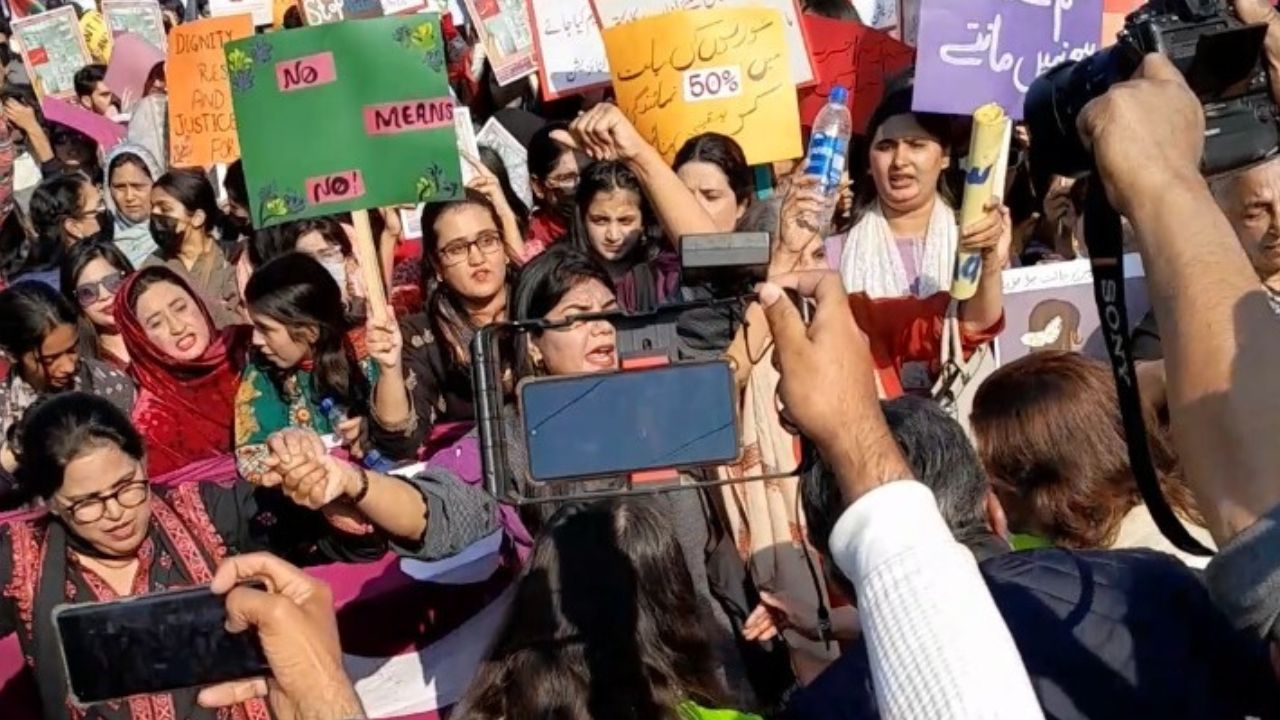
    Aurat March is an annual gathering for women and gender minorities where they lay down their demands before the state as well as celebrate sisterhood. It is an extension of the long-fought struggle of Pakistani women, extending from the country’s birth to this day.

    But standing against the march is an extremist segment of society — a mindset further fueled by Youturbers and reporters from small news channels. With the monetization of YouTube, video creation has developed an appeal for many around the world. A number of vloggers have achieved financial success solely through their YouTube endeavours.

    You must have noticed that content creators often promise rewards or incentives for their viewers if they help them reach 1000 views. This metric, known as Clicks Per Mile (CPM), determines the earnings generated from these views, with one crucial factor being the geographic location of the audience.

    In Pakistan, YouTube offers lower payouts compared to other regions, ranging from 0.5 USD to 1 USD per 1000 views, particularly if the viewership is primarily Pakistani.

    While this may appear modest, the potential for increased earnings exists through attracting international viewership and maintaining a consistent upload schedule. With dedication and growing subscriber counts, Pakistani content creators on YouTube can unlock substantial earning opportunities over time.

    This is why, to get more views, Youtubers now resort to clickbait i.e. misleading headlines and captions while the content too, is deliberately sensational and controversial. For this, truth is compromised as reality is misquoted and misconstrued.

    And so, Aurat March has become a coffer of abundance for content creators.

    The March’s organisers have, time and again, received complaints from the attendees who are pestered by YouTubers who deliberately try to provoke the women with problematic questions. In a staunchly misogynistic society, even a slightly irritated woman is worth a few thousand views.

    This year, at Aurat March Lahore, a YouTuber made his way to the congregation for the first time. When asked why he came to cover the March, he counter-questioned, asking why women felt the need to come out on the streets since “women already have rights”.

    Not only was this YouTuber unwilling to listen to the people willing to list down the reasons why women march, it also showed that he had not read the charter of demands nor the manifesto — another common bad habit of Youtubers.

    “What problems do women have? Hasn’t your dad kept your mother happy? What about those men who aren’t happy because of the women in their lives?” another asked as he allied himself with his counterpart.

    “It seems like you come with preconceived notions about the March and the attendees, and an ill will to malign the voices altogether”, I asserted as the YouTuber then resorted to misinterpreting ‘Mera Jism, Meri Marzi’.

    In reply, their questions and comments only got more personal and extreme.  “Are you a Muslim,” he asked.

    “You should have your head covered because it is a compulsion in our religion,” he claimed, adding that women’s immodesty was the reason for increase in rape as he conveniently absolved men of all actions.

    With a limited understanding of the slogan, and basing it on attire and perceived vulgarity, YouTubers like these appear worryingly ignorant of everyday struggles women have to encounter from domestic spaces to state institutions like the court.

    Worse still, they hope to get clicks from the thousands of patriarchal followers they have amassed by bashing women. Only last month, former Prime Minister Imran Khan’s wife became a target in a courtroom where weightage was given to her opponent i.e. her ex-husband’s claims about her menstrual cycle rather than the woman herself. The court then annulled her marriage deeming her claims as lies. This sparked outrage across the country from civil society as it took away a woman’s agency from her own body while a man’s claim was taken into consideration for the judgement.

    This also made people reconsider their understanding of the slogan ‘Mera Jism, Meri Marzi’ — a phrase that merely demands the patriarchy to keep its hands off women’s bodily integrity.But the naysayers choose to keep their eyes and ears muffled.

    “We are disappointed that like every year, this year also YouTubers chose to come to the March as bad faith actors who resorted to harassing the marchers and disrupting our art installations for content when they couldn’t find any other fodder for their click-bait coverage”, said an Aurat March representative from Lahore.

    On the other hand, Yusra Khan from Multan narrates that while it was welcoming to see YouTubers and journalists covering the March this year and broadcast it for women who could not make it, it was concerning to see how their behaviour was troublesome for the attendees as well as the image of the March.

    “They tried asking some controversial questions but the women countered them very well, but their body-language was aggressive and they topped that with personal comments on the female interviewees which clearly showed that they wanted to create a controversy and add it to their YouTube thumbnail to increase the rating for their content”, she said.

    While women, as well as some men, countered the clickbait machine, many avoided them altogether. Khan recalls that their focused revolved around questions like: “You do not know anything regarding the March, then why are you here?What freedom do you need?”

    Adding that they seemingly came with the goal to spread negative propaganda on social media and like the previous years, make Aurat March a controversy.

    “But our spirits are undeterred. Marchers still had fun!”, reminds a representative of Aurat March Lahore amidst all the attacks.

    It is time that the journalist community unite against disinformation and malinformation. Above all, there is a need to draw a line between content creation and journalism.

    Till then, come what may, March tou har saal hoga!
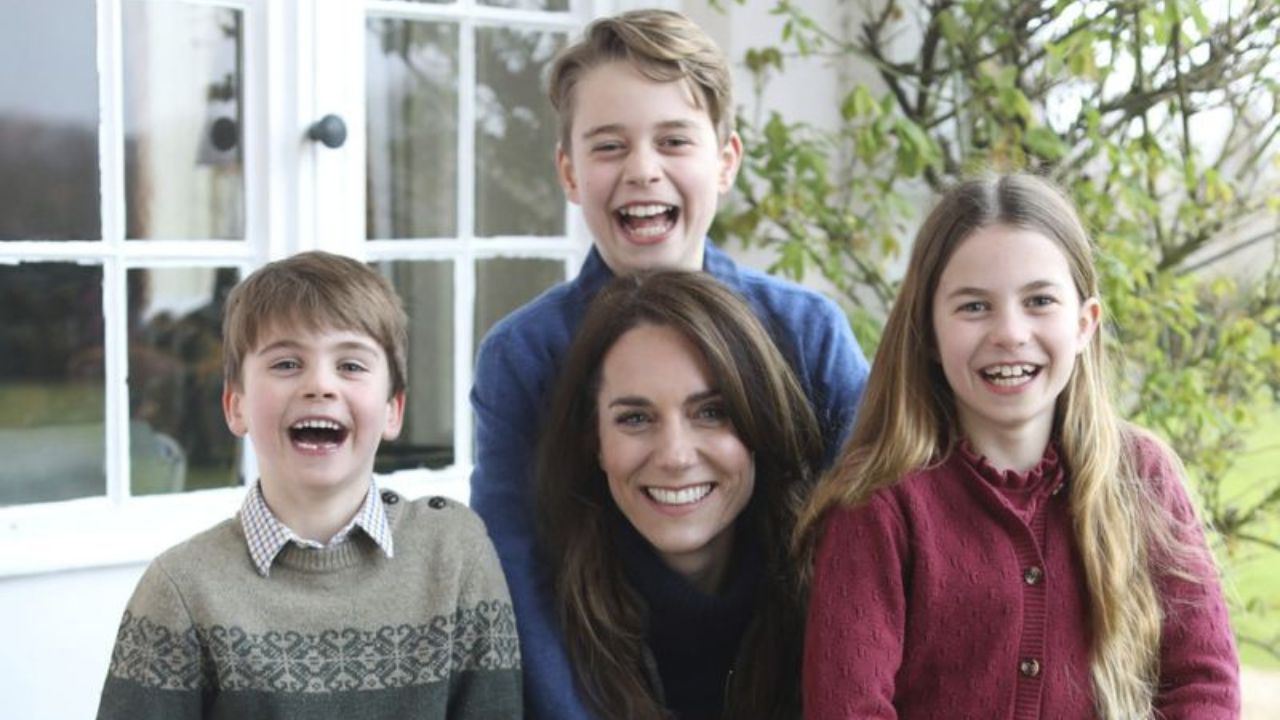
  • First official image published of UK’s Princess Kate after surgery

    First official image published of UK’s Princess Kate after surgery

    Kensington Palace released the first official photo of Princess Kate on social media on Sunday, nearly two months after her abdominal surgery, during which she has stayed out of the public eye.

    The 42-year-old princess, whose husband Prince William is heir to the British throne, has been recovering mainly at their home in Windsor, west of London, since leaving hospital on January 29.

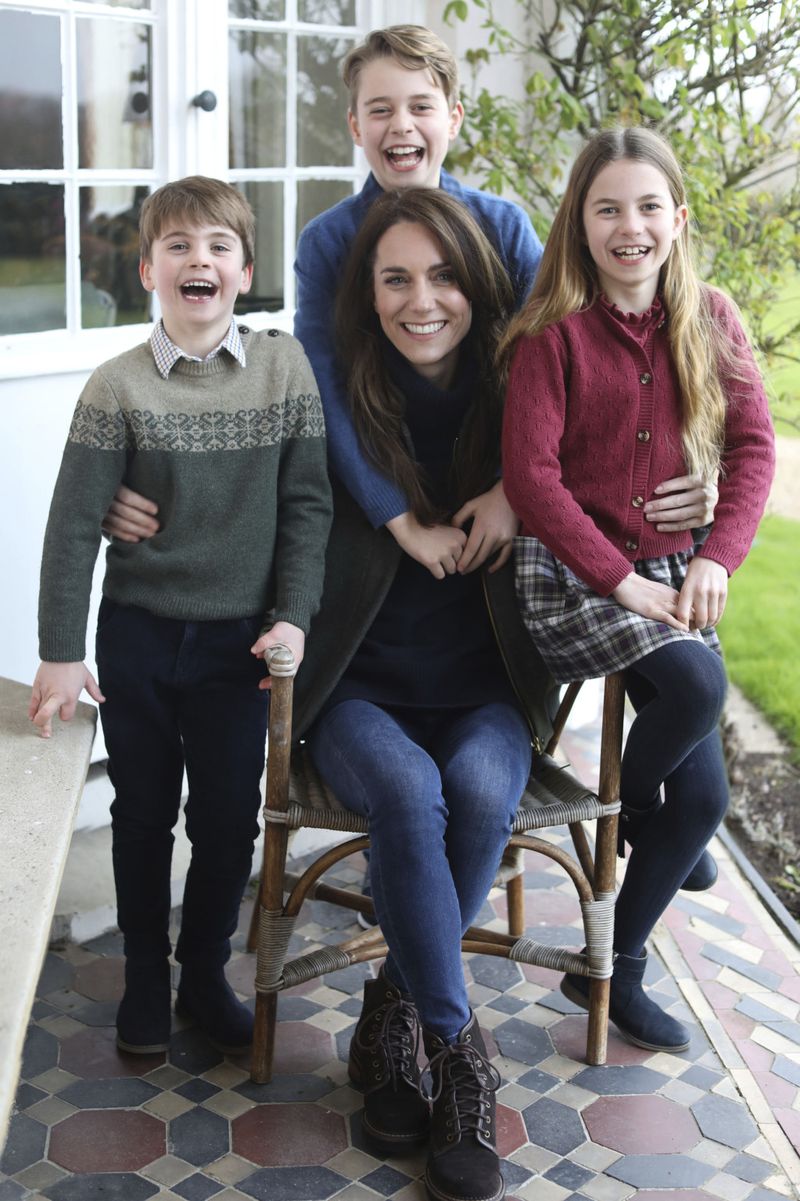
    The photo shows the Princess of Wales sitting on a garden chair, dressed in jeans, a sweater and a dark jacket, smiling, surrounded by her three laughing children, George, Charlotte and Louis.

    “Thank you for your kind wishes and continued support over the last two months,” read a message accompanying the photo on X.

    “Wishing everyone a Happy Mother’s Day,” said the message, which was signed “C” for Catherine.

    In a statement the palace clarified that the photo was taken “in Windsor earlier this week” by Kate’s husband, Prince William.

    The family photograph is the first official image of Kate released by the royal family since her hospitalisation at the London Clinic on January 16 for an abdominal surgery.

    The future queen was last pictured in public during a Christmas Day walk in Sandringham, eastern England.

    Photos published by TMZ earlier in March showed Kate wearing sunglasses while being driven in a car, with the celebrity news site saying they were taken Monday near Windsor Castle.

    UK media outlets including the Daily Mail and The Sun have chosen not to publish the photos.

    The sighting came after a flurry of conspiracy theories on social media over the famously hard-working and dutiful princess’s absence from the spotlight.

    The speculation came despite Kensington Palace clearly saying at the time of her surgery that she would be “unlikely to return to public duties until after Easter”.

    It also said the surgery was not related to cancer.

    Kate’s hospitalisation came almost simultaneously with the announcement that William’s father, King Charles, had been admitted for surgery for a benign prostate condition and subsequently diagnosed with an unrelated cancer.

    Charles, 75, visited his daughter-in-law’s bedside after being admitted himself on January 26.

    The king withdrew from public duties during his treatment, though he attended church services and held his weekly audience with the prime minister.

    – Camilla steps in –

    Charles’s wife Queen Camilla, 76, has been the most visible senior royal, stepping in to cover many of her husband’s public duties during his treatment.

    She is now on a break until March 11, when she is expected to join William and other senior royals at the annual Commonwealth Day service at Westminster Abbey.

    She is reported to be on holiday this week, effectively meaning all four of the most senior royals are out of action.

    The princess is one of the most popular members of the royal family.

    She and William have taken on more royal duties since his younger brother Prince Harry and his wife Meghan left for the United States in 2020, and the king’s brother Prince Andrew stepped back because of his friendship with the convicted sex offender Jeffrey Epstein.

  • Women’s Day: Palestinian Journalists that we need to know about

    Women’s Day: Palestinian Journalists that we need to know about

    Palestinian women in general and journalists, in particular, have set the bar with their resilience against what is now largely perceived as the most well-documented genocide of this century.


    This Women’s Day, the world paid tribute to their untiring efforts, yet it is important to mention here that it is not enough since the besieged strip has been wreaked for more than six months now.


    Palestinian journalists observed in real time the tragedy that women and children are experiencing due to the devastating war since October 7 last year.
    At least 63 women in Gaza are killed daily as a result of the Israeli war, with the majority being mothers, The UN Relief and Works Agency for Palestinian Refugees (UNRWA) reported on Friday.


    “On International Women’s Day, the women in Gaza continue to endure the consequences of this brutal war,” the agency shared. “At least 9,000 women have been killed, and many more are under the rubble,” the statement added.

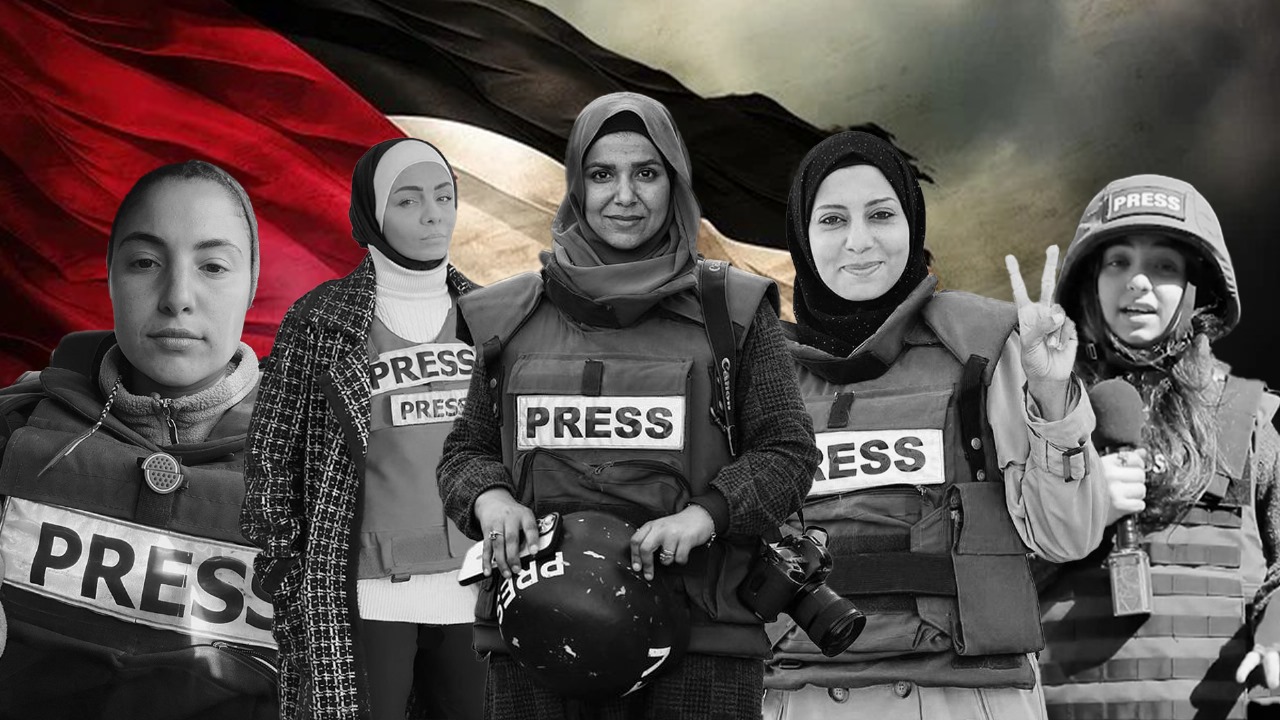
    Hind Khoudary

    Hind Khoudary is one such face the world is now fully familiar with because of her on-ground reporting and the compassion she has shown over time. She was paid tribute to by her fellow journalist Ali Jadallah in an Instagram post where he praised her for her commitment to her profession and towards Gaza.

    However, he added, “As the ‘International Women’s Day’ is celebrated around the world on March 8th, Palestinian women start to work with the first hours of the day to provide for their families despite the difficulties experienced amid Israeli attacks.”


    Hind, 28-years-old, has been working in the media since 2017. In an interview with Anadolu, she pointed out that the current situation in the Gaza Strip affects all Palestinian women regardless of their professions.


    “While the world celebrates Women’s Day, Palestinian women are being displaced from their homes,” she said. “I am not just a journalist covering the war. Rather, I am a displaced person. I left my family and my husband and chose, despite the circumstances, to remain in Gaza and cover the war,” she added further.


    In one of her posts on Instagram, she shared how she doesn’t have clean clothes to wear anymore and how she struggles hard during her periods. “I am also wearing two pants above each other because I don’t have any joggers anymore. The last time I showered was ten days ago. On my period for the second time during the past 30 days and yet I am still standing despite all the cramps,” Hind wrote.

    Noor Hrazeen

    Noor is a TV presenter and a reporter who has been reporting about the ongoing situation in Gaza. She made a huge sacrifice by evacuating her children from Gaza just for them to be able to have food and water but she remained in Gaza to continue reporting about the havoc endured by Palestinians.


    In one of her posts, she wrote: “It’s hard to work in a location, where you know that there is dead bodies still stuck under the rubble. But it’s a story that should be told.”

    Roba Khaled

    Roba is a Palestinian journalist who has shown sheer commitment to her job even when her children were sick or when Israel was bombing buildings in real-time.

    Doaa Albaaz

    Doaa, 27, a photographer, reports the horrors befallen upon Gazans by the Israeli forces. “On International Women’s Day, we want to convey the image of women who are subjected to the most horrific massacres in Gaza,” she said in an interview with Anadolu.


    “During this war, the occupation targeted women, children, and innocent people,” she pointed out. “We lack everything, including privacy. There are no bathrooms, and we struggle to convey the real picture,” Baz asserted.

    Duaa Tuaima

    Duaa Tuaima is a photojournalist whose Instagram is a window that opens into the reality of the suffering in Gaza.

    She mostly documents the women and children of Gaza and how they are struggling to grapple with starvation and siege.

    Bisan Owda

    Bisan is another popular name. A storyteller and filmmaker by profession from northern Gaza, Bisan has been documenting the displacements, bombings, and genocide in Gaza from day one. Her vlogs and videos in collaboration with different platforms are raw and insightful. “Hi, this Is Bisan from Gaza and I am still alive” is the line she says at the beginning of every vlog and it is ironically sad and hopeful at the same time.


    In one of her videos, she featured an Israeli jet and said, “I grew up with this sound, it’s not new…”


    In another, she posted about living in fear since the war started. “For 150 days, I have been afraid of cement ceilings. I do not want to be crushed to death when a missile lands. I sleep in a tent, and I am like hundreds of thousands suffering cold at times, heat at times, and disease and hunger at other times,” she wrote in an Instagram post.

    Sumayya Wushah

    11-year-old war reporter Sumayya Wushah was featured in Al Jazeera’s videos as Gaza’s youngest journalist reporting about the destruction in a confident tone. She is inspired by Shireen Abu Akleh, the Al-Jazeera journalist who was killed by the Israeli army in 2022.


    The list could be longer. These journalists are inspiring women from all around the world for their strength and the cause they stand for.

  • On Women’s Day, the world did not forget Palestinian women

    On Women’s Day, the world did not forget Palestinian women

    Palestinian women took center-stage in internet discourse surrounding Women’s Day on Friday with artwork and rich tributes.

    Al-Jazeera wrote about the five most prominent women from Gaza. From doctors to activists, these are some of the women showing bravery amid Israel’s war on Gaza. These women include Bisan the journalist, Dr. Amira Al-Assouli who saved the life of a child from Israeli snipers by risking her own life, Nadina Abdullatif the child activist from Gaza, Deema Alswiti who caught the world’s attention after posting about her life in Gaza and Sara Alsaqqa, the first woman surgeon in Gaza who safely brought a child in the world while stuck in a room during Israeli bombing.


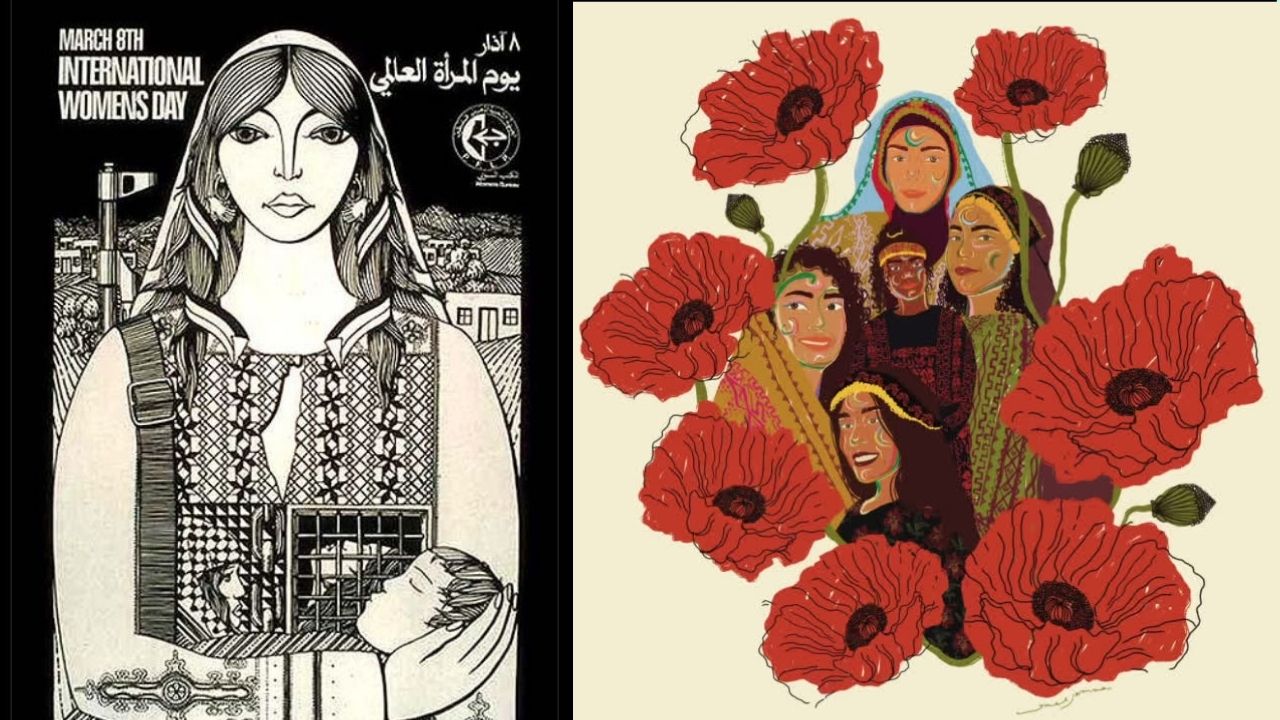
    Instagram digital art-related page Yael Jamina Illustration posted a beautiful art piece in “honour of the heroic women and girls of Palestine”.


    Palestinian-Greek athlete Samia Kallidis posted a heartfelt women’s day message for the women of Gaza and called out the world for the blatant hypocrisy.


    APAN, a Pro-Palestine Account on X, posted detailed profiles of Palestinian activists featuring Hind Khoudary, Ahed Tamimi, and Muna el’Kurd.


    Communist Pastors shared a women’s day poster with the caption, “The Palestinian woman: the guardian of the dream and the shield of the revolution.”


    A netizen shared a poster by award-winning artist Marc Rudin which was published by the Popular Front for the Liberation of Palestine in 1980.


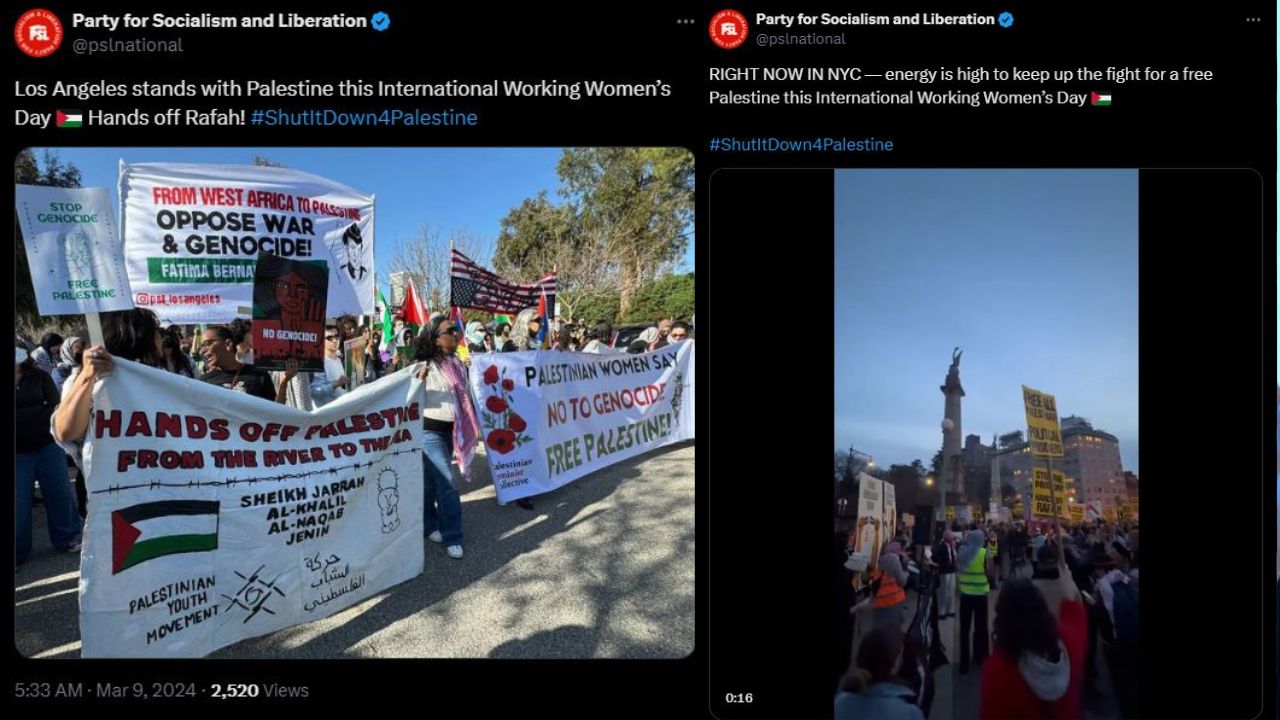
    Along with these beautiful art pieces, women all around the world took to roads for peaceful marches in commemoration of Women’s Day and raised slogans in solidarity with the oppressed women of Gaza.

  • Tanzeela Mazhar fought for seven years to get justice against workplace harassment

    Tanzeela Mazhar fought for seven years to get justice against workplace harassment

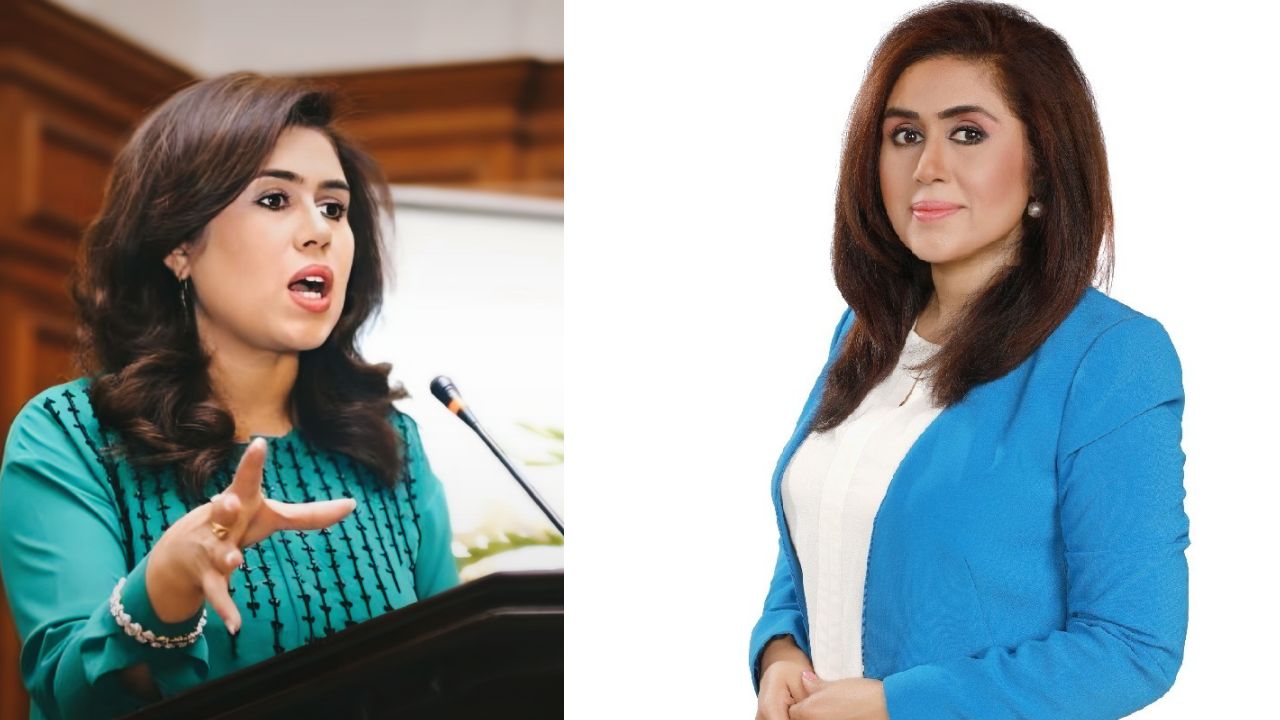
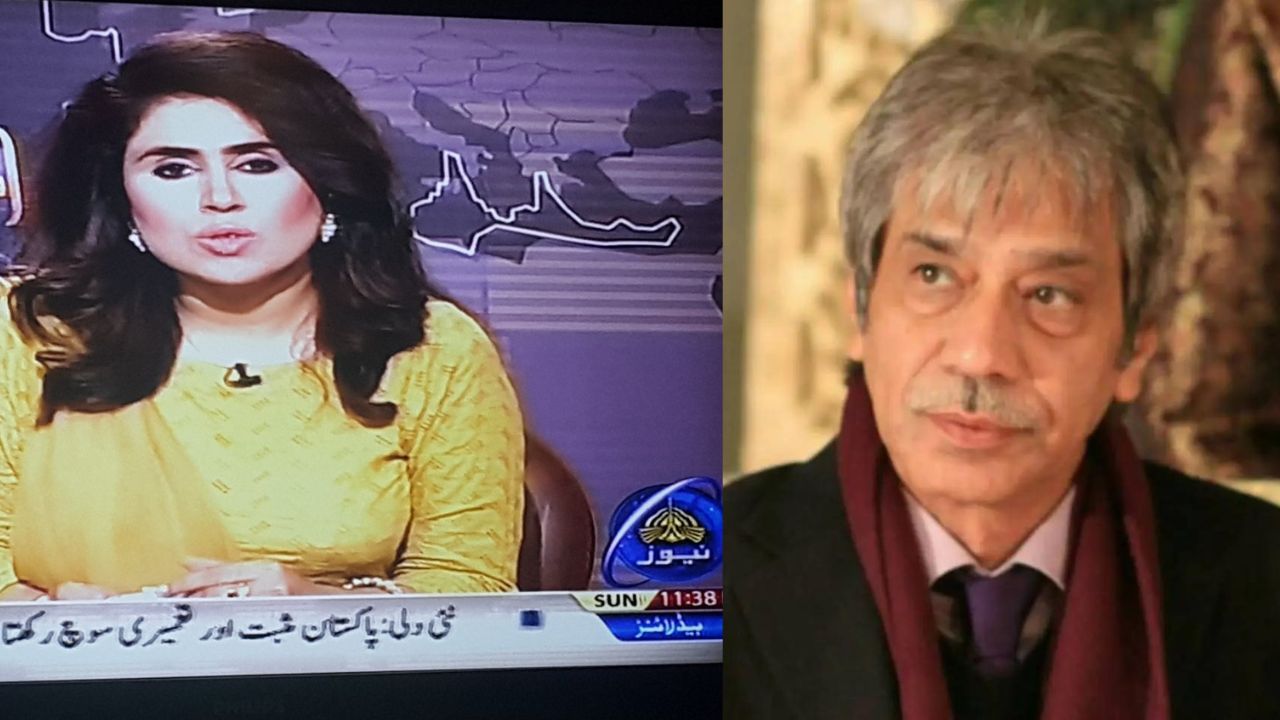
    After seven years of relentless struggle and facing criticism, television host Tanzeela Mazhar, a former anchor at Pakistan Television Corporation (PTV) News, finally received justice in her battle against sexual harassment as she was acquitted in a defamation case filed by her harasser.

    Mazhar’s ordeal began in January 2017 when she bravely exposed Agha Masood Shorish, former director of current affairs on the state television, on X (formerly Twitter) for making “unwelcome advances” towards her in 2009.

    She shared that he took her off-screen after she confronted him. Screenshots of her chat added to the post revealed the harassment against her and another journalist, Yashfeen Jamal.

    In November 2017, PTV terminated Shorish, and the decision followed a series of investigations, with a total of five inquiries launched against Shorish, three of which specifically addressed allegations of sexual harassment.

    The severity of the situation prompted 14 producers from PTV to lodge a formal complaint against Shorish in the Islamabad High Court, elevating the issue to the national platform.

    The matter garnered further attention when it was brought up in the National Assembly, prompting the Information Ministry to issue a notification for Shorish’s termination.

    Since 2017, Mazhar has been fighting the criminal defamation lawsuit that was filed against her soon after she raised the matter of sexual harassment.

    “It is about not losing your ground”

    She believes, “It is not about winning or losing a case, it is about not losing your ground. When you talk about harassment, you are slapped with defamation cases by your harassers because they want you to step back from your ground.”

    The former PTV anchor asserted that this is a pattern that has been seen in multiple cases. Her co-complainant Yashfeen Jamal’s out-of-court settlement and statements made life difficult for her as that impacted her case.

    Mazhar faced backlash from her journalist fraternity and struggled to find a job. She now works as Head of Programming and Current Affairs at GTV News Pk.

    She is also the co-founder of Women in Media Alliance, a support center, which seeks to promote fair and inclusive representation of women in media organizations across Pakistan. They believe in highlighting the work of women affiliated with different mediums and providing them with a platform to get their voices heard.

    Court Hearings and Societal Pressure

    “Men of the family and home, nobody likes that a woman of your family goes every morning to deal with a court case because that is how our society is,” explains Tanzeela while remembering how she was never exempted from a court hearing, faced warrants due to absence, even when she was traveling somewhere for work or there was an emergency.

    She saw the ordeal as an opportunity, all thanks to her nerves of steel. She went back to university and became a lawyer.

    “The message to their egos as they felt they were punishing me, it all changed because the case went on for so long that I eventually started appearing in uniform. He tried to use every influence he had, his father was influential, so he had contacts with everyone, from bureaucracy to the judiciary to intelligentsia, but I fought against him,” she said with a spark in her eyes and a smile on her face.

    Mazhar’s Resignation and Response from Management:

    The fallout from the allegations against Shorish had a significant impact on PTV’s workforce. In March of the same year, Mazhar announced her resignation expressing her disappointment with the handling of the situation.

    She criticized the leadership, particularly referencing statements made by Maryam Nawaz and her party regarding the respect of women. Mazhar’s departure marked a poignant moment, highlighting the pervasive issue of moral corruption within the institution.

    Legal Battles and Renewal of Contracts:

    Meanwhile, the legal ramifications of the scandal continued to unfold. In February, PTV management renewed the contracts of Mazhar and her colleague, Jamal, amidst ongoing legal battles.

    Shorish retaliated by filing a defamation suit against Mazhar and Jamal, further complicating the situation. Despite mounting pressure, State Minister for Information, Marriyum Aurangzeb, assured the public of the impartiality of the inquiry committee tasked with investigating the harassment complaints.

    Timeline of Events and Parliamentary Intervention:

    The timeline of events reveals a complex web of inquiries and bureaucratic procedures. In January, the inquiry committee submitted its report to the PTV managing director, albeit with delays.

    Women lawmakers in the National Assembly demanded clarification on the lack of action taken against Shorish, amplifying the voices calling for accountability. The internal turmoil within PTV was further exacerbated by a circular issued by management, warning employees against making public comments on the ongoing investigations.

    Amidst the turmoil, Tanzeela Mazhar took to social media to publicly disclose her experiences with Shorish.

    In January 2017, she exposed Shorish’s unwelcome advances towards her on Twitter, shedding light on the pervasive issue of sexual harassment within PTV. Screenshots of personal conversations added weight to her claims, sparking a public outcry and igniting a national conversation about workplace harassment.

    In October 2018, Mazhar revealed that the internal inquiry conducted over the past two years was inadequate. She recounts facing bullying and threats throughout the process. Despite the eventual sacking of the director, the consequences do not include accountability for harassment.

    Additionally, Mazhar and her colleague Yashfeen Jamal navigate through two defamation lawsuits, both criminal and civil, further adding to the complexity of their situation. Mazhar’s journey involves recounting her experiences before probing committees and courtroom appearances, all while facing stigmatization from her offenders.

    Three years after filing her complaint against harassment at PTV, Mazhar finally received the inquiry report on August 20, 2019, upon approaching the Federal Ombudsman Secretariat for Protection Against Harassment (FOSPAH). However, the report was classified as a secret document, further complicating Mazhar’s quest for justice. Her appeals for redress from the PTI government also went unanswered.

    She attended court hearings to confront criminal defamation charges on October 9, 20, and 22, November 16 and 23, in the same year reflecting the ongoing legal challenges she faced in her fight against harassment.

    In 2020, Mazhar appeared at the Federal Ombudsman Secretariat for Protection against Harassment to present her arguments for challenging the inquiry report by PTV. She alleged that the inquiry was not conducted fairly and promptly, highlighting that the report was not shared with her until July 2019.

    Finally, on September 15, her appeal against PTV’s report was brought before the ombudsman for an additional hearing. Despite the initial expectation of concluding the report within 30 days, the process extended to a prolonged duration of three years.

    In September 2021, the court refused to accommodate Mazhar’s medical concerns during her trial, despite her being pregnant and nursing a fractured foot.

    Finally, on January 30, 2024, a Pakistani trial court acquitted Tanzeela Mazhar in the criminal defamation case, bringing an end to her seven-year-long legal battle.

    Throughout this ordeal, Mazhar’s resilience and determination to combat harassment have been evident. Her victory serves as a reminder of the importance of standing up against harassment and seeking justice, even in the face of adversity.

    “I was fighting for a larger cause, and I want women to keep fighting. It took 15 years of my life, this has made me a new person and has increased my passion to fight for gender rights,” she gives her message.

  • Cambodia earns new world record for largest ‘Bridal Carry’

    Cambodia earns new world record for largest ‘Bridal Carry’

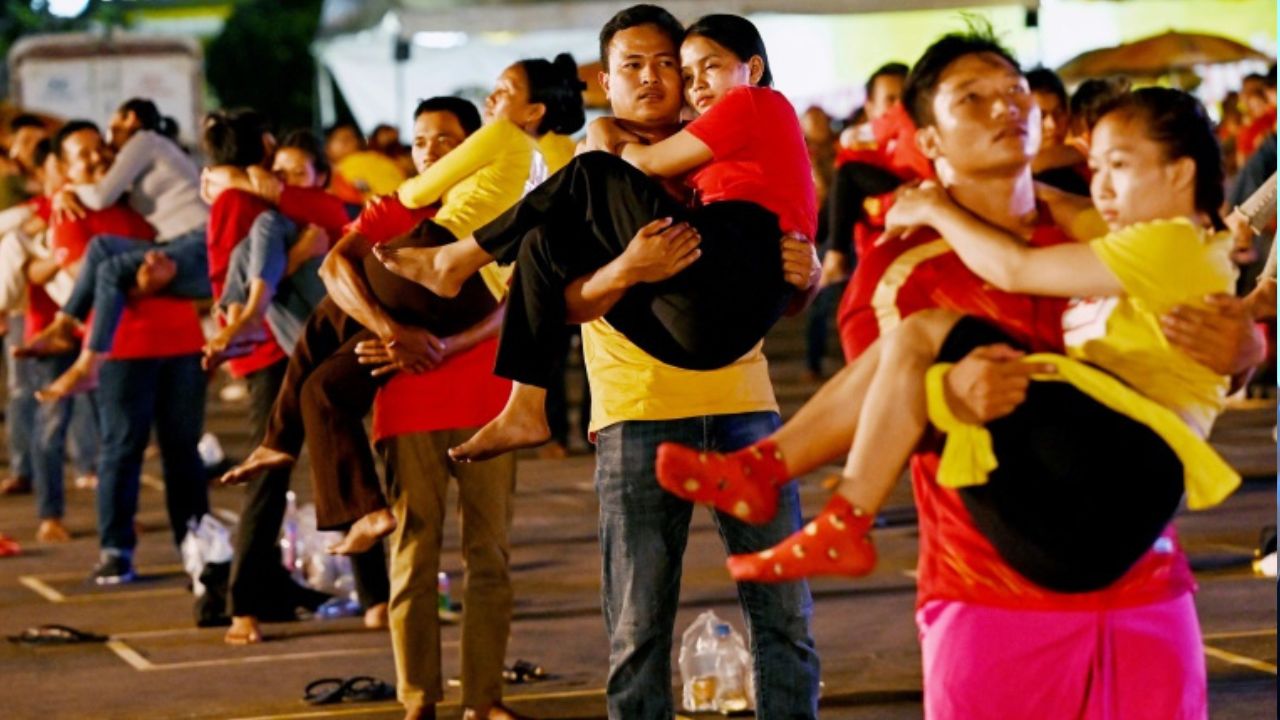
    Hundreds of Cambodians braved sticky tropical heat to set an unusual new world record: for the most people performing a “bridal carry” at the same time.

    Late on Friday, 245 men hoisted their partners – wives, girlfriends, sisters, or mothers – with one arm under the legs and one behind the back and held the position for a minute to set the mark, certified by Guinness World Records representatives.

    “I am so happy, it is my first time to participate in such an event to break a world record for Cambodia,” Sam Khan, 25, told AFP before carrying his wife.

    The event drew participants young and old.

    “I am so excited,” 50-year-old mother Heng Pov told AFP while being carried by her son.

    After setting the record, many of the participants carried on with the hold as part of a competition to win a new car.

    The “bridal carry” is so named for the way a groom in some cultures carries his bride over the threshold of their new home.

    This article was produced by AFP. For more information go to AFP.com.
    © Agence France-Presse

  • Indian policeman beats Muslim men offering jummah on Delhi roadside

    Indian policeman beats Muslim men offering jummah on Delhi roadside

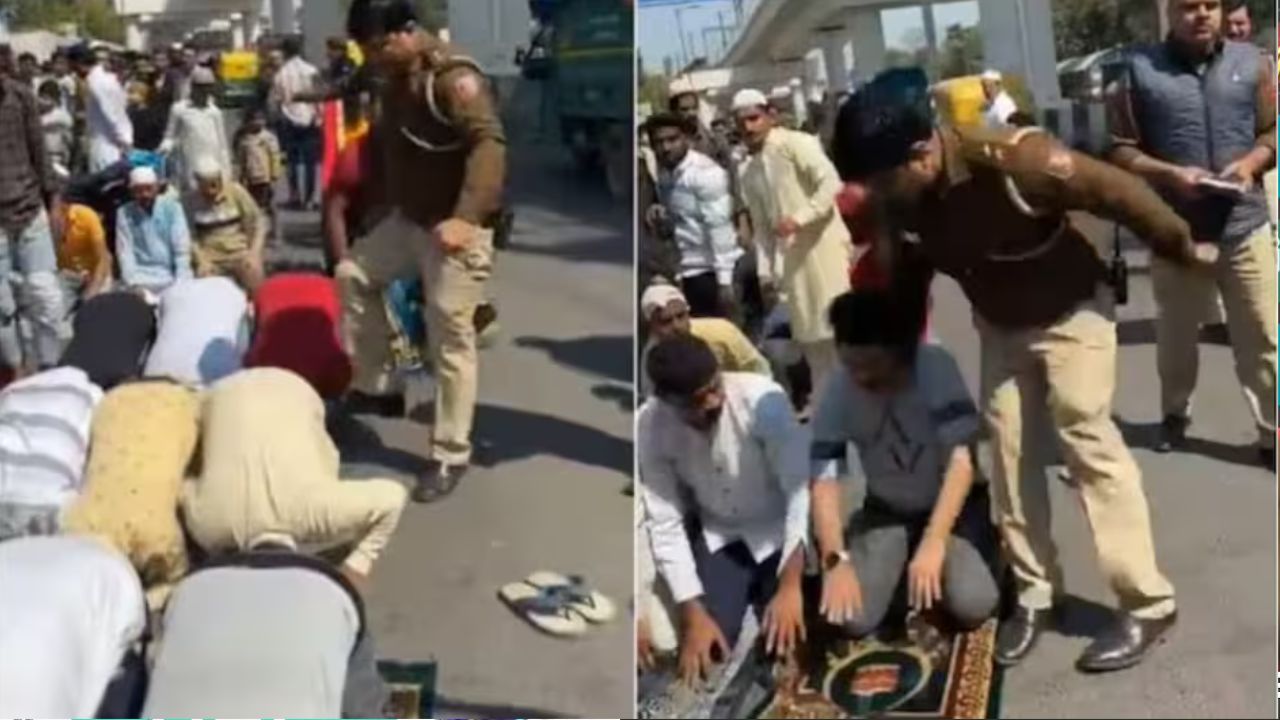
    A video of an Indian cop brutally beating Muslim men offering jummah prayers on the roadside in Delhi has gone viral. The video shows the policeman kicking and hitting Muslims who were kneeling down for sajdah (prostration).


    The incident took place in Delhi’s Inderlok area where a large number of Muslims gathered at a mosque on Friday, leading to several men praying on the road as the crowd overflowed the premises.


    Police officials arrived at the spot mid-prayers and started kicking and punching the Muslims. They can be heard telling the worshippers to vacate the place.
    The video shows one of them kicking and hitting the Muslims who were kneeling down for prayers. However, a crowd surrounded the cop and objected to his attitude, getting into a verbal brawl.


    Sharing the video of the incident, Congress Rajya Sabha MP Imran Pratapgarhi said, “What is this hatred that is filled in the heart of this soldier? Delhi Police is requested to file a case against this official under appropriate sections and terminate his service.”

    In an interview with Hindustan Times, Deputy Commissioner of Police (north) MK Meena said that an inquiry into the matter has been initiated. The official has been suspended with immediate effect and disciplinary action will also be taken, the DCP added.

  • Pakistan’s women ‘Rowdy Riders’ take on traffic and tradition

    Pakistan’s women ‘Rowdy Riders’ take on traffic and tradition

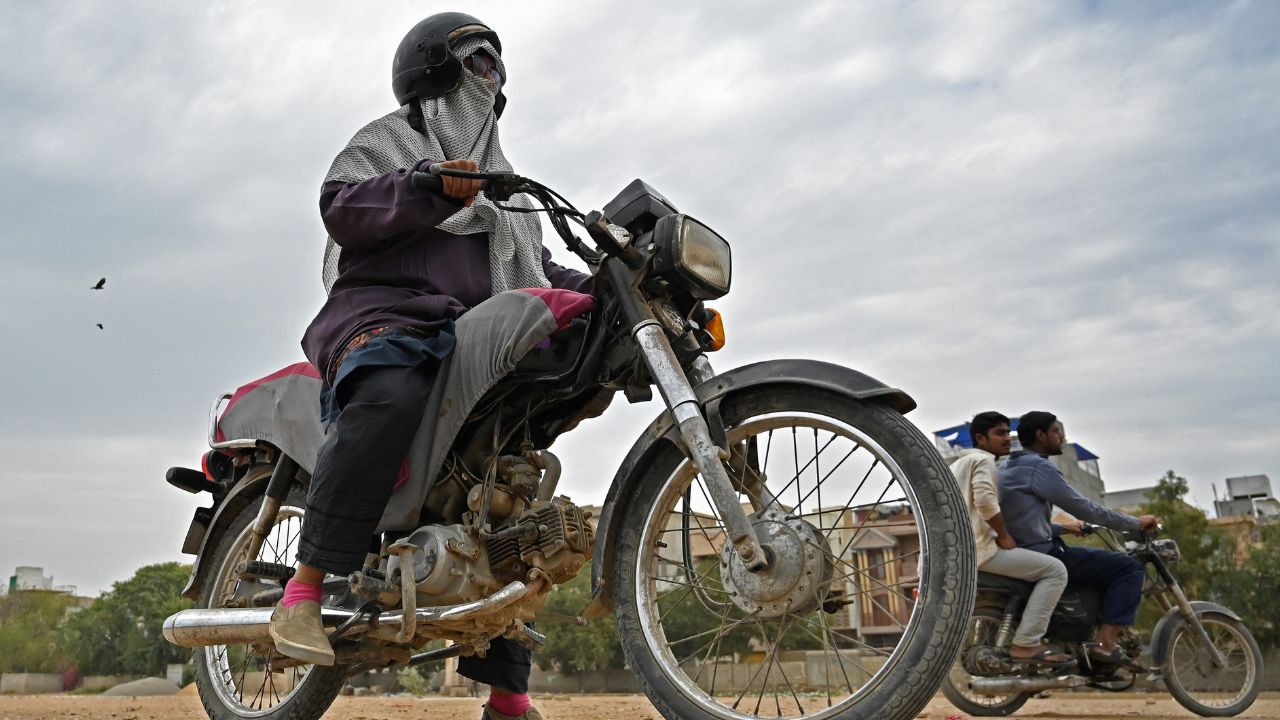
    Karachi (AFP) – Revving round a dusty oval in the heart of Pakistan’s largest city, women on motorbikes practise looping a row of safety cones, their helmets securing colourful headscarves in place.

    It is a rare sight in the culturally conservative country, where women are typically relegated to the back seats of cars or to riding side-saddle on motorbikes, ferried by a male relative.

    “Change is under way,” says Zainab Safdar, demonstrating how to mount a two-wheeler while cloaked in a pink body-covering abaya.

    The 40-year-old is an instructor for the “Rowdy Riders”, a women-only group teaching novices in Karachi everything from the basics of balancing on a bicycle to high-octane gear changing and negotiating traffic.

    Since being founded in 2017 by a handful of pioneering riders, the self-described “Rowdies” have swollen in number to more than 1,500 housewives, students and professionals.

    “In the past, there were misconceptions about girls riding bikes,” Safdar said, referring to doubts about their abilities.

    “Fortunately, with greater awareness, these notions have been dispelled.”

    Women’s participation in the workforce is impacted by the limited availability of public transport services that ensure their safety.

    In the sprawling megacity, granting women the skill and confidence to join legions of male bikers in the helter-skelter of congestion unlocks a new tier of freedom.

    Most of the riders hail from Karachi’s middle class, but rigid gender norms often still hold sway.

    University lecturer Shafaq Zaman said “it took a while to get permission” from her family to start classes to master a pedal bike two months ago.

    Among the few dozen bikers assembled under the mid-afternoon sun, she looks on with her seven-year-old daughter Aleesha as a convoy of women open up their engines and rip past in a haze of dust.

    “I am so inspired that now I have my own dream for me, that I want to ride on a heavy bike. I want to ride the whole of Pakistan,” 30-year-old Zaman said.

    Her story is not unusual. In Pakistan, very young boys are often seen steering motorbikes, but many of the “Rowdies” did not learn to ride a bicycle until well into adulthood.

    “There should be a bike in every house, and usually there is, but it’s rotting because men do not use it and women don’t know how to,” said Sana Kamran, sitting confidently astride a 110cc Suzuki.

    “If women can manage household responsibilities and earn a living, why can’t they ride a bike for their convenience?” the 41-year-old asked.

    Motorbikes are ubiquitous across Pakistan — most commonly red Honda models or cheaper Chinese reproductions, considered capable of mastering any terrain.

    The quest to conquer a bike has seen 26-year-old Farwa Zaidi suffer multiple bone fractures — but the injuries are a badge of honour she wears as proudly as the “Rowdy Riders” crest on her jacket.

    “Here I am, standing strong,” she said alongside her 70cc electric scooter.

    At four feet and six inches (137 centimetres) tall, Zaidi said her small stature made it difficult to claim a spot on crammed city buses.

    Learning to ride gave her a new sense of possibility.

    “Once we master cycling, it instils a new-found confidence in our ability to conquer other challenges,” she says.

  • Man vaccinated for Covid 217 times reports no Side effects: scientists

    A German man who deliberately got vaccinated for Covid-19 a whopping 217 times did not report any side effects from his many jabs, according to researchers studying possibly the “most vaccinated person in history”.

    The immune system of the 62-year-old man from the central German city of Magdeburg — who has not been named — is still firing on all cylinders, the researchers said in The Lancet Infectious Diseases journal.

    They said the man voluntarily received so many shots against all medical advice, and warned against jumping to far-reaching conclusions from this single case.

    The man first came to the attention of the German-led researchers due to news reports in 2022, when he had only received 90 jabs.

    Media reports at the time said the man was suspected of getting so many doses to collect the completed vaccination cards, which could then be forged and sold to people who did not want to be vaccinated.

    A public prosecutor in Magdeburg opened an investigation into allegations of fraud over the case but no criminal charges were filed, according to the scientific paper published earlier this week.

    The prosecutor collected evidence of 130 vaccinations over nine months, it added.

    But the man claims to have received 217 vaccine doses of eight different Covid vaccines — including all mRNA versions — over 29 months.

    Kilian Schober, a virologist at Germany’s University of Erlangen-Nuremberg and study co-author, said in a statement that when they contacted the man, he was “very interested” in undergoing a range of tests to examine the effect of so many vaccinations.

    The case allowed the researchers an extremely rare chance to study what is known as “hyper-vaccination”.

    Some scientists have theorised that after being hit by so many vaccinations, a body’s immune cells would become less effective as they became accustomed to the antigens.

    But that was not the case for the German man, the researchers found.

    In fact, he had “considerably higher concentrations” of immune cells and antibodies for the Covid virus than a control group of three people who received the recommended three vaccinations, the study said.

    His body also showed no sign of fatigue from all those vaccinations — his 217th jab still boosted his number of antibodies against Covid, the researchers found.

    The man reported that he never had any vaccine-related side effects from any of the 217 jabs. He also never tested positive for Covid and showed no signs of past infection, the researchers said.

    But they warned against taking away any wider lessons from the man’s experience.

    “It should go without saying that we do not endorse hypervaccination,” Schober wrote on X, formerly Twitter.

    Caitjan Gainty, an expert in the history of vaccines at King’s College London not involved in the study, told AFP she had “never come across a historical discussion of someone who received more vaccinations than this”.

    It is “relatively unlikely” that anyone has ever had more vaccinations than the man, she added.

    Spyros Lytras, a virologist at the University of Tokyo, said it was a “comically large number of vaccinations”.

    “Whether this is the most vaccinated person in history, I cannot know, but they are certainly the most vaccinated person reported to date” by some margin, he told AFP.

    “And I doubt that we’re going to see another such report any time soon.”

  • Deceased donor saves seven lives by donating his organs

    Deceased donor saves seven lives by donating his organs

    Transplant surgeons at the Pakistan Kidney and Liver Institute and Research Centre (PKLI) in Lahore have successfully conducted Pakistan’s inaugural ‘split-liver transplant’ and the country’s first pancreatic transplant this week, officials announced on Wednesday.

    According to experts, around 8,000 patients need liver transplants each year after the vital organ fails or they get cancer in it.

    “With the help of a liver donated by a young man, who was pronounced brain dead at a Rawalpindi hospital, we have performed Pakistan’s first split-liver transplant. We divided the vital organ into two and transplanted them to an adult and a little boy, who were facing liver failure,” Dean and Chief Executive Officer PKLI&RC Dr Faisal Saud Dar told The News.

    Similarly, the pancreas of the deceased, a 32-year-old man, was transplanted to a Type-1 diabetes patient, Dr Faisal Dar said, adding that it was also the first pancreatic transplant in the history of Pakistan.

    The deceased donor, identified as Uzair Bin Yasin, had expressed his desire to donate all vital organs posthumously, including the liver, pancreas, both kidneys, and eyes. The organs were harvested to save the lives of seven individuals in Rawalpindi and Lahore.

    Dr. Faisal Dar personally retrieved the liver and pancreas from the donor on Sunday at a Rawalpindi health facility and expedited their transportation to PKLI&RC Lahore for the transplants on the same night. The liver was divided into two unequal halves, and separate teams performed the transplants on an adult and a child.

    Explaining the significance of split-liver transplantation, Dr. Faisal noted that it involves dividing a single deceased donor liver into right and left portions, which are then implanted into two recipients simultaneously. Typically, the adult patient receives approximately 60 percent of the liver, while the pediatric patient receives the remaining 40 percent.

    Regarding the pancreatic transplant, Dr. Faisal highlighted its success rate, stating that about 90 percent of patients no longer require insulin injections within the first year following the surgery, with more than two-thirds remaining off insulin thereafter.

    Dr. Faisal Saud Dar, renowned as the pioneer of liver transplantation in Pakistan, has performed over 2,000 liver transplants to date, including the recent historic split-liver and pancreatic transplants.

    “A few years back, we performed Pakistan’s first liver auto-transplantation at Dow University of Health Sciences (DUHS) Karachi, where the diseased liver of a young man was retrieved and after surgical removal of cancerous parts, it was re-transplanted to the patient. Now, we have performed Pakistan’s first split-liver and pancreatic transplants successfully, which are great achievements for us,” he added.

    The successful completion of Pakistan’s first split-liver and pancreatic transplants marks a significant milestone in the country’s medical history, showcasing advancements in organ transplantation and underscoring the potential to save countless lives through organ donation and transplantation initiatives.