Category: National

  • Faisalabad man gunned down by police for not stopping at checkpoint

    Faisalabad man gunned down by police for not stopping at checkpoint

    At least four policemen have been arrested in Faisalabad for killing a man and injuring three others after they fired at a vehicle that failed to stop at a checkpoint in Dijkot area of the city.

    The family of the deceased says that Waqas Ahmed was on his way back from a wedding on Wednesday when the police team on a patrolling duty stopped their car.

    There are conflicting reports about what transpired at the checkpoint. Waqas’s cousin says that the deceased had stopped at the checkpoint and answered police’s questions, but policemen still chased him and gunned him down.

    However, a police report claims that Waqas “mistakenly” ran over Sub-Inspector Shahid Rasool’s foot and sped away from the check-post in panic. The police officers chased the vehicle and intercepted them in no time. They then pulled out Waqas from the vehicle and shot him multiple times. They even slapped Ahmed after he had passed away as well, his cousin told a media outlet.

    The three men accompanying Waqas were taken to an unknown location, but they were released after the Faisalabad police chief intervened. Police claim Waqas was killed in an exchange of fire following his failure to stop on the checkpoint.

    Meanwhile, the relatives of Waqas organised a protest on Samundri Road and set tyres on fire. Following this, the Faisalabad CCPO took notice of the incident and launched an inquiry. Ahmed’s body has been sent for a post-mortem examination while the three other men have been sent back home.

    Last month, five officials of Islamabad Police were arrested for killing 21-year-old youth, Usama Satti, in cold blood near Srinagar Highway, G-10 sector in the federal capital. According to reports, shots were fired from the front and hit Satti mostly on the face and upper body.

    The policemen were subsequently dismissed from the service after a probe.

  • FC man gets death sentence for killing Turbat student

    A Frontier Corps sepoy, Shadiullah, who was accused of killing a 25-year-old student in front of his parents in Turbat has been sentenced to death by a local court in Balochistan.

    During the hearing of the case, Turbat District and Sessions Judge Rafiq Langau decided the case in the presence of Shadiullah and Hayat’s brother Murad Baloch and sentenced the accused to death under Section 302 of the Pakistan Penal Code (PPC).

    The family had recognised Shadiullah during the identification parade while the FC soldier also confessed to the killing.

    Shadiullah had shot dead Hayat Baloch — a BS student at the University of Karachi, in Aug 2020 following a bomb blast in the area in which three soldiers were wounded. Subsequently, the FC officials picked Hayat up — who was helping his parents at their date orchard — and tortured him before shooting him dead as his family pleaded for mercy.

    It was reported that Hayat, who was in Turbat because his university was closed due to the COVID pandemic, had shot more than eight times.

    The killing had resulted in outrage on social media, with people, including lawmakers, demanding justice for the slain youth.

    After the murder, an inquiry was conducted by the paramilitary force. An internal investigation by the Frontier Corps found that the accused FC man “reacted in haste”, Turbat SSP had told media. After this inquiry, Shadiullah was handed over to the police for further investigation in the case.

  • Waziristan at par with Pakistan after PM launches 3G, 4G services; ‘olive revolution’ also announced

    Waziristan at par with Pakistan after PM launches 3G, 4G services; ‘olive revolution’ also announced

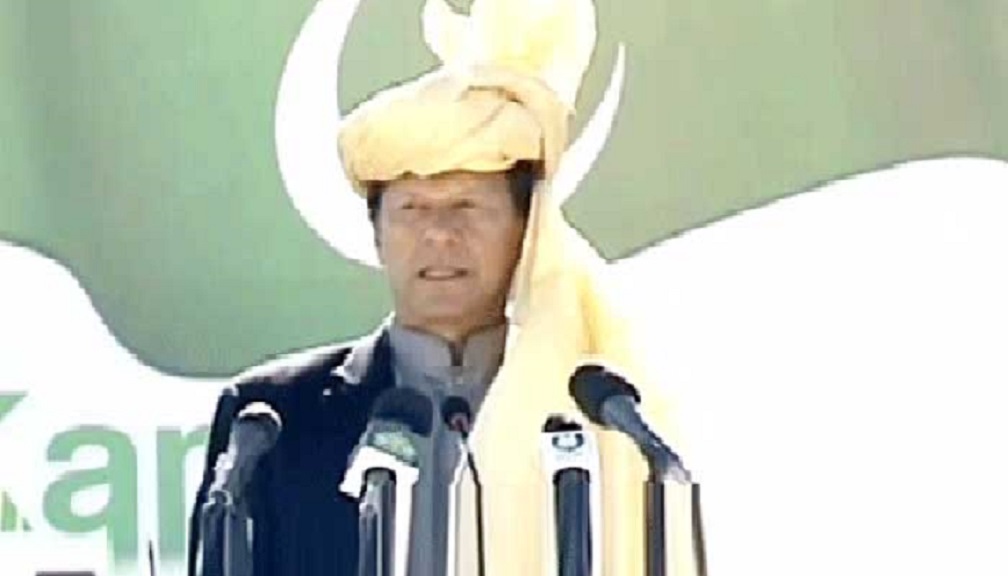
    Prime Minister (PM) Imran Khan has announced that 3G/4G internet services will become operational in Waziristan from today (Wednesday).

    PM Imran shared that the news with the people of Waziristan while addressing a Kamyab Jawan Programme’s cheque distribution ceremony in Wana.

    “We are trying to resolve your problems. From today, 3G and 4G services will become functional,” he said, adding that it was the demand of the youth of the area that they had 3G and 4G services.

    The premier shared that 3G and 4G services were not available in the region earlier as the government feared that it might be used for terrorism. He added that he spoke to the army leadership about the issue and was informed that it was a need of the youth of the area.

    “I spoke to the army and we decided that we will provide this facility,” said PM Imran.

    The premier assured the people that the government will also allocate more scholarship for the people of the area.

    He also told the people that he will bring an olive revolution to the area, as the product is commonly grown there.

    “Olive will bring a lot of money to the area,” he said, announcing that a dam will also be built in the area to resolve water woes of the locals.

    The PM assured the people that his government will work on uplifting the poor segments of the society and backward areas including the tribal districts.

  • HRCP concerned over govt’s decision of asking private sector to import COVID-19 vaccine

    HRCP concerned over govt’s decision of asking private sector to import COVID-19 vaccine

    The Human Rights Commission of Pakistan (HRCP) has expressed serious concern over the federal government’s decision to ask provinces and the private sector to import the coronavirus vaccine.

    As per the details, with the Cabinet Committee on Procurement of COVID-19 Vaccine briefing Prime Minister (PM) Imran Khan on efforts being made to engage more pharmaceutical companies for procurement, HRCP has said that the government’s decision in this regard was not the right step.

    “It is the responsibility of the federal government to provide vaccines at heavily subsidised rates to the poor masses which form a majority of the country’s population,” read a statement by the rights watchdog.

    “The people of lower-income groups are struggling hard to survive the unprecedented economic crisis unleashed by misplaced priorities and pro-rich policies of the federal government. The foreign aid received and funding allocated for fighting the pandemic must be used transparently and spent on vaccinating the citizens,” the HRCP said.

    It also expressed concern after reports appearing in the electronic and social media that some of the agents in Karachi had started pre-booking of AstraZeneca vaccine for Rs 20,000 per dose.

    Earlier, the PM was informed that two vaccines had been registered for emergency use and efforts for fast-track registration of more vaccines were under way.

    He was also told that that the vaccine would be available within the first quarter of the current year.

  • ‘That’s why he prayed for Modi’s victory’: Imran accused of receiving funding from India’s BJP, Israel

    The Pakistan Democratic Movement (PDM) leadership has accused Prime Minister (PM) Imran Khan of receiving funding from India and Israel, as Pakistan Muslim League-N (PML-N) Vice President Maryam Nawaz has also drawn a link between the claim and the premier hoping Narendra Modi won the 2019 election to become his Indian counterpart.

    Ahead of the Indian general election, Imran had expressed his wish for Indian hardliner Bharatiya Janata Party (BJP) to win the election as “they were more prone to holding dialogue with Pakistan”.

    Addressing a protest demonstration in front of the Election Commission of Pakistan (ECP) on Tuesday, Maryam demanded that PM Imran came clean if there were no skeletons in his closet.

    “Imran Khan received funding from India and Israel in his own and in the bank accounts of his friends, and through ‘Hundi’ also,” she added.

    Maryam further said that one of the BJP leaders, Andarjeet Dosal, and an Israeli person transferred funds to Imran’s accounts that he used to operate with his own signatures.

    She said that having received funds from the BJP, Imran prayed for victory of Narendra Modi in 2019 elections and was hopeful of his success.

    Now, she maintained, Imran was saying that he had no knowledge of transfer of funds and the same was done by some agents. “Either he is foolish or trying to make a fool out of the people.”

    The PML-N leader said that the State Bank of Pakistan (SBP) disclosed 23 secret accounts of Imran he used to operate with his signatures, and the same were kept secret from the ECP as well.

    PM Imran should also tell as to who were the agents who brought him in power and imposed him on 220 million people of Pakistan, Maryam said, alleging that the ECP scrutiny committee denied releasing facts about the case because Imran did not permit it. “The one who called us thieves turned out to be the biggest thief himself,” she added.

    She said that a long list of Imran’s crimes came to light before the ECP’s scrutiny committee, but it had been instructed to go slow on him and that was why the scrutiny committee had been investigating the matter for three years.

    Maryam said the shocking revelations should have prompted a decision within three days. “During the 80 hearings of the case, Imran sought a stay of proceedings 30 times, requested four times to keep the proceedings secret, and also moved the high court six times while challenging authority of the ECP,” she said.

    Maryam said the public knew who imposed him on the people. “Pakistan has changed now and you cannot commit dacoity on the votes of its people anymore,” she added.

    She said now that Imran had confessed to his crime, ECP should announce the punishment for him.

    PDM President Maulana Fazlur Rehman also severely criticised the Pakistan Tehreek-e-Insaf (PTI) leadership, and repeated the allegations levelled by the PML-N leader. “Imran Khan is an agent of Jews and he contested elections while using funding from India and Israel,” he claimed.

    Fazl said he had always told the people of Pakistan that Imran Khan was a Jew agent.

    Maulana Fazlur Rehman said the Imams of mosques in Islamabad had refused to receive Rs10,000 per month stipend from the government, adding those might be Indian and Israeli funds. “Those are Hindus and Jews who are supporting the Imran government,” he added.

    The PDM president said some institutions had brought the country to such a bad state of affairs, saying the ECP was facing severe pressure and was serving its own interests.”

    “Those powerful selected a fool person so that they should actually rule while sitting behind the scenes,” he added.

    Other leaders of the anti-government alliance also delivered fiery speeches against the current government setup.

  • Banigala police station staff removed on PM’s complaint

    At least 20 police officials, excluding the station house officer, of Banigala police station were removed by the Islamabad police chief after a complaint by Prime Minister Imran Khan.

    According to Dawn, there were several complaints against the staff of the police station. The cops were reportedly involved in facilitating land grabbers, drug dealers, and taking money from vehicles transporting construction material.

    In addition to over a dozen staffers, three sub-inspectors and three assistant sub-inspectors were also among the officials removed over misconduct.

    The development followed days after Islamabad IG Qazi Jamilur Rehman called on the PM. During their meeting, the PM had told the IG that the Banigala policemen extorted money from a truck driver. The driver was traced and but he couldn’t identify the policemen who extorted money from him.

    According to the newspaper, Banigala and three other police stations were declared Model Subdivision in Sept 2019 in line with the PM’s vision of the police reforms.

    As per the reforms aimed at effective administration of the police stations, assistant superintendents of police would work as station house officer for effective administration.

  • CPEC to come down crashing? Foreign media report claims ‘most serious disagreement’ between Pakistan, China

    Pakistan and China are embroiled in their most serious disagreement relating to the Belt and Road Initiative, causing the annual bilateral summit of the China-Pakistan Economic Corridor (CPEC) to be delayed, the world’s largest financial newspaper has claimed.

    The Joint Cooperation Committee (JCC) is CPEC’s principal decision-making body. It is jointly chaired by Pakistan’s minister for planning, development and special initiatives and the vice chairman of China’s National Development and Reform Commission.

    The first JCC meeting was held in August 2013 and the last in November 2019. The 10th JCC was scheduled for early 2020, but remains postponed.

    Initially, the COVID-19 pandemic was the reason, but later disagreements between the two countries over the Main Line 1 (ML-1) railway project and special economic zones became the main points of disagreement, Nikkei Asia has learned from informed sources.

    Asad Umar, Pakistan’s minister for planning, development and special initiatives, told local media in November that the 10th JCC would be held the following month. However, officials in the Planning Commission of Pakistan, who asked not to be named, recently told Nikkei that the meeting will not take place for at least three months — by far the longest JCC gap to date.

    ML-1 is the largest CPEC project and worth $6.8 billion. China is expected to lend $6 billion of this, which Pakistan wants to borrow at a concessional interest rate of less than 3%.

    China offers a mixture of concessionary and commercial loans for such projects. This could significantly increase the aggregate interest rate Islamabad will face, according to the planning commission officials.

    “China is reluctant to lend money for ML-1 because Pakistan has already sought debt relief to meet G-20 lending conditions and it is not in a position to give sovereign guarantees,” Nasir Jamal, a senior journalist in Lahore covering business and the economy, told Nikkei. He said Beijing’s appetite for lending money for large infrastructure projects has diminished because these projects are vulnerable to local politics that delay returns on investment for China. That has hindered agreement on the finance framework for ML-1.

    Andrew Small, a senior trans-Atlantic fellow with the Asia program at the German Marshall Fund, a U.S. think tank, said China tends to base its decisions about interest rates for loans to Pakistan on a couple of criteria. Firstly, do low-interest rates encourage projects that do not make sense financially? Secondly, what precedents are set for other countries looking for similar concessions?

    “China is much more comfortable deferring payments or providing new financing than it is offering concessional rates in the first place,” Small told Nikkei. He said this approach provides Beijing with greater leverage and control even if they are willing to be very flexible at the back-end.

    With host countries under pressure to repay at higher rates, China trades payment deferments in return for influence, which helps it get more favorable arrangements.

    The delayed JCC meeting and unsettled ML-1 financial framework is complicating matters for Pakistan. Early this month, Pakistan Railways asked the government for 11 billion rupees ($69 million) to provide ML-1 security. Without the Chinese financing framework being agreed by the JCC, it is hard for Islamabad to come up with such a large amount given the state of the economy and severe budgetary constraints.

    The other major disagreement between Beijing and Islamabad delaying the JCC meeting relates to SEZs. In the second phase of CPEC scheduled for 2020 to 2025, Chinese companies are due to start producing goods in Pakistan and exporting from there.

    Currently, the industrial cooperation framework for the SEZs is limited to a memorandum of understanding without detailed modalities. Matters such as tax exemptions and requirements for employing local labor have not been finalized. These need to be agreed by China for confirmation at the JCC. The Board of Investment of Pakistan submitted the draft agreement for the industrial cooperation framework to the Chinese government last month and is still awaiting a response.

    In December 2020, during a meeting of the Joint Working Group on Industrial Cooperation under CPEC, Asim Ayub, the project director for industrial cooperation at the Board of Investment, pressed for early signing of the industrial cooperation framework agreement.

    The seriousness of the delay is clear from China’s unprecedented reluctance to schedule a JCC meeting. In the past, JCCs were always held in time, and China agreed to Islamabad’s requests most of the time. Some experts believe the delay is evidence that CPEC is derailing.

    According to Small, there were plenty of announcements about CPEC last year, but actually setting deals in motion was another matter. “The optics do matter to China so I still expect them to figure out terms in the end, and certainly to keep some narrative of continued progress alive,” Small told Nikkei. “But that doesn’t mean they’re willing to agree on something that doesn’t make sense for other reasons just to speed things up a little.”

    Pakistan is currently renegotiating its $6 billion extended fund facility with the International Monetary Fund (IMF), which was suspended in April 2020. The IMF reportedly will only resume the program if Pakistan does not take out any new commercial loans, and that is one of the reasons it is looking for concessions on loans for the ML-1 project.

    An important long-term implication of this case for other BRI countries could be that China will be more wary of lending to countries that have entered loan agreements with global lenders such as the IMF.

    Hasaan Khawar, an Islamabad-based public policy analyst, views the situation from a different perspective. “The back-and-forth with China by Pakistan on the interest rate and additional guarantees for the ML-1 project is a good sign,” he told Nikkei. “The Pakistani side is appraising the terms carefully and trying to negotiate a better deal.”

    The report originally appeared on Nikkei Asia
  • Naqeeb’s brother says Sindh govt trying to save ‘encounter specialist’ Rao Anwar

    Naqeeb’s brother says Sindh govt trying to save ‘encounter specialist’ Rao Anwar

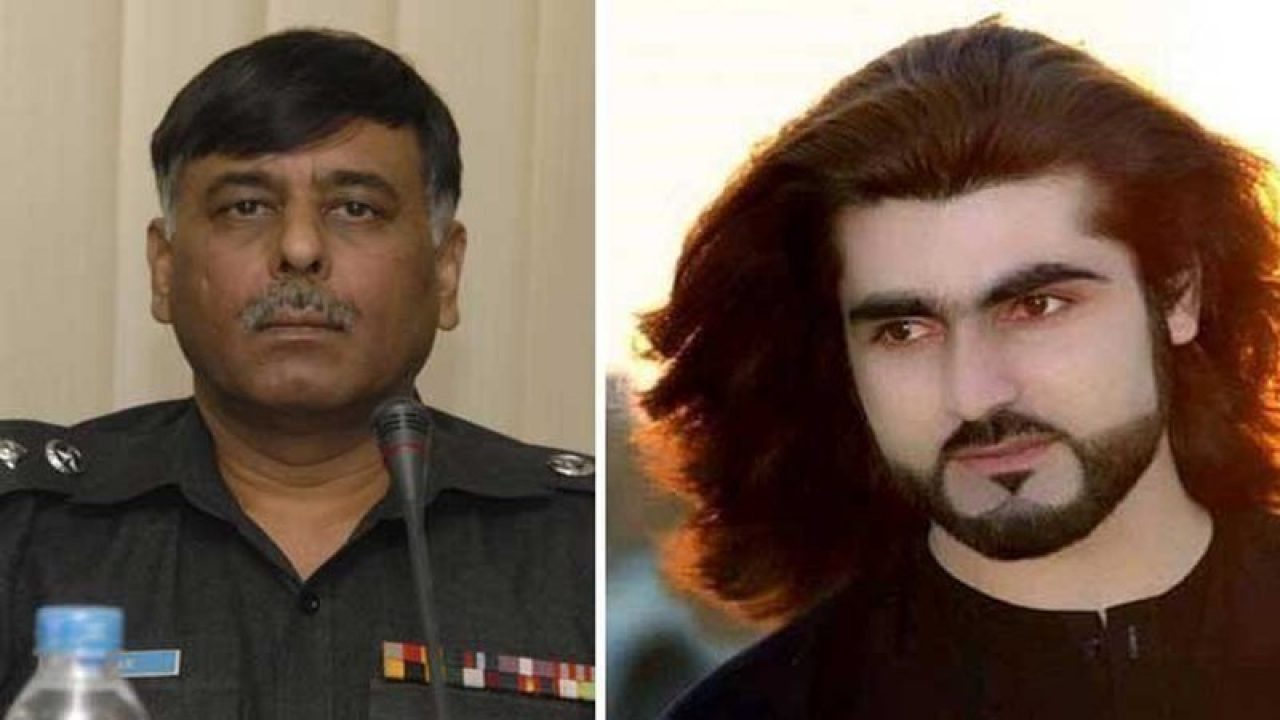
    The Sindh government is helping former Malir SSP Rao Anwar to get a clean chit in the Naqeebullah Mehsud murder case by pressurising the witnesses, alleged Naqeeb’s brother Alam Sher.

    In a press conference alongside his attorney Jibran Nasir, the younger brother alleged that the witnesses were turning hostile at the behest of the Sindh government and the prosecution.

    “The case was registered on behalf of the state, not from the family and if the charges were not proved in the court, the state will lose,” said the attorney.

    Jibran also criticised the National Accountability Bureau (NAB) for ignoring an application filed by the family of Naqib to look into the assets of Rao Anwar. “The US and UK have frozen the assets of Anwar besides imposing travel restrictions on him due to human rights violations, but still NAB has refused to investigate the former police officer,” he added.

    Instead of being detained in a jail, he was confined for a short time in the comfort of his own home and given the protocol of a federal minister, Jibran said. If top politicians, like Shehbaz Sharif, Maryam Nawaz and Asif Ali Zardari, could be sent to jail then why can’t they send Anwar to prison, he asked.

    On January 13, 2019, Mehsud and three others were killed in a fake encounter carried out by a police team headed by then Malir SSP Anwar in Karachi. On January 17, his body was handed over to his relatives at the Chhipa Welfare Association morgue in the metropolis.

    The fake encounter had sparked countrywide protests against extrajudicial killings in the country and to bring Anwar to justice.

    Subsequently, the former SSP and around 20 of his subordinates were charged with killing Naqeebullah. In March 2019, an anti-terrorism court (ATC) had framed charges on Anwar and others for the alleged murder of Naqeebullah and implicating him in bogus cases.

    In Dec 2019, On International Human Rights’ Day, Anwar was also blacklisted by the United States for engaging in “serious human rights abuse” by carrying out alleged fake police ‘encounters’ in which scores of individuals including Naqeebullah Mehsud were killed.

  • Former general replaces career diplomat as ambassador to Saudi Arabia

    Former general replaces career diplomat as ambassador to Saudi Arabia

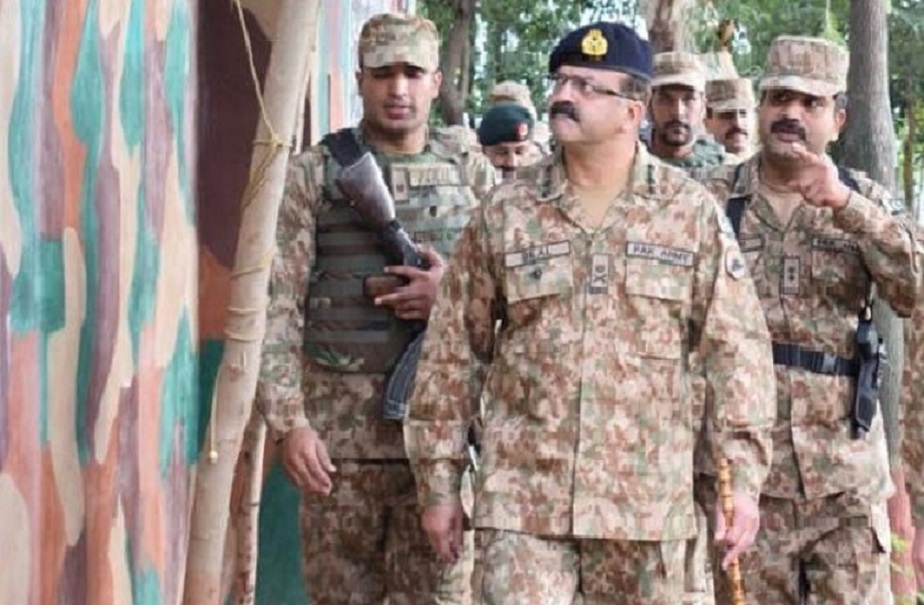
    The Ministry of Foreign Affairs has appointed Lt Gen (r) Bilal Akbar as Pakistan’s ambassador to Saudi Arabia, removing Raja Ali Ejaz, a career diplomat.

    The outgoing Ejaz, who was on his first ambassadorial posting, had been given the assignment around two years ago.

    The latest change has brought Islamabad at par with Riyadh in one term that now both countries have envoys with a military background in each other’s capitals. 

    The Saudi ambassador in Pakistan Nawaf bin Saeed Al-Maliki was from the Royal Saudi Navy and retired as Rear Admiral. He had been appointed as the defence attaché of the Saudi mission in Islamabad and later elevated as the ambassador here four years ago.

    The sudden shuffling by Pakistan is being seen as significant amid reportedly weakening bilateral ties at a time when India’s relationship with the Kingdom is improving. 

    Amid the present scenario, key task of Lt Gen (r) Bilal Akbar, who retired as Pakistan Ordnance Factories chairman, would be saving the ties from further deterioration. 

    The former three-star rank lieutenant general also served as X Corps Rawalpindi commander, chief of general staff (CGS) at GHQ, Pakistan Rangers Sindh director general and the general officer commanding (GOC) of the 11th Infantry Division Lahore.

  • EXPLAINER: How NAB cost Pakistan billions over Broadsheet deal

    EXPLAINER: How NAB cost Pakistan billions over Broadsheet deal

    Pakistan paid Broadsheet, an asset recovery firm registered in the Isle of Man, Rs4.65bn after the National Accountability Bureau (NAB) broke an agreement with it three years after it was signed in 2000.

    After its formation in 1999 by then military dictator Pervez Musharraf, NAB approached Broadsheet to recover overseas assets of at least 200 Pakistanis, particularly the Sharif family. However, the deal fell through in 2003, with NAB saying that the recovery firm had stopped investigations; Broadsheet had accused NAB of hampering its probe to locate the offshore assets of Pakistanis.

    The broken accord was the start of an 18-year-long legal battle between the two parties. In 2008, NAB reached a settlement with a former Broadcast LLC official, Jerry James. The bureau paid at least $1.5million to James to settle the case even though the company was being liquidated and the liquidator was not a party to the deal.

    Though NAB claimed it had reached a settlement with Broadsheet, the firm said James had nothing to do with it at the time of the signing of the agreement. The money paid to James didn’t reach the original Broadsheet, its CEO had claimed and filed a case in a UK court for arbitration in the matter in 2012.

    The UK judge decided the matter in favour of Broadsheet, the claimant. It said Broadsheet LLC was entitled to recover damages for the wrongful repudiation of the ARA [asset recovery agreement]. The award declared that James had no authority from the claimant after March 2005 to enter into a settlement agreement with NAB. The judge said the deal was “wrongful and deliberate to financially hurt the original Broadsheet LLC, Isle of Man”.

    The court held that while negotiating with the fraudulent company, NAB representative Ahmer Bilal Soofi was aware that the original company was in liquidation, and he signed the wrongful deal knowingly.

    Finally, the court ordered NAB to pay $21.58m plus interest to Broadsheet LLC in damages over the breach of the agreement. Due to interest rates, the award amount reached $28.7 million by December 2020.

    According to the judgement, a total of $21.58 million has to be recovered and given to Broadsheet of which $1.5 million had to be recovered from the Sharifs on account of Avenfield flats, $19 million for other assets ($802m worth assets are being attributed to Sharifs); $48,760 from Schon Group; $25,000 from Sultan Lakhani; $85,600 from Fauzi Kazmi; $381,600 from Lt Gen (r) Zahid Ali Akbar; Aftab Sherpao $210,000; and $180,000 from Jamil Ansari.

    WHY DID NAB PAY $1.5m MONEY TO JAMES?

    NAB deliberately tried to cheat Broadsheet LLC by paying $1.5m to James.

    According to the court, NAB made two payments to Jerry James, by then the unauthorized person who had incorporated another Colorado company which he had also named “Broadsheet LLC”. The actual company was Broadsheet LLC, an Isle of Man entity. The arbitration court said NAB tried to financially defraud the original Broadsheet LLC by paying James instead of the original company.

    Broadsheet had been in the process of liquidation since 2005. And Moussavi, who now owns the company, offered to rescue it in return for a 50 per cent share from the settlement and James agreed. He, however, went behind Moussavi’s back and made a deal with NAB by registering another company named Broadsheet LLC — based in Colorado. The deal was declared shady by the court that asked NAB to pay damages to the original Broadsheet.