Category: National

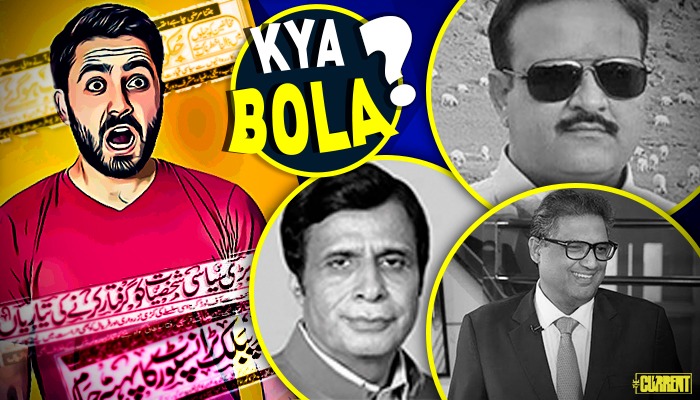
  • KYA BOLA? (Aug 6): ‘Martial law se behtar Angrezo ki hukoomat hai’ to ‘substandard’ construction work of Peshawar BRT

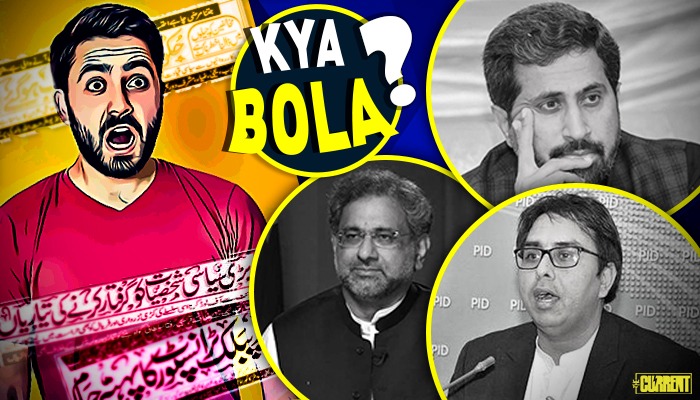
    KYA BOLA? (Aug 6): ‘Martial law se behtar Angrezo ki hukoomat hai’ to ‘substandard’ construction work of Peshawar BRT

    Following are some snippets that stood out from Urdu newspapers on August 6, 2020, which The Current takes no responsibility for.


    ‘Martial Law Se Behtar Angrezo Ki Hukoomat Hai’

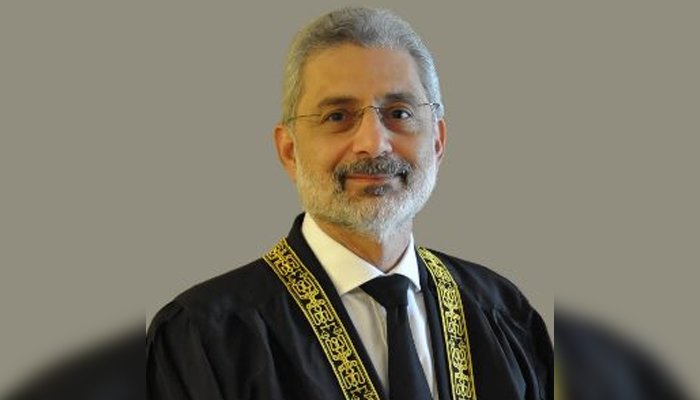
    It has been reported by Daily Dunya that Supreme Court’s Justice Qazi Faez Isa, who is known for being a critic of certain quarters, has taken notice of irregularities in the National Accountability Bureau (NAB) and remarked “Marshal law se behtar hai hukoomat Angrezo ko de di jaaye.”


    Kashmir Aik Namukamal Agenda Hai’

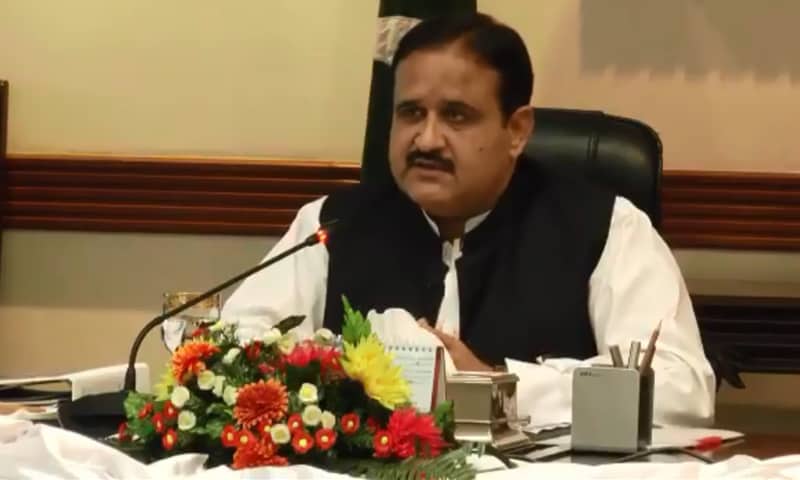
    Daily Jang has quoted Punjab Chief Minister (CM) Sardar Usman Buzdar as saying “Kashmir, Taqseeme Hind ka namukammal agenda hai. Aaj maqbooza Kashmir Pakistan k naqshay mein shaamil hua hai, kal yeh Pakistan ka hissa hoga.”

    Buzdar was referring to Pakistan’s new political map approved by Prime Minister (PM) Imran Khan on Tuesday. It shows the troubled valley as a part of Pakistan.


    ‘Substandard’ Construction Work of Peshawar BRT

    According to Daily Dunya, Asian Development Bank (ADB), which is assisting the construction of Peshawar Bus Rapid Transit (BRT) project, has identified “substandard” construction work.

    The Peshawar BRT is rather infamous for its incompletion as the authorities concerned have failed to meet deadlines time and again. The government has now issued yet another deadline for completion of the much-delayed project, the cost of which has also swollen over the years.

  • VIDEO: FM Qureshi says Pakistan ready to ‘ditch’ Saudi Arabia for Kashmir’s sake

    In what appears to be a major foreign policy shift for Pakistan, Foreign Minister Shah Mahmood Qureshi has asked Saudi Arabia-led Organisation of Islamic Cooperation (OIC) to stop dragging feet on the convening of a meeting of its Council of Foreign Ministers (CFM) on the Kashmir issue.

    “I am once again respectfully telling OIC that a meeting of the CFM is our expectation. If you cannot convene it, then I’ll be compelled to ask Prime Minister (PM) Imran Khan to call a meeting of the Islamic countries that are ready to stand with us on the issue of Kashmir and support the oppressed Kashmiris,” he said while speaking to a private media outlet.

    When asked if Pakistan will “move forward” with or without Saudi Arabia, the foreign minister said, “with or without…”. In response to another question, he said Pakistan could not wait any further.

    WATCH VIDEO:

    According to Dawn, Pakistan has been pushing for the foreign ministers’ meeting of the 57-member bloc of Muslim countries, which is the second-largest intergovernmental body after the United Nations (UN), since India annexed occupied Kashmir in August 2019.

    Qureshi had at an earlier presser explained the importance of CFM for Pakistan. He had then said that it was needed to send a clear message from Ummah on the Kashmir issue.

    Although there has been a meeting of the contact group on Kashmir on the sidelines of UN General Assembly session in New York since last August and OIC’s Independent Permanent Human Rights Commission has made statements on the rights abuses in the occupied valley, but no progress could be made towards the CFM meeting.

    A major reason behind the failure to call the foreign ministers’ meeting has been Saudi Arabia’s reluctance to accept Pakistan’s request for one specifically on Kashmir. Riyadh’s support is crucial for any move at the OIC, which is dominated by Saudi Arabia and other Arab countries.

    Qureshi said Pakistan skipped Kuala Lumpur Summit last December on Saudi request and now Pakistani Muslims, who are ready to lay down their lives for the Kingdom, are demanding of Riyadh to “show leadership on the issue”.

    “We have our own sensitivities. You have to realise this. Gulf countries should understand this,” the foreign minister said, adding that he could no more indulge in diplomatic niceties.

    “We cannot stay silent anymore on the sufferings of the Kashmiris,” he said.

  • KYA BOLA? (Aug 5): ‘Hukoomat k sath ab kabhi nahi baithoonga’ to Fayazul Hasan Chohan’s cameo in Independence Day song

    KYA BOLA? (Aug 5): ‘Hukoomat k sath ab kabhi nahi baithoonga’ to Fayazul Hasan Chohan’s cameo in Independence Day song

    Following are some snippets that stood out from Urdu newspapers on August 5, 2020, which The Current takes no responsibility for.


    ‘Hukoomat K Sath Ab Kabhi Nahi Baithoonga’

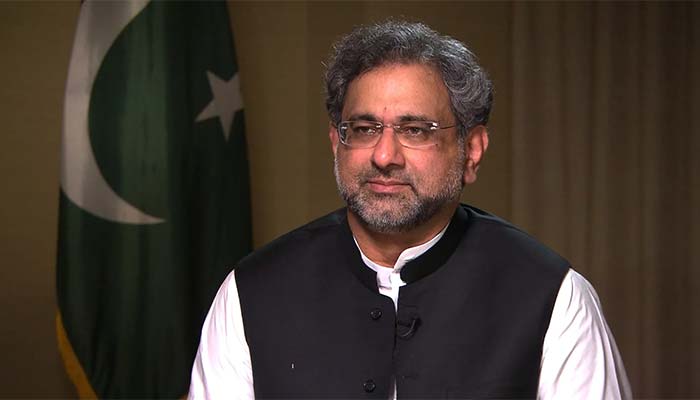
    It has been reported by Daily Jang that Pakistan Muslim League-Nawaz (PML-N) leader and former prime minister (PM) Shahid Khaqan Abbasi has distanced himself and his party from any proposals to amend National Accountability Bureau (NAB) laws, saying, “Hukoomat k sath ab kabhi nahi baithoonga. Hukoomat jhoot bolnay pr awaam se maafi maangay. Jahaan wazire azam aur wuzra assembly k floor pr jhoot boltay hon, unn se kya baat karein?”


    PPP Ki 12 Saala Karkardagi

    Daily Jang has quoted Special Assistant to Prime Minister on Political Communication Dr Shahbaz Gill as saying, “People’s Party walay ehal hotay to NDMA ko Karachi naa bhejna parrta… jin ki 12 saala karkardagi ka pol chand millimeter baarish ne khol dia, unn se bughz kaisa?


    Fayazul Hasan Chohan’s Cameo

    According to Daily Jang, Punjab Information Minister Fayazul Hasan Chohan will be making a cameo appearance in the Independence Day song to be released later this month ahead of August 14 celebrations.

    Chohan, a popular member of the Punjab government, is rather infamous for his “reckless” statements, one of which was against members of the Hindu community and had cost him his job.

  • Pakistan’s fast bowling culture: Even the PM is a paceman

    To understand the culture of fast bowling in Pakistan, look no further than Imran Khan — once a feared quick, and now the country’s prime minister.

    Not all of Pakistan’s pacemen will fly so high, but Prime Minister Imran’s rise underlines a tradition where speed is king, and the blistering pace is essential for any team.

    As if to reinforce the point, Pakistan have eight quicks in their 20-man squad for the three-Test series against England, starting on Wednesday, ready to unleash their trademark pace and swing.

    They carry the baton passed by predecessors such as Khan, left-arm great Wasim Akram and his destructive partner Waqar Younis, the unassuming Aaqib Javed, and Shoaib Akhtar, the feared “Rawalpindi Express” who is considered the fastest bowler in history.

    The current generation includes the precocious Naseem Shah, still only 17, Shaheen Shah Afridi and Wahab Riaz, and the accurate Mohammad Abbas.

    The production line is so consistent that when one player goes, another is ready to take over — as seen in 2010 when Mohammad Amir and Mohammad Asif, banned for spot-fixing, were replaced by Junaid Khan, Riaz, Mohammad Irfan, Ehsan Adil and Rahat Ali.

    Even Amir’s decision to retire from Tests at just 27 did not slow Pakistan, as Shaheen became the spearhead and Naseem announced himself with a stunning Test hat-trick.

    But the steady emergence of quicks — left-armers, right-armers, even one who is ambidextrous — raises an obvious question: how does Pakistan keep doing it?

    Former fast bowler Sarfaraz Nawaz, regarded as the pioneer of reverse swing in the 1970s, said the factors included Muslim Pakistan’s meaty diet — unlike mainly vegetarian India, once known for its spinners.

    “We are a nation obsessed with fast bowling,” Nawaz told AFP. “We eat meat which strengthens the body, we love wickets clattering and the batsman shivering so it’s natural that we produce fast bowlers.”

    Nawaz passed on his reverse-swing skills to Khan under whose tutelage Wasim and Waqar became “The Two Ws”, a menacing partnership in the 1980s and 1990s.

    Wasim said he followed Imran’s legacy, and that pace bowling matches the Pakistani mentality.

    “I think it’s the culture [to become a fast bowler], especially this generation of Waqar and I and then Akhtar, we all had a role model in Khan,” he said.

    “Generally, when we talk about cricket it’s mostly about the fast bowlers, they get batsmen caught napping. We are aggressive people in nature and that’s what helps.”

    Wasim often holds camps to train emerging fast bowlers, swelling Pakistan’s ranks.

    “When I came, I always wanted to be a fast bowler and then a crop of fast bowlers came, and now we have Naseem, Shaheen, Mohammad Hasnain and Musa Khan who bowl at 140-150 kph (87-93 mph),” he said.

    However, perhaps the most decisive factor is Pakistan’s legion of tape-ball players, who play in parking lots and disused patches of land using tennis balls wrapped in electrical tape to make them heavier, putting the onus on pace rather than spin.

    Lahore Qalandars, a Pakistan Super League (PSL) franchise which has been at the forefront of nurturing fast bowlers in recent years, received more than 350,000 applicants for their talent-hunt programme — nearly half of them tape-ball players, including the ambidextrous pace marvel Yasir Jan.

    “We give them a platform in our development programme and send them to Australia to hone their talent,” said head coach Aaqib Javed.

    According to Wasim, fast-bowling is so deeply ingrained that Pakistan’s stocks will never run out.

    “Many natural resources will dry up, but not Pakistan bowling’s reservoirs,” he said. “Our fast bowling future is secure as they follow footsteps and run-ups.”

    The article originally appeared on AFP.

  • KYA BOLA? (Aug 4): ‘Wazire Aala Pervaiz Elahi’ to ‘Murad Ali Shah ko Usman Buzdar se seekhna chaheye’

    KYA BOLA? (Aug 4): ‘Wazire Aala Pervaiz Elahi’ to ‘Murad Ali Shah ko Usman Buzdar se seekhna chaheye’

    Following are some snippets that stood out from Urdu newspapers on August 4, 2020, which The Current takes no responsibility for.


    ‘Wazire Aala Pervaiz Elahi’

    It has been reported by Daily Jang that the participants of a meeting chaired by Pakistan Muslim League (PML) chief Chaudhry Shujaat Hussain, believe, ” Agar Usman Buzdar ko hataya gya to Pervaiz Elahi ko umeedwar hona chaheye.”


    Imran Khan Ki Walida Ka Khat

    Senior journalist and analyst Suhail Warraich, in his column for Daily Jang, has cited a fictitious letter by the mother of Prime Minister Imran Khan, wherein she told her son, “Tumharay siyaasi hareefon k ghar khushiyan manai jaa rahi hain. Dono khandaan khush hain k Imran Khan ne 2 saal se koi siyaasat nahi ki.”


    ‘Murad Ali Shah Ko Usman Buzdar Se Seekhna Chaheye’

    Daily Dunya has quoted Punjab Information Minister Fayazul Hasan Chohan as saying, “Baat baat pr tanqeed karnay walay Bilawal aur Murad Ali Shah, Usman Buzdar sr governance k gurr seekhein. Safai k behtareen intezaamat pr hazaaro logo ne Usman Buzdar aur Punjab intezaamia ki tareef ki.”

  • Information Ministry gets six top officials from PTI’s digital media cell, reports claim

    Information Ministry gets six top officials from PTI’s digital media cell, reports claim

    Six members of the ruling Pakistan Tehreek-e-Insaf’s (PTI) digital media cell have been appointed at top positions in the Ministry of Information & Broadcasting, a notification issued on Monday by the Establishment Division confirmed.

    According to the Establishment Division’s notification, one officer would be appointed at the Management Pay-II (MP-II) pay scale and five at the MP-III level. The MP-II and MP-III appointments would be equivalent to Grade-21 and Grade-20 civil servant jobs, it added.

    Imran Haider Ghazali was hired at the MP-II scale, whereas Shahbaz Khan, Muhammad Muzammil Hassan, Usman bin Zaheer, Naeem Ahmed Yasin, and Syeda Dhanak Hashmi at the MP-III scale.

    According to reports, following months of candidate assessments and interviews, Imran Ghazali was appointed the general manager of the Digital Media Wing (DMW).

    This March, the federal cabinet approved a supplementary grant of Rs42.791 million ($256,000) for the creation of a DMW, which aims to ostensibly counter fake news that damages the federal government’s repute among social media users. The DMW is meant to help the government formulate its policies on digital media and be helpful in countering the criticism the government is facing due to inflation and high electricity tariff.

    Sources told Profit that the DMW will work as a strategic unit of the Government of Pakistan to provide results-oriented media content, digital public relations, and will give authentic government updates on digital media. As the general manager of the DMW, Ghazali has been tasked with leading a data-driven, growth-oriented team to further the interests of the State of Pakistan locally and internationally.

    “DMW will also be responsible for curating the digital content for official social media assets of the government,” said a source. “It will also be organising and verifying social media accounts of all federal government ministries and will be enhancing their digital media presence.”

    As the founding member of the PTI’s social media team, Ghazali is credited with creating the online presence of Prime Minister Imran Khan and led social media for the political party during the 2013 elections, while working with Starcom Pakistan. The Publicis agency went on to lead the 2018 media strategy that won PTI the elections on a $4.7 million media budget.

    According to an Information Ministry statement in response to media reports that the appointments had been approved without any competition, the recruitment was done according to a procedure approved by Prime Minister Imran Khan for its ‘Digital Media Wing’ back in April 2020. The latest job vacancies, the ministry added, were also advertised in the newspapers as per law.

    It said a total of 76 applications were received for the position of ‘General Manager’, whereas 67 for the ‘Digital Media Consultant’ vacancy. All in all, some 461 people applied to the jobs across seven MP scales, it added.

    The recruitment in the digital media wing were made by a special selection board after it conducted interviews, the ministry noted, adding that a summary of the selected individuals was approved by the Prime Minister on July 20.

    Those who have been hired would be paid Rs75,000 a month, it said. The candidates for the remaining 16 posts had been shortlisted, it added further.

    Meanwhile, Focal Person to PM on Digital Media Dr Arsla Khalid said all successful candidates were top names from digital media industry.

    He went on to say that no other successful candidate than Imran Ghazali was affiliated with the PTI, and even Ghazali, like others was a professional.

    According to sources, Imran Ghazali has 14 years of experience in the industry. He is also one of the pioneers of social media campaigning in Pakistan with over 120,000 followers on his personal accounts. He has been speaking as a social media strategist at various public events and has been consulting various global organisations on digital media.

  • Shaukat Khanum CEO made special assistant to PM Imran on health

    Shaukat Khanum CEO made special assistant to PM Imran on health

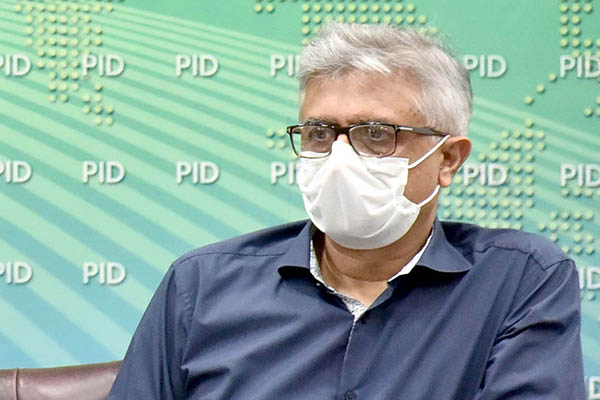
    Prime Minister (PM) Imran Khan has appointed Dr Faisal Sultan, the chief executive officer (CEO) of Shaukat Khanum Memorial Cancer Hospital & Research Centre, as his special assistant on national health services, regulations and coordination, a statement issued by his office said on Monday.

    “Dr Faisal Sultan shall hold status of federal minister,” read a tweet by the government.

    Dr Sultan, who also serves as the PM’s focal person on COVID-19, will replace Dr Zafar Mirza, who had resigned last week.

    A consultant physician on medicine and infectious diseases, Dr Sultan completed his graduation from Lahore’s King Edward Medical College University (KEMU) in 1987. He also holds the postgraduate degrees of Diplomate American Board of Internal Medicine (1992) and Diplomate American Board of Infectious Disease (1994).

    Reacting to his successor’s appointment, Dr Mirza said: “I am very pleased about the appointment of Dr Faisal Sultan as SAPM health. As [a] federal minister he will be able to make decisions which [are] important.”

    Dr Mirza, who reports claimed had been told to resign from office, termed Dr Sultan “a capable professional with a good worldview” and a good friend, wishing him success in his new role.

  • Turkey with Pakistan on Kashmir: president

    Turkey with Pakistan on Kashmir: president

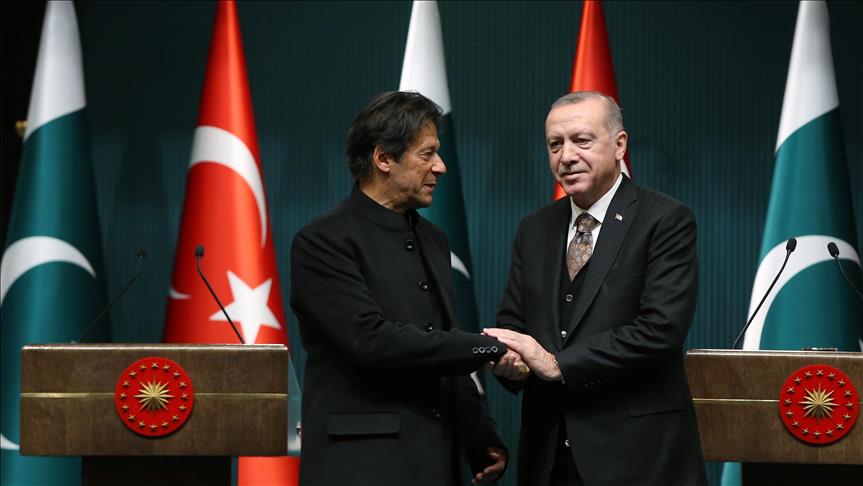
    President Recep Tayyip Erdogan has assured Turkey’s support for Pakistan’s stance on the Kashmir dispute, President Dr Arif Alvi has said.

    According to a statement by the President’s Office, the two counterparts held a telephonic conversation in which they “exchanged Eidul Azha greetings” besides discussing the Kashmir issue and the coronavirus pandemic.

    President Alvi said that occupation regimes were continuing their “extreme repression” in Palestine and Indian occupied Kashmir even during the coronavirus pandemic.

    “[The] Turkish president assured that his country would continue to support Pakistan’s stance on Kashmir as both brotherly countries have similar goals.”

    Erdogan also invited Alvi to visit Turkey after the end of the pandemic.

    While congratulating Erdogan on the reopening of Istanbul’s historical Hagia Sophia as a mosque after nearly nine decades, President Alvi “reiterated Pakistan’s steadfast support to Turkey on its legitimate interests and assured that Pakistan will continue its policy to provide Turkey with all possible support”.

    The Turkish leader also called Prime Minister Imran Khan and the two leaders shared their views on a range of issues.

    The prime minister too felicitated Erdogan on reopening of the Hagia Sophia for prayers and told him that “millions of Pakistanis watched it live on television”, according to a tweet by the Prime Minister’s Office (PMO).

    During their conversation, Prime Minister Imran recalled Erdogan’s visit to Pakistan for the sixth session of the High-Level Strategic Cooperation Council (HLSCC) in February and reaffirmed Pakistan’s commitment to “further fortify bilateral cooperation” in all areas.

    “Pakistan deeply appreciates Turkey’s steadfast support for the just cause of Kashmir, which President Erdogan reaffirmed during his address to the joint session of parliament in February 2020,” the PMO said.

    Erdogan’s contact with the Pakistani leadership comes days before the world marks one year since India revoked the semi-autonomous status of occupied Kashmir and split it into two federal territories, causing further determination in New Delhi’s ties with Islamabad.

  • PIA cabin crew to be tested for alcohol consumption after smoking in the cockpit

    PIA cabin crew to be tested for alcohol consumption after smoking in the cockpit

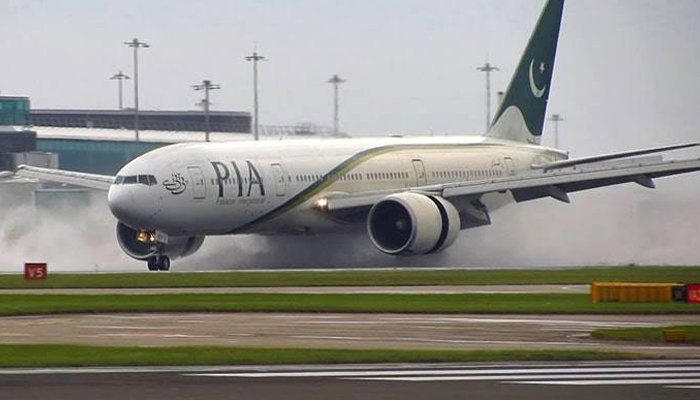
    After the Civil Aviation Authority (CAA) noticed smoking in the cockpit and the cabin, they issued directives that made it mandatory that the cabin crew of Pakistan International Airlines (PIA) take the breathalyser test for alcohol consumption. They also directed that the non-smoking rule on planes be followed in the whole plane.

    RELATED: New heights of friendship: Turkish Airlines to manage Pakistan’s fruit, vegetable exports after PIA ban

    In the notice, which was issued by the PIA‘s medical division and comes into immediate effect, all cabin crew must undergo medical check-ups before boarding flights.

    RELATED: Six-star PIA downgraded to one star on fake licences issue

    The breathalyser test checks for how much alcohol a person has in their blood and based on the results, the medical division will decide whether they can board the flight. The CAA had already made it mandatory that pilots and cockpit crew be tested for alcohol levels, but now the air hosts will be tested as well.

  • The Current Data: Province-wise breakdown of COVID-19 and how the numbers have dropped

    The Current Data: Province-wise breakdown of COVID-19 and how the numbers have dropped

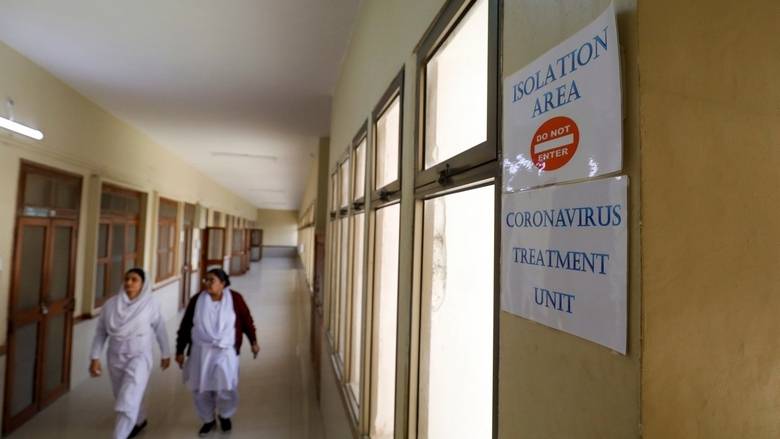
    Before stepping down as the special assistant to Prime Minister (PM) Imran Khan on health, Dr Zafar Mirza, who spearheaded Pakistan’s fight against coronavirus, said that all estimates made by international organisations regarding COVID-19 in Pakistan proved to be wrong and the world was acknowledging the government’s efforts as well as the decline in infections in Pakistan. 

    On July 27, he shared the “good news” that the country had recorded its lowest number of deaths due to COVID-19 within the past three months when the virus is said to have peaked. On the same day, the premier said Pakistan was “one of the few countries that had overcome the coronavirus challenge” and stressed the need for people to continue taking precautionary measures over Eid holidays and during Muharram.

    By the filing of this report, the total number of coronavirus cases in the country stood at 276,287. The deadly virus had claimed 5,892 lives while the number of recovered COVID-19 patients stood at 244,883.

    The number of COVID-19 cases reported in worst-hit Sindh is 119,398 while the death toll from the virus is 2,172. Across the province, 108,989 patients have recovered and a total number of 720,230 tests have been conducted.

    Meanwhile, the number of cases in Pakistan’s most populous province, Punjab, which had briefly beaten Sindh to clinch the “worst-hit” tag from late April to late May, is 92,452. As many as 2,133 people have been so far died due to COVID-19 in the province while 82,512 people have recovered. The number of tests conducted in the province is 697,989.

    There are 33,724 patients of COVID-19 in Khyber Pakhtunkhwa (KP), of which 1,186 have lost their lives and 27,724 have recovered. A total of 208,869 people were tested.

    Islamabad, the federal capital, remains the fourth worst-hit territory where the virus was detected in 14,963 people of the total 177,467 who underwent COVID-19 testing. Out of the total number of patients, 165 people died and 12,377 recovered.

    The number of coronavirus cases in Balochistan is 11,654 and the death toll stands at 136. The number of recoveries is 10,080 while the number of tests is 56,919.

    Azad Jammu & Kashmir (AJK) has 2,055 cases, 50 people have died there and 1,543 people have recovered. Meanwhile, the number of patients, who tested positive of 17,561 total tests conducted in Gilgit, is 2,042. As many as 1,658 have recovered and at least 50 have lost their lives.

    While the government is boasting about its smart lockdown policy that it says “has led to the significant drop in coronavirus cases with little impact on the economy”, it is worth mentioning that experts believe lower testing besides a massive shift in behaviours could also be the reason behind the drop. They, however, fear a second and deadlier wave that can wreak havoc if people flout social distancing guidelines during or after Eid.