Category: National

  • VIDEO: Imran Khan finds aloo gosht at Panahgah ‘better than PM House’

    VIDEO: Imran Khan finds aloo gosht at Panahgah ‘better than PM House’

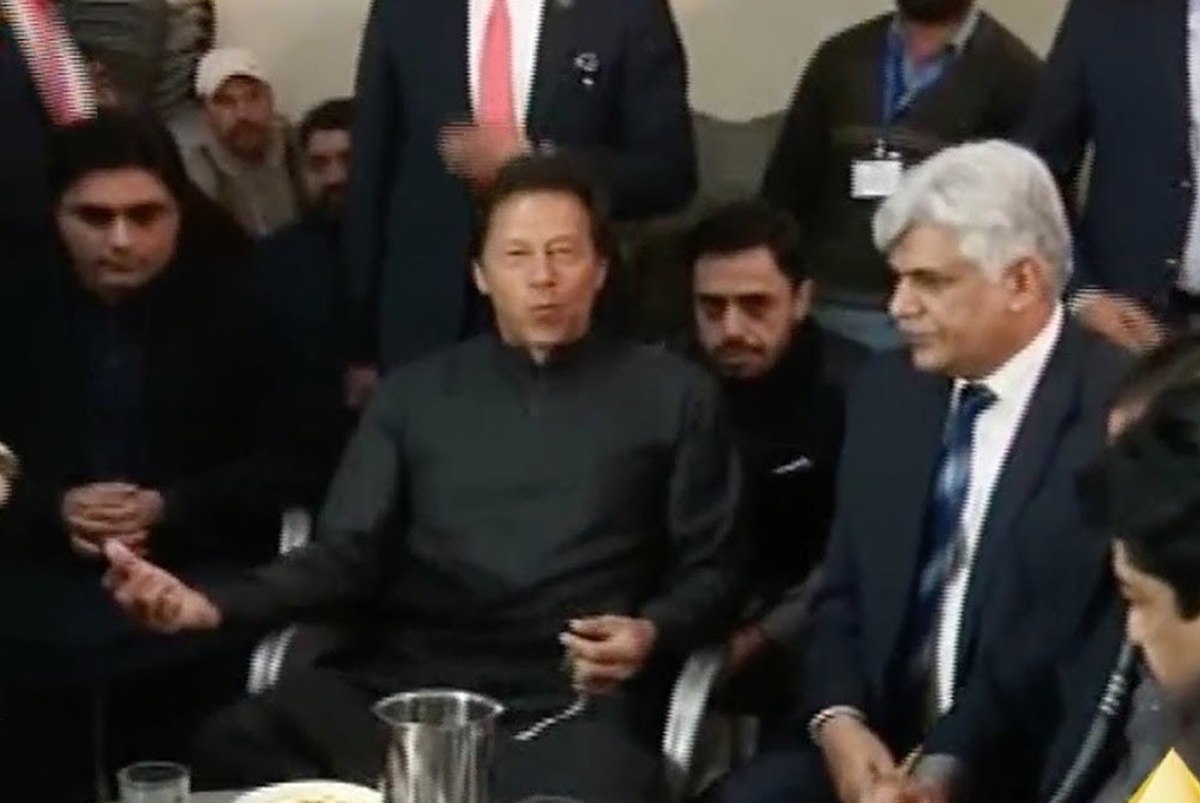
    Prime Minister (PM) Imran Khan and Federal Minister for Planning and Special Initiatives Asad Umar have found the aloo gosht [potato-meat curry] served to them at Faisalabad Panahgah [shelter home] “even better than the one at PM House in Islamabad”.

    This was revealed by Umar, who on Friday tweeted:

    “Got a chance to dine at the shelter home in Faisalabad during our visit. Both I and the prime minister really liked aloo gosht. The premier said it was [even] better than the one he gets to have at PM House,” he wrote.

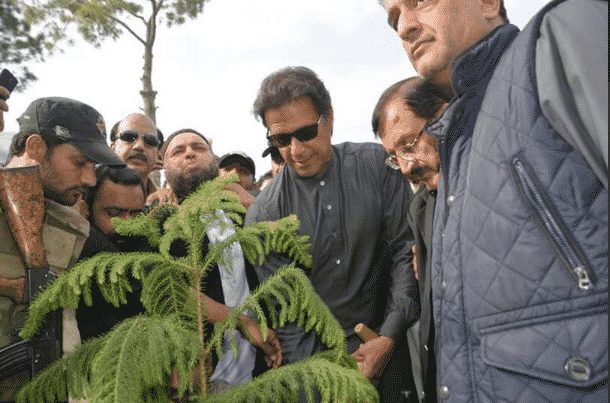
    The tweet came hours after PM Imran and a few members of his team reached Faisalabad to inaugurate the first shelter home in the city, which has been constructed over a four kanal area as part of the government’s flagship Panahgah initiative.

    WATCH VIDEO:

    Accompanied by Punjab Chief Minister (CM) Usman Buzdar, the premier toured the shelter home to review the facilities being provided by the provincial government to homeless people, and received a briefing by the administration.

    Last week, he had directed the chief ministers of Punjab and Khyber Pakhtunkhwa (KP) to take steps to provide temporary shelters and food to every person in their respective province in the wake of harsh cold weather.

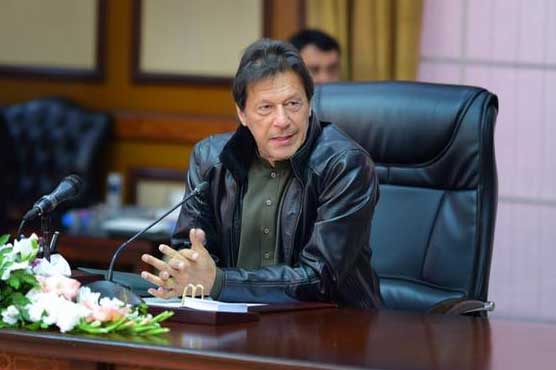
    “Given the extremely cold weather conditions, I have asked CMs of Punjab and KP to ensure that no person is left out without a shelter; and their administrations must take immediate action to provide temporary shelters plus food for those who cannot be accommodated in existing Panah­gahs (shelter homes),” the PM had tweeted.

    Earlier on Friday, the premier also broke ground on the state-of-the-art Allama Iqbal Industrial City that has been planned over an area of 4,000 acres.

    The industrial city is a mega project of the Special Economic Zone of Faisalabad Industrial Estate Development and Management Company (FIEDMC) under the China-Pakistan Economic Corridor (CPEC).

  • Imran’s ex-aide called out for showing up at private New Year’s party uninvited

    Imran’s ex-aide called out for showing up at private New Year’s party uninvited

    Former foreign media head of the ruling Pakistan Tehreek-e-Insaf (PTI) and a close aide of Prime Minister (PM) Imran Khan, Anila Khawaja, has been called out for showing up at a private New Year’s Eve party “without being invited to it”.

    Khawaja was called out by the host, Islamabad-based American blogger and former goodwill ambassador to Pakistan, Cynthia D Ritchie, after she trained guns at the latter for being “a foreigner who broke traditions of good grace and hospitality, and behaved rudely”.

    “When will we learn to stand together and be respected on r [sic] own soil let alone abroad,” Khawaja tweeted.

    Reacting to Khawaja’s claim, Ritchie didn’t go easy on her and pointed out how the ex-PTI foreign media head hadn’t even been invited to the party.

    “I know who you really are as a person: you’re threatening to write a tell-all about IK [Imran Khan] if certain things don’t go your way,” she said in a subsequent tweet.

    The tweet was followed by:

    While Cynthia has now also tweeted about how “fabulous” her New Year’s celebration was, Khawaja is yet to react to the developments.

    Anila Khawaja, who had been appointed as part of PTI’s decision to extend the media team of the party, started supporting Imran Khan’s politics when only a couple of people supported his political cause.

    She was educated, bred and born in West London’s Ealing area.

    Khawaja received her post graduate degree in education from Brunel University and became a British qualified teacher. She took a year out in 2005 to help out the victims in Pakistan during its worst natural disaster, leaving her family and a well-paid job behind.

    She got involved in relief work during the 2005 earthquake that hit Pakistan, causing the death of more than 70,000 people. She worked with Imran Khan Earthquake Relief Fund (IKERF) for a year when Khan’s party was turned into an NGO for a year.

    She was all set to return to London but was approached by the British High Commission to help start a British school in Islamabad.

    It was around 2008 that she formally joined the PTI. Soon after joining the party, she was given the responsibility to deal with international media – a role she successfully performed till last year when there were shuffles within the party.

  • Hospital attack case: Court rejects bail of Imran’s nephew for arriving late

    Hospital attack case: Court rejects bail of Imran’s nephew for arriving late

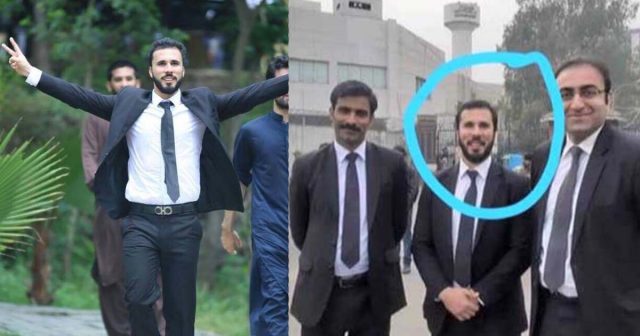
    An anti-terrorism court (ATC) on Thursday rejected the bail of Prime Minister (PM) Imran Khan’s nephew, Barrister Hassaan Khan Niazi, in the case pertaining to lawyers’ attack on Punjab Institute of Cardiology (PIC) in Lahore last month.

    According to ARY News, Niazi turned up late for the hearing, irked by which, ATC Judge Arshad Hussain Bhutta cancelled the former’s interim bail, regretting he showed up late despite being a lawyer.

    With Niazi then offering an unconditional apology and filing a new bail application, he and nine of his colleagues were granted bail until January 6.

    The bail was granted subject to submission of a surety bond worth Rs100,000.

    A group of more than 200 lawyers, who had an ongoing “tussle” with the doctors of the PIC, had stormed the hospital last month, vandalised property and damaged dozens of vehicles besides setting a police van on fire.

    At least 52 lawyers were arrested and dozens of others booked after the attack during which at least four patients lost their lives.

  • Indo-Pak war odds-on if soldiers are attacked in Kashmir again: report

    Indo-Pak war odds-on if soldiers are attacked in Kashmir again: report

    A transnational non-profit organisation, International Crisis Group, has warned that any militant attack on Indian forces in held Kashmir could set off an escalation between Pakistan and India, saying that pro-freedom militants were lying low in the troubled vallet, but they were still active.

    “India’s heavy-handed military operations in Kashmir over the past few years have inspired a new homegrown generation, whose ranks are likely to swell further after the latest repression,” read its report titled “10 conflicts to watch in 2020”.

    Indian fighter planes had violated Pakistani airspace after a pro-freedom militant attack that killed at least 40 paramilitary soldiers in Pulwama on February 19, 2019. In retaliation, Pakistan had shot down two Indian jets over Kashmir on Feb 27, and captured an Indian pilot as well. He, however, was released by Prime Minister (PM) Imran Khan’s government as a “gesture of peace”.

    The Crisis Group, which describes itself as “working to prevent wars and shape policies that will build a more peaceful world” , has warned that any Pulwama-like attack on Indian forces in Kashmir would precipitate Indian action against Pakistan.

    “In a worst-case scenario, the two nuclear-armed neighbours could stumble into war,” the report said.

    The Crisis Group asked New Delhi to lift the communication blackout and release political prisoners in the occupied valley, and asked Pakistan to take action against militants allegedly operating from its soil.

    It further urged the international community to push Pakistan and India for talks “before it is too late”.

  • VIDEO: ‘Mein ne jaan Allah ko deni hai’ haunts Afridi at National Assembly

    VIDEO: ‘Mein ne jaan Allah ko deni hai’ haunts Afridi at National Assembly

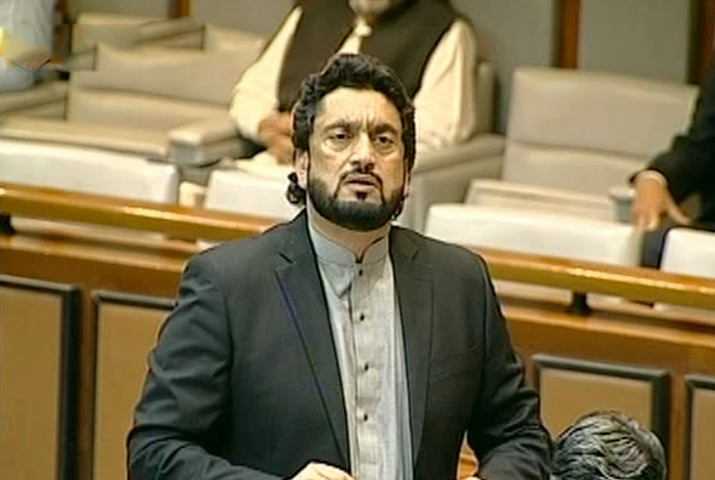
    The first session of the National Assembly on Wednesday was particularly harsh for Minister of State for Narcotics Control Shehryar Afridi as members of opposition parties trolled him for his statements regarding the case against Pakistan Muslim League-Nawaz (PML-N) leader Rana Sanaullah Khan, amid the government’s failure to present any “substantial evidence” before the court.

    According to media reports, opposition members repeatedly called Afridi a “liar” and mocked his oft repeated sentence “Mein ne jaan Allah ko deni hai” when the minister got up from his seat to respond to a query regarding the development work being undertaken in the erstwhile Federally Administered Tribal Areas (FATA).

    PML-N MNA Shahnawaz Ranjha said that Afridi was his friend but “inhon ne jaan Allah ko deni hai”.

    The opposition’s criticism angered Afridi who responded by saying that some people would give their soul to Allah like Hazrat Imam Hussain (AS), while some people would face God’s wrath like “Shimar and Firon”.

    He said that he would prove all allegations against him wrong if he was granted some time.

    WATCH VIDEO:

    Interestingly, no person from the government benches — neither the PTI nor any of its coalition partners — came to Afridi’s defence as the opposition poked fun at the minister.

    Later, while speaking on the development in erstwhile FATA, Afridi informed the House that the budget for the merged tribal districts of Khyber Pakhtunkhwa (KP) had been enhanced from Rs58 billion to Rs162bn.

    Afridi said that Rs62bn had been allocated to the KP government for the “recurrent and development budget” for erstwhile FATA.

    He said that Rs48bn had further been earmarked by the federal government according to its share of the National Finance Commission Award and released to KP, adding that the federal government had also released Rs10bn for the previous financial year 2018-19 to the KP government.

  • Billion Tree Tsunami: NAB detects Rs462 million loss to exchequer

    Billion Tree Tsunami: NAB detects Rs462 million loss to exchequer

    A loss of Rs462 million to the public exchequer has been detected by the National Accountability Bureau (NAB) as it conducted its initial inquiry into the Billion Tree Tsunami Project of the Pakistan Tehreek-e-Insaf (PTI), The News reported.

    NAB Chairman Justice (r) Javed Iqbal had authorised the inquiry against the flagship project in March last year.

    “The NAB regional office has recommended to the headquarters for upgrading the inquiry along with authorisation for separate investigations and six inquiries to unearth the mega scam in Khyber Pakhtunkhwa (KP),” the report said.

    Meanwhile, an officer was quoted as saying that NAB officials “had checked only 10 to 20 per cent of only one region out of three, which is the smallest region as compared to Hazara and Swat.

    In 2014, the then PTI-led KP government had started the Billion Tree Tsunami Project with Rs14.32 billion utilised for the project execution by the Forest Department.

    Allegations of ghost labour, misappropriation and embezzlement of daily wages, enclosures failure and payments against ghost plantations were received by the anti-graft body at its Peshawar bureau earlier.

    According to official documentsduring the initial inquiry based on proceedings conducted so far, a loss of Rs462 million has been detected. The NAB reports further disclosed that due to the shortfall in the hectare-wise plantation area in Dera Ismail Khan, a loss of Rs80.044 million has been detected.

    The regional NAB office has recommended the headquarters to convert the ongoing inquiry into a proper investigation to probe the case. It further recommended four investigations against the divisional forest officer and others regarding misuse of authority, embezzlement, corruption and corrupt practices.

    Furthermore, six additional inquiries were also recommended against the officers and officials of the KP Forest Department and others regarding embezzlement, misappropriation, corruption, and corrupt practices in procurement of seeds, polythene bags, machinery, vehicles and office equipment in forest region 1, 2 and 3.

    While NAB sources were quoted as confirming that the matter is under scrutiny as per law, media has reportedly been requested to avoid speculations in this regard.

  • Hareem Shah controversy: Govt issues statement, drags religion into it

    Hareem Shah controversy: Govt issues statement, drags religion into it

    The Pakistan Tehreek-e-Insaf (PTI) government has broken its silence over the controversial video clips released by TikTok celebrity Hareem Shah last week, saying that technology brings many facilities “but it can also lead one to god’s wrath”.

    In a video doing rounds over the internet, Special Assistant to the Prime Minister for Information and Broadcasting (SAPM) Firdous Ashiq Awan can be seen parrying a question posed by a senior reporter regarding the videos that showed PTI ministers “flirting” with the TikTok celebrity and a friend of hers.

    She said that the society was facing many challenges “like crumbling of the social fabric”, and added that technology brought many facilities, but it had “also become a way to earn the wrath of Allah”.

    “It paves the way to hell,” Awan said.

    WATCH VIDEO:

    CONTROVERSY:

    The videos — featuring Federal Minister for Railways Sheikh Rasheed Ahmed and Punjab Information Minister Fayazul Hasan Chohan — were released over the internet with the claim that Rasheed had “also sent Hareem inappropriate videos”.

    “What about all those naked videos you used to send me have you forgotten about them?” Hareem can be heard as saying to the federal minister in one of the videos of their telephonic conversation, following which Rasheed abruptly disconnected the call.

    While the videos were removed by Hareem, it wasn’t later that they went viral over the internet, drawing mixed reactions. Amid all the criticism facing the internet star, she on Tuesday was reported to have left the country and applied for Canadian citizenship.

  • ‘Smart performance’: Pakistan’s debt falls to 84.7pc of GDP

    ‘Smart performance’: Pakistan’s debt falls to 84.7pc of GDP

    Pakistan’s general government debt, including guarantees and the International Monetary Fund (IMF) loan, have declined to 84.7 per cent of the GDP, Dawn reported.

    According to details, a recently published IMF report has revealed that the decline in debts was a consequence of the government’s smart performance in reducing expenditures, registering primary budget surplus and increasing tax and non-tax revenues during the first five months of the current fiscal year.

    “In the first quarter of 2019-20, budget execution by the incumbent government improved considerably, registering a primary surplus of 0.6pc of GDP and an overall deficit of 0.6pc – about 1pc of GDP better than programmed,” the report added.

    It said the over-performance was driven by stronger than expected non-tax revenues, accompanied by double-digit growth in tax revenue net of refunds.

    At the same time, due to import compression, customs receipts and other external sector-related taxes have suffered (up only 6pc year-on-year), the report said, adding that spending, including by the provinces, has remained prudent.

    However, the document observed that in FY19, the budget registered a primary deficit of 3.5pc of GDP and an overall deficit of 8.9pc, against its target of 1.8pc and 7pc, respectively.

    Revenue collection at the federal level came in at 2pc of GDP, lower than expected, while total expenditures and provincial fiscal balances were in line with projections, it added. Around three-fourth of the revenue shortfall were due to one-off factors, which are not expected to carry over into FY20.

    In particular, delays in renewing telecom licences, a temporary delay in the sale of state assets, and weaker than expected amnesty proceeds contributed around 1pc of GDP, while a shortfall in the transfer of State Bank profits to the budget, stemming from losses related to the exchange rate depreciation in late FY19 added an additional 0.5pc of GDP.

    As a consequence of the fiscal slippages and the exchange rate depreciation, but also the government’s decision to increase cash deposits considerably to provide a financing cushion against potentially unfavourable market conditions, government debt (including guarantees and IMF borrowing) rose to 88pc of GDP.

    With respect to government’s performance in revenue collection, the report observed that with 34pc nominal growth, compared to 1QFY19, total revenue over-performed the programmed projections by 0.2pc of GDP.

    On account of tax policy measures implemented at the beginning of FY20, the domestic component of tax revenue collected by the FBR, recorded robust growth of 25pc.

    Growth was particularly strong in sales and direct taxes, where most measures were targeted (including removal of tax exemptions, zero and reduced rates). At the same time, taxes collected at the import stage were impacted by substantial import compression, with a decline in all revenue categories except of sales tax.

    Given that more than 40pc of total tax revenue in Pakistan is collected at the import stage, this shortfall had a notable impact on overall tax revenue performance 0.2pc of GDP lower than programmed.

    One-off tax revenue inflows (around Rs30bn) also contributed to the overall result and are related to tax advances and tax amnesty receipts that were not collected at the end of FY19 but were realised in the first quarter of 2019-20 instead. Tax revenues collected at provincial level were also strong, increasing by 18pc.

  • PTI govt approves Rs11.7 billion for special military projects

    The Pakistan Tehreek-e-Insaf (PTI) government has approved a supplementary budget for military allowances worth Rs11.7 billion as the Economic Coordination Committee (ECC) met on Monday.

    According to The Express Tribune, the meeting headed by Adviser to the Prime Minister (PM) on Finance, Dr Abdul Hafeez Shaikh, approved the allowances under three technical supplementary grants for Special Security Division (North), Internal Security Duty Allowance and construction of bunkers.

    Of the Rs11.7 billion, Rs6.2 billion have been allocated for the recurring cost of the Special Security Division of Pakistan — for protection of China Pakistan Economic Corridor (CPEC)-related projects — whereas Rs4.966 billion have been set aside for Internal Special Duty Allowance for troops deployed on the western border, a Ministry of Finance handout revealed.

    While the remaining Rs500 million has been reserved for the construction of community bunkers, the heads for the supplementary grants from where the budget will be diverted, have not yet been specified by the Finance Ministry.

    Earlier, the ECC had directed that the cost of providing protection to the CPEC and other important installations by the military should be made part of the regular defence budget instead of meeting it through supplementary grants.

    The Defence Ministry had requested a supplementary grant for paying the recurring cost of the Special Security Division and Internal Security Duty Allowance to the troops deployed on the western border.

  • ‘Gen Raheel Sharif foiled coup attempt by ISI chief in 2014’

    ‘Gen Raheel Sharif foiled coup attempt by ISI chief in 2014’

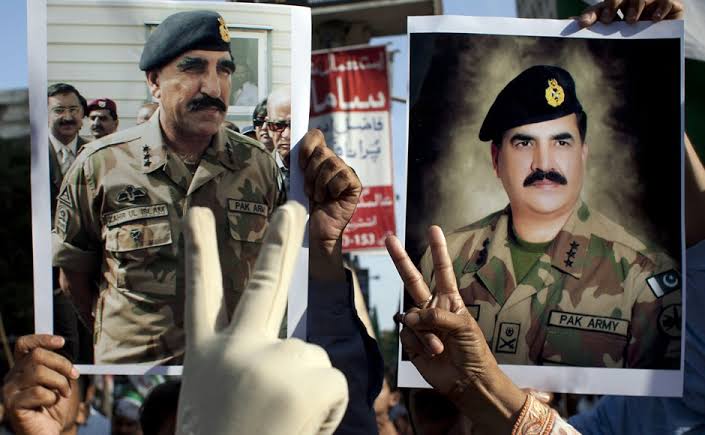
    Former United States (US) Ambassador to Pakistan Richard Olson has been quoted as disclosing that former army chief General (r) Raheel Sharif in 2014 foiled a coup attempt by the then director general (DG) of the country’s premium intelligence agency.

    The ex-envoy was quoted by journalist and author Shuja Nawaz in the his recently-launched book “The Battle For Pakistan, The Bitter US Friendship and a Tough Neighborhood”, chapter “Mil-to-Mil Relations: Do More” of which further read that Olson made this statement in the context of the infamous 126-day protest sit-in by then opposition member Imran Khan in Islamabad.

    “We received information that Zaheerul Islam, the DG ISI [Inter-Services Intelligence], was mobilising for a coup in September of 2014. (Army Chief) Raheel (Sharif) blocked it by, in effect, removing Zaheer, by announcing his successor… (Zaheer) was talking to the corps commanders and was talking to likeminded army officers… He was prepared to do it and had the chief been willing, even tacitly, it would have happened. But the chief was not willing, so it didn’t happen,” Olson was quoted in the book, launch events of which were cancelled across the country after its Washington-based author was allegedly told to do so.

    Nawaz has authored a 373-page book covering the US-Pakistan relationship and important political events of the last decade and a half in Pakistan. Brother of former chief of army staff (COAS) the late Gen Asif Nawaz Janjua, he is an acclaimed author and well-reputed intellectual. His book, “Crossed Swords: Pakistan, Its Army and the Wars Within,” is considered the most authoritative history of the Pakistan Army.

    In his latest book, The News reported, Nawaz reveals that for Americans, former ISI chief Lt Gen Ahmed Shuja Pasha was “straight shooting super nationalist general who had come into the world of intelligence on the insistence of Gen Kayani”.

    According to the book, Pasha became an activist and an aggressive head of the country’s premium intelligence agency, expanding its operations and remit virtually at will and demanding greater access to information on US operations and operatives inside Pakistan.

    According to Nawaz, Pasha was a prime target of American surveillance. He was being tracked during his travels abroad. The book provides details on the surveillance of Lt Gen Pasha.

    Shuja Nawaz also states that during Pasha’s tenure, three Pakistan-US joint intelligence fusion cells were shut down and Pasha was a “bête noire” for Americans.

    While quoting an unnamed US official, the author touches the subject of US intelligence surveillance inside Pakistan and says that the US had penetrated many Pakistani organisations.

    The book says that, after Pasha’s retirement, new ISI head Lt Gen Zaheerul Islam was consumed by domestic issues. Islam spent most of his time on the political turmoil following the 2013 elections, which produced public sit-ins, or “dharnas”, by Imran Khan’s Pakistan Tehreek-e-Insaf (PTI) and allies against the government.

    “Both Pasha and Islam’s names were associated with the street opposition to [then] Prime Minister (PM) Nawaz Sharif; though no solid evidence came to the surface. Islam was also a former head of one of the ISI’s wings or directorates, and then had been in the hurly-burly of Karachi politics as the corps commander there,” notes the book.

    While the latest book by Shuja Nawaz is filled with firsthand accounts of Pakistani and US officials with direct purview of important political events in Pakistan and Afghanistan for a critical period of the region’s history, Lt Gen Zaheerul Islam and Lt Gen Ahmed Shuja Pasha have not given their views regarding their role in service.