Category: Op-ed

  • Are populism & cults detrimental to democracy?

    Are populism & cults detrimental to democracy?

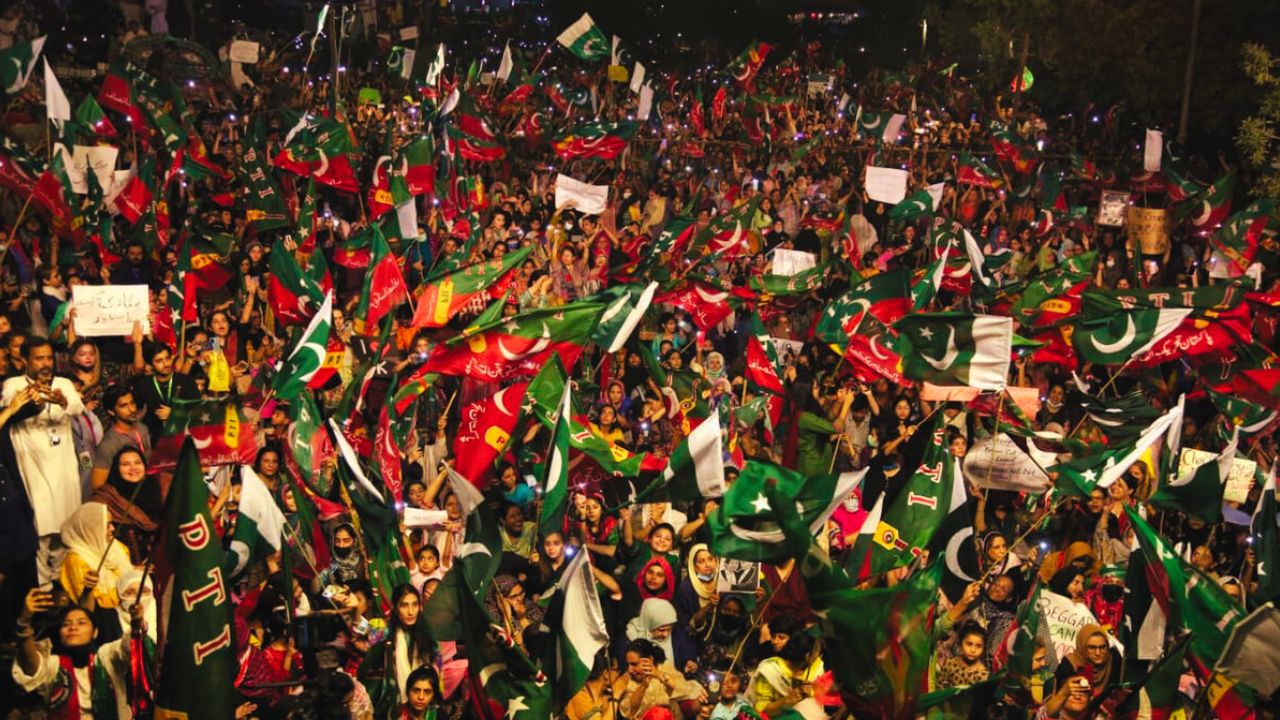
    Pakistani elections have proved to be an interesting study as we see the party that was unable to campaign come out strong even in a splintered state. Election results have once again hit false narratives of traditional parties as voters voted for a leaderless group of independents only because Imran Khan’s PTI supported them. This has revealed the will of the majority that are a direct hit at Pakistan’s political dynasties giving them a wakeup call to change what they are doing.

    Given a chance, the voter actually wants a change, and not necessarily Imran Khan and PTI which are the only options from the traditional parties. There are many reasons why voters opted for the independents but could cult following be one of them?

    Has Pakistan voted on populism, due to cult mentality or because they want a change?

    Most voters might feel offended and declare that their votes were cast to change the status quo and for a better future. But can they answer why they made the choice – really made the choices they did in 2024?

    If you ask voters why they didn’t vote for the major parties, some will say so and so party didn’t deliver in the past despite being in power for X number of years and they want to bring change. A logical reason. Why should voters vote for someone they know may probably not do anything if put back into power again?

    However, other voters will keep voting for the same parties they have been for decades based on a personality or family name. These voters are not concerned about what the party or leader has delivered; they are loyal no matter what.
    So, is Pakistani politics a form of political cult?

    It would seem so, as most parties are based around personalities and/or family names. Each one has a major poster personality without which the party loses its importance. For example, PMLN is Nawaz Sharif; PTI is Imran Khan; MQM was Altaf Hussain; PPP is Bhutto and Bibi.

    Remove any of these people or in PPP’s case the Bhutto name, will these parties survive? Well, recently we have seen the once formidable MQM crumble after its leader Altaf Hussain was removed. Similar predictions were made when Imran Khan was jailed, and we did see the party lose its momentum in the initial days of the PTI’s leader’s imprisonment.

    It was too early to extract Imran Khan from the political scenario since his ‘legacy’ was still strong among the followers who were grieving the loss of their party and the treatment of their beloved leader. Certain ill-timed decisions and steps by the powers that be right before elections didn’t help their efforts to make PTI and its leader redundant and instead backfired, ending up motivating his already devoted voters.

    Cult politics is a dangerous trend in a vulnerable country like Pakistan where democracy hasn’t been allowed to take root properly. Political cults are as dangerous as dictatorships. These cults revolve around the same orbit no matter what and continue to support the status quo without considering the short and long-term consequences.

    In his 2021 Oped “Why personality cults and democracy don’t mix” in The Washington Post, Brian Klaas – associate professor of global politics at University College London and the host of the award-winning Power Corrupts podcast – wrote:

    “At the extreme end, cults of personality are not just dangerous; they’re also absurd. As strange as they might seem, however, cults of personality are a rational mechanism to enforce control. They serve as loyalty tests that sort zealots from dissenters. Sometimes, they can be reasonably innocuous. But they morph into a dangerously authoritarian phenomenon when two criteria are met. First, if party members are required to publicly idolize a single political figure to be fully accepted, you have a problem. Second, if party members are punished for refusing to publicly parrot lies on behalf of that figure, things have gotten out of control.”

    Cults are defined as a “usually small group devoted to a person, idea, or philosophy” (Britannica). It is a movement based usually on religious beliefs opposing the dominant party or ideology however some studies show that the cults were integrated into the society. Sometimes other factors apart from religion are the driving force in cults.

    Other definitions explain cults as a group that has come together by a common ideological system based on a ‘we-they’ philosophy that has been developed and encouraged by a charismatic leader. The followers are in an echo chamber to drown out all other opinions and voices, they may be socially isolated from non-members including family to ingrain the cult’s doctrine into minds and the cult leader may be seen as a parental figure.

    It is interesting to know that “one of the most prominent Roman cults was the imperial cult, which was dedicated to the worship of deceased and deified Roman emperors and their deified family members. Imperial cult worship reinforced the power of the dominant political system, and most or all of pre-Christian Roman society had some degree of membership in it”.

    In an article published in The New York Times (1982 by Glenn Collins) ‘The Psychology of the Cult Experience’ Margaret T. Singer a professor of psychology at the University of California, Berkeley said: ”The techniques of many cults fall under the general rubric of brainwashing. Consciously and manipulatively cult leaders and their trainers exert a systematic social influence that can produce great behavioural changes.”

    Experts outline some signs of cultic behaviour which may lead to or are shared by autocratic leaders. Cults may propagate concentration in a single person, the leader of the party or group using constant propaganda that resonates with the many people who eventually become followers. The cults develop rallies or festivals to keep the followers devoted to the leader and engaged through discussions (or speeches) of simple solutions that may or may not be practical and workable. These cults identify someone to blame and keep repeating this until this becomes the mantra and then the belief of the followers.

    The followers believe only their leader is the one who can save them and others, and despite demanding democracy and rights, they are in danger of crossing the invisible line and accepting authoritarianism.

    Populism and political and religious cults have done more damage to the country’s democracy hence the stability and economic prosperity. Democracy which is still in its nascent stage as the country sweeps through one nazuk dor (delicate time) after another, will survive and hopefully prosper as the country achieves some form of stability in the future.

    Pakistan still needs to experience real democracy despite its dictators, autocrats, and democrats and although this is a long and arduous journey it will hopefully achieve this goal as the few but strong democratic voices keep speaking up for basic human rights regardless of a person’s affiliation.
  • Nepal, Pakistan: anything better than cricket to bring people together?

    Nepal, Pakistan: anything better than cricket to bring people together?

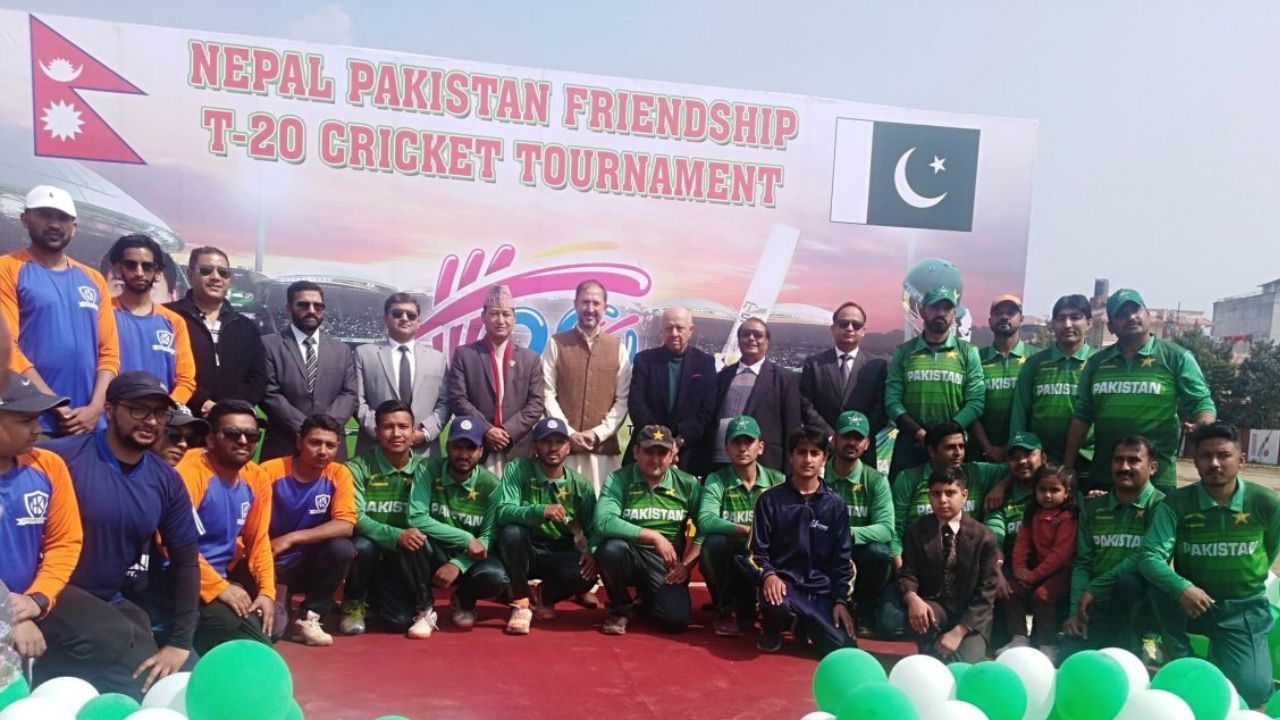
    Pakistan v Nepal from Moorhead to Multan: A Journey of Friendship and Fervour

    Picture this: a chilly midnight in Moorhead, a tiny university town near Fargo. Amidst the freezing air, two cricket fanatics — me and my Pakistani roommate, Shehzad — walk to the end of 20th Street just off campus to a house full of friends from Nepal. Our connection with these guys? Cricket. We had known each other through an indoor tape ball cricket tournament we played together.

    It was the turn of the millennium; TV apps and online streaming weren’t a thing back then. These guys from Nepal were our cricket saviours, the only ones in the area with Direct TV and video on demand available to watch Pakistan vs India 2004 Test series. I remember the first Test was in Multan. Sehwag smashed a triple ton and Tendulkar 194 to stamp their authority on the game. India won the match by an innings and also the series 2-1.

    Even though we had great respect for each other, there were moments when we had tempers flared during this series as all of these guys were rooting for India. That’s the nature of this encounter, it’s an emotional rollercoaster. People from Pakistan and India living abroad will relate: no matter how close you are with each other, this game will always get your emotions out of control.

    Fast-forward to 2023. Two decades later, Asia Cup is being co-hosted in Pakistan. The venue for the first game was Multan where Nepal faced Pakistan head to head for the first time. I have been in touch with these guys on and off, mostly through Facebook. As the national anthem of Nepal was being played, I dropped a one-liner message about the clash to Pawan Adhikari, now living in Houston, Texas. His response, I can feel, triggered a cascade of emotions for him just like it did for me. Memories flood in of chai-fuelled nights, banter, and heated arguments at his apartment.

    This particular game in Multan seemed to create a nostalgia that’s etched in our memories. For me this wasn’t just a game where Pakistan was playing a minnow, it was a symphony of emotions that cricket had orchestrated two decades ago. This memory and this game flung the door open to tomorrow, to the possibility of sitting with old mates, Pawan, Neeraj, Prajowl, and Shehzad; watching Nepal and Pakistan take on the world in the West Indies and Americas next year.

    From that viral image of a packed cricket ground in Katmandu of their famous victory, Nepal’s cricketing journey is a tale of resilience, a narrative that echoed the nation’s spirit, much like conquering the Everest.

    In a world often divided, cricket emerges as the unifier, a magical thread that weaves tales transcending time zones and cultures. From Moorhead’s chilly cold streets to Multan’s scorching heat, this is more than just a cricket story; it’s a tale of friendships woven by cricket’s tapestry. It’s a reminder that amidst the chaos, there’s a language we all speak, a language that unites us, This is why we love this game.

  • The Minister for Human Rights Should Resign: Here is His Resignation Letter

    The Minister for Human Rights Should Resign: Here is His Resignation Letter

    Last month, a 24-year-old woman was gang-raped at gun point by two men in Islamabad’s F9 park. The First Information Report (FIR) filed by the victim stated that after she was raped, the assailants gave her Rs1,000 and told her that she should not have been in the park at night.

    How did the federal Minister for Human Rights react to this heinous crime? Almost three weeks later, in a televised interview with Nadir Guramani, on the topic of the F9 rape case, Mian Riaz Hussain Pirzada said that mothers of ‘tarbiyat’ (good upbringing) do not let their children go out at night. In one breath, Mr Pirzada not only victim-shamed the victim of the rape but he also blamed her mother for not having “properly reared” her daughter.

    Clearly, Mr Pirzada has no understanding of what his job entails as the federal Minister for Human Rights. Here is a tailor-made letter of resignation he can sign on his way out.

    TO:​​ Prime Minister Shehbaz Sharif
    FROM:​​ Mian Riaz Hussain Pirzada
    RE:​​ Letter of Resignation (Federal Minister for Human Rights)

    Dear Excellency,

    I write to you with the heavy weight of self-awareness on my shoulders. I have come to see that I am a misogynist and therefore I cannot represent fairly and equally the rights of all the citizens of Pakistan.

    The term “misogyny” is often linked to woman-hating. The problem with this outdated view of misogyny is that, when it is used like this, it is a circuitous nonsense. As soon as I tell you that I love my mother and my wife, which I do, I have proven to you that I simply cannot be a misogynist.

    What I have come to learn is that misogyny is an enforcement system that keeps women in gendered roles. A woman who carves out her own path, or steps outside the role of being a well-behaved, supportive, giving woman, is disrespectable in the eyes of a misogynist and he (or she) is then entitled to put that woman back in “her place” to ensure she complies with the norms and expectations of patriarchy.

    In my interview with Mr Guramani, I concurred with the F9 rapists: the woman who got raped had it coming because good girls do not venture out at night. I went one step further and I also blamed the victim’s mother because, clearly, she has not raised a good girl. This justification of rape makes me a misogynist. I wonder if the rapists’ criminal defence will quote my words and use my line of reasoning?

    As the Minister for Human Rights, I should have known that Chapter 1 (Fundamental Rights) of the Constitution of Pakistan provides for equality of citizens and “no discrimination on the basis of sex” (Article 25) and that security of person entails that no person shall be deprived of life or liberty (Article 9).

    As the Minister for Human Rights, I should have demanded that my own government (and the police) do more to protect our citizens, who have every right to enjoy their liberties, which include taking in the night air, free of fear and discrimination, whether man or woman.

    As the Minister for Human Rights, I should have made clear that the rapists are the real and only culprits of the F9 rape and that I stand firmly with the victims, enraged at the violation of their human rights.

    I am an embarrassment to the Ministry of Human Rights and I hereby resign, with immediate effect.

    Mian Riaz Hussain Pirzada

  • The collective effervescence of Shah Rukh Khan

    The collective effervescence of Shah Rukh Khan

    ‘Pathaan’ is a frustrating film because it does not want to make things too difficult but it also does not want to take the easy way out. It does not mind being silly but it certainly will not become stupid. Perhaps to resolve these contradictory impulses, it chooses to be a fan-service film, something that requires a certain amount of blind faith on part of the audience but also a deep and nuanced knowledge of the world the star who helms it inhabits.

    ‘Pathaan’ is first and foremost a ritual. According to sociologist Émile Durkheim, when a community or society comes together and simultaneously communicates the same thought and participates in the same action, it represents a collective effervescence. That is, the group members experience a loss of individuality and a unity with gods, where the god and the society are the same and the clan itself transfigures into a symbol, the totem pole around which they gather with strong emotion.

    So what can the film offer to non-fan viewers like this author, who have the background knowledge but not the blind faith?

    If you are not part of this collective effervescence, you might be tempted to perceive the scene, the totem, the group as separate entities but it is simply impossible to extricate one from the others. The only way to understand ‘Pathaan’ is to view the film, the star, the fandom and the world it emerges from as one composite whole even if you are outside of that experience.

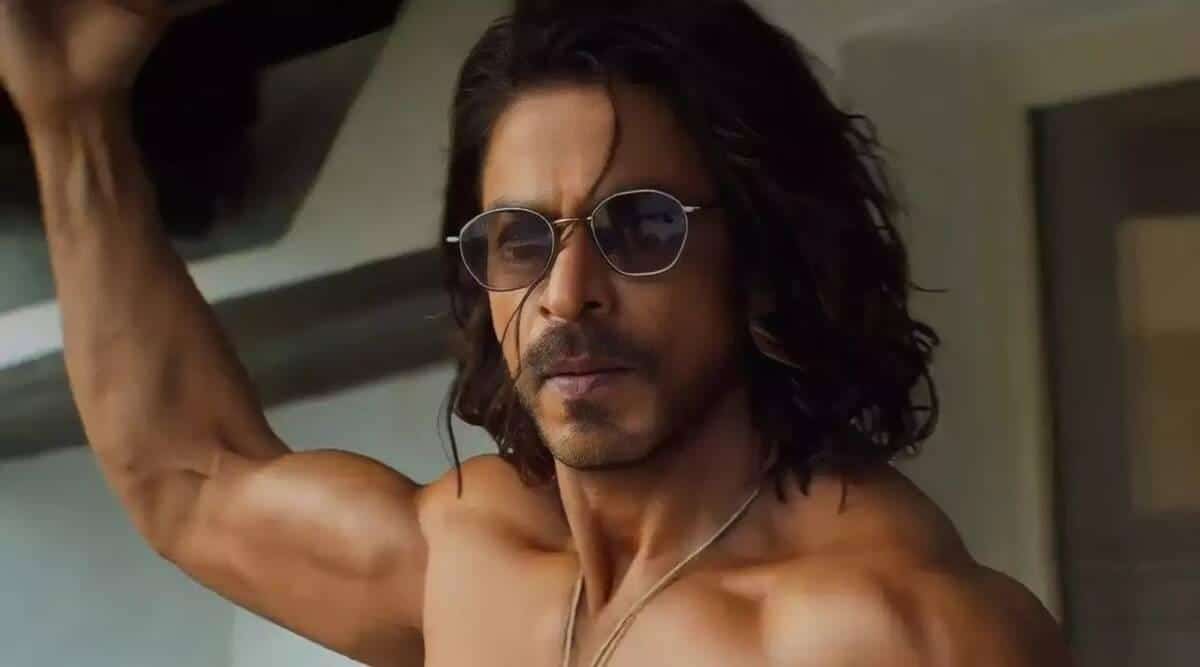
    Khan is a pathaan (son of a Khudai Khidmatgar no less) and, through this film, he insists that he must be seen as no more than an orphan of Indian cinema. Left as he was as a baby in a movie theatre, pathaan has no history and no identity beyond the service of Indian society. That he found a family outside Indian borders – in the film, this is represented by an Afghan village – holds for him deep emotional resonance, but ‘Pathaan’ and Shah Rukh Khan are, first and foremost, lost at and found by Indian cinema. And the Indian in him has a lot to get off his chest – or, do I mean his abs? – and will, unfortunately, exclude his non-Indian fans at least for the purposes of this film.

    This is not the first time a Shah Rukh film and the man became indistinguishable from one another. In ‘My Name is Khan’ (MNIK), Shah Rukh urged an increasingly Islamophobic world to not see all Muslims as terrorists. Moving on from what now seems like innocent times when the deeply problematic discourse of “good Muslims and bad Muslims” retained some currency, India now finds itself at a stage where proving one’s patriotism through a trial by fire (for example, in ‘Chakde India’) will bear no results. The Khan of ‘Pathaan’ is the older, weary and (literally and figuratively) broken version of the man in MNIK and Chakde. He has given up trying to prove his patriotism – if you are not yet convinced, you are unlikely to ever be. If you happen to be one of those blessed with blind faith, this film will not only help you reiterate your beliefs, it will also give you renewed energy to go out into the world filled with hate, despair and anger.

    John Abraham, who plays the antagonist Jim in the film, mentioned in a post-release press conference that Shah Rukh Khan is not a man but an emotion. This film, which is also the star, the nation and its audience all at once, is similarly an emotion. This is why it does not make the treatment of very complex issues difficult or easy. The issues are presented as Indians experience them.

    For me, it was still jarring to sit through the throwaway lines on Pakistan when criticism of the Indian state remains muted and one can well imagine the frustration that led Fatima Bhutto to write that Bollywood, as a whole, appears to be ‘obsessed with Pakistan’. Indian films have been steadily churning out plots where Pakistanis are represented as not only “nasty” but also gullible and even moronic. But, for Indians, who have been subjected to phallic slogans like “ghar mein guss ke maareinge” (we will invade your homes to kill you) in the recent past, the film comes as almost a relief. ‘Pathaan’ is at least not a chest-thumping agent of chaos – whether it is in India or Afghanistan, on-screen he is only trying to protect people. Whether he should have participated in the American invasion of Afghanistan at all is not a question the movie is interested in – just as it shies away from actually taking a political position on the abrogation of Article 370 that forms the impetus of the conflict presented in the film.

    It is in this almost desperate attempt to avoid taking overt stands on polarising debates that the film becomes reluctantly nuanced. While some lazy lines suffice to illustrate that only a handful of Pakistan’s military establishment have, to quote the ISI agent Rubai (played by Deepika Padukone), gone berserk, the blame for the imminent threat lies with the soulless and even callous Indian bureaucracy and a particular version of nationalism that pervades public discourse today. Jim is a narcissist for whom love for the nation used to be an extension of love for self and, now that his love has soured, he cannot but mock the selfless love that ‘Pathaan’ holds on to despite being betrayed and hurt. Most of their conversations centre on this differing attitudes towards nationalism, offering Khan ample opportunity to respond to the real-life attacks the Indian state and its narcissistic nationalists have subjected him to in recent years. The camera lingers on his dark brooding face as he expresses, in turn, his quiet disappointment with state’s priorities (while listening to Jim’s backstory), the shock of betrayal (as Rubai leaves him behind) and abject resignation (when he finally decides to go rogue). The emotions spill over the frame and become a testament to the life of India’s most famous and openly religious Muslim man under the tyranny of Hindu nationalism.

    While Bhutto’s criticism is well-taken, movies like ‘Pathaan’ – and ‘Raazi’, which she also mentions – emerge from a specific political struggle within India and must be seen as a challenge to the rampant hate rather than carriers of the same hateful messaging. Pakistan in ‘Pathaan’ serves as an empty signifier that it has been in films like ‘Uri’ where the larger plots are aimed at othering the Indian Muslims through an invocation of an external threat. But, in a crucial difference, ‘Pathaan’ brings attention back from the neighbouring country to the internal struggle in India that was provoking such excessive obsession in the first place. It is as if the filmmakers are telling us that it is impossible to speak on Indian nationalisms without underlining the disproportionate space Pakistan occupies in public imagination.

    While Jim is explicit about his motivations, Rubai’s backstory leaves a lot unsaid. Rubai’s father was a journalist somewhere in West Asia who “asked too many questions” and, as a child, she was forced to witness his waterboarding by agents of an undemocratic regime. As memories of the father’s torture merge with her own waterboarding at the hands of Indian agents she had actually helped, the signifier of Pakistan is emptied out and her story becomes one of Indian journalists who, in recent times, had “asked too many questions” with national interest at their heart and paid the price for the same.

    It may still be too unrealistic to ask Pakistanis not to be offended by ‘Pathaan’ since it is probably no consolation that the film does not address them at all. The totem of Shah Rukh holds great emotional resonance across South Asia and the world and, while the film tells us that he cherishes ‘his family’ outside India, ‘Pathaan’ is targeted at the Indian society – as a collective – that loves him and, yet, as the film sees it, has betrayed him.