A day after Pakistan Muslim League-Nawaz
(PML-N) leader Hamza Shehbaz was granted pre-arrest bail by the Lahore High
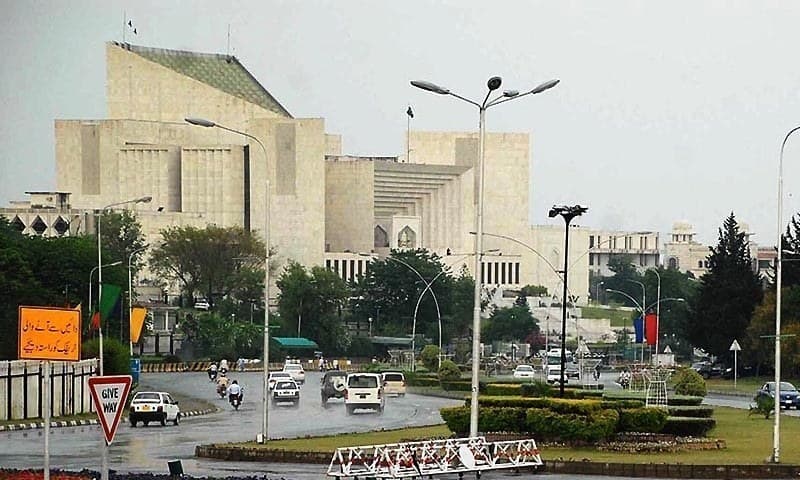
Court (LHC) amid much drama, the Supreme Court (SC) has taken an apparent jibe
at its subordinate court.
As per the details, a
three-member bench of the top court was hearing a case regarding lease of
government land to private petrol pumps when Justice Azmat Saeed warned lawyers
against raising their voice in the courtroom.
“This is not LHC where you can
create ruckus to get the desired decision,” he remarked.
Upon this, veteran lawyer Aitzaz Ahsan reminded the top court judge that he too was a part of the LHC once.
“The existing court is not the one I left behind,” Justice Saeed said while reacting to Ahsan’s comment and cautioned him against the tone in which he was arguing before the bench.
While Justice Saeed did not clarify his remarks about the LHC, Twitterati believe the observation points towards Hamza’s bail that came amid a standoff between police and party workers.
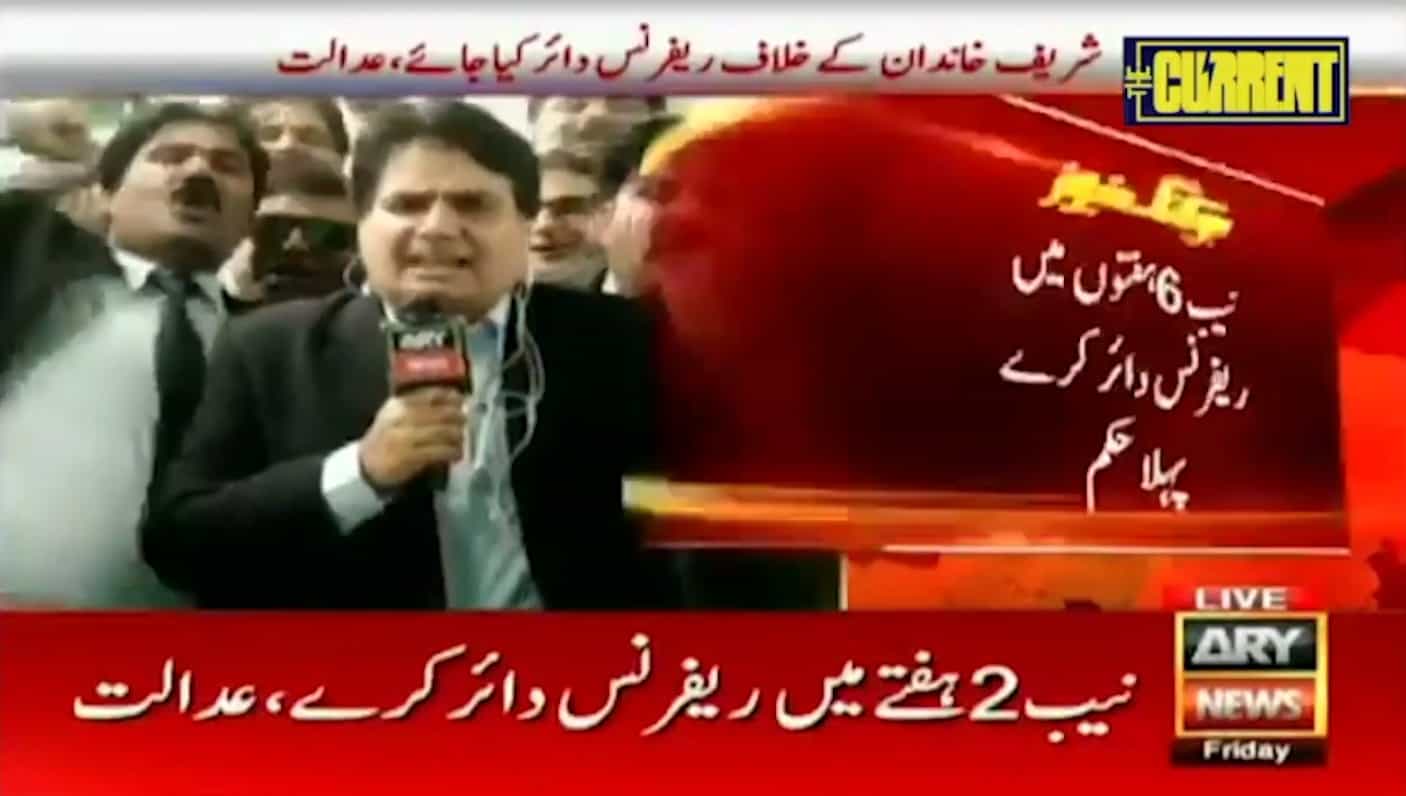
As the PML-N leader’s counsel had sought an extension in his bail on Monday, dozens of party loyalists had gathered outside the court and left the premises only after the petition had been approved and National Accountancy Bureau (NAB) barred from arresting Hamza till April 17.
NAB is after Hamza for the past six months for allegedly accumulating assets beyond known sources of income. The claim, however, has repeatedly been denied by the lawmaker himself.
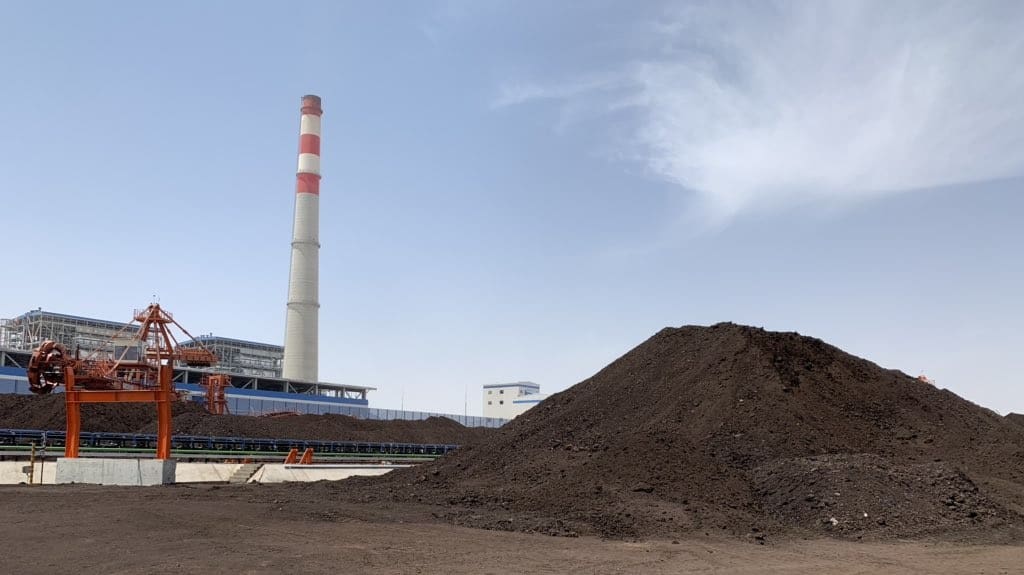
Pakistan People’s Party (PPP) chief Bilawal Bhutto Zardari on Wednesday inaugurated the Thar coal-fired power generation plant which he said was the “highest man-made structure” of the country.
— Bilawal Bhutto Zardari (@BBhuttoZardari) April 10, 2019
The 660-megawatt power plant consists of two power generation units of 330 megawatts each and has been launched under the China-Pakistan Economic Corridor (CPEC).
According to a report by Bloomberg, Thar alone can produce enough coal to generate 15 GW in 10 years. This cheap alternative to imported fuel can help the country overcome a chronic energy shortage that has been wiping off 2 per cent points from economic growth every year.
Meanwhile, officials have said that the project has given direct and indirect employment to up to 6,000 people of the much-neglected Thar region.
With
the democratic process continuing in the country for the third consecutive
tenure, revelations are being made about the national and provincial
assemblies’ lawmakers who are currently representing the people of their
respective constituencies.
As per these revelations, as many as 33 Punjab Assembly members of three political parties are facing criminal proceedings in different courts across the country, while the assembly also houses four billionaires. The case in Sindh, Khyber Pakhtunkhwa (KP) and Balochistan assemblies is quite similar as well.
According
to Free & Fair Election Network’s (FAFEN) “Parliament Monitor”, here is all
you need to know about your provincial representatives.
Punjab Assembly:
Nearly
one-third (123) legislators in the Punjab Assembly have declared that they
possess assets of a cumulative worth between Rs11 million to Rs50 million,
while 18 per cent own assets ranging between one million rupees to
Rs10 million. The worth of around 16 per cent legislators’ assets
ranges from Rs101 million to Rs500 million while 12 per
cent legislators have assets of worth between Rs51 million to 100 million
rupees.
There
are four billionaires in the Punjab Assembly with Pakistan Muslim League-Nawaz
(PML-N) leader Sheikh Allauddin being the richest with assets worth more than
Rs1 billion. On the other hand, six and three legislators belonging to PML-N
and Pakistan Tehreek-e-Insaf (PTI), respectively, have assets worth less than a
million.
Moreover,
as many as 33 (9%) incoming legislators of Punjab have mentioned in their
affidavits that they have criminal cases pending against them.
18 of
these lawmakers belong to PTI, 14 to PML-N and one to Pakistan Rah-e-Haq.
Sindh Assembly:
As
many as 59 legislators have declared that they possess assets of cumulative
worth between Rs11 million to Rs50 million. 30 per cent have assets
that range from Rs1 million to Rs10 million. The worth of around 15 per
cent legislators’ assets ranges from Rs101 million to Rs500 million, while
11 per cent legislators have assets between Rs51 million to 100
million.
The
richest declared legislator in the Sindh Assembly is Pakistan People’s Party
(PPP leader) Mukesh Kumar Chawla, who owns assets worth Rs550 million while
four legislators – two of PTI, one each of Muttahida Qaumi Movement-Pakistan
(MQM-P) and Tehreek-e-Labbaik Pakistan (TLP) – have assets worth less than a
million rupees.
Meanwhile,
20 (12%) legislators have criminal cases pending against them. Half of these
lawmakers with pending criminal cases belong to PPP, four to Grand Democratic
Alliance (GDA), three to PTI and two to MQM-P while one is an independent
lawmaker.
KP Assembly:
One-third
(45) lawmakers have declared that they possess assets of cumulative worth
between Rs11 million to Rs50 million while 20 per cent have assets of
worth ranging from one to Rs10 million. The worth of around 9 per
cent legislators’ assets ranges from Rs101 million to Rs500 million.
As
many as two PTI legislators own declared assets worth more than a billion
including the incumbent Chief Minister Mahmood Khan, who is the richest among
provincial legislators with assets more than Rs2.5 billion. In addition, four
legislators have assets of worth less than a million.
Out
of the total number of incoming legislators, eight (6%) mentioned in their
affidavits that they have criminal cases pending against them. Five of these
belong to PTI while three to Awami National Party (ANP).
Balochistan Assembly:
At
least 22 legislators have declared the cumulative worth of their assets between
Rs11 million to Rs50 million, while 21 per cent have assets of worth
ranging between one to Rs10 million. The worth of around 8 per
cent legislators’ assets ranges between Rs101 million to Rs500 million and
as many as three Balochistan Awami Party (BAP) and two independent legislators
own declared assets worth more than Rs100 million.
Nawabzada
Tariq Magsi is the richest legislator of the Balochistan Assembly, with assets
more than Rs324 million. Two legislators have assets of worth less than a
million rupees.
As
for the criminal cases, 10 (15%) legislators have criminal proceedings pending
against them. At least three of these legislators belong to BAP, two to ANP,
and one each to PTI and Pashtunkhwa Milli Awami Party (PkMAP). Three alleged
criminals are independent legislators.
Generally considered a conservative political party that supports
free market capitalism, democratic ideals and is anti-censorship, the Shehbaz
Sharif-led Pakistan Muslim League-Nawaz (PML-N) is among the few major political
entities that shaped Pakistan as it is today.
While the party’s popularity has taken massive blows in recent years owing to the alleged involvement of its leadership, especially former party chief and thrice-elected prime minister Nawaz Sharif, in corrupt practices, here are five reasons you have to love PML-N for, nonetheless.
Too lazy to read the entire article? Watch the video:
5. Punjab Protection
of Women Against Violence Bill:
The Shehbaz administration passed in the provincial assembly
the Protection of Women Against Violence Bill 2015, granting sweeping powers to
women, particularly in their marital life.
While the bill invited strong criticism from religious
circles that termed some of the clauses of the new law “repugnant to the basic
canons of Islam”, it was finally passed by the Punjab Assembly in February 2016,
providing comprehensive protection to women against a range of crimes.
4. 126 days of
patience:
Among other achievements of the PML-N during its last tenure
were the 126 days of patience while Pakistan Tehreek-e-Insaf (PTI) chief Imran
Khan continued his Azadi march and subsequent sit-in in the federal capital
from August 14 to December 17, 2014.
The patience that the then ruling party resorted to –
without launching a rigorous crackdown and later accepting the protesters’
demands – calls for accepting it as a reason to love the PML-N.
3. China-Pakistan
Economic Corridor:
PML-N supremo Nawaz is credited for the China-Pakistan
Economic Corridor (CPEC) project which has brought $46 billion investment to
Pakistan.
The project is a collection of infrastructure projects that
are currently under construction throughout the country, the value of which was
worth $62 billion as of 2017.
Officials predict that CPEC will result in the creation of over
2 million jobs by the year 2030 and will add 2 to 2.5 percent points to the
country’s annual economic growth.
2. Dealing with the
energy crisis:
The PML-N government launched several power plants in
Sahiwal, Port Qasim, Jamshoro, Faisalabad, Mianwali and DG Khan besides a solar
park in Bahawalpur and wind farms in Sindh to overcome the once
“uncontrollable” power shortage.
Its pre-2013 polls promise to bring about US$20 billion for
the energy sector was also fulfilled which positively impacted the lives of the
people, at least until 2018.
1. War on terror:
The then premier Nawaz launched the Karachi operation in
2013 as part of which hundreds of criminals, gangs and terrorist were held and
sentenced.
Zarbe Azab was also one of the biggest and most successful
anti-terrorism operations ever, which was launched by the Nawaz government. The
operation launch was followed by the formation of the National Action Plan
later in 2015 to crack down on terrorism and supplement the anti-terrorist
offensives.
It was considered as a major coordinated state retaliation
following the deadly APS Peshawar attack and received unprecedented levels of
support and co-operation across the country’s political spectrum.
As many as 0.6 million Pakistanis “will lose their jobs by
July 2019”, Pakistan Muslim League-Nawaz (PML-N) leader Mohammad Zubair Umar
has claimed amid questions being raised over the government’s efforts for the
uplifting of the country’s economy.
“Unemployment is rising by the day and it is expected that
by end of the fiscal year, 600,000 Pakistanis will have lost their jobs,” Zubair
said in a statement issued after the Pakistan Tehreek-e-Insaf (PTI) government
completed 200 days in centre.
Due to the poor economy, he added, more than four million people “will also go below the poverty line”.
WATCH THE VIDEO INSTEAD:
The claims, however, were refuted by Minister of State for
Revenue Hammad Azhar, who termed Zubair’s statement “the worst case of
inaccurate numbers and half-truths”.
“Pure conjecture. With private sector borrowing up and
exporters gearing up for higher productions and foreign investors showing
unprecedented interest, Pakistan is readjusting for investment and
employment-led growth,” Azhar said.
He further stated the most comprehensive and consolidated
poverty alleviation programme was being developed by the government and there
was no truth to Zubair’s statement regarding millions of people going below the
poverty line.
With the row between members of the ruling PTI and PML-N
continuing, The Current reached out to a Lahore-based political
economist and public policy professional Rahema Hasan for the validity of
either side’s claims.
“People may not be losing their jobs by the end of the
fiscal year, but it’s the number of people entering the labour force annually,
which will add to the unemployment rate,” she said.
“Unemployment figures are high for Pakistan, but estimations
need to be made on concurrent information and not perceptions,” she said and
added that such claims could discourage private sector investment confidence
and put pressure on public resources.
On the other hand, the government needs to put down
estimations of how much employment is expected out of the investment coming to
Pakistan; for example, 1,000 jobs per every $100 million invested in the
agriculture sector, Rahema said further.
“Perception is a key to economic decision making, however,
necessarily based on incomplete and unverified information, it is equated with
reality for most practical purposes and guides human behavior,” she said.
Rahema was of the view that mere assumptions and political
gimmicks could have devastating effects on economic decision-making.
The Pakistan People’s Party (PPP) is considered centre-left in the country’s political spectrum owing to its support towards public ownership, egalitarianism, equality and a strong national defence.
Since its foundation in 1967, it has been a major political
left-wing force in the country. Although the party’s leadership has been
dominated by the members of the Bhutto family, it has been voted to power on
five separate occasions on the basis of the close affiliation it has had with
the masses.
While the fate of one of the country’s largest political entities hangs in balance amid the entire fake accounts case fiasco against party President Asif Ali Zardari and co, here are five ways you can defend the PPP.
Too lazy to read the entire article? Watch the video:
5. Bhutto’s UNSC video:
On December 15, 1971, Bhutto walked out of the United Nations Security Council (UNSC) after accusing it of “legalising aggression”.
The then foreign minister Bhutto strode down the carpeted
main hall past milling groups of surprised diplomats and was followed by seven
members of his delegation.
While the positive and negative impacts of the move remain
debated till date, it is a bit too hard to get over Bhutto’s boldness.
4. Call for maximum
provincial autonomy:
PPP has always been a staunch supporter of provincial
autonomy, which it proved by passing the 18th Amendment to the
Constitution of Pakistan in 2010.
The 18th Amendment has led to a significant increase in
provincial autonomy on the basis of ethnic diversity, multiple political
parties and diverse political spectrum.
The major crux of the 18th Amendment with regards to
political autonomy was the dissolution of 17 ministries, including education,
food, agriculture and health, from the centre to provinces allowing the latter
to formulate policies and projects in their own domain.
3. ‘Lionhearted’
leaders:
The PPP, in its own words, has always been led by courageous
leaders; from its founding chairman, the late Zulfikar Ali Bhutto, to his
daughter the late Benazir Bhutto.
While Zulfikar Ali Bhutto did not strike a deal during the
dark days of dictatorship and preferred to lay down his life, Benazir returned
to the country, knowing her life was in danger.
The unfortunate series of events that followed Benazir’s
return are known to all, however, the legacy lives on.
2.Undeterred activism:
At a time when Pakistan witnesses a significant surge in
political awareness, PPP is the only political party that speaks for the rights
of people, including minorities, missing persons and women, while not
succumbing to any pressure.
A recent example is Senator Mustafa Khokhar urging the
authorities concerned to lodge the long-pending First Information Report (FIR)
into the murder case of teacher and activist Arman Loni, who was allegedly
killed in a police crackdown on peaceful protesters.
Raising its voice for the rights of minorities and openly
speaking against the misuse of blasphemy laws, as now accepted by the state as
well, is another reason for the PPP to be loved.
1. Senator Krishna
Kumari:
PPP’s Krishna Kumari Kohli is the first-ever senator from a scheduled
caste. Krishna was elected to the Senate after campaigning for women’s rights,
having previously been forced into bonded labour for three years.
Hailing from Nagarparkar, a village in Tharparkar where
women are to date deprived of basic facilities, Krishna continued to strive for
a better future, all of which paid off after she was awarded a ticket to
contest the polls for the upper house of the parliament by PPP in 2018.
She also chaired the Senate session on International Women’s
Day 2019.
Engineers, medical people, scientific people, have an obsession with solving the problems of reality, once you reach a basic level of wealth in create entire designs with
Engineers, medical people, scientific people, have an obsession with solving the problems of reality, once you reach a basic level of wealth in society, most problems are actually problems of perception.
Wider Galleries
What does Gutenberg change in WordPress
The sole purpose of the Gutenberg editor is to provide an alternative to the current open text editor, not to mention the difficult-to-remember shortcodes, with an agile and visual user interface (UI). So, unlike the current WordPress editor, you don’t have to:
Import images, multimedia and approved files from the media library or add HTML shortcodes;
Copy and paste links for embeds;
Write shortcodes for specialized assets of different plugins;
Create featured images to be added at the top of a post or page;
In short, Gutenberg doesn’t change how WordPress functions. It does, however, change the way website owners (or creators) interact with it. Instead of a whole lot of shortcodes and meta boxes, you will be using simple blocks.
There are three responses to a piece of design – yes, no, and WOW! Wow is the one to aim for.
Ann Johnes
The sole purpose of the Gutenberg editor is to provide an alternative to the current open text editor, not to mention the difficult-to-remember shortcodes, with an agile and visual user interface (UI).
So, unlike the current WordPress editor, you don’t have to:
In short, Gutenberg doesn’t change how WordPress functions. It does, however, change the way website owners (or creators) interact with it. Instead of a whole lot of shortcodes and meta boxes, you will be using simple blocks.