Category: Others

  • Was offered bribes, lucrative positions to drop Musharraf’s case: CJP Khosa

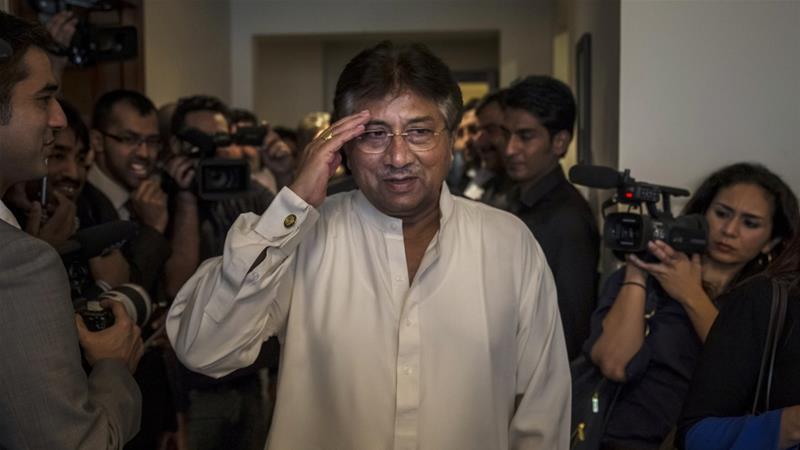
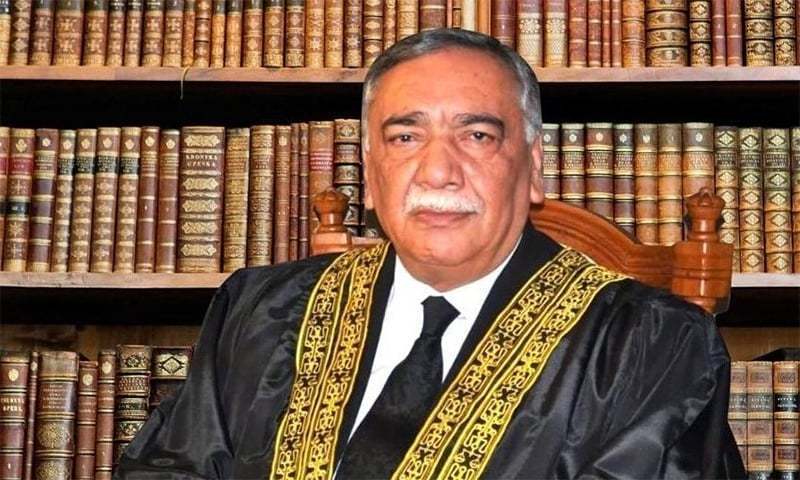
    Chief Justice of Pakistan (CJP) Asif Saeed Khan Khosa has reportedly said that he was “offered lucrative positions and bribes multiple times to drop former military ruler Gen (r) Pervez Musharraf’s case”, but he refused to accept any.

    According to Geo News, the top judge, during an informal discussion with journalists, said that the Supreme Court (SC) had already declared the former president’s case as “open and shut” and the judges feared nothing for as long as they were providing justice to the masses.

    CJP Khosa was also quoted as saying that the decision regarding the extension of Chief of Army Staff (COAS) General Qamar Javed Bajwa “would have long term effects that the people would realise later”.

    “I have already accepted a fellowship offer at Harvard to pursue following my retirement,” the CJP said.

    On Tuesday, a special court awarded death sentence to former military dictator Musharraf in absentia for suspending the constitution on November 3, 2007.

    While the counsel for the convict and the armed forces’ media wing in separate statements strongly criticised the decision that they said was taken “in haste”, opposition parties maintained that “justice had prevailed”.

    According to The Express Tribune, the outgoing CJP is said to have played a key role in making sure the six-year-old treason trial against the former president was concluded before he retired.
  • ‘Who’s trying to save their dad?’ Bilawal asks PM Imran

    A day after the government announced to review the death sentence awarded to former military ruler General (r) Pervez Musharraf, Pakistan People’s Party (PPP) chief Bilawal Bhutto-Zardari has taken a dig at Prime Minister (PM) Imran Khan by asking him that “who was trying to save their father”.

    “Who is running a ‘Save the Dad’ (abbu bachao) campaign?” the chairman of the country’s second-largest opposition party said in a tweet that apparently came in response to Pakistan Tehreek-e-Insaf (PTI) ministers and the premier himself repeatedly calling out Bilawal and Pakistan Muslim League-Nawaz (PML-N) leader Maryam Nawaz for launching “Save the Dad” campaigns.

    On Tuesday, a special court awarded death sentence to former military dictator Musharraf in absentia for suspending the constitution on November 3, 2007.

    While the counsel for the convict and the armed forces’ media wing in separate statements strongly criticised the decision that they said was taken “in haste”, opposition parties maintained that “justice had prevailed”.

    Meanwhile, Special Assistant to the Prime Minister (SAPM) on Information and Broadcasting Firdous Ashiq Awan has said that the government will “review in detail” the ruling.

    “We will review in detail, today’s verdict as well as yesterday’s,” Dawn quoted her saying on Tuesday. She further said that legal experts would analyse all legal and political aspects as well as the impact on national interests, after which a government statement would be presented to the media.

    In response to a question about whether the government will bring Musharraf back to Pakistan, Awan said the government would assess the matter with its legal team. “The premier himself will look at the relevant ground realities and legal framework, following which a final decision will be taken.”

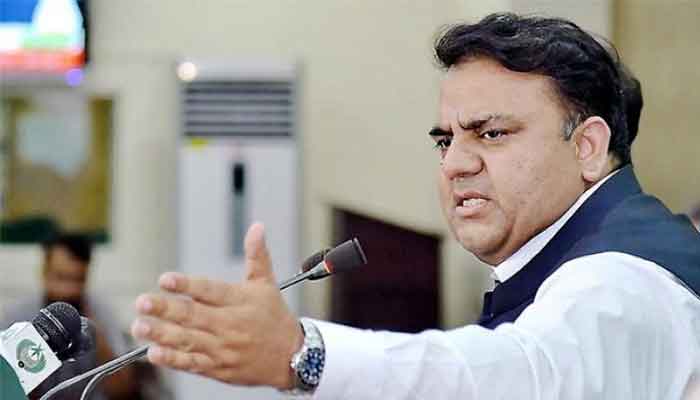
  • Fawad Chaudhry expresses disappointment over Musharraf verdict

    Fawad Chaudhry expresses disappointment over Musharraf verdict

    Federal Minister for Science and Technology Fawad Chaudhry says that no one in Pakistan was happy with Musharraf verdict.

    A Special Court on Tuesday awarded death penalty to former dictator General (retd) Pervez Musharraf for high treason.

    Addressing a press conference in Jeddah, Fawad said that countries cannot function without the army.

    “GHQ has a vital role in formation of the country’s security policy,” said Chaudhry adding that all state institutions should respect each other and not tread into others’ jurisdiction.

    Earlier in the day, Fawad also expressed his displeasure over the verdict saying that what’s the point of verdicts like these which only serve to create further distances.

    It must be remembered that when Musharraf declared Emergency on November 3, 2007, Imran Khan said on Dr. Shahid Masood’s show that Musharraf must be tried for high treason and should get the death penalty.

    https://twitter.com/hyzaidi/status/1207003979596652544?s=20
  • Pakistan ranked 151 out of 153 in gender equality index: WEF

    Pakistan ranked 151 out of 153 in gender equality index: WEF

    According to the Gender Equality Index report of the World Economic Forum, Pakistan stood 151 out of 153. The only two countries below Pakistan are Iraq and Yemen.

    Though grand claims have been made about improving educational opportunities for youth, empowerment of democracy and the betterment of health facilities in the country, all have been shattered after the INGO placed Pakistan at number 150 in the list of economic participation and opportunities, 143rd in education attainment, 149th in health and survival and 93 in political empowerment globally.

    While Pakistan stood 112th in 2006, the standing has drastically slipped to 151 in the the last 14 years.

    The report highlights that there is a huge gap of 32.7 percent between men and women in the context of economic opportunities. The gap has also widened to 94.6pc – which means that women do not have the same facilities in comparison to men.

    On the contrary, Bangladesh ranked 50, followed by Nepal 101, Sri Lanka 102, India 112, Maldives 123 and Bhutan 131.

  • ICC selects Pakistan’s Nida Dar for its T20I team of the year

    ICC selects Pakistan’s Nida Dar for its T20I team of the year

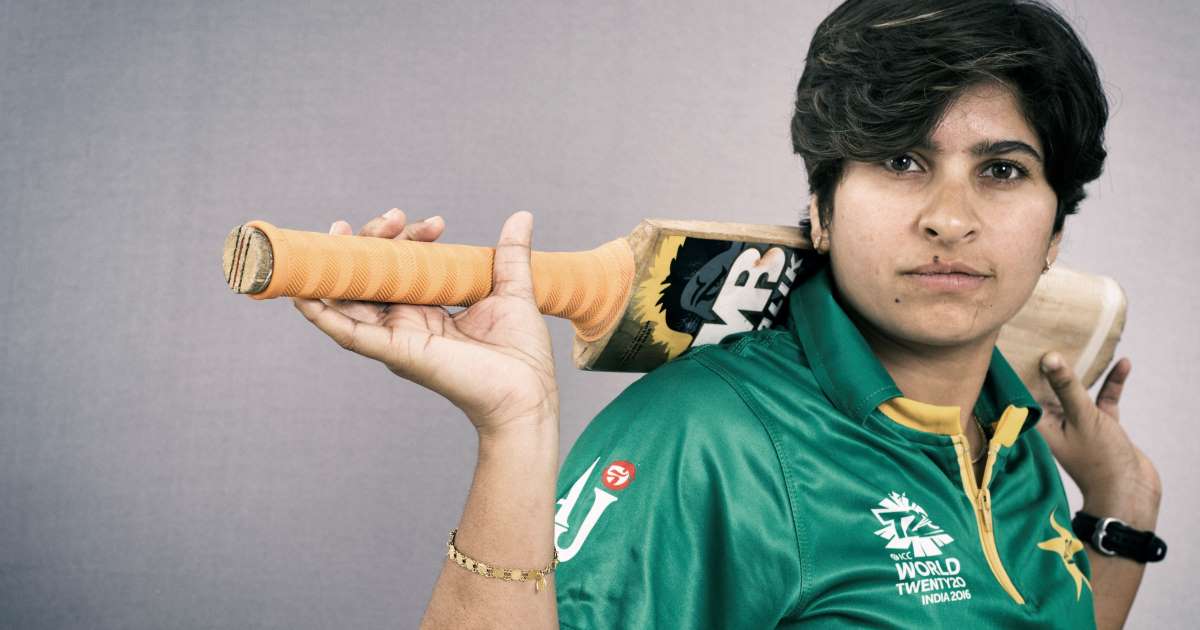
    Pakistan’s Nida Dar, more popularly known as Lady Lala, was picked in the ICC Women’s T20I team of the year.

    The 32-year-old is the only Pakistani player in the 11-member squad led by Australia’s Meg Lanning. The maximum number of players have also been selected from Australia namely Alyssa Healy, Ellyse Perry and Megan Schutt.

    Other members in the team include India’s Smriti Mandhana, Deepti Sharma and Radha Yadhav, South Africa’s Lizelle Lee and Shabnim Ismail. Dani Wyatt is the only England player in the team.

    Nida Dar made her debut as a bowler in women’s twenty20 match against Sri Lanka in 2010. She took her first five-wicket haul in a match against Sri Lanka in women’s Twenty20 Asia Cup 2018. She was also named as the standout player in the team by the International Cricket Council for the 2018 ICC Women’s World Twenty20 tournament.

  • Death Penalty: Timeline of Musharraf’s high treason case

    Death Penalty: Timeline of Musharraf’s high treason case

    The special court on Tuesday handed over the death sentence to the former military dictator General (r) Pervez Musharraf after analysing the complaints, records, arguments and facts in the case for three months.

    The court ruled that it found Musharraf guilty of high treason according to Article 6 of the constitution.

    The special bench hearing the high treason comprised of Peshawar High Court (PHC) Chief Justice (CJ) Waqar Ahmad Seth Akbar and Justice Shahid Karim of the Lahore High Court (LHC). The bench was formed on the orders of the Supreme Court (SC).

    EXPLAINED: MUSHARRAF’S CRIMES, PUNISHMENT

    The Pakistan Muslim League-Nawaz (PML-N) government had in 2013 filed the treason case against Musharraf over the president’s imposition of extra-constitutional emergency in November 2007.

    Here is the timeline of the high treason case

    • July 22, 2009: The Supreme Court (SC) in an unprecedented move, calls Gen (r) Musharraf to defend his actions on November 3, 2007, following the president’s resignation after a nine-year rule on the country.
    • July 31, 2009: The SC rules that Musharraf’s decision to impose an emergency on November 3, 2007, as well as his PCO [Provisional Constitutional Order] were illegal and unconstitutional. The court gives him seven days to respond.
    • August 6, 2009: Musharraf refuses to answer the charges against him and leaves Pakistan for the United Kingdom (UK).
    • March 22, 2013: Musharraf plans to return to Pakistan after exile and gets a protective bail for 10 days in three high-profile cases against him.
    • March 27, 2013: Senior counsel A.K. Dogar, during a hearing pertaining to strict adherence to articles 62 and 63 during elections, refers to SC’s ruling on Musharraf’s actions on November 3, 2007. A.K Dogar argues that in overthrowing the constitution, Musharraf had committed the offence of high treason.
    • March 29, 2013: Sindh High Court (HC) grants an extension in bail for Musharraf, but rules that he cannot leave Pakistan without permission.
    • April 5, 2013: SC agrees to hear a petition seeking to prosecute the former military dictator under sections 2 and 3 of the High Treason (Punishment) Act 1973.
    • April 7, 2013: Chief Justice (CJ) Iftikhar Mohammad Chaudhry withdraws himself from the three-member bench formed to hear the treason case against Musharraf.
    • April 8, 2013: Supreme Court summons Musharraf in the treason case against him. The court also instructs the interior ministry to add his name to the Exit Control List (ECL).
    • April 18, 2013: Musharraf after the cancellation of his bail application flees from the premises of the Islamabad High Court (IHC).
    • April 19, 2013: The former president surrenders in a magistrate’s court in the judges’ detention case and his farmhouse residence at Chak Shahzad, Islamabad, is declared a sub-jail.
    • April 30, 2013: Peshawar High Court (PHC) bars Musharraf from ever contesting elections for either the National Assembly (NA) or the Senate.
    • June 5, 2013: IHC judge Shaukat Aziz Siddiqui recuses himself from hearing former president’s post-arrest bail plea in the judges’ detention case.
    • June 14, 2013: Minister for Law and Justice Zahid Hamid distances himself from the 2007 emergency. Zahid says there was no question of him having allegedly abetted Musharraf as the proclamation of emergency came from the former dictator’s person. The minister also denies having had any contact with Musharraf.
    • June 24, 2013: Prime Minister (PM) Nawaz Sharif tells the NA that his government will request the SC to try Musharraf under Article 6 of the Constitution.
    • November 18, 2013: SC, headed by CJP Iftikhar Chaudhry, agrees to set up a special board to try Musharraf for high treason.
    • November 19, 2013: The PML-N government submits five charges of high treason against the former military ruler in a special court. A three-member bench to hear the treason case is also formed.
    • December 12, 2013: Special bench summons Musharraf to face treason charges.
    • December 20, 2013: Musharraf, in an interview, seeks “forgiveness” for any wrongs he may have committed during his rule on the country for nine-years.
    • January 2, 2014: Musharraf is shifted to hospital after suffering a “heart problem” while on his way to a special court hearing of the treason case. His arrest warrant is not issued on medical grounds.
    • January 7, 2014: The Armed Forces Institute of Cardiology (AFIC) submits former army chief’s medical report to special court, detailing that Musharraf is suffering from “triple-vessel coronary artery disease and eight other diseases”.
    • January 16, 2014: Special court orders AFIC to constitute a medical board to assess Musharraf’s health and to submit a detailed report. The medical board subsequently declares Musharraf to be in a “critical state” and recommends his treatment at a place of his choice.
    • January 28, 2014: Prosecution expresses lack of confidence in former army chief’s medical report and requests court to summon the AFIC head for cross-examination.
    • February 7, 2014: Special court once again orders Musharraf to appear in the treason case.
    • February 18, 2014: Musharraf after avoiding 22 consecutive hearings, finally appears in special court, but no charges are framed against him as the defence argues that the case should be heard in a military court.
    • February 21, 2014: Special court rules that Musharraf is not to be tried in a military court.
    • March 30, 2014: The former army chief is indicted for treason and pleads not guilty to all charges.
    • April 1, 2014: The PML-N government offers to fly former president’s ailing mother to Pakistan from Sharjah.
    • April 2, 2014: The PML-N government rejects Musharraf’s petition seeking the removal of his name from the no-fly list.
    • April 3, 2014: Musharraf petitions SC for the removal of his name from the ECL so he may travel abroad to visit his ailing mother.
    • May 14, 2014: Federal Investigation Agency (FIA) declares it has “irrefutable proof” that former army chief illegally imposed emergency in 2007.
    • June 12, 2014: SHC strikes down the government’s order barring Musharraf from overseas travel, ruling that “not a single ground was mentioned in the memorandum placing the former president’s name on the ECL”.
    • June 13, 2014: Special court rejects former president’s plea for details of “abettors” who had suggested, endorsed or implemented the 2007 emergency.
    • June 14, 2014: The government moves SC against the SHC ruling allowing Musharraf to travel abroad.
    • June 23, 2014: The apex court suspends the SHC judgment allowing former military ruler to travel abroad until it decides the pending appeal.
    • September 8, 2014: Musharraf’s legal team gets hold of crucial evidence pointing towards then prime minister (PM) Shaukat Aziz’s role in the imposition of the November 3 emergency.
    • October 15, 2014: Musharraf’s defence team asks the special court for a collective trial of all his accomplices.
    • November 21, 2014: Special court directs the federal government to resubmit its complaint in the high treason case, this time including the names of former PM Shaukat Aziz, former law minister Zahid Hamid and former CJ Abdul Hameed Dogar to the charge-sheet.
    • December 22, 2015: The former president says he invoked emergency after consulting Gen Ashfaq Parvez Kayani among other civilian and military leaders.
    • March 14, 2016: Musharraf seeks one-time permission to go abroad on medical grounds.
    • March 16, 2016: SC orders the fovernemnt to remove Musharraf’s name from the no-fly list, allowing him to travel abroad on medical grounds.
    • March 18, 2016: The former president leaves for Dubai to seek medical treatment, promising to come back to his “beloved homeland” in a few weeks.
    • May 11, 2016: Special bench declares former army chief an absconder in the treason case.
    • March 29, 2018: Special court dissolves after Justice Yahya Afridi recuses himself from hearing the high treason case against Musharraf.
    • April 7, 2018: CJ Mian Saqib Nisar reconstitutes special bench hearing Musharraf high treason case.
    • May 31, 2018: Interior ministry, complying with the special court’s orders, asks the National Database and Registration Authority (NADRA) and the Directorate General of Immigration & Passports to suspend former army chief’s national identity card and passport.
    • June 7, 2018: SC allows Musharraf to run for polls on the condition that he appear in person before the court.
    • June 20, 2018: Former president says he was set to return to the country but SC’s orders barring authorities from arresting him made him change his mind.
    • July 30, 2018: Prosecution head in the high treason case against Musharraf quits.
    • August 3, 2018: Special court decides to resume the trial which was delayed due to Musharraf’s departure from Pakistan — beginning August 20.
    • August 20, 2018: Musharraf citing threats to his life, seeks presidential security to appear before the special court in the high treason case.
    • August 29, 2018: Special court is told that Interpol refuses to issue red warrants for former army chief’s repatriation from the United Arab Emirates (UAE) where he has been living since 2016.
    • October 2, 2018: CJ Saqib Nisar grills Musharraf’s councel on the “brave commando’s” overdue return to the country.
    • October 24, 2018: APML discloses that former president is suffering from amyloidosis and has difficulty standing and walking.
    • November 19, 2018: Court tells Musharraf’s lawyer to convince former president to return and provide his itinerary so the high treason case could proceed.
    • March 31, 2019: Supreme Court orders Musharraf to appear before the special court in the treason case on May 2 or lose his right of defence.
    • April 1, 2019: SC, under CJ Asif Saeed Khosa, issues a decree telling the special bench to proceed in the high treason case without Musharraf’s statement if he fails to appear the following month.
    • June 11, 2019: SC orders NADRA to unblock former dictators’s CNIC and passport.
    • July 30, 2019: Prosecution head in high treason case against Musharraf quits.
    • October 8, 2019: Special court decides to hear the high treason trial on a daily basis from October 24.
    • October 24, 2019: The Pakistan Terhreeke Insaf (PTI) government sacks the prosecution team in the high treason case.
    • November 19, 2019: The special court concludes its proceedings in the treason case against Musharraf, saying that a verdict will be pronounced on November 28.
    • November 23, 2019: Former army chief petitions the Lahore High Court (LHC) to challenge the reservation of the judgment in the treason case.
    • November 25, 2019: The case takes a new turn as interior ministry files a petition in the IHC requesting it to set aside the special court’s decision to reserve a judgement in the case without hearing from the prosecution.
    • November 26, 2019: LHC accepts for hearing former president’s petition challenging the special court’s decision.
    • November 27, 2019: IHC stops special court from announcing verdict in Musharraf high treason case.
    • December 2019: Special court says it will announce the verdict in the case on Dec 17. Former army chief moves the LHC to stay the trial at the special court until his earlier petition pending adjudication by the high court is decided.
    • December 17, 2019: Special court hands Musharraf death sentence in the long-drawn high treason case against him.
  • Explainer: Musharraf’s crime, punishment as per law

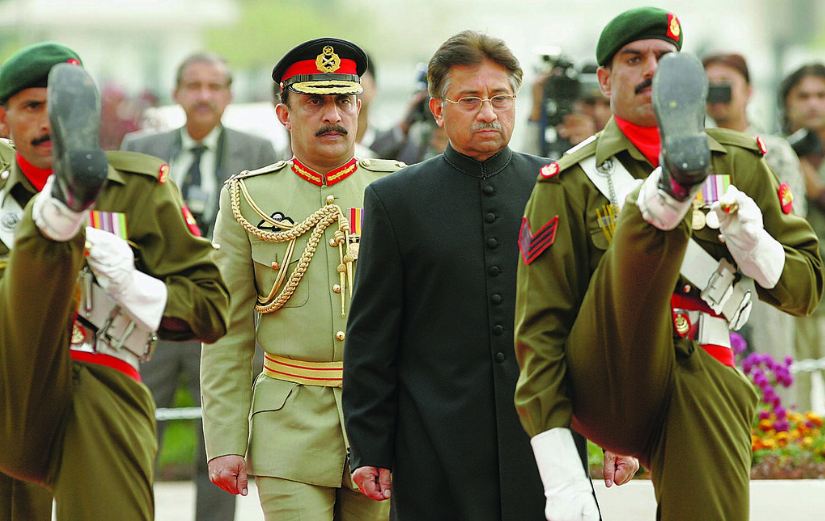
    Former military ruler General (r) Pervez Musharraf on Tuesday was sentenced to death by a special court hearing the high treason case against him.

    The case was reigstered against the ex-dictator for imposing a state of emergency on November 3, 2007, by the Pakistan Muslim League-Nawaz (PML-N) government in 2013 under Article 6 of the counstitution.

    Here is what Article 6 says:

    “Any person who abrogates or subverts or suspends or holds in abeyance, or attempts or conspires to abrogate or subvert or suspend or hold in abeyance, the Constitution by use of force or show of force or by any other unconstitutional means shall be guilty of high treason.”

    The second clause of the article maintains that any person aiding, abetting or collaborating in the acts will also be considered guilty of high treason; while clause 2A states that an act of high treason cannot be validated by any court, including the Supreme Court (SC) and a high court.

    The last clause directs the parliament to provide for the punishment of persons found guilty of high treason, and according to the High Treason (Punishment) Act, 1973, the punishment is death or lifetime imprisonment.

    STATE OF EMERGENCY:

    On November 3, 2007, the then president and chief of army staff (COAS) Musharraf issued a proclamation of emergency, which held the constitution in a state of temporary suspension.

    While he later resigned as army chief 25 days into the emergency on November 28, the state of emergency and its responses are generally attributed to the controversies surrounding his re-election during the presidential election on October 6, 2007, including his holding of both offices of president and COAS at the time.

    Coming to power six years later, Nawaz Sharif had announced putting the former military ruler on trial for treason, saying the former president had committed treason by abrogating the constitution and should be tried under the law.

  • #ThankYouJinnah trends on Twitter as India attacks its own students

    As India enters another day of protests against Modi-government’s Citizen Amendment Bill, Pakistani Twitterati have taken to Twitter to thank Pakistan’s founder Muhammad Ali Jinnah for creating a separate homeland for Muslims.

    Here’s what you need to know about the Citizen Amendment Bill that has now become an act and part of law.

    Slide right for details of the Citizen Amendment Act

    Modi’s government has called in troops to deal with the students, much like it has done in Kashmir. The internet has been shutdown and curfews have been imposed. Unarmed students were beaten in New Delhi and in Assam, three young men have been shot and killed.

    A Pakistani Hindu says that:

  • ‘Saudi Arabia telling a nuclear-power what to do’; Twitter react to PM Imran’s Malaysia decision

    ‘Saudi Arabia telling a nuclear-power what to do’; Twitter react to PM Imran’s Malaysia decision

    Prime Minister (PM) Imran Khan has cancelled his scheduled visit to Malaysia reportedly after succumbing to pressure from Saudi Arabia and Twitter is not happy about it.

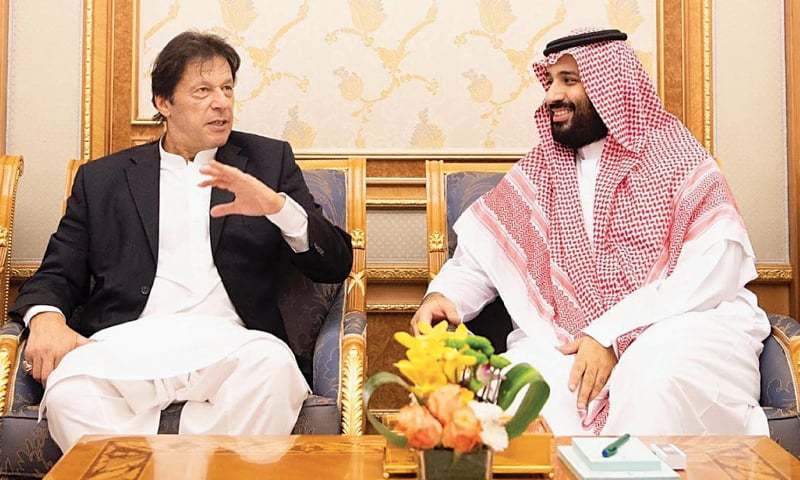
    According to reports, Foreign Minister (FM) Shah Mahmood Qureshi will represent Pakistan in the premier’s place at the Kuala Lumpur Summit scheduled for December 18-20, after a meeting between PM Imran with Saudi Crown Prince Mohammad Bin Salman in Riyadh, during which matters related to bilateral relations were discussed.

    The Kingdom has reportedly raised serious concerns over the statement of Malaysian PM Mahathir Mohammad, who had recently said that the Muslim countries at Kuala Lumpur Summit would form a new platform to replace the Organisation of Islamic Cooperation (OIC) that he said had failed to deliver on issues faced by the Muslims across the world.

    Here’s what politicians and journalists among other Twitterati have to say about PM’s Malaysia decision.

    And many have termed the move “a failure of Pakistan’s foriegn policy”.

    Meanwhile, Special Assistant to Prime Minister (SAPM) on Information and Broadcasting Dr Firdous Ashiq Awan has said that after his Bahrain visit, the premier will travel to Geneva and return to Pakistan Thursday, following which a final decision regarding his Malaysia trip would be taken.

  • Treason case: Gen (r) Musharraf handed death sentence

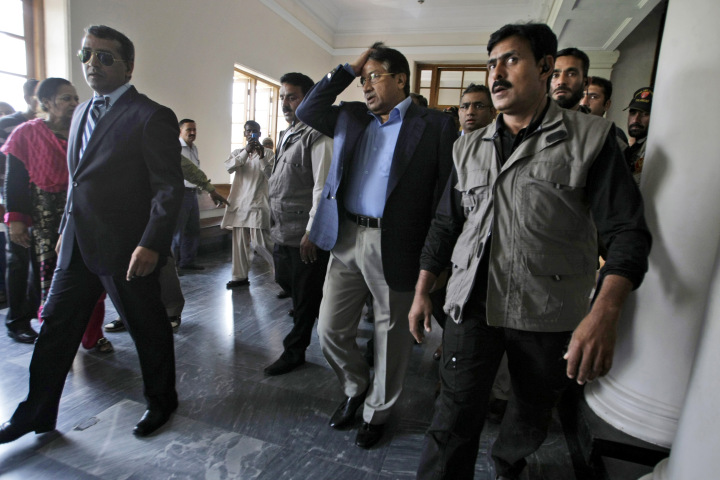
    Former military dictator General (r) Pervez Musharraf on Tuesday was handed death sentence in the high treason case against him.

    The case was being heard by a a special bench comprising Peshawar High Court (PHC) Chief Justice (CJ) Waqar Ahmad Seth Akbar and Justice Shahid Karim of the Lahore High Court (LHC). The bench was formed on the orders of the Supreme Court (SC).

    According to reports, the court, in its short order, said that it analysed complaints, records, arguments and facts in the case for three months, adding that it found Musharraf guilty of high treason according to Article 6 of the constitution.

    It was a majority verdict.

    TREASON CASE:

    The Pakistan Muslim League-Nawaz (PML-N) government had in 2013 filed the treason case against Musharraf over the president’s imposition of extra-constitutional emergency in November 2007.

    Earlier this year, head of the prosecution, Mohammad Akram Sheikh, tendered his resignation. In his resignation letter sent to the interior secretary, Sheikh expressed his inability to proceed with the case after the imminent change of government at the centre.

    Akram was appointed as the head of the prosecution in the case in November 2013, by the then ruling PML-N.

    Musharraf was indicted in the case in March 2014 after he appeared before the court and rejected all charges.

    On March 18, 2016, the former president left the country for Dubai for medical treatment after his name was removed from the exit control list (ECL) on the orders of the Supreme Court (SC).

    A few months later, the special court had declared him a proclaimed offender and ordered the confiscation of his property owing to his continuous inability to appear.

    Later, his passport and identity card were also cancelled on orders of the apex court.