Category: Others

  • Hong Kong-based smartphone company becomes first to start manufacturing in Pakistan

    A Hong Kong-based smartphone manufacturer, Infinix, has become the first smartphone company to start manufacturing in Pakistan. Prior to this, only a certain amount of mobile phones were being assembled within the country, including Xiaomi Mi phones.

    “Fully aligning with the country’s initiative of ‘Make in Pakistan’, the company keeps growing its investment to contribute and help transform Pakistan into a regional tech hub. This is just one step further towards our mission and commitment to putting Pakistan on the road to progress and prosperity,” Infinix Pakistan said in a statement on Friday.

    Located in Pakistan, the Chinese smartphone brand’s manufacturing facility helps prevent the unnecessary worry of coronavirus and the inaccessibility of the newest Infinix products. With the launch of the facility, the company also fulfils its aim of playing its role in empowering the local labour, particularly women, as 60pc of the workforce working in the Infinix Pakistan factory comprised of women.

    The manufacturing vicinity was also visited by Chinese Consul General Li Bijian, who applauded Infinix’s contribution in promoting local employment in the country.

    Talking about their company mission, Infinix Pakistan CEO Joe Hu said, “Infinix’s vision as a company is to enrich our customers’ experiences, whether it is through our products, or what goes in their manufacturing. To be able to play a small part in the empowerment of the labour force in Pakistan, particularly women, is an important step further towards our mission.”

    Infinix’s products in Pakistan are priced from approximately Rs11,000 to Rs40,000.

    The development comes as the government finalises the Mobile Device Manufacturing Policy with the theme ‘Make in Pakistan’ under which regulatory duty (RD) on the local assembly of smartphones (Android) will be reduced from the existing five per cent to zero.

    Within the next two to three years’ time, 40 per cent localisation in manufacturing will be attained, meaning that the charger manufacturing, casing of the phones and its packing would be done locally and with the passage of time 100 per cent manufacturing of android mobile phones will be done.

    Local device manufacturing activity is projected to create 200,000 direct and indirect jobs in the country alongside the development of an efficient manufacturing ecosystem and linking Pakistan to the global supply chain.
  • Cricket trumps all

    Pakistan Super League (PSL) 2020 is the fifth season of the Twenty20 cricket league established by the Pakistan Cricket Board (PCB). And for the first time, all of its matches are being held in Pakistan.

    After the Mumbai attack in November 2008, Indian franchise owners refused to include Pakistani cricketers in the Indian Premier League (IPL) due to pressure from the Board of Control for Cricket in India (BCCI). Pakistan had been working on its own premier league for a while, but the idea of PSL was only materialised under the leadership of former PCB chairman Najam Sethi.

    The first season of PSL was a huge hit and led to an interest in all cricketing countries. PSL opening and closing ceremonies, as well as all the matches, have had record-breaking numbers on the league’s digital platforms. This year, the numbers are said to be even more than the four previous seasons.

    All six teams have their unique qualities as well as strengths and weaknesses. Every cricketing fan in Pakistan has an opinion about these teams and has his or her favourites. While we’ve only had PSL semi-finals and finals in the country in the past, this year’s tournament is even more special with all matches being played here in a development that we had not seen in a long time.

    Although one would think it would lead to full houses in all stadia, only Multan has seen housefuls at matches. Karachi’s turnout has not been that bad and same goes for Rawalpindi, but the most disappointing turnout has been in Lahore.

    Whether it was due to the security arrangements and road closures, one cannot say for sure, but we think Pakistanis should come out in full force to support the PSL. There are 36 international players who are in the country and this gives Pakistan cricket a huge boost as it takes away some of the baggage that we have carried since the terror attack on the Sri Lankan cricket team in 2009.

    To some people, shutting down roads on match days seems like a hassle, but to be fair, this is the only way forward to bring international cricket back to Pakistan. Hopefully, in the years to come, we would not be needing this much security, but for now, we have to live with the discomfort that for the good of cricket and Pakistan, doesn’t seem much.

    Tayyar Ho? Tayyar Hain!

  • OGRA to drastically cut down petrol prices

    OGRA to drastically cut down petrol prices

    The prices of petroleum products are expected to decrease substantially for the month of March, DAWN reported.

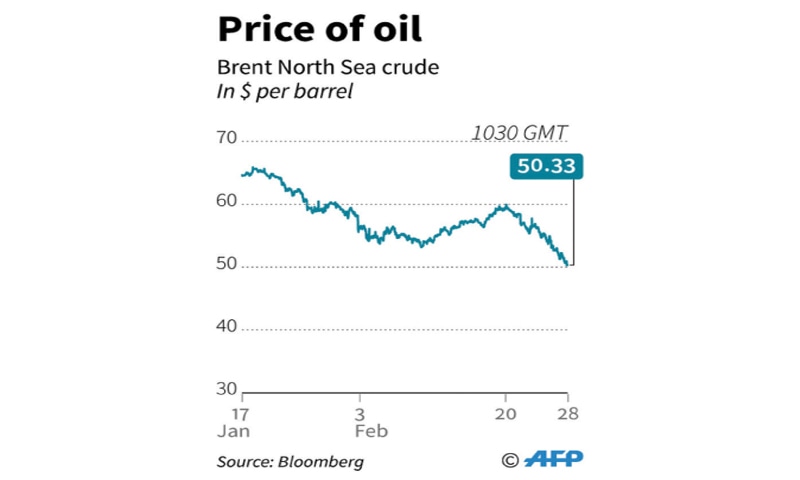
    According to reports, the price of Dubai Crude — a medium sour crude oil extracted from Dubai — came down from $62 per barrel to $50 on Friday.

    READ MORE: Pakistan, US trade negotiation failed.

    Similarly, the benchmark International Brent price reduced from $60 a barrel to $51 a barrel. 

    As per existing tax rates, the Oil & Gas Regulatory Authority (OGRA) calculated about Rs15 per litre reduction in the prices of high-speed diesel (HSD) and petrol. 

    READ MORE: Coronavirus in Pakistan: Prices of face masks increase by 900%

    The authorities concerned have proposed different rates but Prime Minister’s Delivery Unit (PMDU) had proposed scaling down the price of HSD from Rs127 to Rs100 per litre. 

    The officials reportedly advised PM Imran Khan that reduction in HSD price would go a long way in bringing down the rate of inflation because it was the primary source of transportation and agriculture in the country.

    READ MORE: FBR to regulate real estate, jewellers trade to comply with FATF agenda

    Moreover, the price of diesel is lower than petrol in many countries because of its inflationary impact. A drastic reduction in pricing structures to comply with PM’s directives will be problematic and certainly not an easy task.

  • Back to the 40s?

    Back to the 40s?

    While violence against the Muslim community of India is no longer an internal secret of our neighbour, it would be nothing less than hypocrisy to turn a blind eye towards the quality of life of minorities in Pakistan where a majority of them is equally vulnerable due to intolerance rooted in religion or ethnicity.

    When Saadat Hasan Manto finally decided to leave India amid growing communal violence back in the 40s, Indian actor Sunder Shyam Chadda wasn’t very happy with his friend’s decision.

    “Are you going to Pakistan because you think you are a Muslim?” Shyam asked Manto as the former removed the bottle of alcohol from their table.

    “I am a Muslim enough to get killed here,” Manto replied.

    Seven decades later — in the year 2020 — the world’s most populous democracy, under fascist Narendra Modi’s Bharatiya Janata Party (BJP), witnesses similar circumstances as those belonging to India’s minority communities, flee their homes in order to save their lives.

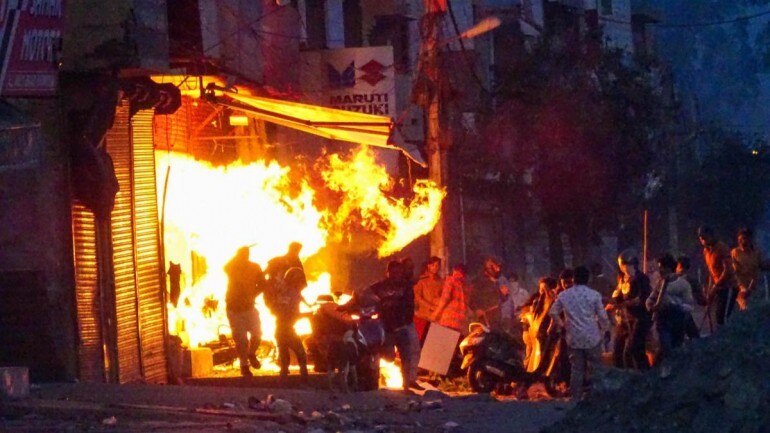
    The recent round of violence against Muslims in India by extremist Hindutva mobs has been the worst with over 40 innocent people losing their lives, mosques being set ablaze and properties of New Delhi’s Muslims being vandalised.

    The situation persisting across Pakistan’s eastern boundaries can be best explained through a mention of suzerainty, under which a single ideology asserts and maintains paramountcy or supremacy over the rest. But the problem in India is further accentuated by the fact that the state’s monopoly over violence has silently been delivered to the goons of the ruling BJP with the promise of targeting Muslims regardless of if they are at home or at a mosque.

    While violence against the Muslim community of India is no longer an internal secret of our neighbour, it would be nothing less than hypocrisy to turn a blind eye towards the quality of life of minorities in Pakistan where a majority of them is equally vulnerable due to intolerance rooted in religion or ethnicity.

    Although analyses suggest the factors that have led to the current upheaval in India are manifold, our focus, for now, will remain on religion since outside India, its importance has been rightly overshadowed by unfolding the neo-liberal agenda New Delhi is trying to implement; for which Hindutva serves as the best medium, and that too in disguise.

    It is nothing but Modi’s model from Gujarat, which is now expanding to Delhi and Ashoknagar.

    Nonetheless, the role of religion in itself cannot be undermined especially in the Indian subcontinent as both in Pakistan and India, religion has remained closely intertwined with politics since even before the partition. And from world-acclaimed statesman Gandhi to today’s fascist Modi, the combination has proved to be lethal while resulting in violence almost every time.

    The use of religion on state-level despite having a secular constitution is to achieve a purposive social order, which in other words is ‘national interest’ based on the exclusion of Muslims and inclusion of corporate and liberal values in society, surprisingly through the conservative ideology of RSS.

    Regardless of the intention behind employing religion in politics, its implications have not been desirable for the general masses, which brings into question the basic understanding of religion. Apart from politics, when religion is examined alone, the underlying principle of religion generally is expounded as that of peace and prosperity.

    Having said that, one inadvertently subscribes to the root word of religion as ‘lig’ and not ‘leg’ where the former means ‘to bind’ while the latter means ‘to gather.’

    Contrary to the broader agreement of religion to be in the greater interest of mankind by making people dependent on each other, the current predominant form of Hinduism in India is that of a certain mindset of people – the Rashtriya Swayamsevak Sangh (RSS) — coming together to serve a ‘holy purpose’ which in this case has become a national interest of BJP’s India.

    In this pretext, the use of religion on state-level despite having a secular constitution is to achieve a purposive social order, which in other words is ‘national interest’ based on the exclusion of Muslims and inclusion of corporate and liberal values in society, surprisingly through the conservative ideology of RSS, which ultimately benefits a handful of people in India by increasing their wealth and stay in power.

    Therefore, while mentioning the Citizenship Amendment Act (CAA), one should always mention its far-reaching effects in the lives of minorities other than Muslims, including Hindus with a working-class background.

  • How to protect yourself from coronavirus at office

    How to protect yourself from coronavirus at office

    The Khyber Pakhtunkhwa government’s Department of Relief, Rehabilitation & Settlement has released a list of directives for its employees to help prevent the spread of the novel coronavirus in shared workspaces.

    Here are the measures you can take to ensure a healthy environment for all employees:

    • Employees must be politely directed against hugging and shaking hands or coming into any needless physical contact with each other. This can help prevent the virus from being transferred to healthy employees from employees who may already have the virus but are not showing its symptoms.
    • Employees must wash their hands at least three to four times a day with soap or an alcohol-based sanitizer
    • All towels in toilets should be changed frequently or replaced with disposable towels that can be trashed after first use.
    • Any tissues, once used, should be disposed of immediately in a trash bin.
    • Biometric attendance to be stopped with immediate effect. This can help prevent the virus from being transferred to healthy employees from a sick individual via biometric machines.
    • Any unnecessary contact with side railings and doors should be avoided.  Healthy employees can pick up the virus by touching surfaces that a sick employee has also touched.
    • Likewise, appropriate safety precautions must be taken when coming in contact with office machinery such as telephones, fax machines and computers.
    • In case of cough and flu, the employee must seek medical attention on first priority.
    • A mask should be worn by any person showing symptoms of cough and flu. This is to prevent the virus from spreading in the environment through coughing and sneezing.
    • Face-masks should be discarded after one day of use.

  • Pakistan, US trade negotiation failed.

    Pakistan, US trade negotiation failed.

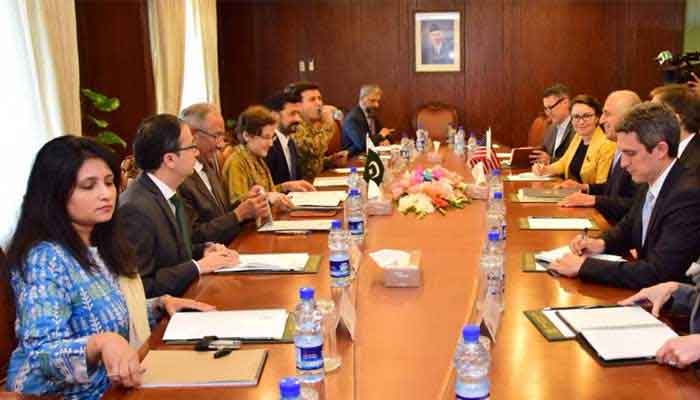
    Despite United States (US) Secretary of Commerce Wilbur Ross’s visit to Islamabad, Pakistan and the US have failed to achieve ‘breakthrough’ for promoting trade ties between the two countries, Geo reported.

    “This high-level visit proved a non-starter because the US did not make any firm commitments on three demands put forth by the Pakistani side on the negotiating table. It can be termed just a posturing visit as a balancing act in the wake of US President Donald Trump’s visit to arch-rival India,” the report said.

    It quoted top officials as noting that the Pakistani side put forward three demands before the US delegation. Pakistan seeks a Free Trade Agreement (FTA), but the US side replied that “they would look into it” and did not make a commitment.

    The delegation also disapproved Pakistan’s proposition to expand GSP Plus list for providing concession on export items from the US side, so it can once again become a non-starting area.

    Furthermore, the Pakistani side demanded moving towards Trade and Investment Framework Agreement (TIFA). However, the US authorities responded that they would see how things could proceed in future.

    Pakistani officials still seemed confident to believe that the US would respond positively on TIFA front in the coming future, but the optimism seems groundless because no commitments have been made.

    Keeping in view experience of the past many years, there have been several occasions when the US agreed to hold talks on TIFA and the Bilateral Investment Treaty (BIT), but it always proved a futile exercise after holding sessions for several years.

  • Coronavirus in Pakistan: Prices of face masks increase by 900%

    Coronavirus in Pakistan: Prices of face masks increase by 900%

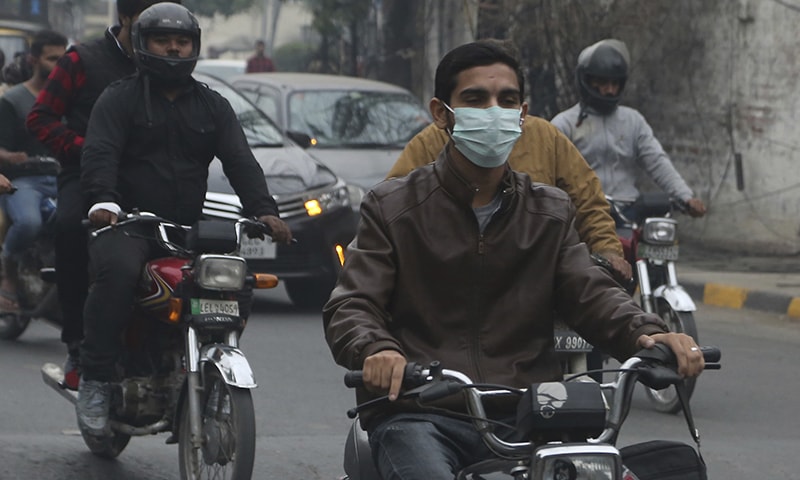
    With a couple of confirmed cases of the new coronavirus — COVID-19 — surfacing in the country, the prices of face or medical masks have increased by staggering 900% as local pharmacies also run out of what is said to provide some protection from the virus.

    While some experts say it provides modest protection against the virus that is new to science, others doubt the effectiveness of such masks for stopping COVID-19 transmission. United States (US) health officials say the virus spreads mostly between people who are in close contact with each other, and from respiratory droplets when an infected person sneezes or coughs.

    China is the world’s largest producer of the said masks, with a reported daily capacity of 20 million pieces, but by the estimate of its manufacturers, domestic demand alone is around 50 to 60 million per day. Amid the surge in demand, medical store owners are citing a shortage of the masks as the reason behind the increase in its price from Rs100 for a box to Rs1,000 for the same in markets across Pakistan.

    CORONAVIRUS IN PAKISTAN:

    First two cases of coronavirus in Pakistan were reported on Wednesday night, one of which was in the provincial capital of the country’s southeastern province of Sindh, and the other in the federal capital.

    While details of the case in Islamabad have not yet been made public, the first reported case is that of a 22-year-old man who, according to government sources, reached Pakistan from Iran by air and has a history of travel to Tehran “from where he acquired the virus”.

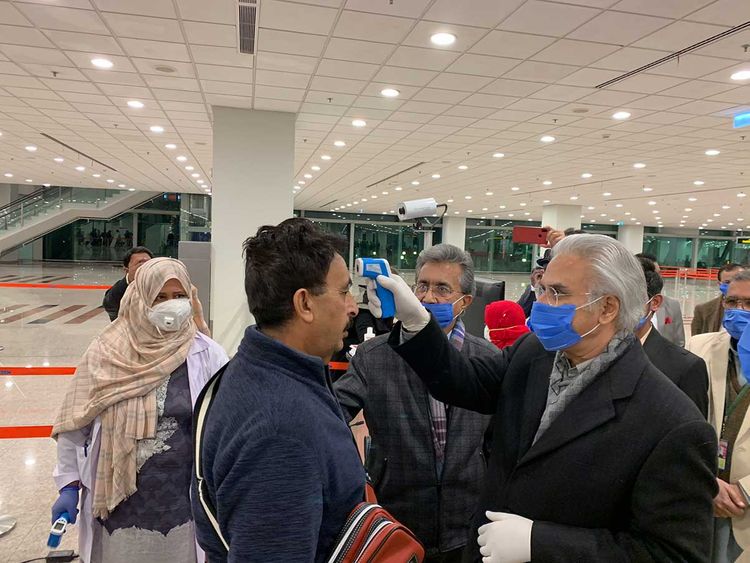
    It was also confirmed by Special Assistant to Prime Minister (SAPM) on Health Dr Zafar Mirza.

    “I can confirm first two cases of coronavirus in Pakistan. Both cases are being taken care of according to clinical standard protocols and both of them are stable. No need to panic, things are under control,” he tweeted.

  • Schools in Sindh and Balochistan closed due to Coronavirus scare

    Schools in Sindh and Balochistan closed due to Coronavirus scare

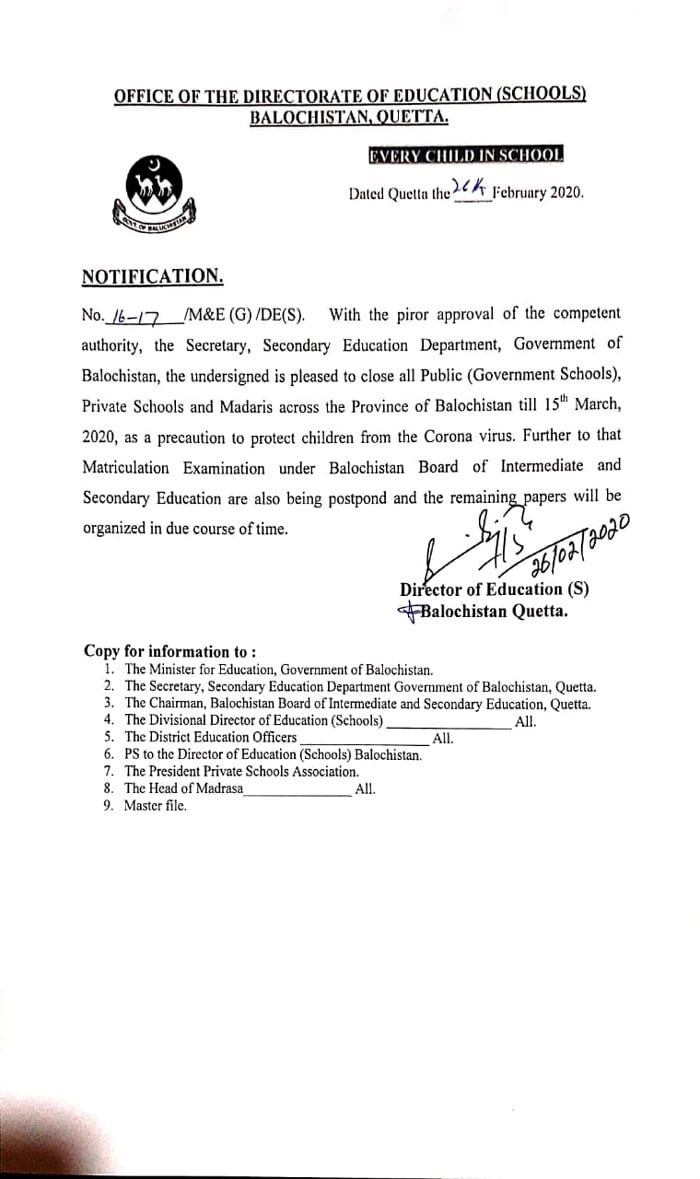
    All public and private educational institutes are closed in Balochistan until March 15 to protect children from the spread of Coronavirus. After two cases were confirmed in Pakistan on Wednesday, one in Karachi and one in Islamabad, governments are taking precautionary measures.

    The notification states that all public and private educational institutes, as well as madrassas, will be closed for more than two weeks.

    “The ongoing examinations of Grade 9 and Matriculation are also suspended,” the education minister said in a video message, “We want to keep our children safe’. He also said that it was a safety measure and no one needed to panic.

    A copy of the notification

    RELATED: Two coronavirus cases confirmed in Pakistan

    Sindh Education Minister Saeed Ghani also announced that the schools in the province would remain closed on Thursday and Friday, after the confirmation of a case in Karachi on Wednesday night.

    Saeed Ghani’s tweet

    The State Minister for Health Dr. Zafar Mirza tweeted last night, confirming the two cases.

    He said that everything was under control and also tweeted a helpline number.

    He asked people to refrain from sharing personal information of the patients saying that the patient in Karachi, as well as his family, was immediately placed in quarantine at a private hospital on the National Stadium Road while the one in Islamabad was moved to the capital’s Pakistan Institute of Medical Sciences (PIMS).

  • Daren Sammy offers match tickets to sobbing Qalandars’ fan

    Daren Sammy offers match tickets to sobbing Qalandars’ fan

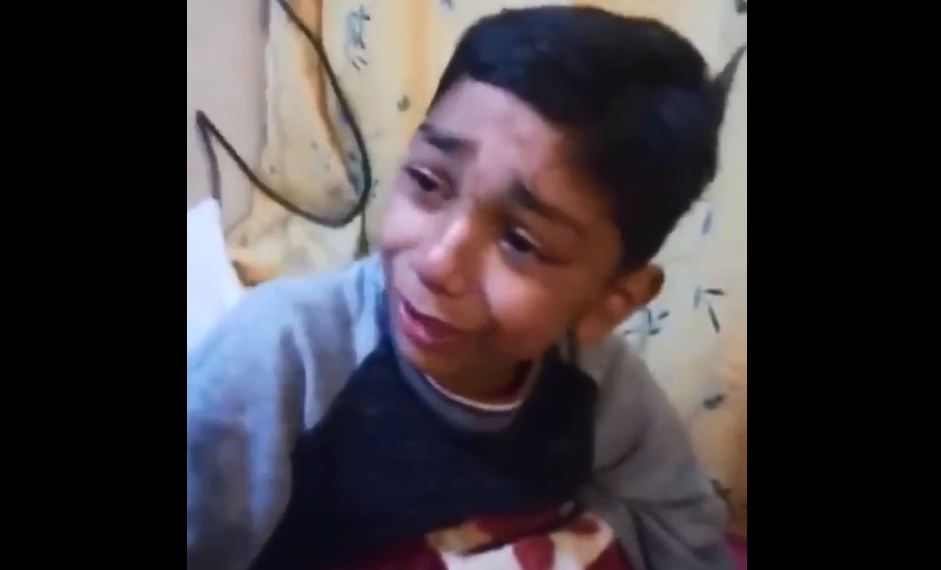
    Karachi Kings’ coach Dean Jones and Peshawar Zalmi captain Darren Sammy retweeted a video of an upset Lahore Qalandar’s fan crying after his team’s defeat on Sunday against Islamabad United.

    Jones took to twitter and asked the kid to support Kings and also offered him tickets to watch the cricket matches.

    Peshawar skipper Sammy also retweeted the video and wrote, “Ok buddy PeshawarZalmi got u come let me dry your tears.”

    A video of a kid who supported Lahore Qalandars went viral on social media. The video shows a young boy sobbing over Sunday night’s defeat of Lahore Qalandars by Islamabad United who won the game by a wicket.

    The kid was sad over Qalandars’ poor performance and Usman Shinwari, the man who bowled the last over in the game.

    Lahore Qalandars lost both matches they played in PSL 5.

  • FBR to regulate real estate, jewellers trade to comply with FATF agenda

    FBR to regulate real estate, jewellers trade to comply with FATF agenda

    The investigation against money laundering now extends to real estate, gold, gems, and jewellery, as the federal board of revenue is making new rules to stop the financing of terrorism and money laundering in these areas, DAWN reported

    What does this mean?

    Jewellers will have to document and record the value of their sales and the information will be shared with the FBR. Any suspicious transactions such as buying of selling of gold and precious stones will also have to be reported. Jewellers will also submit a ‘special return form’ with their data. 30,000 jewellers will be recorded by the FBR.

    READ MORE: Study reveals: Excessive smartphone usage affects brain like drugs

    Law division and Securities and Exchange Commission of Pakistan (SECP) will also monitor services provided by lawyers and chartered accountants.

    “We have sent these rules to the law division for vetting,” FBR spokesperson and Member Policy Dr Hamid Ateeq confirmed. After vetting, he said, the rules would be notified for implementation.

    These rules will also apply to housing authorities and sub-registrar offices for real estate. Property agents will not be covered under these rules.

    The reason for these new regulations is because Pakistan needs to implement new Financial Action Task Force (FATF) rules.The implementations of these rules will help Pakistan get off the FATF grey list.

    FATF strongly urges Pakistan to swiftly complete its full action plan by June 2020.

    READ MORE: As Delhi burns, Gurdwaras open doors to Muslims fleeing violence