Category: Politics

  • Cipher Case: Imran Khan to remain behind bars till September 13

    Cipher Case: Imran Khan to remain behind bars till September 13

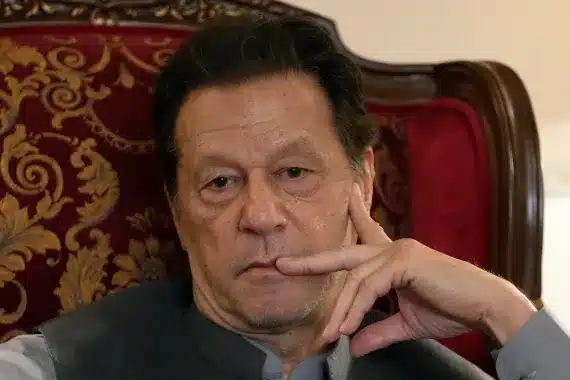
    A special court has extended the judicial remand of former Prime Minister and Pakistan Tehreek-e-Insaf (PTI) Chairman Imran Khan under the official secret act till September 13 in the cipher case. He will remain in jail until September 13, Geo has reported.

    Today’s hearing, conducted in Attock Jail, was headed by Judge Abual Hasnat Zulqarnain. Due to security concerns expressed by the Interior Ministry, the hearing took place at the jail.

    Imran Khan has been imprisoned in the Attock jail since August 5. However, on Tuesday, the Islamabad High Court (IHC) overturned the decision of a lower court to jail Imran Khan for three years.

    According to the report in Geo News, Imran Khan’s five-member legal team including Naeem Haider Panjotha, Salman Safdar, Intizar Panjotha, Ali Ijaz Buttar, and Umair Niazi also attended the hearing.

    On the other hand, a special court extended the judicial remand of Pakistan Tehreek-e-Insaf (PTI) Vice Chairman Shah Mahmood Qureshi in the cipher case for 14 days.


    The FIA’s Counter Terrorism Wing (CTW) detained Qureshi earlier this month after receiving a complaint from Interior Secretary Yousaf Naseem Khokhar alleging violations of Sections 5 and 9 of the Official Secrets Act of 1923, r/w 34 PP.


    “Consequent upon the conclusion of the enquiry No. 111/2023 dated 05.10.2022, registered in the CTW, FIA Islamabad, it transpired that former prime minister namely Imran Ahmad Khan Niazi, former foreign minister namely Shah Mahmood Qureshi and their other associates are involved in communications of information contained in secret classified document (Cipher Telegram received from Parep. Washington dated 7th March, 2022 to Secretary Ministry of Foreign Affairs) to the unauthorised person (i.e. public at large) by twisting the facts to achieve their ulterior motives and personal gains in a manner prejudicial to the interests of state security,” the FIR stated.
  • It is ECP’s responsibility to conduct elections: PPP

    It is ECP’s responsibility to conduct elections: PPP

    In a meeting with the Election Commission of Pakistan’s (ECP) Chief Election Commissioner (CEC) Sikandar Sultan Raja, the Pakistan Peoples Party (PPP) expressed concerns about the upcoming general elections, Geo has reported, reminding the constitutional body that it is its duty to hold timely elections.

    The party has reservations about the date of the elections, stressing that election should be held within 90 days after the dissolution of the National Assembly (NA) as per the constitution.

    On August 17, the electoral body announced the schedule of new delimitations to be carried out as per the new census approved by the Council of Common Interests (CCI) earlier this month.

    According to the ECP schedule, four months are required for the new delimitation, which means that a general election is not possible in the country within 90 days after the dissolution of the provincial and national assemblies.

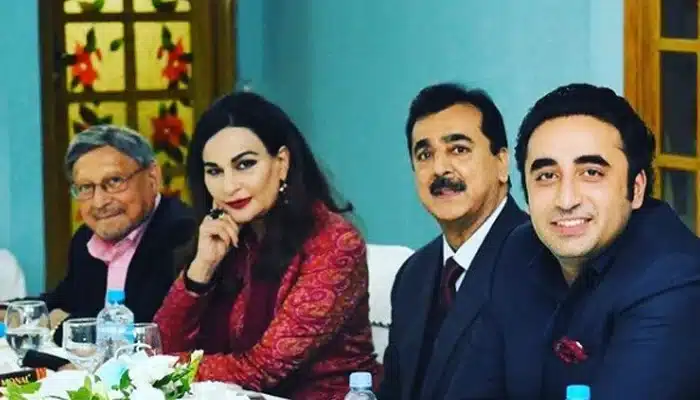
    “We had a meeting with the ECP in a pleasant environment, during which we put forward all our reservations,” said PPP Vice President Sherry Rehman in a press conference held after the meeting.

  • Is Imran Khan leaving Pakistan?

    Is Imran Khan leaving Pakistan?

    Aleema Khan and Uzma Khanum, sisters of Pakistan Tehreek e Insaf (PTI) Chairman Imran Khan, along with his wife Bushra Bibi, met him in Attock Jail on Tuesday, five days after they moved the Islamabad High Court (IHC) seeking permission for the meeting.

    The Khan sisters pleaded with the court they were not allowed to meet the former prime minister by the jail superintendent.

    “We went to meet our brother, former prime minister Imran Khan, in Attock jail on Thursday, but the superintendent did not allow us to meet him,” their plea mentioned, requesting the court to issue directives allowing the meeting to take place.

    During the meeting, Khan’s sisters and wife were accompanied by the party’s legal team comprising four members, as per The News.

    While Aleema and Uzma were meeting their brother for the first time, it was Bushra Bibi’s third visit to her husband, who has been in jail since August 5, after a trial court in Islamabad convicted him in Toshakhana case and handed him a three-year sentence.

    Bushra’s meeting lasted for over an hour during which, it was reported that the couple discussed personal and political issues.

    “Bushra discussed a specific issue with her husband regarding a message from a foreign friend about his settlement abroad,” an intelligence agency source said, as reported by Shakeel Anjum, correspondent of Geo News.

    READ MORE: Imran Khan rearrested in cypher case

  • More than 60 government officials close to PPP added to stop list

    More than 60 government officials close to PPP added to stop list

    The names of more than 60 Sindh government officials close to the Pakistan People’s Party (PPP) have been out on the stop list, Azaz Syed has reported for The News. The name of Mukesh Chawla, a PPP leader and former provincial minister, is also on the list.


    According to the report, the National Accountability Bureau (NAB) is conducting an investigation against Sindh PPP leader Mukesh Chawla, asking that he be added to the stop list.

    These officials will be investigated by NAB Karachi, Azaz Syed has said.

    On the other hand, according to a report filed by Hasnaat Malik in The Express Tribune, the gap between PPP and the security establishment has grown after the dissolution of Sindh Assembly.
    PPP was unhappy to see that government officials on prominent posts were being transferred during the caretaker government, the report said.

  • No country has raised concerns regarding polls delay, says Foreign Office

    Following reports of senior diplomats expressing reservations regarding the delay in polls in Pakistan, while mentioning that it could have negative effects on Pakistan’s relationships with democratic nations, the Foreign Office said it has not yet received any such communication from any capital, sources told The News.

    If a country raises any doubts and concerns, the authorities can address them, the Foreign Office said.

    If elections are delayed beyond February next year, then that might invoke serious consequences for the country. “Frankly, if elections are delayed beyond February, it will be extremely difficult for us to maintain the same level of bilateral engagement with Pakistan as we are doing now,” a source told Express Tribune.

    It is believed that in case of delay in elections, western countries, might revisit their cooperation with Pakistan. This could negatively impact Pakistan’s engagement with US-led financial institutions, including the International Monetary Fund (IMF).
    Not only Western countries want timely elections but they also want a level playing field for all the political parties. “This is something we will be keeping a close eye on,” said another diplomatic source, referring to media restrictions and crackdown against certain political parties.

    Meanwhile, FO Spokesperson Mumtaz Zahra Baloch clarified that she has no knowledge of any messages from any capital on this matter, as the positions of Pakistan and other countries on the issue are already known.

    The sources revealed that the government is well aware of the European Union’s (EU) stance and the International Monetary Fund’s (IMF) perspective on the matter. If parliamentary elections are deferred without valid reasons, the Generalised System of Preferences Plus (GSP+) trade facility could come under scrutiny.

    It has been reported that United States Ambassador to Pakistan, Donald Blome, and some other senior Western diplomats had held meetings with high-ranking officials in Pakistan, including caretaker Prime Minister Anwaar-ul-Haq Kakar and Chief Election Commissioner (CEC) Sikandar Sultan Raja.

    These meetings were aimed at gaining first-hand assessments of the situation. It is understood that these countries have closely followed the developments in Pakistan regarding election preparations and maintained communication with relevant parties to emphasise the preservation of a democratic environment.

    The sources noted that Pakistan has adequately briefed important capitals on the post-dissolution developments in national and provincial legislatures. The government has assured these capitals that the action will strictly adhere to the Constitution and law. The restriction to hold elections within 90 days following assembly dissolution, as stipulated in the Constitution, has been communicated.

    The sources highlighted that the ECP had recently clarified that there are no intentions to delay elections once the delimitation process concludes. Speculation arose that updating electoral rolls based on new delimitations could lead to further delays.

    The electoral body dismissed the concerns, explaining that updating electoral rolls and delimitation can proceed concurrently, as this is not an uncommon practice and would not cause any delay in elections. The ECP has already set December 14 as the deadline for completing the constituency delimitation process, and the enrollment of new voters will also be completed by this deadline.

  • Toshakhana case: Bushra Bibi gets bail till September 12

    Toshakhana case: Bushra Bibi gets bail till September 12

    An accountability court has granted bail to former First Lady Bushra Bibi until September 12 in the Toshakhana case, in exchange for surety bonds of Rs500,000.

    Bushra Bibi has been accused of keeping a locket, chain, earrings, two rings, and a bracelet from Toshakhana state gifts.

    According to a report in Samma News, she is also accused of keeping a gold and diamond necklace and bracelet, as well as gold and diamond ring, earrings, and bracelet.

    According to the National Accountability Bureau (NAB), the gifts were not given to the Toshakhana for fair price calculation.

  • Imran Khan rearrested in cypher case

    Imran Khan rearrested in cypher case

    The Islamabad High Court (IHC) has on Tuesday suspended PTI Chairman Imran Khan’s conviction and three-year sentence in the Toshakhana case.

    Imran Khan was rearrested again in the cypher case right after getting bail in the Toshakhana case.
    According to the judgment of Judge Abul Hasnat Zulqarnain, Khan will remain in police custody until August 30.

    Imran Khan was sentenced to jail for three years on August 5 in the Toshakhana Case. As a result of the sentence, the Election Commission of Pakistan (ECP) also banned Imran Khan for five years from contesting elections.

    Imran Khan has to sumbit a surety bond of Rs 100,000 to get bail, as per Geo.

    The former Prime Minister had challenged his sentence in the high court, with today’s verdict coming as a major legal victory.

    Earlier, Judge Humayun Dilawar of a sessions court in Islamabad found former Prime Minister Imran Khan guilty in the Toshakhana case.

    Khan had been disqualified for five years and given a prison sentence of three years.

    He had also been fined Rs 100,000. The judgement also said that if the fine is not paid, the imprisonment can be increased by six months.

  • KHAN TO BE SET FREE, Shehbaz is NOT happy

    KHAN TO BE SET FREE, Shehbaz is NOT happy

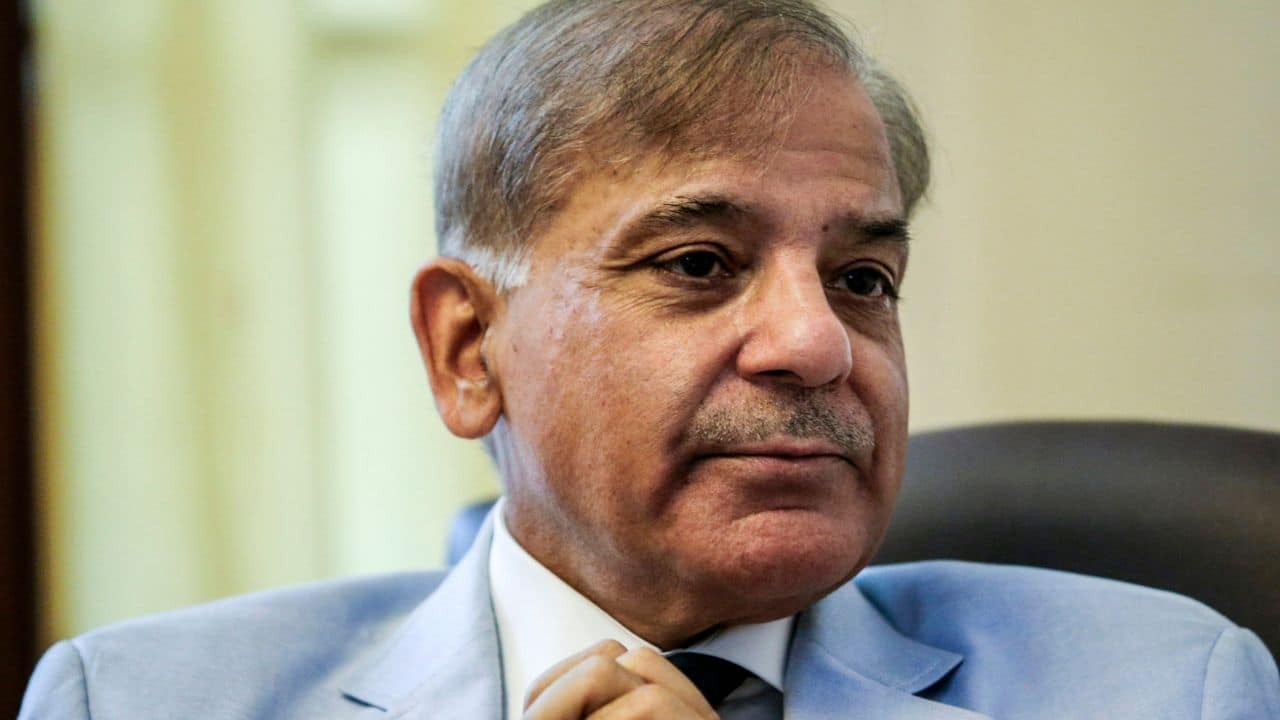
    Shehbaz Sharif took to X (formerly Twitter) and reacted to the Islamabad High Court (IHC) decision suspending Imran Khan’s three-year sentence in the Toshakhana case.”‘Laadla’s’ sentence has been suspended, not terminated,” Sharif wrote, adding that Chief Justice’s message of “Good to see you” and “Wishing you good luck” has reached Islamabad High Court.

    He tweeted, “Before the decision comes, everyone knows what the decision will be, so it should be a momentary concern for the justice system. If a clear message is received from the higher judiciary, then what else should the subordinate court do?”

    He further stated that a monitoring judge was appointed to ensure Nawaz Sharif’s punishment, and the then Chief Justice himself became a monitoring judge to save “Laadla”.

    He added, “This role of the justice system will be written in the dark chapter of history. Scales tilted to one side and a justice system that undermines justice are not acceptable. The law is powerless before the one who sold watch. Thieves and state terrorists will be facilitated, then where will the common man get justice in the country?”

    He also stated that be it May 9, be it an attack on the judicial complex, be it throwing petrol bombs on the police, everything is forgiven.

    READ MORE: Imran Khan’s Toshakhana conviction suspended by Islamabad High Court

  • Imaan Mazari handed to police on three day physical remand

    Imaan Mazari handed to police on three day physical remand

    An anti-terrorism court has handed over Imaan Mazari, the daughter of former federal minister Shireen Mazari, to the police on a three-day physical remand.

    Anti-Terrorism Court Judge Abual Hasanat heard the case against Imaan Mazari in which prosecutor Raja Naveed appeared in court while Zainab Janjua appeared on behalf of Iman Mazari.

    During the hearing, prosecutor Raja Naveed argued that a case had been registered against Imaan Mazari in Bara Kahu police station. The plaintiff accused Imaan Mazari of inciting the youth and instigating them against the state, alleging that he received threats when he broke away from Imaan Mazari’s party.

    Prosecutor Raja Naveed requested the physical remand, which was opposed by her lawyer, saying that a new case was made on the same day that Imaan was supposed to get bail. He asked how can three cases be registered on the same incident.

    She said that a drama is being constructed against Imaan Mazari, while the real purpose of the prosecution against her is something else.

    Imaan’s lawyers requested to discharge her from the case.

    After listening to the arguments of the parties, ATC judge Abual Hasnat reserved the decision, after which she was handed over to the police on a three-day physical remand.

  • Libyan Foreign Minister suspended, flees after meeting with Israel

    Libyan Foreign Minister suspended, flees after meeting with Israel

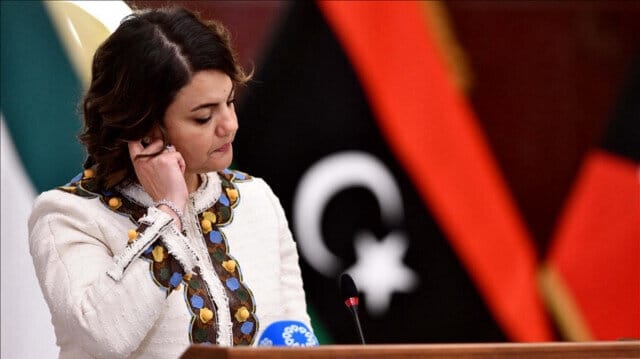
    AP — Libya’s Foreign Minister, Najla El Mangoush, fled the country after the Libyan Prime Minister suspended her on Monday because she met with her Israeli counterpart.

    In its support for Palestine, Libya does not recognise Israel as a state. Thus, the foreign meeting resulted in public outrage. On the contrary, Israel is working on instituting closer relations with the Arab countries.

    Israeli Foreign Minister Eli Cohen called their meeting “historic”, and being “the first step” in establishing relations with Libya.

    Israel’s statement regarding the talks came as a surprise. The Speaker’s Office in the Libyan parliament deemed Najla Mangoush’s meeting as treason, and Prime Minister Abdul Hamid Dbeibah has called for an investigation.

    On Monday, an Israeli official told the BBC that the meeting was not a “chance encounter” but planned in advance — contrary to Libya’s foreign ministry portrayal.

    According to the official, the two sides agreed to the focus of the published statement, which was due to be published on Monday but was released on Sunday instead after the story was leaked to the Israeli media.

    Israeli opposition leader Yair Lapid accused the Israeli foreign ministry of being “amateurish [and] irresponsible” and having committed “a serious failure of judgement”.

    In Sunday’s statement, Eli Cohen revealed the discussions which held “great potential for the relations” between Israel and Libya. He added that they talked about Israeli aid in humanitarian issues, agriculture, water management and the importance of preserving Jewish heritage in Libya, including renovating synagogues and cemeteries.

    Libya’s Presidential Council requested “clarification” from the government regarding the matter. The Presidential Council operates as head of state and is in charge of the country’s military.

    A letter from the body stated that the meeting between the two foreign ministers “does not reflect the foreign policy of the Libyan state, does not represent the Libyan national constants and is considered a violation of Libyan laws which criminalise normalisation with the ‘Zionist entity’”.

    It also suggested “to apply the law if the meeting took place”.