Category: Politics

  • Protesters put former Sri Lankan PM’s ancestral house on fire

    Protesters put former Sri Lankan PM’s ancestral house on fire

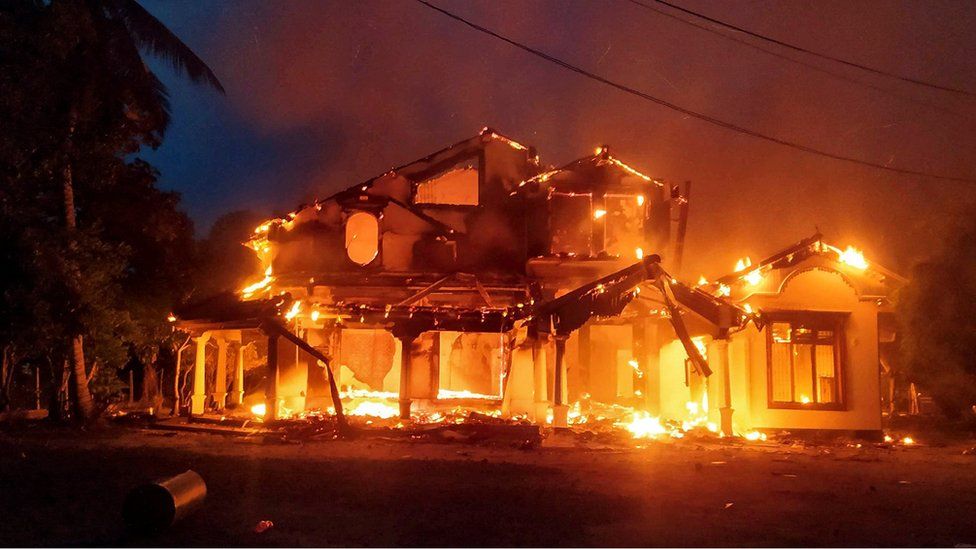
    The ancestral home of Former Sri Lankan Prime Minister (PM) Mahinda Rajapaksa in the southern district of Hambantota, was set on fire after his resignation on Monday.

    Video footage showed the entire house burning. Later, the police were forced to use tear gas to disperse protesters. Not only this, the protestors also attacked the homes of at least 31 politicians.

    The country is facing months of street protests because of inflation and mismanagement of government finances which has left the nation with as little as $50 million of useable foreign reserves.

    On Monday, Rajapaksa resigned amid mass protests because of the economic crisis in Sri Lanka.

    Sri Lanka gave emergency powers to its military and police to detain people without warrants. A recent clash in the country resulted in the killing of eight people and injured more than 200. Ruling party parliamentarian Amarakeerthi Athukorala died after a standoff with anti-government protesters in the town of Nittambuwa near Colombo.

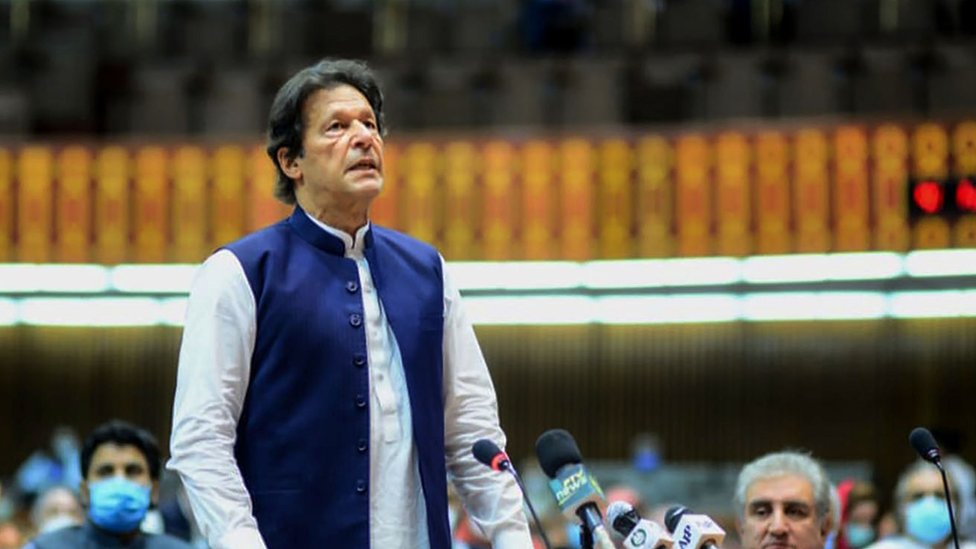
  • If Khan is arrested, protests will be held across the country: PTI

    If Khan is arrested, protests will be held across the country: PTI

    Speaker National Assembly (NA) Raja Pervez Ashraf on Tuesday said that former Prime Minister Imran Khan is still a member of the National Assembly, adding that he is yet to resign, reports Geo News.


    The speaker has sent letters to Pakistan Tehreek-e-Insaf (PTI) members in order to confirm their resignations.

    It was further reported that PTI has decided not to appear before the Speaker National Assembly to confirm their resignations. It is also being reported that the PTI fears that more than two dozen members may refuse to confirm in front of the speaker.

    Geo News further reports that if Khan is arrested, protests would be held across the country and important highways would be blocked.

  • Explainer: What is happening with the United States abortion laws?

    Explainer: What is happening with the United States abortion laws?

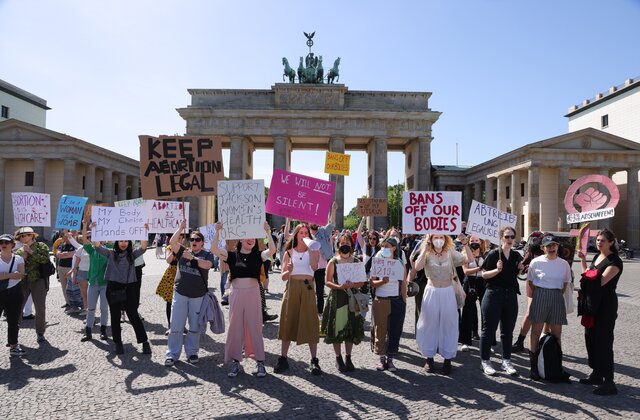
    People in the United States are protesting against the possibility of a ban on abortions. A leaked document suggests that abortion will be banned in the country. People are protesting against it, and many pro-abortion, pro-choice rallies and demonstrations have taken place in the past few weeks.

    So what happened?

    A 98 page leaked US Supreme court draft was published by the news site Politico. The leaked document shows that majority of judges have voted to strike down the landmark 1973 Roe v Wade ruling, that has guaranteed the right to abortion in the United States for decades. But, according to the draft, there are plans to overturn the 1973 ruling.

    The leaked document is an unofficial judgment of Dobbs v Jackson Women’s Health Organisation. The case that will determine whether pregnant people have a constitutional right to choose abortion in the US.

    What is the Dobbs vs Jackson case?


    The US Supreme Court is debating Dobbs v. Jackson Women’s Health Organization, a case involving a Mississippi legislation prohibiting abortion beyond 15 weeks. The conservative litigants specifically request that the Supreme Court overturn Roe, and the justices have indicated that they are willing to do so. In 2018, Mississippi passed the Gestational Age Act (“HB 1510”), which prohibits abortions after 15 weeks, except in cases of a medical emergency or severe fetal abnormality.

    In the same year, Jackson Women’s Health Organization, a clinic and abortion facility in Mississippi, challenged the constitutionality of the “Gestational Age Act” in federal court.

    What is the 1973 judgement Roe v. Wade?


    The landmark 1973 ruling protects the constitutional right to have an abortion.

    Roe v. Wade was a historic legal decision delivered by the United States Supreme Court on January 22, 1973, in which the court overturned a Texas law prohibiting abortion, essentially legalising the operation throughout the United States.

    “The court held that a woman’s right to an abortion was implicit in the right to privacy protected by the 14th Amendment to the Constitution. Prior to Roe v. Wade, abortion had been illegal throughout much of the country since the late 19th century. Since the 1973 ruling, many states have imposed restrictions on abortion rights.”

    What are US politicians saying?


    US president Joe Biden called it “really quite a radical decision” that reflects a “fundamental shift in American jurisprudence”.

    US vice-president Kamala Harris told a conference on Tuesday: “Women’s rights in America are under attack. Today, we know our purpose. We also know what we are up against. Let us fight with everything we’ve got”.

    What would happen if the 1973 judgment is overturned?
    Before 1973, abortion regulations varied greatly across the country. Some states outlawed all abortions, while others allowed them under limited conditions. Roe v. Wade provided a legal framework for abortion laws at the federal level by ruling that a Texas abortion statute was unconstitutional. As a result, if Roe is overturned, states will once again be free to restrict abortion.

    Thirteen states have “trigger laws” that would prohibit abortion if the Supreme Court overturns the decision.
  • US to pressure Taliban if they don’t remove restrictions on women

    US to pressure Taliban if they don’t remove restrictions on women

    The United States (US) has said that it will put pressure on Afghanistan’s Taliban government if the group does not reverse some of its recent restrictions on Afghan women, reports Reuters.

    US State Department spokesperson Ned Price reported saying on Monday: “We have addressed it directly with the Taliban. We have a number of tools that, if we feel these won’t be reversed, these won’t be undone, that we are prepared to move forward with.”

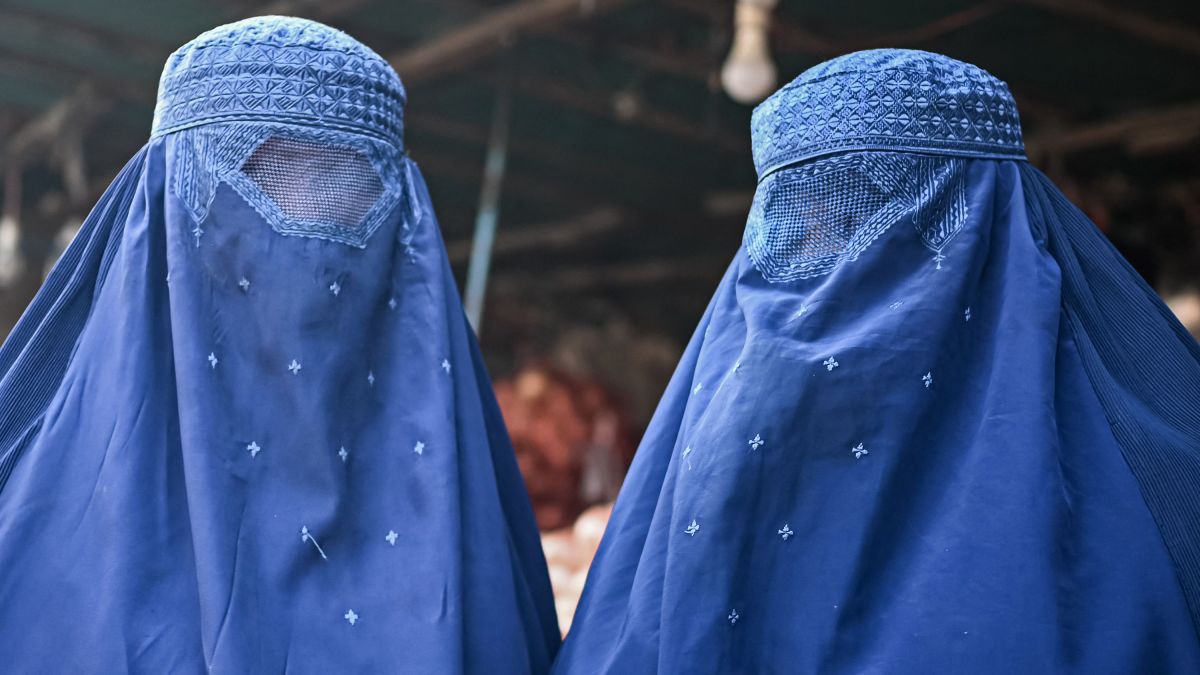
    Last week, the hardline group ordered women to cover themselves from head to toe in public, expanding a series of oppressive restrictions on women that dictate nearly every aspect of public life.

    Recently, the Taliban has reportedly stopped issuing driving licenses to women. However, there has been no official confirmation. Local media reports, cited by news agencies, said verbal orders have been issued to stop giving driving licenses to women, according to the Independent UK.

    Despite the fact that the international community, has on multiple occasions, made the education of girls a key demand for any future recognition of the Taliban administration, the group has barred Afghan girls from going to school beyond the seventh grade. Moreover, they have restricted women and girls from working and have limited their travel unless accompanied by a close male relative.

  • Nawaz summons party leadership, PM Shehbaz on his way tonight

    Nawaz summons party leadership, PM Shehbaz on his way tonight

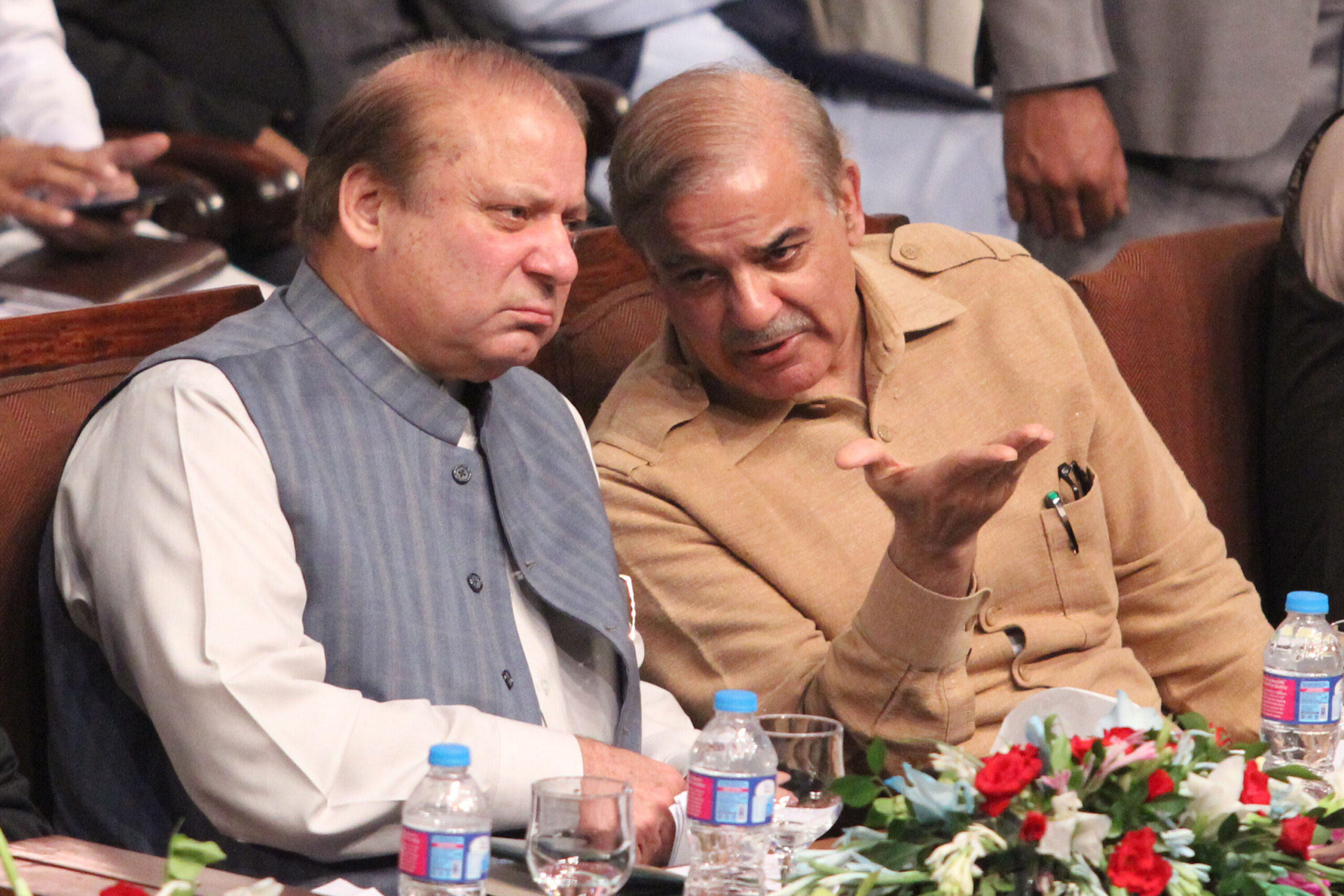
    Pakistan Muslim League-Nawaz (PML-N) supreme leader Nawaz Sharif on Tuesday called an emergency meeting of the party and summoned the central leadership including Prime Minister Shehbaz Sharif to London, reports Geo News.

    As per media reports, Nawaz Sharif declined the proposal of a video link meeting and directed the central leadership of the party to reach London. PML-N leader Shahid Khaqan Abbasi is already in London while PM Shehbaz Sharif, Ahsan Iqbal, and Mariyyum Aurangzeb are likely to leave for London in a day or two.

    Nawaz Sharif has reservations on some issues and the PML-N leadership has gone to discuss them with him, reports the news outlet. After being summoned by Nawaz Sharif, Prime Minister Shehbaz Sharif will leave for London tonight.


  • Covid rise: PM orders reopening of National Command and Operation Center

    Covid rise: PM orders reopening of National Command and Operation Center

    Prime Minister (PM) Shehbaz Sharif has ordered the immediate restoration of the National Command and Operation Centre (NCOC) after Pakistan reports its first case of the Covid Omicron sub-variant. The NCOC was disbanded in March after covid cases were on the decline.

    According to a statement issued by the Prime Minister’s House, the premier took notice of the new variant of Omicron and its growing cases. “He has also sought a report from the National Institute of Health (NIH) over the current Covid-19 situation,” it said.

    https://twitter.com/PMO_PK/status/1523912826787667968?s=20&t=TXvYAouDrl9564PVgoXaQw

    Pakistan detected its first case of Omicron sub-variant on Tuesday.

    “NIH has detected the first case of Omicron sub-variant BA.2.12.1. This new sub-variant is causing an increasing number of cases in different countries.” NIC also advised citizens to take preventive measures.

    NCOC, which was tackling Covid-19 in Pakistan, was shut down on March 31.

    On March 16, NCOC decided to lift all the Covid-19 related restrictions amid the decline in cases.

  • Punjab Governor Omar Sarfraz Cheema removed by federal government

    Punjab Governor Omar Sarfraz Cheema removed by federal government

    Punjab Governor Omar Sarfraz Cheema has been de-notified on Tuesday after President Arif Alvi’s rejection to approve Prime Minister (PM) Shehbaz Sharif’s summary to remove Cheema from his post.

    President Alvi had conveyed to the prime minister that the Punjab governor cannot be removed without his approval.

    However, in contrast to the president’s rejection of the PM’s advice, the federal cabinet division issued a notification regarding the removal of Omar Cheema as governor of Punjab.

    “In terms of Article 101 and proviso to Article 48 (1) of the constitution of the Islamic Republic of Pakistan, read with serial No. 2D of schedule V-B to the Rules of Business, 1973 and the Prime Minister’s advice (s) rendered on 17-04-2022 and 01-05-2022 for removal of Governor of Punjab, Mr Omer Sarfraz Cheema ceases to hold the office of the Governor Punjab, with immediate effect,” the notification read.

    The Punjab Assembly speaker Chaudhry Pervaiz Elahi shall perform the functions of the governor till the appointment of an incumbent, in accordance with Article 104 of the Constitution.

    Cheema was appointed Punjab Governor by Imran Khan during his last days in power. 

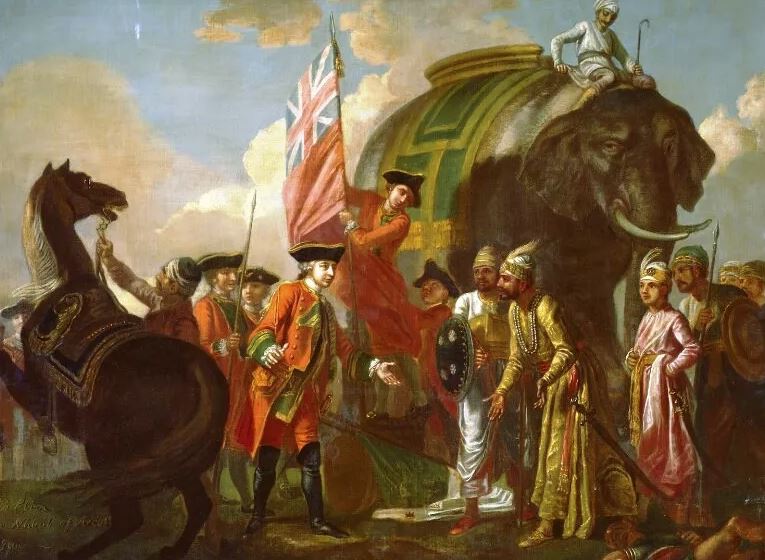
  • Heard it but know it? Who are Mir Jafar and Mir Sadiq?

    Heard it but know it? Who are Mir Jafar and Mir Sadiq?

    Former Prime Minister and PTI Chairman Imran Khan at many instances hit out at the opposition by calling them the ‘Mir Jafars and Mir Sadiqs’ of present time.

    Mir Jafar and Mir Sadiq are two people from 18th-century India who are symbolised as the subcontinent’s ultimate sin of ghaddari (treason), like a South Asian version of Brutus, the man who betrayed Roman Emperor Julius Caesar. But who were they really? Let’s find out.

    Who Was Mir Jafar?

    Mir Jafar was born in the late 17th century. He served as a Bengal crown major general. Jafar replaced Siraj-Ud-Daulah as the eighth Nawab of Bengal with the help of the British under Robert Clive. Mir Jafar was forced to cede some area around Calcutta in exchange for British assistance in the conspiracy that brought him to the throne, to confirm and expand British economic advantages, and to make large public and private payments as rewards and indemnities to his British supporters. These payments bankrupted the state, and his power was quickly lost.

    Who was Mir Sadiq?
    Tipu Sultan of Mysore appointed Mir Sadiq as a minister in his cabinet. He supposedly betrayed Tipu Sultan during the Siege of Srirangapatana in the Fourth Anglo-Mysore War in 1798–99, clearing the door for a British triumph. He betrayed Tipu by assassinating Tipu’s loyalist Ghazi Khan and then trapping Tipu behind sealed doors. Following the loss, Sadiq was assassinated by some of the bewildered Mysorean forces as he attempted to cross the border to greet the Brit

  • Who is going to be the next governor of Sindh?

    Who is going to be the next governor of Sindh?

    The Pakistan Muslim League-Nawaz (PML-N) led government has decided to appoint their party ally Muttahida Qaumi Move­ment-Pakistan’s (MQM-P) senior leader Nasreen Jalil as the governor of Sindh.

    If Jalil becomes the next governor, she would be the second female governor in the province’s history after the first Prime Minister (PM) Liaquat Ali Khan’s wife Begum Raana Liaquat Ali Khan who served in the 1970s.

    The office of the Sindh governor fell vacant on April 12 when Pakistan Tehreek-e-Insaf’s (PTI) leader Imran Ismail resigned, hours before PM Shehbaz Sharif took oath as the premier of Pakistan.

    Nasreen Jalil was born in Lahore but she spent most of her time in Karachi. In her childhood, she lived in London. She went to Paris for her education. She joined MQM and started her political career in Karachi. She served as a senator two times. Nasreen Jalil had been elected as chairperson of the Senate Standing Committee on Human Rights in 1994 and 2012.

    Following the news, the former Information Minister Fawad Chaudhry took to Twitter, saying the “crime minister” has proposed the name of Nasreen Jalil as Sindh governor. He claimed that Jalil had written a letter to the Indian high commissioner on June 18, 2015, and sought ‘help’ against Pakistan’s law enforcement agencies.

    Similarly, PTI’s Imran Ismail and former Sindh governor said that it appears that in order to become part of the present government it has become ‘imperative’ that one should be on bail or an “expert of vicious attacks” on security institutions.

    Responding to Ismail’s tweet, Federal Minister for Maritime Affairs Senator Faisal Subzwari cleared that the letter was written to all diplomats.

    He admitted that it was the party office’s mistake that the name of the Indian diplomat was not excluded from the list of diplomats. However, this letter surfaced in 2015 and its contents were before everyone.

  • ‘Maybe PTI does not trust the court’: Justice Athar Minallah

     Islamabad High Court (IHC) Chief Justice (CJ) Athar Minallah on Monday questioned former Interior Minister Sheikh Rasheed if he trusted the IHC.

    Justice Minallah said that it seemed as if the Pakistan Tehreek-e-Insaf (PTI) did not have faith in the courts.

    “It is said in rallies that courts are not independent. Political statements are made at rallies questioning why courts opened at night. It is said that the courts open at the behest of someone,” he said.

    IHC Chief Justice Athar Minallah heard the petition of the former interior minister against the appointment of Hanif Abbasi as a Special Assistant to Prime Minister (SAPM), with Sheikh Rasheed appearing before the court on Monday.

    The IHC CJ summoned Rasheed to the rostrum and said, “These courts are for everyone. Perhaps, people don’t believe this.”

    “Important cases of this country are being heard in this court,” he said, further telling Rasheed that the IHC would hear his plea if he had faith in his court. Justice Minallah said important and big cases are pending in the high court, like the cases of missing persons and Baloch students.

    “There are other courts and judges who, too, can hear your cases. But if Imran Khan does not have faith [in this court] … I will refer the case to another court,” he stated.

    “If you have faith in it, then this court would hear your case. Also, ask the PTI chairperson about this,” Justice Minallah said, adding that the courts had been “issuing judgements for the weak”.

    “Your lawyers must have told you that there are rules and the chief justice can take up a case at any time,” CJ IHC told Rasheed.

    Rasheed said that he had appeared before the court because he had faith in it. “I will talk to Imran Khan,” added Rasheed.

    Justice Minallah said, “One should have the respect for the judiciary in their heart.” He then told Rasheed to “decide by tomorrow” whether he had faith in his court.

    At that, Rasheed asserted that he was already decided on the matter.

    “I have been a minister 16 times and that is why I have appeared before the court,” said Rasheed.

    IHC directs PM Shehbaz to review Hanif Abbasi’s appointment as SAPM

    IHC on Monday directed Prime Minister Shehbaz Sharif to review his decision of appointing Hanif Abbasi as his special assistant.

    Rasheed had filed the petition challenging Abbasi’s appointment on May 6.