Category: Politics

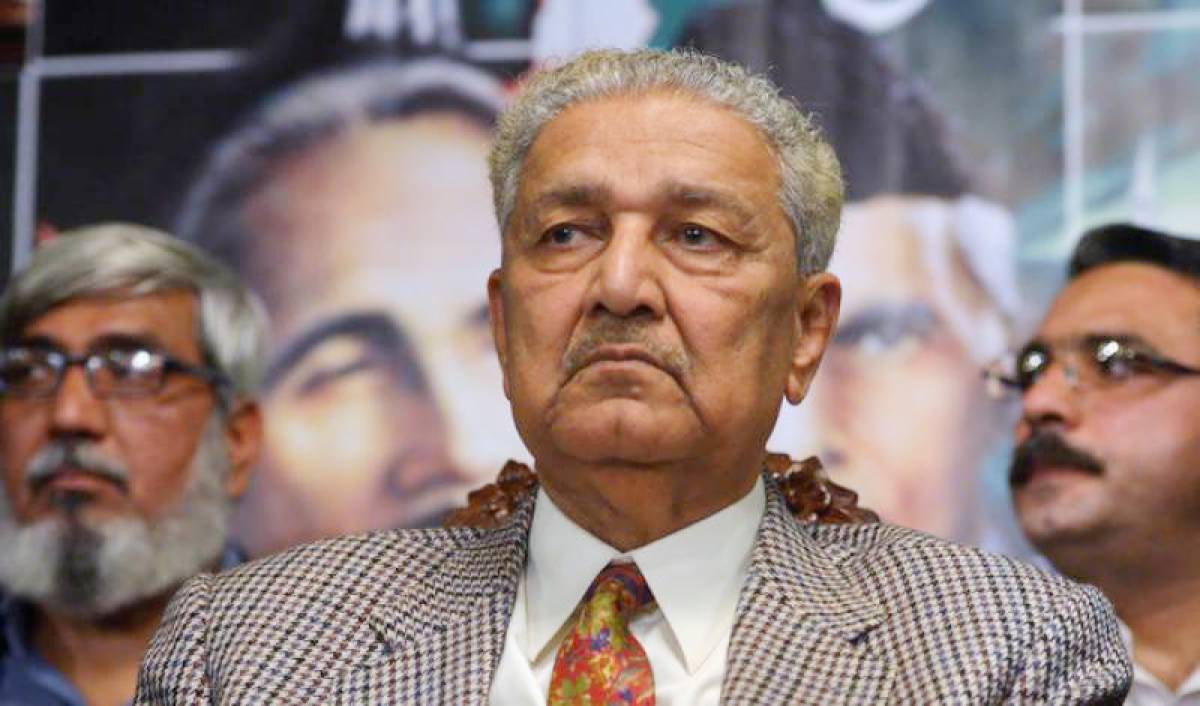
  • Dr Abdul Qadeer Khan passes away at 85

    Dr Abdul Qadeer Khan passes away at 85

    Pakistan’s nuclear scientist Dr Abdul Qadeer Khan passed away in Islamabad on Sunday morning at the age of 85.

    Dr Khan was admitted to a local hospital where his health deteriorated early morning. PTV said that the nuclear scientist died after being transferred to a hospital with lung problems, reports Radio Pakistan.

    “Under the directions issued by Prime Minister Imran Khan, Dr Khan would be given a state funeral,” said Interior Minister Sheikh Rashid.

    Prime Minister Imran Khan took to Twitter and wrote Dr Khan was loved by the nation because of his critical contribution to making Pakistan a nuclear weapon state.

    “This has provided us security against an aggressive much larger nuclear neighbour. For the people of Pakistan he was a national icon,” he said, adding that he would be buried in Faisal Mosque “as per his wishes”.

    President Dr Arif Alvi said, “He helped us develop nation-saving nuclear deterrence, and a grateful nation will never forget his services in this regard.”

    Leader of the Opposition in the National Assembly Shehbaz Sharif said that the nation had lost “a true benefactor who served the motherland with heart and soul”.

    According to a statement issued by the Inter-Services Public Relations (ISPR), Chairman Joint Chiefs of Staff Committee General Nadeem Raza and all services chiefs expressed sorrow over Dr Khan’s passing.

    The ISPR statement also quoted Chief of Army Staff General Qamar Javed Bajwa as saying that he had rendered invaluable services to strengthen Pakistan’s defence capabilities.

    Born in 1936 in Bhopal, India, Dr Khan had immigrated along with his family to Pakistan in 1947 after the partition of the subcontinent.

    After learning of India’s nuclear test in 1974, Dr Abdul Qadeer Khan joined his nation’s clandestine efforts to develop nuclear power, read Radio Pakistan’s statement.

    He founded the Khan Research Laboratories in 1976 and was both its chief scientist and director for many years.

    He was awarded Nishan-i-Imtiaz for his services to the country.
  • US Deputy Secretary of State receives cold reception upon her arrival in Pakistan

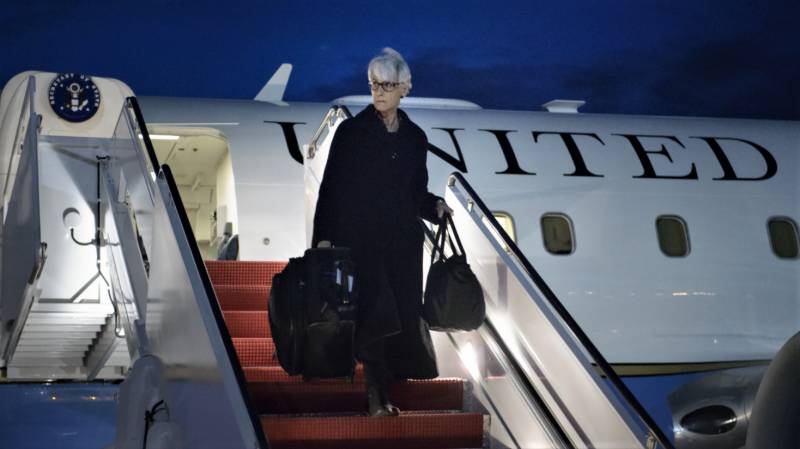
    US Deputy Secretary of State receives cold reception upon her arrival in Pakistan

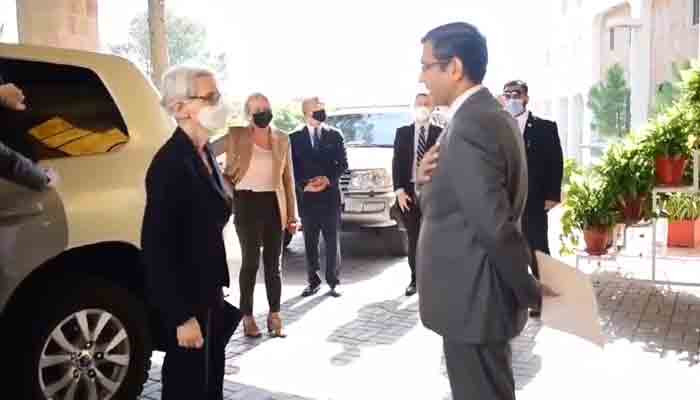
    United States (US) Deputy Secretary of State Wendy R Sherman, following her visit to India, received a cold reception upon her arrival in Islamabad as per The News.

    She was welcomed by a mid-level diplomat, instead of her counterpart, Foreign Secretary Sohail Mehmood.

    Well aware of Pakistan concerns: Wendy R Sherman

    Before coming to Pakistan, Sherman in Mumbai had made it very clear that the US was not interested in a broad relationship with Pakistan, beyond Afghanistan.

    She stated, “My visit to Pakistan is for a very specific narrow purpose and the United States does not see itself building a broad relationship with Pakistan and we have no interest in returning to days of hyphenated [India and Pakistan]. That is not where we are. That is not where we’re going to be.”

    “My visit to Pakistan in the context of Afghanistan is in a bid to make sure that Pakistan has the capabilities to ensure everybody’s security, including India’s and the US”, she said as she left India.

    According to The News, the government was shocked at Sherman’s undiplomatic statements that she had made in India.

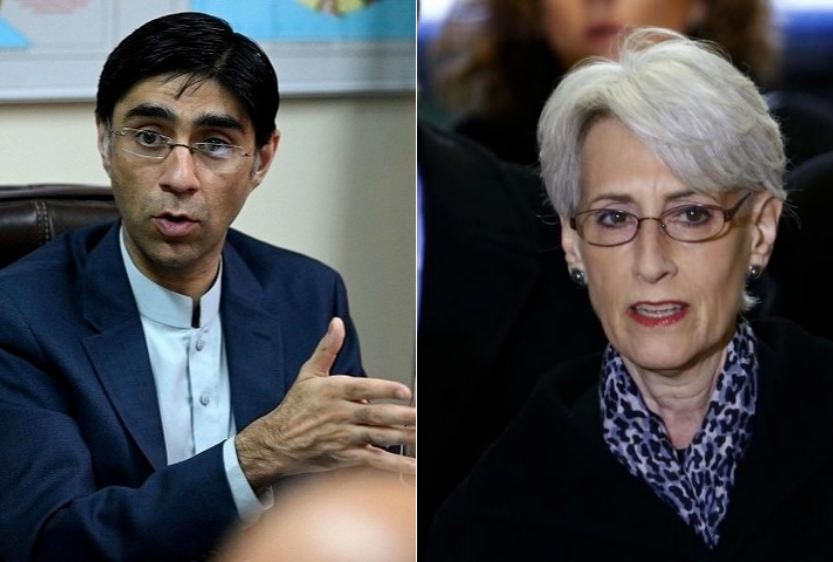
    Sherman met with the National Security Adviser (NSA) Moeed Yusuf where he stressed that the world “must maintain contact” with the interim Taliban government in Afghanistan.

    Furthermore, Yusuf blatantly said that Indian human rights violations in Indian Illegally Occupied Jammu and Kashmir (IIOJK) also pose a threat to regional peace.

    Foreign Minister (FM) Shah Mahmood Qureshi met the Deputy Secretary on Thursday but he didn’t tweet about the meeting. However, Sherman tweeted, “I met today with Pakistan FM to discuss Afghanistan’s future and the important and long-standing US-Pakistan relationship. We look forward to continuing to address pressing regional and global challenges.”

    https://twitter.com/DeputySecState/status/1446387306131251235?s=20

    Sherman also met Chief of the Army Staff (COAS) General Qamar Javed Bajwa where matters of mutual interest, regional security situation, and collaboration in humanitarian measures in Afghanistan were discussed.

    Apart from the meetings, while talking to The News’ editors, Sherman said she believed US President Joe Biden will soon talk to Prime Minister (PM) Imran Khan. She said, “We have an idea that every country wants to have a telephone conversation with US President. I am sure that this conversation will be held with PM Khan soon.” 

    “I am sure that this contact will take place soon, so I don’t think it should mean anything else,” she added.

    Moreover, while replying to a question about a bill presented in September by 22 Republican senators targeting Pakistan, Sherman assured, “We get hundreds of bills; thousands of people are behind them but we are well aware of Pakistan’s concerns and are closely looking at the situation.”

  • ‘Pakistan should be very proud of last 42 years of helping Afghan refugees’: Wendy Sherman

    ‘Pakistan should be very proud of last 42 years of helping Afghan refugees’: Wendy Sherman

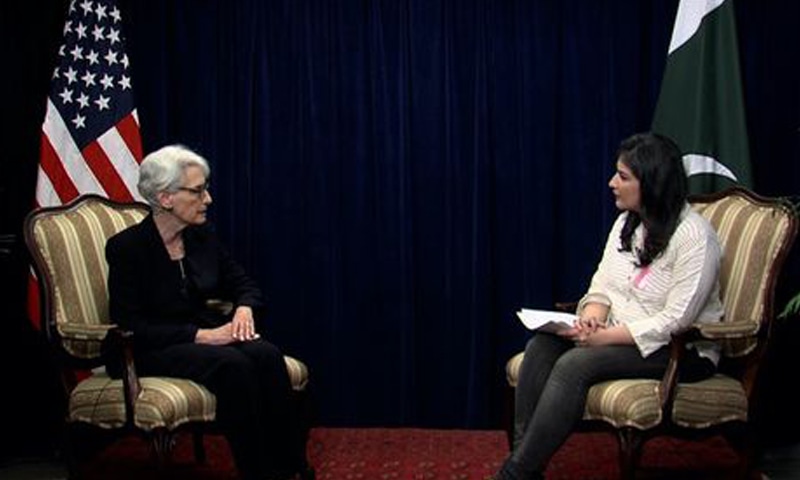
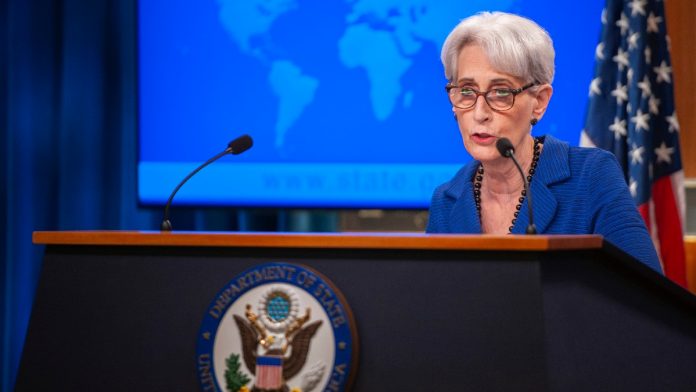
    United States (US) Deputy Secretary of State Wendy Sherman, during an exclusive interview on PTV News programme ‘Shahrah-e-Dastoor’, said, “Pakistan should be very proud of 42 years of helping Afghan refugees and the US, as well as the world, was grateful for that,” reports Dawn.

    “It is an extraordinary system,” she said, commending Pakistan for continuously helping Afghan refugees.

    Sherman was also asked about her comments about relations between the US and Pakistan during her visit to India.

    In response to the question about Sherman’s comments where she categorically said, “It’s for a very specific and narrow purpose, we don’t see ourselves building a broad relationship with Pakistan,” Sherman clarified that by “specific steps” she meant that the purpose of her trip to Pakistan was to predominantly focus on the aftermath of events in Afghanistan and review bilateral relationships between the US and Pakistan.

    “The US and Pakistan have had longstanding relations for decades,” she said.

    She went on to say that “this is a time of great change in [this] region because of the events in Afghanistan”, and the US and the world were reassessing what the future would look like.

    She added that the US was glad that Pakistan had called for an inclusive government in Afghanistan and progress on this front should be made so as to “create a better life for the people of Afghanistan”.

    “And we also agree that humanitarian assistance [to Afghanistan] should continue,” Sherman said, sharing details of measures taken by the US for this purpose.

  • At least 1 million Afghan children at risk of starvation, warns UNICEF director

    At least 1 million Afghan children at risk of starvation, warns UNICEF director

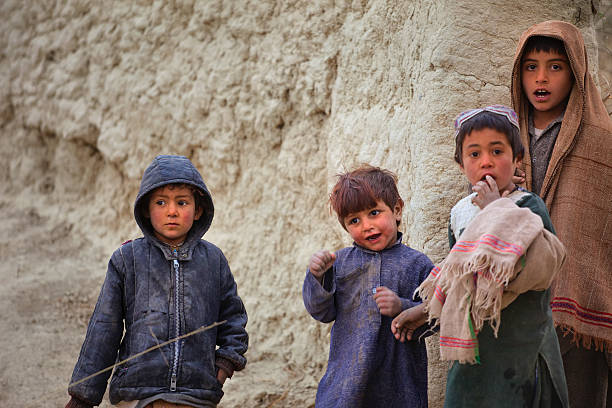
    At least one million children in Afghanistan will suffer from severe acute malnutrition this year and could die without proper treatment, warned United Nations International Children’s Emergency Fund’s (UNICEF) Executive Director Henrietta Fore. “Please help us,” she said.

    According to a report by CNBC, Fore implored the international community and wealthy nations to help avert further suffering after the Taliban takeover in Afghanistan.

    “Nearly 10 million girls and boys depend on humanitarian assistance just to survive,” she said at a UN ministerial-level meeting on the humanitarian crisis unfolding in Afghanistan.

    Fore also emphasised UNICEF’s ability to operate in Afghanistan. She said, “UNICEF has been on the ground in Afghanistan for more than 70 years. We know what needs to be done for children. And we can get it done.”

    According to Fore, during the last week of August, UNICEF provided 4,000 severely malnourished children under five with life-saving therapeutic treatment.

    “Please help us. There has never been a more urgent time to stand with the children of Afghanistan and the people who serve them,” she said.

  • Top civilian, military leadership gather at PM House for NSC meeting

    Top civilian, military leadership gather at PM House for NSC meeting

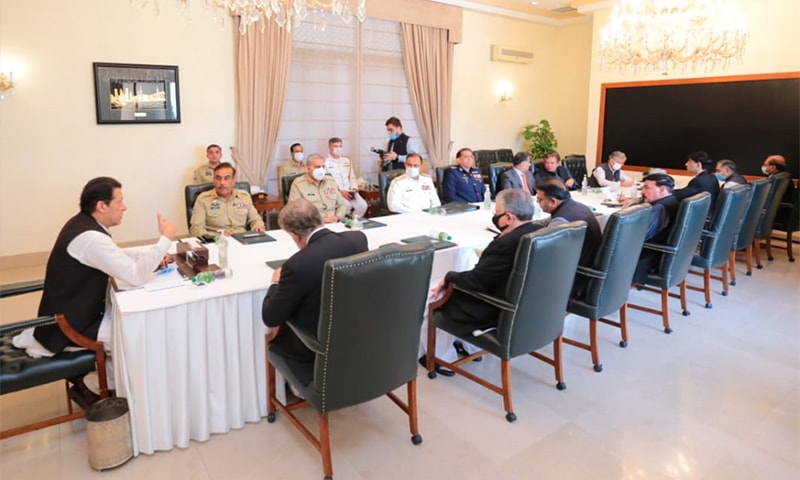
    A meeting of the National Security Committee (NSC) discussed matters of national security, the situation in Afghanistan, and other important issues on Friday, reports Dawn.

    The meeting was chaired by Prime Minister (PM) Imran Khan and attended by senior cabinet members, Pakistan’s national security adviser, and the services and intelligence chiefs. However, the new director-general of the Inter-Services Intelligence agency (ISI) Nadeem Anjum was not there, as the official take-over takes a few days.

    PM Imran was given a detailed briefing on the evolving regional security situation, “particularly the recent developments in Afghanistan and their possible impact on Pakistan”, according to the statement issued by the Prime Minister Office (PMO).

    “The participants noted, with concern, the dire humanitarian situation in Afghanistan and emphasised the urgent need for the international community to provide assistance to avert a humanitarian crisis,” the press release said.

    Committee members stressed that the evolving situation in the region was “extremely complex”, and that any instability in Afghanistan could have severe implications for Pakistan.

    “Agreeing with this view, the prime minister stressed the need for a coordinated policy effort,” the PMO said. It added that the premier issued directions for the establishment of a dedicated cell to synergise various streams of efforts on Afghanistan across the government, including international coordination for humanitarian assistance and effective border management to prevent “any negative spillover” into Pakistan.

  • 90 per cent institutions, including PM Khan’s office, decline RTI requests

    The majority of government institutions and departments have declined to respond to hundreds of queries by Geo News, which were sent to them under the Right To Information (RTI) laws, Investigative Reporter Zahid Gishkori reports for The News.

    According to the Punjab Information Commission, RTI is the right that you have, as a citizen, to access information from your government and private bodies that receive public funds. It is based on the principle that information belongs to the people. Under Article 19-A of the Constitution, RTI is a fundamental right in Pakistan.

    The media outlet reportedly sent approximately 400 different queries to 36 key institutions in the last nine months but 90 per cent of them didn’t respond or simply declined. Only 10 per cent of queries were partially responded to by the institutions, providing either very little or patchy information.

    According to the report, a few of the institutions provided factually incorrect and cooked-up information.

    Over 100 queries were sent to the governments of Khyber Pakhtunkhwa (KPK) and Punjab, both have not responded. Similarly, Sindh and Balochistan did not receive the correspondent’s queries.

    The departments that simply refused to share any information includes the offices of the Prime Minister, President, Chief Ministers, Cabinet Members, Supreme and High Courts, Federal Board of Revenue (FBR), China–Pakistan Economic Corridor (CPEC) Authority, National Accountability Bureau (NAB), Assets Recovery Unit (ARU), Parliament, Pakistan International Airlines (PIA) and Financial Action Task Force (FATF), the report states.

    The Cabinet Division (CD) refused to share any information regarding gifts and the use of helicopters by PM Khan. The ARU and NAB refused to share information on the Broadsheet scandal, as per the report.

    Furthermore, it says that the Ministry of Interior even shared false information by saying no official is facing inquiry in issuing bogus visas to Chinese nationals. despite the fact that the interior ministry itself referred an inquiry against its own officials allegedly involved in a visa scam to the FIA for probe.

    During the process, Gishkori was approached by four cabinet members and half a dozen senior civil servants to withdraw the requests.

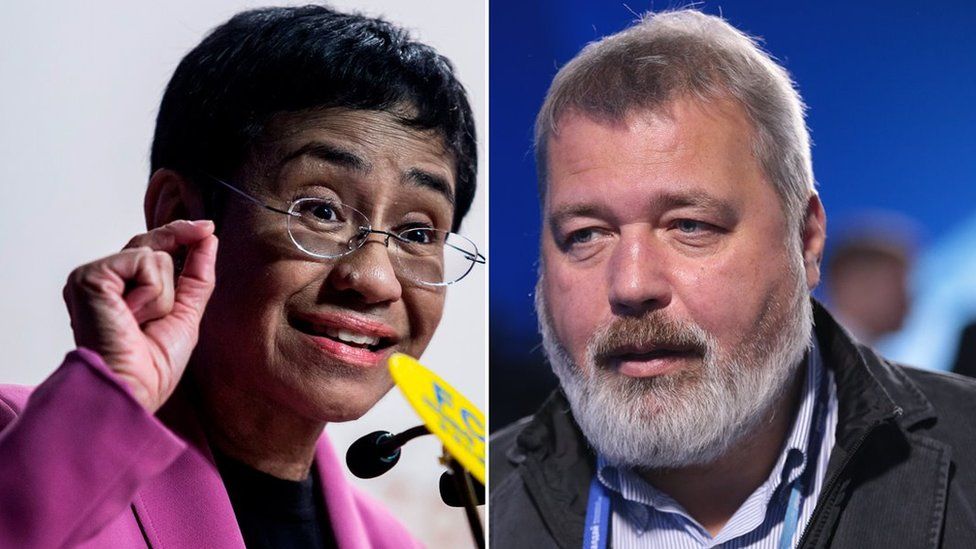
  • Journalists Maria Ressa and Dmitry Muratov win 2021 Nobel Peace Prize

    Journalists Maria Ressa and Dmitry Muratov win 2021 Nobel Peace Prize

    The Nobel Peace Prize 2021 has been awarded to journalists Maria Ressa and Dmitry Muratov for their efforts to safeguard freedom of expression in the Philippines and Russia.

    “Free, independent, and fact-based journalism serve to protect against abuse of power, lies, and war propaganda,” Berit Reiss-Andersen, chair of the Norwegian Nobel Committee, said as she announced the prize in Oslo on Friday.

    “Without freedom of expression and freedom of the press, it will be difficult to successfully promote fraternity between nations, disarmament, and a better world order to succeed in our time.”

    “Maria Ressa uses freedom of expression to expose abuse of power, use of violence, and growing authoritarianism in her native country, the Philippines,” said Andersen.

    ” Dmitry has four decades defended freedom of speech in Russia under increasingly challenging conditions,” announced Andersen.

    Ressa is the CEO of Rappler, a news outlet critical of Philippine President Rodrigo Duterte’s regime, while Muratov heads the independent Russian newspaper Novaya Gazeta. Ressa becomes the first woman to be awarded a Nobel Prize this year.

    It is the 102nd time the Nobel Peace Prize has been awarded. Previous winners include Malala Yousafzai, Nelson Mandela, Martin Luther King, Jr, Polish dissident Lech Walesa, United Nations World Food Programme, the Soviet Union’s last leader Mikhail Gorbachev, and four US presidents.

  • ‘World must maintain contact with interim Taliban government in Afghanistan’: Moeed Yusuf tells Wendy Sherman

    ‘World must maintain contact with interim Taliban government in Afghanistan’: Moeed Yusuf tells Wendy Sherman

    National Security Adviser (NSA) Moeed Yusuf, in a meeting with United States (US) Deputy Secretary of State Wendy Sherman on Thursday, stressed that the world “must maintain contact” with the interim Taliban government in Afghanistan, reports Radio Pakistan.

    During the meeting, both sides expressed the desire to promote bilateral relations between the US and Pakistan.

    Yusuf and Sherman discussed economic cooperation and the regional security situation.

    According to reports, the US was appreciative of Pakistan’s efforts for the evacuation of foreigners from Afghanistan and the help it has extended to the Afghan refugees.

    Moeed Yusuf blatantly said that Indian human rights violations in Indian Illegally Occupied Jammu and Kashmir (IIOJK) also pose a threat to regional peace.

    Sherman took to Twitter and tweeted about her meeting with Foreign Minister Shah Mahmood Qureshi.

    “I met today with Pakistani Foreign Minister @SMQureshiPTI to discuss Afghanistan’s future and the important and long-standing U.S.-Pakistan relationship,” tweeted Sherman.

    https://twitter.com/DeputySecState/status/1446387306131251235

    US Deputy Secretary of State and her seven-member team arrived in Islamabad on Thursday for a two-day visit to the country.

  • ‘We don’t see ourselves building our broad relationship with Pakistan’: US Deputy Secretary of State

    ‘We don’t see ourselves building our broad relationship with Pakistan’: US Deputy Secretary of State

    United States (US) Deputy Secretary of State Wendy Sherman, while speaking at an event in Mumbai, said, “We (the US) don’t see ourselves building our broad relationship with Pakistan and we have no interest in returning to the days of a hyphenated India, Pakistan. That’s not where we are, that’s not where we are going to be,” reports The Print.

    “But we all need to know what’s going on in Afghanistan. We all need to be of one mind in the approach to the Taliban. We all need to make sure that we have the capabilities that we need to ensure everybody’s security, including India’s, of course. So I am going to have some very specific conversations, continuing conversations that Secretary (Antony) Blinken has had (with Pakistan),” she added.

    Wendy Sherman is in Pakistan to meet officials during her October 7-8 visit.

    Sherman said that her trip to Islamabad is only for a “specific and narrow purpose”.

    Taking to Twitter, Sherman wrote, “I met yesterday evening with Pakistani National Security Advisor, Moeed Yusuf to discuss Afghanistan and areas of cooperation in the U.S.-Pakistan relationship.”

    https://twitter.com/deputysecstate/status/1446361767932801039?s=21

    Ahead of her visit to Pakistan, Sherman told reporters, “We seek a strong partnership with Pakistan on counterterrorism and we expect sustained action against all militant and terrorist groups without distinction.”

    “Both of our countries have suffered terribly from the scourge of terrorism and we look forward to cooperative efforts to eliminate all regional and global terrorist threats,” she said.

  • NAB Amendment Ordinance 2021 promulgated

    NAB Amendment Ordinance 2021 promulgated

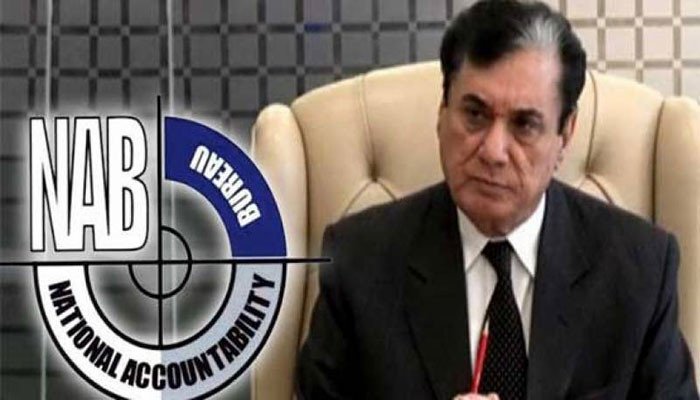
    President Dr Arif Alvi on Wednesday signed an ordinance that sharply reduces the jurisdiction of the National Accountability Bureau (NAB) and enables the president to reappoint the incumbent NAB chairman or extend his tenure, reports Dawn.

    Federal Law Minister Barrister Dr Farogh Naseem and Minister for Information and Broadcasting Chaudhry Fawad Hussain earlier held a press conference and explained that the law would enable NAB to focus on mega corruption cases.

    The salient features of the ordinance, as reported by Dawn, are: the National Acco­untability Second Ame­n­dment Ordinance 2021 has amplified the Opposition’s role in the appointment of the NAB chairman.

    “All matters pertaining to Federal, Provincial or Local taxation, other levies or imposts, including refunds, or loss of exchequer pertaining to taxation will be dealt with in accordance with the revenue or banking laws and will be transferred from the accountability courts to the courts of competent jurisdiction.”

    “NAB cannot proceed against any person or entity who, or transaction in relation thereto, which are not directly or indirectly connected with the holder of a public office…procedural lapses in any public or governmental work, project or scheme, unless it is shown that a holder of public office or any other person has been conferred or has received any monetary or another material benefit from that particular public or governmental work.”

    “The ordinance has amended Sub-section (b) of Section (6) of the National Accountability Ordinance (NAO) to grant extension in the tenure of the NAB chairman by excluding the word non-extendable from the statute.”

    “However, it has retained the proviso that makes consultation between the Opposition leader and the leader of the house in the National Assembly on the appointment of NAB chairman but states that the president would consult both of them.”

    “The ordinance has increased the role of the Opposition and enhanced the parliamentary oversight as it has provided a forum of a 12-member parliamentary committee in case the consultation between the Prime Minister and the Opposition leader proves futile.”

    “The ordinance has enhanced the authority of prosecutor general of NAB empowering him to play a crucial role in advising the chairman to file or withdraw any reference from the court. It has also allowed the accountability court to grant bail to any accused.”