Category: Politics

  • Ministry of Information to form joint committee for media authority bill

    Ministry of Information to form joint committee for media authority bill

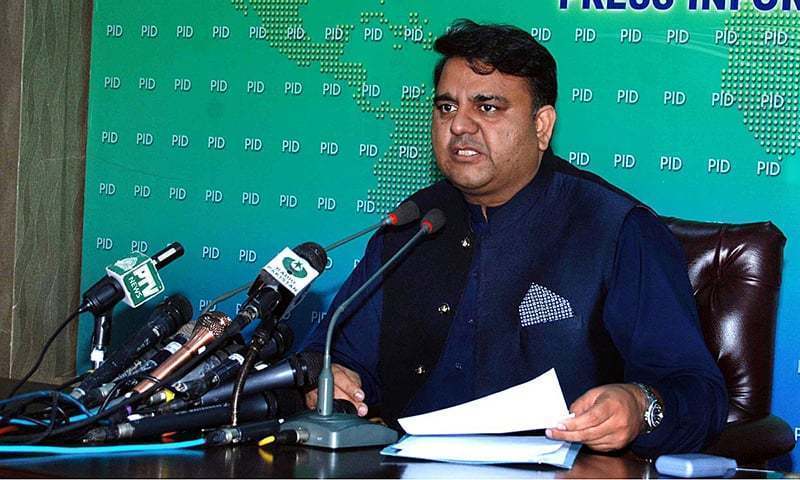
    The Ministry of Information has decided to form a joint committee after consultations with representatives of all media institutions and organisations.

    The committee will review the proposed media regulation and make recommendations. The Pakistan Media Development Authority (PMDA) has apparently been postponed for the time being.

    Journalists staged a protest in front of the Parliament House against the proposed PMDA, which aims to muzzle media freedom. The protest started on Sunday, September 12. Journalists marched from the National Press Club to the Parliament House and stayed overnight.

    As journalists continued with sit-in outside of the Parliament House against the government’s proposed PMDA, prominent leaders from political parties, student unions, and members of the civil society also joined in to show solidarity.

    In a first in Pakistan’s history, reporters were not allowed to enter a joint session of Parliament on Monday, September 13.

    Parliamentary reporters were to be present in the press gallery for President Alvi’s address but entered the hallway to find that the door was locked. The press gallery was closed for the journalists.


    The Parliamentary Reporters Association (PRA) strongly condemned the closure of the press gallery and said, “Closing the gallery is the worst dictatorship.”

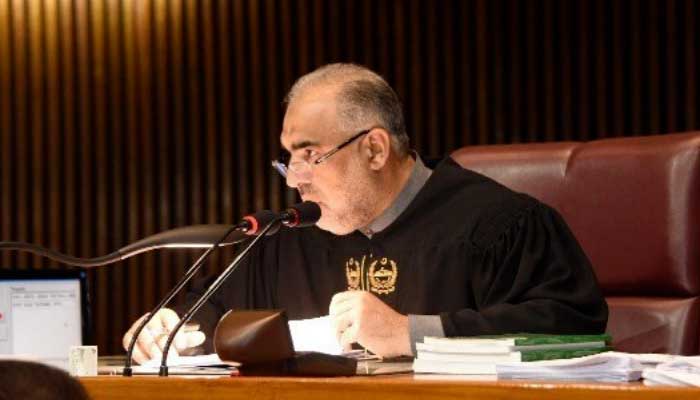
    However, National Assembly (NA) Speaker Asad Qaiser said that he closed the doors of the press gallery during the president’s speech to a joint session of parliament after getting ‘reports’ that there was a possibility of a ruckus between two journalists’ groups.

    The Speaker claimed that he made this decision after consulting the PRA.

    “I couldn’t afford a fight between two groups in Parliament which could have resulted in the disrespect of media and the House,” Qaiser said adding, “however, there was some misunderstanding.”
  • Dollar rises to Rs169.6, breaking the previous record

    The United States (US) Dollar continued its surge against the Pakistani rupee as it created a new high, rising to Rs169.6 in the interbank market.

    “Due to the recent sustained rise in the dollar’s value, importers have started booking the currency in advance, which has increased its demand in the interbank market,” Chairman of the Exchange Companies Association of Pakistan Malik Bostan told Dawn.

    Bostan warned that the dollar could become even more expensive if the State Bank of Pakistan (SBP) does not intervene.

    On the other hand, (SBP) pumped $1.2 billion into the inter-bank market in three months to protect the weakening rupee but could not stop the local currency from falling to a historic low.

    From mid-June to the first week of September, the central bank injected $1.2 billion out of its reserves, government sources told The Express Tribune. The maximum single-day injection of $100 million was made in July, followed by $85 million in August, they added.

    Back in November 2019, Pakistan Tehreek-e-Insaf (PTI) Minister for Labour & Culture, Khyber Pakhtunkhwa (KP) Shaukat Yousafzai, was all praises for the rise in the value of the dollar.

    “The increase in dollar benefits Pakistan greatly as we only have to pay in rupees, not in dollars,” said Yousafzai.

    Senior journalist Mansoor Ali Khan shared Yousafzai’s old clip again today as the USD rose to a record high.

    Yousafzai can be heard saying, “The increase in dollar value has increased the cost of BRT by Rs3 billion and at the same time helped us save over Rs3 billion because we only have to pay that amount in rupees, not in dollars.”

    Yousafzai also said that all those saying that the rupee devaluation is going to increase the amout have no idea what they are talking about.

  • Govt gives three housing units each to 19 bureaucrats

    Govt gives three housing units each to 19 bureaucrats

    A total of 19 bureaucrats of grade BS-22 secured three housing units each, including Special Assistant to the Prime Minister on Establishment Shehzad Arbab.

    According to the papers obtained by Dawn, the officers had already been allotted a double-story “grey structures” house each in the Pakistan Housing Authority Foundation (PHAF) scheme.

    The PHAF traditionally built low-cost housing schemes for its members and this was the first time that it introduced a scheme for senior bureaucrats.

    Previously, former prime minister Nawaz Sharif had cancelled the allotment of “choice” apartments to influential bureaucrats in the same locality [PHAF] and ordered an investigation into the manipulated balloting carried out by the housing scheme.

    Not only this, the official documents say that 185 of the 588 bureaucrats right after this allotment were allotted plots in the capital’s new sectors of F-14 and F-15.

    Following this, the Federal Government Employees Housing Authority (FGEHA) recently allotted two plots each to senior bureaucrats, judges of superior courts, lawyers, and judicial officers of Islamabad’s subordinate judiciary.

    Earlier, the Islamabad High Court (IHC) ruled against the allotment of more than one plot to top bureaucrats at public expense under Article 25 of the Pakistan Constitution and then set aside the policy of allotment of the second plot and referred the matter to the federal cabinet.

    While talking to Dawn, Federal Minister for Law and Justice Barrister Farogh Naseem said the allotments would be examined in light of the IHC judgment. Federal information minister Fawad Chaudhry said, “The government is working on the issue in the light of the IHC directive and has formed a committee as well.”

    Initially, civil servants were entitled to one plot each only. However, in 2006, the then prime minister allowed two plots each for BS-22 officials.

    However, an insider said the policy to make such allotments had never been approved by the federal government.

  • Asad Qaiser states press gallery closed in consultation with journalists, journalists deny

    Asad Qaiser states press gallery closed in consultation with journalists, journalists deny

    National Assembly Speaker Asad Qaiser said that he closed the doors of the press gallery during President Arif Alvi’s speech to a joint session of parliament after getting ‘reports’ that there was a possibility of a ruckus between two journalists’ groups.

    The speaker while speaking to journalists, claimed that he made this decision after consulting the Parliamentary Reporters Association (PRA).

    “I couldn’t afford a fight between two groups in Parliament which could have resulted in the disrespect of media and the House,” Qaiser said adding, “however, there was some misunderstanding.”
    After Qaiser’s claims, the PRA categorically denied the speaker’s statement and challenged him to name the journalists who met him as PRA representatives, reported Dawn.

    “PRA delegation has not met the Speaker National Assembly nor has the PRA been taken into confidence over the closure of the Press Gallery,” says the statement issued by PRA’s information secretary Malik Saeed Awan.

    “PRA delegation has not met the Speaker National Assembly nor has the PRA been taken into confidence over the closure of the Press Gallery,” says the statement issued by PRA’s information secretary Malik Saeed Awan.

    “PRA strongly condemns this black lie of the Speaker”. Awan demanded an inquiry to determine which delegation met with and misrepresented the journalist organisation.

    In a first in Pakistan’s history, reporters were not allowed to enter a joint session of Parliament on Monday, September 13.

    Parliamentary reporters were to be present in the press gallery for the president’s address but entered the hallway to find that the door was locked. The press gallery was closed for the journalists.

    PRA strongly condemned the closure of the press gallery and said, “Closing the gallery is the worst dictatorship.”

    Pakistani journalists protested in front of the Parliament House against the proposed Pakistan Media Development Authority (PMDA), which aims to muzzle media freedom. The protest started on Sunday, September 12, Journalists marched from the National Press Club to the Parliament House and stayed overnight.

  • More than half of Pakistanis ‘happy’ with Taliban takeover

    A survey conducted by a leading research firm has revealed that around 55 percent Pakistanis were ‘happy’ that the Taliban would be ruling Afghanistan, Arab News has reported. The study was released by the Gilani Research Foundation (GRF) and carried out by Gallup & Gilani Pakistan (GGP).

    The survey was conducted from August 13 to September 5 and 2,170 men and women in urban and rural areas of the Punjab, Sindh, Khyber Pakhtunkhwa and Balochistan were surveyed.

    “Some people are happy that the Taliban will now rule Afghanistan. Some are not happy about that. What is your opinion?” this question was asked in the survey.

    In response to the question, 55 percent said they were happy. Moreover, 25 percent said they were unhappy, 16 percent did not know and four percent did not respond.

    The highest numbers of respondents were from Khyber Pakhtunkhwa, and more 65 per cent were happy with the Taliban take over. In Punjab 54 per cent, 55 per cent in Balochistan, and around 54 per cent were happy in Sindh.

     56 per cent of men and 36 per cent women were happy.

    The Taliban on September 7, announced the formation of its interim government, amid heavy criticism that not one woman was among the 33 members.

  • Election Commission sends notice to Fawad Chaudhry and Azam Swati for controversial comments

    Election Commission sends notice to Fawad Chaudhry and Azam Swati for controversial comments

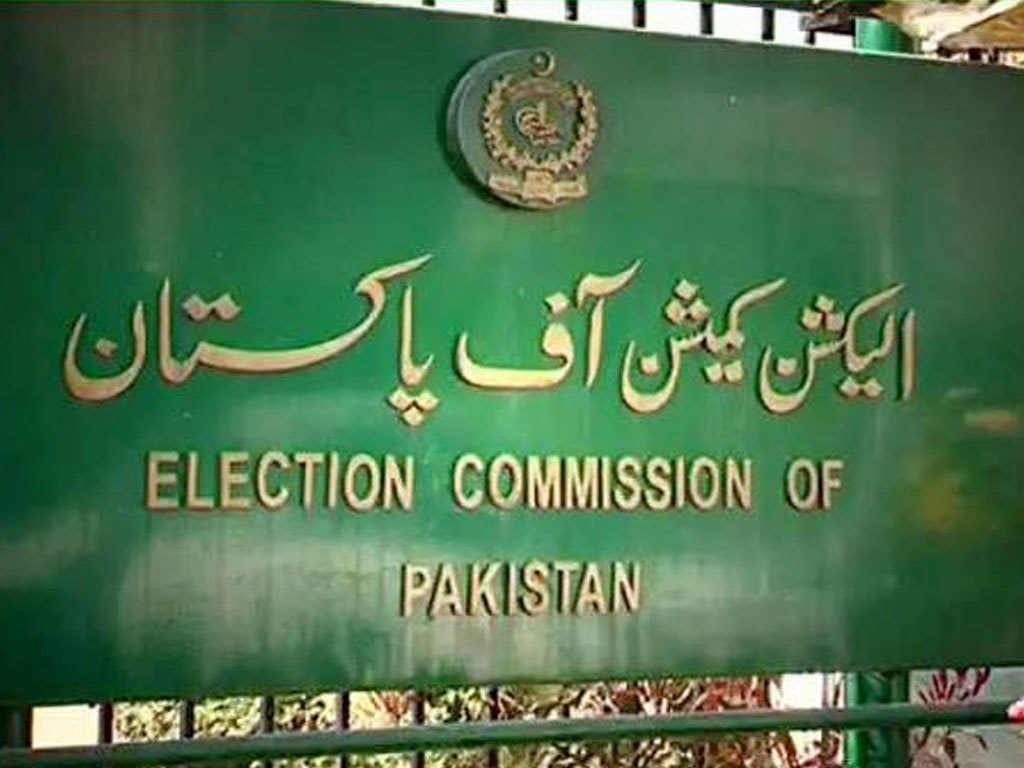
    The Election Commission of Pakistan (ECP) has sent a notice to Federal Minister for Railways Azam Khan Swati and Federal Minister for Information and Broadcasting Fawad Chaudhry.

    The ECP has decided to ask for proof from Swati as the latter accused the institution [ECP] of taking bribes and being on the payroll of ‘someone’.

    Last week, Swati said that the ECP was responsible for destroying Pakistan’s democracy and for rigging all elections. Swati added that such institutions should be “set on fire”. 

    Meanwhile, Fawad Chaudhry in a press conference said, “The ECP seems to be acting as a mouthpiece of the Opposition, so much so that it seems to have become the headquarters for Opposition parties”.

    https://twitter.com/FawadPTIUpdates/status/1436319497338621955

    The minister said that the Chief Election Commissioner (CEC) should “either take a look at his behaviour or join politics”.

    “You better not become a tool used by small political parties,” Chaudhry told the chief election commissioner.

    https://twitter.com/FawadPTIUpdates/status/1436322520362258440

    Fawad Chaudhry responding to the notice tweeted, “If a notice comes, will give a detailed answer.”

    In March, seeking to disband the election watchdog, the ruling party had called on the CEC to resign for “failing to hold the Senate elections in a transparent manner”.

    Federal Minister Shafqat Mahmood said, “To ensure transparent elections are held is the responsibility of the election commission. This responsibility was not fulfilled,” he said. “The election commission failed to act as a neutral umpire hence it should resign,” added Mahmood.

    On the other hand, the ECP has given dates to the politicians from Pakistan Tehreek-e-Insaaf’s (PTI) and Pakistan Pakistan Peoples Party’s (PPP) leaders’ pending cases, which are due tomorrow (Wednesday) i.e. September 15.

    Those who have been called by the ECP from PTI include Senator Faisal Vawda who has a total of three cases, MNA Farrukh Habib and Mian Asif Mehmood. From PPP, Qadir Ali Mandokhel and Nawabzada Ghazanfar Ali Gul among others have also been asked to appear.

  • #DoNotTouchMyClothes: Afghan women reject Taliban’s dress code for women

    Afghan women have started an online campaign using the hashtag #DoNotTouchMyClothes to challenge the Taliban’s conservative female clothing rules. Many Afghan women shared pictures of their colourful traditional dresses.

    Dr Bahar Jalali, a former history professor at the American University in Afghanistan, used hashtags #DoNotTouchMyClothes and #AfghanistanCulture to reclaim Afghan women’s traditional clothes.

    While posting a picture of herself on Twitter in a green Afghan dress, she stated: “This is Afghan culture. I am wearing a traditional Afghan dress.”

    Referring to the women who wore long, fully veiled black gowns, covering their faces and hands at pro-Taliban rally, she tweeted: “No woman has ever dressed like this in the history of Afghanistan. This is utterly foreign and alien to Afghan culture. I posted my pic in the traditional Afghan dress to inform, educate, and dispel the misinformation that is being propagated by the Taliban.”

    After that, women across Afghanistan started posting pictures of themselves.

    This campaign was also in reaction to a video in which many women holding a pro-Taliban rally in the capital were seen saying that Afghan women wearing make-up and in modern clothes do not represent the Muslim Afghan women and we don’t want women’s rights that are foreign, reports BBC.

    Afghanistan’s Higher Education Minister Abdul Baqi Haqqani said that universities will be segregated and veils made mandatory for all female students. Earlier this month, the Taliban announced an all-male interim government.

  • Private torture cell found in Lahore’s Mayo Hospital

    A private torture cell has been found at Lahore’s Mayo Hospital, Jang News has reported. The torture cell was run by Zohaib, the janitorial supervisor at Mayo Hospital, who used to arrest and torture people.

    In a video received by Geo News, Zohaib can be seen torturing people.

    Zohaib picked up patients on suspicion of theft and drug trafficking and tortured them.

    Mayo Hospital Medical Superintendent (MS) Dr Iftikhar fired three employees, including Zohaib. Dr Iftikhar said that he has formed a three-member inquiry committee to investigate the matter. As per reports, the inquiry committee will complete the investigation within 24 hours and submit a report to the MS.

  • All students will be declared ‘pass’ in board exams, confirms Shafqat Mahmood

    A decision has been made to pass all the students in board exams. The decision was made during the meeting of Inter-Provincial Education Ministers Conference (IPEMC) which was chaired by federal Education Minister Shafqat Mahmood, Dawn has reported.

    Speaking to Dawn, Shafqat Mahmood confirmed the decision and said 33 per cent marks would be awarded in each subject, which a student was unable to clear.

    “Education ministers of the country, including Sindh, participated in the meeting (physically and online) and took decisions,” the education minister added.

    Shafqat Mahmood further requested students to fully focus on their studies, adding, “There would be no reduced syllabus this academic session.”

    According to Dawn, the IPMEC has decided that the academic session would start in the country from August every year while board exams would be conducted in May-June instead of March-April.

    Federal Minister for Development Planning and Special Initiatives Asad Umar has said that the government is reopening schools in five districts of Punjab and one district in Khyber Pakhtunkhwa from September 16.

  • Broken promise? Madrassas to implement SNC in six years

    Director National Curriculum Council (NCC) Dr Mariam Chughtai has said that the government is giving five to six years to madrassas (religious seminaries) to adopt the changes that need to be made to switch to the Single National Curriculum (SNC).

    Earlier, Mariam Chughtai has said that Single National Curriculum will help Madrassa students to to qualify for jobs.

    Responding to a question about not taking all stakeholders on board, Mariam added, “Let me also point out that every single child was being affected in 2017 as well. The Quran Naazrah Act was passed unanimously in the parliament by every single political party. Not one article in Dawn, not one webinar, not one question, not one tweet about it… but now because this curriculum impacts the children of the rich, suddenly there is a hue and cry about where are all the stakeholders.”

    She went on to add, “There was a call in the newspaper to participate [in SNC], not one university expect Agha Khan University applied for it.”

    “As far as the Aitchison question is concerned, it’s too quick to assume that Aitchison is rejecting it [SNC]. I read the principal’s statement and they said explicitly they are following SNC in spirit.”

    “Rest is all implementation-related, we are giving schools time, we are giving madrassas five to six years to accommodate the changes that need to be made,” Dr Chughtai added.

    Prime Minister, Imran Khan in December 2020 said that, “A uniform curriculum is important because it is the only way to streamline the country’s education system which is currently divided on the basis of Urdu-medium schools, English-medium schools, and Madrassahs,” he said.

    Single National Curriculum (SNC) is a ‘uniform’ system of education, which means the same curriculum for everyone.