The capital of Afghanistan, Kabul, can be isolated by the Taliban within the next 72 hours, CNN has reported. A diplomatic source told CNN that one intelligence assessment indicated that Kabul could be isolated by the Taliban within the week, possibly within the next 72 hours, but stressed that does not mean the militant group would enter the capital.
CNN also reports that personnel at the US Embassy in Kabul have been instructed to delete sensitive and materials “which could be misused in propaganda efforts”, as soon as possible. As per details, a notice was sent to the embassy staff with the instructions.
The act of destroying sensitive material is a standard procedure applied to minimise the US footprint.
“Drawdowns at our diplomatic posts around the world follow a standard operating procedure designed to minimise our footprint across various categories, including staffing, equipment, and supplies. Kabul Embassy is conducting their drawdown in accordance with this standard operating procedure,” a US State Department spokesperson said.
United Nations Secretary-General Antonio Guterres has said that Afghanistan is spinning out of control. Every day, the conflict is taking a bigger toll on civilians, especially women and children. He also reminded all the parties of their obligation to protect civilians.
Afghanistan is spinning out of control. Every day, the conflict is taking a bigger toll on civilians, especially women & children.
I remind all parties of their obligation to protect civilians & I call on the Taliban to immediately end the offensive & return to the peace table.
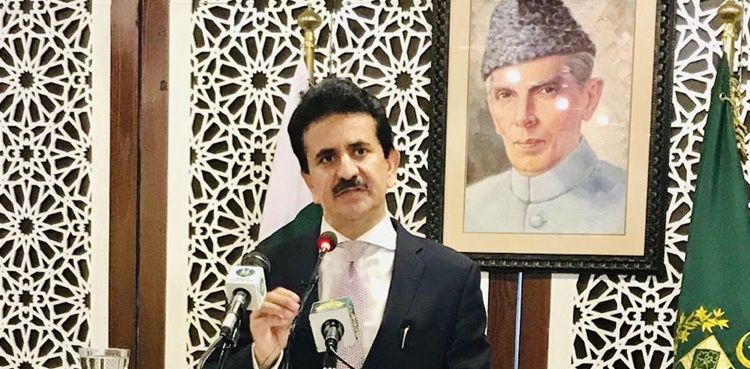
Foreign Office Spokesperson Zahid Hafeez Chaudhri, during his weekly press briefing, clarified that Pakistan considers the United States (US) a friend and wants broad-based relations to achieve the shared objective of peace and prosperity in the region and beyond.
Answering the questions on the surging situation in Afghanistan and Pakistan’s relations with the US, Zahid said, “Pakistan and the US have a history of close cooperative relations. This cooperative relationship has served the interests of both the countries.”
“We both believe that there’s no military solution to the conflict in Afghanistan and we both want to see peace in Afghanistan,” added Zahid.
He reiterated the fact that both Pakistan and the US support an inclusive, broad-based, and comprehensive political settlement in Afghanistan through a process that is owned and led by the Afghans themselves.
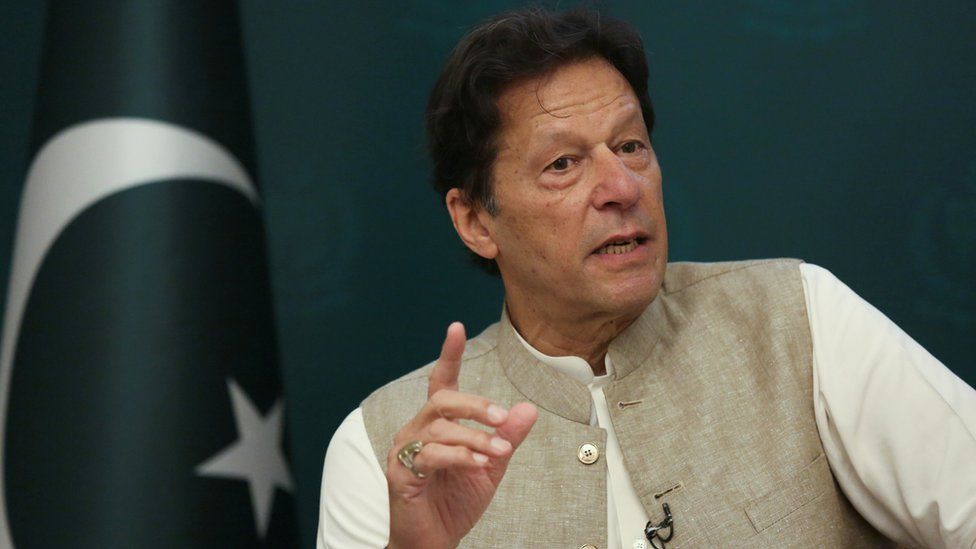
The statement by the Foreign Office comes a day after Prime Minister Imran Khan issued a hard-hitting statement, saying that Washington sees Pakistan only useful in cleaning up the “mess” in Afghanistan.
“Pakistan is considered only to be useful in the context of somehow settling this mess which has been left behind after 20 years of trying to find a military solution when there was none,” said PM Khan.
PM Khan also clarified speculations that he was not “waiting” for a phone call from US President Joe Biden.
“I keep hearing that President Biden hasn’t called me. Well, it’s his option. If he wants to call or not it’s his business. If he thinks it’s necessary or not. Not that I am waiting for any phone call,” said the premier.
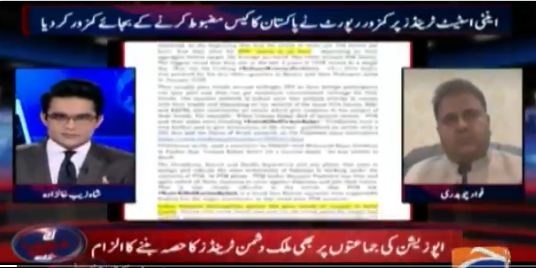
The government’s Digital Media Wing (DMW) recently released a report titled, ‘Anti-State Trends: Deep Analytics Report’. The Current analysed the report, which was discussed on Geo News programme ‘Aaj Shahzeb Khanzada Kay Sath’ on Thursday night. The Current found glaring errors in the report.
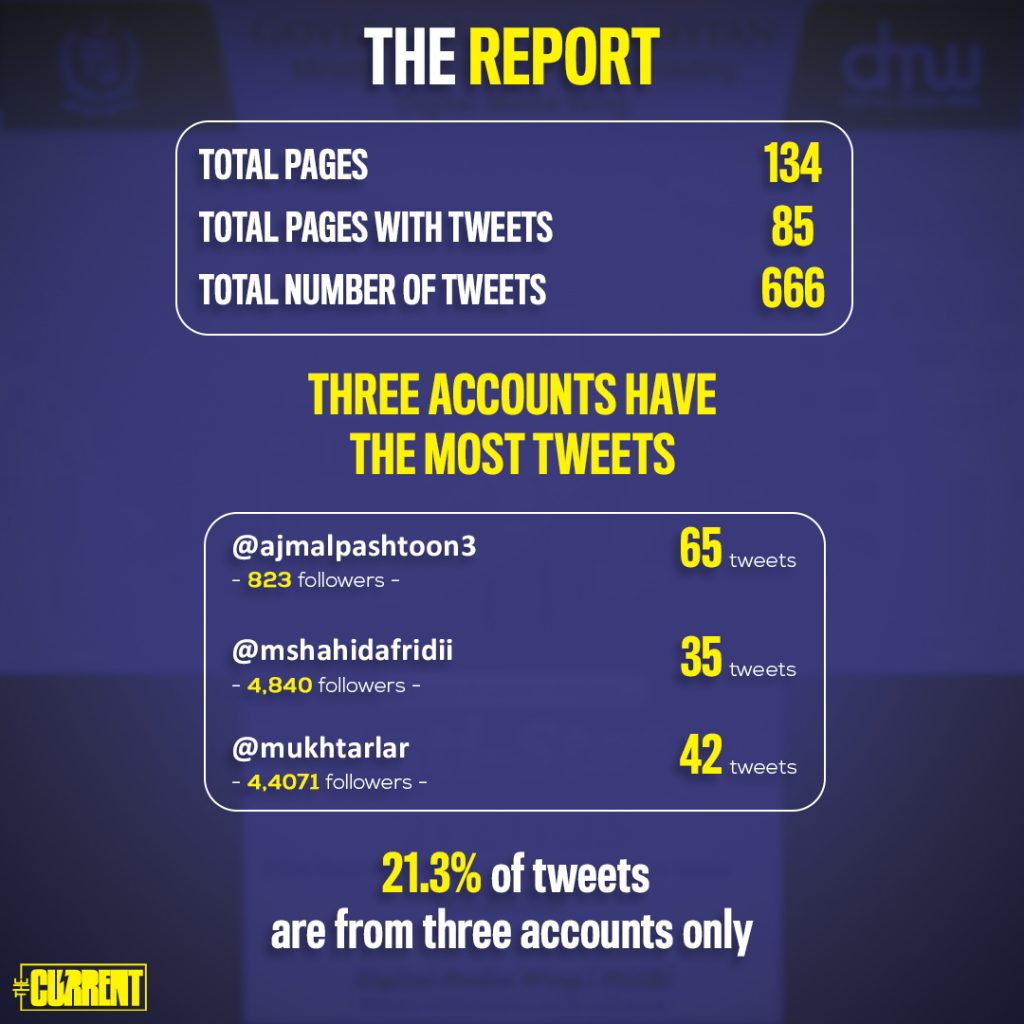
Mentioning The Current’s research, Shahzeb Khanzada stated the facts mentioned in our report. “From The Current’s analysis, the 134-page report has 85 pages that have screenshots of tweets, which means that 63.4 per cent of the report is based on screenshots of people who are using a certain hashtag that the government has identified as being anti-state. The number of tweets that are in these 85 pages amounts to 666 tweets out of which 142 tweets are from three accounts, which means that 21.3 per cent of the tweets used in this study came from three people.”
“After further analysis of the three accounts, The Current discovered that all three accounts had a combined following of less than 11,000,” mentioned Shahzeb.
حکومت کی طرف سے ٹویٹر ٹرینڈز پرمبنی رپورٹ میں کس طرح ڈیٹالیا گیا۔ دیکھیے
The report was released Wednesday evening around 5:30PM and a few hours later a disclaimer was added to the report. According to journalist Fereeha Idrees, the disclaimer was added after she raised the issue with the DMW for being highlighted in the report as a ‘replies with the most followers’ account.
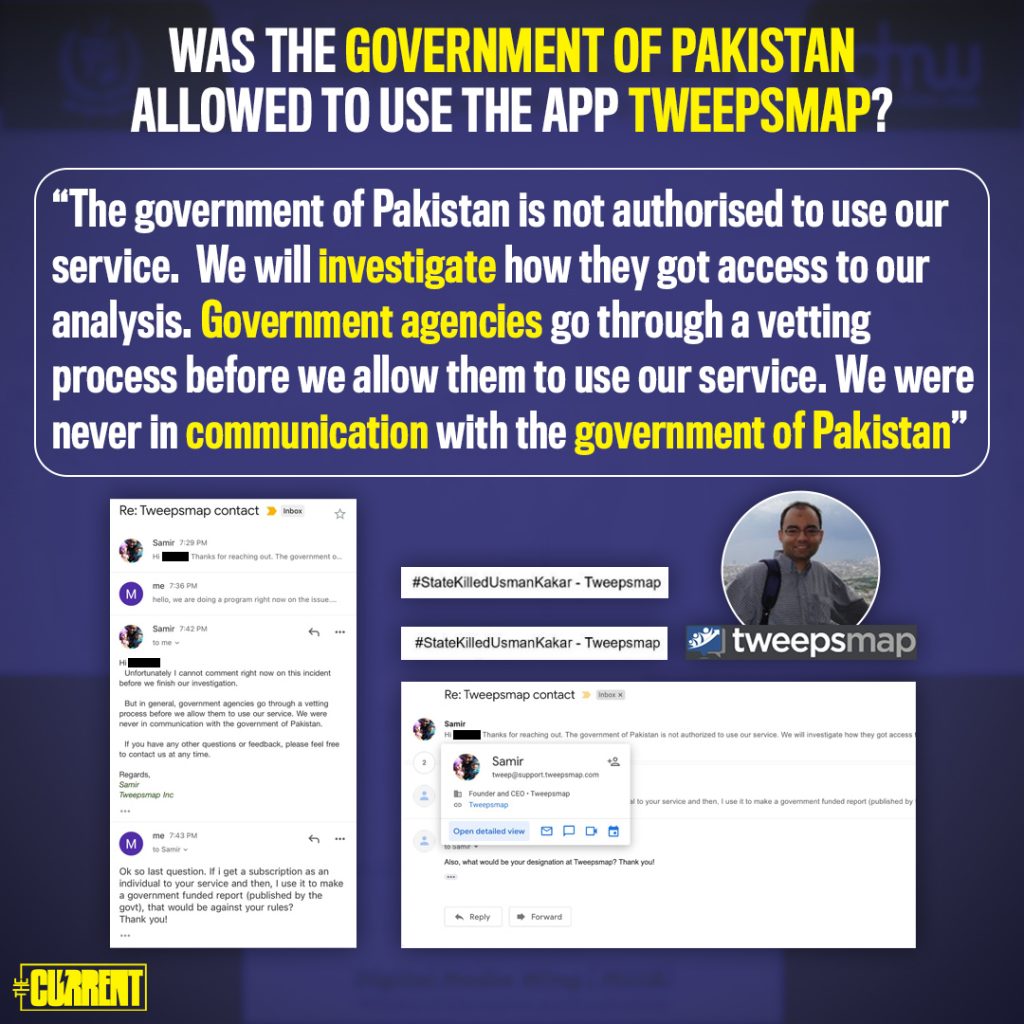
Shahzeb Khanzada also mentioned that The Current reached out to TweepsMap, which was the primary analysis app used by the government for this report. The maps and information all have the Tweepsmap link on the maps and all charts in the report. We asked the CEO of TweepsMap Samir Al-Battran if they considered the analysis of the report to be authentic since it used their app service. Samir told us, “The government of Pakistan is not authorised to use our service. We will investigate how they got access to our analysis and get back to you on this.”
Federal Minister for Information and Broadcasting Fawad Chaudhry refuted these claims on Shahzeb Khanzada’s programme.
“Were the Twitter trends data compiled without research? Was the press conference held without reading the final draft? Was the patriotism of our own citizens deliberately questioned? How did you determine which tweet is anti and pro-state?,” asked Shahzeb.
“The data could have been complied on a single page as well. We analysed the data for the past two years, around 150 trends were made, and we checked how India and Afghanistan glorified those trends. Around 37 lac tweets were done on the very trends. We spent around 1,000 hours going through those tweets,” said Fawad Chaudhry.
کیا بس ٹویٹر ٹرینڈز کا ڈیٹا اکھٹا کر کے بغیر تحقیق کیے رپورٹ بنا دی گئی؟ کیا بغیر پڑھے ہی پریس کانفرنس کردی گئی؟ کیا جان بوجھ کر اپنے ہی شہریوں کی حب الوطنی پر سوال اٹھا دیے گئے؟ دیکھیے 1/2
Shahzeb reiterated the fact that the report should have included how India and Afghanistan were involved in generating, promoting, and glorifying the very trends and sentiment analysis of the tweets should have been checked.
” I think you did not read the mechanism and neither did you try to understand the work done in the report,” replied the minister.
“The positive and negative sentiment does not matter, what matters is that people participated in the trend. India did all this because it wanted to portray to the international spheres that there is chaos within Pakistan,” added Fawad.
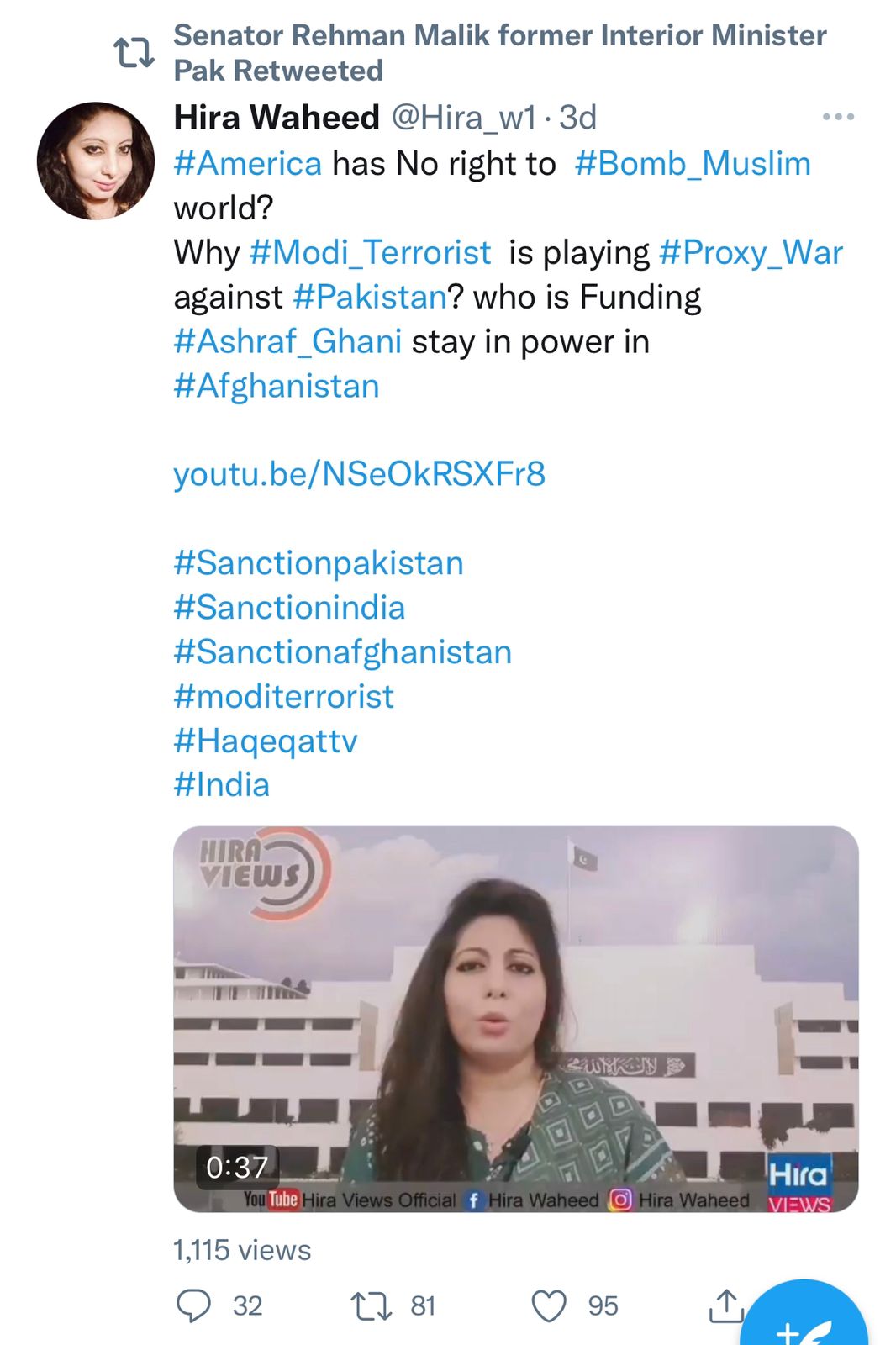
Former Interior Minister Rehman Malik also thanked Shahzeb for highlighting how his anti-India tweet was also part of the DMW report. “I hope someone from the Govt will apologise to me tomorrow.”
A report released by the Digital Media Wing (DMW) of the Ministry of Information and Broadcasting titled, ‘Anti-State Trends: Deep Analytics Report’ is deeply misleading and based on assumptions instead of facts, The Current has discovered after analysing the report.
Glaring errors and almost comical additions, the report makes a correlation between analysing hashtags on Twitter to determine if someone is anti-state and is responsible for starting trends against Pakistan.
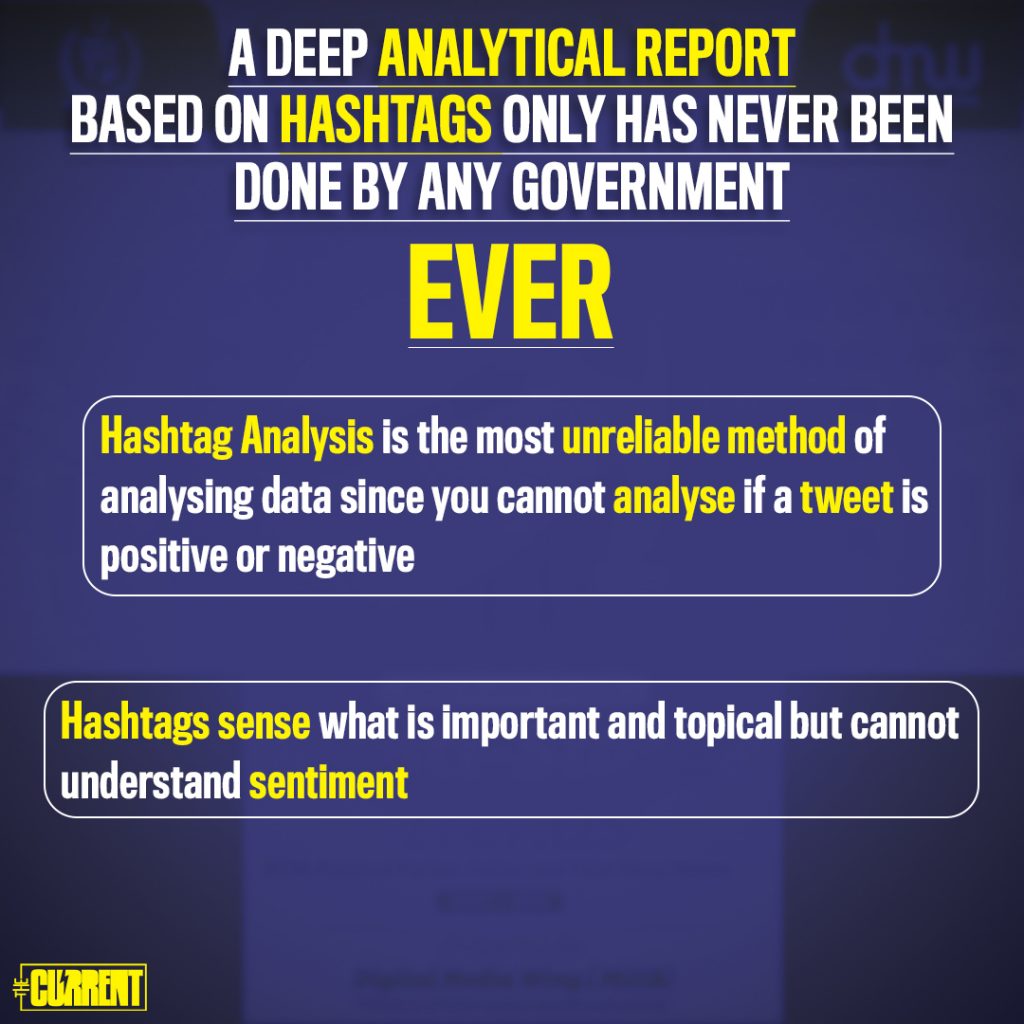
Before analysing the report, The Current researched and spoke with analysts who are well-versed with digital analysis. There is no record of any report on hashtag analysis to determine trends at a government level in any country at any time. Pakistan is the only country that has created a report based on hashtag analysis. Worldwide, hashtag analysis is considered to be deeply unreliable since it cannot understand what is written in the tweet – it is just able to see what is being discussed.
WHAT IS THE REPORT?
The report is a compilation of hashtags that created trends that the government deems anti-state. The report shows information collected about hashtag trends and then lists pages of screenshots that show different Twitter handles sharing tweets that have the ‘anti-state’ hashtag. They do not differentiate between users and also label ‘influencers’ – people with a following who have tweeted or retweeted/replied to the hashtag.
In effect, the report seems to declare all the users in the report as anti-state, until one prominent journalist got them to add a disclaimer last night.
HOW WAS THE INFORMATION COLLECTED?
Since the whole report is based on hashtag analysis, it will be considered to be unreliable data collection and cannot be considering as a legitimate report in any institution.
When The Current reached out to General Manager of the Digital Media Wing (DMW), Imran Ghazali, he responded to the question of faulty analysis of hashtags by saying, “The purpose of this report was to ascertain factual data and to analyze social media trends that were anti-state, Data was collected after analysing Pakistan Twitter Panel from June 2019- August 2021. Those hashtags were marked for data collection where the content of tweets were planned and propagated through a network to spread anti-state trends.”
According to a source in the government, the information used is public. “Publicly released data is accurate. It’s no rocket science, anybody with a credit card can get this data. Hence made public.”
From The Current’s analysis, the data was collected by using a web application called, ‘Tweeps Map’, which is open to the public.
From our findings, the 134-page report has 85 pages that have screenshots of tweets, which means that 63.4 per cent of the report is based on screenshots of people who are using a certain hashtag that the government has identified as being anti-state. The number of tweets that are in these 85 pages amount to 666 tweets out of which 142 tweets are from three accounts, which means that 21.3 per cent of the tweets used in this study came from three people.
After further analysis of the three accounts, The Current discovered that all three accounts had a combined following of less than 11,000.
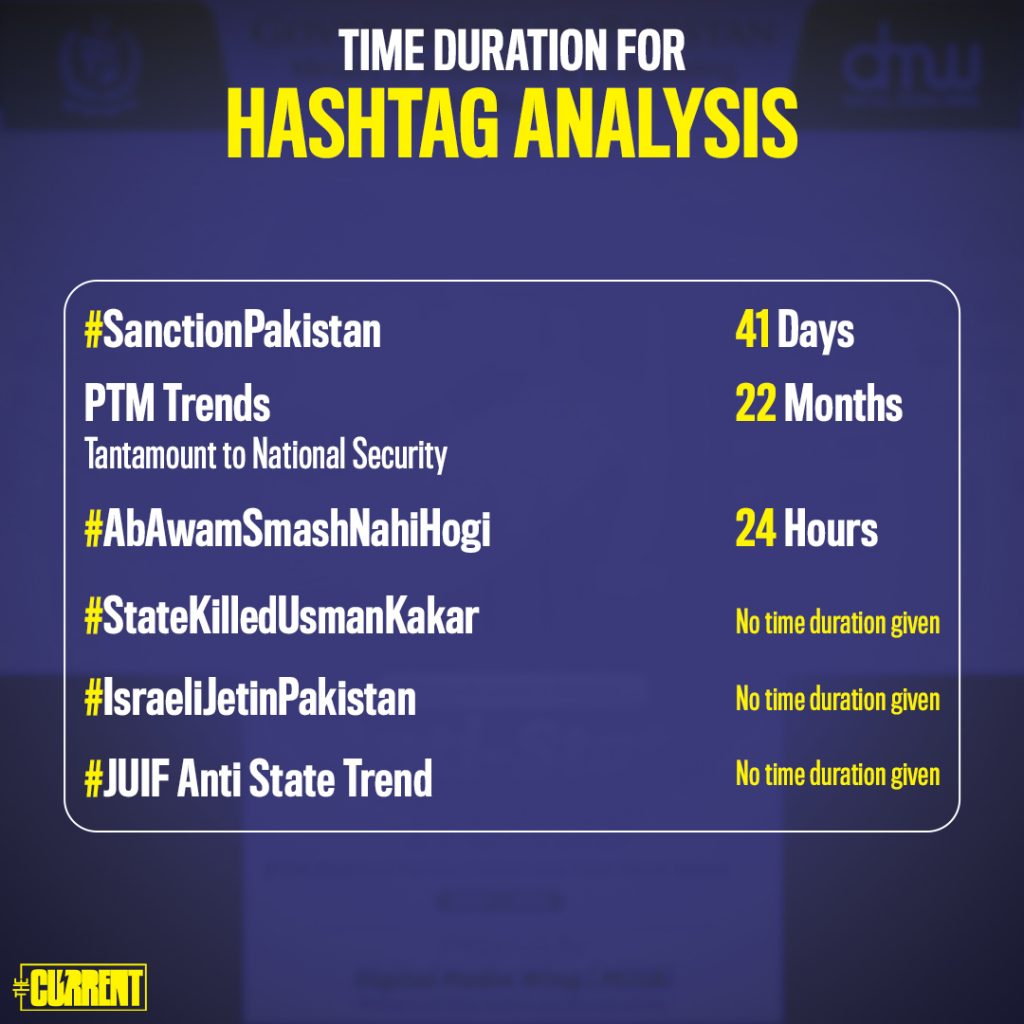
We discovered that the hashtag #SanctionPakistan was ‘analysed’ for 41 days, Pakhtun Tahafuz Movement (PTM) hashtags were clubbed together as “PTM Trends Tantamount to National Security” (the report doesn’t list which hashtags were used within this topic) and were ‘analysed’ for 22 months, #AbAwamSmashNahiHogi was ‘analysed’ for one day, and #StateKilledUsmanKakar, #IsraeliJetinPakistan, ‘JUIF Anti State Trend’, was ‘analysed’ but no time duration is given.
WHY AND WHEN WAS THE ‘DISCLAIMER’ ADDED?
The report was released Wednesday evening around 5:30PM and a few hours later a disclaimer was added to the report. According to journalist Fereeha Idrees, the disclaimer was added after she raised the issue with the DMW for being highlighted in the report as a ‘replies with the most followers’ account.
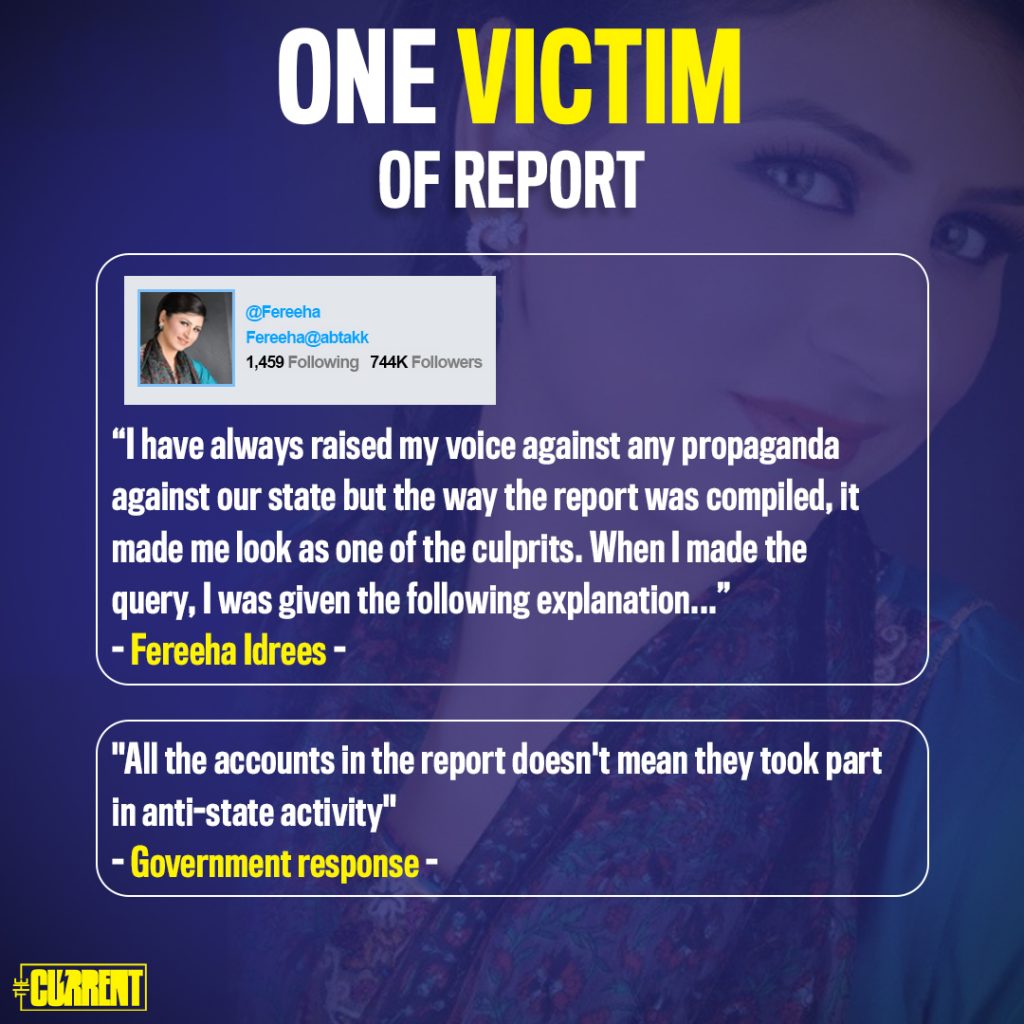
“I have always raised my voice against any propaganda against our state but the way the report was compiled, it made me look as one of the culprits and suddenly social media was rife with messages calling me anti-state,” Fereeha told The Current, “When I made the query, I was given the following explanation.”
The explanation given to Fereeha by the DMW stated, “All the accounts in the report doesn’t mean they took part in the anti-state activity…It shows the whole journey of the trends/hashtags, so in this case Fareeha Idrees replied/rebutted on the Israeli related trend and that’s why it mentions ‘Replies with most mentions’ in the report.”
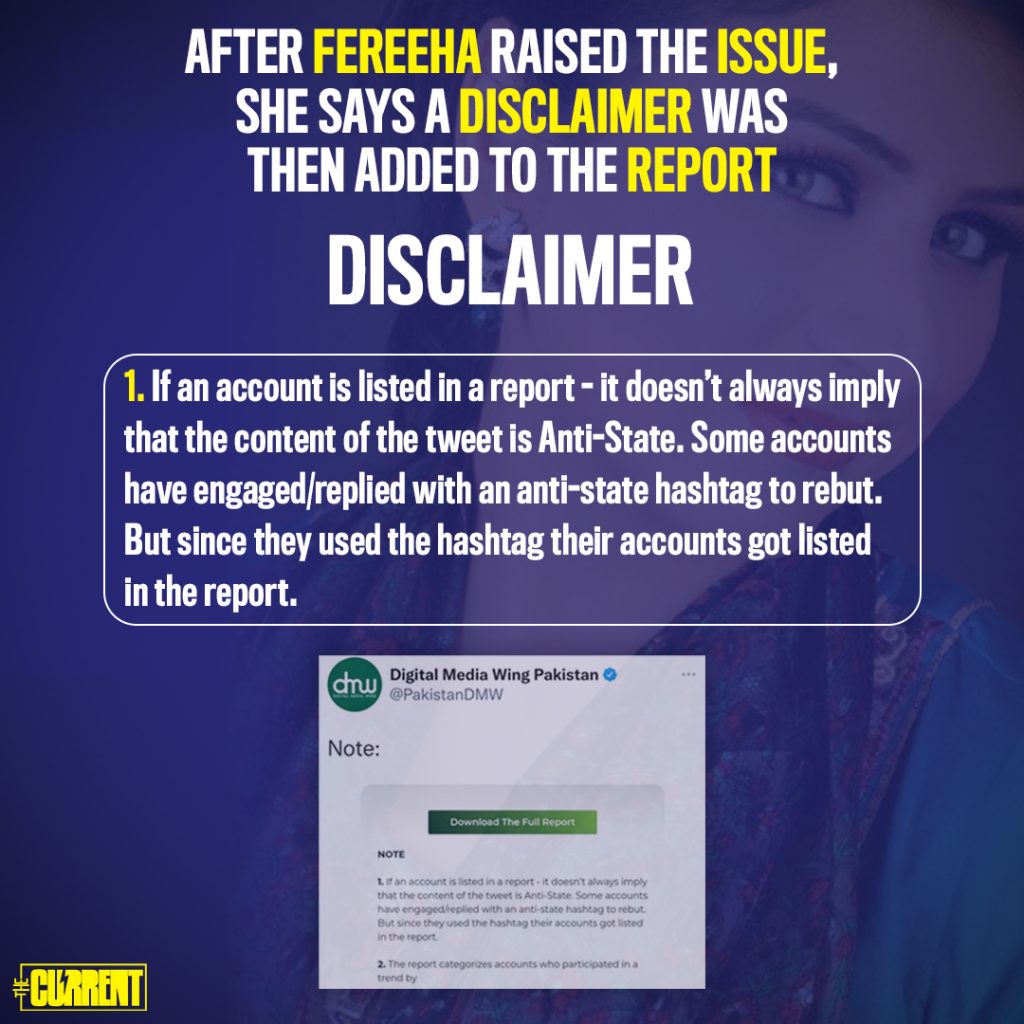
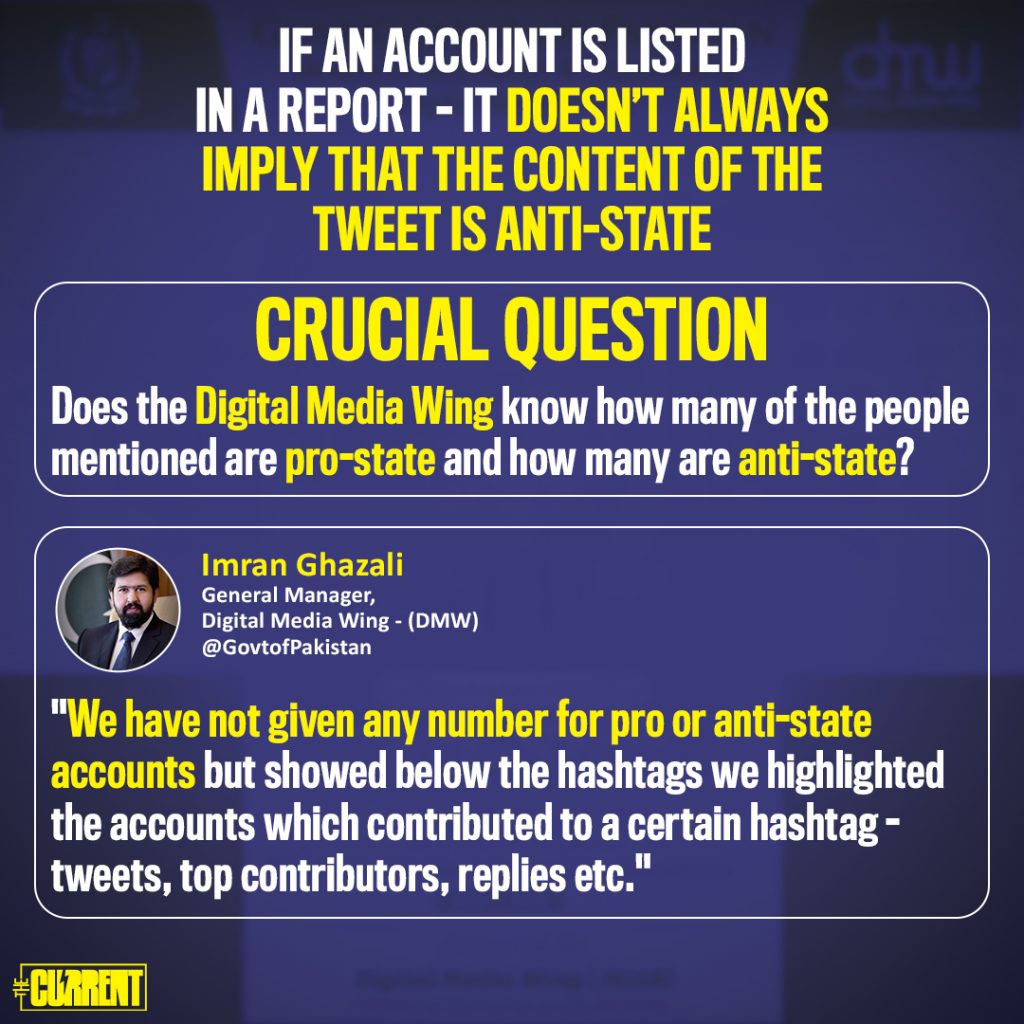
After the DMW response, Fereeha demanded that they add a disclaimer to the report. A disclaimer was added which stated, “If an account is listed in a report – it doesn’t always imply that the content of the tweet is Anti-State. Some accounts have engaged/replied with an anti-state hashtag to rebut. But since they used the hashtag their accounts got listed in the report.”
Imran Ghazali admitted to adding the disclaimer after Fereeha raised an objection about the fairness of the report.
The Current asked Ghazali about how they have divided the report to show which people mentioned were anti-state and which ones were considered pro-state. Ghazali refused to directly answer the question and stated, “We have not given any number for pro-state or anti-state accounts but showed below the hashtags we highlighted the accounts which contributed to a certain hashtag – tweets, top contributors, replies etc.”
When we pressed him to answer the question about how the people selected were separated into anti-state and pro-state, he said, “If an account is listed in a report – it doesn’t always imply that the content of the tweet is Anti-State. Some accounts have engaged/replied with an anti-state hashtag to rebut. But since they used the hashtag their accounts got listed in the report.”
The implication of his answers show that the report does not – and cannot- differentiate people’s points of view on a tweet, which means that someone who has posted a ‘pro-state’ tweet condemning the hashtag will also be added into the list of someone who is considered anti-state.
WAS THE GOVERNMENT ALLOWED TO USE THE APP ‘TWEEPSMAP’?
The Current reached out to TweepsMap, which was the primary analysis app used by the government for this report. The maps and information all have the Tweepsmap link on the maps and all charts in the report. We asked the CEO of TweepsMap Samir Al-Battran if they considered the analysis of the report to be authentic since it used their app service. Samir told us, “The government of Pakistan is not authorised to use our service. We will investigate how they got access to our analysis and get back to you on this.”
We asked him for further details, asking if an individual used their service for analysis for a government funded report, would that be against their rules, to which Samir replied and said, “…Government agencies go through a vetting process before we allow them to use our service. We were never in communication with the government of Pakistan…Yes, [using the app without informing us what it is for] would be a misrepresentation and is definitely against our rules.”
The Current asked Ghazali if they used the application and if they had authorisation to which he said, “We used different tools/APIs including our internal tools to analyse data”. We asked him since TweepsMap is the only one that is being listed in the report, if they had gotten a subscription for the government of Pakistan to which we got no response.
WHAT ELSE IS IN THE REPORT?
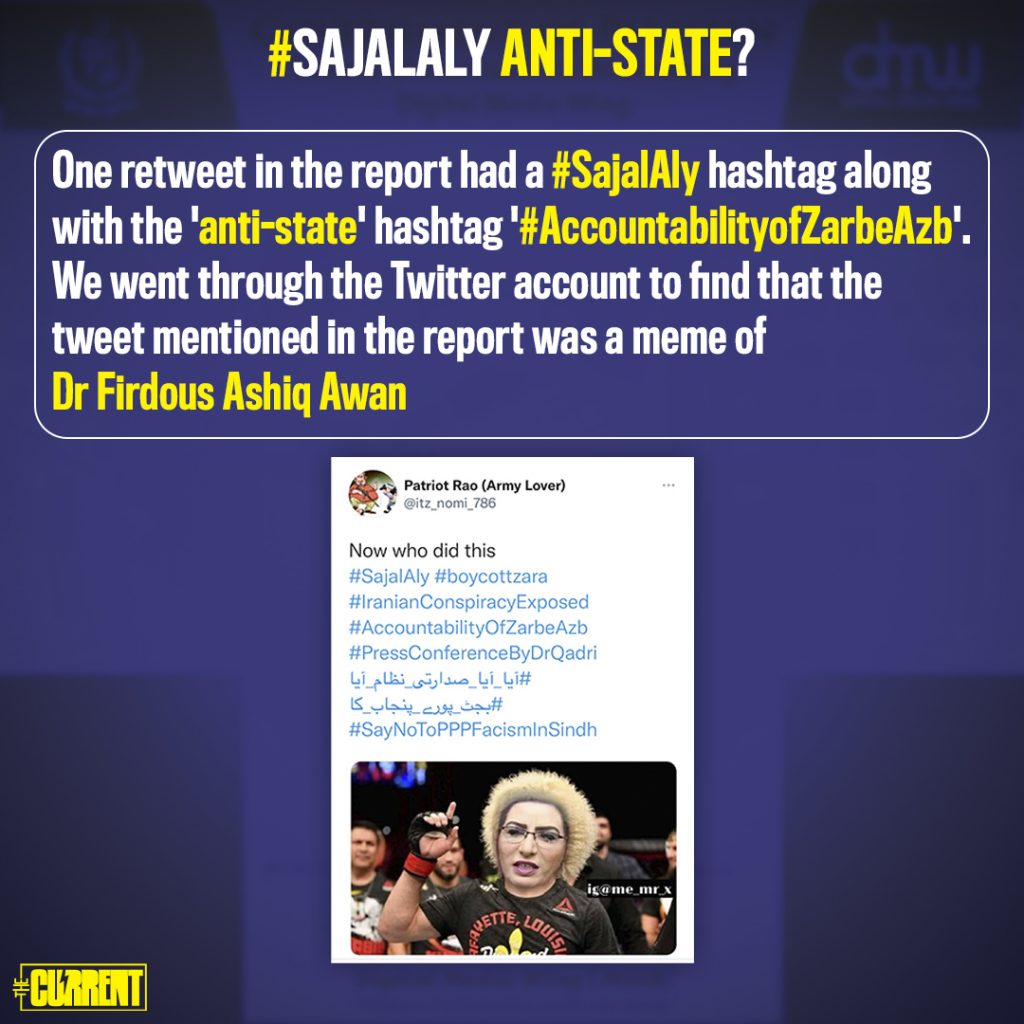
We analysed the tweets used in the 85 screenshots present in the report and found some comical discrepancies. One retweet had the #SajalAly hashtag along with the ‘anti-state’ hashtag ‘#AccountabilityofZarbeAzb’. We went through the Twitter account to find that the tweet mentioned in the report was a meme of Dr Firdous Ashiq Awan.
A tweet by former Interior Minister Rehman Malik is included in the #SanctionPakistan list in which he is criticising Indian Prime Minister Narendra Modi and the US.
The tweet Rehman Malik retweeted
The report also includes references to “a group of Wikipedia Admins most of whom are based in India,” giving state level credibility to an online encyclopedia that can be edited by anyone. With glaring spelling mistakes and analysis based on unauthorised data, the summary of the Digital Media Wing Deep Analysis report has been summed up by one senior data analyst based in Singapore, “That just goes to show… they don’t understand how it works.”
Prime Minister Imran Khan, while talking to foreign journalists on Wednesday, to explain the unrest in the region, referred to the Pashtuns as ‘xenophobic’.
“We have a larger Pashtun population here in Pakistan than in Afghanistan and they’re probably the most ‘xenophobic’ people on earth,” said PM Khan.
“They fight each other normally but when it’s an outside [force], they all get together,” said the prime minister.
Twitterati reacted to PM Khan calling the Pashtuns ‘xenophobic’. As per the Oxford dictionary, ‘xenophobia’ means literally, fear of foreigners or strangers, though the term is often used to refer to attitudes of hatred or contempt rather than pure fear.
The word ‘xenophobic’ means having or showing a dislike of or prejudice against people from other countries.
National Assembly member Mohsin Dawar tweeted, “Shocking to see that in 2021 a PM would label an entire ethnicity as xenophobic.”
Shocking to see that in 2021 a PM would label an entire ethnicity as "xenophobic". I can't believe how he can even think that considering all the Pashtuns around him. Expect these Pashtuns to defend this shameful racist characterisation rather than question and correct him. pic.twitter.com/U9ws8EkJg6
A Twitter user wrote, “Imran Khan should apologise to all Pashtuns. We are not xenophobic we are peaceful people who just want to live in peace.”
Imran Khan should apologise to all Pashtuns. We are not xenophobic we are peaceful people who just want to live in peace. Stop demonising us when we are victim of state oppression. pic.twitter.com/Kzdde08WTG
Another Twitter user requested, “I think time has come that IK should only be giving written speeches/media talks with editing/homework on each question. No more live talks. Restrict him now.”
Journalist Murtaza Solangi questioned, “Is he [Imran Khan] a social scientist or social anthropologist?”
He told journalists that he is not waiting for Biden’s call. His NSA complaints to Yanks why they are not calling him. Now he dubs all Pashtuns as Xenophobic. Is he a social scientist or social anthropologist? What is he? #SmallPeopleInBigOfficespic.twitter.com/ABDfA3CqRB
Chief Justice of Pakistan Gulzar Ahmed has nominated Justice Ayesha A. Malik for the elevation to the Supreme Court, tweeted senior journalist Hasnaat Malik.
Breaking: Chief Justice of Pakistan Gulzar Ahmed has nominated Justice Aysha Malik for the elevation to the Supreme Court. Justice Aysha will be first female judge who is going to elevate to the Supreme Court of Pakistan in history.
Justice Ayesha will be the first woman judge in the history of Pakistan to be elevated to the Supreme Court.
She will become the first woman Chief Justice of Pakistan after Justice Yahya’s retirement in January 2030.
CJP Gulzar has summoned JCP meeting on September 9 to consider her elevation to SC. She is number 4 on LHC judges seniority. Justice Aysha wil work 10 years as SC judge. She will become first female CJP after Justice Yahya retirement in January 2030 for more a year. https://t.co/mwRqCrCrqV
Justice Ayesha A. Malik is one of the only two women judges in the 40 esteemed judges of the Lahore High Court. According to Women in Law, a group working for equal opportunities for women lawyers in Pakistan, only 15 per cent of women judges are part of the Pakistani judiciary.
Justice Ayesha Malik’s name came to fame after her landmark judgment against the ‘two-finger test’ or two-finger virginity test of sexual assault survivors.
Justice Ayesha Malik, 54, received her early education from Karachi Grammar School and her LLM degree from Harvard Law School in the United States, after which she returned to Karachi to practice law.
Prime Minister Imran Khan, while talking to foreign journalists at his residence on Wednesday night, said he was not “waiting” for a phone call from United States (US) President Joe Biden.
“I keep hearing that President Biden hasn’t called me. Well, it’s his option. If he wants to call or not it’s his business. If he thinks it’s necessary or not. Not that I am waiting for any phone call,” he said in response to a question from Reuters journalist, Gibran Peshimam.
I asked PM Imran Khan about the "Biden call" issue in an interaction. He said: "I keep hearing President Biden hasn’t called me. Well it's his option. If he wants to call or not it's his business if he thinks it's necessary or not. Not that I’m waiting for any phone call"
PM Khan’s comments come after National Security Adviser (NSA) Moeed Yusuf had said that Pakistan has other options if Joe Biden continues to ignore the country’s leadership.
While speaking to Finacial Times (FT), Yusuf categorically said, “If a phone call is a concession, if a security relationship is a concession, Pakistan has options.”
“We’ve been told every time that . . . [the phone call] will happen, it’s technical reasons or whatever. But frankly, people don’t believe it,” Yusuf added.
The prime minister also talked about the current situation in Afghanistan, its impact on Pakistan, and the withdrawal of US troops.
PM Khan further said, “The only solution to Afghan problem is the formation of an inclusive government through a political settlement.”
He said the prevailing situation in Afghanistan could lead to a civil war in the country resultantly making us suffer being the immediate neighbour. He said it could also affect our geo-economic agenda of improving trade links with Central Asia.
Prime Minister said, ” Pakistan is ready to work with any government in Afghanistan that is elected by its people.” He once again made it clear that we have no favourites in Afghanistan.
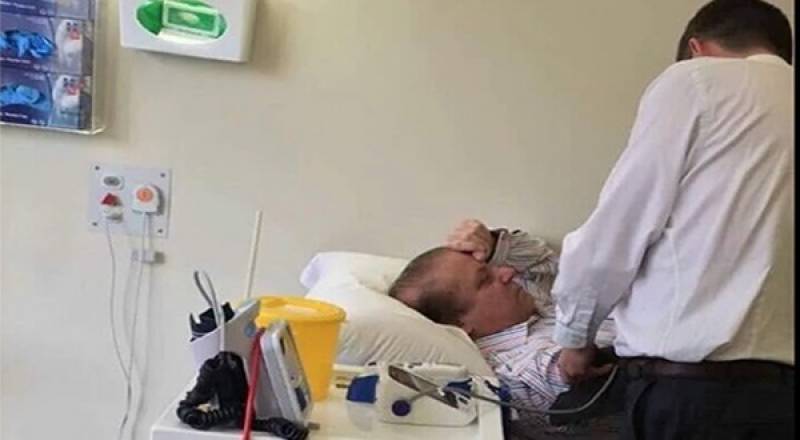
Former Prime Minister Nawaz Sharif’s new medical reports have been submitted to the Lahore High Court (LHC) after the British authorities turned down his request for an extension in his stay, pleading that he cannot return as doctors have not yet allowed him air travel, reports Dawn.
Since November 2019, this is Nawaz’s 11th medical report submitted to the LHC. In all medical reports, a similar plea had been taken that ‘doctors have stopped him (Nawaz) from air travel’.
Pakistan Muslim League-Nawaz (PMLN) President Shehbaz Sharif has already said that Nawaz Sharif will not return until his complete recovery and stated that he can legally stay in the UK till the British immigration tribunal makes a final decision.
Nawaz’s consultant, cardiothoracic surgeon David Lawrence, in Nawaz’s medical report wrote, “Nawaz Sharif, undoubtedly, has complex and complicated medical issues which need to be treated holistically. Great care needs to be exercised in dealing with each of the diseases and comorbidities he is suffering in order to maintain the right balance.”
“There is also the appearance of the transient ischemic dilatation suggesting significant ischemic burden that amounts approximately 22 per cent of the myocardium. This is indicative of significantly reduced blood supply to the heart in the circumflex territory and impaired functionality. Mr Nawaz is advised cardiac catheterisation and subsequent management given the significant risk of worsening of his heart disease but once his comorbidities (ITP, hypertension, diabetes, and chronic kidney disease) were stabilised by a multidisciplinary approach,” said the doctor.
“He developed Immune thrombocytopenic purpura (ITP) during his incarceration and his response to the first and second-line therapies was unsatisfactory, a stable platelet count within the medically prescribed range was paramount to ensure the safety of diagnostics and treatment. In addition to the recent finding of him having developed carotid artery’s stenosis, he was assessed to have had an exacerbation of his coronary artery disease and deterioration of renal functions. The intention was indeed to proceed with the management of his cardiac and carotid diseases once he was given clearance from hematology and nephrology specialties,” says the medical report.
“He should, by all means, avoid travelling and visiting public places like airports. He should only stay in close proximity to the healthcare facilities where he has been getting his treatment until the Covid-19 threat is over and his health problems are adequately addressed,” Lawrence said.
“Mr Nawaz needs to take serious precautions being a clinically extremely vulnerable person,” added the report.
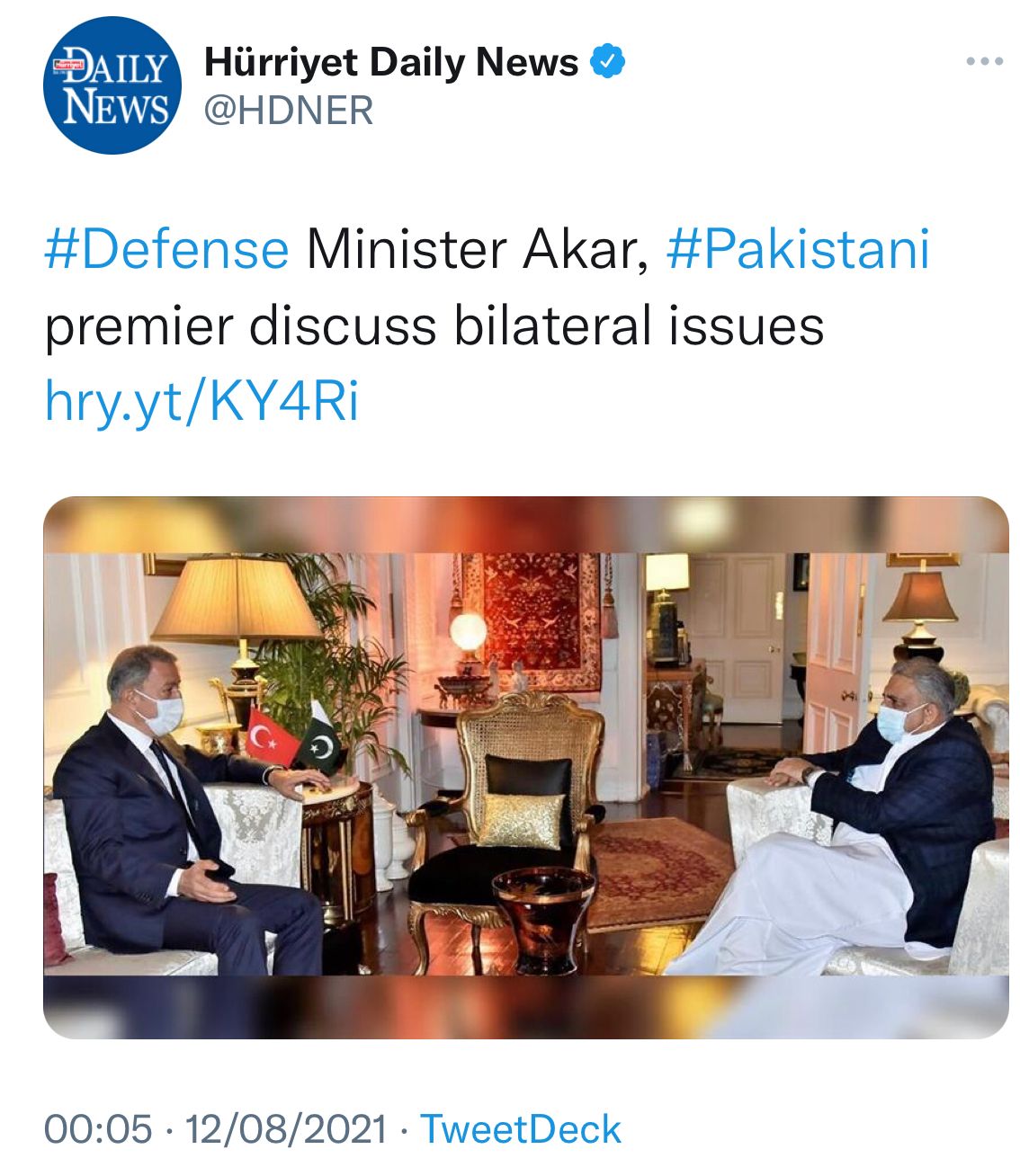
A Turkish news channel ‘Hürriyet Daily News’ shared a picture of the Chief of Army Staff (COAS) General Qamar Javed Bajwa in a meeting with Turkish Defence Minister Hulusi Akar, with the caption: “#Defense Minister Akar, #Pakistani premier discuss bilateral issues.”
Another user wrote, “Na koi phone karta hai, na koi milnay aata hai… [Neither does anyone call nor does any once come to meet] The #SedLyf of #ImranKhan”
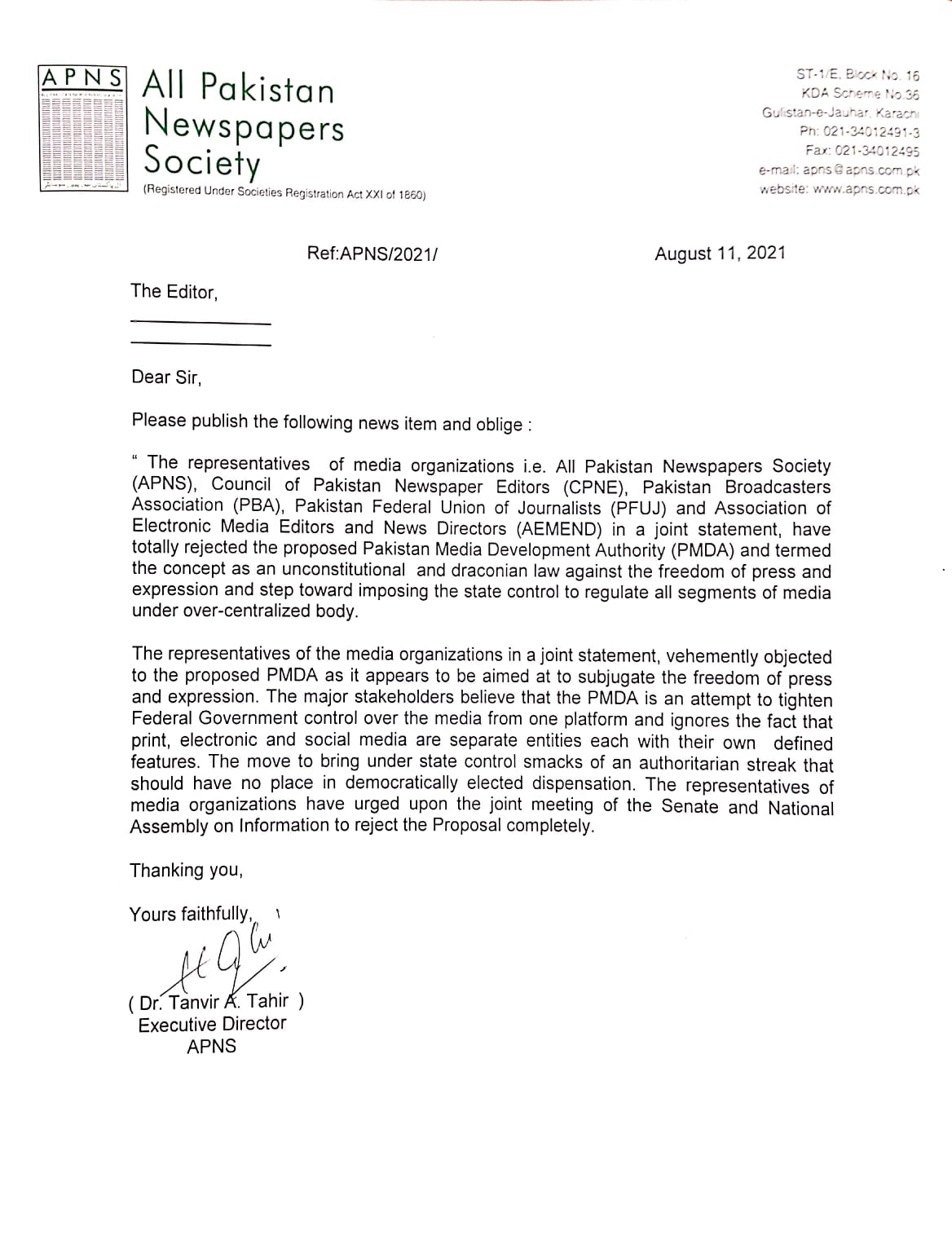
The representatives of media organisations have rejected the proposed Pakistan Media Development Authority (PMDA) and termed the concept as an unconstitutional and draconian law against the freedom of press and expression and a step toward imposing state control to regulate all segments of media under over-centralised body.
The major stakeholders believe that the proposed PMDA is an attempt to tighten the government’s control over the media from one platform and ignores the fact that print, electronic and social media are separate entities, each with their own defined features.
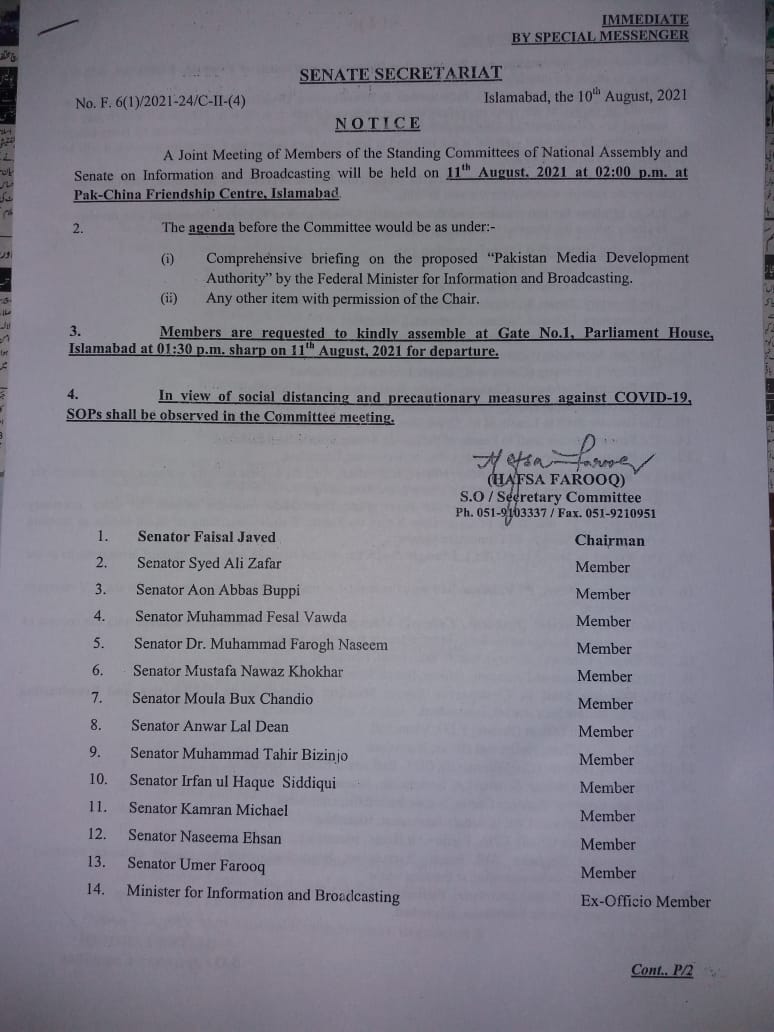
A joint meeting of the members of the Standing Committee of National Assembly and Senate on Information and Broadcasting was held on August 11.
Talking to The Current, Senator Mustafa Nawaz Khokhar said that a joint meeting of the Standing Committees on Information of both Houses — Senate and National Assembly— had been called by the Information Ministry to discuss the proposed media authority bill.
“PML-N had boycotted the meeting as it was being held at the Information Ministry instead of Parliament House. When I went to the meeting, I raised some legal and constitutional points regarding the meeting,” said Khokhar.
“I asked the government for signed permission by Chairman Senate and Speaker National Assembly as it is required by law if such meetings are called outside parliament. The government could only produce a permission letter from Chairman Senate but not Speaker National Assembly. So I raised the point that this meeting is illegal,” said Khokhar.
“I also pointed out that since Mian Javed Latif, who is the chair of the NA Standing Committee on Information, is not present due to PML-N’s boycott, the NA Standing Committee cannot be part of this meeting. I was overruled by the government. Thus, the PPP also decided to boycott the briefing,” added Senator Khokhar.
The agenda before the Committee was one of a comprehensive briefing on the proposed PMDA by the Federal Minister for Information and Broadcasting Fawad Chaudhry.
As per the last known draft, the PDMA has been described in the Ordinance as “an independent, efficient, effective and transparent” Authority, which will regulate all forms of media, including digital media.
Under the Ordinance, print and digital media will also need a license to establish and operate in the country.
The draft describes digital media as online newspapers, web TV channels, OTT content platforms, online news channels, video logs, and YouTube channels, Netflix, Amazon Prime.
As per the drafted Ordinance, the government could issue directives to the Authority on matters of policy, and such directives will be binding on the Authority.
For a media organisation to operate in the country, it will be required to not broadcast, distribute or make available online any programme inciting violence or hatred or any action prejudicial to maintenance of law and order or content which defames or brings into ridicule the Head of State, or members of the armed forces, or legislative or judicial organs of the state or is obscene or vulgar.
As per the draft, the president will set up media tribunals. An aggrieved person can file an appeal with the media tribunal within 30 days. Only the Supreme Court will have jurisdiction to question the legality of a decision taken by the media tribunals.