Category: Politics

  • Will Justice Yahya Afridi accept his nomination as chief justice?

    Will Justice Yahya Afridi accept his nomination as chief justice?

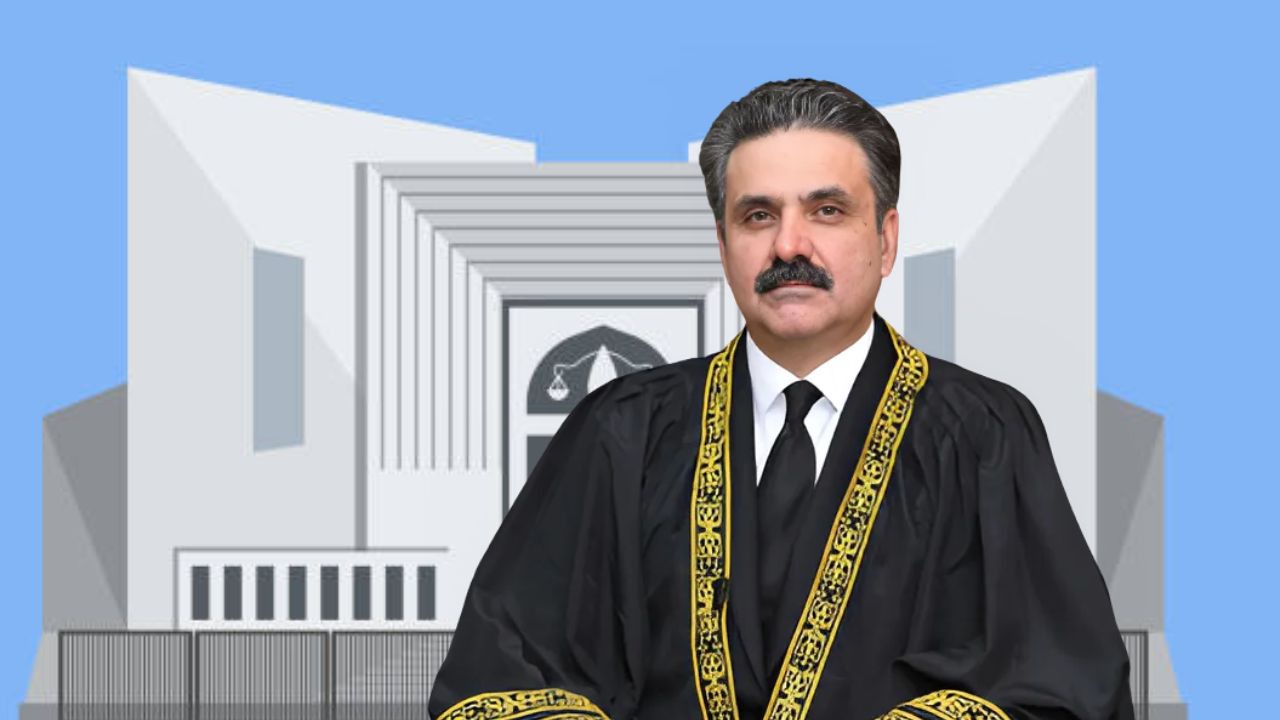
    With Justice Yahya Afridi’s name being finalized as the next chief justice of Pakistan (CJP), opposition leader and netizens are speculating whether Justice Afridi will be accepting the post or not.

    President Asif Ali Zardari on Wednesday appointed Justice Yahya Afridi as the next CJP, who will take over the reins from incumbent CJP Qazi Faez Isa later this week. Justice Afridi has been appointed for a fixed three-year term starting on October 26, said a statement from Aiwan-e-Sadr.

    Soon after Justice Afridi’s nomination by a special parliamentary committee, formed under the 26th Amendment, PTI leader Hamid Khan, in conversation with a private media outlet on Tuesday night, expressed hope that Justice Afridi “would decline the position”.

    The statement left the internet divided, with people speculating whether Justice Afridi will be accepting the position of the country’s 30th CJP.

    Some social media users went on to suggest that Justice Afridi should not accept the position owing to the changes in process of appointment of the country’s top judge under the 26th Amendment.

    “Justice Yahya Afridi, show some grace and reject this offer. Justice Mansoor Ali Shah should be made the Chief Justice of Pakistan, as this Constitutional Amendment was illegitimate,” wrote one user, calling out the ruling coalition.
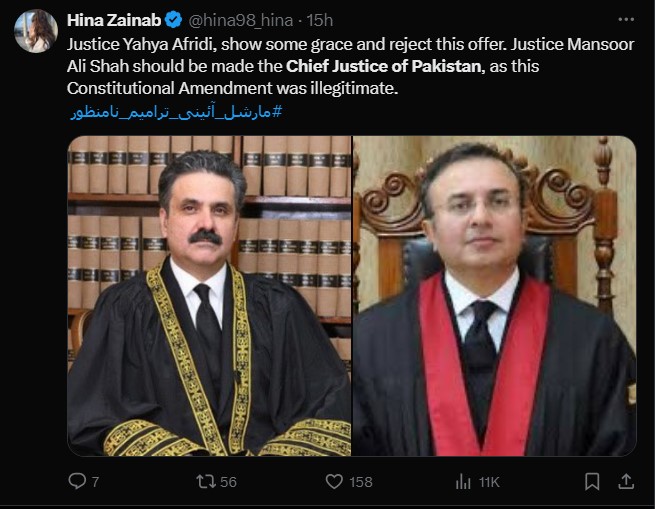
    Showing concern over the appointment of the third senior-most judge instead of senior-most Justice Mansoor Ali Shah after CJP Qazi Faez Isa, another user wrote, “This is Pakistan’s most senior judge, Mansoor Ali Shah, but his seniority is being ignored, and the third-ranked judge, Yahya Afridi, is going to be made Chief Justice of Pakistan.”
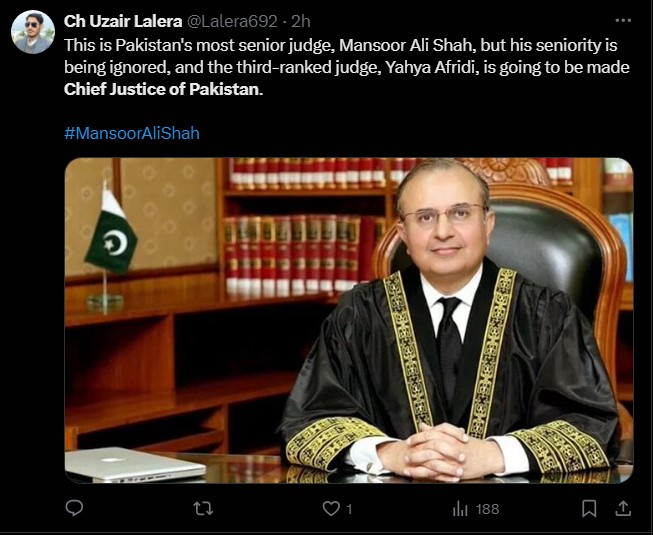
    It may be noted that neither Justice Afridi himself, any Supreme Court (SC) judges nor other relevant authorities have so far hinted at the possibility of Justice Afridi refusing to take charge as the country’s top judge. Instead, media reports on Wednesday afternoon claimed that the incumbent chief judge among other members of the judicial community had already congratulated Justice Afridi.

    On late Sunday night, the Parliament passed the 26th Amendment, ruling out the scenario of the senior-most SC judge’s appointment as the CJP. Under the changes, the appointment of the CJP shall now be made from among the three senior-most judges of the apex court on the recommendation of a special parliamentary committee.

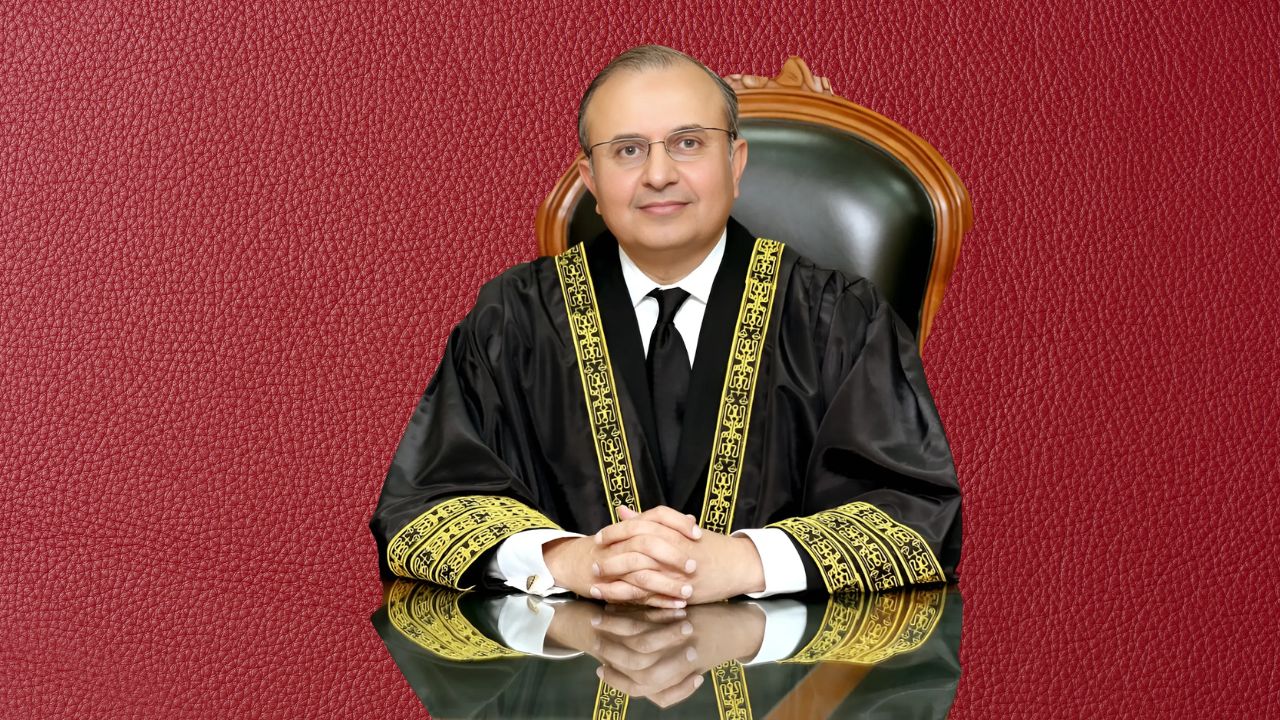
    Justice Mansoor Ali Shah, Justice Munib Akhtar and Justice Yahya Afridi were in the race for the slot of the country’s top judge till a special parliamentary committee nominated Justice Yahya Afridi.
  • Who Will Be New Chief Justice? Is Mansoor Ali Shah a Strong Competitor?

    Who Will Be New Chief Justice? Is Mansoor Ali Shah a Strong Competitor?

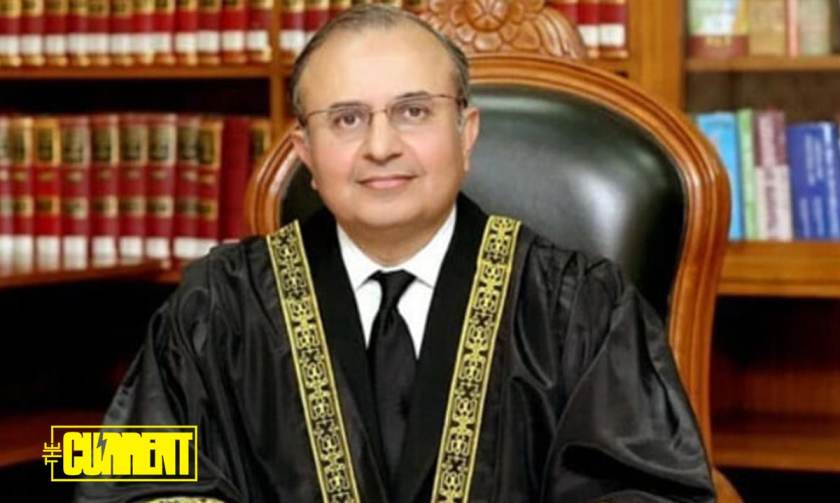
    A special parliamentary committee has been established to elect the next Chief Justice of Pakistan (CJP) Mansoor Ali Shah after legal changes were made through the 26th constitutional amendment. The secretariat of the national assembly has also confirmed the committee’s formation through notification.

    The elected Chief Justice of Pakistan, Qazi Faez Isa, will provide three nominations of the seniormost judges by the end of Tuesday to appoint a new CJP.

    The report mentions three senior judges under consideration: Justice Mansoor Ali Shah, Justice Munib Akhtar, and Justice Yahya Afridi. Their profiles are as follows:

    Mansoor Ali Shah

    Justice Mansoor Ali Shah was born in Peshawar on November 28, 1962. He was educated in Lahore at Aitchison College. After completing his law degree from Punjab University, he became a law college instructor. This career move was fruitful as I rose the ranks to eventually become an additional judge of the Lahore High Court in the year 20 as Chief Justice of the Lahore High Court between 2016 and 2018. 

    He became a Supreme Court judge on February 7, 2018, after a brief period during which he could rise in charge levels. This same period was also fruitful for Justice Shah as he could participate in and manage many important cases, including the majority decision regarding reserved seats. He also became known for his 27 dispersed pages written regarding changes in NAB laws. His time has also been marked by his attempts to help construct arbitration forums and help foster judicial change in Pakistan.

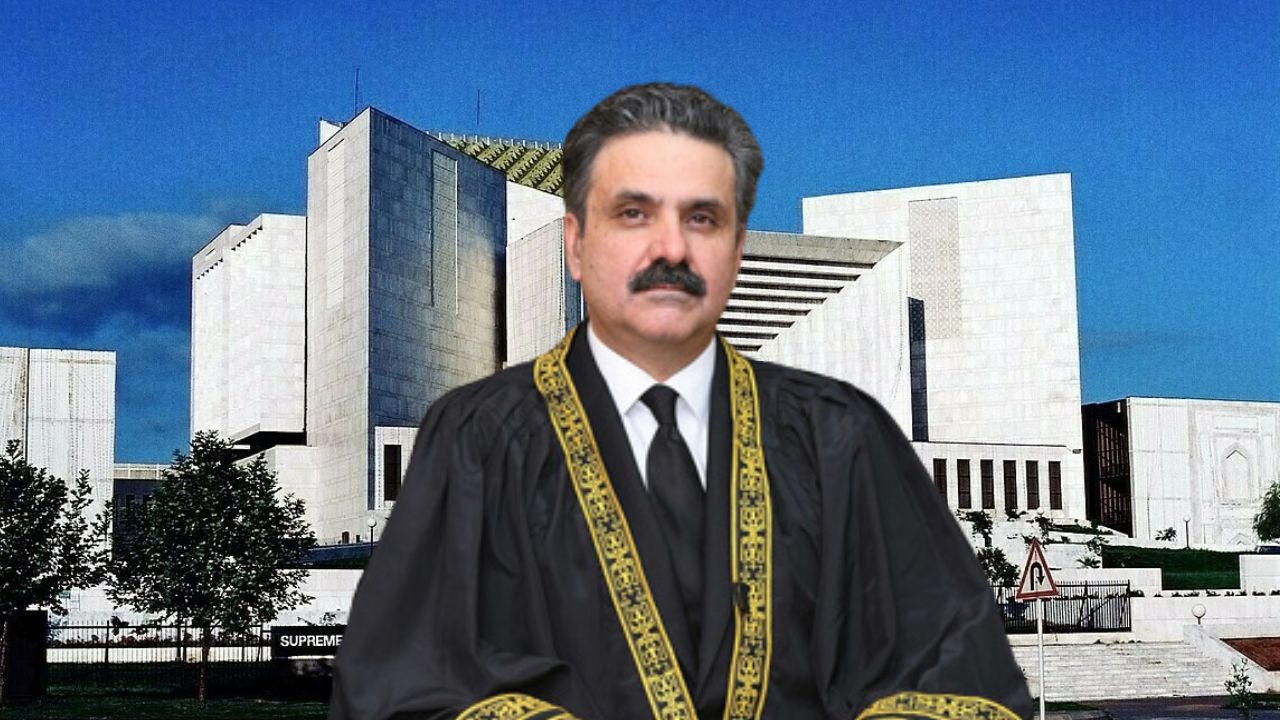
    Justice Yahya Afridi

    Justice Yahya Afridi was born in Dera Ghazi Khan on January 23, 1965. Most of his early education was obtained at Aitchison College, Lahore. After that, he graduated from Government College, Lahore. Legal studies were continued with an LLM from Jesus College, Cambridge University. Legal practice commenced in 1990, and entry into the Supreme Court bar was achieved in 2004. 

    He has been involved in larger benches deciding significant issues, including the case of reserved seats and the Zulfikar Ali Bhutto presidential reference. He has also contributed dissenting notes in various significant judgments.

    Read also: Here’s how Justice Mansoor Ali Shah reacted to Yahya Afridi’s appointment as CJP

    Justice Munib Akhtar

    Justice Munib Akhtar was born on 14 December 1963. He received most of his early education at Govt College in Lahore. He then relocated to the United States and continued his studies at Princeton University. Justice Munib Akhtar entered the judiciary when he was appointed as an additional judge of the Sindh High Court in 2009. In 2011, he also got the substantive post.

    Further, in 2018, he was promoted to Judge of the Supreme Court of Pakistan. The judge’s other critical duties included authoring articles that detailed Article 63-A of the Constitution of Pakistan.

  • What important decisions has Justice Yahya Afridi made?

    What important decisions has Justice Yahya Afridi made?

    Justice Yahya Afridi, who was nominated by a Special Parliamentary Committee (SPC) last night, is set to take oath as the next chief justice of Pakistan (CJP) on Saturday.

    Following the passage of the 26th Amendment, the Chief Justice of Pakistan (CJP) will now be “appointed on the recommendation of the Special Parliamentary Committee from amongst the three most senior” SC judges.

    Previously, the president used to appoint the CJP based on the seniority principle, according to which Justice Mansoor Ali Shah would be the next CJP.

    Since the new CJP is here, let’s take a look at some of his famous cases.

    Some important decisions of Justice Yahya Afridi

    In 2018, Justice Yahya Afridi was the head of the special bench in the treason case against the dictator Pervez Musharraf. However, he recused after some time after Musharraf’s lawyer objected to his inclusion, saying Justice Afridi was former chief justice Iftikhar Chaudhry’s lawyer.

    In 2020, Justice Yahya rejected Justice Qazi Faiz Isa’s plea against the infamous Presidential Reference against him, saying the fundamental rights of a sitting judge would remain eclipsed so far as their enforcement was not in consonance with the terms of his oath of office. However, he endorsed the quashment of reference by disposing of other petitions moved by a number of bar councils and bar associations.

    In 2022, he supported the issuance of show cause notice to Imran Khan in the May 25 Long March case of Tehreek-e-Insaf when it was accused of allegedly flouting a May 25 order of the apex court that defined the limits for the party’s ‘Azadi March’ gathering in Islamabad and thereby committing contempt of court. A five-member SC bench, in a 4-1 split decision, instead sought a reply from Imran on the matter before deciding to issue him a notice.

    In 2023, a five-judge bench, which included Justice Yahya, declared that the trial of civilians in the military courts was unconstitutional in May 9 cases.

    In the Punjab/Khyber Pakhtunkhwa election case, the petitions were dismissed as pending in the High Court.

    In April 2024, he also recused himself from the infamous six IHC judges’ letter to the Supreme Judicial Council case.

    In the reserved seat case of SIC-PTI, he supported the position of Tehreek-e-Insaaf by giving a similar position as the other 8 judges on the bench but opposed it due to some other legal issues. And he also wrote his dissenting note in the decision related to the case.

    Justice Yahya Afridi was also part of the 9-member larger bench of the Supreme Court on the presidential reference against the execution of former Prime Minister Zulfiqar Ali Bhutto.

    Justice Yahya Afridi declined to join the three-member judges committee of the Supreme Court Practice and Procedure Ordinance 2024.

  • Will India support Pakistan’s bid to join BRICS?

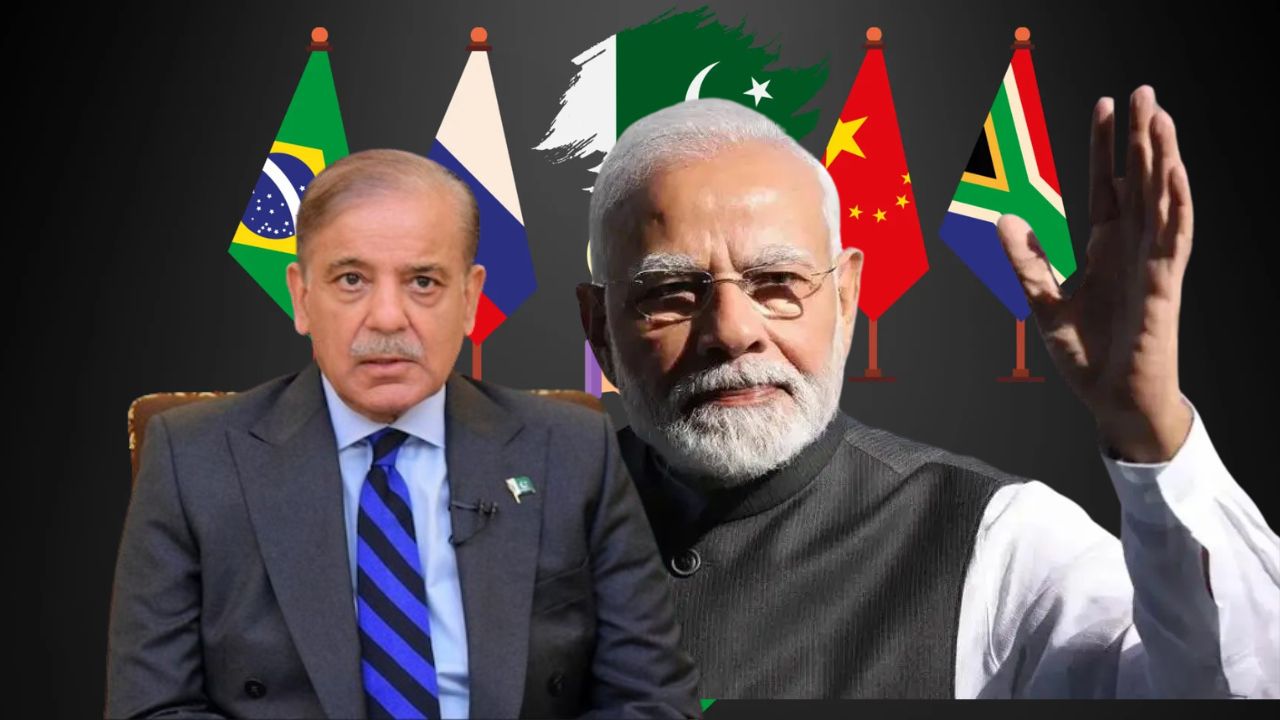
    Will India support Pakistan’s bid to join BRICS?

    India is likely to support Pakistan’s bid to join the BRICS bloc, an alliance that challenges the economic monopoly of the West, Indian media has reported.

    Indian media has speculated that following Russia’s influence on India, News Delhi may vote in favour of Pakistan joining the BRICS.

    “One of the key takeaways of the summit is likely to be India’s green signal to Pakistan’s long-pending bid for membership in the bloc,” ABP Live reported.

    Pakistan applied for membership in BRICS in August 2023; following this, other countries, Turkiye, Azerbaijan, and Malaysia, also formally applied to become members of the bloc.

    It should be mentioned here that a new member of BRICS was added only after the consensus of the bloc members, and India has remained defiant in giving assent to Pakistan joining the BRICS bloc over the past years.

    The chances only brightened after Russia’s Deputy Prime Minister Alexei gave public support to Pakistan’s membership in BRICS during his visit to Islamabad in September, Dawn News observed.

    What is BRICS?

    BRICS stands for countries’ names: Brazil, Russia, India, China, and South Africa.

    The group started in 2006, and Brazil, Russia, India and China convened for the first BRIC summit in 2009. However, South Africa joined on 24 December 2010.

    BRICS in 2023 extended the invitation to Egypt, Ethiopia, Iran, Saudi Arabia and the United Arab Emirates after these countries applied for membership.

    Two dozen world leaders, including Indian Prime Minister Narendra Modi, Chinese President Xi Jinping, and South African President Cyril Ramaphosa, attended the opening of the BRICS summit on Tuesday.

    Russian Prime Minister Vladimir Putin hosted the BRICS summit, which is in progress in Russia’s third largest city, the southwestern city of Kazan and will end on October 24.

  • MQM’s Rana Ansar’s son killed in a car crash

    MQM’s Rana Ansar’s son killed in a car crash

    Muttahida Qaumi Movement (MQM) leader Rana Ansar’s son has been killed in an accident.

    As per Aaj News, 23-year-old Shahzaib Naqvi’s car met a horrible accident at Clifton Road Karachi.

    His body was shifted to the morgue of Sohrab Goth.

    Various leaders of the party have reached the morgue, whereas the MQM MNA has boarded a flight from Islamabad, where she was present to represent her party in the special parliamentary committee made for the selection of the Chief Justice of Pakistan after the 26th amendment.

    Previously, Rana, in an interview, shared an unfortunate experience of losing her husband, senior journalist Ansar Naqvi, in a plane crash back in Ramzan of 2020.

  • Amitabh Bachchan asks question about Imran Khan on Kaun Banega Crorepati

    Amitabh Bachchan asks question about Imran Khan on Kaun Banega Crorepati

    In a short video clip going viral on social media platforms, the Indian entertainment show Kaun Banega Crorepati’s host – Bollywood legend Amitabh Bachchan- asked a contestant a question about the founder of Pakistan Tehreek-e-Insaf (PTI) Imran Khan.

    The question was: “Which former Prime Minister of Pakistan was shot at in Wazirabad on 3 November 2022?”

    The contestants are asked a question and then given four options, out of which only one can be the correct option.

    In this question, the four options were Nawaz Sharif, Imran Khan, Yousaf Raza Gillani, and Shaukat Aziz. The contestant chose the second option, which was Imran Khan, and won Rs 3,20,000/- for the correct answer.

    PTI followers are sharing the short footage on social media, and most of them are celebrating the popularity of Imran Khan internationally.

    On November 3 2022, Imran Khan, months after being ousted from the government through a no-confidence motion, was rallying across the country campaigning for the second ‘Azadi March’ against the Pakistan Democratic Movement (PDM) government when he was shot at in an attempted assassination in Wazirabad city.

    Khan was at the front of a container-mounted truck along with other PTI leaders and supporters when a gunman fired shots. He was shot in the shin, and thigh of the right leg and was transferred to Shaukat Khanum Memorial Cancer Hospital and Research Centre in Lahore, where he underwent treatment.

    Police arrested the gunman, Muhammad Naveed and uploaded a controversial confession video of the suspect stating that he shot Khan as he was “spreading hatred and misleading the people”, as well as making “blasphemous and anti-religion” remarks.

    Seven people, including former prime minister Imran Khan and other party leaders, were injured, and a party worker was killed in the gun attack.

  • Here’s how Justice Mansoor Ali Shah reacted to Yahya Afridi’s appointment as CJP

    Here’s how Justice Mansoor Ali Shah reacted to Yahya Afridi’s appointment as CJP

    A claim regarding Justice Mansoor Ali Shah’s reaction to Justice Yahya Afridi’s appointment as the next chief justice of Pakistan (CJP), has taken the internet by storm.

    Justice Shah, who was next in line to be the CJP on the basis of seniority, was on Tuesday sidelined for the appointment of Justice Yahya Afridi, as a Special Parliamentary Committee, formed under the 26th Amendment, nominated the latter instead.

    The committee, with a two-thirds majority, referred Justice Afridi’s name to Prime Minister Shehbaz Sharif, who later forwarded it to President Asif Ali Zardari for a final nod.

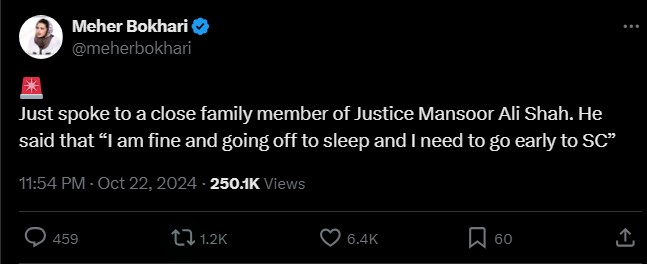
    With the Law Minister Azam Nazeer Tarar announcing the decision of the parliamentary committee last night, senior journalist Meher Bokhari shared on X (formerly Twitter) a claim regarding Justice Shah’s reaction to the news.

    “Just spoke to a close family member of Justice Mansoor Ali Shah. He said, ‘I am fine and going off to sleep and need to go early to SC [sic],” she claimed

    It wasn’t later when social media was flooded with commentary on Justice Shah’s reaction.

    One user trolled Meher Bokhari and said, “It was quite a revelation indeed. I also talked to a family member of Justice Mansoor Ali Shah, and he said, ‘I’ll wake up and brush my teeth.”

    “Sanu ki paway lambi taan kay sawy ya choti,” another user posted.

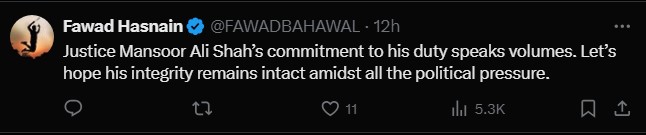
    Optimistically, one X user wrote, “Justice Mansoor Ali Shah’s commitment to his duty speaks volumes. Let’s hope his integrity remains intact amidst all the political pressure.”

    Justice Yahya Afridi’s Early Life

    Justice Yahya Afridi was born in Dera Ismail Khan on Jan 23, 1965. Justice Afridi belongs to the Adam Khel clan of the Afridi tribe and is a resident of Kohat’s Babari Banda village. He comes from a family steeped in the tradition of public service, as per Dawn News.

    Justice Afridi attended Aitchison College and Government College, Lahore, for his schooling and undergraduate degree. He later secured an MA degree in Economics from Punjab University.

    After being awarded a Commonwealth Scholarship, Justice Afridi completed his LLM from Jesus College at the University of Cambridge. He was subsequently selected for a scholarship programme for Young Commonwealth Lawyers at the Institute of Legal Studies in London.

    He was enrolled as a high court advocate in 1990 and a Supreme Court lawyer in 2004. He served as an assistant advocate general for Khyber Pakhtunkhwa and as federal counsel for the federal government while in practice.

    Justice Afridi was elevated to the Peshawar High Court (PHC) as an additional judge in 2010, and confirmed as a PHC judge on March 15th, 2012.

    He was elevated to the Supreme Court on June 29, 2018.

    Justice Yahya Afridi will take oath as CJP on October 26.

  • X finds Salman Akram Raja’s past remarks on judiciary’s seniority principle

    X finds Salman Akram Raja’s past remarks on judiciary’s seniority principle

    The coalition government successfully passed the controversial 26th constitutional amendment, aimed at judicial reforms, yesterday, which has been deemed as the “bleakest moment in our parliamentary history” by Pakistan Tehreek-e-Insaf (PTI) senior leader Salman Akram Raja.

    The lawyer posted on X on October 20, “The bleakest moment in our parliamentary history is underway. A contrived body that should protect the basic constitutional value of an independent judiciary is about to hand over control of a suppressed judiciary to the executive effectively – Estab. Just 1 senator could save us.”

    While Raja has called the amendments a move to “suppress judiciary”, netizens refuse to forget the PTI leader’s past opinions about the judicial system.

    One social media user posted Salman’s tweets from 2021, in which he criticises the seniority principle in the elevation of judges of the top judiciary – a principle which has been amended through the 26th constitutional amendment.

    In August 2021, Salman wrote, “I have always maintained, including in our exchanges in the press, that the issue is the credibility of those making the appointments, not seniority as a principle per se. Seniority is in fact no principle at all. But credibility is key. Each appointment needs examination by the bar.”

    He also wrote: “Democracy is about interrogating power. The adoption of mindless seniority that stifles debate is acceptance of defeat. The credibility of those appointing is the key issue. Credibility is earned, doesn’t come with high office.”

    Furthermore, in a Twitter debate about judicial appointments back in 2021, the PTI leader emphasised that “seniority stunts the system.”

    Now, PTI strongly opposed the constitutional amendments and refused to vote in favour of the bill in parliament. The bill, containing 22 clauses, was presented by Federal Law Minister Azam Nazeer Tarar in the Senate, where it secured 65 votes, a two-thirds majority in the Upper House.

    The 26th Constitutional Amendment bill was tabled at the National Assembly following approval from the Upper House and passed with a two-thirds majority as 225 lawmakers voted in favour of the bill in NA, while the magic number in the Lower House was 224 votes.

    Pakistan Tehreek-e-Insaf (PTI) and Sunni Ittehad Council’s 12-member National Assembly (MNA) opposed the Constitutional Amendments In the National Assembly.

    “225 members cast their votes for ayes, 12 for nos. Consequently, the bill is passed by the assembly by not less than two-thirds of the total membership of the assembly,” the Speaker of the National Assembly, Ayaz Sadiq, said.

    Following the passage of the bill from the NA, Prime Minister Shehbaz Sharif remarked, “Today’s amendment, the 26th, is not just an amendment, but an example of national solidarity and consensus. A new sun will rise, emanating across the nation.”

  • ‘Nawaz Sharif was not in favour of 26th Amendment,’ senior journalist claims

    ‘Nawaz Sharif was not in favour of 26th Amendment,’ senior journalist claims

    Political analyst Nusrat Javed has claimed that former Prime Minister (PM) Pakistan Nawaz Sharif’s body language was showing his lack of interest in passing the 26th Constitutional Amendment in parliament on Sunday.

    Appearing on Public TV’s programme Khabar Nashar, he said, “Nawaz Sharif ka dil hi iss ma nahi tha, mery khayal se wo dil se hi chah rahay thay kay ye na hi hu.”

    Pakistan Muslim League Nawaz (PML-N) supremo Nawaz Sharif was reportedly quiet at a dinner arranged by Prime Minister Shehbaz Sharif before tabling the 26th Constitutional Amendment. “Chairman PPP Bilawal Bhutto Zardari, Chief Jamiat Ulema-e-Islam Fazl (JUI-F) and President Asif Ali Zardari only remained engaged in verbal communication,” Nusrat Javed added.

    The political analyst further claimed that the PML-N supremo only kept advising lawmakers to try the different food dishes at the dinner. Otherwise, he remained silent.

    Citing Nawaz Sharif’s lack of interest in tabling constitutional amendments in parliament, he substantiated his claim by saying that Nawaz Sharif was the last to arrive at the National Assembly on Sunday.

    The coalition government passed the 26th Constitutional Amendment Bill through both the Senate and the National Assembly in the wee hou

  • ‘Contract was issued to kill Murad Saeed’ alleges Shehzad Akbar

    ‘Contract was issued to kill Murad Saeed’ alleges Shehzad Akbar

    Former Advisor to ex-Prime Minister Imran Khan on Interior and Accountability, Shehzad Akbar, has alleged that there was a “contract to kill Murad Saeed.” He claims that Imran Khan intervened and ordered Murad Saeed to stay hidden at all costs.

    In a small clip going viral on X, formerly Twitter, Shehzad Akbar states, “There is a reason why the ISI and the establishment are out to take Murad’s life: He is loyal to the core with Imran Khan and truly represents him. I’ve personally seen him and can attest to the fact that nobody’s more loyal to Imran Khan than him.”

    “I’m a witness to the fact that Imran Khan was completely aware how a trap was set against Murad Saeed to force him against Khan, but because it wasn’t possible, he had to be taken out of the way,” alleged the former Advisor.

    “I also know that at some point, a contract was issued to kill Murad Saeed,” claimed Shehzad.

    He also claimed that Murad Saeed was going to suffer “exactly the same” as journalist Arshad Sharif did in 2022.

    Arshad Sharif fled the country in August 2022 to avoid arrest after he was slapped with multiple cases, including sedition charges, over an interview with Shahbaz Gill – a close aide of former Prime Minister Imran Khan – during which Gill passed comments that were perceived as provocation to mutiny.

    He was killed by local police in Kenya two months later, with controversies surrounding his cause of death.

    That is why, according to Shehzad Akbar, Imran Khan has strictly ordered Murad Saeed to stay hidden.

    Last year, Akbar revealed that he was the victim of an acid attack outside his home in the UK, for which he later accused the Pakistani state. The former Advisor also initiated legal action against the Pakistan government in May 2024.

    After Imran Khan was ousted through a no-confidence motion in 2022, Akbar left Pakistan for the UK.