Category: Politics

  • Open ballot in Senate polls: What do legal experts have to say?

    While the government continues to stress the need for open ballot/show of hands in the forthcoming Senate election to curb horse-trading marring the process of induction of lawmakers into the upper house of the parliament, the opposition is continuing to allege that it is meant to serve the political interests of the ruling party as it “loses control over its own legislators”.

    The judiciary, on the other hand, has observed that matters related to ballot secrecy had been left to the parliament and would be decided by it.

    Chief Justice of Pakistan (CJP) Gulzar Ahmed, during the hearing of the presidential reference on holding Senate elections through open ballot on Wednesday, said that the judiciary was not the parliament and neither could it reduce its authority.

    According to Dawn, the CJP observed that it has to be seen how parties decide who to vote for. “Do parties have minutes of their meetings?” he asked.

    He said the court had three questions in front of it:

    • Is Article 226 applicable to the Senate elections or not?
    • Can proportional representation be done through single transferable vote?
    • Are elections conducted according to the Constitution secret?

    But with the verdict on the procedure to hold the election likely to come out soon, what do legal experts have to say?

    In this regard, The Current reached out to lawyers Reema Omer and Muhammad Ahmad Pansota…

    REEMA OMER:

    This is exactly the question before the Supreme Court (SC): if SC opines Senate elections are “under the constitution”, Article 226 says they shall be by secret ballot. Any change, therefore, will require a constitutional amendment and amending the Elections Act (EA) either by an Act of Parliament or an ordinance won’t be enough.

    In 2003, the Indian Parliament introduced open ballot in Rajya Sabha elections through amending the Representation of People Act (India’s equivalent of their Elections Act). However, this was possible because unlike the Pakistani constitution, the Indian constitution identifies which elections will be by secret ballot and leaves this question open for all other elections.

    In my view, in Pakistan’s context, this change cannot be done without a constitutional amendment. The government’s argument is that the procedure for Senate election is in the EA and Election Commission of Pakistan (ECP) conducts this election (unlike speaker and Senate chairperson).

    This is why Senate elections fall under the elections act and not the constitution.

    The logical extension of this argument is that the general election where we all vote by secret ballot isn’t under the constitution either as that too is conducted by the election commission. This raises the possibility that the government could through an ordinance even make voting in the general election open. Surely, allowing such a scenario is deeply troubling.

    It’s also important to note the question before the SC is not whether Senate elections should be by open ballot or not: the desirability or necessity of this move is not being determined by the SC. The court is only clarifying the procedure through which this can be done — whether by constitutional amendment or amendment of the EA.

    Since the reference is under the court’s advisory jurisdiction, there are also limitations on how far the court can go in such proceedings.

    Reports from SC proceedings, in this case, suggest the court is also looking at the possibility of reinterpreting “secret ballot” to allow votes to be identifiable. This would in effect be equivalent to the SC amending the constitution itself, which goes against the very foundation of our constitutional framework and separation of powers.

    Let’s hope the SC sticks to the question in the reference before it and allows parliament to decide questions of desirability.

    MUHAMMAD AHMAD PANSOTA:

    The government’s uncertainty about the conduct of Senate elections through an open ballot adopting three different routes has ignited a constitutional and political debate across the country.

    Referral of issue to the SC invoking its advisory jurisdiction under Article 186 of the Constitution for an opinion, tabling of constitutional amendment seeking amendment in Article 226 of the Constitution and then finally the passing of an ordinance on the subject by the president has certainly added to the already existing confusion on the subject.

    Article 59 (2) of the Constitution states that the election of the Senate has to take place through a system of proportional representation and the members of the Senate should hold office for a term of 6 years. Article 218 (1) of the Constitution further states that the ECP is empowered to conduct elections of both houses: Senate and the National Assembly and Article 218 (3) embodies a duty on the ECP to conduct the elections in the best possible manner; in a fair, just and honest exercise–in accordance with the law. Confusion appears as a result of article 226, which says that the Constitution stipulates that all elections which are conducted “under the constitution”, except for the positions of Prime Minister and Chief Minister shall be by a secret ballot.

    Chapter VII of the EA, section 122(6) provides that “poll for election of members of Senate shall be held by secret ballot”.

    This gives rise to a million-dollar question i.e. whether the Senate is an election under the constitution and, if not, can the government amend section 122(6) of the EA?

    Recently through a presidential ordinance, section 122(6) of the EA has been amended so as to allow for open and identifiable ballot subject to the outcome of the Reference No.1 0f 2021 pending before the SC to determine whether the election of the Senate falls under the Constitution or not?

    Supreme Court through its judgment bearing CAS No.760-765 of 2016 titled as “Province of Sindh vs. MQM etc.” declared local government elections could be conducted through either secret or open ballot so long as the applicable law stated its legislative preference.

    The government, in light of the above judgment, could have either amended the law through an ordinance or an act of parliament. The government chooses to promulgate the ordinance which, in my view, appears to be legal and constitutional, however, should not have been passed before the decision of the reference.

    Dragging the courts into politics is not an appreciable move when the same could have been achieved without filing the said reference.
  • Senate election: Bilawal says establishment is ‘neutral’

    Senate election: Bilawal says establishment is ‘neutral’

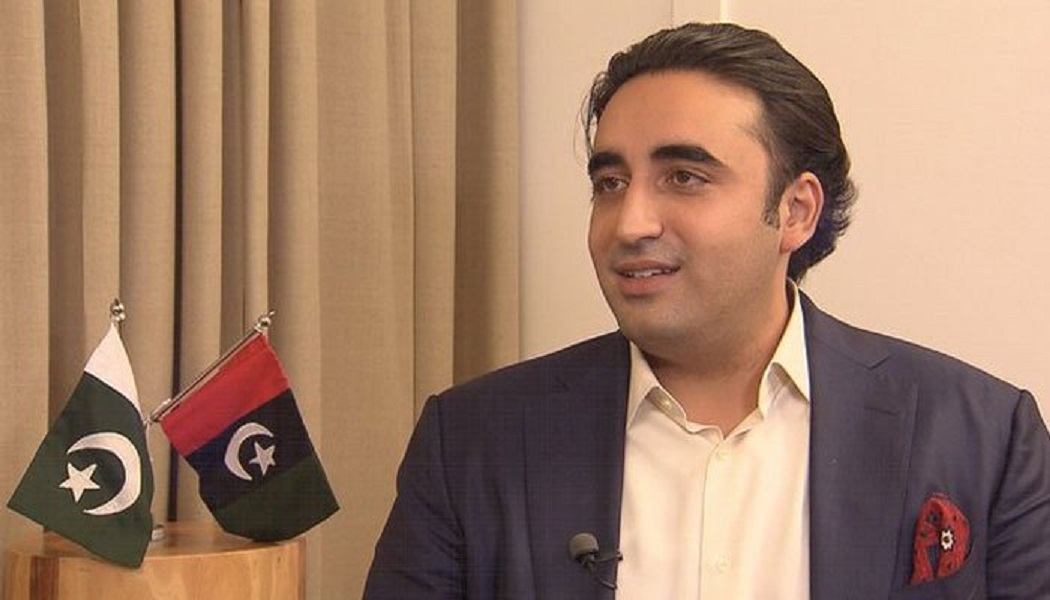
    Pakistan People’s Party (PPP) Chairperson Bilawal Bhutto-Zardari has said that the military establishment is playing a neutral role in the lead up to the Senate elections.

    Addressing a press conference in Lahore, the PPP chief said that his party criticises the state institutions when they act beyond their constitutional role. “It is heartening to see that they are not transgressing their boundaries,” the opposition leader added. He said that if the establishment is neutral, then we should welcome this.

    According to Bilawal, the Pakistan Democratic Movement is giving the “incapable government” a tough time. He said the PDM has aiming to strengthen democracy in Pakistan.

    “The responsibility of the opposition is to fight for the rights of people. Now we have exposed this selected and incapable government not only before the people of Pakistan but also before the entire world. This government tried to carry out massive rigging in the Daska by-election, but was exposed.”

    He thanked PML-N and JUI leadership for accepting PPP candidate Syed Yousaf Raza Gillani as the candidate of PDM for the Senate seat from Islamabad.

    “The march will also begin by the end of the month of March. It is time to say that just one more push is needed for the wall to fall,” he said.

  • Terrorist involved in murder of four women killed in Waziristan operation: ISPR

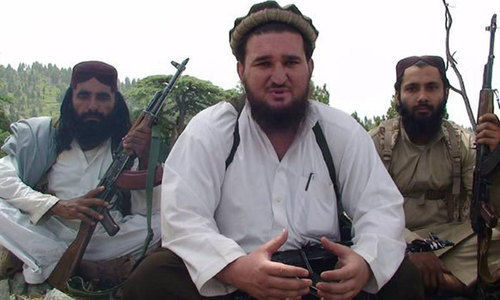
    The security forces have killed a key militant leader who was involved in the killing of four women aid workers in North Waziristan, said the Inter-Services Public Relations (ISPR) in a statement on Tuesday.

    Commander of militant outfit Tehreek-e-Taliban Pakistan (TTP) Hassan alias Sajna was killed in a security operation in the restive district near the Afghan border, the army said.

    The statement said Sajna was involved in the Monday morning killing of four aid workers associated with a local women’s skills development program in Mirali, a town in North Waziristan.

    Security forces conducted an intelligence-based operation in Mirali and killed militant commander Sajna of the TTP’s Hafiz Gul Bahadur group during an exchange of fire, it was quoted by Anadolu Agency as saying.

    Bahadur, who is believed to have been operating from Afghanistan, is leading his own militant group within the TTP.

    Sajna, the statement said, remained involved in terrorist activities against the security forces and civilians, including “bomb blasts, kidnapping for ransom, target killings, and extortion,” in addition to the recruitment of terrorists.

    North Waziristan — once dubbed the heartland of militancy — is one of seven former semi-autonomous tribal regions in Pakistan where the army has carried out a series of operations since 2014 to eliminate the TTP network.

    Successive operations have pushed the TTP towards neighboring Afghanistan and Islamabad claims the terrorist network has now set up bases across the border to attack Pakistani security forces.

  • ‘Multiple’ army officials complicit in terrorist Ehsanullah Ehsan’s escape, says ISPR DG

    ‘Multiple’ army officials complicit in terrorist Ehsanullah Ehsan’s escape, says ISPR DG

    Pakistan Army spokesperson Major General Babar Iftikhar has said that former Tehreek-e-Taliban Pakistan mouthpiece Ehsanullah Ehsan had managed to escape the custody with the help of “more than one army officials”.

    According to a report in Independent Urdu that quotes Gen Iftikhar, the military is in the process of fixing responsibility in the case. “The details of the proceedings [against the accused] would be shared with the media soon,” the Inter-Services Public Relations (ISPR) chief said in a conversation with the reporters of foreign media outlets.

    Last week, a Twitter handle, now suspended, allegedly operated by Ehsanullah Ehsan threatened Pakistani Nobel laureate Malala Yousafzai. Malala had responded to the tweet, asking the military’s media wing and PM Imran as to how did the Ehsan even escape.

    The government had denied that the account belonged to the infamous terrorist, but Ziauddin Yousafzai, father of Malala, asserted that it was the Twitter handle of the ex-TTP spokesperson. Ehsanullah had also confirmed this in an audio message to BBC Urdu, saying his account was suspended over threats to Malala but he would come back with a new Twitter handle soon.

    However, the ISPR DG told reporters that he doesn’t think the account belonged to the ex-TTP spokesperson. “The attempts are being made to arrest the Taliban spokesperson, but at present, we have no idea where is he hiding,” he was quoted by the outlet as saying.

    Ehsan is infamous for issuing claims of carrying out TTP attacks and has been linked to some of the country’s most deadly incidents of terror. These include the massacre of children at Army Public School (APS) Peshawar, bombing at a park in Lahore on Easter in 2016, and the targeting of Malala.

    He surrendered to authorities in 2017 and later gave interviews to a Pakistani TV channel, leading to criticism and controversy that a terrorist was given airtime. It angered many in the country who believed he was being pampered by authorities after years of helping lead a violent insurgency. Ehsan mysteriously escaped custody last year, which, according to SAMAA, was also confirmed by the army.

  • PM offers Sri Lanka to join CPEC, says trade links vital to eradicate poverty

    PM offers Sri Lanka to join CPEC, says trade links vital to eradicate poverty

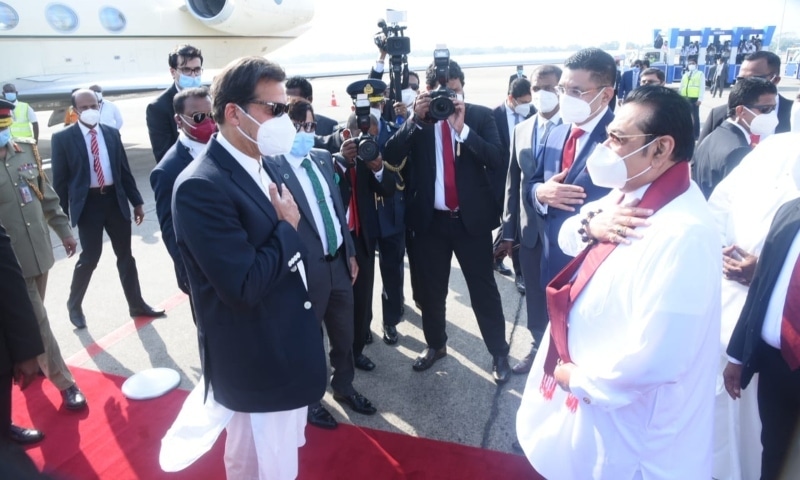
    Prime Minister Imran Khan on Wednesday invited the Sri Lankan businessmen to invest in Pakistan, saying trade connectivity among the countries of the Asian sub-continent was vital for poverty alleviation.

    Addressing the Pakistan-Sri Lanka Trade and Investment Conference held in Colombo which he jointly chaired with his Sri Lanka counterpart Mahinda Rajapaksa, Imran proposed establishing trade links, as existed among the European countries, for the prosperity of the Asian sub-continent.

    The PM also urged the Sri Lankan government to become part of the China-Pakistan Economic Corridor (CPEC), saying joining the Belt and Road Initiative could open up new avenues for Sri Lanka with an opportunity to establish trade links with the Central Asian states via Gwadar.

    The PM, who is in Colombo on a two-day official visit, said political stability in the region by maintaining good relations with neighbouring countries would ensure a business-friendly environment.

    He said Pakistan and Sri Lanka could explore the idea of generating wealth through joint business activities and diverting the wealth to alleviate poverty. Imran offered the Sri Lankan businessmen to explore the immense opportunities offered by the government of Pakistan in the form of ease-of-doing business. He said his government would welcome and facilitate investment from the island nation.

    The PM mentioned that as Pakistan and Sri Lanka both suffered the brunt of terrorism in the past, their journey together towards development could make a difference. He expressed intent for Pakistan to learn from Sri Lanka’s advanced tourism industry and mentioned that he made the tourism minister part of his delegation to explore the area.

    Imran said Pakistan has a lot of undiscovered sites of religious tourism, including the Gandhara civilization. He added that a recently discovered 40-feet-long Sleeping Buddha could be of special interest for Sri Lankan tourists.

    In an effort to maintain good relations with neighbouring states, Imran Khan recalled his offer to Indian Prime Minister Narendra Modi for a dialogue to resolve all outstanding issues including the Kashmir dispute. To encourage trade ties with neighbours, he said, “maintaining amiable relations and living like civilized nations must be a priority”.

    Imran Khan emphasized that with 1.3 billion people, the South Asian region needed to resolve its mutual conflicts through dialogue for sustainable prosperity.

    On Tuesday, Pakistan and Sri Lanka agreed to further strengthen bilateral relations in diverse areas, including trade, investment, science and technology, and culture, as Prime Minister Imran Khan urged the Sri Lankan counterpart to become part of the CPEC.

    “My visit is aimed at strengthening bilateral relationship [with Sri Lanka], especially trade and economic ties through enhanced connectivity…,” Prime Minister Imran Khan said while addressing a joint press conference with his Sri Lankan counterpart Mahinda Rajapaksa after holding one-on-one and delegation-level talks.

  • No one, including Gen (r) Asim Bajwa, above law: Alvi reacts to corruption allegations against CPEC chairman

    No one, including Gen (r) Asim Bajwa, above law: Alvi reacts to corruption allegations against CPEC chairman

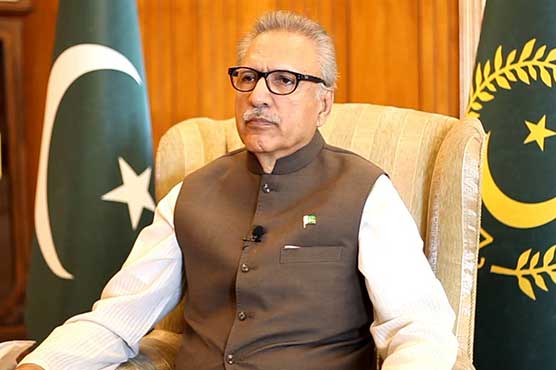
    President Arif Alvi has said the National Accountability Bureau (NAB) should take notice of corruption allegations against former chief military spokesperson and China-Pakistan Economic Corridor (CPEC) Chairman Asim Saleem Bajwa as no one is above the law.

    https://twitter.com/SpotlightAajtv/status/1364265897221791745

    The president made these comments in response to a question by Aaj TV host Munizae Jahangir over rampant corruption in Pakistan. The president said that Pakistan has suffered due to corruption over the past 70 years, adding that his government’s focus should be on curbing corruption. “I am very serious about it; it is very painful for me,” the president said.

    At this, the host asked about allegations against Gen Bajwa, saying the opposition has accused the government of refusing to take action against the ex-general despite graft allegations. The president responded that if the general is accused of corruption then there should be a probe against him.

    “Who will launch this investigation?” asked Jahangir. “NAB [National Accountability Bureau] should,” Alvi responded.

    “No one is above the law, even Prime Minister Imran Khan,” Alvi said, adding that as the president of Pakistan he will never endorse corruption.

    The president also talked about defence budget, saying this has strengthened Pakistan over the years. “The budget has decreased compared to inflation,” the president claimed.

    “In principle, you agree that parliament should debate the defence budget and that everyone accused of corruption, whether it is a bureaucrat, a politician or a general, must be held accountable,” the host asked. “I fully agree [with you],” said the president, adding that parliament is the supreme authority to discuss such matters.

  • Daska by-polls: RO proposes re-polling at 14 stations over discrepancies in results

    Daska by-polls: RO proposes re-polling at 14 stations over discrepancies in results

    Daska (NA-75) by-polls Returning Officer Athar Abbas has proposed re-polling at 14 stations, saying the presiding officers were seemingly involved in tampering with the final result.

    During his appearance before the Election Commission of Pakistan committee on Tuesday, Abbas said that the initial investigation has revealed that the presiding officers manipulated the result. The ECP has taken up a plea filed by PML-N candidate from the constituency Nousheen Iftikhar. The five-member bench which heard the case was headed by Chief Election Commissioner (CEC) Sikandar Sultan Raja.

    According to the PML-N candidate, she got 5,000 votes from the contested polling stations against PTI leader Ali Asjad Malhi’s 6,705 votes. The number of rejected votes was 139 and turnout remained at 45.16 per cent.

    Whereas, the form-45 sent in by presiding officers after a delay of six hours showed that the vote gap between the PML-N and PTI candidates was 9,263 instead of 1,705. The form puts the number of rejected votes at 1,731 and the turnout at 75.34pc.

    The RO’s report quoted by Dawn said at least 20 presiding officers went missing for an entire night after the vote count at their station. It added that the presiding officers also appeared before the ECP panel after much delay.

    “The replies of almost all the presiding officers were stereotype that they were able to complete the counting process by 10 to 10.30pm and started back journey to the office of returning officer on the transport provided by the Election Commission and in escort of police but due to fog, they reached the office of returning officer at about 4.30am and most of them stated their phone batteries were low and they were having no chargers, in response to the questions that they were supposed to send snapshots of the result of the count through WhatsApp but they did not do the same,” the report read.

    As per the report, there was no discrepancy in the record of three out of 23 polling stations from where the presiding officers had disappeared. The returning officer has proposed re-polling at 14 polling stations were there was a marked difference between the number of polled votes in two different sets of form-45.

    On Friday, at least two people were shot dead as a result of firing at the polling place. Both the Pakistan Muslim League-Nawaz and the Pakistan Tehreek-e-Insaf (PTI) had alleged irregularities during the by-election on the National Assembly seat in Daska. Subsequently, the ECP withheld the results, saying it suspected irregularities in 20 polling stations.

    The commission had said results of the NA-75 constituency were received with “unnecessary delay”, adding that it tried to contact the presiding officers several times but with no success.

    In the backdrop of these allegations, the PM, in a series of tweet on Monday night, reaffirmed his pledge to hold transparent elections in Pakistan. “Have always struggled for fair & free elections. So even though there is no legal compulsion to do so before ECP announces results, I would request our PTI candidate to ask for re-polling in the 20 polling stations Opposition is crying hoarse over in the Daska NA 75 by- election,” Imran had tweeted.

  • Broadsheet ends up paying £20,000 to Sharifs in London lawsuit

    The company hired by Pakistan to trace assets of the Sharif family in London, Broadsheet LLC, has ended up paying £20,000 (Rs4.5 million or Rs45 lacs) to the Sharifs in the lawsuit before the London High Court, Geo News reported.

    According to reports, Broadsheet has made the payment for the settlement of the Sharif family’s legal costs after having withdrawn the Avenfield Apartments attachment application for the seizure and sale of four Avenfield Apartments in the Broadsheet vs Pakistan/National Accountability Bureau (NAB) case.

    Lawyers acting for the Sharif family have confirmed that the payment has been received in their bank account whereas Broadsheet’s lawyers have also confirmed making the payment.

    Sharing the development on Twitter, Maryam said those who had gone to identify corruption, ended up paying Rs4.5 million to save themselves.

    “Nawaz Sharif had left it up to Allah,” she tweeted, adding that Prime Minister (PM) Imran Khan and his team will also have to “pay their fines” that will be from their own pockets and not the treasury.

  • VIDEO: Was PTI’s Haleem Sheikh tortured in Karachi jail?

    VIDEO: Was PTI’s Haleem Sheikh tortured in Karachi jail?

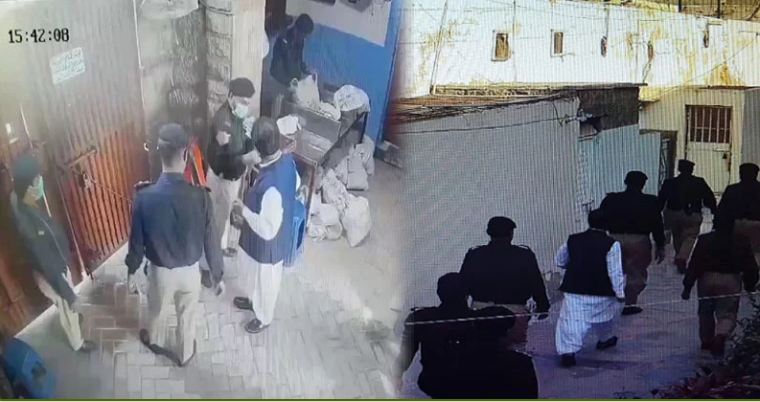
    Pakistan Tehreek-e-Insaf (PTI) leader Haleem Adil Sheikh has accused the Sindh government of trying to harm in jail through its alleged goons in the light of a video released by PTI’s Karachi chapter showing the Sindh opposition leader running for his life.

    According to PTI, the MPA was attacked by “goons” in jail and he was running from them to save himself. In a video statement, Sheikh said he had come to Karachi’s Jinnah Hospital allegedly after he was beaten up in jail, adding that PTI workers, including Samir Mir Shaikh, Amjad, Hafeez Chandio and three other people who are in Central Jail are being “tortured”.

    Maritime Minister Ali Zaidi also alleged torture on Sheikh. “Sheikh was hospitalised after being attacked by 50 PPP goons inside Central Jail Karachi,” he claimed.

    POLICE CONTRADICT SHEIKH:

    However, Karachi Central Jail Superintendent Hassan Sahito rejected the claims made by the PTI leader. He said “nobody raised a hand on Haleem Adil Sheikh or slapped him”, adding that some prisoners raised slogans against Sheikh and PM Imran Khan when the PTI leader was being shifted to another ward.

    “Haleem Adil Sheikh was being moved to the Mohammad Ali B-class ward […] and was passing through the waiting area when some prisoners raised slogans. He was moved back to the superintendent’s office in 26 seconds,” Sahito said.

    Sheikh was later moved to the security ward, he added.

    According to the police officer, Sheikh was moved to a hospital because he had submitted an application for treatment. According to Sheikh, he suffered from blood pressure issues and had heart problems and he was regularly treated at the National Institute of Cardiovascular Diseases (NICVD).

    The Sindh government also denied the allegations levelled by the PTI leaders, saying Sheikh was arrested on the orders of the Election Commission of Pakistan.He further said that Sheikh could be seen “happy and healthy” in the hospital which shows that he wasn’t tortured at all. “No torture was done on him in jail,” Wahab stressed.

  • New Delhi allows PM Imran to use airspace, claims Indian media

    New Delhi allows PM Imran to use airspace, claims Indian media

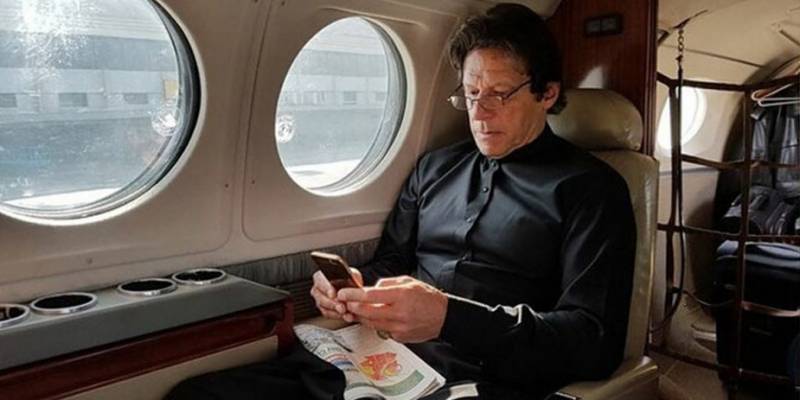
    India has allowed Pakistan Prime Minister Imran Khan’s aircraft to use Indian airspace for his official trip to Sri Lanka, reported India media outlets on Tuesday.

    According to Indian media outlet WION, Islamabad asked New Delhi for permission 10 days ago that was granted on Monday. As a protocol, whenever heads of state or governments pass through the air space of any other country, the country is alerted and due permission is taken, it reported.

    Planes taking off from Islamabad for Sri Lanka cannot bypass Indian airspace; therefore, they require permission to use its airspace. But in case of Karachi, the flights can use another route and travel to Sri Lanka via Arabian Sea.

    According to the Foreign Office spokesperson, PM Imran has embarked on a two-day official visit to Sri Lanka on the invitation of his Sri Lankan counterpart Mahinda Rajapaksa. The premier is accompanied by a high-level delegation, including members of the Cabinet and senior officials.

    To exchange views on key regional and international issues, Prime Minister will hold meetings with President Gotabaya Rajapaksa and Prime Minister Mahinda Rajapaksa during the two-day visit. The prime minister will also participate in a joint ‘Trade and Investment Conference’ aimed at promoting trade and investment between the two countries.