Category: Politics

  • Goswami WhatsApp chat proves Modi used Balakot strikes to gain popularity: PM

    Goswami WhatsApp chat proves Modi used Balakot strikes to gain popularity: PM

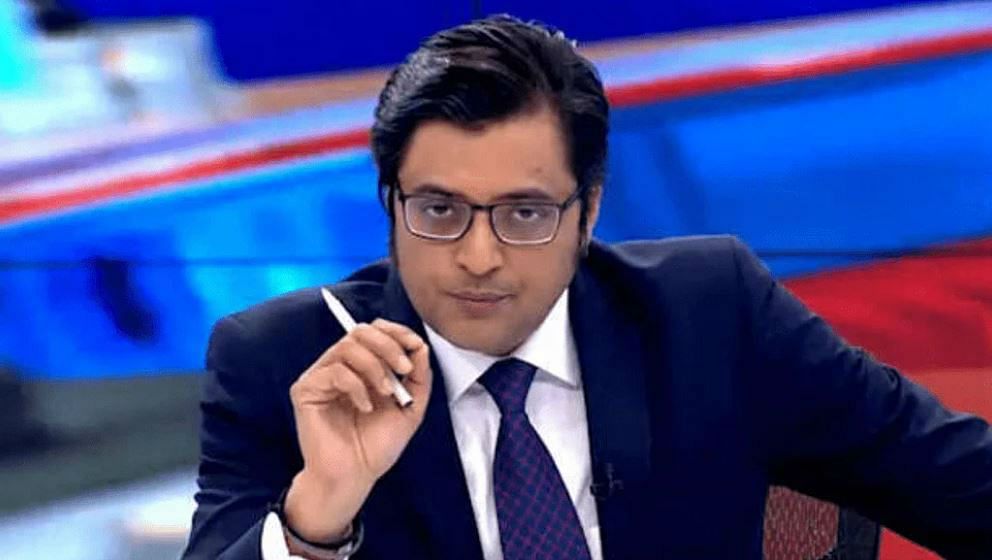
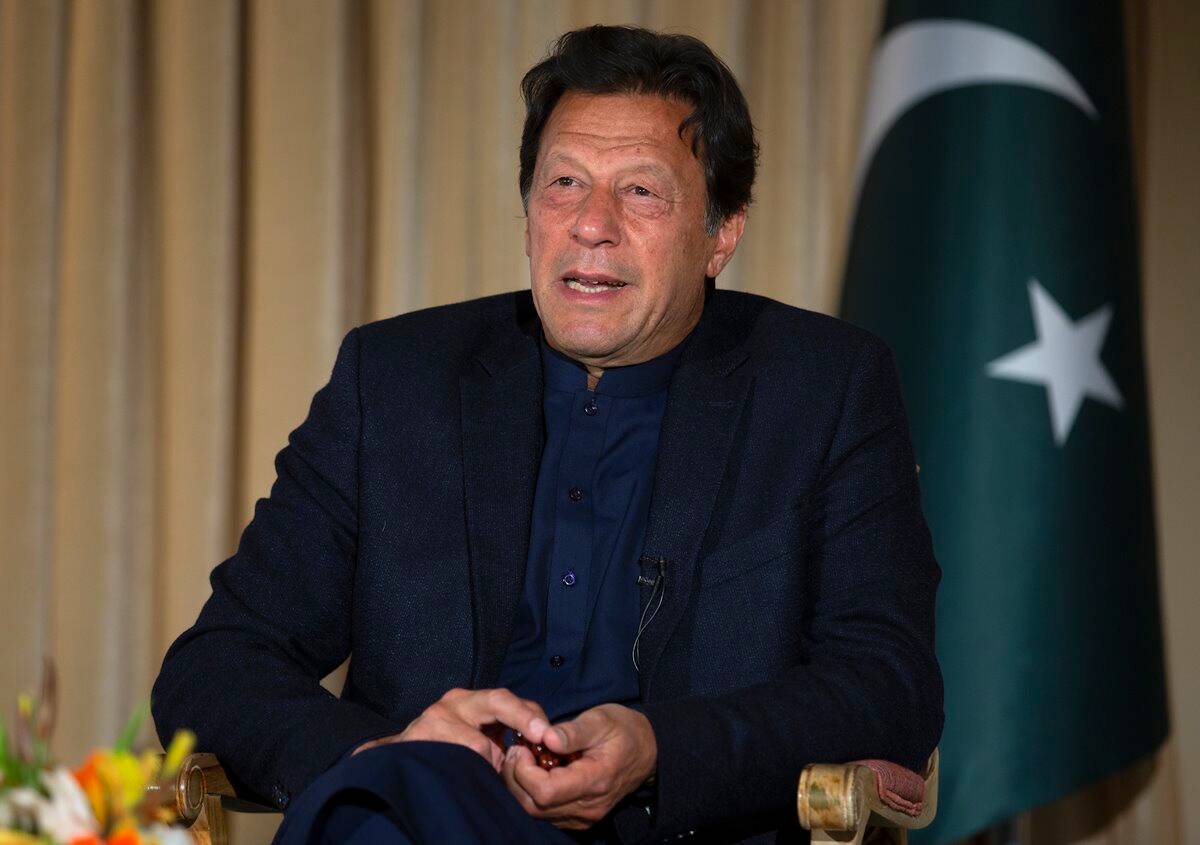
    Prime Minister Imran Khan said the leaked WhatsApp conversation between Indian journalist Arnab Goswami and another Indian senior media official proved that the Indian government led by Narendra Modi used the Balakot strikes for electoral gains.

    Imran was referring to WhatsApp conversations between Goswami and Pratho Dasgupta — the incarcerated head of ratings company Broadcast Audience Research Council (BARC).

    According to the conversation that was a part of a chargesheet filed against Goswami in a ratings scam, the firebrand anchor knew about the strikes three days before the Indian air force bombed an alleged militant camp inside the Pakistani territory.

    In the conversation on Feb 23, 2019, Goswami said that ‘something big will happen’ and three days later, the Indian jets carried out a strike in Pakistan, bringing the two countries on the brink of a full-fledged war.

    The conversation had also suggested that the strikes were conducted to boost ruling Bharatiya Janata Party’s (BJP) popularity ahead of the national elections.

    In a comment on this conversation, PM Imran Khan made a series of tweet. He recalled that in a speech at the United Nations General Assembly in 2019, he had told the international community that the ruling BJP had “used the Balakot crisis for domestic electoral gains”.

    “Latest revelations from communication of an Indian journalist, known for his warmongering, reveal the unholy nexus between the Modi govt & Indian media,” he said, referring to Goswami having access to the “confidential information”.

    “Now India’s own media has revealed the dirty nexus that is pushing our nuclearised region to the brink of a conflict it cannot afford,” the premier said.

    “I want to reiterate that my government will continue to expose India’s belligerent designs towards Pakistan and Modi government’s fascism. Int(ernational) community must stop India from its reckless, militarist agenda before the Modi government’s brinkmanship pushes our region into a conflict it cannot control.”

    Meanwhile, Foreign Minister Shah Mahmood Qureshi said that India stood further exposed with the leaked chats revealing a “staggering new low”.

    The Foreign Office issued a statement on the issue as well. It said the anchorperson knowing the plan to attack Pakistan “further exposed India’s sinister designs and vindicated Pakistan’s long-held position”.

    In a statement on Sunday, the FO said: “The latest revelations further confirm… [that] BJP government stages ‘false-flag’ operations; maligns Pakistan with terrorism-related allegations; stokes hyper-nationalism in the country; claims to have launched so-called ‘surgical strike[s]’; and then deviously manipulates national sentiment in its bid to win elections.”

    REPUBLIC TV RESPONDS TO PAKISTAN STATEMENTS:

    Meanwhile, Republic TV issued a statement, rejecting the “allegations against Goswami” by the Pakistan government.

    “Goswami…as India’s leading journalist exposed every sinister design…. of the government of Pakistan and ISI (Inter-Services Intelligence),” it said in response to the statements by the Pakistani officials. It also termed these statements as part of “deep conspiracy” to target Arnab Goswami.

    “The desperations with which government of Pakistan has attacked the Republic Media Network in an open forum today also lays bare the involvement of anti-India forces in the conspiracy,” it added.

    The statement also took a potshot at Congress, saying the opposition party should stop working in tandem with the government of Pakistan to spread lies against India’s interests.
  • ‘Koh-i-Noor’ goes on display at Pakistan museum

    A replica of Koh-i-Noor, one of the largest cut diamonds in the world, has gone on display at the Pakistan Museum of Natural History (PMNH) in Islamabad.

    The disputed original diamond, which weighs 105.6 carats (21.12g), and is believed to have been mined from the Kollur mine, Golconda, India and was acquired by Alauddin Khalji, Sultan of Delhi, is part of the British Crown Jewels.

    The legendary diamond had also been part of the Mughal Peacock Throne (Takhat-e-Taoos) where it was lodged at the very top of the throne, in the head of a glistening gemstone peacock.

    Persian ruler Nadar Shah invaded Delhi in 1739 and took the Peacock Throne along with other treasures but removed the Tamur Ruby and the Koh-i-Noor to wear it on his armband.

    The diamond remained in Afghanistan for almost 70 years after which, in 1813, Sikh ruler Ranjit Singh won back all the Indian land and brought back the Koh-i-Noor to India.

    Today, the diamond is on public display in the Jewel House at the Tower of London, where it is seen by millions of visitors each year.

    The governments of Pakistan, India, Iran and Afghanistan have all claimed rightful ownership of the Koh-i-Noor and demanded its return ever since India gained independence from the United Kingdom (UK) in 1947. The British government insists the gem was obtained legally under the terms of the Last Treaty of Lahore and has rejected the claims.

  • Nawaz’s election campaign was funded by Gulf country, claims Sheikh Rasheed

    Nawaz’s election campaign was funded by Gulf country, claims Sheikh Rasheed

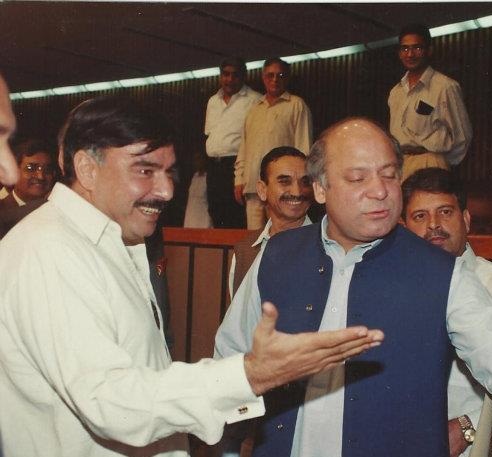
    Interior Minister Sheikh Rasheed has claimed that a Gulf country funded former prime minister Nawaz Sharif’s election campaign in the 1990s.

    In an interview with Samaa, the minister said that he was a minister in the cabinet of Nawaz Sharif at the time. Rasheed said he was accompanying Nawaz Sharif when it was revealed that the country, that is rich in oil and gas and also has an LNG deal with Pakistan, funded the former PM’s party as a “token of love”.

    According to the minister, the Arab country leader asked Nawaz: “Mr Prime Minister, we have given you a token of love on your election expenditure. Did you receive it?”

    At this, Nawaz responded that yes, he had received the money, said Rasheed, adding that he asked Nawaz to send them a ‘thank you note’ at least.

    It may be noted here that PM Imran Khan had alleged that the Pakistan People’s Party (PPP) and Pakistan Muslim League-Nawaz (PML-N) received funds from foreign countries. The comments by the PM came in the wake of the hearings of a foreign funding case against the Pakistan Tehreek-e-Insaf (PTI).

    Last week, the PTI had said that its agents managing two limited liability companies (LLCs) in the US could be responsible for any illegal funding and PTI Chairman Imran Khan had nothing to do with it.

    In a response to the petition in the foreign funding case, the PTI, that had denied any links to the foreign funding, said that if the two LLC registered after the written instructions of party chief Imran Khan were involved in the illegal act, it would be due to its agents who were managing them in the US.

    The case was filed by PTI founding member Akbar S Babar in 2014. The Election Commission of Pakistan had started fresh scrutiny of the PTI accounts — a process going on since March 2018.

  • Govt officials get secretly vaccinated amid delay in mass vaccination, claims journalist

    Govt officials get secretly vaccinated amid delay in mass vaccination, claims journalist

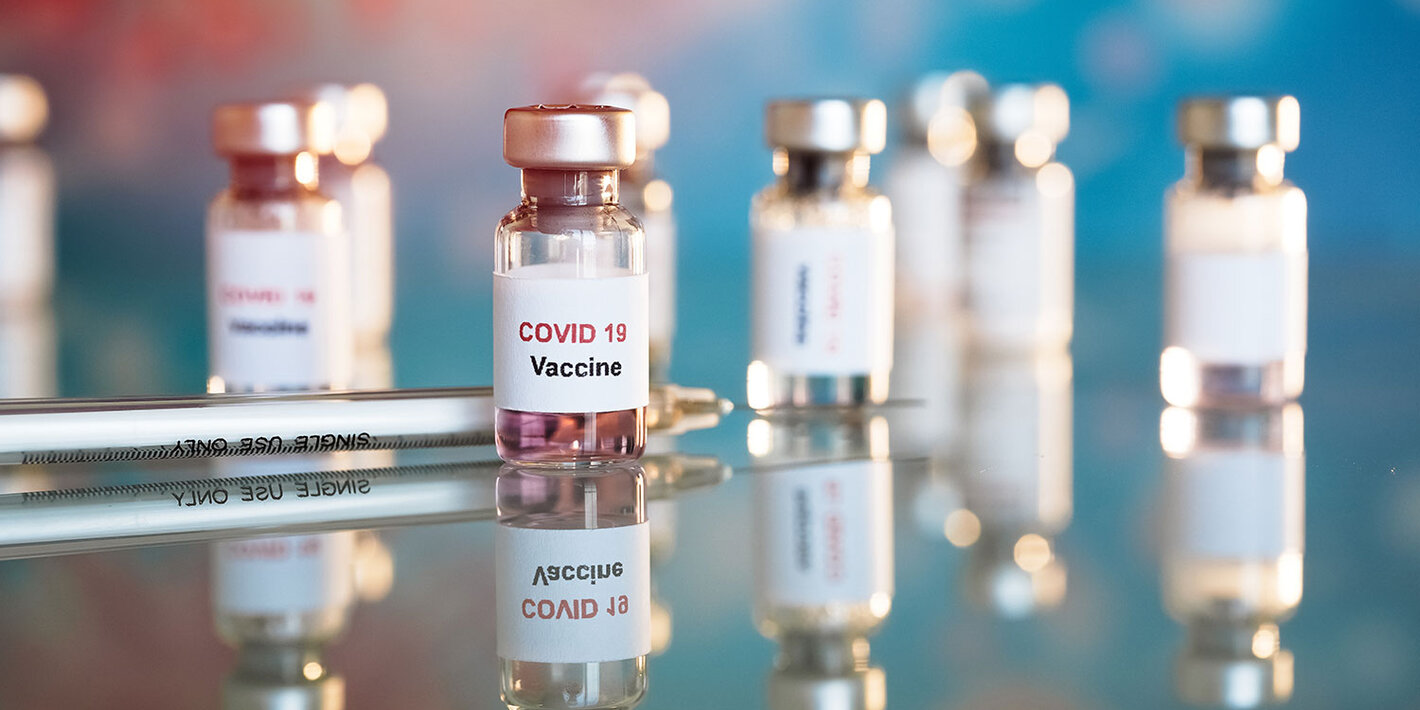
    Amid reports of a delay in the procurement of vaccine, senior journalist Sohail Warraich has claimed that the government is in no hurry to order the coronavirus vaccine as most of the senior government members have already been vaccinated against the deadly disease.

    In an article published in Jang, Warraich implied the bigwigs of this country are in no hurry to inoculate the masses as they now consider themselves safe following the administration of the vaccine. His article was shared by former Pakistan Muslim League-Nawaz (PML-N) minister Miftah Ismail, who retweeted the column on his Twitter handle.

    A similar claim was made by journalist Saleem Safi as well. He tweeted that the senior government officials and aides of the prime minister have already been vaccinated. “These people are now distributing the vaccine to their near and dear ones,” he alleged.

    Federal Minister for Information Shibli Faraz rejected these claims. Talking to The Current, Faraz said he hasn’t heard anything like this to the best of his knowledge.

    Asad Umar, who heads the National Command Operations Centre to fight the virus, also denied these reports while talking to a media outlet.

    He said a proposal for the earliest vaccination of strategic leadership was presented earlier, but it was rejected by the government. “I, however, do not know if someone got themselves vaccinated in secret,” he added.

    As the pharmaceutical companies, such as Pfizer, started to roll out vaccines, the government announced that Pakistan will have the vaccine by March 2020. However, a recent report revealed that the government has not even placed the final order for the procurement nor has any manufacturer agreed to sell it to Pakistan as of yet.

    PM’s aide on health Dr Faisal Sultan was quoted by The News saying that Pakistan has yet to place a final order and strike a deal with a manufacturer.

    On Dec 31, it was reported that the government had decided to purchase 1.2million doses of a Chinese vaccine, Sinopharm, amid a worsening coronavirus outbreak across the world.

    Pakistan had planned to vaccinate its population in three phases: In the first phase, frontline health workers will be inoculated; the second phase will be focused on the elderly; the third phase will be for the general populace.

  • Imran tells spokespersons to stop sharing details of party meetings with media

    Imran tells spokespersons to stop sharing details of party meetings with media

    Prime Minister Imran Khan has stopped the Pakistan Tehreek-e-Insaf (PTI) spokespersons from sharing the details of the party meetings with after details of a spokesperson meeting were released to the media.

    According to reports, the PM is not happy with the fact that the details of the party spokespersons meetings, organised on a regular basis to discuss the internal affairs and future strategy, make it to the newspapers even though there pertain to the internal affairs of the party.

    According to the PM, the meetings of the party spokespersons are held to strengthen the party narrative and these decisions should not be made public. He said the details of the meeting have been “misreported” on multiple occasions while directing the party spokesperson to keep these details under wraps.

    Recently, a news about PM aide Nadeem Afzal Chan’s resignation was being reported in the media before the resignation reached the PM, prompting a stern response from Imran. Recently, PM Imran Khan had also expressed annoyance with his ministers, saying if someone had a problem with the government narrative, they should step down from the cabinet.

  • Pro-Modi anchor knew about ‘highly confidential’ Balakot strikes in advance

    Pro-Modi anchor knew about ‘highly confidential’ Balakot strikes in advance

    Republic TV Editor Arnab Goswami knew about the Balakot strikes three days before the Indian air force bombed an alleged militant camp inside the Pakistani territory, revealed a Whatsapp chat between Goswami and Partho Dasgupta, the former head of India’s Broadcast Audience Research Council (BRAC).

    According to Indian media reports, the purported chat is mentioned in a transcript that is part of a 3,400-page supplementary chargesheet filed by the Mumbai Police in their investigation into the alleged Television Ratings Point scam.

    In the conversation on Feb 23, 2019, Goswami said that ‘something big will happen’ and three days later, the IAF planes carried out a strike in Pakistan, bringing the two countries on the brink of a full-fledged war. The conversation also suggested that the strikes were conducted to boost ruling Bharatiya Janata Party (BJP) popularity ahead of the national elections.

    There are also many instances in the transcripts that show Goswami boasting about his proximity to the Prime Minister’s Office and the Ministry of Information and Broadcasting. There is another instance where he says that “all the ministers are with us”, reported The Hindu.

    In other conversations, Goswami also complained about other news channels getting better ratings than his (Republic TV) and Dasgupta assures him that necessary steps will be taken to “clean the data”, it reported.

    Following the release of these Whatsapp conversations, #ArnabGoswamiExposed started trending on Twitter, with Indian users demanding accountability of those involved in the episode.

  • BOOK REVIEW: The Sikh Heritage — Beyond Borders of India and Pakistan

    BOOK REVIEW: The Sikh Heritage — Beyond Borders of India and Pakistan

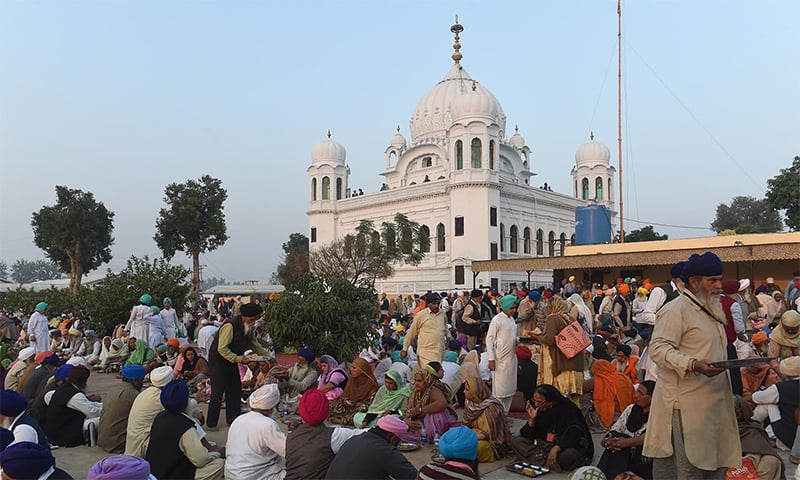
    After the inauguration of the Kartarpur Corridor in November 2019, Pakistan has repositioned itself as an attractive destination for the global Sikh community for religious tourism. The numbers so far have not reached the expectations because of many reasons including among others the spread of the coronavirus and the heightened tension between India and Pakistan.

    Despite many hurdles, the history of the land of Pakistan retains a rich potential for the Sikh diaspora to relive and reclaim their religious heritage. As an effort to highlight and elaborate the religious memorials, Gurdwara, and history of the important religious figures, we find an impressive effort of Dr Dalvir S. Pannu as, The Sikh Heritage: Beyond Borders of India and Pakistan.

    The book is both a culmination of the writer’s ten years journey to explore the present condition of the memorial sites, also beautifully presented pictorially in it and a search for the authentic Sikh history with the help of archival and contemporary sources. The book also engages with the historical interaction between Muslims and Sikhs before 1947. 

    The book also engages with the historical interaction between Muslims and Sikhs before 1947. 

    To tell the story of eighty-four memorials in six districts of Punjab, the book sets off from the description of the Gurdwara Janam Asthan (the birthplace of Guru Nanak, the first of the ten Sikh Gurus), in the Nankana district.

    Locating 13 more in Nankana, 03 in Sheikhupura and six in Sialkot, the book highlights the importance of Guru Nanak’s life to understand the development of Sikhism. One finds that Gurdwara Sacha Sauda in Sheikhupura commemorates the moment in Guru Nanak’s life when he gave twenty rupees to a group of hungry mendicants instead of using them for personal business purpose. The Gurdwara Babe Di Ber in Sialkot the meeting of Guru Nanak with a Muslim mystic whose anger with the locality was resolved by Guru by pointing out the importance of being forgiving.

    Dr Pannu could locate the dilapidated remains of 17 memorials in the Kasur district. The remains of the memorials still exhibit dimly the frescoes on the walls and ceilings, paintings of the saints, dilapidating arches, inscriptions in Gurmukhi, and weakened parapets.

    The book surprises its local Muslim reader with the recollection of the story of Baba Bulle Shah (1680-1757) taking refuge in a Gurdwara Sahib of Daftuh, the Union Council of the Kasur district. The famous poet, and later Sufi saint of the Muslims, took refuge in the Gurdwara to save his life from the angry Muslim mob of village Pandoke, his ancestral village.  

    The shared communal traditions engulf the reader further once the book ferrets out the shrines and memorials in Lahore. The half of the total number of Sikh shrines, the book mines them in Lahore highlighting the importance of the city not only as a center stage for the development of the Sikh religion but also for being a witness to a long history of mutual engagement, strife, and coexistence of Sikhs and Muslims.

    One comes to know that Lahore is the birthplace of the sister of Guru Nanak and first GurSikh Bebe Nanki (1464-1518) in a village Chahal memorialized as Dera Chahal, and Guru Ram Das (1534-1581), the fourth of the ten Sikh Gurus, memorialized as Gurdwara Janam Asthan Guru Ram Das.

    Lahore also became a place where a Mughal ruler martyred Guru Arjan (1563-1606), the fifth of the ten Sikh Gurus, and the site is memorialized as Gurdwara Dehra Sahib. The city has the site of Gurdwara Shaheed Ganj, memorialized as a site of a painful memory of Sikhs killed in hundreds during the period of Mughal Viceroys of Lahore, including Abdul Samad Khan (1713-1726), Zakariya Khan (1726-1745), and Mir Mannu (1748-1753).

    The same city is also important for the shrines of figures including Pir Sheikh Abdul Qadir Jilani Sani (d. 1560), Wazir Khan (Sheikh Il mud Din Ansari, famous for making a grand mosque) and Hazrat Mian Mir (1550-1635), radiating the cheerful memories of friendly and intellectual interaction with Sikh Gurus.

    The book ends its journey in the Narowal district at the Gurdwara Darbar Sahib, Kartarpur (God’s dwelling). The story of Gurdwara Darbar Sahib is also the story of the last eighteen years of the life of Guru Nanak who finally settled in this village and favored the life of the household instead of Udasis or life as a Divine Mission.

    As the book collected its data before 2019, the story of the Gurdwara Darbar Sahib does not include the development of the site as a Gurdwara Kartarpur Corridor inaugurated in November 2019. However, the details of Guru Nanak’s household life introduce the reader with interesting anecdotes coloring Sikhism with the teachings of Guru in a more practical fashion.

    The book is an outcome of the authentic and deep-seated urge to find one’s own identity in the communally divided region.

    In the backdrop of the birth of Pakistan that entailed violent communal clashes resulted in the uprooting of almost 2 million Sikhs from the region of Pakistan and constant tension on the borders between India and Pakistan since then, there has been seldom space, especially during the whole twentieth century for conducting such a study.

    This book is a witness to the beginning of a new turn in the history of Pakistan, when, instead of bracketing with the victims or perpetrators communally, the painful memories of violence can be commemorated from the humanistic perspective. The search of the Global Sikh community for the Sikhism within this region may become an opportunity for Pakistan to embrace its own heritage truly.

  • VIDEO: OLMT officials torture labourers for taking shelter in metro station

    VIDEO: OLMT officials torture labourers for taking shelter in metro station

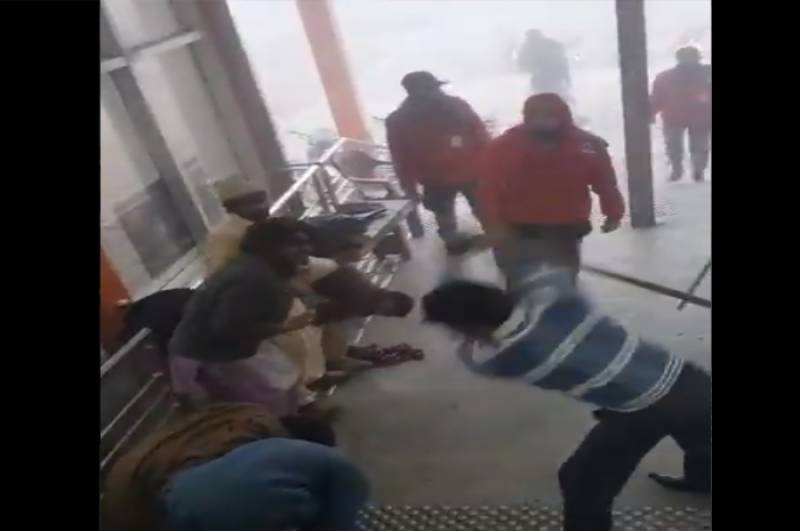
    Police have arrested five alleged employees of the Orange Line Metro Train (OLMT) for torturing labourers who, after taking shelter, were trying to light a fire near the elevators of the Awan Town train station.

    The video of the assault that went viral on social media garnered criticism, as people demanded action against the suspects over violence against the homeless workers.

    The officials– wearing orange jackets, included a woman as well, arrived at the scene after the fire alarms went off. They beat up the labourers with sticks who were forced to remain in a squatting position as punishment, the video showed.

    The staff also abused the workers while beating them continuously despite their apologies. According to police, the labourers were trying to keep them warm by starting a fire in the Awan Town station when they were held by the OLMT security officials.

    https://twitter.com/SardarAbdulRe16/status/1350061815745679360

    After backlash on social media, Punjab Chief Minister Usman Buzdar took notice of the incident and sought a report from the Lahore police chief.

  • Naeem Bukhari removed as PTV chairman

    Naeem Bukhari removed as PTV chairman

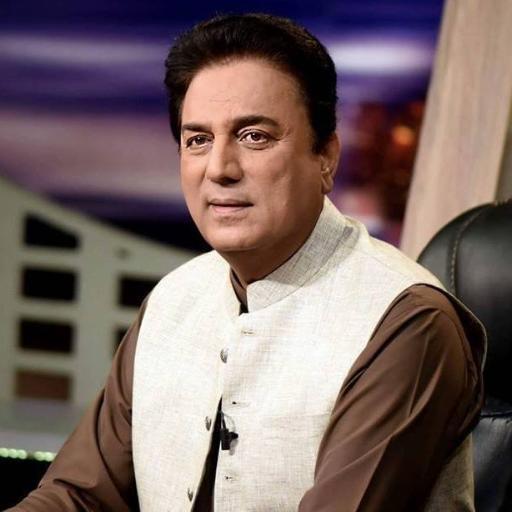
    The government has removed Pakistan Television Chairman Naeem Bukhari after an order of the Islamabad High Court that asked the cabinet to review the decision taken in violation of a court order.

    According to Geo News, Bukhari, who was also PM Imran Khan’s lawyer in the Panama Papers case, was removed through a circulation summary. The cabinet also restored Aamer Manzoor as the managing director of the state-run television who was removed by the corporation’s board of directors on January 1.

    Earlier this week, the IHC said the appointment was made in violation of the Supreme Court ruling in a similar case pertaining to Ataul Haq Qasmi.

    During the hearing, IHC Chief Justice Athar Minallah had said the government ignored the guidelines set by the SC in a decision pertaining to the posting in the said position. It had said there must be a clear reason for relaxing the upper age limit for 65-year-old Naeem.

    It had advised the counsel for the PTV chairman to peruse the decision of the top court that had set aside the appointment of Qasmi.

    It may be noted that the apex court had declared the appointment of Qasmi illegal in Nov 2018 over loopholes. It had said the government had failed to appoint a full-time managing director in accordance with the law.

    During today’s hearing, the IHC CJ said the cabinet did not take a clear decision to relax the age limit for the incumbent chairman. He said the matter will be referred to the federal cabinet so a decision could be taken in light of the SC decision.

    At this, the counsel said the cabinet had approved the summary for the appointment of Bukhari. “You should have informed the cabinet about the top court’s decision so that it could have avoided the embarrassment,” the IHC CJ said.

    The hearing was adjourned for two weeks.

    BUKHARI BECOMES PTV CHAIRMAN:

    In November, the Ministry of Information and Broadcasting had notified Bukhari, who has a vast experience of doing TV programmes, as chairman of PTV. The appointment was made after a court ruling in Sept 2020 declared the appointments of PTV chairman Arshad Khan and independent members of the board of directors illegal while directing the government to fill the vacant slots in accordance with the law. 

    Bukhari, who has worked as an anchorperson and commentators on PTV for decades, had joined PTI in June 2016. At the time, he called Imran Khan the “only political leader who had the courage to speak the truth”. Bukhari also represented Imran when he went to the Supreme Court against then prime minister Nawaz Sharif following the Panama Papers leak.

    The pleas that were later admitted by the apex court which disqualified Nawaz Sharif for being “dishonest” under Article 62 (1)(f).

    The National Accountability Bureau (NAB) had also hired the services of Bukhari as a special prosecutor to take up cases against close confidants of Sharif brothers — former Lahore Development Authority chief Ahad Cheema and former principal secretary Fawad Hassan Fawad.

  • Petrol price up by Rs3.20/litre after govt approves another hike in January

    Petrol price up by Rs3.20/litre after govt approves another hike in January

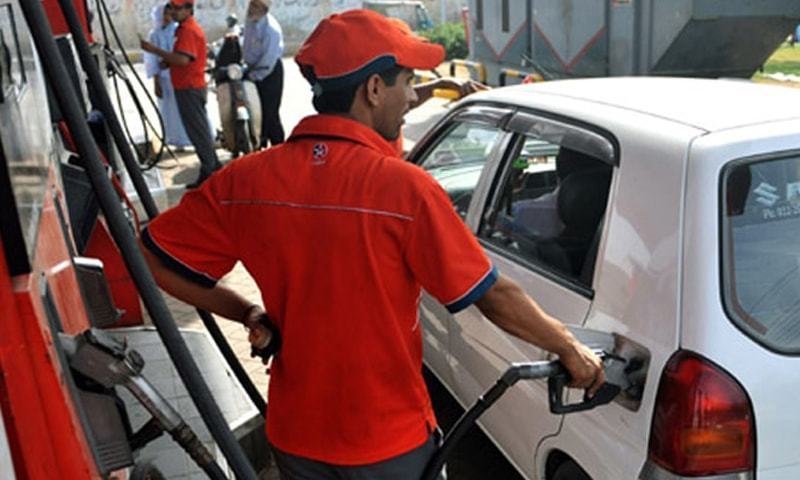
    The government on Friday decided to increase the price of petrol and diesel by Rs3.20 per litre and Rs2.95 per litre, respectively, for the months of January and February.

    The price of kerosene oil has been hiked by Rs3, while light diesel prices have been increased by Rs4.42, reported Geo News.

    This is the second time that the government hiked the prices of petroleum products in a month. Earlier this month, there was an increase of Rs2.31 and Rs1.80 in the prices of petrol and diesel, respectively.

    “While considering relief for the people, Prime Minister Imran Khan approved the minimum possible increase in prices of petroleum products against OGRA’s [Oil and Gas Regulatory Authority] recommendations,” a Prime Minister’s Office (PMO) press release had said at the time.

    OGRA had sought an increase of Rs10.68 in petrol price and Rs8.37 in diesel price, whereas it asked the government to increase the price of kerosene oil by Rs10.92 and light diesel oil (LDO) by Rs14.87.

    The price of Liquefied Petroleum Gas (LPG) had also increased earlier this month. According to OGRA, the LPG prices were raised by Rs16 per kg amid an increase in demand.

    With the increase, the LPG cylinder for domestic users will be up by Rs188 and commercial users by Rs722.

    It may be noted here that the consumers are already facing a shortage of gas nationwide and have to rely on LPG cylinders instead.