Category: Politics

  • Nawaz naming Gen Bajwa in Gujranwala jalsa ‘shocked’ Bilawal

    Pakistan People’s Party (PPP) Chairperson Bilawal Bhutto-Zardari has distanced himself from a statement by Pakistan Muslim League-Nawaz (PML-N) supremo Nawaz Sharif accusing Chief of Army Staff (COAS) Gen Qamar Javed Bajwa of “hijacking elections”.

    The PPP chief alluded to remarks made by Nawaz during a rally in Gujranwala held by the Pakistan Democratic Movement (PDM) last month. During the speech, the former PM had called out Gen Bajwa and ISI chief Lt Gen Faiz Hameed for alleged manipulation of election results.

    In an interview with BBC Urdu, Bilawal said the statement “shocked” him because the use of such language during the public gathering was unprecedented. “But if Nawaz Sharif names these generals, he must have evidence to back these claims up,” said the PPP chief, adding that hopefully, the PML-N supreme leader would bring forward relevant evidence.

    The PPP chief said the PDM was not in favour of naming generals, so a consensus was reached to use the term “establishment”. However, it is Nawaz Sharif’s right to call these people out if he wants to, added Bilawal.

    He said the deployment of the military inside and outside the polling was wrong, so was the dam fund campaign of former chief justice Saqib Nisar in the lead-up to the polls. “So, due to the prevalence of such activities, we can not say Imran was brought to power by an individual.”

    The PPP chief also shot down reports regarding his party’s lack of interest in the PDM. He said the PPP stood by the commitments made at the time of the formation of the joint opposition alliance.

  • After hundreds of train accidents, casualties in two years, PM says ‘role of railways crucial for Naya Pakistan’

    After nearly 200 major and minor train accidents that have caused hundreds of casualties since the Pakistan Tehreek-e-Insaf (PTI) took reins of the country in 2018, Prime Minister (PM) Imran Khan has said that the role of Pakistan Railways is “crucial” in the journey to Naya Pakistan.

    Speaking at the inauguration of the Hassan Abdal Railway Station in Attock, the premier underlined that across the world, trains were a cheap and comfortable way to travel.

    “Railways are important because it’s a commute for the poor and common people of Pakistan,” he said.

    “Unfortunately, we did not develop the railway system provided by the British,” PM Imran said, adding that for the first time, the largest investment to Pakistan Railways was coming through the ML-1.

    ML-1 or Main Line 1 is one of the four main railway lines in Pakistan. The Karachi-Peshawar Railway Line begins from Karachi City station or Kiamari Station and ends at Peshawar Cantonment Station. The total length of this line is 1,687 kilometers with 184 railway stations.

    The line serves as the main passenger and freight line of the country as it is used by 75% of both sorts of rail traffic. It is currently undergoing a six-year Rs886.68 billion upgrade and renovation as part of the China-Pakistan Economic Corridor (CPEC) with average rail speeds expected to be doubled to 160 kilometers per hour upon completion.

    The premier said the journey from Karachi to Lahore through ML-1 would come down to seven hours, and the project “will be an important step towards self-reliance”.

    Railways would play an important role in Pakistan’s economic development, he remarked.

    RAILWAYS SINCE 2018:

    While the premier has highlighted the significance of railways for the materialisation of his dream of a new Pakistan, it merits a mention that a significant spike in train accidents over the past two years has further marred the department’s safety record.

    According to Dawn, over 100 train-related incidents, including some fatal accidents took place in 2019 besides 111 incidents of engine failure within the first five months of the year alone.

    These come on top of minor derailment incidents at least one of which is reported every week with the last reported three weeks ago near Ghotki in Sindh.

    Here’s a list of major untoward incidents involving trains since 2018…

    September 16, 2018:

    Nine bogies of the Peshawar-bound Khushal Khan Khattak Express from Karachi derailed near Attock. 20 passengers were injured.

    September 27, 2018:

    Another Peshawar-bound train derailed in which 11 bogies overturned in Sehwan, Sindh.

    December 18, 2018:

    At least 12 children were injured as a passenger train crashed into a school van near Narowal in Punjab. Local witnesses said the accident happened due to dense fog and because the gate at the crossing was left open.

    June 9, 2019:

    As many as 23 bogies of a Karachi-bound freight train derailed in Sukkur.

    June 20, 2019:

    Three people were killed when a passenger train collided with a stationary cargo train in Makli Shah near Hyderabad.

    July 11, 2019:

    A Quetta-bound train collided with a cargo train near Sadiqabad in Punjab, killing 24 people and injuring over 100 others. The accident was later found to be caused by a delay in switching the train tracks.

    October 31, 2019:

    Fire engulfed a train near Rahim Yar Khan in Punjab, killing 65 people. The cause of the incident was discovered to be a gas explosion. A canister had been carried by passengers to cook on the train amid the authorities’ failure to keep a check on the travellers’ luggage.

    February 28, 2020:

    At least 19 people were killed when a train collided with a passenger bus near Sindh’s Rohri.

    July 3, 2020:

    At least 20 people died and ten others were injured when Shah Hussain Express collided with a bus near Sachcha Sauda Railway Station in Sheikhupura. Most victims were members of the Pakistani Sikh community.

  • Pakistan reacts to Indian claims of taking Kartarpur Gurdwara’s management away from Sikh body

    Pakistan reacts to Indian claims of taking Kartarpur Gurdwara’s management away from Sikh body

    Pakistan has firmly rejected the “baseless and fallacious” claims made by the Indian government against the Kartarpur Corridor, and the same have also been rejected by the Pakistan Sikh Gurdwara Prabandhak Committee (PSGPC).

    In a statement, Foreign Office (FO) Spokesperson Zahid Hafeez Chaudhri has said that the malicious propaganda by the Indian government is simply an attempt to malign the peace corridor initiative.

    “The malicious propaganda by the Indian government is simply an attempt to malign the peace corridor initiative by casting mischievous aspersions against the interests of the Sikh community and to detract attention from the reprehensible violation of human rights of minorities in India,” he said.

    The FO said that it was no more than an Indian attempt to cast damaging accusations against the interests of the Sikh community and to detract attention from India’s own reprehensible human rights violations of minorities in India.

    Chaudri added that the PSGPC is responsible for carrying out rituals in Gurdwara Sahiban, including Kartarpur, as per Sikh Rehat Maryada.

    “Any insinuations regarding ‘transferring’ the affairs of Gurdwara Kartarpur Sahib from the PSGPC to the Project Management Unit (PMU) are not only contrary to the facts but are also aimed at creating religious disharmony by the Hindutva-driven government in India,” the FO spokesperson said.

    “The PMU, under the Evacuee Trust Property Board (ETPB), has simply been created to facilitate the committee in this regard,” he added.

    Chaudhri said that the Sikh community from all over the world remains greatly appreciative of the efforts made by Pakistan to complete the Kartarpur Corridor project in record time and for the excellent arrangements made to facilitate the pilgrims.

    “India would be well advised to take steps to protect its minorities and their places of worship, rather than feigning misleading and sham concerns for the rights of minorities elsewhere,” he said.

    INDIAN CLAIMS:

    India had on Thursday “highly condemned” Pakistan’s then alleged decision to transfer the management of the Kartarpur Sahib Gurdwara from PSGPC to a separate trust, saying the move ran against the religious sentiments of the Sikh community.

    The Ministry of External Affairs (MEA) had said India received representations from the Sikh community expressing grave concern over the decision to transfer the management and maintenance of the gurudwara from the PSGPC to the administrative control of the ETPB.

    KARTARPUR SAHIB:

    Kartarpur Sahib Gurdwara is located in Pakistan’s Narowal district across Ravi, about four kilometres from the Dera Baba Nanak shrine.

    In November last year, the two countries threw open a corridor linking Dera Baba Sahib in Gurdaspur in India with Gurdwara Kartarpur Sahib in Pakistan, in a historic people-to-people initiative.

    The move was lauded by members of the Sikh community from all across the globe.

  • Troubled Tareen returns to Pakistan ‘after assurance on ongoing issues’

    Estranged Pakistan Tehreek-e-Insaf (PTI) Jahangir Khan Tareen, whose sugar mills were allegedly involved in corrupt practices, has returned to Pakistan after spending five months in London.

    Tareen, once a close confidant of PM Imran Khan, had a falling out with the prime minister and party leaders after he was named in an inquiry ordered by the PM over hike in sugar prices. The report made public by the government had named other politicians as well.

    A news report claimed that Tareen took this decision to end his self-imposed exile after Imran assured him a free trial about the ongoing issues among other things.

    Speaking about his return at the airport, the PTI leader said that he was staying in London for medical reasons. He also rejected the inquiry report that named him for manipulating sugar industry to make profits, saying that he was ready to face all these accusations.

    Earlier this year, following the shortage of wheat flour in the country and the subsequent price hike, sugar had also gone missing from the market. Taking notice of the situation, the premier had formed a committee to find out those responsible for the crises.

    The inquiry report subsequently had named PTI bigwig Tareen, Pakistan Muslim League-Quaid’s (PML-Q) Moonis Elahi and a relative of then minister for national food security Makhdoom Khusro Bakhtiar as the beneficiaries of the price hike.

  • Did Maryam Nawaz just ask PML-N workers to harass those who leave party?

    Did Maryam Nawaz just ask PML-N workers to harass those who leave party?

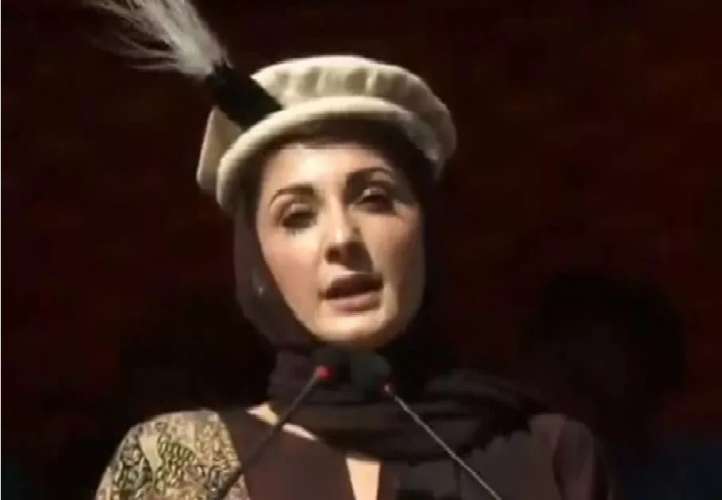
    Kicking off her one-week-long political campaign ahead of the November 15 election in the semi-autonomous Gilgit-Baltistan region, Maryam Nawaz on Thursday told party workers to confront those Pakistan Muslim League-Nawaz (PML-N) leaders who were switching loyalties “under pressure”.

    “Promise me you will not vote for those who change their loyalties. Those who backstab their party do not deserve your votes,” the PML-N leader said while addressing a public gathering in Skardu.

    She went on to say that those who succumbed under pressure could never stand for the rights of the people. “They need to be taught a lesson,” Maryam added.

    Earlier during an informal discussion upon her arrival at the airport, the PML-N suggested that workers should gherao all such turncoats.

    Gherao or encirclement is a tactic similar to picketing. It is mostly used by labour activists and union leaders in South Asian countries where a group of people would surround a politician or a government building until their demands are met, or answers given.

    Later at the public gathering, Maryam began her speech by thanking former premier Shahid Khaqan Abbasi, Pervez Rasheed and former Gilgit-Baltistan chief minister (CM) Hafiz Hafeezur Rehman for staying by Nawaz Sharif’s side through thick and thin.

    “Today, politicking has changed. And it should change,” she told the crowd. “Those who remain loyal to their party and aren’t sell-outs, deserve votes.”

    “I have heard that out of our 16 candidates, eight or nine have changed loyalties. Remember this when you go out to vote that those who cannot endure pressure, will never stand for the public’s rights,” she reiterated.

    “The fake prime minister (PM) announced to make Gilgit-Baltistan a province. You may be a fake premier but you are still a premier. You don’t realise how people are struggling due to inflation,” Maryam said while taking a dig at PM Imran Khan.

    Blaming the incumbent government for the sugar and wheat crisis, she recalled the premier’s promise of 10 million jobs. “Has any youth in Skardu found employment? Did he fulfill his promise to provide housing?”

    The PML-N leader also urged the people of Skardu to send the “lying premier” home. “He is about to go. The last push will be given by the people of Gilgit-Baltistan.”

  • Medical board to ascertain age of teenage Christian bride

    Medical board to ascertain age of teenage Christian bride

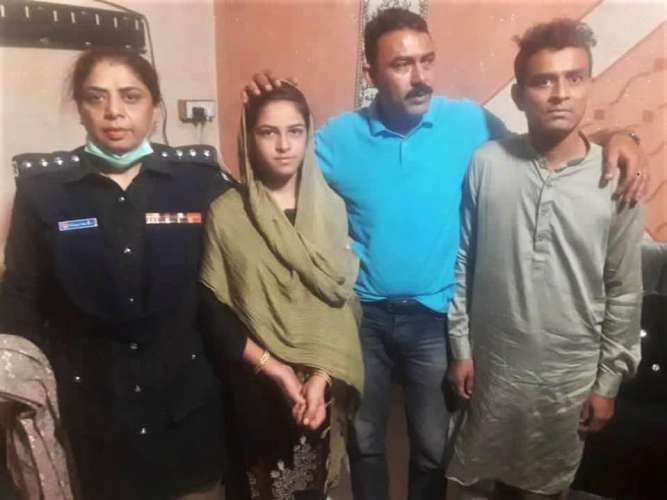
    The Sindh High Court has ordered the formation of a medical board to determine the age of Arzoo Raja — a teenage Christian girl who was kidnapped, forced to marry a 44-year-old man in Karachi after conversion to Islam.

    The matter was brought to the court attention after her parents approached the high court, seeking custody of their daughter. They had said that the girl was underage and didn’t convert out of her own free will.

    The high court, however, had rejected the plea, allowing the girl to stay with her alleged husband, Ali Azhar. This prompted a strong response from the civil society and the government that filed another plea in the case.

    Subsequently, the court ordered police to recover the girl and sent her to a shelter home. The purported husband was also detained and sent on judicial remand.

    As a two-member bench comprising Justice KK Agha and Justice Amjad Ali Sahito took up the case today (Thursday), the counsel representing Azhar and Arzoo urged the court to quash the forced marriage case against him.

    The court, however, observed that the matter now was about the girl’s age. To this, the counsel said a separate law would be applied in that case. Arzoo also told the bench that she wanted to stay with her alleged husband, whom she married out of her own choice.

    When Arzoo informed the court that she was 18 years of age, the bench pointed out that the NADRA documents showed her a teenager.

    The counsel representing the state in the case asked the bench not to record the statement of Arzoo at this point.

    Observing that the case can only proceed once the girl’s age is determined, the bench directed authorities to submit a final report on her age in the next hearing on November 9.

    The CASE:

    On Oct 27, a two-member bench of SHC had admitted a petition that claimed that she was 18 years old and had married Ali Azhar and converted to Islam with her free will. The petition also sought protection against alleged harassment of the girl’s family.

    Underage girls in such cases in Pakistan come under intense pressure, including threats to them and their families, to give false statements in court.

    Azhar allegedly abducted Arzoo in Karachi’s Muhalla Railway Colony West Camp Road locality on Oct. 13, according to the family, which registered a kidnapping case on the same day.

    On Oct. 15 police summoned them to the local station and showed them documents claiming that Arzoo was 18 years old and had willingly converted to Islam after marrying Azhar.

  • ‘Relax, it happens,’ former senator of ‘grape’ fame tells Donald Trump

    ‘Relax, it happens,’ former senator of ‘grape’ fame tells Donald Trump

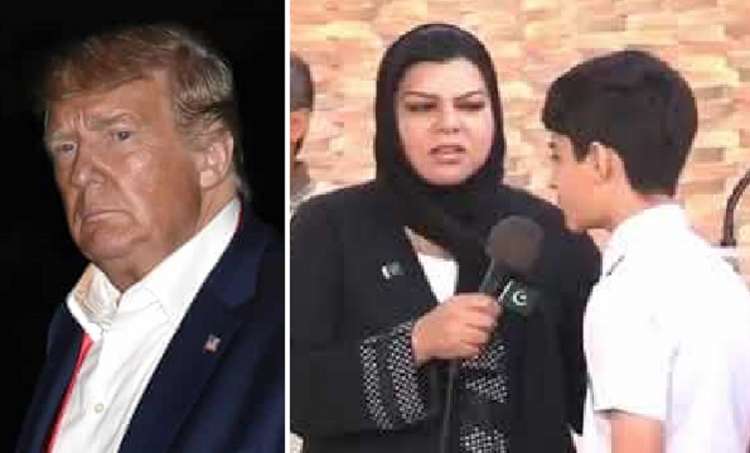
    Former Pakistan People’s Party (PPP) senator Sehar Kamran of “grape” meme videos fame has made headlines for telling United States (US) President Donald Trump to relax as the latter raises concerns over his looming loss in the race to White House.

    By the time this report was filed, Democratic challenger Joe Biden, according to Associated Press’ (AP) data, had secured 264 electoral votes against Trump’s 214. For a majority, 270 electoral votes are needed.

    With Trump taking to Twitter to launch a tirade against his opponent and cast doubts over the electoral process while adding to his laid groundwork for refusing to concede a loss now expected, the former parliamentarian from Pakistan has told him to relax.

    “Relax, it happens,” she wrote in response to a tweet by the incumbent American president.

    The former senator from Pakistan had earlier also tweeted to wish Trump’s rival Biden good luck.

    ‘GRAPE’:

    In September, Sehar responded to the viral clips doing the rounds on social media where some schoolchildren were seen telling what they would do for their country at an Independence Day event.

    The clips had gone viral on TikTok and not just in Pakistan. Sehar was seen encouraging the children in the clips and adding clarity to their statements — all in the spirit of patriotism.

    Speaking to NayaDaur, Sehar had said that the clips are from Pakistan International School in Jeddah, Saudi Arabia of which she was the principal ten years ago.

    “Everyone has the right to express their affection for the country and this is what my students at Pakistan International School Jeddah and I were doing in the video clip,” she said.

    One particular clip in which a child says that he would get into the army and “destroy India” had turned into memes and Sehar’s reaction to the student’s comment, “strong army, wow!”, had also taken the internet by storm.

    While a lot of people had also criticised her for “teaching the kids to promote hate”, another reaction of hers, “great”, had broken the internet as “grape”.

  • What would happen if Trump cries ‘dhandli’?

    What would happen if Trump cries ‘dhandli’?

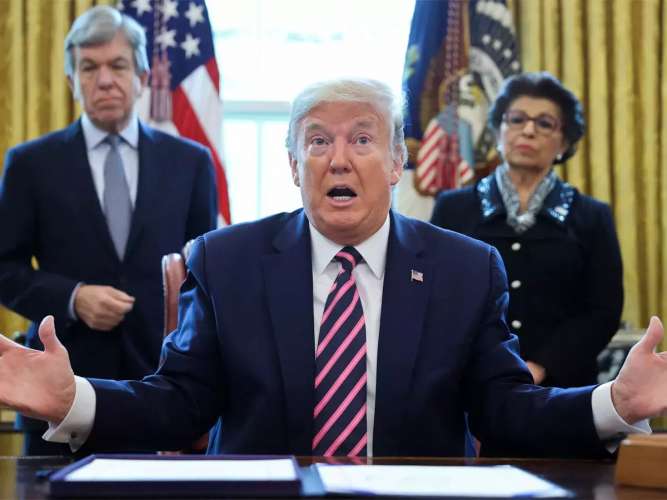
    While Democratic challenger Joe Biden on Thursday seems to have quite a lead against United States (US) President Donald Trump in the race for the key to the White House, the latter, despite incomplete results from several battleground states, proclaimed victory on Wednesday.

    The premature move in spite of incomplete results from the said states, that could determine the outcome of the presidential election, confirmed worries Democrats had voiced for weeks that Trump would seek to dispute the election results, forcing Americans to consider an extraordinary scenario in which Trump refuses to concede his loss.

    The said move could set off any number of legal and political dramas in which the presidency could be determined by some combination of the courts, state politicians and Congress.

    Here are the various ways the election can be contested…

    LAWSUITS:

    Early voting data shows Democrats are voting by mail in far greater numbers than Republicans. In states such as Pennsylvania and Wisconsin that do not count mail-in ballots until Election Day, initial results appeared to favour Trump because they were slower to count mailed ballots.

    Democrats had expressed concern that Trump would, as he did on Wednesday, declare victory before those ballots could be fully tallied.

    A close election could result in litigation over voting and ballot-counting procedures in battleground states. Cases filed in individual states could eventually reach the US Supreme Court, as Florida’s election did in 2000, when Republican George W Bush prevailed over Democrat Al Gore by just 537 votes in Florida after the high court halted a recount.

    Trump appointed Amy Coney Barrett as Supreme Court justice just days before the election, creating a 6-3 conservative majority that could favour the president if the courts weigh in on a contested election.

    ELECTORAL COLLEGE:

    The US president is not elected by a majority of the popular vote. Under the constitution, the candidate who wins the majority of 538 electors (270 votes) known as the Electoral College, becomes the next president. In 2016, Trump lost the national popular vote to Democrat Hillary Clinton but secured 304 electoral votes to her 227.

    The candidate who wins each state’s popular vote typically earns that state’s electors. This year, the electors will meet on December 14 to cast votes. Both chambers of Congress will meet on January 6 to count the votes and name the winner.

    Normally, governors certify the results in their respective states and share the information with Congress.

    But some academics have outlined a scenario in which the governor and the legislature in a closely contested state submit two different election results. Battleground states of Pennsylvania, Michigan, Wisconsin and North Carolina all have Democratic governors and Republican-controlled legislatures.

    According to legal experts, it is unclear in this scenario whether Congress should accept the governor’s electoral slate or not count the state’s electoral votes at all.

    While most experts view the scenario as unlikely, there is historical precedent. The Republican-controlled Florida legislature considered submitting its own electors in 2000 before the Supreme Court ended the contest between Bush and Gore. In 1876, three states appointed “duelling electors,” prompting Congress to pass the Electoral Count Act (ECA) in 1887.

    Under the act, each chamber of Congress would separately decide which slate of “duelling electors” to accept. As of now, Republicans hold the Senate while Democrats control the House of Representatives, but the electoral count is conducted by the new Congress, which will be sworn in on January 3.

    If the two chambers disagree, it’s not entirely clear what would happen.

    The act says that the electors approved by each state’s “executive” should prevail. Many scholars interpret that as a state’s governor, but others reject that argument. The law has never been tested or interpreted by the courts.

    Another unlikely possibility is that Trump’s Vice President Mike Pence, in his role as Senate president, could try to throw out a state’s disputed electoral votes entirely if the two chambers cannot agree, according to Foley’s analysis.

    In that case, the ECA does not make clear whether a candidate would still need 270 votes or could prevail with a majority of the remaining electoral votes — for example, 260 of the 518 votes that would be left if Pennsylvania’s electors were invalidated.

    The parties could ask the Supreme Court to resolve any congressional stalemate, but it’s not certain the court would be willing to adjudicate how Congress should count electoral votes.

    ‘CONTINGENT ELECTION’:

    A determination that neither candidate has secured a majority of electoral votes would trigger a “contingent election” under the 12th Amendment of the Constitution. That means the House of Representatives chooses the next president, while the Senate selects the vice president.

    Each state delegation in the House gets a single vote. As of now, Republicans control 26 of the 50 state delegations, while Democrats have 22; one is split evenly and another has seven Democrats, six Republicans and a Libertarian.

    A contingent election also takes place in the event of a 269-269 tie after the election; there are several plausible paths to a deadlock in 2020.

    Any election dispute in Congress would play out ahead of a strict deadline — Jan 20, when the constitution mandates that the term of the current president ends.

    Under the Presidential Succession Act, if Congress still has not declared a presidential or vice presidential winner by then, the Speaker of the House would serve as acting president. Nancy Pelosi, a Democrat from California, is the current speaker.

    TRUMP LAYING GROUNDWORK:

    The president has suggested he may not accept the results of the 2020 election enough times to prompt alarm over whether he may actually be serious.

    Over the past six months, Trump has repeatedly refused to commit to a peaceful transition of power, when asked, and has claimed he will only lose if the election is rigged.

    Trump displayed the same non-commitment in 2016, but this year an expectation of delays in the result gives the president more scope to claim election results can’t be trusted, or even to claim victory before enough votes are counted.

    Back in July, Trump seemed to be laying the ground for potentially disputing the vote. In an interview with Chris Wallace on Fox News, largely remembered for Wallace confronting Trump with the “very hard” cognitive test, the president claimed to have taken — the test required the sitter to identify an elephant, an alligator and a snake — Wallace asked Trump if he would accept the election results.

    “I have to see,” Trump said. “Look – I have to see. No, I’m not going to just say yes. I’m not going to say no.”

    On other occasions he was happy to bring up the question himself.

    “The only way we’re going to lose this election is if the election is rigged,” Trump told the crowd at a rally in Oshkosh, Wisconsin, in August. “Remember that. That’s the only way we’re going to lose this election.”

    The president repeated the message in a rare White House news conference in September, and during the first presidential debate a week later.
  • Justice Isa reference: SC judge for criminal proceedings against Shahzad Akbar, others

    Justice Isa reference: SC judge for criminal proceedings against Shahzad Akbar, others

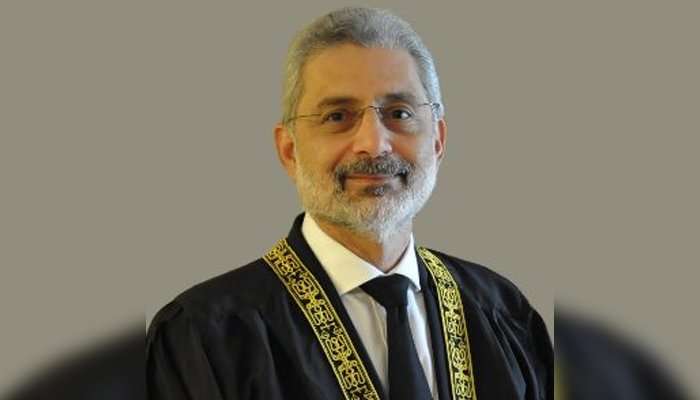
    The federal government tried to remove Supreme Court judge Qazi Faez Isa through illegal means, said a dissenting note in a case pertaining to “mala fide” presidential reference against the top judge.

    In a dissenting note, Justice Sajjad Ali Shah questioned the intent of the government behind filing the reference and its methods to locate the properties owned by Justice Isa’s family, as he sought criminal cases against the government officials.

    He questioned: “Are we governed by the constitution and the rule of law or can the government of the day conveniently get off the constitutional rails to suit its ends and come prying into the private lives of its citizens in disregard of their constitutional rights?”

    The judge said the complainant could only have approached the constitutional forums provided under Article 209(5), adding that the very act of approaching the Assets Recovery Unit (ARU) was per se unconstitutional and illegal.

    “It is noted with concern and suspicion that how did the complainant, a citizen of this country, plan on filing the complaint against a constitutional court judge before the ARU, which had no public
    interface or the legal mandate…”

    Instead of approaching the forum concerned, the complainant’s decision to move the ARU against the judge “raises eyebrows about the credibility of the complaint”. “It is no rocket science to put the facts together to discern that the complainant was fed the information to generate the complaint,” the note commented on the complainant being a “journalist”.

    “The establishment of the ARU was, therefore, absolutely without lawful authority, and is hereby so declared. In the absence of any legal status of the ARU, its Chairman and Members also have no legal position or status,” the judge wrote.

    The judge said that the ARU chairman and legal expert “procured the information regarding the UK properties by offending the fundamental rights…without the sanction of any law”, going on to call these actions criminal.

    For indulging in unlawful practices to gather data on the SC judge, the dissenting note said that the authorities concerned “must initiate criminal and disciplinary proceedings against the ARU chairman, legal expert and [its] members, as well as, the defaulting officials of FBR [Federal Board of Revenue] and NADRA [National Database and Regulatory Authority] under the IFTA, ITO and NADRA Ordinance, 2000”.

    ‘MALICE AND ILL-WILL AGAINST JUDGE’

    Justice Maqbool Baqir also penned a dissenting note, wherein he said that the “respondents have violated all of the above and carried covert surveillance of the petitioner and his family without any rhyme or reason, wholly illegally”.

    Criticising the presidential reference sent to the SJC, he said: “Had the president applied his mind
    independently, he would have readily and surely appreciated that reliance of the chairman ARU, the law minister and the prime minister, on a purported report obtained by the chairman ARU was
    wholly unconstitutional, unlawful, illegal, inappropriate, misconceived and mala fide.”

    “The reference springs from actual malice and ill-will harboured against the petitioner by the concerned state functionaries on account of the Faizabad dharna judgment and a common desire to ensure his absence from the review thereof,” the judge wrote.

    JUSTICE ISA CASE:

    In June this year, the SC dismissed the Pakistan Tehreek-e-Insaf (PTI) government’s presidential reference against Justice Qazi Faez Isa and referred the matter to the FBR for further probe.

    Justice Qazi Faez Isa is an SC justice who took oath as a judge of the top court in September 2014. He is scheduled to become the chief justice in August 2023 for thirteen months.

    His landmark cases include the Faizabad Sit-in judgment in 2019, the Quetta Massacre Commission in 2016 — when he headed an inquiry commission to find out what happened when a suicide attack in August 2016 killed 74 people — and the Memogate Commission in 2012, a case where an alleged memo was delivered to an American official at the behest of former ambassador to the United States (US), Husain Haqqani, in May 2012.

    In May 2019, media started reporting that references were being filed against SC judges Reports became so rampant that Justice Isa approached President Arif Alvi, complaining that information being leaked to the media amounted to character assassination, which would hinder his right to a fair trial. He also asked the president if a reference was being filed against him by the president in the SJC.

    There was no reply by the president and soon, a notice was sent to the federal government by the SJC that a reference was being filed against him and another judge, accusing them of concealing assets.

    Justice Isa then wrote another letter, in which he said that he could’ve handled the inquiry against him and his family but it seemed that the independence of the judiciary was being undermined and that a judge had to preserve and protect the constitution as he had sworn to do.

    He then asked the SC that a full bench be constituted, a plea that was accepted by then CJP Asif Saeed Khosa, and after a months-long trial, a full bench of the apex court on Friday dismissed the petition against him.

  • Lawyer, allegedly a PML-N supporter, submits application for treason case against Fawad Chaudhry

    Lawyer, allegedly a PML-N supporter, submits application for treason case against Fawad Chaudhry

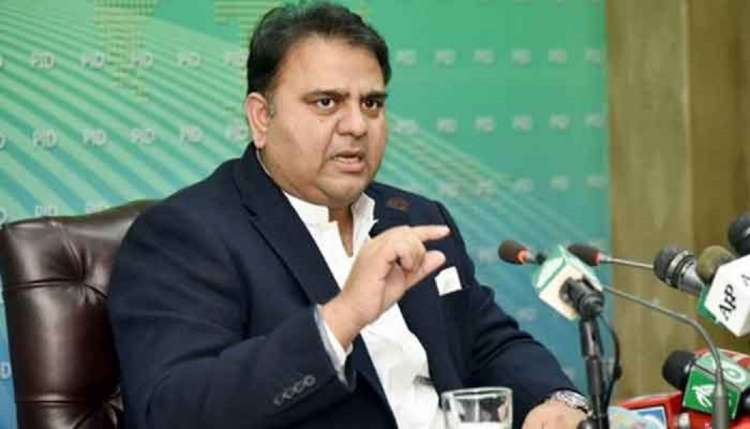
    A lawyer, who is allegedly a supporter of opposition’s Pakistan Muslim League-Nawaz (PML-N), has submitted an application seeking the registration of a treason case against Federal Science and Technology Minister Fawad Chaudhry over the latter’s Pulwama remarks from last week.

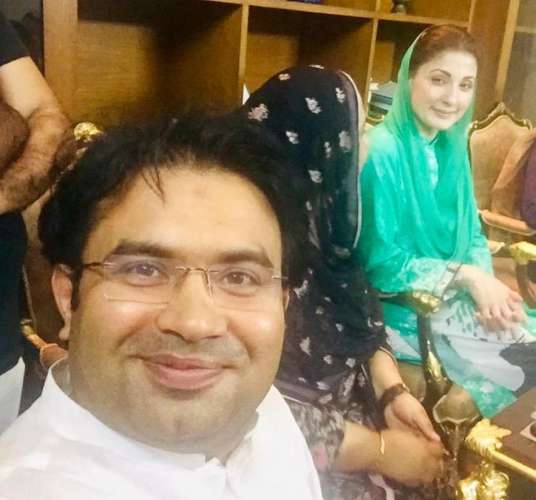
    According to reports, the application has been submitted to Civil Lines police station in Lahore by Advocate Rohail Asghar, a picture of whom with PML-N Vice President Maryam Nawaz has now gone viral over the internet.

    Fawad had in a faux pas on the floor of the National Assembly last week mentioned 2019’s Pulwama attack in held Kashmir, which had killed 40 paramilitary troops and brought the two countries to the brink of war.

    Speaking of Pakistan’s swift response to its air space being violated by India following the said terrorist attack, Fawad had mistakenly named Pulwama, drawing strong reactions.

    READ: ‘Pulwama attack’: Fawad says Indian media twisted his words to malign Pakistan

    While Pakistanis had called out the minister for carelessly making the statement that he went on to clarify later on, Indians, including Prime Minister (PM) Narendra Modi and several journalists, had added fuel to fire by extensively reporting it.

    In a formal statement, the minister had said that the Indian media “acted with gross irresponsibility by misrepresenting the context of the speech” he delivered during a session of the National Assembly.

    Wednesday’s development comes as a series of treason cases between members of the government and opposition continues.

    READ: ‘Abhinandan’s release’: Banners calling Ayaz Sadiq ‘traitor’ surface in Lahore

    Last week, former National Assembly speaker Ayaz Sadiq had landed in hot water for his remarks regarding Abhinandan’s release by Pakistan soon after he was captured.

    The controversy surrounding his statements had led to the military also clarifying the situation, which was followed by the government announcing how the parliamentarian could face legal action.