Category: Politics

  • Out-and-about Nawaz now spotted at London park

    Former prime minister (PM) Nawaz Sharif, who was allowed to leave the country for treatment despite his conviction and subsequent imprisonment in a National Accountability Bureau (NAB) case against him, has been advised to engage in physical activity and take daily walks as lockdown rules have eased in the United Kingdom (UK).

    Two days after Nawaz’s personal physician Dr Adnan Khan said that the ex-PM had been in self-quarantine due to his vulnerable age and a history of cardiovascular and metabolic disease, he was seen taking a walk at a park in London, which according to Adnan, had been advised by his doctors in the UK.

    “Now, as lockdown is eased & authorities are allowing to go out for health reasons, PM #NawazSharif is medically advised to take regular physical activity & should manage walks daily for physical well-being as essential in the management of Heart Disease, Diabetes & Hypertension,” Dr Adnan had tweeted earlier this week.

    The picture doing rounds over the internet showed Nawaz with his son Hussain Nawaz, grandson and two others, taking a walk.

    He did not have a mask on.

    “Former PM Nawaz Sharif has complex cardiac and carotid artery disease with significant co-morbidities, including diabetes, hypertension and chronic renal disease,” Dr Adnan told The News.

    Due to the UK government’s previous rules on lockdown amidst coronavirus pandemic, he was in self-quarantine at residence. Since the rules have been relaxed, his consulting doctors have advised him to take regular exercise and daily walks as an essential part of the disease management.

    “It is very unfortunate that controversy is made when an under treatment patient is out for a walk. While there’s little doubt that the intent behind leaking the picture was mala fide, in reality, had an opposite effect and a glimpse of Nawaz Sharif infused new life into his followers and workers.”

    Last week, a fresh picture of Nawaz at a roadside cafe in London had sparked a debate about his health. In the picture, he was seen sitting at the roadside eatery with his granddaughters, sporting a blue shalwar kameez and a cap. As the picture went viral on social media, it sparked a debate about the former premier’s health with his detractors asking why he does not return to Pakistan if he is well and roaming on London streets, while his supporters expressed joy at seeing their leader in good health and spirits.

    Dr Adnan, who left for Pakistan two weeks ago, said that he would soon return to London, as the former PM has to undergo planned cardiac intervention and further in-hospital treatment. He said that all possible necessary precautions guided by the consultants and international health advisories have been taken by Nawaz during walks and exercises.
  • ‘Our relief package is as large as your country’s GDP,’ India reacts to Imran’s offer to share Ehsaas project

    ‘Our relief package is as large as your country’s GDP,’ India reacts to Imran’s offer to share Ehsaas project

    — Islamabad regrets negative remarks by New Delhi regarding goodwill suggestion by PM Imran

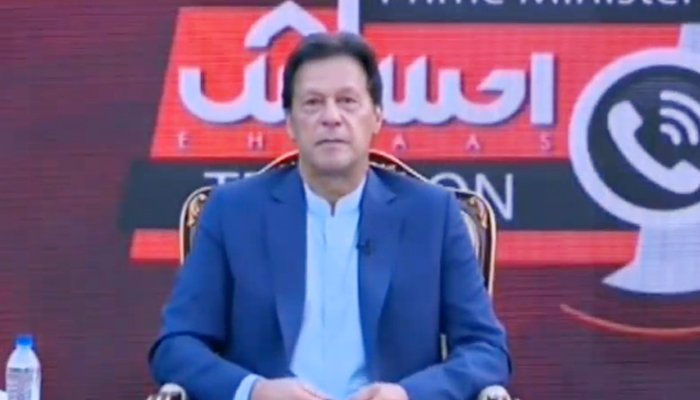
    In a stinging reply to Prime Minister (PM) Imran Khan’s offer of sharing with India his government’s cash transfer project technology to help the poor amid the coronavirus crisis, New Delhi has said that the size of its economic relief package during the pandemic is as large as Pakistan’s Gross Domestic Product (GDP).

    “Pakistan would do well to recall that they have a debt problem which covers 90% of their GDP. As far as India goes, our stimulus package is as large as the GDP of Pakistan,” said Anurag Srivastava, a spokesperson for India’s Ministry of External Affairs (MEA), on Thursday.

    Imran had earlier in the day tweeted a news report published in an Indian daily highlighting the suffering of a section among the poor in India due to the economic challenges posed by the COVID-19 outbreak, saying that his government was willing to help with its successful cash transfer programme, which he boasted was recognised internationally.

    “I am ready to offer help and share our successful cash transfer programme, lauded internationally for its reach and transparency, with India,” the premier had said while sharing the report as per which 34 per cent households across India will not be able to survive for more than a week without assistance.

    He had said his government successfully transferred Rs120 billion in nine weeks to over 10 million families in a transparent manner to deal with the economic fallout of the virus.

    ISLAMABAD REACTS TO NEW DELHI’S RESPONSE:

    In response to New Delhi’s reaction to the premier’s offer, the Foreign Office (FO) regretted “negative remarks by the MEA spokesperson regarding a goodwill suggestion by the PM to share Pakistan’s successful experience in ameliorating the impact of COVID-19 on the poorest sections of the society”.

    “Remarks by the MEA spokesperson reflect an unprofessional attempt at point-scoring over a serious issue that involves the lives of millions of poor people in the subcontinent, worst affected by the COVID-19 pandemic,” read a statement issued by the FO on Friday.

    THE REPORT:

    A study titled “How are Indian households coping under the COVID-19 lockdown? Eight key findings”, carried out by experts at the University of Pennsylvania, the University of Chicago and the Mumbai-based Centre for Monitoring the Indian Economy (CMIE) reveals that nearly 84 per cent of Indian households are seeing decreases in income since the lockdown began. Nearly a third of all households will not be able to survive beyond a week without additional assistance.

    “Direct and immediate transfers of food and cash are a very high priority,” said Heather Schofield, assistant professor of medical ethics and health policy at the Perelman School of Medicine and a Wharton professor of business economics and public policy.

    When a nationwide lockdown began in late March, India’s Ministry of Labour and Employment asked private and public organisations not to terminate jobs on the pretext of prevailing conditions. But these pleas hardly made any difference and large-scale retrenchments that took place as cope with the contagion.

    However, the study found a “sharp and broad negative impact on household income” as the pandemic diminished their staying capacity, adding that the unemployment rate in the country had crossed 27 percent in early May, up nearly four-fold from levels in January-February.

    The fall in incomes affected people in the lower and middle segments of the income distribution most severely, the study found. “Households in the lowest of the five income groups had average monthly per-capital earnings of less than Rs3,800 (about $50), while those at the high end made between Rs12,374 and upwards of Rs100,000 ($167 to $1,370 and more).”

    Households in the middle-income groups are hurt disproportionately more perhaps because they are most likely to be dependent on sources of income that are hit due to the lockdown, the study’s authors stated.

    Rural households have seen disproportionately more distress than those in urban India during the lockdowns. Incomes have fallen at some 88% of rural households, compared to 75% of urban households, the study found.

    Only 30% of households are able to survive one month or more without additional assistance. “Crucially, 14% of the sample is already out of funds and risks immediate and severe deprivation if they are unable to borrow or receive additional benefits,” the report warned.

    “Rapid distribution of in-kind or cash transfers is needed to prevent a sharp increase in malnutrition and severe deprivation. Such transfers will also likely promote a more robust recovery as the country is able to reopen.”

    The need for additional resources is also affected by where the household is located. “The urban poor have the least time before their resources are depleted,” the study said.

    Nearly two-thirds of urban households that earn less than median income households will run out of resources in two weeks. Rural households in similar income groups have relatively more resilience, the study found, as 54% of them have sufficient resources for the same period of time.

  • Pakistan ready to share Ehsaas project with India: PM

    Pakistan ready to share Ehsaas project with India: PM

    Prime Minister (PM) Imran Khan has offered sharing his government’s cash transfer flagship programme that successfully dealt with the negative fallout of COVID-19 on vulnerable communities, with India.

    “I am ready to offer help and share our successful cash transfer programme, lauded internationally for its reach and transparency, with India,” the premier said in a tweet while sharing a report that 34 per cent households across India will not be able to survive for more than a week without assistance.

    He said his government successfully transferred Rs120 billion in nine weeks to over 10 million families in a transparent manner to deal with the economic fallout of the virus.

    A study titled “How are Indian households coping under the COVID-19 lockdown? Eight key findings”, carried out by experts at the University of Pennsylvania, the University of Chicago and the Mumbai-based Centre for Monitoring the Indian Economy (CMIE) reveals that nearly 84 per cent of Indian households are seeing decreases in income since the lockdown began. Nearly a third of all households will not be able to survive beyond a week without additional assistance.

    “Direct and immediate transfers of food and cash are a very high priority,” said Heather Schofield, assistant professor of medical ethics and health policy at the Perelman School of Medicine and a Wharton professor of business economics and public policy.

    When a nationwide lockdown began in late March, India’s Ministry of Labour and Employment asked private and public organisations not to terminate jobs on the pretext of prevailing conditions. But these pleas hardly made any difference and large-scale retrenchments that took place as cope with the contagion.

    However, the study found a “sharp and broad negative impact on household income” as the pandemic diminished their staying capacity, adding that the unemployment rate in the country had crossed 27 percent in early May, up nearly four-fold from levels in January-February.

    The fall in incomes affected people in the lower and middle segments of the income distribution most severely, the study found. “Households in the lowest of the five income groups had average monthly per-capital earnings of less than Rs3,800 (about $50), while those at the high end made between Rs12,374 and upwards of Rs100,000 ($167 to $1,370 and more).”

    Households in the middle-income groups are hurt disproportionately more perhaps because they are most likely to be dependent on sources of income that are hit due to the lockdown, the study’s authors stated.

    Rural households have seen disproportionately more distress than those in urban India during the lockdowns. Incomes have fallen at some 88% of rural households, compared to 75% of urban households, the study found.

    Only 30% of households are able to survive one month or more without additional assistance. “Crucially, 14% of the sample is already out of funds and risks immediate and severe deprivation if they are unable to borrow or receive additional benefits,” the report warned.

    “Rapid distribution of in-kind or cash transfers is needed to prevent a sharp increase in malnutrition and severe deprivation. Such transfers will also likely promote a more robust recovery as the country is able to reopen.”

    The need for additional resources is also affected by where the household is located. “The urban poor have the least time before their resources are depleted,” the study said.

    Nearly two-thirds of urban households that earn less than median income households will run out of resources in two weeks. Rural households in similar income groups have relatively more resilience, the study found, as 54% of them have sufficient resources for the same period of time.

  • PIA flight from Riyadh makes emergency landing in Karachi

    PIA flight from Riyadh makes emergency landing in Karachi

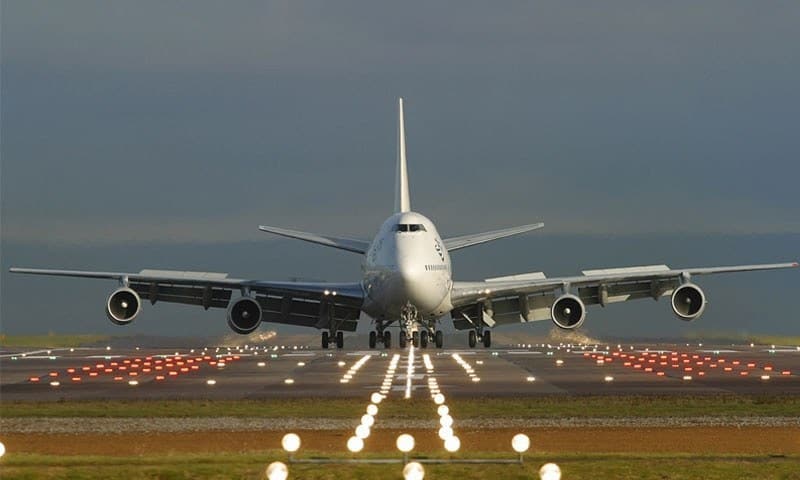
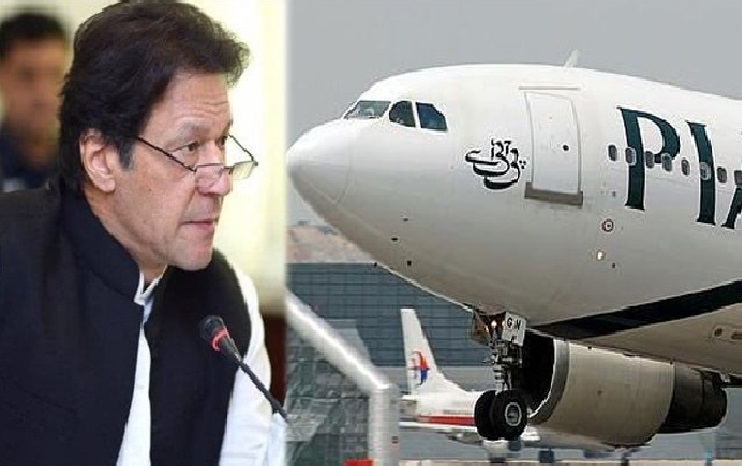
    A Pakistan International Airlines (PIA) flight from Riyadh on Thursday made an emergency landing at the Jinnah International Airport in Karachi, after the plane developed some technical fault, ARY reported.

    According to reports, PIA flight PK8726 from Riyadh was scheduled to land in Multan but developed a technical fault, forcing it to make an emergency landing at the Karachi airport. “The plane safely landed at the airport,” the report quoted sources as saying, adding that an alternative plane was arranged for the passengers to leave for Multan.

    Speaking of the technical fault, they said something went wrong with one of the doors that apparently did not close properly.

    The passengers, after realising something was wrong, refused to fly on the same plane and demanded that the authorities make alternative arrangements.

    The incident comes days after 97 people were killed while only two survived miraculously after an ill-fated PIA plane crashed in a residential area seconds away from the Karachi airport.

    An investigation into the crash is underway.

    Meanwhile, Federal Minister for Aviation Ghulam Sarwar Khan has said that those found responsible in Pakistan International Airline (PIA) plane crash incident will be taken to task. He assured that fair and transparent investigation will be carried out into the tragic crash incident.

    Speaking during the National Assembly session on Wednesday, he said the preliminary investigation report will be presented before the house on June 22. “Decoding of voice and data boxes have been completed and this will be made part of the inquiry report to make it credible,” the minister highlighted.

    Sarwar maintained that the government has requested the International Pilots Association to provide a pilot and technician to help in the investigation of the crash.

    He said the inquiry reports of plane crashes that occurred in the past including those in the federal capital will also be made public.

  • Ex-wife trolls Imran for petrol shortage in Pakistan when ‘world is running out of space to store it’

    Ex-wife trolls Imran for petrol shortage in Pakistan when ‘world is running out of space to store it’

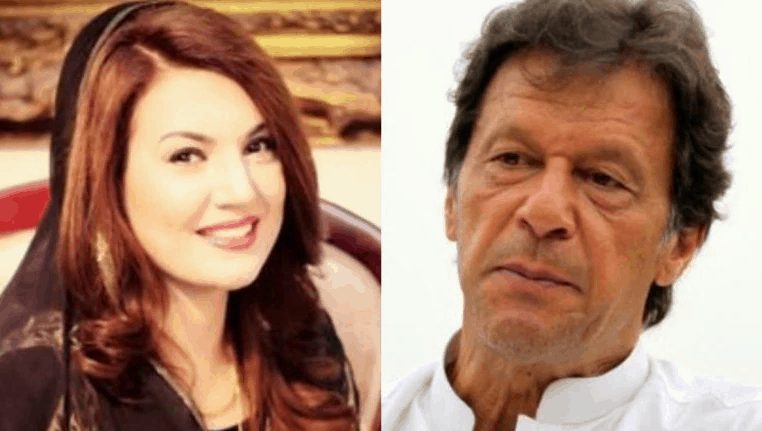
    Former wife of Prime Minister (PM) Imran Khan has taken a dig at him, calling him “selected” — a term used by the opposition to raise objections over Imran’s rise to power –, while highlighting the persisting petrol shortage at a time when “the entire world is running out of storage space for the same”.

    “History will remember the selected person in Pakistan who created a shortage of petrol at a time when the world was running out of places to store it,” she tweeted.

    The tweet came as a shortage of petrol and diesel at most fuel stations across the country reportedly due to the limited supply of petroleum products added to the miseries of people amid the coronavirus outbreak.

    The scarcity of petrol across the country turned severe last week, as most petrol pumps remained closed in Karachi, Lahore, Peshawar, and Quetta. Long queues could be seen on those stations that were open.

    Sameer Najmul Hassan, chairman of All Pakistan Petroleum Retailers Association (APPRA), in a statement, said oil companies will likely run out of their oil stocks in the next three days. They have been left with the stock hardly enough to last out more than three days, he added.

    He said a new quota of petroleum products is not being purchased due to a consistent decrease in the oil companies’ quota. No company other than the Pakistan State Oil (PSO) is purchasing oil at present, the APPRA chairman said.

    “The situation seems to be going from bad to worse until Sunday,” he warned. He said 15 oil marketing companies in total, including the PSO, purchase oil in the country.

    It is pertinent to note that in an unprecedented move, Pakistan, which imports 70 per cent of its crude oil from Saudi Arabia and the remaining from the United Arab Emirates (US), had in April canceled import of gasoline, diesel and crude oil to support the domestic refining industry as energy demand sharply declined amid countrywide lockdowns. 

    The decision to halt the import of petroleum products had followed country’s economic meltdown resulting from the coronavirus pandemic. In a letter to the Oil Companies Advisory Council (OCAC), the Energy Ministry had said that the consumption of motor gasoline had dropped significantly due to lockdown by provincial governments to control the spread of COVID-19.

    Meanwhile, the globally plunging demand for oil brought by the coronavirus pandemic combined with a savage price war had left the fossil fuel industry broken and in survival mode, according to analysts. It faced the gravest challenge in its 100-year history, they said, one that will permanently alter the industry.

    While the first few months into the pandemic saw price wars between oil giants as demand plunged, things are getting better as lockdown restrictions are gradually being eased.

  • Coronavirus: Pakistan out of list of 100 safest countries, Switzerland on top, India 56th safest, worst-hit US 58th

    Coronavirus: Pakistan out of list of 100 safest countries, Switzerland on top, India 56th safest, worst-hit US 58th

    In a detailed study of 200 countries, Switzerland has been found to be the safest place on earth to escape the ongoing coronavirus pandemic while Pakistan is no longer among the 100 safest places, falling down to the 148th rank — amongst the riskiest group of countries.

    India ranks 56th in the COVID-19 ranking by Deep Knowledge Group. The first tier comprises a list of 20 most safe countries while those in the fourth tier are amongst the riskiest lot.

    The study focuses on nations and their safety capability against the pandemic.

    Top 10 safest countries from coronavirus:

    1) Switzerland

    2) Germany

    3) Israel

    4) Singapore

    5) Japan

    6) Austria

    7) China

    8) Australia

    9) New Zealand

    10) South Korea

    The United States (US), which has the highest number of coronavirus cases in the world, was ranked 58th on the list.

    By the time this report was filed, Pakistan had a total number of 113,702 COVID-19 cases with at least 2,255 deaths.

    Punjab had the most number of infections (43,460) with Sindh trailing behind at 41,303 cases. The number of infections in Khyber Pakhtunkhwa (KP), Balochistan and Islamabad stood at 14,527, 7,031 and 5,963, respectively. Gilgit-Baltistan (GB) had a total 974 cases while the number in Azad Jammu & Kashmir (AJK) stood at 444.

  • Another Etihad plane from UAE carrying medical aid lands in Israel

    Another Etihad plane from UAE carrying medical aid lands in Israel

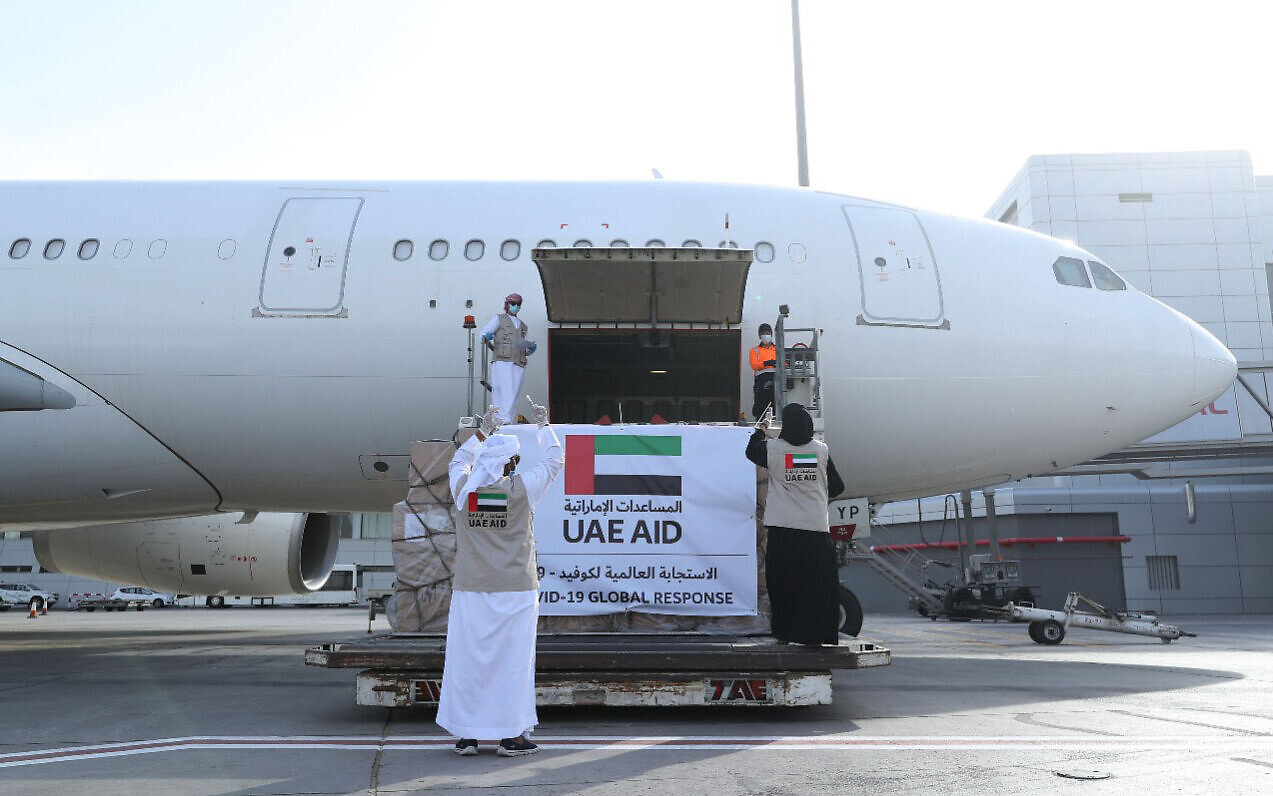
    United Arab Emirates (UAE) flag carrier Etihad Airways sent its second flight to Israel in less than a month on Tuesday, carrying medical aid to help Palestinians tackle the coronavirus pandemic, witnesses and officials said.

    Jordan and Egypt aside, Arab countries have no official diplomatic ties with Israel, but Gulf Arab nations have had ever more publicly warm ties with Israel of late, partly over shared rivalry with Iran.

    In mid-May, the UAE flew its first publicly announced flight to Israel, also an Etihad flight carrying coronavirus aid for the Palestinians.

    But Tuesday’s aircraft bore for the first time the logo of the Arab carrier, a source with knowledge of the flight told AFP.

    It is “the first time that a plane carrying Etihad’s marking is landing in Israel”, the source said.

    Israel’s foreign affairs ministry confirmed that Tuesday’s flight was the second one to Israel from the UAE.

    “It is the second direct flight from the UAE and it has medical aid for the Palestinians,” the ministry said.

    The aid “will be given to the UN to distribute,” it said.

    Palestinian premier Mohammed Shtayyeh said the Palestinians had not been informed about the flight.

    “The Emirati plane took us by surprise, we didn’t know about it,” he told foreign journalists at the Palestinian Authority headquarters in the occupied West Bank city of Ramallah.

    He voiced appreciation for the aid but said the delivery should have been coordinated.

    “When China decides to help us, they coordinate with us, when any country in the world is extending its assistance, they tell us,” he told foreign journalists in Ramallah.

    In another sign of warming ties between Israel and Gulf Arab nations, the Jewish state Tuesday congratulated the UAE on its bid to launch the first Arab space probe.

    That and the latest flight came as Israel prepares to potentially move forward in July with annexing its West Bank settlements and the Jordan Valley.

    A peace plan announced by US President Donald Trump in January gave the green light for such annexations as well as creating a reduced Palestinian state, crucially lacking a capital in east Jerusalem.

    The Palestinians have rejected the proposals and Shtayyeh said Tuesday the Palestinians had submitted a counter-proposal to the Quartet mediating in the conflict, namely the United Nations, United States, Russia and the European Union.

    Analysts say Prime Minister Benjamin Netanyahu believes Arab states normalising with Israel will push the Palestinians to reach a peace deal, not the other way around.

  • PIA incurring Rs6 billion loss per month, Air Marshal Arshad Malik tells PM Imran

    PIA incurring Rs6 billion loss per month, Air Marshal Arshad Malik tells PM Imran

    Pakistan International Airlines (PIA) Chief Executive Officer (CEO) Air Marshal Arshad Malik has told Prime Minister (PM) Imran Khan that in the prevailing situation, the national flag carrier is running into a loss of around Rs6 billion on a monthly basis.

    A sum of Rs24 billion was being spent yearly on the payment of salaries to its 14,500 employees alone, the PIA CEO briefed the premier, who was chairing a meeting on the reforms and restructuring of the national airline.

    The CEO also apprised the PM about the progress on the investigation into the Karachi plane crash, handing over of bodies to their bereaved families and payment of compensation amount to the heirs of plane crash victims, the PM Office Media Wing in a press release said.

    The meeting was attended by Aviation Minister Ghulam Sarwar Khan, Information and Broadcasting Minister Senator Shibli Faraz, Advisor to PM on Reforms Dr Ishrat Hussain, Special Assistant Lt Gen (r) Asim Salim Bajwa and other senior officials.

    During the meeting, a timeline for the restructuring of the PIA and a comprehensive roadmap over reforms and implementation was also submitted before the prime minister.

    Addressing the meeting, the PM said due to the coronavirus pandemic, the country’s economy was facing difficulties, adding that people had to bear the burden of billions of rupees losses on a monthly basis suffered by the state-owned entities.

    He said under the current situation, it was imperative to expedite restructuring and reforms process in the PIA, which had been running into billions of rupees loss owing to Covid-19.

    PM Imran stressed upon bringing down expenditures of the organisation, focusing on increase in its income and financial resources and upgradation of its fleet.

    He also directed that special attention should be paid so that the PIA-owned domestic and foreign assets, which could be utilised through a completely transparent and clear manner. The assets should create financial resources for the organisation instead of becoming a burden on the general public, he observed.

    Arshad Malik on the occasion also gave a detailed briefing on the restructuring, improvement in the financial discipline, better and effective utilisation of the PIA’s assets, and strategy over other related issues.

    He said due to the prevailing situation, the airlines industry throughout the world had been affected and reforms in that regard, were carried out in the organisation.

  • Imran govt for tightening of noose around necks of ‘sugar daddies’

    Imran govt for tightening of noose around necks of ‘sugar daddies’

    Prime Minister (PM) Imran Khan’s aide on accountability Shahzad Akbar has unveiled a comprehensive action plan outlined by the government to take to task the “sugar daddies” identified by the sugar inquiry commission as well as for an overall overhauling of the regulatory framework which had all the while “been in cahoots with the sugar mills”, Geo reported.

    “Imran Khan was given a mandate for accountability in 2018. His 22-year political struggle has been for the same. For accountability of the powerful and influential. This was a big test for that mandate,” said Akbar, during a press conference in Islamabad alongside Information Minister Shibli Faraz.

    Referring to the all parties conference called by the PPP in Punjab, Akbar went on to say, “This is not an all parties conference, it is an all sugar daddies conference.”

    Akbar said that no matter how powerful a person is, no matter the party they belong to, or however wealthy, “no exceptions can be made” for anyone, and this was the line of inquiry followed by the probe commission.

    “Transparency is of utmost importance when it comes to accountability. Before we take action over whatever matter is being pursued, it must be put before the people. That is why the report was made public,” said the premier’s aide.

    He said the public, farmers, as well as industrial experts had been consulted over an “action matrix” that was developed.

    Akbar said that the PM had approved three sets of actions during a meeting in Bani Gala earlier in the day, which he then proceeded to delineate.

    These actions form the first set of actions approved by the premier and consist of the punishments to be given as well as the recovery mechanism to be enacted.

    Within the broad category, seven major actions, including investigation of subsidy scandal, investigation of income and sales tax fraud, evasion and benami transactions, investigation of cartelisation, inquiry and investigation of export proceeds, loan defaults, write-offs and sale of pledged stocks, investigation of corporate fraud, investigation of potentially fake exports to Afghanistan and money laundering, and breach of provincial laws, were recommended.

  • Cynthia Ritchie denies working for intelligence; adds to allegations, drags PML-N through the mud

    Cynthia Ritchie denies working for intelligence; adds to allegations, drags PML-N through the mud

    American blogger Cynthia Ritchie has doubled down on accusation and claimed that she had been harassed by multiple political leaders during her time in Pakistan.

    In an interview with a local news outlet, she revealed detailed of alleged harassment by Pakistan People’s Party (PPP) stalwarts Yousaf Raza Gillani, Makhdoom Shahabuddin and Rehman Malik.

    She said that after Osama bin Laden was killed, Malik, who was the interior minister at the time, asked her to visit the minister’s enclave to discuss her visa. She added that she agreed because some officials told her that “real business is done out of the office”.

    Cynthia said that when she visited the minister’s enclave, she was welcomed with flowers and was offered a drink. “About a drink and a half into my visit, I felt dizzy and the next thing I remember is he getting me to sit down and I was in his bed,” she claimed.

    She also claimed that Malik’s driver helped her dress up and told her that they wanted her to distance herself from the NGO she was working in since it was run by Azam Swati’s daughter and the politician had recently joined the Pakistan Tehreek-e-Insaf (PTI).

    She said that the driver put 2,000 pounds into the car with her and made her take it with her. She added that the Malik also gifted her a mobile phone which was used to spy on her.

    She said that she was also harassed by the Pakistan Muslim League-Nawaz (PML-N) and they stole her ‘Emerging Pakistan’ idea.

    She further said that the Muttahida Qaumi Movement (MQM) had been more civil and she has more respect for them than she has for the PPP.

    Responding to a question, Cynthia denied working for intelligence agencies.

    When the interviewer contacted Gillani and Shahabuddin, both denied the allegations.