Blog

  • Pakistan records 20% drop in ‘immoral content’ online as PTA blocks 88,000 URLs

    Pakistan records 20% drop in ‘immoral content’ online as PTA blocks 88,000 URLs

    Pakistan recorded a 20 percent drop in the volume of “immoral content” uploaded online during the fiscal year 2024–25 after the Pakistan Telecommunication Authority (PTA) blocked more than 88,000 unlawful URLs, official documents revealed.

    The documents showed that the PTA blocked 88,035 URLs across social media platforms and the wider internet during the year as compared to last year’s 109,771 links – reflecting a year-on-year reduction in the number of identified unlawful webpages.

    PTA officials said the decline was linked to continued enforcement measures, enhanced monitoring systems and coordination with social media companies under the Prevention of Electronic Crimes Act (PECA) 2016.

    Platform-specific data indicated that TikTok accounted for the highest number of blocked links with 35,000 webpages removed during the reporting period. Facebook ranked second with 25,482 URLs blocked, Instagram where 13,242 links were restricted and YouTube with 8,586 URLs blocked for hosting unlawful material.

    The documents further detailed the nature of the content removed during the year. A total of 38,214 websites were blocked for hosting “immoral material”. Another 31,313 webpages were restricted for content related to Pakistan’s defence and security.

    Content classified as being against the glory of Islam led to the blocking of 7,608 URLs. In addition, 6,269 websites were taken down for hosting hate or sectarian material.

    The PTA also blocked 2,498 URLs containing defamatory content. A further 353 websites were restricted in connection with contempt of court cases.

    Enforcement actions also extended to X with 2,103 URLs blocked on X.

    On Likee, 991 web pages were restricted while 345 URLs were blocked on Snack Video during the same period.

  • Defiant Maduro pleads not guilty in New York

    Defiant Maduro pleads not guilty in New York

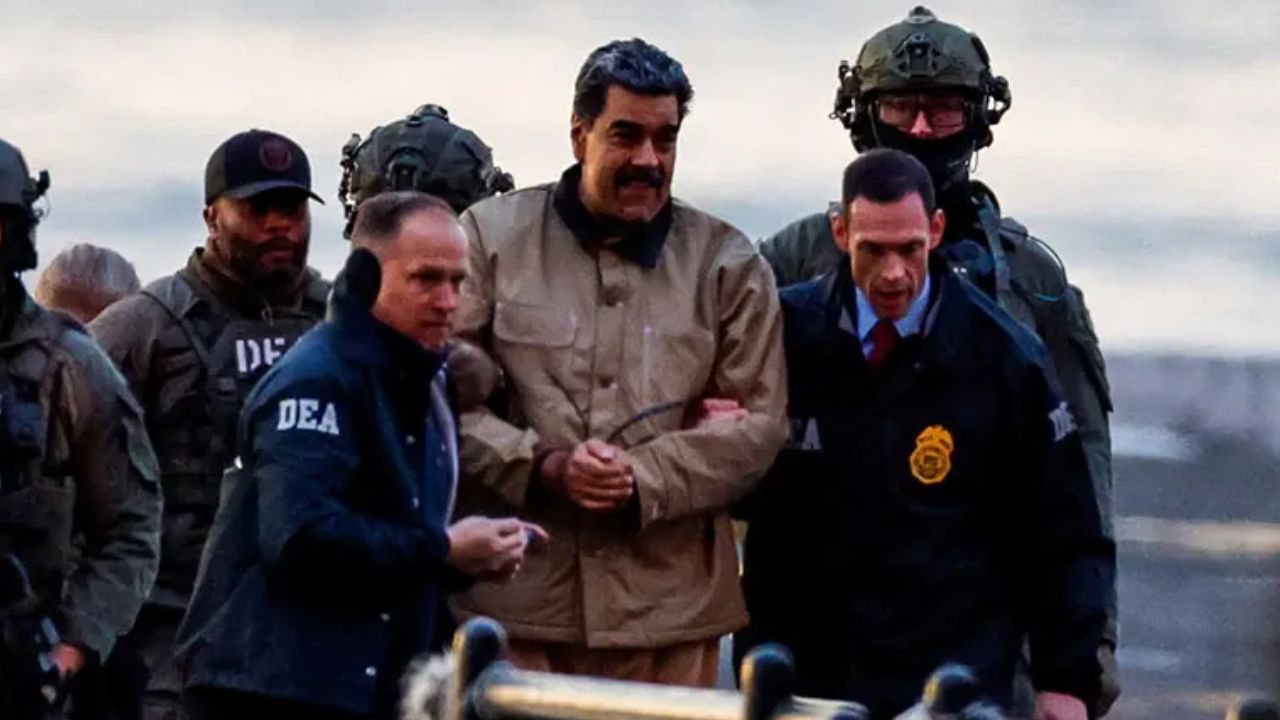
    Venezuelan president Nicolas Maduro has pleaded not guilty to charges of narco-terrorism during a court appearance in New York, US, on Monday, two days after being seized by American forces during an illegal Saturday raid on his residence in Caracas.


    Maduro, 63, appeared alongside his wife, Cilia Flores, after the couple were captured in what US officials described as a surprise military operation carried out in the Venezuelan capital. The controversial operation, which involved helicopters, fighter jets and naval support, marked a sharp escalation in Washington’s interference in the oil-rich South American nation.


    Both Maduro and Flores face narcotrafficking charges in the United States. According to reports, US commandos stormed their home on Saturday and kidnapped them from the country.


    Speaking before a federal judge in Manhattan, Maduro emphasised that he had been abducted, telling the court: “I’m innocent, I’m not guilty.” He also said, “I’m still the president of my country,” according to US media reports.


    Flores also entered a plea of not guilty. The Venezuelan President is expected to remain in custody in New York, with his next court hearing scheduled for March 17.


    Maduro was transported by helicopter and armored vehicle earlier on Monday, and he was taken to the courthouse under strict security, accompanied by armed law enforcement officers. 


    Thousands of Maduro supporters assembled in Caracas on Sunday, in favour of the overthrown leader, yelling slogans and waved Venezuelan flags.


    No official death toll has been released in Venezuela following the operation. However, Defence Minister Vladimir Padrino Lopez said that a “large part” of Maduro’s security team had been killed “in cold blood,” along with members of the military and civilians.


    In Washington DC, President Donald Trump said late Sunday that the United States was now “in charge” of Venezuela. US Secretary of State Marco Rubio said discussions about holding elections following Maduro’s removal were “premature.”


    Asked what the United States required from interim leader Rodriguez, Trump said: “We need total access. We need access to the oil and other things in their country that allow us to rebuild their country.”


    Venezuela holds the world’s largest proven oil reserves, and an increase in Venezuelan crude entering global markets could deepen oversupply concerns and add further pressure on prices. 


    Analysts, however, say that significantly ramping up oil production would be neither quick nor easy, given the country’s deteriorated infrastructure. Oil prices dipped as investors assessed the potential impact of the situation.


    The Trump administration has said it continues to wield economic leverage by blockading Venezuelan oil tankers and has warned of further military action if necessary.


    Prominent opposition figure Edmundo Gonzalez Urrutia said the US intervention was “important” but added that without the release of political prisoners and recognition that he won the 2024 election, it was “not enough.”


    Details of the US operation continued to emerge on Monday. Cuba said 32 of its nationals were killed during the assault, while Trump claimed that Cuba itself was on the brink of collapse following Maduro’s capture. “I don’t think we need any action. It looks like it’s going down,” Trump said.


    International reaction was swift. China, Russia and Iran, long-time allies of Maduro, condemned the US operation. Some US allies, including the European Union (EU), also voiced concern.


    China called for Maduro to be “immediately released,” with its foreign ministry describing the operation as a “clear violation of international law.” Iran said on Monday that its relationship with Venezuela remained unchanged and also called for Maduro’s release.


    Colombian President Gustavo Petro criticised the US action as an “assault on the sovereignty” of Latin America, warning it could trigger a humanitarian crisis. Petro also rejected Trump’s threats of military action against Colombia, after the US president accused the Colombian leader of drug trafficking.

  • ‘New brides should seek in-laws’ permission to rest’: Saba Faisal gets problematic, again

    ‘New brides should seek in-laws’ permission to rest’: Saba Faisal gets problematic, again

    Pakistani actor Saba Faisal keeps on landing in hot waters after saying questionable things during interviews.

    Just weeks after igniting outrage on her comments on the clothes brides wear, the actress has shocked social media yet again after advising newly married women to ask their mothers-in-law for permission before taking rest. 

    Faisal, who frequently appears on morning shows to discuss marriage and domestic matters, passed the controversial remarks during a recent appearance on a private TV channel’s morning show.

    The senior actor said that after marriage, when guests gather at the in-laws’ home, mothers-in-law handle responsibilities including hosting guests and other household tasks, while new brides carry no such obligations.

    “If a new bride needs rest, the mother-in-law should tell her herself. But if the mother-in-law doesn’t say anything, the new bride should go to her mother-in-law or married sister-in-law and ask permission to rest,” Faisal said.

    She added that communication styles matter in such situations. “If a girl gives direct orders, the in-laws won’t accept it. But if she asks politely, even the strictest mother-in-law won’t refuse and will allow her to rest,” she opined. 

    Social media users quickly criticize Faisal’s advice. Maliha Rehman wrote, “She seriously needs to stop giving interviews.”

    One user asked, “Can we please cancel her.” Another questioned, “Susral hy ya jail?” (Is it an in-laws’ home or a jail?)

    Other users expressed disbelief, with comments including “Oh God” and “Wait whattttt.”

    Earlier, she faced backlash for suggesting mothers-in-law should be consulted in selecting brides’ wedding outfits, sparking criticism from fellow celebrities including actors Fiza Ali, Javeria Saud and Hira Khan. 

    However, she later apologised on Instagram, acknowledging that she used inappropriate terminology and clarified that she never insisted brides must only wear clothes chosen by their mothers-in-law. “I had no wrong intention. And still, if my words or my interview have hurt you, I want to apologise,” she said at the time.

  • HONOR Teases X9d — A Smartphone Designed for Everyday Reliability

    HONOR Teases X9d — A Smartphone Designed for Everyday Reliability

    HONOR has announced the upcoming launch of the HONOR X9d in Pakistan, introducing a smartphone designed to deliver top-level durability, long-lasting battery performance, and advanced AI-powered experiences for everyday use.

    As part of HONOR’s X Series, the HONOR X9d is positioned as one of the most durable smartphones in its category, combining reinforced structural protection with endurance-focused innovation. The device has been developed to withstand the demands of real-life usage, making it relevant for users who rely on their smartphones throughout the day — at work, on the move, and in challenging environments.

    Certified Durability Built for Everyday Life

    The HONOR X9d comes equipped with comprehensive protection against drops, water, and dust, backed by globally recognized durability certifications, including SGS Triple Resistant Premium Performance Certification and SGS 5-Star Comprehensive Reliability Certification.

    Built using a six-layer drop-resistant structure and HONOR Ultra-Bounce Anti-Drop Technology, the device is engineered to handle accidental drops on a wide range of everyday surfaces, including stone, asphalt, and tiled flooring. This all-around durability places the HONOR X9d among the most robust smartphones available in its segment.

    To further enhance resilience, the device features an advanced multi-layer water resistance structure supporting IP69K-level protection, allowing it to operate reliably in rain, splashes, and dusty conditions. Intelligent features such as AI Heavy Rain Touch and AI Glove Touch ensure smooth screen responsiveness even in wet or cold environments.

    Smart Protection for Long-Term Performance

    The HONOR X9d also introduces One-Tap Dust and Water Ejection, a smart system designed to remove dust and moisture from the speaker area. This feature helps maintain clear audio output and supports long-term device performance, particularly for users exposed to outdoor or industrial environments.

    Industry-Leading Battery Endurance

    At the core of the HONOR X9d is an ultra-large 8300mAh silicon-carbon battery, designed to deliver extended usage with long-term reliability. Paired with HONOR’s battery health management technology, the device is built to maintain performance over years of use.

    The smartphone supports 66W HONOR SuperCharge for fast recharging and wired reverse charging, enabling users to power other devices when needed. With optimized power efficiency, the HONOR X9d is designed to support multiple days of typical usage, reducing charging anxiety for users with demanding routines.

    AI-Powered Photography and Immersive Display

    The HONOR X9d features a 108MP ultra-sensing camera supported by optical and electronic image stabilization, enabling clear and detailed photography across lighting conditions. A suite of AI-powered editing tools, including object removal and image enhancement, allows users to refine photos effortlessly.

    On the front, the device sports a 6.79-inch eye-comfort OLED display with ultra-high brightness and a smooth refresh rate, offering an immersive viewing experience optimized for both entertainment and daily use.

    Availability in Pakistan

    The HONOR X9d will be introduced in Pakistan through a phased rollout:

    • Pre-Bookings Open: January 17, 2026

    • First Sale Day: January 26, 2026

    Further details regarding variants, offers, and availability will be announced closer to launch.

    With its focus on certified durability, long-lasting power, and intelligent performance, the HONOR X9d is set to strengthen HONOR’s presence in Pakistan’s mid-range smartphone segment.

    About HONOR

    HONOR is a global AI device ecosystem company committed to redefining human-device interaction through innovation. With a growing portfolio that includes smartphones, wearables, tablets, and connected devices, HONOR continues to deliver reliable technology designed to meet real-world needs.


  • Salaried individuals pay Rs266 billion income tax in six months

    Salaried individuals pay Rs266 billion income tax in six months

    Salaried individuals paid a whopping Rs266 billion in income tax during the first half of the current fiscal year, accounting for nearly one-tenth of the total income tax collected nationwide.


    According to provisional figures compiled by the Federal Board of Revenue (FBR) for the July–December period, tax payments from salaried employees in both the public and private sectors were more than twice the amount collected from the real estate sector during the same period.


    The data suggested that salaried individuals paid over Rs266 billion in income tax, marking an increase of Rs23 billion, or 9%, as compared to the corresponding period last year when income tax collection from salaried persons, excluding book adjustments, stood at Rs243 billion.


    Book adjustments refer to the process of reconciling the profit and loss figures recorded in book income with different rules and regulations for calculating taxable income as per the Income Tax Ordinance of 2001.


    Reports quoted sources as saying that once book adjustments are included, income tax contributions from salaried individuals had already crossed Rs300 billion by the end of the first half of the fiscal year.


    The figure also does not include payments made by certain contractual employees under Section 153-B of the income tax law.


    Despite this, the salaried class still bears a disproportionate tax burden, mostly because of what critics claim is the FBR’s dependence on a taxpayer base that has already been established. Large portions of the economy remain outside the tax net, with manufacturers and salaried persons continuing to be the main contributors. 


    The salaried class contributes about 38% of their gross income in taxes, which is far more than the average for the region and much more than contributions from industries like retail and real estate.


    Lt Gen Sarfraz Ahmed, the national coordinator of the Special Investment Facilitation Council (SIFC), also acknowledged the imbalance during a speech to the Pakistan Business Council (PBC) last month.

    He claimed that the government’s fiscal difficulties had resulted in an excessive reliance on taxes, specifically targeting documented and visible taxpayers.

    The data further showed that non-corporate employees contributed the highest share among salaried individuals, paying Rs117 billion in income tax – an increase of 14% from last year. 

    Employees in the corporate sector, on the other hand, paid Rs82 billion, reflecting a 13% rise as compared to the same period of the previous fiscal year.

    During the first half of the fiscal year, the FBR collected Rs3.03 trillion in income taxes overall. Nearly 10% of this amount came from salaried individuals, who pay taxes on their gross incomes without the ability to adjust expenses.

    Despite this contribution, FBR struggled to meet its downward-revised tax target of Rs6.5 trillion.

    To bridge the gap, it relied on advance collections and delayed the processing of taxpayers’ refunds. Even then, overall tax collection growth remained below 10%, roughly half the rate required to achieve the annual target.

    While provincial government employees paid Rs39 billion in income tax, a 7% decrease from the previous year, according to a breakdown of public-sector contributions, employees of the federal government paid Rs27 billion, registering an increase of 8%.

    The government’s recently implemented tax on wealthy pensioners, which is applied to pensions above Rs10 million per year, generated minimal revenue, indicating that full-year revenues might not be able to reach Rs1 billion.

    Meanwhile, the government last month once again allowed retired employees to draw more than one pension, a move that undermined its stated objective of pension reforms and expenditure reduction.

    Tax revenues from traders remained low. Restrictions on financial transactions by ineligible individuals were among the enforcement measures that were either diluted or rolled back.


    However, after higher rates for non-filers and the establishment of a new category for late filers, the real estate sector saw some increase in tax collection. Plot sales saw a two-thirds increase in withholding tax income to Rs87 billion, while plot purchases saw a 29% decline to Rs39 billion.


    Overall, withholding tax collections from the real estate sector reached Rs126 billion during the first half of the fiscal year, reflecting a 17% increase.
  • Four Pakistan kabaddi players banned for refusing doping tests

    Four Pakistan kabaddi players banned for refusing doping tests

    The Anti-Doping Organization has banned four kabaddi players for four years after they refused to undergo doping tests during the National Championship in Lahore.

    The organisation issued a notification in this regard after Obaidullah Rajput, Malik Bin Yamin, Rana Haider and Kashif Sindhu refused to take the tests.

    The Pakistan Kabaddi Federation’s Disciplinary Committee has summoned a meeting on January 12 in Lahore, where all four players will appear to present their case.

    Earlier in December 2025, the federation faced controversy when Obaidullah also played for an Indian kabaddi team, wearing their jersey and waving the Indian flag at a tournament in Bahrain.

    Federation Secretary Rana Sarwar clarified that 16 Pakistani players participated in the Bahrain tournament without representing Pakistan’s national team. 

    The federation had neither granted permission for their participation nor issued No Objection Certificates (NOCs).

  • FIA files case against Faiz Hameed’s brother over land record fraud

    FIA files case against Faiz Hameed’s brother over land record fraud

    The Federal Investigation Agency’s (FIA) Anti-Corruption Cell on Monday registered a case against Najaf Hameed, the brother of former Inter-Services Intelligence (ISI) chief Faiz Hameed.

    The case also names Abdul Zahoor and Khalid Munir as suspects. The case relates to the alleged transfer of land through forged documents when Najaf Hameed was serving as a patwari (land record officer) in Islamabad.

    The FIA initiated the case after completing its preliminary inquiry. Officials said the investigation has begun.

    The FIR registered under sections 109, 409, 420, 468, and 471 of the Pakistan Penal Code (PPC) notes that fake registries and incomplete transfers of land were made in 2009 and 2010. Instead of transferring one kanal, only 10 marlas of land were reportedly transferred, while official records were tampered.

    In December last year, former director general (DG) Inter-Services Intelligence (ISI)  Faiz Hameed, was sentenced to 14 years of rigorous imprisonment. The charges against him included engaging in political activities, violating the Official Secrets Act, misuse of authority, and causing wrongful loss to individuals.

    According to the Inter-Services Public Relations (ISPR), a Field General Court Martial was initiated against Faiz Hameed on August 12, 2024, under provisions of the Pakistan Army Act. The proceedings spanned over 15 months.


    Authorities are carrying out further inquiries to establish the full extent of the alleged irregularities.

  • Punjab Bar Council restores licence of Rajab Butt’s lawyer

    Punjab Bar Council restores licence of Rajab Butt’s lawyer

    Punjab Bar Council (PbBC) has restored the practising licence of Advocate Mian Ali Ashfaq who represents YouTuber Rajab Butt.

    According to reports, the council made the decision on Tuesday, a day after Lahore High Court’s Justice Malik Awais Khalid heard a petition filed by Ashfaq challenging the suspension of his licence. The court summoned the complete record of the PbBC on the matter of the suspension. 

    “Keeping in view the above-mentioned facts and circumstances, and particularly the violation of Article 10-A of the Constitution of the Islamic Republic of Pakistan, 1973, the licence of Mr Ali Ashfaq to practice as an advocate is hereby restored,” PbBC Vice Chairman Muhammad Ashfaq Kahooti stated in Tuesday’s order.

    Tuesday’s order revealed that on the same day the council received the complaint against Ashfaq, “a short notice was issued to him and, without affording him a proper opportunity of hearing, his licence to practice as an advocate was suspended” by the bar’s executive committee.

    However, the order noted that the council turned down Ashfaq’s objection on the executive committee’s lack of authority as “the said contention is misconceived”.

    “The Punjab Bar Council is duly empowered to reprimand, suspend, remove from practice, or impose compensation, fine, or penalty upon any advocate found guilty of professional or other misconduct on a complaint under Section 41(1) and (2) of the said Act,” the order maintained.

    The PbBC stated that Ashfaq submitted an application on Tuesday in the form of an objection petition challenging his licence suspension. His application argued that the December 31 order violated Article 10-A of the Constitution and “principles of natural justice, as the order was passed in absentia without providing him an opportunity of hearing”.

    Ashfaq further contended that he had not “committed any misconduct either towards the legal fraternity or against the dignity of the legal profession”. 

    The lawyer described the complaint filed by KBA as “biased, mala fide, and motivated by certain members of its cabinet”.

    The PbBC had suspended Ashfaq’s licence on December 31 following a complaint from the president and general secretary of the Karachi Bar Association (KBA).

  • Used mobile imports to be banned under new manufacturing policy

    Used mobile imports to be banned under new manufacturing policy

    The federal government on Monday announced a ban on the import of used mobile phones under the proposed Mobile and Electronic Devices Manufacturing Policy 2026–33.

    The policy, prepared by the Engineering Development Board (EDB) in collaboration with local mobile phone manufacturers, aims to draw in global brands and encourage export-led growth through domestic production, in line with models adopted by countries such as India, Vietnam and Bangladesh.


    Stakeholders examined the policy framework’s objectives and implementation plan during a high-level meeting chaired by Special Assistant to the Prime Minister (SAPM) on Industries and Production Haroon Akhtar Khan.

    A detailed briefing was given on the proposed measures, including a comparison between local assembly and complete imports. Addressing the meeting, Haroon Akhtar Khan said the policy’s primary focus was to generate local employment and strengthen Pakistan’s industrial base.

    Under the policy guidelines, mandatory export targets were described as counterproductive, citing the auto sector as an example. Exports will need quality certification, but this shouldn’t be enforced coercively. The policy also proposes the establishment of government-run local laboratories, penalties tied into to performance targets, and a defined minimum number of parts for semi-knocked-down (SKD) kits 40 parts for smartphones and 15 for feature phones.


    It further recommends institutionalising valuation rulings with the participation of the EDB, the Pakistan Mobile Phone Manufacturers Association (PMPMA) and the Customs valuation directorate. To curb under-invoicing, both completely built units (CBUs) and locally manufactured mobile phones are proposed to be placed under the 3rd schedule of sales tax.

    Export targets are to be directly linked with the implementation of Tax Increment Financing (TIF), while the tariff gap between CBUs and SKDs is proposed to be maintained at a minimum of 30 percent. The policy also suggests the application of a TIF levy on both CBU and SKD imports and acknowledges that e-waste management remains a complex challenge.

    Haroon Akhtar Khan said phased localisation would be adopted to encourage foreign investment in high-tech manufacturing and ensure sustainable industrial growth. He added that the policy places particular emphasis on the local production of key components, including motherboards, printed circuit boards, electronic parts and display units.

    He restated Prime Minister Shehbaz Sharif’s plans to integrate Pakistan into global value chains and turn the nation into an export base for foreign companies. 


    Major international brands, such as Samsung, Xiaomi, Oppo, Vivo, and Nokia, were told by representatives of mobile manufacturers that they might become investors under the new policy framework.


    It was mentioned that growth in the mobile phone industry might benefit other electronic industries and support broader industrial development. 

    According to the SAPM, the policy’s goal is to establish an export-focused, globally competitive industrial structure that complies with international standards.


    Strict compliance mechanisms will be enforced under the policy, with incentives to be withdrawn and penalties imposed in cases of violations related to localisation targets, reporting requirements or operational obligations. Non-compliance could also result in the suspension of import licences and financial penalties, as decided by the committee.


    Mobile manufacturers stressed the need for quality certification for exports and called for the establishment of government-led local testing and certification facilities to meet international standards.

  • Govt to cut electricity rates through captive power levy

    Govt to cut electricity rates through captive power levy

    The federal government has decided to provide relief to electricity consumers by using revenue generated from a captive power levy, introduced under an agreement with the International Monetary Fund (IMF), to reduce electricity rates.

    The charge on captive power plants would be used to reduce electricity prices for all consumer categories, according to government sources. The federal cabinet has previously authorized the decision, supporting the direct transfer of the levy’s benefits to electricity consumers. 

    Officials said the government has finalised a plan under which the levy collected from captive power plants will not be adjusted on a monthly basis. Instead, electricity rates adjustments will be made at intervals of two months, allowing the accumulated amount to be reflected in consumer bills.

    The federal government has enforced a law introducing a phased levy of up to 20 percent on captive power plants operating on gas or liquefied natural gas (LNG). Under the first phase, a levy of five percent has been imposed with immediate effect.

    In the second phase, the levy will be increased to 10 percent. According to the implementation plan, the rate will rise further to 15 percent by February 2026 and reach 20 percent by August 2026. 

    Authorities said the increase in the levy rate is expected to expand the scope of electricity rate reduction as higher revenue is generated.

    Sources said every captive power plant using gas or LNG will be required to pay the levy to the federal government. The collected amount will be pooled and used specifically for lowering electricity rates in the power sector.

    The government has also outlined enforcement measures to ensure compliance. In cases where captive power plants fail to pay the levy, action will be initiated against the defaulting entities. If non-payment continues, gas supply to the concerned captive power plant will be disconnected.

    The move is part of the government’s broader plan to restructure the power sector following discussions with the IMF.