Blog

  • ICC delegation to arrive in Karachi tonight for Champions Trophy

    ICC delegation to arrive in Karachi tonight for Champions Trophy

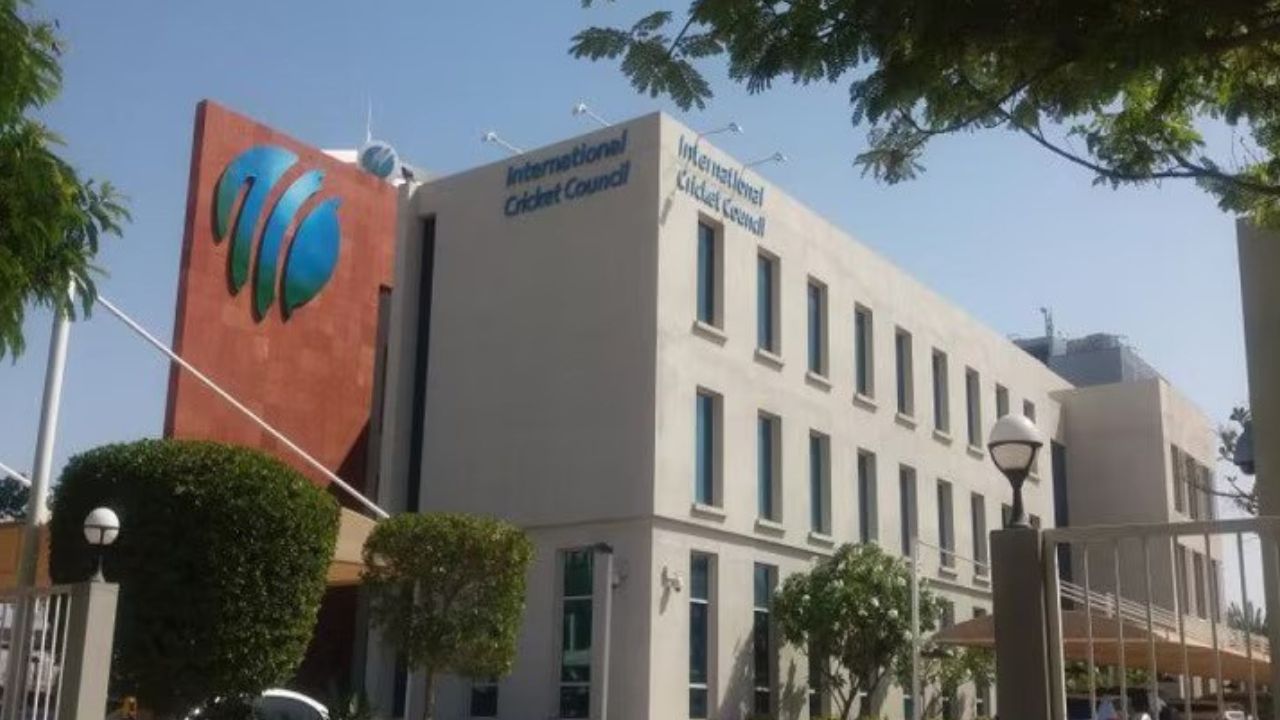
    The International Cricket Council (ICC) delegation will arrive in Karachi tonight for the Champions Trophy 2025.

    The ICC delegation will also visit the National Stadium in Karachi, Gaddafi Stadium in Lahore, and Pindi Cricket Stadium to review security and other issues and prepare its report after completing its visit.

    Pakistan will host this mega event in February and March of 2025.

  • Government clarifies no military trial for Imran Khan

    Government clarifies no military trial for Imran Khan

    The federal government clarified to the Islamabad High Court (IHC) that the possibility of a military trial for founder of Pakistan Tehreek-e-Insaf (PTI), Imran Khan, is not under consideration.

    Additional Attorney General (AAG) Barrister Munawar Iqbal Duggal remarked before the IHC that the defence ministry has not yet provided any information regarding former Prime Minister Imran Khan’s military trial.

    However, the AAG Duggal cleared to the IHC bench headed by Justice Miangul Hassan Aurangzeb that Khan’s military trial would be per the law if the military court tried him.

    Law official for Ministry of Defence, Brigadier Falak Naz remarked that civilian trials by the military court are possible for certain offences under Section 2(1) (d) of the Pakistan Army Act.

    Earlier, ex-PM Khan filed a petition against his possible military trial in connection with the May 9 violent protest cases, upon which IHC directed the incumbent government to submit its answer by September 24.

  • Alia Bhatt officially adds ‘Kapoor’ to her name

    Alia Bhatt officially adds ‘Kapoor’ to her name

    Bollywood actress Alia Bhatt has finally taken her husband Ranbir Kapoor’s surname, two years after their wedding.

    The Darling actress recently appeared as a guest on ‘The Great Indian Kapil Show,’ where actor Sunil Grover called her Alia Bhatt but she corrected him, saying, “It’s Alia Bhatt Kapoor.”

    Alia Bhatt new film ‘Jigra’ with Vedang Raina will be releasing on October 11, 2024.

    Alia Bhatt and Ranbir Kapoor tied the knot on April 14, 2022 in Mumbai.

  • Gohar Rasheed reacts humorously to being called ‘underrated’

    Gohar Rasheed reacts humorously to being called ‘underrated’

    Renowned actor Gohar Rashid had an interesting reaction to being called “underrated”.

    Recently, he appeared as a guest on Jawad Bashir’s show. “Some people say that Gohar Rasheed is an ‘underrated’ actor, and the first thing that comes to my mind when I hear this is that it’s better to be ‘underrated’ than ‘overrated’,” he stated.

    “I should first be told what ‘underrated’ means and what the standard is to measure an actor’s success,” he added.

    He questioned whether an actor’s success is based on the number of followers or their work. “If it’s work, then I’ve contributed,” he said.

    Gohar Rasheed also asked, “If I’m not ‘underrated’ in terms of my work, how many millions or billions of followers do I need, or how famous do I have to be to be considered successful?”

    He further said, “If success depends only on the number of followers, then the actor’s artistry and honesty with his work will be left far behind.”

  • Constitutional Amendment Bill: What was the govt trying to do?

    Constitutional Amendment Bill: What was the govt trying to do?

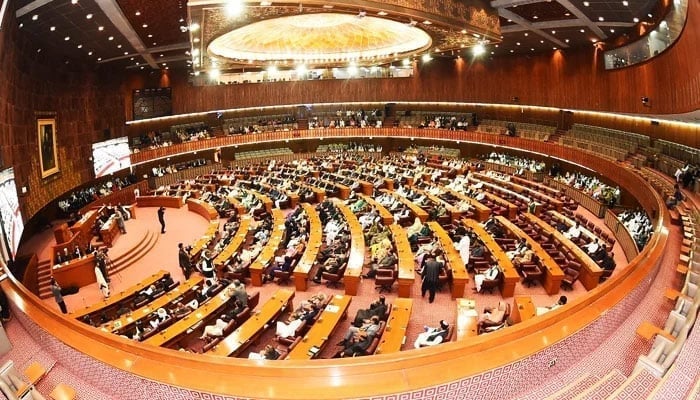
    The coalition government remained unsuccessful last week as it tried to pass the Constitutional Amendment Bill amidst protests by opposition party and senior lawyers. The Government failed to get the magic number to pass the bill with JUI-F President Fazal ur Rehman holding the key. Fazl took the centre stage as opposition and coalition government raced to meet with him to get his support. Ultimately, the government postponed the sessions of Parliament on Sunday indefinitely as the government’s cajoling did not convince JUI-F’s Fazal ur Rehman.

    However, what exactly was the secretive amendments bill? The Current breaks it down for you:

    Article 17

    When the government decides to ban a political party if it threatens the sovereignty and integrity of Pakistan, the government shall refer the matter to “Federal Constitutional Court” instead of the Supreme Court

    Article 63A

    Votes given by members of Parliaments against their party directions will be counted and not disregarded.

    Article 175

    Seniority principle for appointment of Chief Justice of Pakistan revised. Under the amendments, the CJP would be appointed based on the recommendation of National Assembly Committee.

    Section 46

    No Court including the Supreme Court or the proposed Federal Constitutional Court would have the authority to call into question any amendment or provision of Constitution made by the Parliament.

    Article 179

    The retirement age for a judge of the Federal Constitutional Court has been raised from 65 to 68 years. Additionally, if a former Supreme Court judge is appointed to the Federal Constitutional Court, they shall hold office for a term of three years. It has also been added that the term of the Chief Justice of the Supreme Court (CJ SC) shall be three years unless they resign, are removed from office, or attain the age of 65 years.

    Article 184

    All petitions, appeals, or review applications against judgments passed under Article 184, whether pending or filed before the Supreme Court even prior to these constitutional amendments, will now be transferred to the Federal Constitutional Court for adjudication.

    Article 184

    All appeals, petitions, or review applications arising from orders or judgments by High Courts passed under Article 199 (mostly matters related to federal and provincial governments), which are pending before the Supreme Court, shall be transferred to the Federal Constitutional Court for adjudication.

    Article 185

    Any appeal from High Court involving matters of constitutional interpretation would also be heard by the Federal Constitutional Court and not the Supreme Court.


    Article 189

    Decisions made by the Federal Constitutional Court and the Supreme Court on questions of law will be binding on all courts in Pakistan, including the Supreme Court itself.

    However, decisions made by the Supreme Court on questions of law will be binding on all courts except the Federal Constitutional Court.

    Article 190

    All executive and judicial authorities to act in aid of the proposed Federal Constitutional Court. The requirement to act in aid of Supreme Court has been removed.

    Article 192

    The number of High Court judges will now be decided by the Parliament.

    Article 193

    Eligibility criteria for a High Court judge changed as the person must have been an advocate of the High Court for 15 years and have held a judicial office for 15 years instead of 10 years.

    Article 199

    The High Court shall not make any orders against armed forces personnel performing functions under any law related to national security.

    Article 200

    The President would have the authority to transfer a High Court judge on the recommendation of the Judicial Commission.

    Article 202

    The rules for practice and procedure that the High Court may establish are now subject to the Constitution and Parliament, rather than just the Constitution and law.

  • Climate finance: what you need to know ahead of COP29

    Climate finance: what you need to know ahead of COP29

    Developing countries will need trillions of dollars in the years ahead to deal with climate change- but exactly how much is needed, and who is going to pay for it?

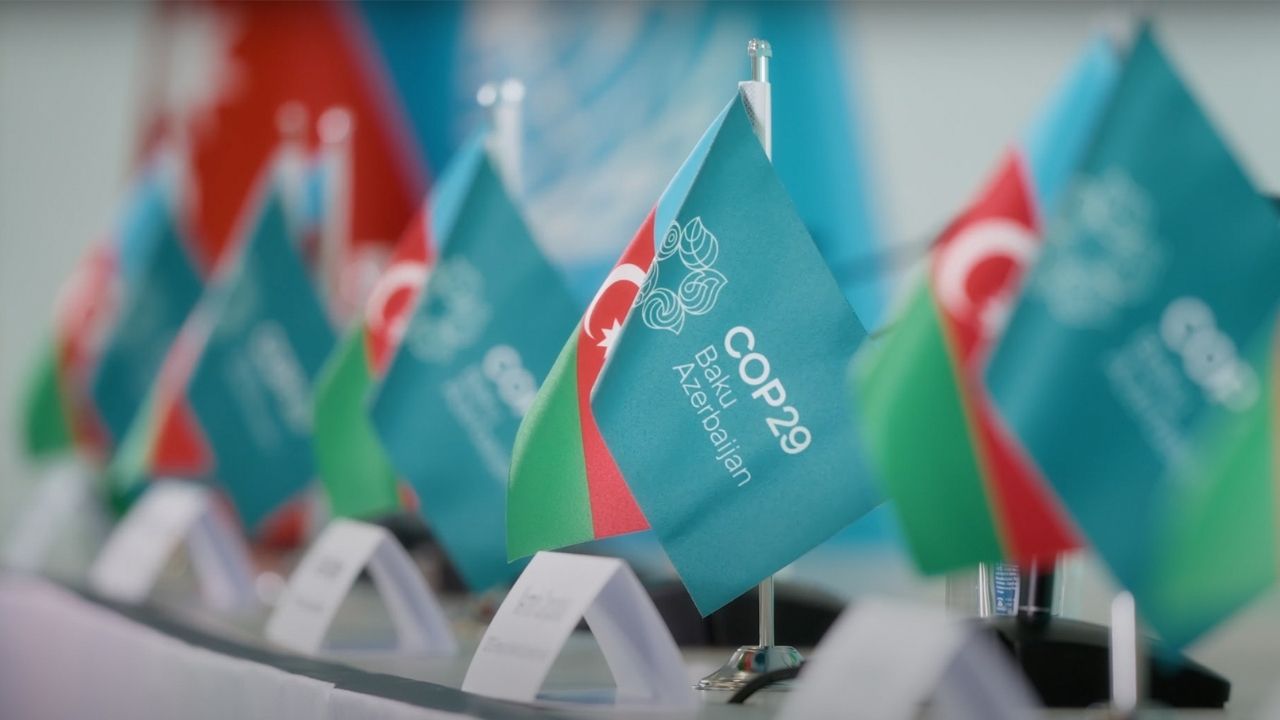
    These difficult questions will be wrestled at this year’s United Nations climate conference, known as COP29, being hosted in Azerbaijan in November.

    What is climate finance?

    It is the buzzword in this year’s negotiations, but there isn’t one agreed definition of “climate finance”.

    In general terms, it’s money spent in a manner “consistent with a pathway towards low greenhouse gas emissions and climate-resilient development”, as per phrasing used in the Paris Agreement.

    That includes government or private money channelled into low-carbon investments in clean energy like wind and solar, technology like electric vehicles, or adaptation measures like dikes to hold back rising seas.

    But could a subsidy for a new water-efficient hotel, for example, be included in climate finance?

    The COPs — the annual UN-sponsored climate summits — have never defined it.

    How much is needed?

    The Climate Policy Initiative, a nonprofit research group, estimates that $10 trillion per year in climate finance will be needed between 2030 and 2050.

    This compares to around $1.3 trillion spent in 2021-2022.

    But in the parlance of UN negotiations, climate finance has come to refer to something more specific — the difficulties that developing nations face getting the money they need to adapt to global warming.

    The line between climate finance and conventional development aid is sometimes blurred.

    But experts commissioned by the UN estimate that developing countries, excluding China, will need an estimated $2.4 trillion per year by 2030.

    Who will pay?

    Under a UN accord adopted in 1992, a handful of countries deemed wealthy, industrialised, and the most responsible for global warming were obligated to provide compensation to the rest of the world.

    In 2009, these countries — the United States, the European Union, Japan, the United Kingdom, Canada, Switzerland, Turkey, Norway, Iceland, New Zealand and Australia — committed to paying $100 billion per year by 2020.

    They only achieved this for the first time in 2022. The delay eroded trust and fuelled accusations that rich countries were shirking their responsibility.

    At COP29, nearly 200 nations are expected to agree on a new finance goal beyond 2025 — but deep divisions remain over how much should be paid, and who should pay it.

    India has called for $1 trillion annually, a ten-fold increase in the existing pledge, but countries on the hook to pay it want other major economies to chip in.

    They argue times have changed since 1992. Economies have grown, new powers have emerged, and today the big industrialised nations of the early 1990s represent just 30 percent of historic greenhouse gas emissions.

    In particular, there is a push for China — the world’s largest polluter today — and the Gulf countries to pay, a proposal they do not accept.

    Where will they find the money?

    Today, most climate finance aid goes through development banks or funds co-managed with the countries concerned, such as the Green Climate Fund and the Global Environment Facility.

    Campaigners are very critical of the $100 billion pledge because two-thirds of the money was distributed as loans, often at preferential rates, but seen as compounding debt woes for poorer nations.

    Even revised upwards, it is likely any future commitment will fall well short of what is needed.

    But it is viewed as highly symbolic nonetheless, and crucial to unlocking other sources of money, namely private capital.

    Financial diplomacy also plays out at the World Bank, the International Monetary Fund and the G20, where hosts Brazil want to craft a global tax on billionaires.

    The idea of new global taxes, for example on aviation or maritime transport, is also supported by France, Kenya and Barbados, with the backing of UN chief Antonio Guterres.

    Redirecting fossil fuel subsidies towards clean energy or wiping the debt of poor countries in exchange for climate investments are also among the options.

    Another proposal, from COP29 host Azerbaijan, has floated asking fossil fuel producers to contribute to a new fund that would channel money to developing countries.

    As for the “loss and damage” fund created at COP28 to support vulnerable nations cope with extreme weather events, it is still far from up and running, with just $661 million pledged so far.

  • India to face China in Asian Hockey Champions Trophy final today

    India to face China in Asian Hockey Champions Trophy final today

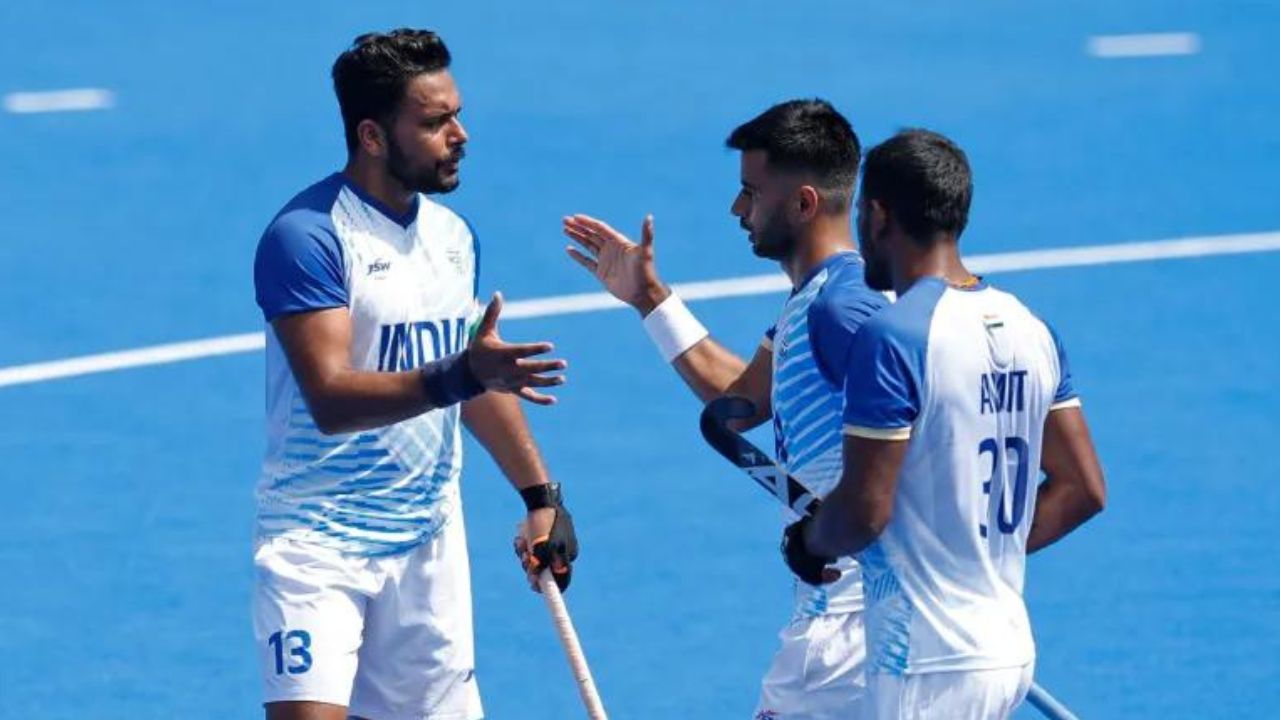
    India will face China in the final of the Asian Hockey Champions Trophy today.

    India will look to win their fifth Asian Champions Trophy, defeating hosts China.

    In the first semi-final, China defeated Pakistan on a penalty shoot-out to qualify for the final for the first time. In the second semi-final, India defeated South Korea.

  • More than 95,000 Japanese aged over 100, most of them women

    More than 95,000 Japanese aged over 100, most of them women

    The number of people in Japan aged 100 or older has hit a record high of more than 95,000 — almost 90 percent of them women — government data showed Tuesday.

    The figures further highlight the slow-burning demographic crisis gripping the world’s fourth-biggest economy as its population ages and shrinks.

    As of September 1, Japan had 95,119 centenarians, up 2,980 year-on-year, with 83,958 of them women and 11,161 men, the health ministry said in a statement.

    On Sunday, separate government data showed that the number of people over the age of 65 hit a record high of 36.25 million, accounting for 29.3 percent of Japan’s population.

    The proportion puts Japan at the top of a list of 200 countries and regions with a population of over 100,000 people, the Ministry of Internal Affairs and Communications said.

    Japan is currently home to the world’s oldest living person, Tomiko Itooka, who was born on May 23, 1908 and is 116 years old, according to the US-based Gerontology Research Group.

    The previous record-holder, Maria Branyas Morera, died last month in Spain at the age of 117.

    Itooka lives in a nursing home in Ashiya, Hyogo prefecture in western Japan, the ministry said.

    She often says “thank you” to the nursing home staff and expresses nostalgia about her hometown, the ministry said.

    “I have no idea at all about what’s the secret of my long life,” Japan’s oldest man, Kiyotaka Mizuno, who is 110, told local media.

    Mizuno, who lives in Iwata, Shizuoka prefecture in central Japan with his family, gets up at 6:30 am every morning and eats three meals a day — without being picky about his food.

    His hobby is listening to live sports, including sumo wrestling, the ministry said.

    Japan is facing a steadily worsening population crisis, as its expanding elderly population leads to soaring medical and welfare costs, with a shrinking labour force to pay for it.

    The country’s overall population is 124 million, after declining by 595,000 in the previous,  according to previous government data.

    The government has attempted to slow the decline and ageing of its population without meaningful success, while gradually extending the retirement age — with 65 becoming the rule for all employers from fiscal 2025.

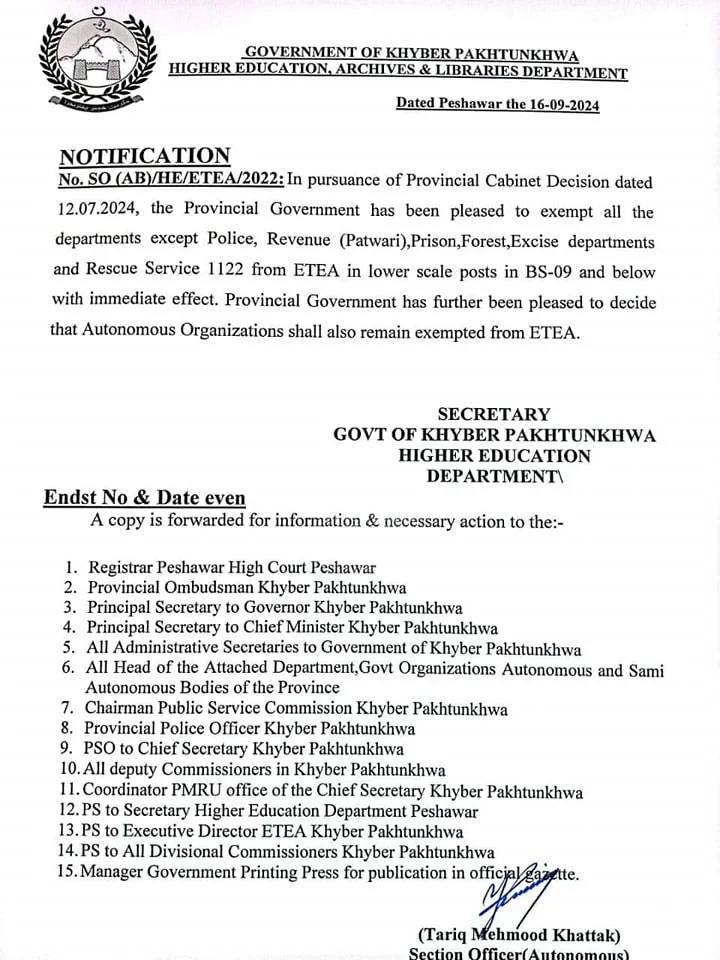
  • KP discontinues testing service for hiring govt employees under scale 9

    KP discontinues testing service for hiring govt employees under scale 9

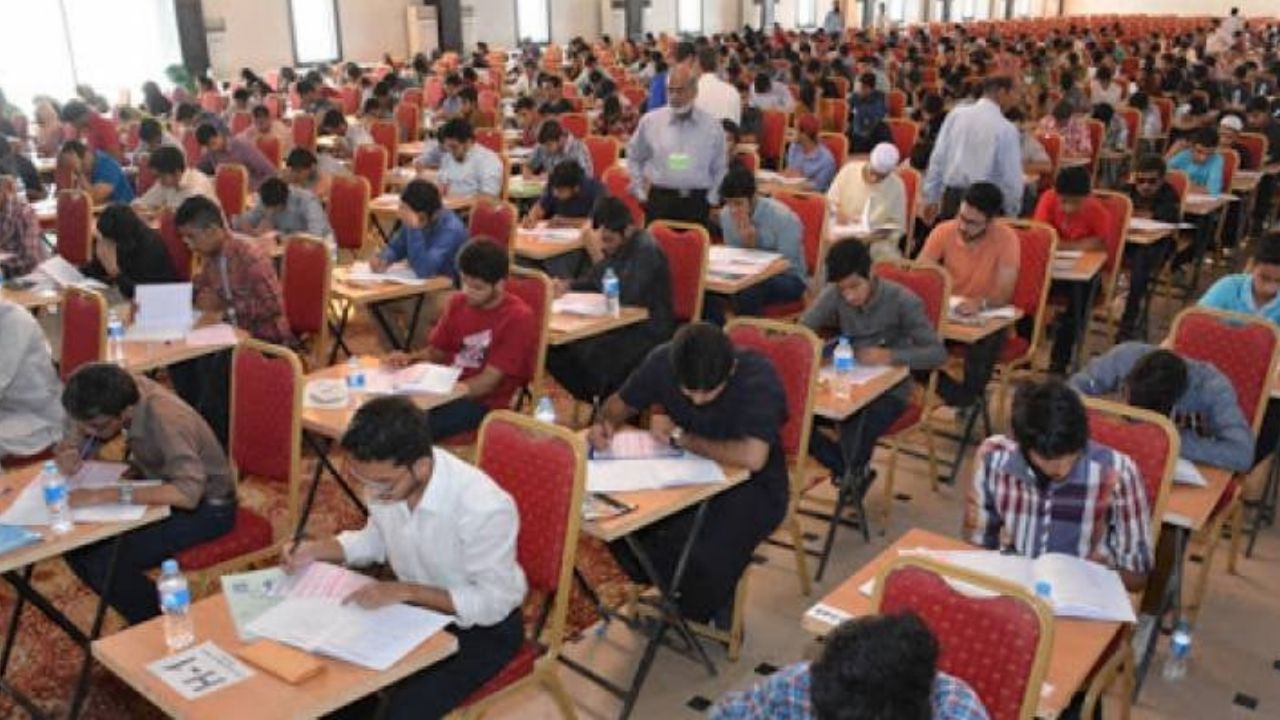
    The Khyber Pakhtunkhwa government has abolished the Educational Testing and Evolution Agency (ETA) test for jobs below Scale 9.

    The Higher Education, Archives and Libraries Department of Khyber Pakhtunkhwa issued a notification in light of the decision of the provincial cabinet.

    The notification says that except for Police, Finance Department, Jail, Forest, Excise and Rescue recruitment in other departments will not be done on ETA. Apart from these six departments, all other departments are authorized to make recruitments in Scale 9 on their own.

    The announcement further states that recruitments in autonomous institutions will also not be done through ETA.

  • Sindh Culture Minister takes action over missing artwork

    Sindh Culture Minister takes action over missing artwork

    Syed Zulfiqar Ali Shah, Minister for Culture and Tourism in Sindh, has formed a two-person investigating commission to investigate the disappearance of painter Safdar Ali Soomro’s artwork .

    The Director General of Antiquities and the Director General of Culture make up the committee which will conduct a thorough investigation and provide a comprehensive report on the missing artwork

    Minister for Cultural Tourism Syed Zulfiqar Ali Shah said, “We have initiated a comprehensive investigation, and further action will be taken based on the findings. Any negligence or misconduct will be addressed accordingly.”
    Big Bang issued a statement on their Instagram account, saying,

    “As artists and producers ourselves, our sympathies go out to the concerned individual. This being said, Big Bang Entertainment would like to clarify that we have no involvement in this matter. The location for this specific shoot was rented, and as per our agreement, all assets present, including the painting in question, belonged to the venue owners.”

    “Unfortunately, this is beyond the control of our production team, and we encourage the artist to directly address the matter with the concerned parties. We hope for a swift and fair resolution and expect all stakeholders to respect the unprecedented success and acclaim Kabhi Main Kabhi Tum has organically achieved these past few weeks.”

    Safdar Ali Soomro, a talented artist from Daharki in Ghokti, Sindh, never imagined that his paintings would be featured in the smash hit drama Kabhi Mein Kabhi Tum.

    The trending serial has captured the hearts of viewers both in Pakistan and abroad, with its characters and storyline receiving widespread praise.

    However, an unexpected twist occurred when artist Safdar Ali Soomro recognized his lost paintings hanging in the background in one of the episodes.

    In an exclusive conversation with The Current, Safdar shared the story of his missing artwork. Graduating from the University of Sindh with a focus on fine arts, Safdar created 16 paintings for his thesis, all in blue monochrome, under the theme ‘Innocent Faces.’ These works were displayed at his university’s Benazir Art Gallery, after which he sought exhibitions in Karachi.

    “After the display, I took my paintings to Karachi to explore the market. I had already participated in two or three local exhibitions while I was at the university. I saw an ad on Frere Hall’s social media inviting artists to submit their paintings for an exhibition. I submitted my paintings to their Sadeqain Art Gallery, and they made an entry in their book. I might have received a receipt, but I don’t have it anymore.”

    Before bringing his paintings to Karachi, he had already showcased his work in a few university exhibitions.

    Safdar submitted his paintings to Frere Hall, but to his dismay, he was informed that they had gone missing. Seven years later, in 2024, he was surprised to see his artwork featured in episode 17 of Kabhi Main Kabhi Tum.

    “ I want to say that whoever’s paintings they are, they should get the credit. No third party should take credit for my work. I am the owner of those paintings, and I have proofs and my signature on them,” Soomro added.

    The Current reached out to Big Bang Productions, who clarified that they had nothing to do with the paintings and only paid rent for the scene shot at Frere Hall. The problem now lies at Frere Hall’s doorsteps, with many questions still unanswered.