Blog

  • Pervez Musharaf Was One Of Pakistani’s Better Dictators

    Pervez Musharaf Was One Of Pakistani’s Better Dictators

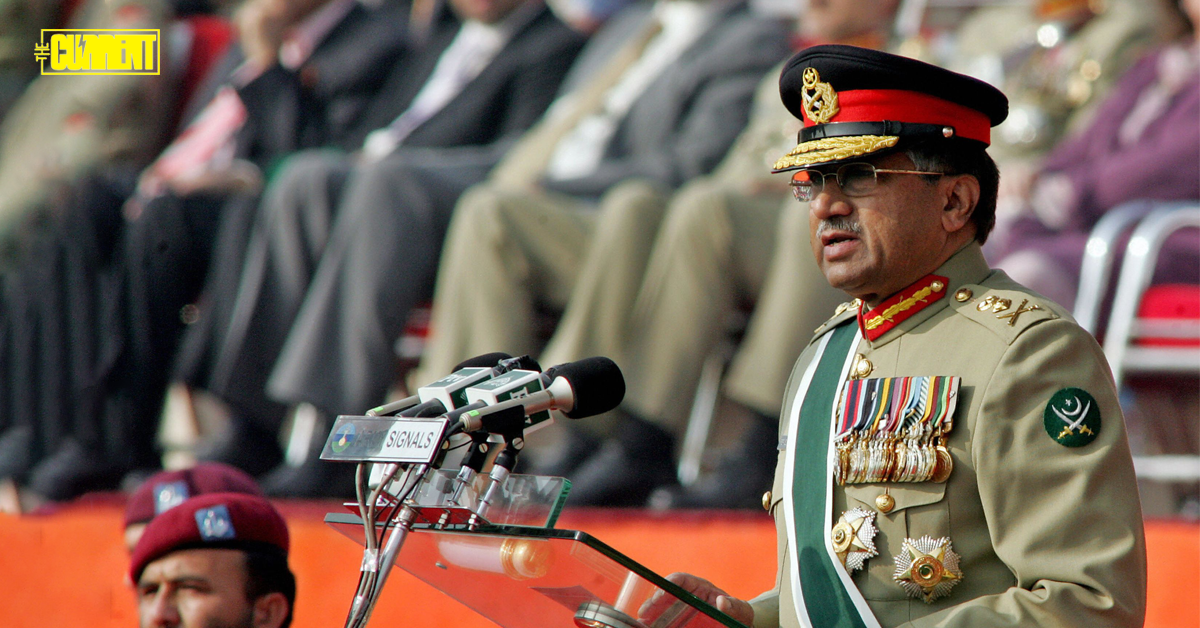
    Pervez Musharraf was the prime minister of Pakistan. He ruled the country from 1999 to 2008. He was one of the most influential figures in Pakistan’s history.  His tenure as President and Chief of Army Staff was marked by significant developments and controversies. These are some traits of his personality that make him a figure of intense debate.

    While some argue that Musharraf was among Pakistan’s more effective and pragmatic dictators, his legacy is complex and multifaceted.

    A Brief Overview of Musharraf’s Rule

    General Pervez Musharaf was the only man who remained president of Pakistan for 10 years. He was the master of combining military power with politics hence his reign was a period of both accomplishment and conflict.

    Musharraf came to power by removing from office the Prime Minister Nawaz Sharif. His first term was mainly devoted to managing Pakistan’s economy. This was in a rather ill state due to a high inflation rate as well as a low growth rate. During Mushraf’s rule, Pakistan enjoyed a mild economic boom with the annual growth rate of GDP ranging between 5-7 percent. 

    He was able to show his government towards the process of economic liberalization; lift some of the barriers to foreign investment, and embark on a process of modernization of some key sectors of the economy. He did it by embarking on infrastructural development; such as enhancement of telecommunication and transport systems.

    Socially, he wanted to reform the country. For this purpose, he promoted women’s rights, increased female representation in parliament, and decentralized power through local government elections. These are some efforts that represent his goal to modernize Pakistan’s political landscape.

    Gen Pervez Musharraf aimed to align Pakistan with the United States. This cooperation provided more military assistance as well as financial contributions. This also created negative public opinion in Pakistan about sovereignty as well as the position in the war on terrorism.

    However, several controversies were recorded during Musharraf’s rule of the country. He therefore declared a state of emergency in 2007. He suspended the constitution suppressed political opposition, and was widely criticized. But again his regime also witnessed more hostile relations with the Judiciary and conditional political freedom.

    Mushraf’s rule is still an object of controversy as the tyrannical outcome of the policies conducted during his administration overlaps with the economic growth of Pakistan.

    Economic And Developmental Achievements

    Different economic or development advancements took place during Pakistan General Musharraf’s tenure. It was a time when Pakistan experienced a period of different transformations. The main focus of his administration was the stability or modernization of Pakistan’s economy. 

    Pakistan’s economic growth increased during his tenure. This was the significance of his economic success. In the early years of his administration, the annual growth rate of the country was 5-7% which later marked improvement over previous periods of economic stagnation. liberalizing trade policies, encouraging foreign investment, and implementing deregulation measures were the reasons for economic growth.

    There was another reason that gave a boost to the economy of Pakistan during Pervez Musharraf’s tenure was infrastructure development. The government invested heavily in different projects which may include road construction, urban development, and energy generation. expansion of the motorway network and improvements in public transportation are also some of the projects that can’t be neglected. These projects were also the reason for economic growth. 

    Advancement of Telecommunication Department

    The telecommunication department also grew under Mushraf’s rule. He used up-to-date techniques that gave a rapid boost to mobile phone services or internet services. This boost increased the Digital connectivity or technological progress. As a result, communication pr economic growth increased.

    These were not only works, Gen Pervez Musharraf brought revolutionary changes everywhere. He also worked on social development. He introduced different programs that improved healthcare and education. increase female literacy rates and best healthcare services were a proof of his social upliftment.

    Despite these achievements, he faced strong criticism. The reason behind this criticism was income inequality and persistent poverty. Pakistan general Pervez Musharraf is still remembered for his significant services which he brought for the reformation of the country. 

    Political And Social Reforms

    The tenure of General Pervez Musharraf was from 1999 to 2008. His tenure was marked by different political and social reform series. modernizing Pakistan’s governance and societal structures was one of his services. He was the only prime minister that worked hard for the reformation of Pakistan. While his tenure was characterized by significant advancements, it was also full of substantial controversies.

    When you talk about politics, the different reforms he used to decentralize power. His initiative was the promotion of local governance. 

    Improve Administrative Efficiency

    He aimed to empower local authorities and improve administrative efficiency. He took this step to bring the governance or people closer. He also wanted to increase political participation at the grassroots level.

    Pakistan general Musharraf also tried his best to establish the administration to tackle different corruption activities and bureaucracy inefficiency of the political institutions. 

    His government made efforts to rationalize bureaucratic procedures as well as increase the measures of accountability. However, these attempts were seen under the prism of suspicion as the military dominated the government under his dictatorship in Pakistan.

    Social Aspect And Freedom

    As far as the social aspect and freedom and rights of the people were concerned, there were marked improvements, especially women’s rights during the rule of Musharraf. The government tried to enhance the position of females in politics and every field of life. He also empowered the social sectors during Mushraf’s presidency through the implementation of different policies. 

    All policies gave support to the rights and opportunities of females regarding education and healthcare services. All these were in a program to transform Pakistan’s society and elevate the status of women in the society.

    However, these reforms aimed at accomplishing its objectives did not go without controversies. The politics during the rule of Gen Musharraf was quite restricted in essence, there were some restrictions to the freedom of media and political parties. 

    The discharge of the judiciary and declaring a state of emergency in 2007. This also demonstrated the contradictory nature of the reformist agenda along with the authoritarian measures.

    It is possible to note that Musharraf’s presidency was indeed progressive in terms of decentralization of power and social liberalization. At the same time introduced certain troubles and controversies in Pakistan, proving the concept of the path of modernization being intertwined with authoritarianism.

    Relations with the International Community

    Strategic location, economic needs, and geopolitical challenges are some basics that build a country’s relations with the international community. Pervez Mushraf had introduced a military dictatorship in Pakistan. He introduced different nuclear power projects in Pakistan. 

    These projects had a certain responsibility for regional stability, especially in the South Asian area. It primarily focused on the two-sided relationships that still exist with most of the world powers such as the United States, China, and Russia in its foreign policy.

    Relationship With China

    Out of all these countries, Pakistan built an especially close relationship with China in his tenure. The China-Pakistan Economic Corridor was an important project of the Belt and Road Initiative. By financializing this partnership, it had brought about hefty investment in the country that enhanced the growth of the economy. 

    Strategies Of Pervez

    The strategies of the late Pervez Musaraf are still alive. Pakistan’s external affairs continue to be shaped with the help of the most powerful dictators today. They desire to secure economic cooperation and foster a stable environment for the growth of their industries. They even want to balance the disturbances posed by security threats by following the strategies of Pervez. 

    Criticisms and Controversies

    Significant figures, institutions, and events cover the Criticisms and controversies. In politics, Gen Musharraf also faced different criticism over policy decisions., governance, and ethical conduct. 

    For example, he faced allegations of corruption, human rights violations, or mismanagement. Above all, he didn’t let these criticisms or controversies affect his plan for the welfare of Pakistan.  

    Conclusion

    A complex story can be told about Pervez Musharraf’s time as a leader of Pakistan. The economic pyramid that he headed did have some measure of positive development, many progressive reforms, and some social overtone expertise. It also claimed its stake in authoritarianism and rather politically charged controversies. 

    It must be noted that categorizing Pervez Mushraf as one of Pakistan’s ‘lesser’ evils is an easily arguable opinion. It depends on one’s point of view when addressing the president’s achievements and follies. It is still a subject of discussion today because governance is still an issue in a country that is struggling to be democratic yet is constantly influenced by the military dictatorship in Pakistan.

    People May Ask

    Was Musharraf’s rule considered successful in terms of economic performance?

    Yes, Pakistan General Musharraf’s services for economic growth can’t be neglected. The infrastructure, increased foreign investment, and better economic stability are some of the evidence of his successful economic situation as compared to previous periods. This is the first reason why He is still alive in Pakistan dictatorship world. 

    What were the major criticisms of Musharraf’s rule?

    There were different criticisms Mushraf faced during his political tenure. Major criticisms of his rule included:

    • Authoritarianism
    • Legal and Human Rights Issues
    • Political Corruption
  • Who Are The Biggest Billionaire Philanthropists Richest Pakistani?

    Who Are The Biggest Billionaire Philanthropists Richest Pakistani?

    Philanthropy in Pakistan follows Islamic teachings that include performing tasks for the welfare of human beings. Richest Pakistani philanthropists are the persons who become the helping hand for needy people. 

    It is difficult to find who is the first billionaire because several billionaires have emerged in Pakistan as philanthropists. These people take part in charitable activities. They contribute vast amounts of their wealth to social causes. 

    This article explores some of the most prominent Pakistani billionaires and philanthropists in Pakistan, highlighting their contributions and their impact on society.

    The Impact of Philanthropy In Pakistan

    There are several impacts of philanthropy present in the country. Here are some of them that define how the richest businessmen in Pakistan are playing their role in reforming the country.

    • Poverty Alleviation: The richest Pakistani philanthropists have the main initiative to fight against poverty. For this purpose, they introduce different educational courses or scholarships for youth and financial aid. 
    • Healthcare Improvement: The richest businessmen in Pakistan always take part in social work. They give funds to hospitals, clinics, and health programs. These philanthropists want to improve quality healthcare for underdeveloped areas of the country.
    • Educational Advancement: The philanthropic efforts of the richest Pakistani billionaires have led to the establishment of schools, universities, and scholarship programs. In this way, they increase access to education and raise educational standards.
    • Disaster Relief and Rehabilitation: The wealthiest person in Pakistan is playing his role, especially in disastrous relief campaigns.He provides immediate aid and long-term rehabilitation for victims of natural calamities like floods and earthquakes

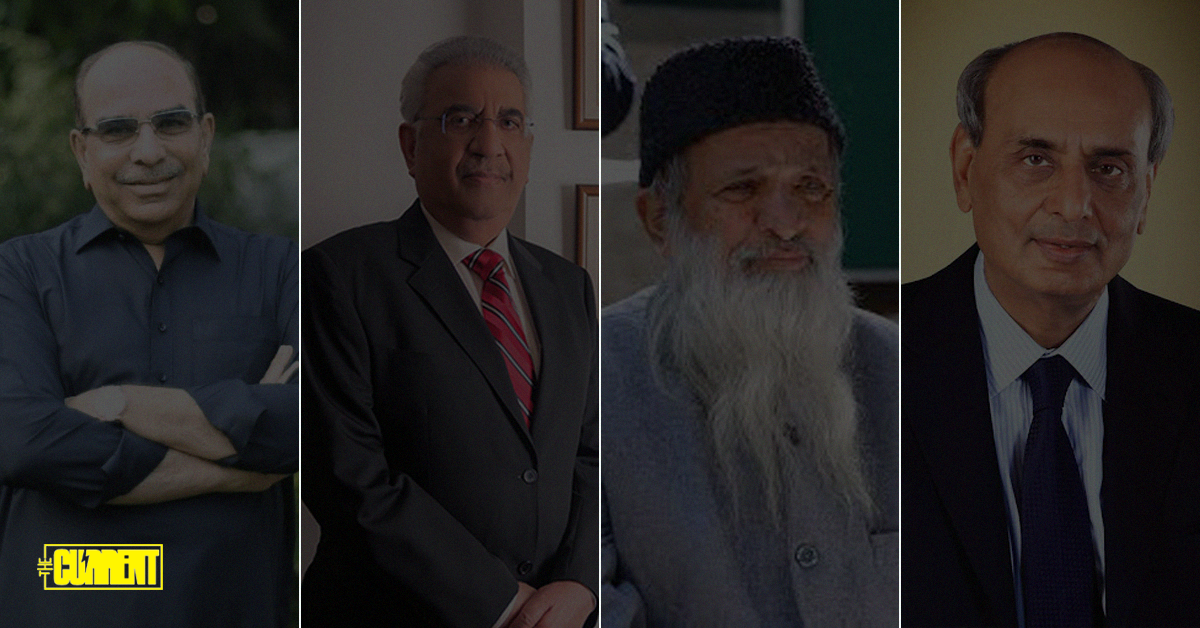
    Malik Riaz Hussain

    Malik Riaz Hussain the richest Pakistani is the owner of Bahria town. He is a prominent figure in the billionaire world but still, it is hard to know about the net worth of Malik Riaz. Despite being a controversial figure, He has a distinguished personality in the philanthropic world as he always contributed to humanity’s welfare. His charitable activities are limitless. This sphere may include healthcare, education, and housing, particularly for the underprivileged.

    There are millions of his efforts for needy people but his efforts which he performed for disaster relief people is the most notable action of his social works. Whenever any natural disaster such as floods and earthquakes hits Pakistan, he always steps forward to save the country by giving shelter, food, healthcare facilities, or money to the affected people. He always built homes for the homeless, he aims to improve the living conditions of the poorest segments of society.

    • In the healthcare sector, Malik Riaz has initiated and provided different hospitals and medical centers. The healthcare centers provide good healthcare services to those people who cannot afford to get proper treatment facilities. 
    • His input to education also extended to the provision of schools and scholarships to enable needy students to access education.

    From his philanthropy, this Pakistan wealthiest person is a man with a genuine passion for reducing inequalities in society, especially in Pakistan. He has established himself as one of the largest charitable billionaires in the country today touching the lives of millions positively.

    Sadruddin Hashwani

    The chairman of the Hashoo Group Sadruddin Hashwani is another richest person in Pakistan. He is one of the most influential billionaire philanthropists in Pakistan. At first, he was just a businessman but later he started contributing to Pakistanis welfare. He knows that the majority of people in Pakistan are homeless or they can’t afford medical treatments or good food. 

    Here he became a helping for these people. At the time of any calamity, he also showcases his commitment to uplifting society, particularly in the areas of education, healthcare, and poverty relief.

    The Hashoo Foundation takes care of these all charitable activities. There is a proper channel this foundation follows to regulate these activities without any pause. The purpose of this foundation is to address all the socio-economic challenges Pakistan’s community may face. 

    He offers educational, vocational training, and microfinance services to young women so they can stand in hard times using their educational skills. This is good for them and for the overall country’s growth. Being the richest Pakistani Hashwani has enabled individuals to break the cycle of poverty and achieve financial independence.

    Hashwani has made an immense contribution, especially in the field of healthcare delivery. He has contributed towards the creation of and funding for expensive hospital and clinic facilities in hard-to-reach areas. The reason is to bring health care closer to those who require its services. These have taken health care services to many a neglected corner of the country hence enhancing the quality of many Pakistanis ‘lives greatly.

    Besides, healthcare, Hashwani had his partnerships with schools and scholarships to mark his interest in the education sector. He has focused his philanthropy on the educational sector and mentioned that education holds the future of Pakistan where millions are still out of schools. 

    The benefits he has given have not only opened access to education but have also improved the quality of education in the country.

    Being a billionaire from Pakistan he always serves the country like his responsibilities. Moreover, he has true dedication to helping the needy without any expectations in return. Through his ongoing efforts, Hashwani continues to inspire others to contribute to the betterment of society.

    Abdul Sattar Edhi

    Abdul Satar Edhi was not Pakistan most richest man but his humanitarian work has made him a top philanthropist. He built the Edhi foundation for those who are homeless, and sick. Edhi is a true example of philanthropy as he always served humanity genuinely. 

    He started his welfare work with a small dispensary in Karachi. Later his compassion for serving humanity grew into a nationwide network of services. The edhi foundation later introduced the facility of edhi ambulance in Pakistan which works for free. 

    Moreover, this foundation has also opened orphanages, homeless shelters, clinics, and rehabilitation centers across Pakistan. 

    Edhi gathered fame by contributing his services to the world but he always led a simple life. He always used all his resources for the betterment of humanity. His philosophy was centered on the unity of humanity and his foundation as a result offered assistance to anyone irrespective of their faith, origin, or race.

    Abdul Sattar Edhi had devoted as much of his life to the welfare of fellow human beings and the needy. His dedication to the goal of helping people in need has indeed set a very brilliant precedent to change the lives of the helpless in the country.

    Mian Muhammad Mansha

    Mian Muhammad Mansha is one of the richest men in Pakistan. He has done good business as well as involved in social causes. However, through his wealth acquired from the Nishat Group Mansha has been able to support and fund different social causes, especially in the field of education and health.

    In Mansha’s case, philanthropy is as a rule aimed at the enhancement of the outcomes that can be sustainable in the long run. He has funded a lot of education projects, to assist schools and scholarships for those students who cannot afford to pay education fees. 

    For this reason, his works are generally focused on helping the succeeding generations become enlightened and responsible individuals to help out in society.

    In terms of healthcare, Mian Mansha has extended beneficial contribution in uplifting the standards of medical services in Pakistan. He has financially backed the provision and development of hospitals and other healthcare centers. 

    The purpose of these healthcare centers is to guarantee that the increased segment of the population will be capable of receiving quality healthcare. He has been more concerned with offering health care to those who have not easy access to them namely the rural and marginalized groups.

    The case shows this Pakistani richest person wanted to become a nobleman who wanted to help society whenever he had the resources to do so. In targeting his contributions, he has proved to be one of the key billionaire philanthropists in Pakistan who impact society positively.

    Shoaib Sultan Khan

    He is not a billionaire in traditional financial terms but is still considered one of the richest Pakistani influential philanthropists. Shoaib Sultan Khan is the founder of the Rural Support Programmes Network (RSPN). He dedicated his whole life to improving the socio-economic conditions of rural communities or relieving poverty.

    Khan worked hard to make the people able to enhance their livelihood by providing them with tools, resources, and training. His services and works have made The RSPN one of the top successful rural development initiatives in the country. 

    This network has always helped people to raise their living standards with the help of their community-driven development projects, including microfinance, education, healthcare, and infrastructure development.  

    Shoaib Sultan Khan believes that sustainable development starts with empowering individuals to take control of their own lives. For this purpose, he worked hard day and night and his efforts have transformed countless communities and enabled them to break the cycle of poverty and achieve long-term prosperity.

    Although he is not one of Pakistani billionaires by wealth, he is no less than a billionaire philanthropist. His contributions to Pakistan’s development are immeasurable. His humanitarian services have made him a towering figure in the country’s philanthropic landscape. His legacy inspires those who want to do some social work.

    Hussain Dawood

    Hussain Dawood is the CEO of the Dawood Hercules Corporation and Engro Corporation together which makes him one of the richest people in Pakistan. Dawood has focused on philanthropic activities operated by the Dawood Foundation & Engro Foundation. 

    He concentrates on Education, Health & Social uplift in Pakistan. No one knows about Hussain Dawood net worth because he has infinite sources of income.

    Concerning the cause and support of schools, Dawood supports several schools and has demonstrated a commitment to education. He has played a key role in the formation of Lahore University of Management Sciences (LUMS). It is one of the renowned universities of Pakistan in which he is still involved in improving educational quality. He strongly believes in education as key to youth transformation resulting in many scholarships and educational programs meant to prepare the future leaders of Pakistan.

    Concluding Remarks

    The richest Pakistani philanthropists are a testament to the power of giving back to society. Many people have positively benefited from their efforts for they offered their work to help those in need. While such people still hold their positions as examples. 

    More young Pakistani millionaires should copy these trends consequently boosting the tradition of philanthropy back in the country.

  • Objectionable material found on Orya Maqbool’s phone, claims Umar Cheema

    Objectionable material found on Orya Maqbool’s phone, claims Umar Cheema

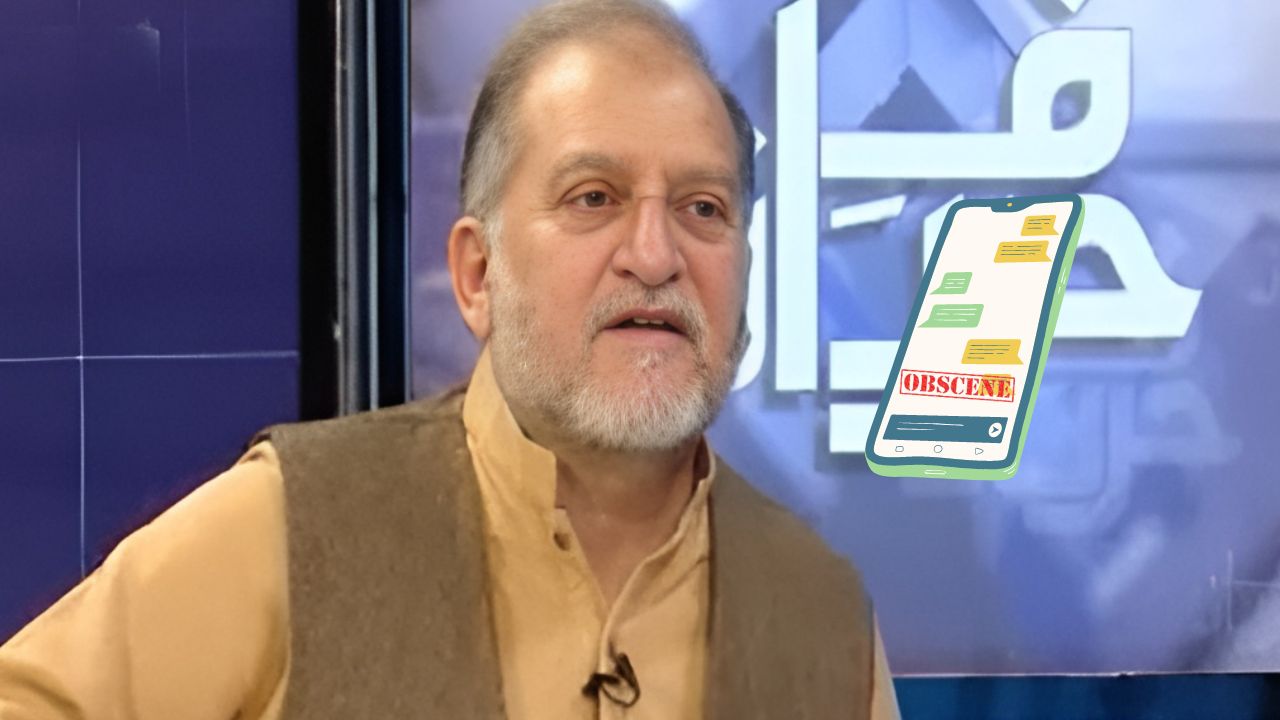
    In a short clip that has gone viral on X (formerly Twitter), journalist Umar Cheema alleged that police have found objectionable material on Orya Maqbool Jan’s mobile phone while in custody.

    YouTuber Orya Maqbool Jan, known for his right-wing religious views, was arrested on August 22 by the FIA’s cybercrime wing in Lahore for alleged hateful social media posts regarding the Mubarak Sani case.

    “Charges brought up against him include sharing of vulgar and nude media in some drinking party where Orya Maqbool Jan is present.”

    He also alleged that the authorities have found evidence that indicates Orya’s team was involved in creating trends against Army Chief Gen Asim Munir.

    Umar opined that the coming days will tell how the case unfolds.

  • Rana Sanaullah wants Mohsin Naqvi to choose between Interior Ministry, PCB

    Rana Sanaullah wants Mohsin Naqvi to choose between Interior Ministry, PCB

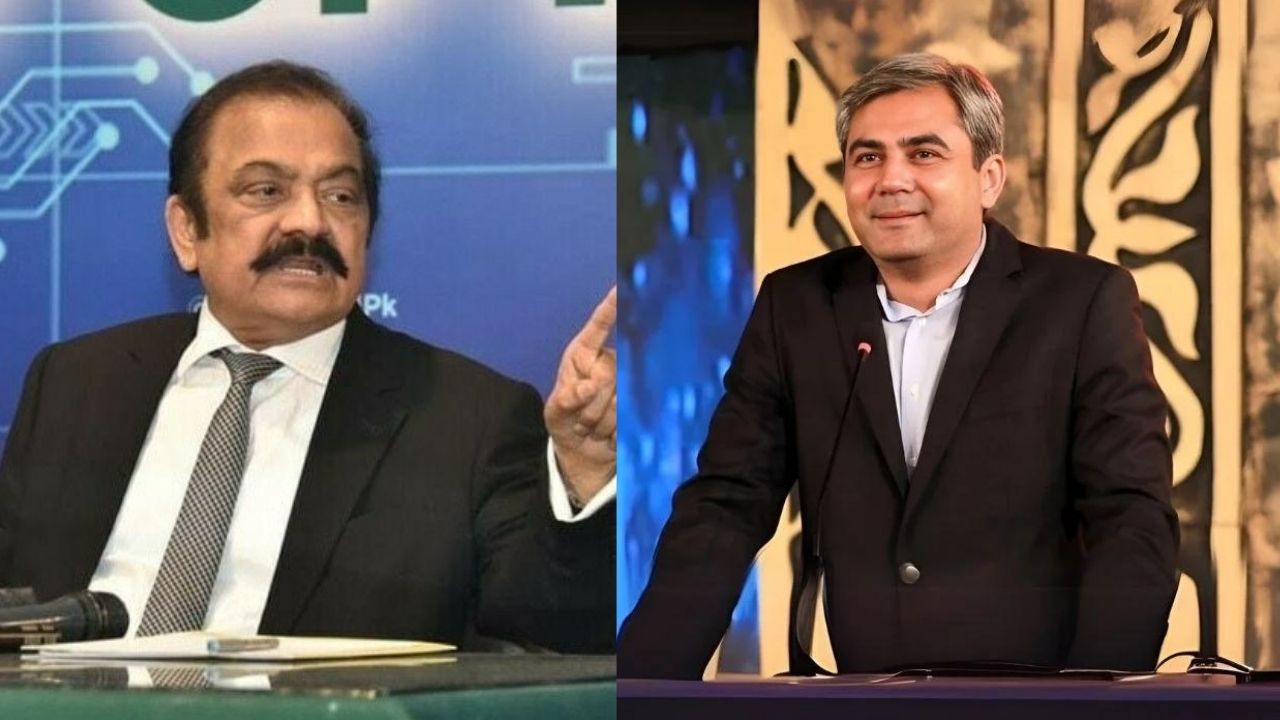
    Federal Minister for Inter-Provincial Coordination (IPC) and Advisor to Prime Minister Rana Sanaullah says that Mohsin Naqvi should choose between the Interior Ministry or Chairman of the Pakistan Cricket Board (PCB).

    In a special interview with ARY News, he said, “The positions of the Ministry of Interior and Chairman PCB are full-time jobs; it is up to him to decide which position he wants to hold.”

    Expressing his helplessness, he said, “The bad condition of sports in Pakistan is because an influential person is sitting on every sports body against merit, and he is also not on merit. Whoever does not get a place, he comes to a good sports body with his strength. They are so strong that I can not take any stand.”

    The Pakistan cricket team is struggling against a team like Bangladesh on their home ground. Many think that this is all because of Mohsin Naqvi, who doesn’t have the ability to run the cricket board.

    In the T20 World Cup 2024, Pakistan faced an early exit from the group stage.

  • How many people are married in Pakistan? Gallup report reveals

    How many people are married in Pakistan? Gallup report reveals

    Gallup Pakistan, an opinion poll agency, has released a new survey on marital status in the country.

    The survey was conducted via telephone from June 28 to July 10, and 755 men and women from all four provinces participated.

    Four out of every five Pakistanis, i.e. 80 per cent, are married, while 20 per cent are unmarried.

    The rate of married Pakistanis is higher among women and the rural population, with the rate of married women being 12 per cent higher than that of men.

    75 per cent of urban and 83 per cent of rural women were identified as married.

    Notably, in the survey, 56 per cent of Pakistanis aged 30 and 96 per cent of Pakistanis above 50 said they were married.

    As for the duration of marriages, 30 per cent have been married for five to 10 years, 17 per cent fall between two to five years, 17 per cent were married for 10 to 15 years, and 13 per cent have been together for more than 25 years of marriage.

  • Where did ‘Chin Tapak Dam Dam’ come from?

    Where did ‘Chin Tapak Dam Dam’ come from?

    If you’ve been scrolling through social media lately, you must be familiar with the phrase ‘Chin Tapak Dam Dam.’ It is being used frequently on Facebook and Instagram especially on reels, memes and videos.


    But where did it come from, and why has it become so popular on social media.Chin Tapak Dam Dam is a catchphrase of Takia, a negative character of the popular Indian cartoon Chhota Bheem. It was used in Chhota Bheem’s old enemies in season 4, episode 47.

    Interestingly, a similar phrase was used by Kishore Kumar in the 1966 film Ladka Ladki. Kishore Kumar can be seen singing the theme song of Chin Tapak Dam Dam.


    Here is the video of the original Chin Tapak Dam Dam:


    Here is the video of Chhota Bheem of Chin Tapak Dam Dam:

  • Pakistan sets 185-run target for Bangladesh in second Test

    Pakistan sets 185-run target for Bangladesh in second Test

    On the fourth day of the second Test match, Pakistan’s batting line failed miserably in the second innings, and the entire team was bowled out at 172 runs. Pakistan set a target of 185 runs, including a 12-run lead in the first innings.

    Pakistan started the fourth day of the second Test in Rawalpindi with a lead of 21 runs, having lost two wickets.

    Abdullah Shafiq scored three runs, Khurram Shahzad and Muhammad Ali both scored zero, Saim Ayub made 20 runs, Shan Masood added 28, and Babar Azam made 11 runs. Saud Shakeel scored 2, Muhammad Rizwan 43, Abrar Ahmed 2, and Salman Ali Agha finished with 47 runs.

    On the third day of play, Pakistani bowlers were overshadowed, sending six players to the pavilion for a total of 26 runs but wicketkeeper-batsman Liton Das’s 138 and Mehdi Hasan’s 78 led the team to a total score of 262 runs.

    These two batsmen put on a partnership of 165 runs for the seventh wicket. Khurram Shahzad took six wickets for Pakistan, while Mir Hamza and Salman Ali Agha took two each.

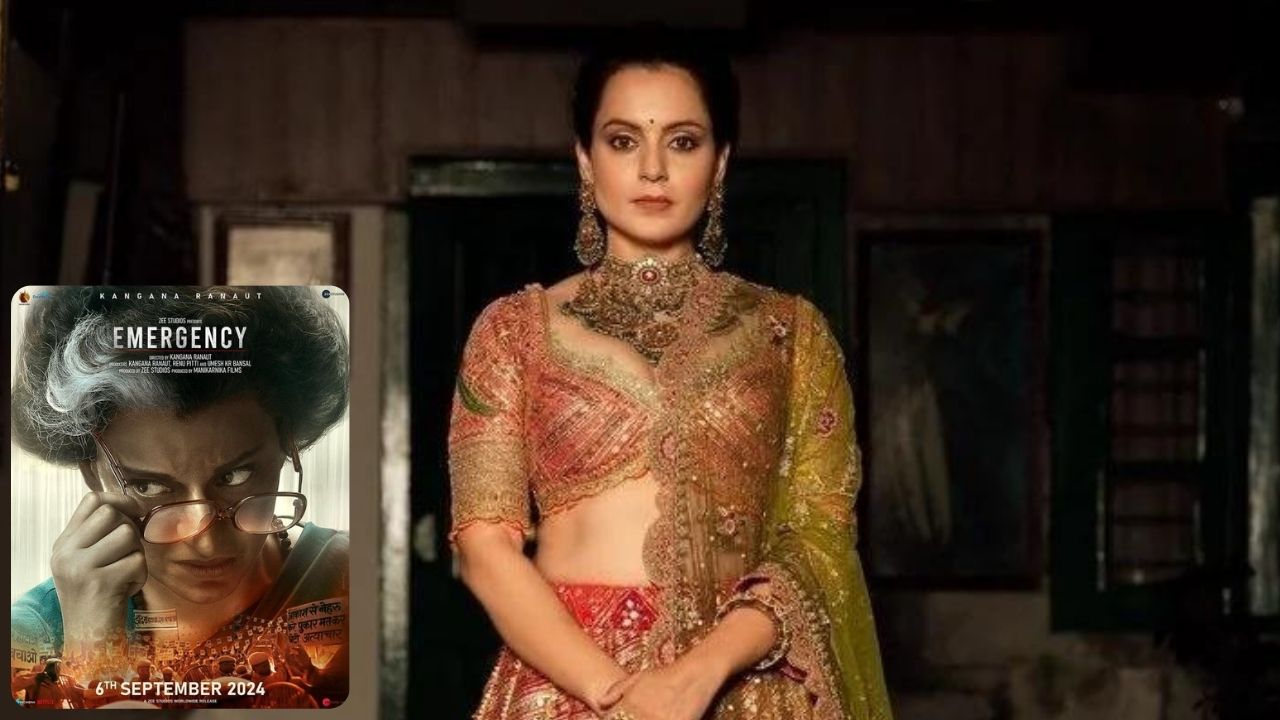
  • Kangana Ranaut’s controversial Bollywood film ‘Emergency’ postponed

    Kangana Ranaut’s controversial Bollywood film ‘Emergency’ postponed

    Bollywood actress and politician Kangana Ranaut’s controversial film ‘Emergency’ has been delayed after the Indian Censor Board refused to give it a green signal.

    According to media reports, the film’s negative portrayal of the Sikh community, has led to the postponement of the film’s release.

    The trailer of the film created a sensation all over Punjab as soon as it was released. The Censor Board has directed that the controversial scenes of the film be deleted, considering the sentiments of the Sikh community.

    The decision of the board has come after a legal notice by the Sikh political party Shiromani Akali Dal, asking for the film’s release to be stopped due to fear of communal riots and spread misinformation.

    The movie was expected to hit theatres on September 6.

  • ‘Shadi key bad bhi boyfriend se salam dua hai’; Mariyam Nafees on relationship boundaries

    ‘Shadi key bad bhi boyfriend se salam dua hai’; Mariyam Nafees on relationship boundaries

    Famous actress Maryam Nafees has revealed that she is still in touch with her ex-boyfriend, and her husband is aware of this.

    She was recently invited to a podcast where the host asked Maryam, “If a girl follows you, what advice would you give these girls for a good marital relationship?”

    She responded, “Girls should tell their husbands everything, but it should not be about meeting ex-boyfriends. Every relationship has certain boundaries that both should follow. I also tell my husband everything.”

    She gave her example to explain this and said, “I am still in touch with my ex-boyfriend, even though we are no longer related, but I am very close to my ex-boyfriend’s family. His sister is still my best friend, and my husband knows this too; he has no objection to it either.”

    Maryam married Aman Ahmed in 2021.

  • She’s still beautiful’: Waseem Abbas defends Mahira Khan

    She’s still beautiful’: Waseem Abbas defends Mahira Khan


    Veteran actor Waseem Abbas has spoken up against recent controversial remarks by fellow actor Firdous Jamal over co-stars Humayun Saeed and Mahira Khan. Abbas was invited as a guest on ZAH Entertainment’s YouTube show. He sent out a straightforward message that age should not be considered when judging the capabilities of an actor.
     
    Host Zaheer Ahmed asked him, “An artist sarcastically remarked about Mahira Khan, saying that even a bad mother is still considered a mother, and similarly, he criticized Humayun Saeed, implying that even though everyone engages in criticism, it should be done within limits. What does Sir have to say about this?”
     
     
    Waseem Abbas replied, “What can I say about this, I think we have no right to talk about someone’s age. I don’t care about anyone’s age, Mahira Khan is still beautiful. She was last seen on screen in ‘Maula Jatt’ and we should accept that she looks very beautiful in the film.”
     
    “As seniors, we should be very careful while sharing our opinion about our co-stars. Any actor’s performance can be criticized, but it is not appropriate to discuss his age,” Abbas added.
     
    Waseem pointed out that Jamal criticized Humayun Saeed in the same way, saying, “He is not Marlon Brando.”

    Read more:Firdous Jamal stands by controversial remarks on Mahira Khan’s looks

    Calling Humayun Saeed a huge star with a massive fan base, Waseem said, “He is Pakistan’s own Marlon Brando.”
     
    Waseem highlighted the older Bollywood stars as proof that age doesn’t matter, saying, “Just look at Bollywood, Shah Rukh Khan and Salman Khan are still considered heroes and are still going strong. People love them, and their films are doing extremely well at the box office. When they are raking in box-office profits, what else could you want.”