The Netherlands and Turkey reached the quarter-finals of the Euro Cup. The Netherlands beating Romania 3-0 while Turkey defeated Australia by 2-1.
The pre-quarterfinals in Munich witnessed an exhilarating first half between the Netherlands and Romania, adding to the thrill of the Euro Cup.
In the 20th minute of the match, Kody Gepko scored to give the Netherlands the lead; Romana could not equalize until the break. In the second half, Romania played better, but in the 83rd minute, Daniel Malin scored the second goal for the Netherlands to secure the victory for his team.
Daniel scored his second and possibly third goal in injury time to send the Netherlands into the quarter-finals.
In the second match, Turkey beat Austria by one goal to two. The line-up of eight teams for the quarter-finals of the Euro Cup has been completed.
It should be noted that England, France, Germany, Netherlands, Portugal, Spain, Switzerland and Turkey are among the top eight teams.
Apple is reportedly testing advanced CMOS image sensors (CIS) from Samsung, which could feature in the iPhone 16 later this year. According to The Elec, Apple is conducting a final quality assessment of these sensors, provided by Samsung System LSI, the logic business unit of Samsung.
Traditionally, Apple has relied exclusively on Sony for its CIS needs. However, recent developments suggest a strategic shift away from the Japanese supplier due to concerns about reliability and the desire to integrate new technologies into its camera systems.
This change in direction comes after Apple encountered issues with Sony last year. In response, Apple asked Samsung to develop new image sensors in 2023 when Sony failed to deliver in a timely manner, complicating the launch schedule for the iPhone 15.
If Samsung successfully passes the current quality tests, it will mark the first time the company supplies CIS for an iPhone. The new sensors from Samsung boast a more advanced three-wafer stack design, compared to the two-stack design used in current and previous iPhone models. These three wafers separately house the photodiode, transistors, and analog digital converter logics, which allows for higher pixel density, reduced noise, and smaller pixel sizes.
In a CIS, the photodiode converts light into electrical signals, while four transistors are responsible for transferring, amplifying, reading, and erasing these signals. The separation of these components into three wafers enhances the sensor’s performance.
Additionally, the new technology uses wafer-to-wafer hybrid bonding, which directly attaches the wafers through a copper pad, eliminating the need for signal-transferring bumps. This results in a smaller CIS with faster data transfer speeds.
The iPhone 16 lineup is expected to be announced in the autumn, featuring new camera capabilities, including a dedicated “Capture” button and a 48-megapixel Ultra Wide camera.
Pakistan International Airlines (PIA) and other airlines operating in Pakistan have announced a significant increase in the federal excise duty (FED) on international flight tickets, following the federal government’s decision in the 2024-25 budget.
According to the latest notification, the FED on economy and economy plus tickets has surged by 150 per cent. Previously, passengers paid Rs5,000 in FED for economy class tickets, but this has now increased to Rs12,500.
For premium travellers, the increase is even more substantial. Passengers travelling to the USA in Club Class, who previously paid Rs250,000 in FED, will now be charged Rs350,000. Similarly, the duty for flights to destinations in Africa and the Middle East has risen from Rs75,000 to Rs105,000.
Travellers to European cities will see their FED increase from Rs150,000 to Rs210,000. The duty on tickets for flights to Australia, New Zealand, and countries in the Far East has also risen by 40 per cent, now standing at Rs210,000.
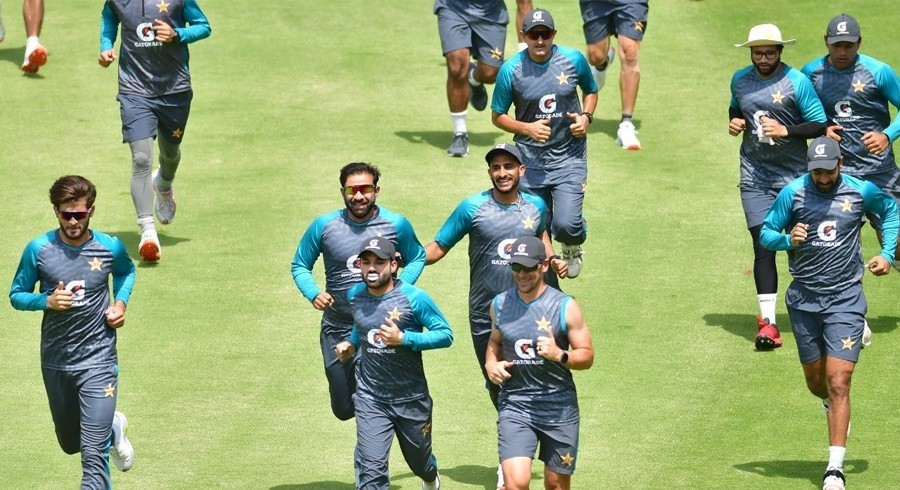
The Yo-Yo test is back!Any cricketer who fails the infamous difficult fitness test will be dropped from national and regional teams.
Director Domestic Khurram Niazi has approved a plan to improve player fitness levels.
According to the plan, the fitness test will be conducted in two phases. The first phase will be conducted across the country from July 11, first at the district level and then at the regional level.
Chairman Pakistan Cricket Board (PCB) Mohsin Naqvi has approved the fitness mission.
The Director Domestic has made team selection subject to fitness tests, including regional contracts. After that, test cricketers, international cricketers, and national cricketers will have to pass all fitness tests, including the Yo-Yo test.
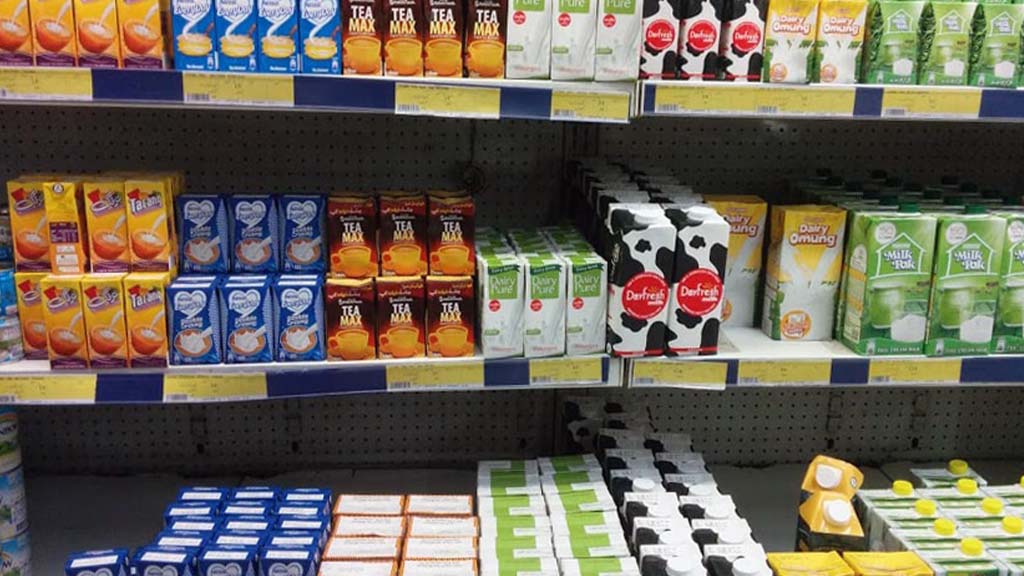
The cost of packaged milk has surged dramatically, with prices soaring by Rs75 per liter or 25 per cent as the federal government’s pro-IMF budget took full effect on July 1st.
Effective immediately, consumers are now paying Rs370 per litre, up from Rs295 in the previous fiscal year. This increase is primarily driven by an 18 per cent sales tax and an additional 2.5 per cent tax on retailers, according to reports.
In response to these economic pressures, a leading dairy company has announced a price adjustment for its milk products starting July 1, 2024.
Citing escalating production costs and broader economic influences impacting the dairy sector, the company emphasised the necessity of this adjustment in its latest advertising campaign.
The price hikes extend beyond this company, as other vendors have similarly adjusted their rates to reflect the new taxation policies outlined in the Finance Bill 2024. These measures include the imposition of an 18 per cent sales tax and a 2.5 per cent tax on retailers, collectively aimed at augmenting government revenue.
Notably, the government has proposed an 18 per cent tax on infant milk products priced not exceeding Rs600 per 200g, anticipating a substantial revenue impact of approximately Rs95 billion. This figure includes Rs75 billion from standard milk sales and an additional Rs20 billion from infant milk products.
Addressing concerns over the impact of these increases, Finance Minister Muhammad Aurangzeb reassured the public during a post-budget briefing on June 13 that the middle class should not face undue hardship in meeting the new tax obligations on milk products.
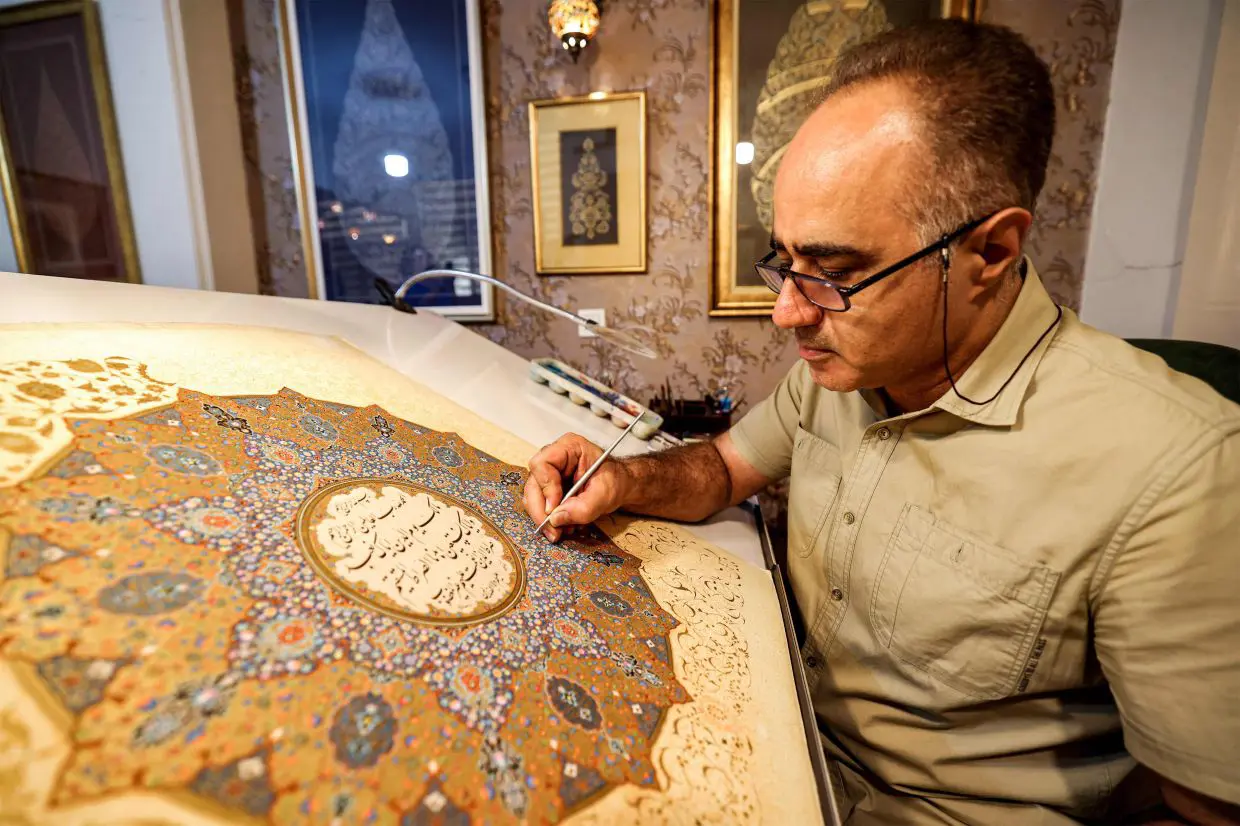
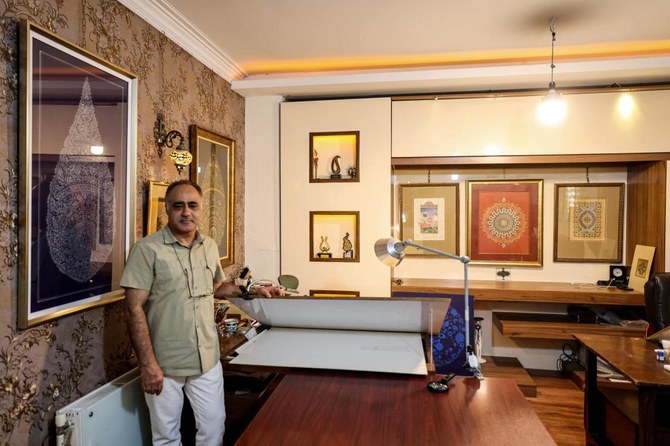
Iranian artist Mohammad Hossein Aghamiri sometimes labours for six months on a single design, very carefully — he knows a single crooked line could ruin his entire artwork.
In the age of AI-assisted graphic design on computer screens, the centuries-old tradition of Persian illumination offers an antidote to rushing the creative process.
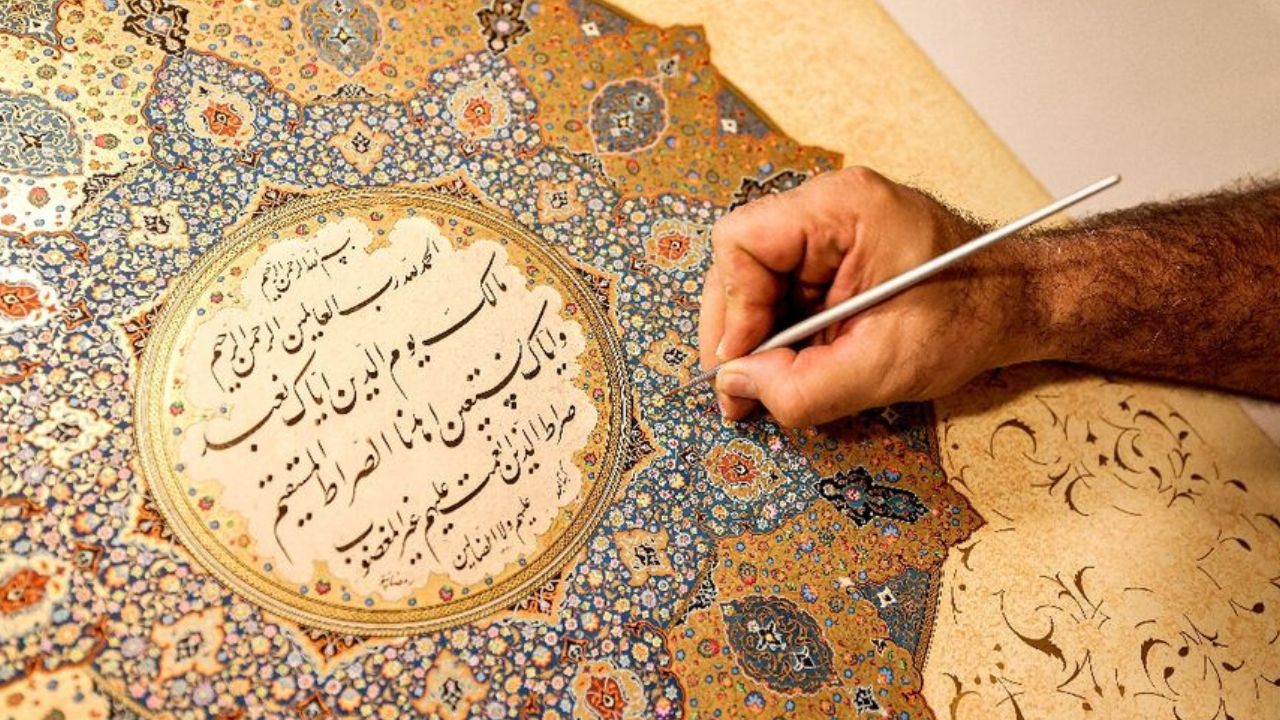
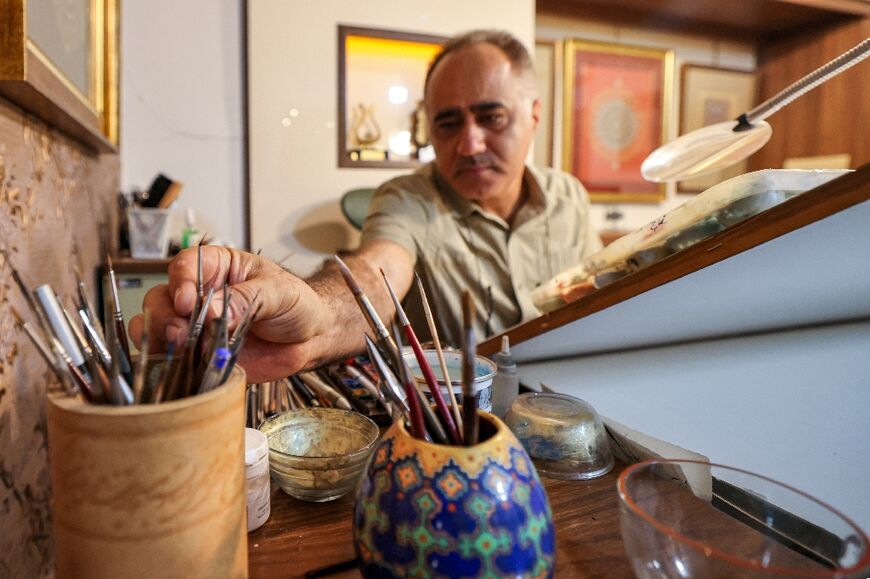
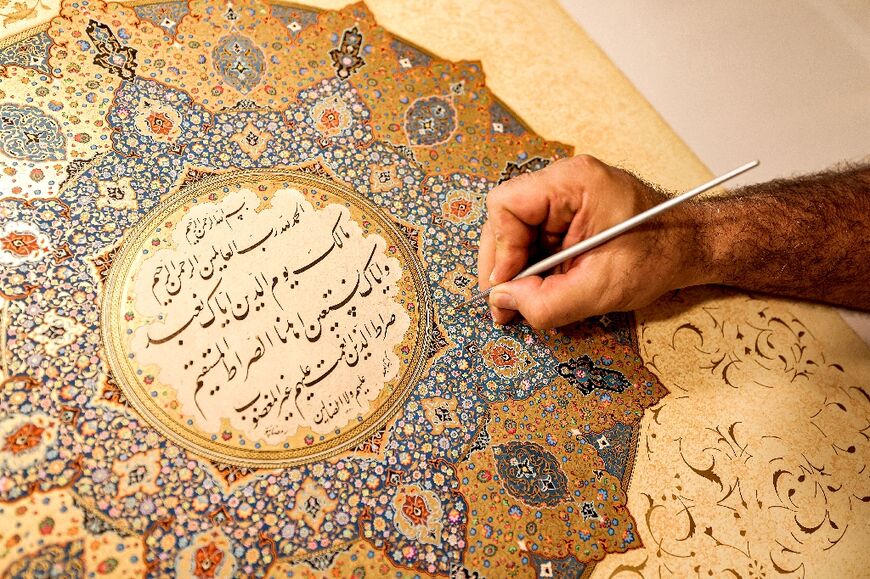
Aghamiri’s fine brush moves natural pigments onto the paper with deliberate precision as he creates intricate floral patterns, religious motifs and elegantly flowing calligraphy.
The exquisite artwork has for centuries embellished literary manuscripts, religious texts and royal edicts as well as many business contracts and marriage certificates.
Aghamiri, 51, is one of Iran’s dozen or so remaining masters of the ancient illumination art of Tazhib, which was inscribed last year on UNESCO’s list of intangible heritage.
“It is a very unique job that requires a lot of patience and precision,” Aghamiri, a veteran of the craft with over 30 years’ experience, told AFP in his downtown Tehran studio.
“It’s not accessible to everyone.”
Tazhib’s non-figurative and geometric flourishes have traditionally adorned the margins of holy books and epic poems.
The artform dates back to the Sassanid era in pre-Islamic Iran but flourished after the seventh century advent of Islam, which banned human depictions.
Aghamiri says it often takes him months to finish one design and that a single misplaced stroke that disrupts its symmetrical harmony can force him to start over.
– Global workshops online –
When AFP visited, he was working on a so-called shamsa design, a symbolic representation of the sun, about 50 centimetres across with intertwined abstract, geometric and floral patterns.
He said he started the piece over four months ago and aimed to finish it within six weeks, using natural pigments such as lapis lazuli, saffron, gouache and pure gold, from China.
“Gold has a very strong visual appeal,” said Aghamiri. “It’s expensive and it enhances the perceived value of the work.”
Aghamiri hails from a family of artists and artisans with a rich history in Iranian craft traditions including calligraphy, miniature painting and carpet design.
His work has been showcased in museums in Iran and in nearby Arab countries of the Gulf region where interest in Oriental and Islamic art continues to grow.
“Eighty percent of my works are sold in the region, especially in the Emirates and Qatar” as well as in Turkey, he said.
In recent years, Aghamiri garnered interest abroad and even began teaching the ancient art online to students from across the world, notably the United States.
Soon, he also hopes to hold workshops in Britain for his craft, which he says is fundamentally different from European illumination art, which flourished in the Middle Ages.
European designs, he said, are more figurative and can depict human faces, animals and landscapes, and often illustrate biblical scenes.
UNESCO labelled the Persian art of illumination as part of the Intangible Cultural Heritage of Humanity in December 2023, at the request of Iran as well as Turkey, Azerbaijan and Uzbekistan.
“Twenty years ago, I didn’t have much hope” for the future of Persian illumination, said Aghamiri. “But things have changed, and I see that this art is becoming more and more popular.”
Imported products used in make-up, skin and hair care have come under regulatory duty, after which these products have become more expensive by upto 55 percent, reports Geo.
Budget for the year 2024-25 has imposed heavy taxes on imported milk, fruits, honey, apples, cherries, figs, mangoes making them 20 to 45 percent more expensive while the government increased regulatory duty from 5 to 55 percent on several other products.
Apples and lychees 45 percent, imported cherries and frozen fish 35 percent, corn and natural honey 30 percent, imported milk, milk cream, dates, figs, pineapples, guavas and pomegranates are also subject to 25 percent regulatory duty. Curd, butter and fruits also became expensive after the implementation of 20 percent regulatory duty.
50 percent regulatory duty has been imposed on imported shaving cream and soap, 45 percent on imported jewelry, 10 percent on imported overcoats, caps, jackets, trousers, skirts and shorts for men and women.
Regulatory duties on waterproof leather shoes, wash basins, bathtubs and imported commodes have also been increased.
Sometimes, love finds you in the most unexpected places. On the set of the Bollywood movie ‘Dear Maya’, a special connection formed between two individuals. Madiha Imam recently shared how she met her husband, Moji Basar, while working on the film. Moji, who comes from northern India, is both a filmmaker and an MMA trainer. The film set the stage for their love story, making Madiha’s journey in the film industry even more special.
“My husband is from India, from the Northern part, and he’s a filmmaker as well as an MMA trainer. He has worked on various projects in Bollywood, and we first met during the making of my Bollywood film, Dear Maya,” she narrated.
While discussing her new family, Madiha said, “My in-laws have a unique culture that surprised me with their customs. I loved how they welcomed me into the family. The whole area is very tribal, and the entire tribe came down to welcome me when Moji took me for the reception.” Madiha, the star of ‘Bayhadh’ and ‘Dil Manay Na’, married Moji Basar on May 1, 2023. She posted pictures of the wedding with the caption, “Married 1-5-2023, remember us in your prayers as we embark on this new chapter of our lives.”
After the recent statement by United Nations working group on arbitrary detention calling the detention of Pakistan Tehreek-e-Insaf (PTI) founder Imran Khan in violation of international law, the US State Department has asked Pakistan to respect people’s fundamental human rights.
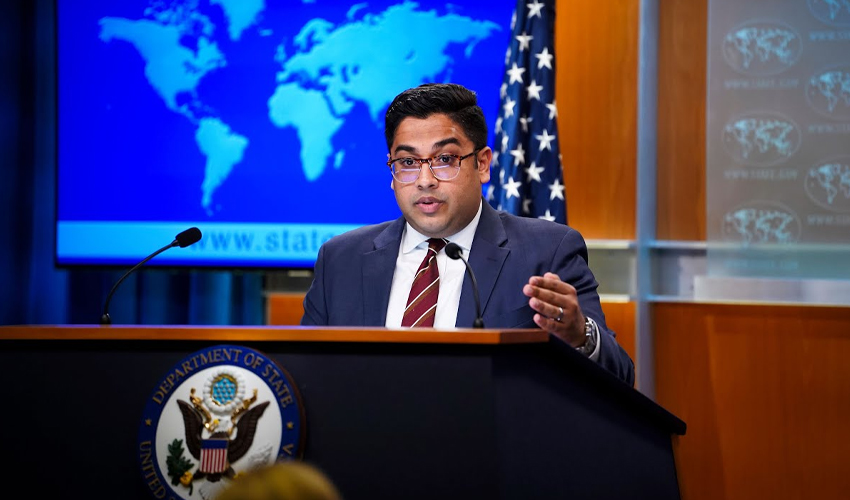
Addressing a press briefing on Monday, Principal Deputy Spokesperson Vedant Patel said that US officials have consistently and privately and publicly urged Pakistani authorities to respect the rights of its people in line with its constitution and international commitments.
A journalist asked Patel a question regarding the resolution passed by the US House of Representatives seeking an investigation into the February 8 elections but the spokesperson refused to comment on it.
“We urge the Government of Pakistan to respect human rights and fundamental freedoms, including the freedom of expression, freedom of association, peaceful assembly, and the freedom of religion as well,” he said.
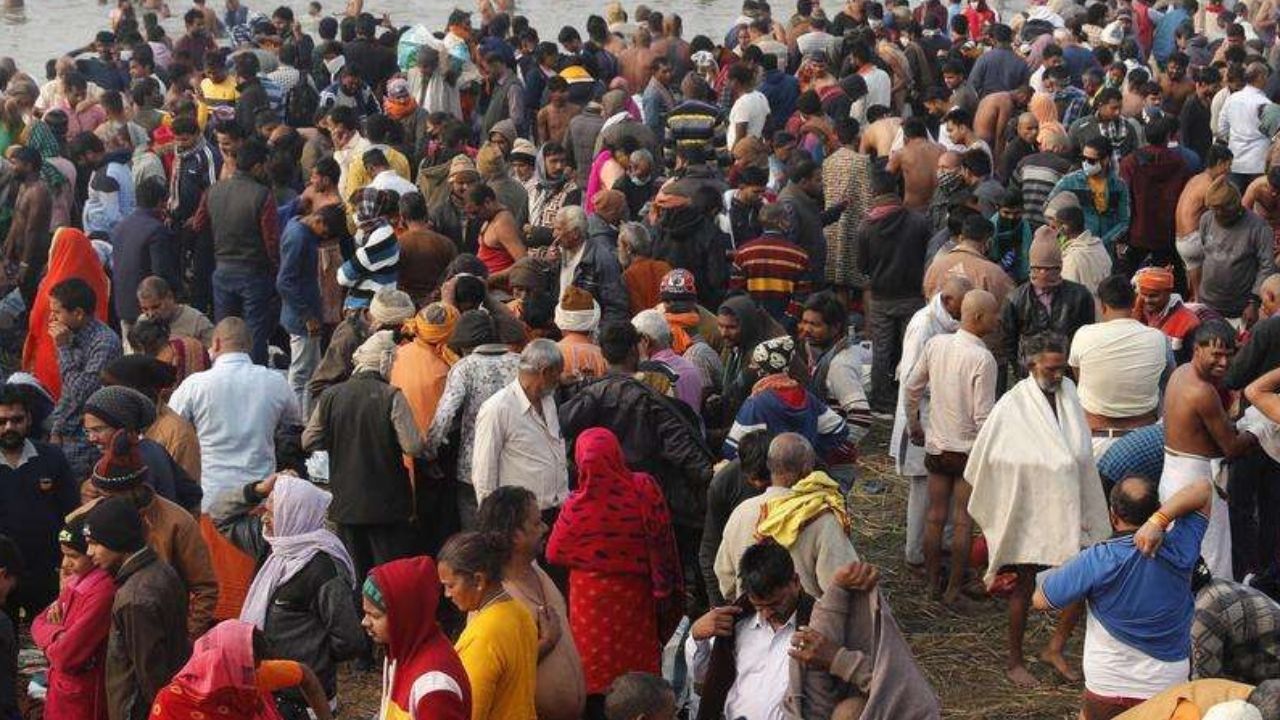
At least 27 people were crushed to death at a Hindu religious gathering in northern India, with several more injured and fears the toll could rise, government medics said Tuesday.
“We have received 27 bodies so far… bodies are still coming,” Uttar Pradesh state senior medical officer Ram Mohan Tiwari told AFP.
Crowds had gathered to celebrate the Hindu deity Shiva in the city of Hathras, some 140 kilometres (87 miles) southeast of New Delhi.
Umesh Kumar Tripathi, chief medical officer, told reporters the dead were 25 women and two men.
“Many injured have also been admitted,” Tripathi said. “The primary reason is a stampede during a religious event.”
Deadly accidents are common at places of worship in India during major religious festivals.
At least 112 people were killed in 2016 after a huge explosion caused by a banned fireworks display at a temple marking the Hindu new year.
The blast ripped through concrete buildings and ignited a fire at a temple complex in Kerala state, where thousands had gathered.
Another 115 devotees died in 2013 after a stampede at a bridge near a temple in Madhya Pradesh.
Up to 400,000 people were gathered in the area, and the stampede occurred after a rumour spread that the bridge was about to collapse.
About 224 pilgrims died and more than 400 others were injured in a 2008 stampede at a hilltop temple in the northern city of Jodhpur.