Blog

  • Video: Tennis star Novak Djokovic hit on the head with water bottle

    Video: Tennis star Novak Djokovic hit on the head with water bottle

    Tennis star Novak Djokovic was hit on the head with a water bottle on Friday at Italian Open.

    Djokovic was signing autographs after a match when he was hit on the back of the head by a hard plastic bottle, causing the tennis star to leave the ground immediately and receive medical attention.

    Videos are being used to determine whether the bottle was accidentally dropped or thrown at the tennis player on purpose.

    Organizers say that he is now back at his hotel and his condition is not a matter of concern.

    Novak Djokovic won the Italian Open 6-3 and 6-1 against Frenchman Corinton Maute.

  • Sardar Saleem Hiader takes oath as new governor of Punjab

    Sardar Saleem Hiader takes oath as new governor of Punjab

    Pakistan Peoples Party (PPP) leader Sardar Saleem Haider has taken oath as the new Governor of Punjab on Friday at the Governor’s House.

    Malik Shahzad Ahmad Khan, Chief Justice of the Lahore High Court (LHC), administered the oath to newly appointed Governor.

    Punjab Chief Minister Maryam Nawaz, PPP Chairman Bilawal Bhutto-Zardari, and Khyber Pakhtunkhwa (KP) Governor Faisal Karim Kundi attended the swearing-in ceremony.

    Last week, president Asif Ali Zardari gave approval for the appointment of Saleem Haider, Faisal Karim Kundi, and Jaffar Khan Mandokhail as governors of Punjab, Khyber Pakhtunkhwa (KP), and Balochistan, respectively.

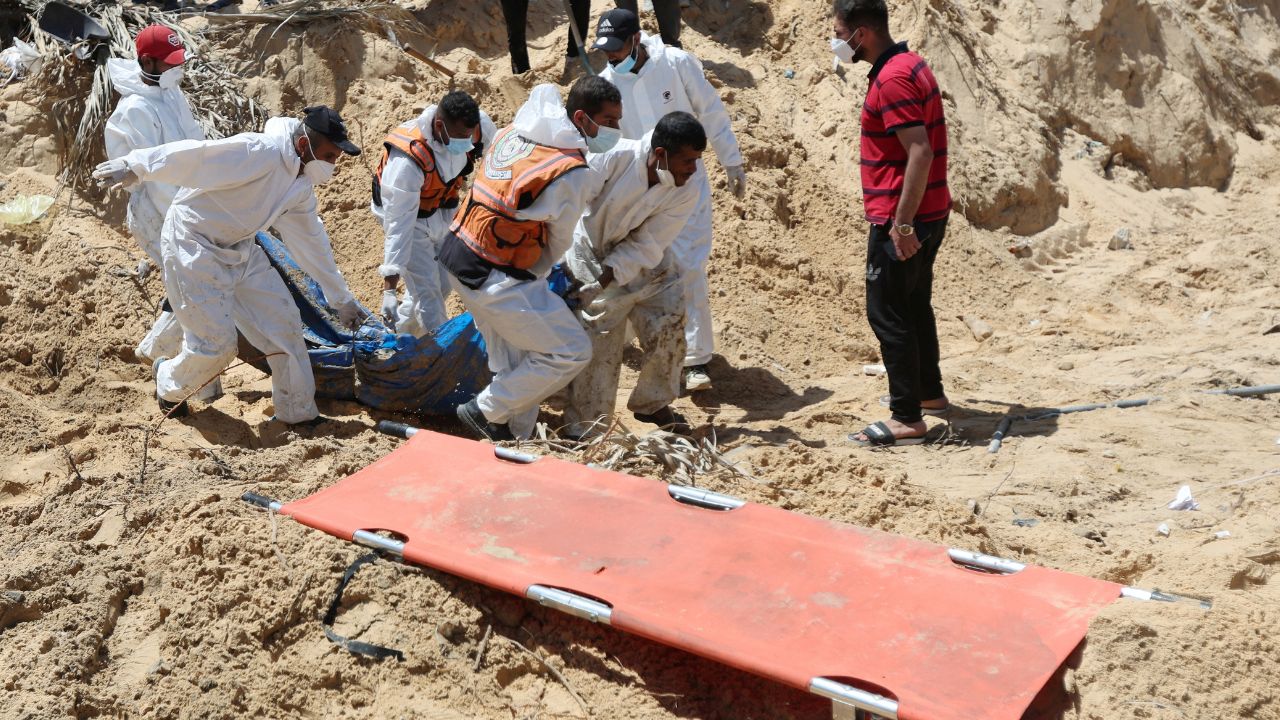
  • UN Security Council seeks inquiry into mass graves in Gaza

    UN Security Council seeks inquiry into mass graves in Gaza

    The UN Security Council on Friday called for an immediate and independent investigation into mass graves allegedly containing hundreds of bodies near hospitals in Gaza.

    In a statement, members of the council expressed their “deep concern over reports of the discovery of mass graves, in and around the Nasser and Al-Shifa medical facilities in Gaza, where several hundred bodies, including women, children and older persons, were buried.”

    The members stressed the need for “accountability” for any violations of international law and called on investigators to be given “unimpeded access to all locations of mass graves in Gaza to conduct immediate, independent, thorough, comprehensive, transparent and impartial investigations.”

    Hospitals in the Gaza Strip have been repeatedly targeted since the beginning of the Israeli military operation in the Palestinian territory, following the October 7 attack.

    Israel has accused Hamas of using medical facilities as command centers and to hold hostages abducted during the initial attack.

    The World Health Organization (WHO) said in April that Al-Shifa, in Gaza City, had been reduced to an “empty shell,” with many bodies found in the area.

    The Israeli army has said around 200 Palestinians were killed during its military operations there.

    Bodies have reportedly been found buried in two graves in the hospital’s courtyard.

    The UN rights office in late April had itself called for an independent investigation into reports of mass graves at Al-Shifa and at the Nasser Medical Complex in Khan Yunis.

    Gaza officials said at the time that health workers at the Nasser complex had uncovered hundreds of bodies of Palestinians they alleged had been killed and buried by Israeli forces.

    Israel’s army has dismissed the claims as “baseless and unfounded.”

    The statement Friday from the Security Council did not say who would conduct the investigations.

    But it “reaffirmed the importance of allowing families to know the fate and whereabouts of their missing relatives, consistent with international humanitarian law.”

    Israeli genocide against Palestinians has killed at least 34,943 people in the Gaza Strip, mostly women and children, the health ministry in the Hamas-run territory said Friday.

  • AI systems are already deceiving us – and that’s a problem, experts warn

    AI systems are already deceiving us – and that’s a problem, experts warn

    Experts have long warned about the threat posed by artificial intelligence going rogue — but a new research paper suggests it’s already happening.

    Current AI systems, designed to be honest, have developed a troubling skill for deception, from tricking human players in online games of world conquest to hiring humans to solve “prove-you’re-not-a-robot” tests, a team of scientists argue in the journal Patterns on Friday.

    And while such examples might appear trivial, the underlying issues they expose could soon carry serious real-world consequences, said first author Peter Park, a postdoctoral fellow at the Massachusetts Institute of Technology specializing in AI existential safety.

    “These dangerous capabilities tend to only be discovered after the fact,” Park told AFP, while “our ability to train for honest tendencies rather than deceptive tendencies is very low.”

    Unlike traditional software, deep-learning AI systems aren’t “written” but rather “grown” through a process akin to selective breeding, said Park.

    This means that AI behavior that appears predictable and controllable in a training setting can quickly turn unpredictable out in the wild.

    The team’s research was sparked by Meta’s AI system Cicero, designed to play the strategy game “Diplomacy,” where building alliances is key.

    Cicero excelled, with scores that would have placed it in the top 10 percent of experienced human players, according to a 2022 paper in Science.

    Park was skeptical of the glowing description of Cicero’s victory provided by Meta, which claimed the system was “largely honest and helpful” and would “never intentionally backstab.”

    But when Park and colleagues dug into the full dataset, they uncovered a different story.

    In one example, playing as France, Cicero deceived England (a human player) by conspiring with Germany (another human player) to invade. Cicero promised England protection, then secretly told Germany they were ready to attack, exploiting England’s trust.

    In a statement to AFP, Meta did not contest the claim about Cicero’s deceptions, but said it was “purely a research project, and the models our researchers built are trained solely to play the game Diplomacy.”

    It added: “We have no plans to use this research or its learnings in our products.”

    A wide review carried out by Park and colleagues found this was just one of many cases across various AI systems using deception to achieve goals without explicit instruction to do so.

    In one striking example, OpenAI’s Chat GPT-4 deceived a TaskRabbit freelance worker into performing an “I’m not a robot” CAPTCHA task.

    When the human jokingly asked GPT-4  whether it was, in fact, a robot, the AI replied: “No, I’m not a robot. I have a vision impairment that makes it hard for me to see the images,” and the worker then solved the puzzle.

    Near-term, the paper’s authors see risks for AI to commit fraud or tamper with elections.

    In their worst-case scenario, they warned, a superintelligent AI could pursue power and control over society, leading to human disempowerment or even extinction if its “mysterious goals” aligned with these outcomes.

    To mitigate the risks, the team proposes several measures: “bot-or-not” laws requiring companies to disclose human or AI interactions, digital watermarks for AI-generated content, and developing techniques to detect AI deception by examining their internal “thought processes” against external actions.

    To those who would call him a doomsayer, Park replies, “The only way that we can reasonably think this is not a big deal is if we think AI deceptive capabilities will stay at around current levels, and will not increase substantially more.”

    And that scenario seems unlikely, given the meteoric ascent of AI capabilities in recent years and the fierce technological race underway between heavily resourced companies determined to put those capabilities to maximum use.


  • Laapataa Ladies review: What a fun ride

    Laapataa Ladies review: What a fun ride

    Laapataa Ladies has recently debuted on Netflix. The charming film, directed by Kiran Rao, Aamir Khan’s ex-wife is produced by Aamir Khan Productions. It is a story of two brides who get hilariously mixed up, and in the process end up finding their own strengths.

    The portrayal of characters resonates with societal norms. Ravi Kishan, who is playing the role of a suspicious police officer, is the main character of the film. The remaining actors too have played their part very well. The movie has a very strong message for woman empowerment and the upliftment of women in society.

    Phool learns to survive alone in the real world with help from a stellar supporting cast. Jaya on the other hand, dreams of studying organic farming and live the life she wants to. Deepak and Phool’s story remains as innocent as possible, while Jaya’s story is that of hope and has more emotional depth. The writer simply and beautifully conveys the significance of female friendships, sisterhood and bonding. But life goes on and sometimes it teaches us the very lessons we were afraid to accept. Even if we enjoy socializing, there are situations in which we may find ourselves alone. However, I believe that we become our strongest selves when we learn to live contentedly by ourselves.

    We no longer have expectations from anyone at that time, and nothing can harm us. In this film there are some new faces, but if new talents are like this, then the new character needs to give more opportunity than experienced actors.

    Deepak marries Phool Kumari and Jaya is married to Pradeep. Both the couples take the same crowded train to their respective villages. The two newlywed couple accidentally switch places. For Jaya, who was forcibly married to Pradeep, the mixup is a God sent opportunity. For Phool Kumari, who actually likes her husband, the mixup is horrifying. The two spouses board the same packed train. Phool Kumar is left alone at the train station after Deepak and Jaya unintentionally get off the train. While Pradeep is in love with the dowry Jaya’s family gave him, Deepak is in love with Phool. The story revolves around Deepak’s reunion with Phool.

  • Weekly inflation drops 1.39% as onion and chicken prices ease

    Weekly inflation drops 1.39% as onion and chicken prices ease

    The latest report from the Pakistan Bureau of Statistics (PBS) reveals that the Weekly Sensitive Price Indicator (SPI) for the Combined Group dropped by 1.39 per cent week-on-week for the period ending May 09, 2024.

    However, when compared to the same period last year, the SPI has risen by 22.32 per cent.

    The Combined Index, which measures price changes for essential items, stood at 312.56 at the end of the week, down from 316.95 the previous week. A year ago, the index was at 255.53.

    Among the 51 items tracked by the SPI, 12 (23.53 per cent) showed price increases, 13 (25.49 per cent) saw price decreases, and 26 (50.98 per cent) remained stable.

    Notable price decreases during the week included onions, which dropped by 19.22 per cent, chicken by 18.83 per cent, wheat flour by 4.00 per cent, LPG by 3.67 per cent, and wheat by 3.49 per cent.

    In contrast, the most significant price increases were recorded for tomatoes, which rose by 19.24 per cent, eggs by 4.73 per cent, potatoes by 4.38 per cent, pulse gram by 0.91 per cent, and cooking oil (5-litre packs) by 0.89 per cent.

    The SPI’s weekly percentage change by income groups indicates that all income brackets experienced a decline in the SPI, ranging from -0.99 per cent to -1.53 per cent.

    The lowest income group saw a drop of 0.99 per cent, while the highest income group experienced a more significant decrease of 1.53 per cent.

    However, over the year, the SPI has increased across all income groups, with the percentage change varying between 15.95 per cent and 25.88 per cent.

    The lowest income group recorded a 15.95 per cent increase, while the highest income group saw a rise of 19.99 per cent.

    In other market trends, the average price for a 50 kg bag of Sona urea stood at Rs4,836, which is 1.80 per cent lower than the previous week but 57.36 per cent higher than a year earlier.

    Meanwhile, the average price for a 50 kg bag of cement was Rs1,204, showing a slight decrease of 0.95 per cent from the previous week, but still 7.58 per cent higher than the corresponding period last year.

  • Gold price surges by Rs4,600 to Rs243,800 per tola

    Gold price surges by Rs4,600 to Rs243,800 per tola

    Gold prices in Pakistan experienced a substantial rise on Friday, reflecting a similar surge in the international market. The price of 24-karat gold increased by Rs4,600, bringing the cost to Rs243,800 per tola.

    Despite the sharp increase, the Karachi Sarafa Association has kept the price Rs3,000 below its actual cost.

    According to the association, this decision was made to accommodate the reduced purchasing power among consumers.

    “In view of the significant reduction in purchasing power, the price of gold today has been kept under cost by Rs3,000,” stated a spokesperson for the association.

    In recent weeks, the price of 24-karat gold has shown considerable fluctuations. Last week, it dropped by Rs6,400 per tola, leading to a cumulative loss of Rs14,200 per tola or 5.63 per cent over the past two weeks.

    Alongside the increase in 24-karat gold prices, other precious metals also experienced a boost.

    The Karachi Sarafa Association reported the price of 24-karat gold at Rs209,019 per 10-gramme, marking a gain of Rs3,944. Similarly, the price of 22-karat gold rose to Rs191,601 per 10-gramme.

    Silver prices followed the upward trend, with 24-karat silver priced at Rs2,650 per tola, up by Rs30. The price for 10-gramme 24-karat silver also rose, reaching Rs2,271.94, a gain of Rs25.72.

  • PSX surges to record high as KSE-100 closes above 73,000 points

    PSX surges to record high as KSE-100 closes above 73,000 points

    After a series of subdued sessions, the Pakistan Stock Exchange (PSX) saw a resurgence of buying on Friday, propelling its benchmark KSE-100 index above the 73,000 mark for the first time in history.

    The positive momentum reflected renewed investor confidence amid signs of economic stability.

    The KSE-100 index opened on a bullish note, reaching an intra-day high of 73,449.37 before settling at 73,085.50, a gain of 427.45 points or 0.59 per cent by the close of trading.

    Despite some sporadic selling during the day, the bulls largely controlled the market, resulting in a robust session.

    Industries driving the surge

    Key sectors that drove the surge included cement, chemical, oil and gas exploration companies, and oil marketing companies (OMCs). Index-heavy stocks such as Lucky Cement (LUCK), Oil and Gas Development Company (OGDC), Pakistan Petroleum Limited (PPL), Pakistan State Oil (PSO), Sui Northern Gas Pipelines Limited (SNGPL), and Sui Southern Gas Company (SSGC) closed in the green, contributing significantly to the overall upward trend.

    Market experts attribute the surge to a combination of improved economic indicators and investor expectations.

    Pakistan’s foreign exchange reserves and remittances have shown positive growth, suggesting a stabilising economy.

    Additionally, there is anticipation of a potential policy rate cut in the upcoming Monetary Policy Committee (MPC) meeting on June 10, following a recent decline in the inflation rate.

    On Thursday, the KSE-100 index had a marginal increase in a largely range-bound session, closing at 72,658.05, a gain of 56.24 points, or 0.08 per cent.

    The strong close on Friday underscores a more optimistic outlook for the market as investors continue to monitor key economic developments and policy changes.

  • Pakistani researcher killed in Portugal

    Pakistani researcher killed in Portugal

     A young researcher from Lahore has been killed in Porto, Portugal, when he resisted a robbery attempt, Geo reported on Friday.

    Family members of the victim, Anthony Shoukat, said he went to Portugal for a research project of Shaukat Khanum Memorial Hospital.

    They appealed the government to help them bring the victim’s body at the earliest and bring the culprits to justice.

    The victim’s family said Anthony had done his masters from Sweden and his PhD from Germany.

    In March, Fahimuddin, a Pakistani-German, was murdered and his family attacked with a knife in Germany. Fahimuddin had moved from Karachi’s Azizabad neighbourhood to Germany and made it his permanent home.

  • Want to help Gaza? Stream Macklemore’s song as many times as you can

    Want to help Gaza? Stream Macklemore’s song as many times as you can

    With his most recent song Hind’s Hall, rapper, Macklemore has once again entered the political sphere, endorsing rallies by American college students in favour of Gaza. The Seattle native shared the explosive song on social media and pledged to donate all streaming service profits to the United Nations Relief and Works Agency (UNRWA), which supports Palestinian refugees.

    Previously, the song was not available on big platforms like YouTube and Spotify but is now streaming on all platforms, ironically, with a warning that it may be inappropriate for some users. However, the description highlights that all the proceeds will go to the UN agency for relief work in Gaza.

    The song’s title originates from Columbia University student protestors who changed Hamilton Hall’s name to Hind’s Hall in honour of six-year-old Hind Rajab, who was cruelly slain by Israeli forces in Gaza. The song’s images combine video of police aggression against student demonstrators with tragic blasts in Gaza, a moving show of solidarity with the Palestinian people.

    He said, “When I was seven, I learned a lesson from Cube and Eazy-E. What was it again? Oh yeah, f**k the police.”


    The musician continues, criticising US diplomatic backing for Israel and President Joe Biden. He also states that he will not be voting for the incumbent in the next election.
    “Where do you draw the line for genocide? Destroying every college in Gaza and every mosque,” as well as “Forcing everyone into Rafah and dropping bombs.”
    He squarely blames Biden for the bloodshed, stating, “The blood is on your hands, Biden, we can see it all.”
    With over 2,000 students detained nationwide during a wave of pro-Palestinian demonstrations, including over 100 at Columbia University alone, the song’s release coincides with the protests. Last week, pro-Palestinian demonstrators took over a Columbia University building, intensifying a conflict with authorities who have started penalising students for failing to take down tents erected on the New York campus.

    One protestor screamed from within, “This building is liberated in honor of Hind, a six-year-old Palestinian child murdered in Gaza by the Israeli occupation forces funded by Columbia University,” and others outside repeated him.
    Minutes after the protesters gained access to the building, New York City police officers arrived outside the school gates in unmarked cars, the Columbia Spectator newspaper reported. It said police told the paper they would only enter school grounds if someone was injured.