Blog

  • 70% of environment journalists report attacks, threats, pressure: UN

    70% of environment journalists report attacks, threats, pressure: UN

    Seventy percent of environmental journalists from 129 countries, polled in March, reported experiencing attacks, threats or pressure related to their job, UNESCO said Thursday.

    Of those, two in five subsequently experienced physical violence, it said in a report released on World Press Freedom Day. More than 900 reporters were questioned for the poll.

    The UN Educational, Scientific and Cultural Organization warned of an increase in violence against and intimidation of journalists reporting on the environment and climate.

    “Without reliable scientific information about the ongoing environmental crisis, we can never hope to overcome it,” UNESCO director general Audrey Azoulay said in a statement.

    “And yet the journalists we rely on to investigate this subject and ensure information is accessible face unacceptably high risks all over the world, and climate-related disinformation is running rampant on social media.”

    UNESCO said at least 749 journalists and news media outlets reporting on environmental issues were “targeted with murder, physical violence, detention and arrest, online harassment or legal attacks” between 2009 and 2023.

    More than 300 of those attacks occurred between 2019 and 2023 –- a 42 percent increase on the preceding five-year period.

    “The problem is global, with attacks taking place in 89 countries in all regions of the world,” the agency added.

    At least 44 environmental journalists have been killed for their work in the past 15 years, with convictions in only five cases, said the report.

    On top of hundreds of reported physical attacks, “a third of journalists surveyed said they had been censored,” it added.

    “Almost half (45 percent) said they self-censored when covering the environment due to fear of being attacked, having their sources exposed, or due to an awareness that their stories conflicted with the interests of concerned stakeholders.”

    At a press freedom conference in Chile this week, UNESCO will announce the launch of a grants program to provide legal and technical support to over 500 environmental journalists facing persecution, said the statement.


  • Japan town begins blocking Mt Fuji view from ‘bad-mannered’ tourists

    Japan town begins blocking Mt Fuji view from ‘bad-mannered’ tourists

    Fujikawaguchiko (Japan) (AFP) – Work has begun in a small Japanese town to erect a barrier blocking views of the country’s most famous sight, Mount Fuji, after locals complained of bad behaviour by photo-hungry tourists.

    Fujikawaguchiko town began building panels of mesh netting at a spot where unending flows of mostly foreign tourists visit daily to take photos of the majestic mountain sitting behind a Lawson convenience store.

    Photos taken from a narrow stretch of pavement across a busy road from the Lawson store — which are ubiquitous in Japan — are widely shared online.

    Local officials and residents say while the town welcomes visitors, they need to stop tourists from continuously crossing the street, ignoring red lights, littering, trespassing, illegally parking and smoking outside of designated areas.

    “It became not uncommon for people to yell at us when we asked them to move their cars, and for them to throw their lit cigarettes (on the ground),” a dentist’s office located across the street from the Lawson shop said in a statement.

    By the middle of this month, the town plans to complete the barrier, which will stand 2.5 metres (8 feet) high and stretch more than 20 metres long to block the view of the mountain, with hopes that it will discourage tourists from loitering there.

    The town’s move has prompted national and international headlines, as Japan experiences growing problems of overtourism, particularly at popular sites like the narrow private alleys of Kyoto, and even trails on Mount Fuji itself, where tourists love to photograph themselves and post on social media.

    The Fujikawaguchiko town hall has been inundated with telephone calls from Japanese people, many of them non-local residents, who have criticised the move to block the view.

    “It is not that we do not want people to see Mount Fuji. The issue is that there are so many people who are not able to observe basic rules,” a town official told AFP.

    ‘Basic manners’

    Having the net barrier is unfortunate but perhaps necessary, area residents say.

    “We welcome foreigners for the revitalisation of the community, but there are so many violations of basic manners, like crossing the road, dumping garbage and trespassing into people’s properties,” a 60-year-old resident told AFP.

    “After all, they are here for Mount Fuji, so having that barrier is very unfortunate,” said the woman, who identified herself as Watanabe.

    “There might have been other ways to deal with it, but for now I feel it cannot be helped,” she said.

    Some tourists expressed understanding and voiced hopes that the town would create a designated photo spot.

    But others speculated that the barrier may only make matters worse.

    “Stop people? I don’t think so because when there is a will there is a way. People will just be on the left side of it or right side of it,” said 29-year-old Australian tourist Trinity Robinson.

    “There definitely will be a way to still get the shot. It will just be more dangerous, really.”

    As a possible solution, a 37-year-old local man, who gave his name as Ama, called on visitors to check out other scenic locations in the area.

    “Mount Fuji from here (near the Lawson shop) is fantastic. But there are so many other places around here where you can visit and see beautiful views,” he said.

  • Story behind sudden resignations in Pakistan Cricket Board

    Story behind sudden resignations in Pakistan Cricket Board

    The series of resignations of the directors of the Pakistan Cricket Board (PCB) continues, but the internal story behind the resignations of the top officials has come to light.

    Sohail Imran has reported for Geo that resignations are not being given in the board but resignations are being taken by force, neither is anyone leaving out because of boredom nor is there any disagreement with anyone.

    According to board sources, de-politicization of PCB is the top priority at the moment, so no one can stay in office on the political basis or because of relationships, groupings or recommendations. The formula of ‘Right Man for the Right Job’ will be strictly followed on board .

    Chairman Mohsin Naqvi had initially conveyed the message to all officials.

    After Chairman Mohsin Naqvi assumed office, resignations of 6 senior officials have accepted while more resignations are likely to be come in the coming days in the board.

  • England Women’s cricket coach using AI to pick team

    England Women’s cricket coach using AI to pick team

    England Women’s cricket coach Jon Lewis revealed Friday he is using artificial intelligence to aid team selection, saying the technology helped his side square last season’s Ashes.

    Lewis first became familiar with the work of London-based PSi when he took charge of the UP Warriorz franchise in India’s Women’s Premier League.

    Now the 48-year-old former England paceman uses the company to assist with his decisions about squad composition, team balance and in-game match-ups between players.

    The system plots projected outcomes depending on the composition of each side.

    “I can send multiple different line-ups to the PSi in London and they run, I think, about 250,000 simulations per team that I send, with all different permutations that could happen through the game,” he said.

    “We are able to run simulated teams versus the simulated opposition to give us an idea about how those teams may match up against each other.

    “I came across it during my time at UP Warriorz and it’s something I looked at and thought it could add some value to the England Women’s cricket team.”

    Lewis said he still favoured a “people-first approach” but he added: “What data can do is give you a really objective view of what could happen and what has happened previously. I think it will help with borderline decisions in terms of selection and match-ups.”

    Lewis, who has spoken to England’s rugby union coach Steve Borthwick about his own use of the PSi model, said the system had proved its worth as his side drew last season’s multi-format Women’s Ashes series against arch-rivals Australia.

    “There was one selection particularly last year, one period of the Ashes that we targeted as a team,” said Lewis, speaking at the announcement of England’s squad for T20 and ODI series at home to Pakistan later this month.

    “There were a couple of selections where AI really helped because both players I was thinking about picking were both in really good form and were both really selectable and it did help with those selections.

    “We saw a real strength in Australia and we matched up our strength to that. That worked really, really well and it helped us win the T20 series in particular, which got us back in the Ashes.”

    AI is becoming an increasing feature of top-level sport, with International Olympic Committee president Thomas Bach saying last month it could help identify talented athletes “in every corner of the world”.

    He said AI could also provide more athletes with access to personalised training methods.

  • CDWP gives go-ahead to 10 development projects valued at Rs115 billion

    CDWP gives go-ahead to 10 development projects valued at Rs115 billion

    In a key meeting held on Friday, the Central Development Working Party (CDWP) approved a total of 10 development projects, with an overall cost of Rs115.458 billion.

    Out of these, eight projects totaling Rs17.297 billion were given the green light by the CDWP forum, while two projects, valued at Rs98.161 billion, were recommended to the Executive Committee of the National Economic Council (ECNEC) for final approval.

    Deputy Chairman Planning Commission Mohammad Jehanzeb Khan chaired the meeting, attended by Secretary Planning Awais Manzur, Planning Commission members, Additional Secretary Planning, and representatives from federal ministries and provincial governments.

    The meeting’s agenda covered a range of sectors, including agriculture and food, energy, governance, health, higher education, physical planning and housing, science and technology, transport and communication, and water resources.

    A notable project from the agriculture and food sector, the “Sindh Livestock and Aquaculture Development Project,” valued at Rs38.36 billion, was recommended to ECNEC for final approval.

    This World Bank-assisted project aims to improve competitiveness, inclusivity, climate resilience, and sustainability in Sindh’s livestock and aquaculture sectors.

    Another significant project from the energy sector, the “765/500/220/132kV Islamabad West Substation,” worth Rs59.801 billion, was also referred to ECNEC for final approval.

    This World Bank-backed initiative is part of the National Transmission and Modernization Project Phase-I and aims to address increasing power demands in the Islamabad region through a new substation and related transmission lines.

    The governance sector saw approval for the “Modernization and Upgradation of Pakistan Mint Phase-II” project, costing Rs2.48 billion, as well as the “Federal Project Management Unit (FPMU) Post-Flood 2022 Reconstruction Program” project, valued at Rs2.38 billion.

    In the physical planning and housing sector, five projects were discussed, including the “Smart Environmental Sanitation System and Landfill Project” in Gwadar, worth Rs3.277 billion, and the “Construction of Audit House, Lahore,” valued at Rs1,528.931 million. Both projects received approval from the CDWP forum.

    A project related to science and technology, the “Establishment of Regional Nuclear Safety Inspectorate at Lahore,” costing Rs515 million, was also approved by the CDWP. This project aims to enhance nuclear safety and oversight in the region.

    The approval of these projects underscores the government’s commitment to advancing critical infrastructure, promoting sustainable development, and addressing energy needs, among other priorities. The recommendations to ECNEC signal the importance of these projects for the country’s growth and development.

  • ICC has announced the T20 World Cup umpires and referees

    ICC has announced the T20 World Cup umpires and referees

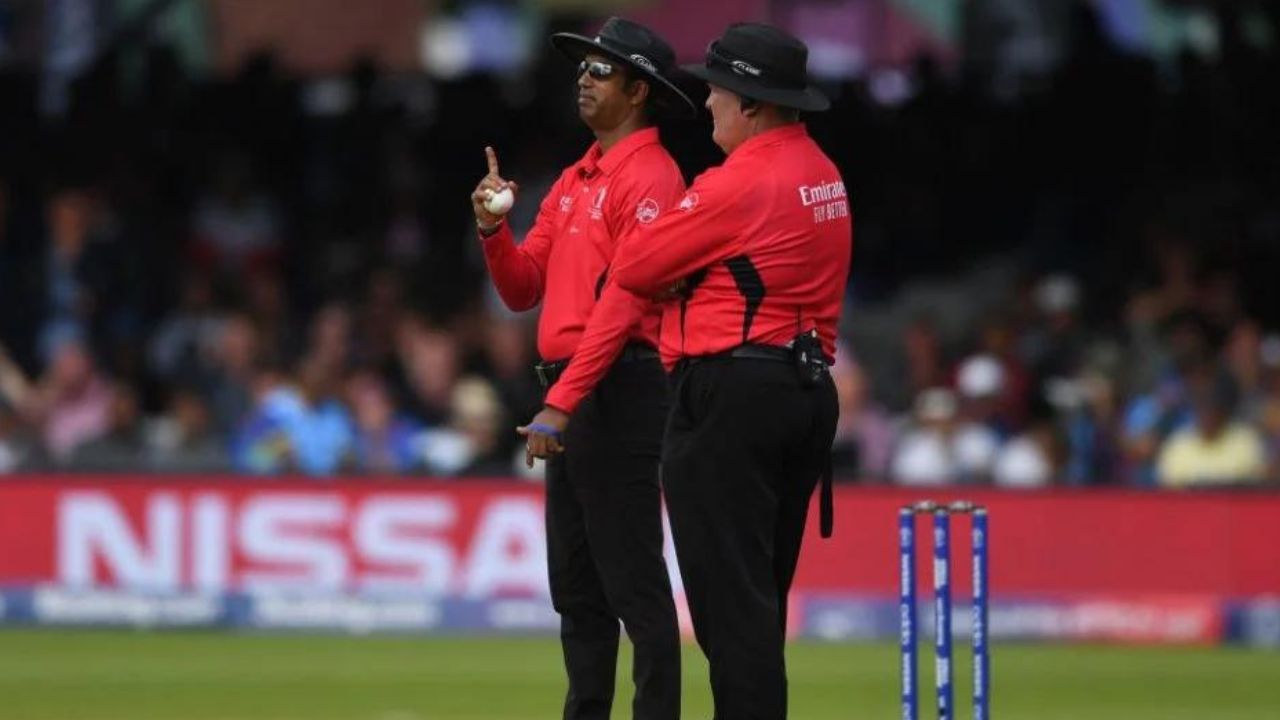
    The International Cricket Council (ICC) has announced its lineup of umpires and referees for T20 World Cup 2024.

    A panel of 20 umpires and six referees has been selected for the opening round of the T20 World Cup.

    According to the ICC, match referees include David Bone, Jeff Crowe and Ranjan Madugale, in addition to Andrew Pycroft, Richie Richardson and Jugal Srinath.

    The panel of umpires also includes Pakistan’s Ahsan Raza, Asif Yaqub and Rashid Riaz.

    ICCT Twenty World Cup will be played from June 1 to June 29 in USA and West Indies.

  • Competition Commission approves Scheme of Arrangement for PIA’s privatisation

    Competition Commission approves Scheme of Arrangement for PIA’s privatisation

    The Competition Commission of Pakistan (CCP) has approved the Scheme of Arrangement (SoA) for the privatisation process of Pakistan International Airlines Corporation Limited (PIACL).

    This marks a crucial step towards restructuring the national airline and facilitating a smoother transition during the privatisation process.

    The approval paves the way for the Securities and Exchange Commission of Pakistan (SECP) to give its final nod, leading to the formalisation of the transfer of PIACL’s non-core assets and liabilities to a newly established entity, PIA Holding Company Limited.

    This separation is designed to create a debt-light PIACL, allowing for greater focus on core airline operations and enhancing its appeal to investors.

    The privatisation of PIACL has attracted considerable interest from both domestic and international investors, with major airlines and business conglomerates submitting their expressions of interest.

    The Privatisation Commission (PC) has extended the deadline for submitting the Statement of Qualification (SOQ) until May 17, 2024, accommodating requests from potential bidders.

    The Privatisation Commission’s extension aims to ensure a competitive and transparent bidding process, fostering a fair environment for all parties. This development is seen as a significant step towards achieving a successful outcome in the privatisation of PIACL, with the ultimate goal of revitalising the national airline and improving its financial health.

    Stakeholders and industry experts are closely monitoring the process, with hopes that the privatisation will bring much-needed efficiency and innovation to Pakistan’s aviation sector. They

    he finalisation of the Scheme of Arrangement and the subsequent privatisation process will be critical in determining the future trajectory of Pakistan International Airlines.

  • Gold price drops for sixth consecutive session, now at Rs238,000 per tola

    Gold price drops for sixth consecutive session, now at Rs238,000 per tola

    Gold prices in Pakistan continued to fall on Saturday, marking the sixth consecutive session of declines. The price per tola (a traditional South Asian unit equivalent to about 11.66 grammes) dropped to Rs238,000, following a single-day decrease of Rs1,600.

    According to the All Pakistan Gems and Jewellers Sarafa Association (APGJSA), the price for 10 grammes of gold also fell, closing at Rs204,047 after a reduction of Rs1,257. This downward trend follows a similar drop on Friday, when the price of gold fell by Rs1,400 per tola.

    While gold prices in Pakistan declined, the international market saw an uptick in gold rates. As per APGJSA, the global price of gold reached $2,301 per ounce (with a premium of $20), registering a gain of $4 during the day.

    Despite this international increase, the domestic market in Pakistan has seen a consistent downward trend. Over the past six sessions, gold prices per tola have dropped by Rs7,000. This decline is significant, considering that just last month, gold reached an all-time high of Rs252,200 per tola in the local market.

    Meanwhile, the price of silver remained stable, with rates holding at Rs2,620 per tola.

    Analysts suggest that the local decline in gold prices may be due to various factors, including market speculation, currency fluctuations, and changes in demand. With international prices showing a slight increase, it remains to be seen whether the downward trend in Pakistan will continue or if the market will begin to stabilise.

    For now, local consumers and investors in gold are watching the market closely, anticipating potential changes in the days ahead.

  • Woman keeping babies in freezer not charged

    Woman keeping babies in freezer not charged

    A 69-year-old woman from Boston, whose apartment was found to have frozen infants in the freezer in 2022, will not be charged.

    A probe into the case started back in 2022 — which was deemed as “one of the most complex, unusual and perplexing” investigations by District Attorney Kevin Hayden.

    It has been said in the statement that it has not been concluded if the four babies were born alive or not, and that is why no criminal charge has been filed against the woman.

    Additionally, the attorney stated that according to the medical examiner, there have been no signs of trauma.

    The father of the babies reportedly died in 2011, while the mother is said to be in a healthcare facility.

    When she was questioned with regards to what was found, she “appeared confused and demonstrated a lack of understanding about where she was and who she was speaking to,” Hayden said.

    The mother is said to have five children and one of them was put up for adoption and had a birth record.

    It is still a mystery as to whether the children were born dead, killed, or did something else happen; and moreover, why the mother did not disclose her pregnancy.

    Background:

    Back in 2022, four babies were found in a freezer – two boys, two girls — in South Boston. The DNA proved that all four were siblings.

  • Paul Auster’s wife deplores reporting on US writer’s death

    Paul Auster’s wife deplores reporting on US writer’s death

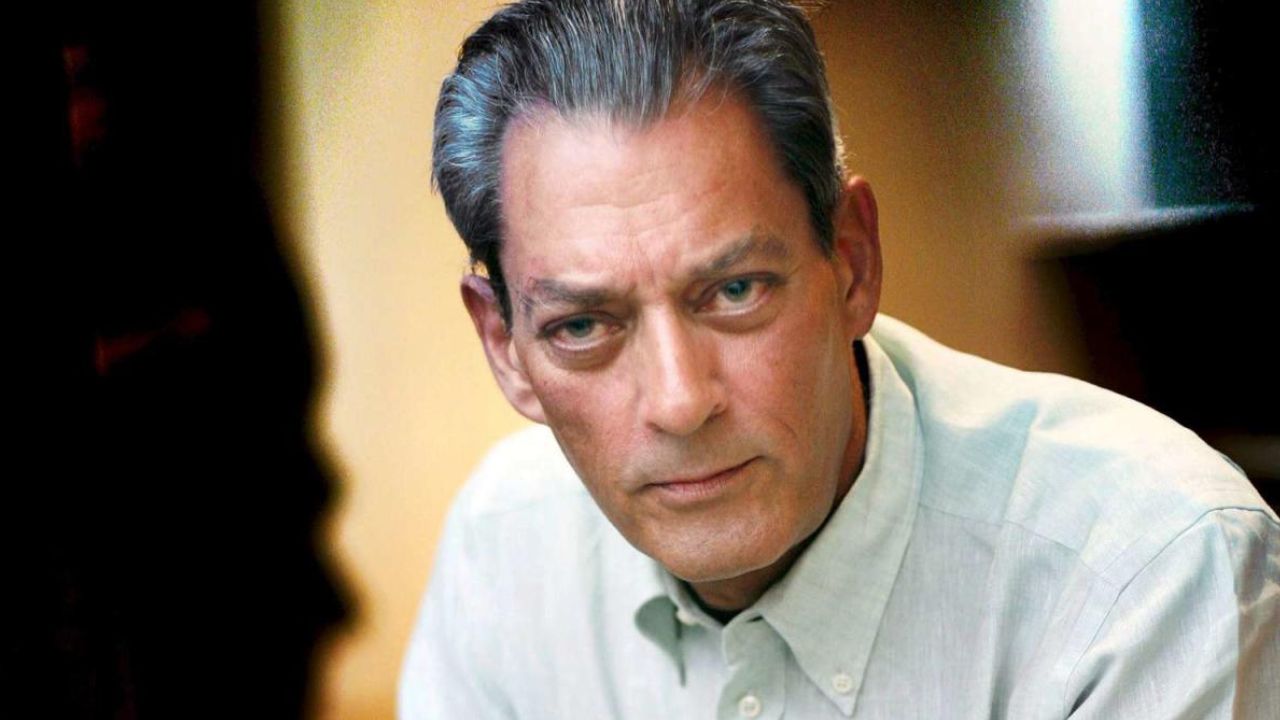
    New York (AFP) – The wife of US writer Paul Auster, who died due to lung cancer complications, said Thursday that her family was “robbed” of “dignity” after a friend quickly confirmed his death to media outlets.

    The New York Times, citing a friend of the couple, published a story of Auster’s passing hours after his death on Tuesday, with other outlets following suit with similar reports.

    “I was naive, but I had imagined that I would be the person to announce the death of my husband,” Siri Hustvedt, an esteemed novelist, wrote on Instagram.

    “He died with us, his family, around him on April 30, 2024 at 6:58 PM,” Hustvedt said.

    “Sometime later, I discovered that even before his body had been taken from our house, the news of his death was circulating on media and obituaries had been posted,” she added.

    Hustvedt revealed in March 2023 that Auster, whose works included “The New York Trilogy,” had been diagnosed with lung cancer.

    The New York Times — the first news outlet to announce Auster’s death — cited family friend and American journalist Jacki Lyden as its source, though Hustvedt did not refer to her or the newspaper directly.

    Hustvedt wrote on Instagram: “Not one of us was able to call or email the people dear to us before the shouting online began. We were robbed of that dignity.

    “I do not know the full story about how this happened, but I know this: It is wrong.”

    Hustvedt added: “Paul never left Cancerland. It turned out to be, in Kierkegaard’s words, the sickness unto death,” referencing the 19th-century Danish philosopher.

    He made his name with noirish, existentialist novels about lonely writers, outsiders and down-and-outers that were a huge hit in Europe particularly.

    The author gained cult status in the 1980s and 1990s with his “New York Trilogy” of metaphysical mysteries and his hip film “Smoke,” about the lost souls who frequent a Brooklyn tobacco shop.