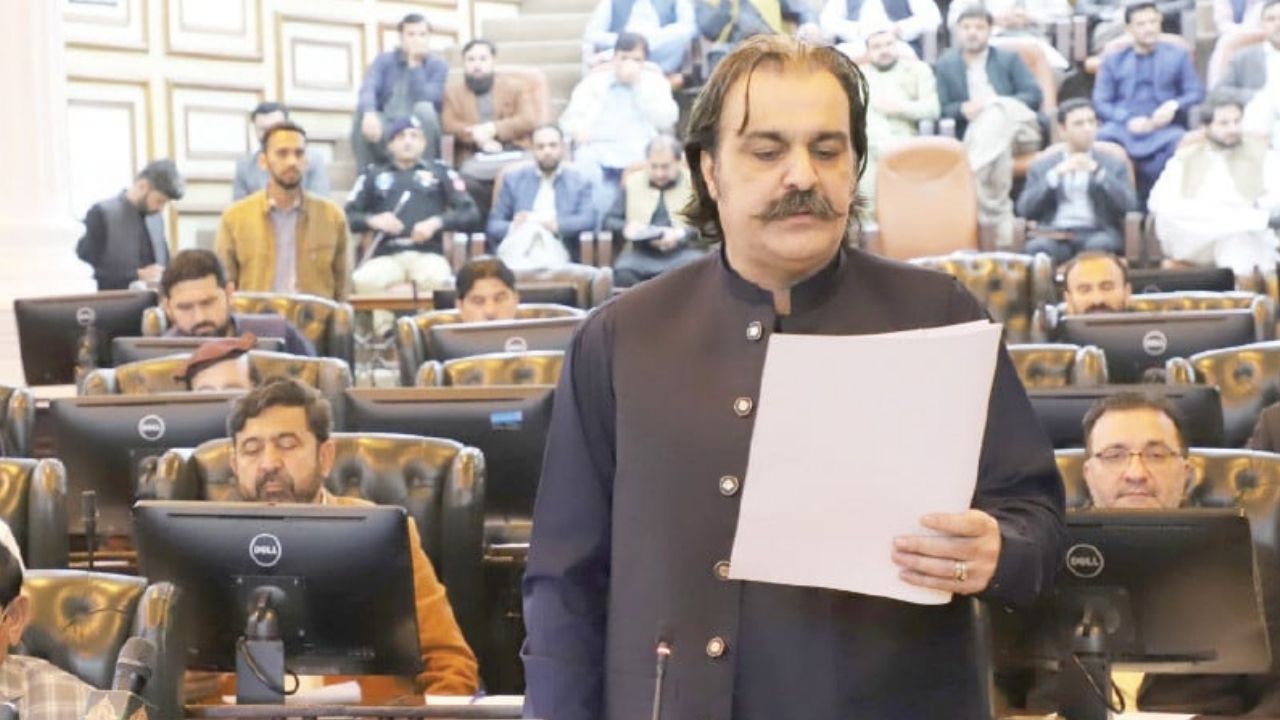
Khyber Pakhtunkhwa Chief Minister Ali Amin Gandapur has announced 100 million rupees aid for the Palestinians.
Finance Advisor Muzzamil Aslam says that the KP government is following the footsteps of Pakistan Tehrik-e-Insaf’s founder, Imran Khan and because of his principles, the Khyber Pakhtunkhwa government has announced a donation for Palestine in this difficult time.
Special Assistant to the Chief Minister, Barrister Muhammad Ali Saif has said, “This money will be used to buy basic necessities for the Palestinians in Gaza.”
He also added, “The KP government stands with the oppressed people of Gaza in this difficult time and urges the international community to play its role in helping and supporting the Palestinians. Pakistan is one of the prominent countries that has not recognized Israel till date. We support the establishment of an independent Palestinian state whose capital is Bait ul Muqqadas.”
The number of martyred Palestinians has exceeded 32,000 and more than 74,000 have been injured in Israeli attacks in Gaza.
The Pakistan Cricket Board has restored the central contract of national fast bowler Haris Rauf after his written apology.
During a press conference in Lahore on Sunday, Chairman PCB Mohsin Naqvi said, “Haris Rauf’s central contract has been restored, Haris Rauf’s injury will be treated by insurance, Haris Rauf is our responsibility, we are concerned about him, cricket board’s money will be spent on players, no exemption for anyone, regarding NOC, I will not take anyone’s recommendation.”
He said, “Work is being done on the captain, they will take a decision after consultation, now the selection committee has come and they are consulting on it, the captain is in consultation with the coaches and the selection committee.”
PCB had terminated the central contract of Haris Rauf on February 17 due to his refusal for Australia tour.
Pakistan Cricket Board chairman Mohsin Naqvi has announced selection committee consists of 7 members including captain.
Mohsin Naqvi held a press conference in Lahore today in which he said, “The selection committee has been reorganized, the selection committee will now consist of 7 people, the new thing is that now there will be no chairman in the selection committee.”
“The selection committee will include Muhammad Yusuf, Wahab Riaz, Abdul Razzaq, Asad Shafiq, head coach, captain and an analyst. The seven members will take a decision with consultation, the committee will finalize every decision, all the seven members will have equal authority.”
Talking about coaches he said, “Thework is being done on the coaches, we will tell you whenever the final will be done, the matter of the coaches will also be finalized in 4-5 days, God willing, there will be a combination of national and international coaches. Everyone is of the same opinion that the team should be strong for the World Cup, there was a talk about the coach that a name came up and when it went on the media, he ran away.”
According to Chairman PCB, the central contract of Haris Rauf has been restored, work is being done on the captain, they will take a decision after consultation, now the selection committee has come and they are consulting on it, the captain is in consultation with the coaches and the selection committee.
A magnitude 6.9 earthquake hit northern Papua New Guinea on Sunday morning, the United States Geological Survey said.
The Pacific Tsunami Warning Centre said there was “no tsunami threat” from the inland quake, which struck at 6:22 am local time (2022 GMT Saturday) at a depth of approximately 35 kilometres (21 miles).
The “notable quake” hit some 88 kilometres (54 miles) southwest of Wewak, the USGS said, a town of 25,000 people that serves as the capital of Papua New Guinea’s East Sepik province.
There were no immediate reports of damage or injuries. The tremor was downgraded from an preliminary magnitude of 7.0.
Earthquakes are common in Papua New Guinea, which sits on top of the seismic “Ring of Fire” — an arc of intense tectonic activity that stretches through Southeast Asia and across the Pacific basin.
Although they seldom cause widespread damage in the sparsely populated jungle highlands, they can trigger destructive landslides.
At least seven people were killed in April last year when a 7.0-magnitude quake hit a jungle-clad area in the country’s interior.
Many of the island nation’s nine million citizens live outside major towns and cities, where the difficult terrain and lack of sealed roads can seriously hamstring search-and-rescue efforts.
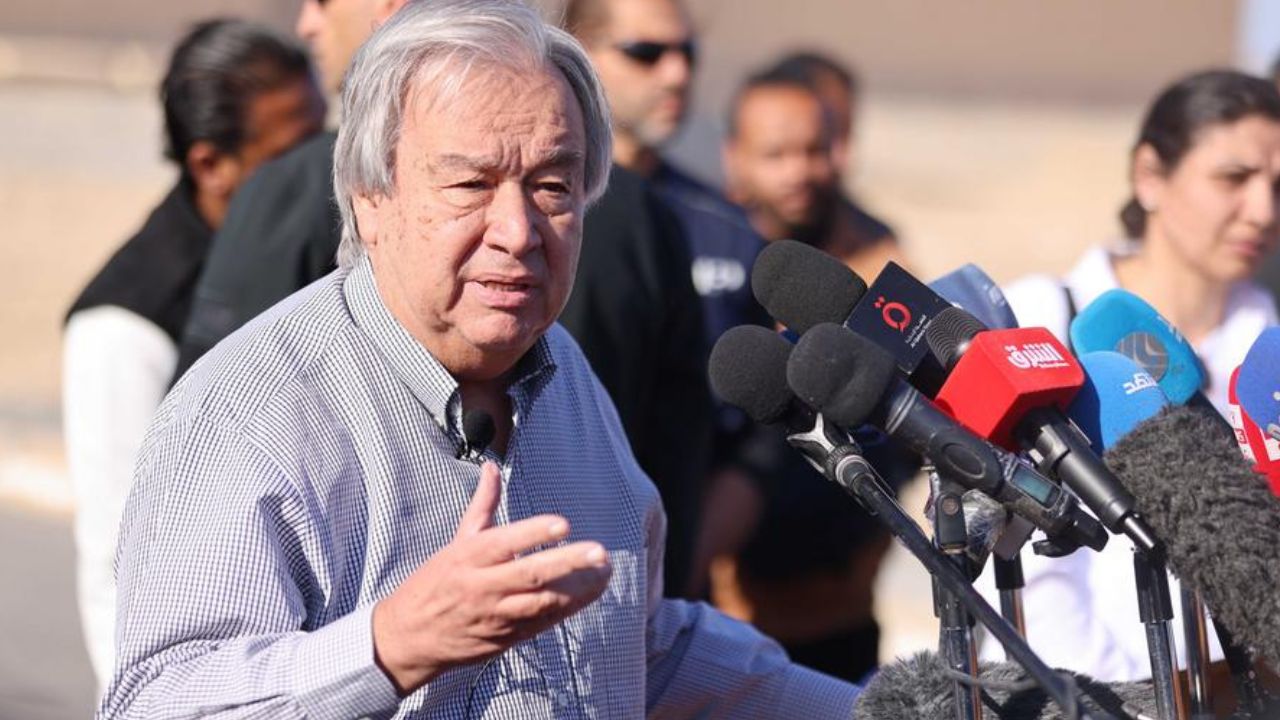
UN chief Antonio Guterres, on a visit to the doorstep of Gaza, on Saturday said the world has seen enough of the war’s horrors and appealed for a ceasefire to allow in more aid.
‘Palestinians in Gaza—children, women, men—remain stuck in a non-stop nightmare,’ he said on the Egyptian side of the Rafah crossing where truckloads of aid trickle into Gaza but the population is stalked by ‘hunger and starvation’.
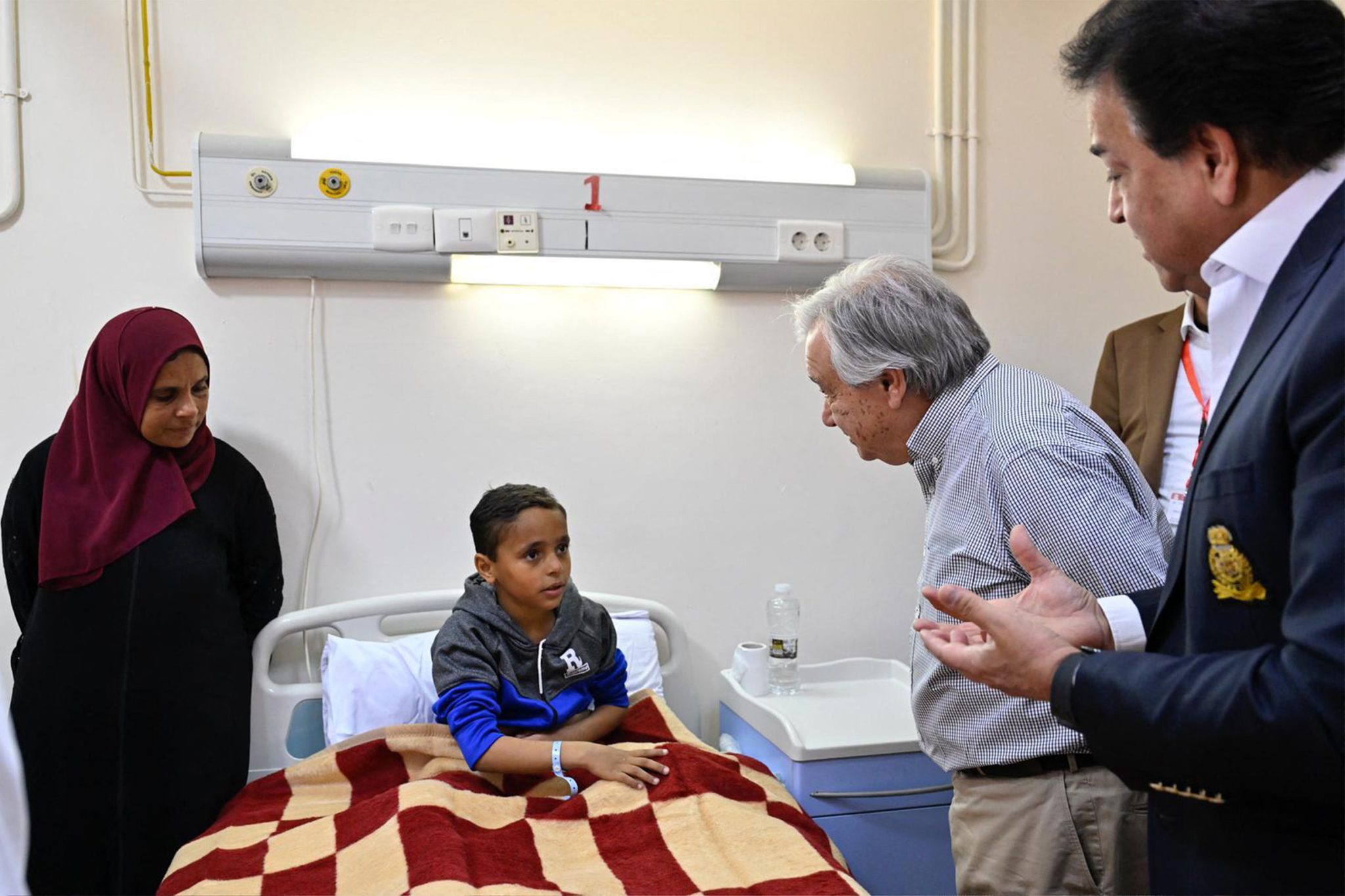
This handout pictured released by the United Nations press office shows UN Secretary-General Antonio Guterres meeting with a Palestinian child evacuated from the Gaza Strip receiving treatment at the general hospital in El-Arish in Egypt’s northeastern North Sinai province on March 23, 2024, amid the ongoing conflict in the Palestinian territory between Israel and the militant group Hamas. (Photo by Mark GARTEN / UNITED NATIONS / AFP) / RESTRICTED TO EDITORIAL USE – MANDATORY CREDIT “AFP PHOTO / UNITED NATIONS – MARK GARTEN” – NO MARKETING NO ADVERTISING CAMPAIGNS – DISTRIBUTED AS A SERVICE TO CLIENTS – RESTRICTED TO EDITORIAL USE – MANDATORY CREDIT “AFP PHOTO / UNITED NATIONS – Mark Garten” – NO MARKETING NO ADVERTISING CAMPAIGNS – DISTRIBUTED AS A SERVICE TO CLIENTS /
‘I carry the voices of the vast majority of the world who have seen enough,’ Guterres said, deploring ‘communities obliterated, homes demolished, entire families and generations wiped out’.
He reiterated that ‘nothing justifies the horrific attacks by Hamas’ against Israel, triggering the war on October 7.
‘And nothing justifies the collective punishment of the Palestinian people,’ the United Nations secretary-general said.
Guterres, speaking at a lectern in front of the imposing gates to the Gaza side of Rafah, through which aid trucks pass, said the ‘heartbreak and heartlessness of it all’ were clear.
‘A long line of blocked relief trucks on one side of the gates. The long shadow of starvation on the other,’ which he called ‘a moral outrage.’
Guterres emphasised ‘it is more than time for an immediate humanitarian ceasefire’ and appealed to Israel for ‘total, unfettered access for humanitarian goods throughout Gaza.’
The UN chief, who makes an annual ‘solidarity mission’ to distressed Muslim communities during their holy fasting month, said that ‘in the Ramadan spirit of compassion, it is also time for the immediate release of all hostages’ captured in the October attacks and still held by militants in Gaza.
Response from Israel
Israel’s foreign minister said Saturday the United Nations had become an ‘anti-Israeli body’ under Antonio Guterres, after the UN chief called for a ceasefire on a visit to Gaza’s border.
International outrage over the heavy civilian toll and humanitarian crisis in Gaza has further worsened the long strained ties between Israel and the world body.
‘Under his (Guterres’s) leadership, the UN has become an anti-Semitic and anti-Israeli body that shelters and emboldens terror,’ Foreign Minister Israel Katz said on social media platform X.
The top Israeli diplomat criticised Guterres, who Katz said ‘stood today on the Egyptian side of the Rafah crossing and blamed Israel for the humanitarian situation in Gaza’, claiming instead that Hamas militants ‘plunder’ aid.
Katz, whose government has accused staff at the UN agency for Palestinian refugees of involvement in Hamas’s October 7 attack that triggered the war, also said Guterres spoke ‘without calling for the immediate, unconditional release of all Israeli hostages’.
Vote at Security Council
Meanwhile, a vote at the UN Security Council on a new text calling for an ‘immediate’ ceasefire in the Israel-Hamas war was postponed to Monday, diplomatic sources told AFP, after a separate, US-lead draft resolution was vetoed.
The United States, Israel’s main ally and military backer, had put forward a resolution mentioning ‘the imperative of an immediate and sustained ceasefire’ and condemning the October 7 attack by Hamas.
Russia and China on Friday vetoed that resolution, which was also opposed by Arab states for stopping short of explicitly demanding Israel immediately end its campaign in Gaza.
The new ceasefire text was meant to go to a vote on Saturday, but was pushed back to allow further discussions, the diplomatic sources said.
The new, tougher draft resolution, seen by AFP, ‘demands an immediate ceasefire’ for the ongoing Muslim holy month of Ramadan that leads ‘to a permanent sustainable ceasefire’ respected by all sides.
Eight of the council’s 10 non-permanent members have been working on the draft, which also calls for the ‘immediate and unconditional’ release of hostages seized by Hamas and the lifting of ‘all barriers’ to humanitarian aid flowing into the besieged Gaza Strip.
‘We as (the) Arab Group unanimously endorse and support the draft resolution,’ said Palestinian ambassador to the UN Riyad Mansour, who had denounced the US-led text as biased.
But US Ambassador Linda Thomas-Greenfield indicated opposition, saying the resolution would jeopardize ongoing diplomatic efforts to secure the release of hostages—the same reason the United States gave before vetoing previous ceasefire resolutions.
‘In its current form, that text fails to support sensitive diplomacy in the region. Worse, it could actually give Hamas an excuse to walk away from the deal on the table,’ she said.
Friday’s text did not explicitly use the word ‘call,’ but simply stated that a ceasefire was imperative, and linked to ongoing talks, led by Qatar with support from the United States and Egypt, to halt fighting in return for Hamas releasing hostages.
‘If the US is serious about a ceasefire, then please vote in favor of the other draft resolution, clearly calling for a ceasefire,’ China’s representative, Zhang Jun, said.
Short-term inflation in Pakistan dipped to 29.06 per cent year-on-year by the week ending March 21, stepping down from its prolonged stint above 30 per cent for the past 18 weeks, as per recent official data.
The pullback in weekly inflation, tracked by the Sensitive Price Index (SPI), was primarily attributed to a drop in the prices of key staples like tomatoes, onions, and potatoes. The SPI noted a 1.13 per cent week-on-week decrease as of March 21, down from 32.89 per cent recorded in the previous week.
This follows an unbroken 11-week stretch of inflation topping 40 per cent, starting from 29 per cent noted on November 8, 2023. The surge was largely fueled by upticks in gas prices, electricity tariffs, and essential kitchen item costs.
Weekly inflation peaked at a record 48.35 per cent year-on-year in early May 2023, before cooling off to as low as 24.4 per cent in late August 2023, only to surge past 40 per cent again by the week ending November 16, 2023.
Among the notable declines in prices on a week-on-week basis were tomatoes (36.73 per cent), onions (19.58 per cent), potatoes (4.02 per cent), garlic (2.87 per cent), pulse mash (1.25 per cent), wheat flour (1.02 per cent), sugar (0.95 per cent), pulse masoor (0.86 per cent), and diesel (0.60 per cent).
Conversely, significant increases were seen in the prices of LPG (1.49 per cent), shirting (0.74 per cent), beef (0.53 per cent), rice basmati broken (0.48 per cent), mutton (0.42 per cent), mustard oil (0.40 per cent), rice irri 6/9 (0.25 per cent), powdered milk (0.14 per cent), and georgette (0.03 per cent) compared to the previous week.
On an annual basis, notable price hikes were observed in gas charges for Q1 (570 per cent), chilli powder (86.05 per cent), gents sponge chappal (58.05 per cent), garlic (57.41 per cent), onions (54.65 per cent), gents sandal (53.37 per cent), gur (39.86 per cent), sugar (35.01 per cent), salt powder (33.29 per cent), energy saver (29.83 per cent), and pulse mash (27.31 per cent).
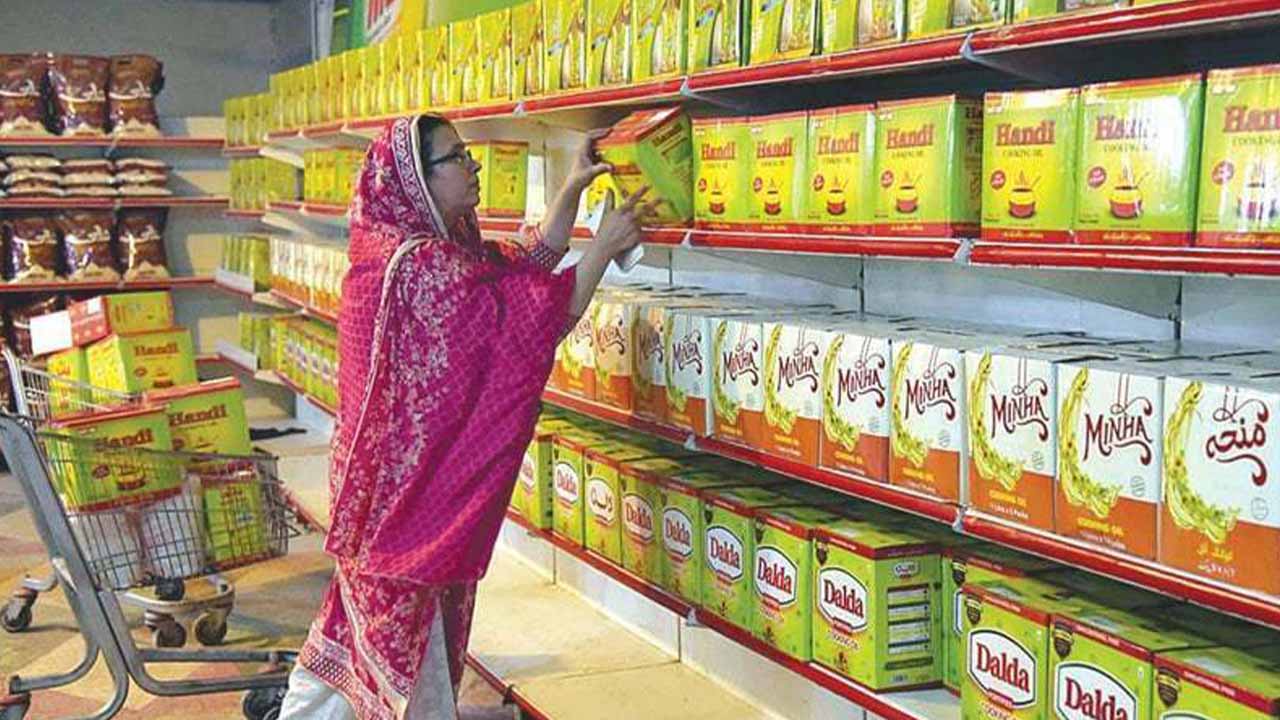
In contrast, certain items witnessed declines, with cooking oil 5-litre dropping by 21.35 per cent, followed by vegetable ghee 2.5 kg (18.48 per cent), vegetable ghee 1 kg (18.44 per cent), mustard oil (13.90 per cent), bananas (13.52 per cent), diesel (2.47 per cent), and cigarettes (0.06 per cent).
The short-term inflation, gauged through the SPI, stood at 323.50, compared to 327.21 in the preceding week and 250.66 a year ago. Comprising 51 items collected from 50 markets in 17 cities, the SPI is calculated weekly to monitor the prices of essential commodities and services at shorter intervals. Data indicates that prices of nine items increased, 17 items decreased, and 25 items remained stable compared to the previous week.
Pakistan and the Saudi Fund for Development (SFD) have recently finalised significant agreements aimed at bolstering the country’s energy infrastructure.
In a ceremonial signing event held on Friday, two pivotal loan agreements were formalised.
The first agreement, valued at $66 million, pertains to the Shounter Hydropower Project, boasting a capacity of 48 MW.
The second agreement, worth $41 million, is dedicated to the Jagran IV Hydropower Project, with a capacity of 22 MW.
The signing ceremony, attended by key figures from both parties, including Sultan Bin Abdul Rehman Al Marshad, Chief Executive Officer of SFD, and Ahad Khan Cheema, Minister for Economic Affairs, marks a significant milestone in Pakistan’s pursuit of sustainable energy solutions.
In a statement issued following the event, Minister Ahad Khan Cheema expressed gratitude towards the SFD delegation and commended their unwavering support in various sectors, including health, energy, infrastructure, and education, particularly amidst recent challenges such as flooding incidents.
These collaborative efforts are geared towards tapping into Pakistan’s abundant hydropower potential, with the aim of generating an additional 70 MW of electricity to be integrated into the national grid.
Beyond mere energy production, the projects also seek to address environmental concerns by offering an alternative to deforestation practices.
By providing electricity as a viable substitute for wood-based energy sources, local communities, predominantly reliant on forest resources, will benefit. This initiative is expected to catalyze economic growth and uplift the socio-economic landscape of Azad Jammu and Kashmir (AJK).
Minister Ahad Khan Cheema reiterated Pakistan’s appreciation for the pivotal role played by SFD during challenging times and pledged to further strengthen bilateral relations in the future.
In response, Sultan Bin Abdul Rehman Al Marshad reaffirmed SFD’s steadfast commitment to supporting Pakistan’s development endeavours.
The World Bank’s Board of Executive Directors has greenlit a significant sum of $149.7 million in financing for Pakistan, marking a milestone in bolstering the nation’s development efforts.
The approval, granted on Friday, will allocate funds to support two vital projects aimed at enhancing the country’s infrastructure and digital landscape.
According to a press statement released by the international financial institution, a substantial portion of the funding, totaling $78 million, has been earmarked for the Digital Economy Enhancement Project (DEEP).
This initiative seeks to bolster digitally enabled public services delivery for both citizens and businesses, thereby fostering greater accessibility and efficiency.
Simultaneously, an allocation of $71.7 million has been designated as second additional financing for the Sindh Barrages Improvement Project. This endeavor aims to fortify resilience against floods while enhancing the reliability, safety, and management of the Sindh barrages, crucial components of Pakistan’s water management infrastructure.
Najy Benhassine, the World Bank Country Director for Pakistan, emphasised the imperative of fortifying infrastructure in the wake of catastrophic events such as the floods of 2022. He underscored the importance of bolstering barrages and their management to mitigate the impact of such disasters effectively.
Additionally, Benhassine highlighted the significance of nurturing Pakistan’s burgeoning digital economy. He stressed that fostering connectivity and access to government and financial services is pivotal for economic and social development, particularly for marginalised groups like women and entrepreneurs.
The Digital Economy Enhancement Project (DEEP) aims to develop robust digital authentication and data-sharing platforms.
These platforms will enable Pakistan to respond more effectively to shocks, deliver enhanced e-government services, and facilitate regulatory reforms to promote private participation in the sector while strengthening personal data protection and online safety.
Moreover, the project endeavors to promote financial inclusion, particularly among women, by facilitating access to banking services and credit through smartphone applications. It also seeks to address barriers such as limited mobility and digital literacy, ensuring inclusivity in the digital realm.
Shan Rehman, Task Team Leader for the project, emphasised the comprehensive nature of the initiative, which adopts a holistic approach to digital transformation. He emphasised the importance of inclusivity and trust in digital platforms to meet the evolving needs of the populace.
Meanwhile, the second additional financing for the Sindh Barrages Improvement Project (SBIP) aims to complete and commission rehabilitation works for barrages, including Guddu and Sukkur. Additionally, it seeks to enhance the management of three barrages in Sindh, namely Guddu, Sukkur, and Kotri.
Francois Onimus, Task Team Leader for the SBIP, stressed the critical role of barrages in ensuring the livelihoods and climate-resilience of the Sindh Province. He highlighted the project’s focus on bolstering canal systems fed by these barrages, thereby mitigating the adverse impacts of extreme weather events.
In essence, the approval of financing for these projects underscores the World Bank’s commitment to supporting Pakistan’s development agenda, spanning both infrastructure and digital innovation, in its journey towards sustainable growth and resilience.
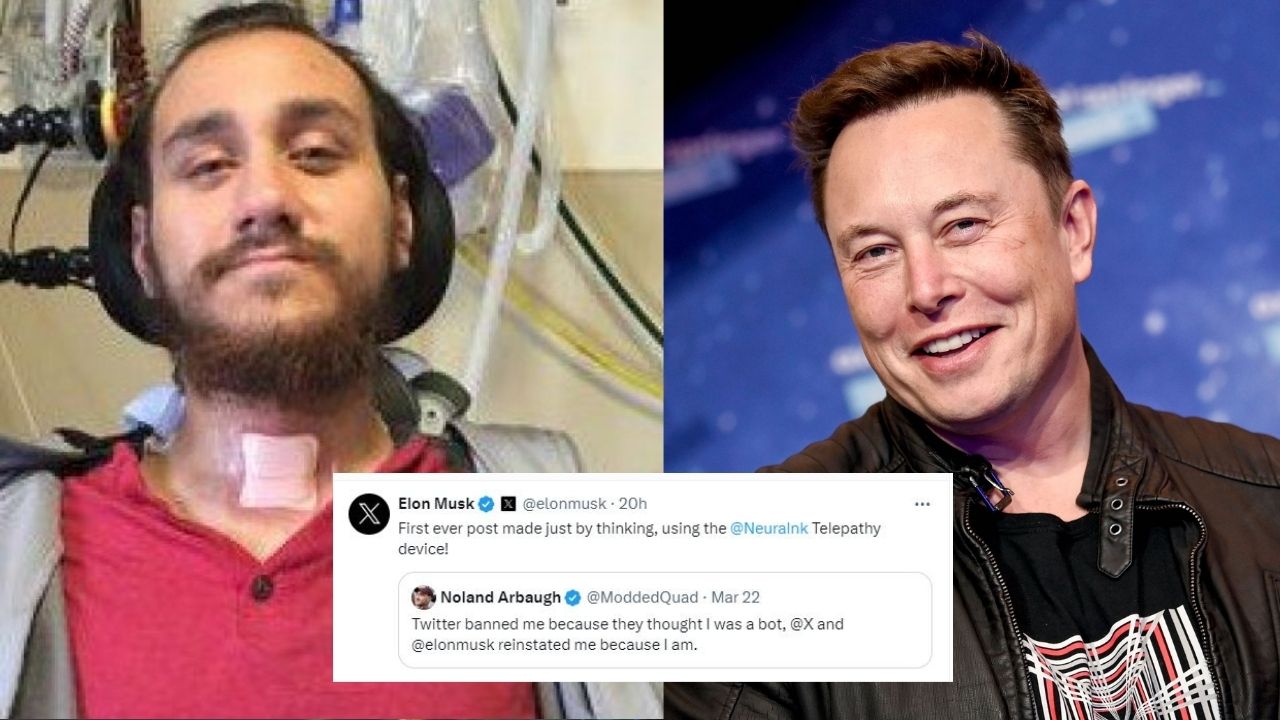
Elon Musk has announced that the first-ever Neuralink patient Noland Arbaugh has shared a post on social media using a telepathic device. Musk reposted the patient’s tweet on X.
Noland Arbaugh wrote on ‘X’, “Twitter banned me because they thought I was a bot, @X and @elonmusk reinstated me because I am.”
Elon Musk also shared Arbaugh’s tweet stating, “First ever post made just by thinking, using the Neuralink Telepathy device!”
Noland Arbaugh is a man who can’t move his body from the shoulders down because of paralysis. He plays chess on a computer using only his thoughts and now posts on social media the same way. He thinks of what to say, and it appears online. He said using Neuralink feels like having “the force” from Star Wars, where people can communicate telepathically.
Whether dogs truly understand the words we say – as opposed to things like tone and context clues – is a question that has long perplexed owners, and so far science hasn’t been able to deliver clear answers.
But a new brain wave study published Friday in Current Biology suggests that hearing the names of their favorite toys actually activates dogs’ memories of those objects.
“It definitely shows us that it’s not human-unique to have this type of referential understanding,” first author Lilla Magyari of the Eotvos Lorand University in Hungary, told AFP, explaining that researchers have been skeptical up to this point.
With a couple of famous exceptions, dogs have fared poorly on lab tests requiring them to fetch objects after hearing their names, and many experts have argued it isn’t so much what we say but rather how and when we say things that pique our pooches’ interest.
Yelling “Go get the stick!” and having a dog successfully bring the object back doesn’t conclusively prove they know what the word “stick” means, for example.
Even scientists who concede that dogs do pay attention to our speech have said that, rather than really understanding what words stand for, they are reacting to particular sounds with a learned behavior.
In the new paper, Magyari and colleagues applied a non-invasive brain imaging technique to 18 dogs brought to their lab in Budapest.
The test involved taping electrodes to the dogs’ heads to monitor their brain activity. Their owners said words for toys they were most familiar with — for example “Kun-kun, look, the ball!” — and then showed them either the matching object or a mismatched object.
After analyzing the EEG recordings, the team found different brain patterns when dogs were shown matching versus mismatched objects.
This experimental setup has been used for decades in humans, including babies, and is accepted as evidence of “semantic processing,” or understanding of meaning.
The test also had the benefit of not requiring the dogs to fetch something in order to prove their knowledge.
“We found the effect in 14 dogs,” co-first author Marianna Boros told AFP, proving the ability is not confined to “a few exceptional dogs.” Even the four that “failed” may have simply been tested on the wrong words, she added.
Holly Root-Gutteridge, a dog behavior scientist at the University of Lincoln in England, told AFP that the ability to fetch specific toys by name had previously been deemed a “genius” quality.
Famous border collies Chaser and Rico could find and retrieve specific toys from large piles but were deemed outliers, she said.
But the new study “shows that a whole range of dogs are learning the names of the objects in terms of brain response even if they don’t demonstrate it behaviorally,” said Root-Gutteridge, adding it was “another knock for humanity’s special and distinct qualities.”
The paper “provides further evidence that dogs might understand human vocalizations much better than we usually give them credit for,” added Federico Rossano, a cognitive scientist at UC San Diego.
But not all experts were equally enthusiastic. Clive Wynne, a canine behaviorist at Arizona State University, told AFP he was “split” on the findings.
“I think the paper falls down when it wants to make the big picture claim that they have demonstrated what they call ‘semantic understanding,’” he said, though he praised the “ingenious” experimental setup as a new way to test the full extent of dogs’ “functional vocabulary.”
For example, Wynne said, he needs to spell out the word “w-a-l-k” when he’s in front of his dog — lest his pet get excited for an outing there and then — but he doesn’t need to take the same precautions in front of his wife, whose understanding of the word goes beyond simple association.
“Would Pavlov be surprised by these results?” asked Wynne, referencing the famous Russian scientist who showed dogs could be conditioned to salivate when they heard a bell signaling meal time. “I do not think he would be.”