Blog

  • Bilawal predicts a ‘coalition government’, addresses rumoured rift with father

    Bilawal predicts a ‘coalition government’, addresses rumoured rift with father

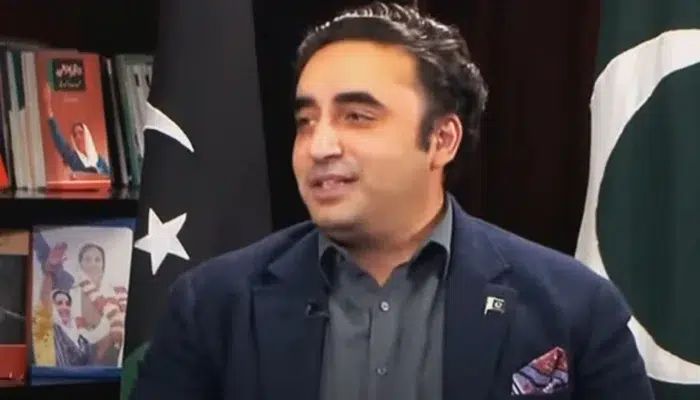
    Pakistan People’s Party (PPP) Chairman Bilawal Bhutto on Monday predicted the formation of a coalition government after the upcoming election set to take place on February 8, 2024.

    In an interview with Kashif Abbasi of ARY News, the former Foreign Minister said: “Whether it is led by PML-N [Pakistan Muslim League-Nawaz] or any other party, the next government will be a coalition [regime].”

    Last year, in November, PPP Co-Chairman Asif Zardari also anticipated the formation of a “national unity government” after elections. He believed that no single party will be able to get a two-thirds majority in the upcoming polls.

    When asked by Abbasi about the rumoured rift with his father, Bilawal Bhutto said that he is not angry and has no disagreements with his father. “I am not contesting elections against Zardari Sahib,” he said, smiling.

    The former foreign minister also said that every father including politicians, train their sons, stressing that he will never speak against his father.

    “The PPP and my father himself nominated me as a candidate for the slot of prime minister,” Bilawal added.

    He also said that Pakistan Muslim League-Nawaz (PML-N) supremo Nawaz Sharif will take revenge on those who ousted him from government, if he returns to power.

  • Death Toll From Japan Quake Rises Above 200

    Death Toll From Japan Quake Rises Above 200

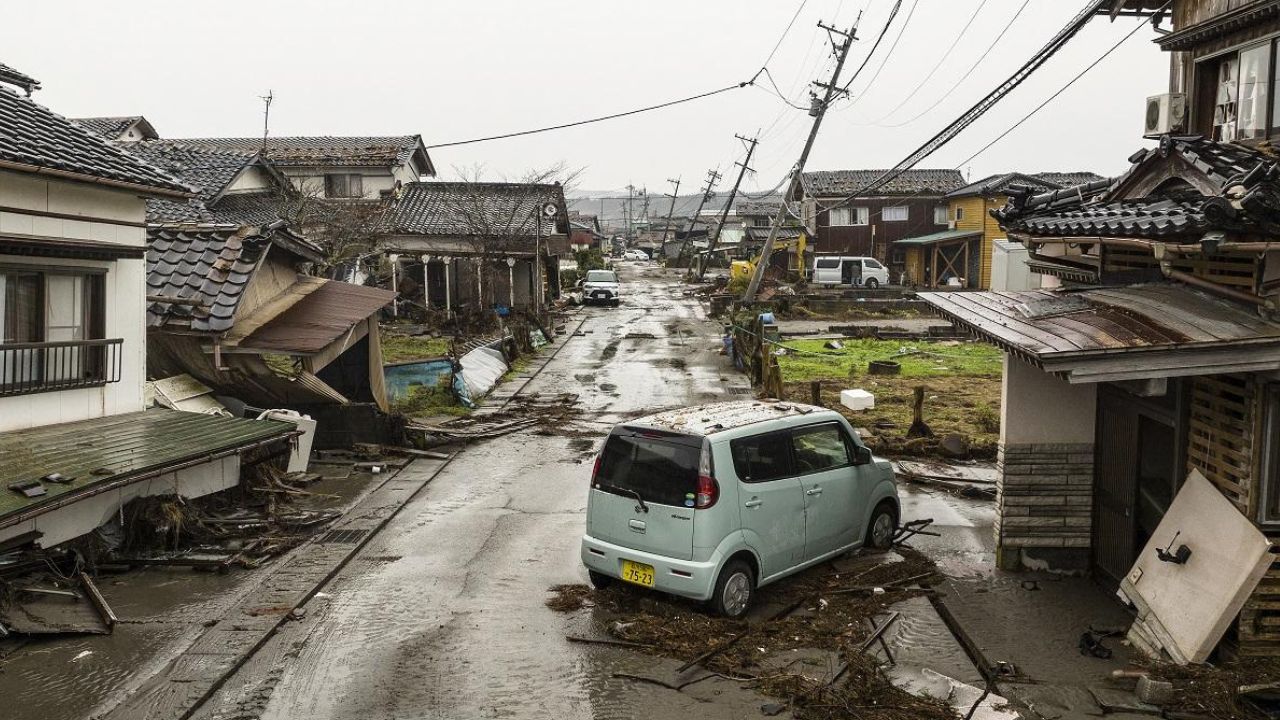
    The death toll from the powerful earthquake that flattened parts of central Japan on January 1 passed 200 on Tuesday, with just over 100 still unaccounted for, authorities said.

    The 7.5 magnitude quake destroyed and toppled buildings, caused fires and knocked out infrastructure on the Noto Peninsula on Japan’s main island Honshu just as families were celebrating New Year’s Day.

    Eight days later thousands of rescuers were battling blocked roads and poor weather to clear the wreckage as well as reach almost 3,500 people still stuck in isolated communities.

    Ishikawa regional authorities released figures on Tuesday showing that 202 people were confirmed dead, up from 180 earlier in the day, with 102 unaccounted for, down from 120.

    On Monday, authorities had more than tripled the number of missing to 323 after central databases were updated, with most of the rise related to badly hit Wajima.

    But since then “many families let us know that they were able to confirm safety of the persons (on the list)”, Ishikawa official Hayato Yachi told AFP.

    With heavy snow in places complicating relief efforts, as of Monday almost 30,000 people were living in around 400 government shelters, some of which were packed and struggling to provide adequate food, water and heating.

    Almost 60,000 households were without running water and 15,600 had no electricity supply.

    Road conditions have been worsened by days of rain that have contributed to an estimated 1,000 landslides.

    At a daily disaster-relief government meeting on Tuesday, Prime Minister Fumio Kishida instructed ministers to “make efforts of resolving the state of isolation (of communities) and continue tenacious rescue activities”.

    Kishida also urged secondary evacuations to other regions outside the quake-hit area, top government spokesman Yoshimasa Hayashi told reporters.

    In Ishikawa prefecture’s city of Suzu, a woman in her 90s managed to survive five days under the wreckage of a collapsed house before being saved on Saturday.

    “Hang in there!” rescuers were heard calling to the woman, in police footage from the rainy scene published by local media.

    Not all were so lucky, with Naoyuki Teramoto, 52, inconsolable on Monday after three of his four children’s bodies were discovered in the town of Anamizu.

    “We were talking of plans to go to Izu,” a famous hot spring resort, after his daughter passed her high school entrance exam, he told broadcaster NTV.

    Japan experiences hundreds of earthquakes every year, though most cause no damage because of strict building codes in place for more than four decades.

    But many structures are older, especially in rapidly ageing communities in rural areas like Noto.

    The country is haunted by the monster quake of 2011 that triggered a tsunami, left around 18,500 people dead or missing, and caused a nuclear catastrophe at the Fukushima plant.
  • Heinrich Klaasen is retiring from Test cricket

    Heinrich Klaasen is retiring from Test cricket

    South African wicketkeeper-batsman Heinrich Klaasen announced on Monday that he is retiring from Test cricket.

    According to a report by the International Cricket Council (ICC), South African wicketkeeper-batsman Klaasen will remain available for white-ball formats.

    Klaasen played four Tests during his career, making his debut against India in Ranchi in 2019 and last representing his team against West Indies in 2023.

    He scored 104 runs at an average of 13 in his four matches, with his highest score being 35 against Australia in Sydney.

    In a statement, Klaasen said, “After a lot of thought as to whether I am making the right decision I have decided to retire from Red Ball Cricket, it is a difficult decision that I have taken as it is by far my favorite format of the game. It’s been a great journey and I’m happy that I could represent my country, my Test cap is the most valuable ever.”

  • ‘Idiots in my country’; Wasim Akram slams Pakistani on Instagram

    ‘Idiots in my country’; Wasim Akram slams Pakistani on Instagram

    Former Pakistan bowling great Wasim Akram has slammed a Pakistani user on Instagram for a personal comment on his post.

    Wasim Akram is having a fun-filled trip to Australia where he also commented during the Pakistan Test Series. After being part of a critically acclaimed show shot in a Pakistani studio during the 2023 ODI World Cup, the former captain of Pakistan provided commentary for Pakistan’s three-match Test series against Australia while he was there with his wife Sheneira. He keeps posting happy shots on social media.

    His latest photo is a selfie in a sleeveless shirt during a walk. A user posted an odd remark on Akram’s photo, taking a dig at the legend’s personal appearance. Akram, seen in other photos with Waugh, Ravi Shastri, and Michael Vaughan, was quick to shut down the troll.

    Returning it to the Pakistani user, the legend from Pakistan wrote: “Idiots in my country are talking about armpit hair, but the world has reached the moon.”

    We love how the witty Lahori refuses to let internet grumps rain on his parade.

  • Top US diplomat to meet Israeli PM as fears of escalation rise

    Top US diplomat to meet Israeli PM as fears of escalation rise

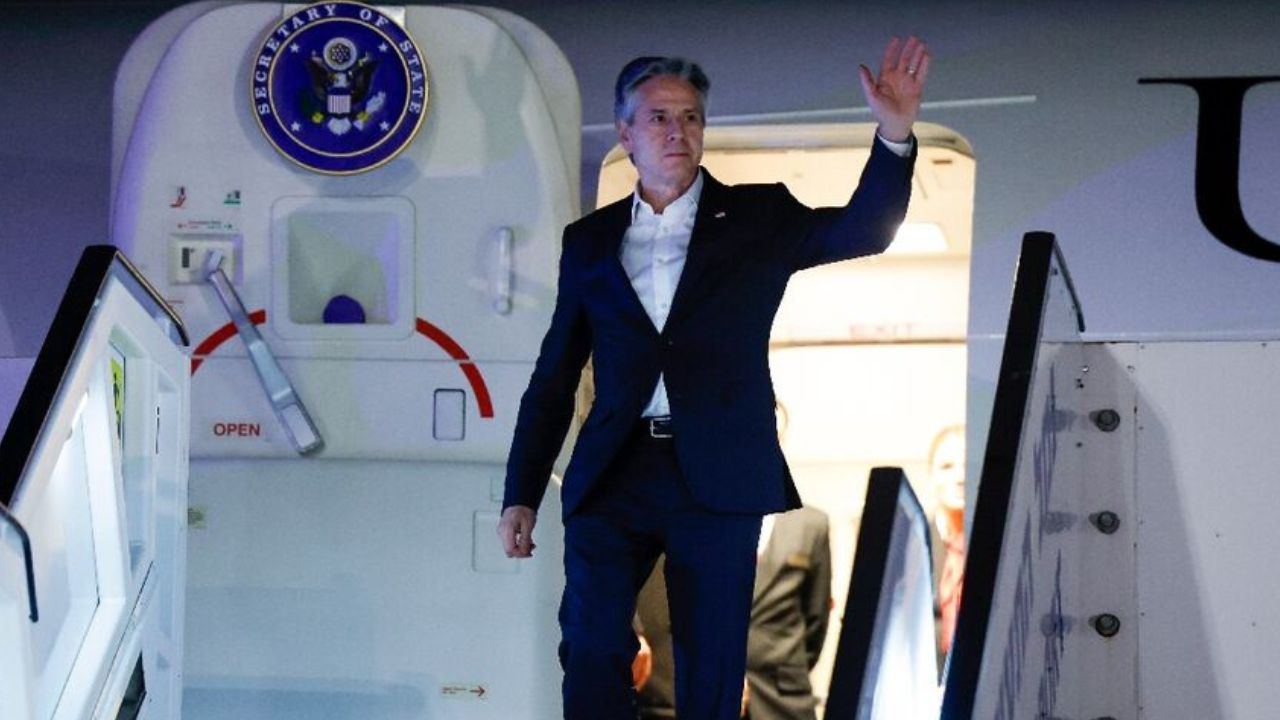
    Tel Aviv (AFP) – Top US diplomat Antony Blinken was set to meet Israeli leaders on Tuesday as part of efforts to contain Israeli attacks on Gaza, a day after strikes in Syria and Lebanon killed high-profile members of Hamas and its ally Hezbollah.

    The visit comes as the Israeli military said its campaign against Hamas in the Gaza Strip was shifting into a new phase involving more targeted operations in the territory’s centre and south.

    Sirens warning of incoming rockets sounded in central and southern Israel on Monday, as well as near the border with Lebanon, where Israeli strikes and tit-for-tat exchanges of fire with Iran-backed Hezbollah militants have raised fears the war could spread north.

    Earlier in the day, Hezbollah announced the killing of a “commander” for the first time since October, naming him as Wissam Hassan Tawil.

    A security official in Lebanon, speaking on condition of anonymity, said Tawil “had a leading role in managing Hezbollah’s operations in the south”, and was killed there by an Israeli strike.

    The Israeli military said it struck Hezbollah “military sites” in Lebanon on Monday, but did not immediately comment on Tawil’s death.

    His was the second high-profile killing in Lebanon this month, following a strike in a Hezbollah stronghold in Beirut that resulted in the death of Hamas deputy leader Saleh al-Aruri.

    On Monday the Israeli army also said it had killed a “central” Hamas figure in Syria, Hassan Akasha, who had led “terrorist cells which fired rockets… toward Israeli territory”.

  • Govt’s bank borrowings jump 3.15x in six months

    Govt’s bank borrowings jump 3.15x in six months

    The government’s reliance on bank borrowings has displayed a concerning upward trajectory, intensifying the nation’s debt burden and raising doubts about its optimistic economic outlook. 

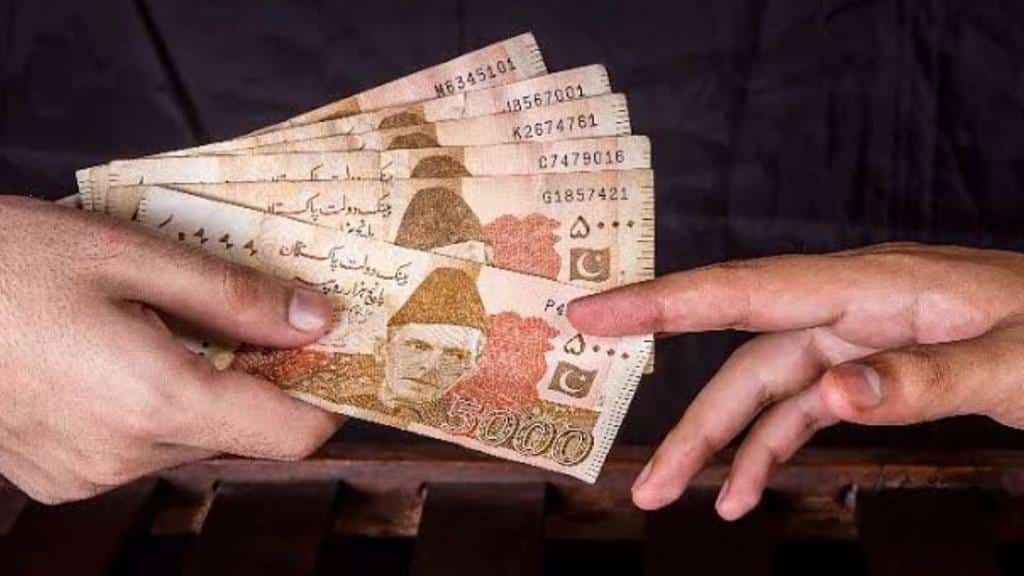
    Recent data for the six months ending December 2023 reveals a substantial increase in borrowing through banks, soaring to Rs3.214 trillion compared to Rs1.019 trillion during the same period last year—an alarming surge of 3.15 times.

    Notably, this surge occurs amid a caretaker government’s administration, signalling that within six months, the government has amassed a level of debt equivalent to the entire fiscal year 2023. 

    While governments commonly borrow from banks to address financial gaps, refinance debts, and fund public projects, the scale of the borrowing indicates a matter of heightened concern.

    Despite the Federal Board of Revenue’s commendable performance in tax collections, with historic achievements of over Rs1 trillion in December and Rs4.468 trillion in 6MFY24, these impressive figures clash with the substantial reliance on bank borrowings.

     Economic apprehensions grow as these borrowing patterns contradict the government’s objective of optimising the allocation and expenditure of public funds.

    The caretaker government’s limited authorisation of Rs300.904 billion for development funds, out of a total allocation of Rs950 billion for ongoing and new social sector uplift projects, contrasts starkly with the escalating borrowing figures, hinting at the possibility of an expanding Public Sector Development Programme (PSDP).

    Furthermore, this escalating trend in government borrowings raises concerns among economists and financial experts who emphasise the importance of fiscal discipline. 

    The growing debt levels may not only impact the country’s creditworthiness but also strain future budgetary allocations, potentially limiting the government’s capacity to respond to unforeseen economic challenges. 

    As stakeholders closely monitor these developments, there is a pressing need for transparent fiscal policies and strategic measures to ensure a sustainable and resilient economic future for the nation.

  • Germany Ready To Sell Eurofighter Jets To Saudi Arabia

    Germany Ready To Sell Eurofighter Jets To Saudi Arabia

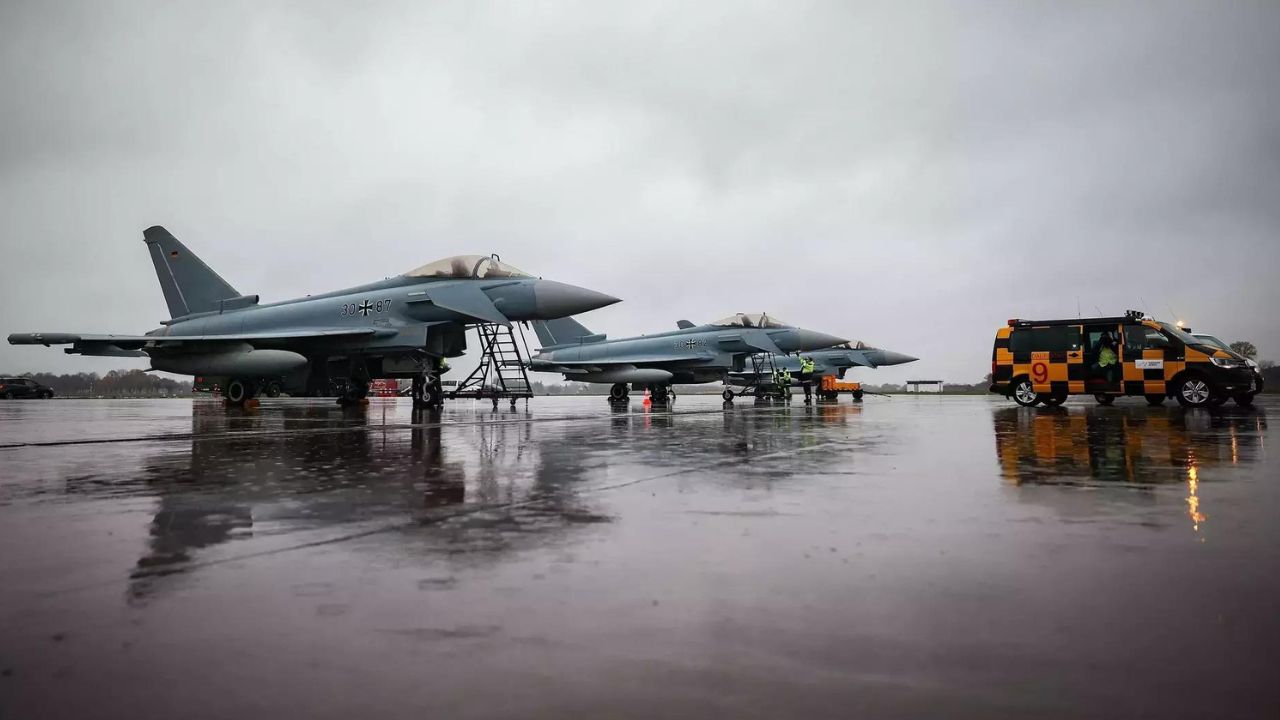
    Chancellor Olaf Scholz’s government on Monday defended plans to lift Germany’s longstanding veto on sales of Eurofighter jets to Saudi Arabia, saying Riyadh has adopted a “constructive approach” in the Israel-Hamas war.

    Germany, Britain, Italy and Spain jointly build the jet and each can veto deals.

    Berlin has blocked one deal, sought by London, since 2018.

    But German Foreign Minister Annalena Baerbock, on a visit to Israel on Sunday, signalled that Berlin was ready to lift its blockade.

    “We do not see ourselves, as the German federal government, opposing British considerations on other Eurofighter (sales),” Baerbock told journalists, as she underlined the Saudi role in the Middle East security crisis since the eruption of the Israel-Hamas war on October 7.

    Scholz “shares this assessment,” his spokesman Steffen Hebestreit said on Monday at a press conference, noting that “it is an open secret that Saudi Arabia’s airforce has used Eurofighters to shoot down rockets launched by the Huthis on the way to Israel”.

    Germany has blocked arms sales to Riyadh since the 2018 murder of dissident journalist Jamal Khashoggi in the Saudi consulate in Istanbul.

    That includes blocking a deal for 48 Eurofighter jets signed by Saudi Crown Prince Mohammed bin Salman in London.

    Baerbock noted that Saudi Arabia and Israel had “not renounced their policy of normalisation” since the war broke out.

    “The fact that Saudi Arabia is now intercepting missiles fired by the Huthis at Israel underlines this, and we are grateful for that,” she added.

    “The fact that the Saudi air force also uses Eurofighters in this context is an open secret,” the minister continued.

    “Saudi Arabia is a key contributor to Israel’s security, even these days, and is helping to stem the risk of a regional conflagration.”

    Germany’s previous position against deliveries to the kingdom had put itself at odds with key partners, with Airbus chief Guillaume Faury saying in November that it was “damaging to Germany’s reputation as an exporting nation”.

    “This raises the question of confidence and the credibility of Germany as a country participating in international programmes,” he added.

    Berlin’s U-turn, however, risks opening up a new political row domestically, with Baerbock’s Greens already uneasy about the move.

    Co-chair of the Greens, Ricarda Lang, on Monday insisted that “with a view on the human rights situation, including Saudi Arabia’s domestic constitution, I think as before that it is wrong to deliver Eurofighters” to the kingdom.

  • JN.1 : New Covid variant spreading in Pakistan

    JN.1 : New Covid variant spreading in Pakistan

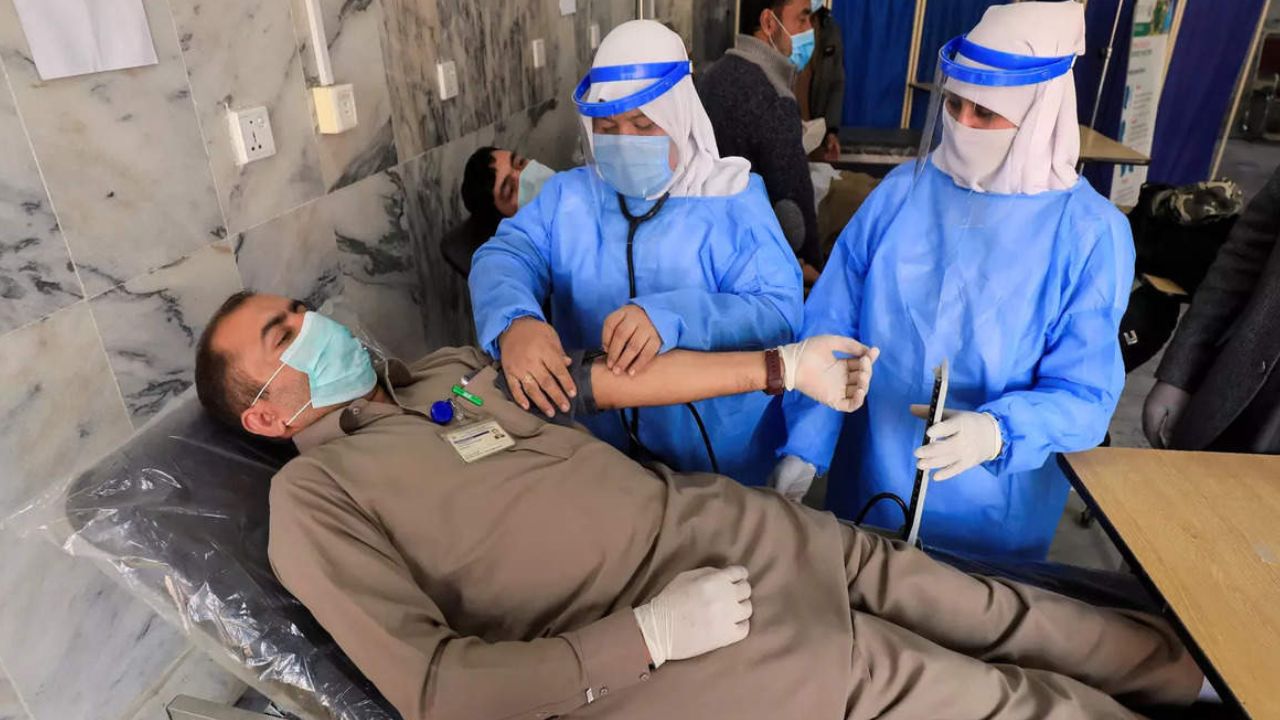
    The emergence of a new coronavirus variant, JN1, a subvariant of Omicron, has raised concerns as four cases were confirmed on Sunday in Pakistan.

    A spokesperson for the Ministry of Health confirmed that all four patients had recovered without encountering any complications, reports the Express Tribune.

    Amid global attention on the new strain, the World Health Organization (WHO) has classified JN1 as a “variant of interest.” Presently, WHO assesses the risk to public health from this strain as low based on existing evidence.

    Dr Nadeem Jan, the caretaker health minister, has said that authorities are closely monitoring the situation, adding that approximately 90 per cent of Pakistan’s population has received vaccination against Covid-19, a critical measure in combatting the spread of such variants.

    As winter brings its challenges, Dr Jan reiterated the importance of preventive measures, urging the public to continue wearing masks, maintaining social distancing, and following health guidelines to curb the spread of COVID-19 and other infectious diseases.

    A few days ago, the federal government decided to secure 500,000 doses of a COVID-19 vaccine in response to the potential resurgence of the new variant observed in multiple countries.


    The procurement strategy for Pfizer vaccines from the US was devised based on recommendations from the Emergency Operation Centre’s (EOC) technical advisory group.


    Previously, the Sindh Health Department confirmed the presence of a new variant of COVID-19 in two passengers arriving from overseas at Karachi Airport. However, it had clarified that no cases of the variant have been reported within the Sindh province.

  • Enforced Disappearance Bill never went missing, claims Chairman Senate

    Enforced Disappearance Bill never went missing, claims Chairman Senate

    In response to recent speculations surrounding the Criminal Law (Amendment) Bill 2021, the Senate Secretariat has issued a statement on Monday, debunking claims of the bill on enforced disappearances going “missing.”

    The Senate Secretariat clarified that the bill was duly passed by the National Assembly (NA) and subsequently returned to the NA after receiving approval from the Senate.

    https://twitter.com/OfficeSenate/status/1744311661509382327?s=20

    The Criminal Law (Amendment) Bill 2021, designed to introduce amendments to the Pakistan Penal Code (PPC) and Code of Criminal Procedure, received approval from the NA on November 8, 2021.

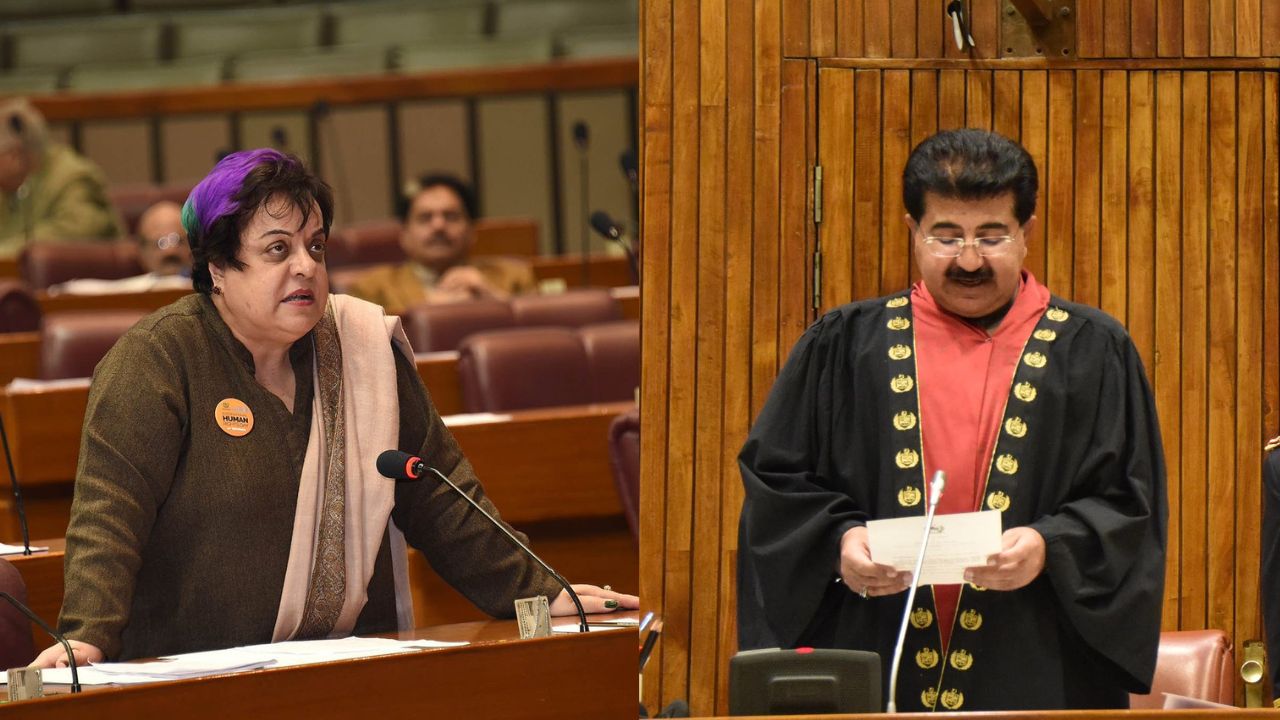
    Former human rights minister Shireen Mazari had previously voiced concerns about the bill’s status, suggesting that it had disappeared after being forwarded to the Senate.

    In its official statement, the Senate Secretariat refuted these claims, providing a detailed timeline of the bill’s progress. According to the Secretariat, the bill was initially introduced in the NA by the then-interior minister on January 7, 2021. After successfully passing the NA on November 8, 2021, the bill was transmitted to the Senate on November 10, 2021, adhering to constitutional and procedural requirements.

    Addressing the allegations raised by Shireen Mazari, the Senate Secretariat clarified that the bill was presented in the Senate on July 29, 2022. Subsequently, it was referred to the standing committee for a comprehensive consideration and report.

    “The Bill was passed by the Senate on 20th October, 2022 with some amendments. Accordingly, in pursuance of clause (2) of Article 70 of the Constitution of Pakistan, 1973 and rule 125 of the Rules of Procedure and Conduct of Business in the Senate, 2012, the Bill was returned to the originating House, i.e. the National Assembly of Pakistan on 20th October, 2022,” the statement said.

    The Secretariat underscored that, by Article 70 of the Constitution of Pakistan, 1973, and Rule 125 of the Rules of Procedure and Conduct of Business in the Senate, 2012, the bill was returned to its originating House, the National Assembly, on October 20, 2022, after securing approval in the Senate.

    The statement concluded by emphasizing that the bill was never missing, and it is not currently pending in the Senate Secretariat. Instead, it has been appropriately returned to the National Assembly after completing the required legislative process in the Senate. The Senate Secretariat reiterated its commitment to upholding constitutional and procedural standards in handling legislative matters.

  • Winning streak: Pakistani rupee appreciates 0.04% in fourth consecutive session

    Winning streak: Pakistani rupee appreciates 0.04% in fourth consecutive session

    In a resilient display, the Pakistani rupee continued its upward trajectory against the US dollar, marking gains for the fourth consecutive session in the interbank market on Monday. 

    The State Bank of Pakistan (SBP) reported a noteworthy appreciation of 0.04 per cent, with the rupee settling at Rs281.28 after a rise of Re0.12.

    This positive trend extends the rupee’s recent performance, as it achieved a 0.16 per cent appreciation during the preceding week, settling at Rs281.40 against the US dollar in the inter-bank market. 

    Impressively, this marks the eighth consecutive week of the local currency advancing against the greenback.

    The momentum driving the rupee’s strength can be attributed to the recent announcement of a staff-level agreement (SLA) between Pakistan and the International Monetary Fund (IMF). 

    This agreement pertains to the first review of the $3 billion standby arrangement (SBA), reinforcing investor confidence in Pakistan’s economic stability.

    A significant development contributing to this positive outlook is the notable increase in foreign exchange reserves held by the State Bank of Pakistan. 

    According to SBP data from the previous week, the central bank’s reserves surged by $464 million on a weekly basis, reaching $8.2 billion as of December 29.

    Internationally, the US dollar maintained stability on Monday, with investors eagerly awaiting a crucial US inflation report later in the week. This report is expected to provide clarity on the Federal Reserve’s monetary policy outlook. 

    The greenback’s recent rally was supported by a rebound in US Treasury yields as traders adjusted their expectations regarding the pace and scale of potential Fed cuts this year. 

    This cautious optimism globally has complemented Pakistan’s positive economic indicators, contributing to the sustained strength of the Pakistani rupee against the US dollar.