A US import ban on certain Apple smartwatch models came into effect Tuesday, after the Biden administration opted not to veto a ruling on patent infringements.
The United States International Trade Commission (ITC) decided in October to ban Apple Watch models over a patented technology for detecting blood-oxygen levels.
Apple contends that the ITC finding was in error and should be reversed, but last week paused its US sales of Apple Watch Series 9 and Apple Watch Ultra 2.
The order stemmed from a complaint made to the commission in mid-2021 accusing Apple of infringing on medical device maker company Masimo Corp’s “light-based oximetry functionality.”
“After careful consultations, Ambassador (Katherine) Tai decided not to reverse the… determination and the ITC’s decision became final on December 26, 2023,” the president’s executive office said in a statement on Tuesday.
Apple has been steadily ramping up fitness and health features with each generation of its Apple Watch, which dominates the smartwatch category.
In September, Apple released its Apple Watch Series 9, touting increased performance along with features such as the ability to access and log health data.
“Our teams work tirelessly to create products and services that empower users with industry-leading health, wellness and safety features,” Apple said when the ITC ban was issued.
“Masimo has wrongly attempted to use the ITC to keep a potentially lifesaving product from millions of US consumers while making way for their own watch that copies Apple.”
In May, a trial of Masimo’s allegations ended in a mistrial after jurors failed to reach a unanimous verdict.
Late last year, Apple filed two patent infringement lawsuits accusing Masimo of copying Apple Watch technology.
The Airbus A340 initially had been bound for Nicaragua when it was detained last Thursday at Vatry airport, east of Paris, where it had stopped for refuelling. A donkey flight is an illegal immigration used for unauthorized entry into foreign countries like the USA, UK, Canada etc.
It had arrived from the United Arab Emirates and was halted after an anonymous tip-off that it was carrying potential victims of human trafficking.
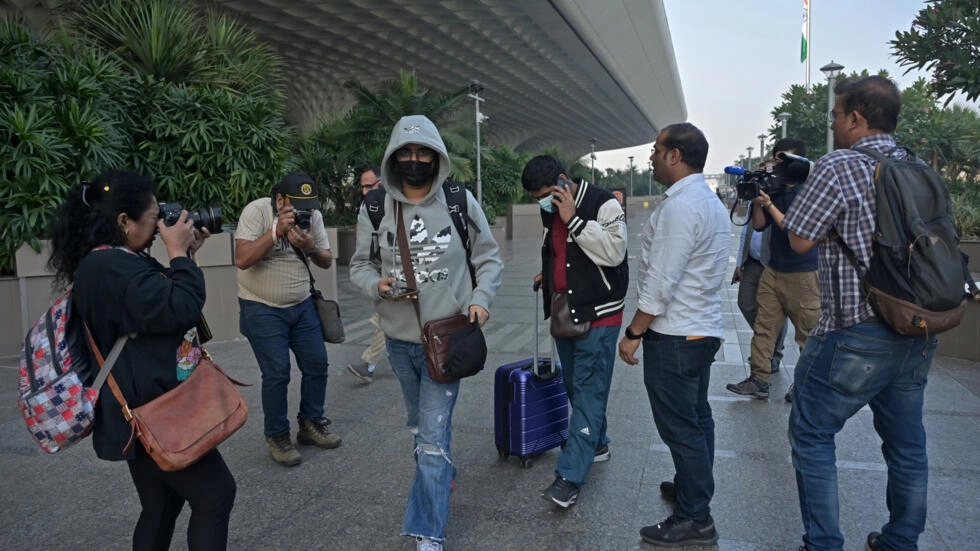
Of the original 303 people on the passenger list, 276 were on the plane that arrived in Mumbai before dawn on Tuesday.
Passengers began walking out onto the concourse four hours later but refused to speak to a large crowd of waiting journalists and covered their faces to shield their identities.
It was unclear whether the arrivals were questioned by authorities and India’s government has yet to issue a statement on their return.
Among those staying behind in France were two people questioned by police there over suspected people trafficking.
A judicial source said they were released after it was established the passengers had boarded the plane of their own free will.
French authorities are continuing to investigate the case for a potential violation of immigration laws, but no longer for people trafficking, judicial sources said.
Another 25 passengers sought asylum in France including five minors, local officials said.
A source close to the inquiry told AFP that those aboard were likely workers in the UAE bound for Nicaragua, which they intended to use as a staging post for journeys to the United States or Canada.
Authorisation for the plane to leave France came after a court ruled that any further detention of three of its passengers would be illegal.
The passengers of the flight, operated by Romanian company Legend Airlines, were put up at Vatry airport during the investigation.
Beds, toilets and showers were installed, the local prefecture said, while police prevented press and outsiders from entering the airport.
The passengers included 11 unaccompanied minors, according to Paris prosecutors.
The Indian embassy in Paris posted on X, formerly Twitter, on Monday that it was grateful for the “quick resolution” of the incident.
The 30 crew members were not detained. Some had handled the Dubai-Vatry leg while others were to take over for the flight to Nicaragua.
‘Mutual benefit’
The use of charter flights to aid migrants “is a relatively new phenomenon”, Manuel Orozco, director of migration issues at the Washington-based Inter-American Dialogue, told AFP last month.
Orozco said he believed that airline operators and Nicaraguan airport authorities made “an economic calculation” for their “mutual benefit”.
Indian deputy foreign minister V. Muraleedharan this month told parliament that close to 100,000 illegal Indian migrants had attempted to enter the United States this year, citing US Customs and Border Protection data.
Last year the issue caught public attention when four Indians froze to death while trying to cross into the United States on foot from the Canadian border.
They were among a group of 11 people attempting the journey, with the remaining seven detained by US authorities.
Many Indian migrants seek passage to the United States for economic reasons.
But human rights experts say there are several other factors at play, including the oppression of minority communities in India and extreme visa backlogs.
Unlawful Indian migration abroad is such an established phenomenon that it forms the backdrop of the Bollywood comedy-drama “Dunki”, released in cinemas last week.
Starring Shah Rukh Khan, one of India’s most bankable film stars, “Dunki” delves into the various means by which Indians attempt the perilous journey to the West with the help of unscrupulous agents and corrupt border officials.
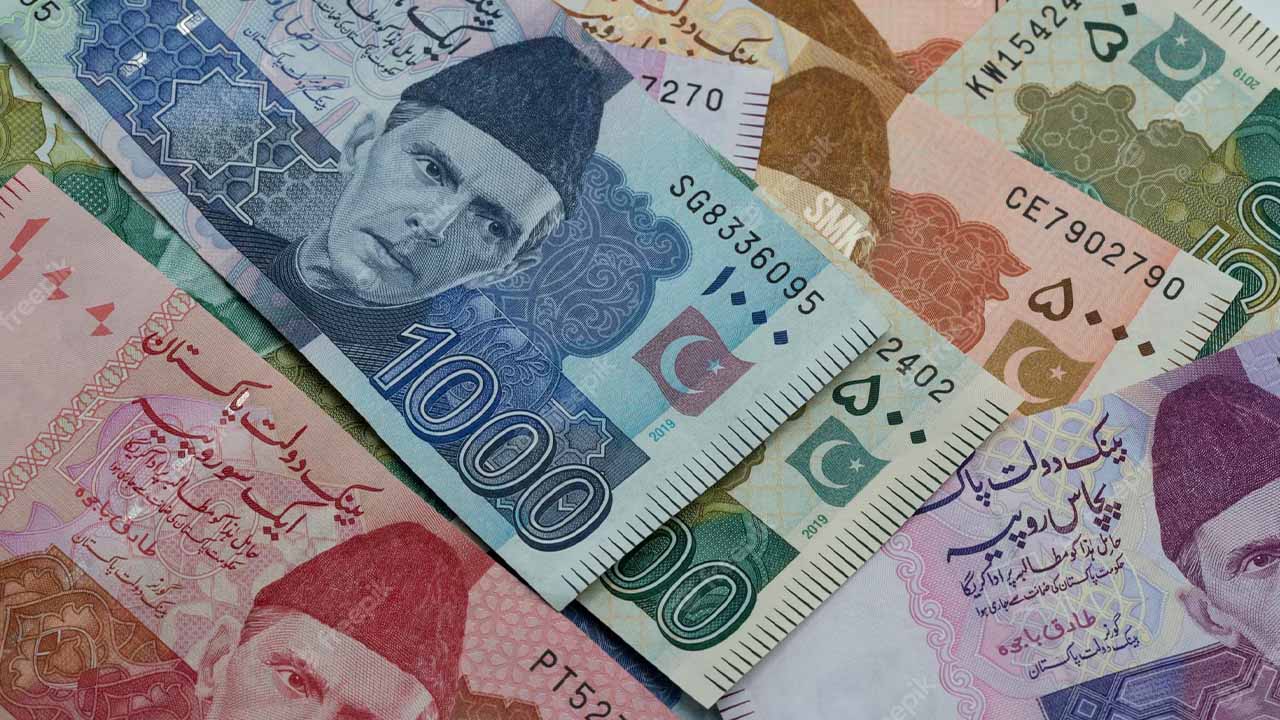
In Tuesday’s interbank session, the Pakistani rupee (PKR) strengthened by 15.82 paisa against the US dollar (USD), concluding the trade at PKR 282.37 per USD—improved from the previous closing of PKR 282.53 per USD.
The Pakistani currency experienced intraday fluctuations, reaching a high bid of Rs282.8 and a low ask of Rs282.4.
Within the open market, Exchange Companies quoted the dollar at Rs282 for buying and Rs284.8 for selling.
Against major currencies, the PKR depreciated by 46.13 paisa against the Euro, closing at Rs311.27, compared to the prior value of Rs310.81.
The British Pound became more affordable by 17.27 paisa, closing at Rs358.48, in contrast to Rs358.66 from the preceding day.
The Swiss franc demonstrated gains of 4.63 paisa, concluding at Rs329.89, a slight increase from Rs329.84 in the previous session.
Against the Japanese Yen, the PKR gained 0.23 paisa, settling at Rs1.9841 as opposed to Rs1.9864 a day ago.
The Chinese Yuan experienced a decline of 3.37 paisa, closing at Rs39.52 compared to Rs39.55 in the previous session.
The Saudi Riyal concluded at Rs75.27, indicating a loss of 4.32 paisa from its previous value of Rs75.31.
Simultaneously, the UAE Dirham decreased by 4.73 paisa, transitioning from Rs76.89 a day ago to Rs76.93.
On Tuesday, gold rates in Pakistan experienced an ascent, reaching Rs219,600 per tola in the domestic market, reflecting a gain of Rs300 throughout the day.
The 10-gramme gold price in Pakistan rose to Rs188,272, marking a Rs258 increase, as reported by the All Pakistan Gems and Jewellers Sarafa Association (APGJSA).
In contrast, international gold prices maintained stability at $2,072 (with a premium of $20), as noted by the APGJSA.
Notably, silver retained its position at Rs2,650 per tola in the local market.
A video featuring Syed Basit Sultan, a Pakistan Muslim League Nawaz (PML-N) candidate from NA-177 and other constituencies, has sparked controversy on social media.
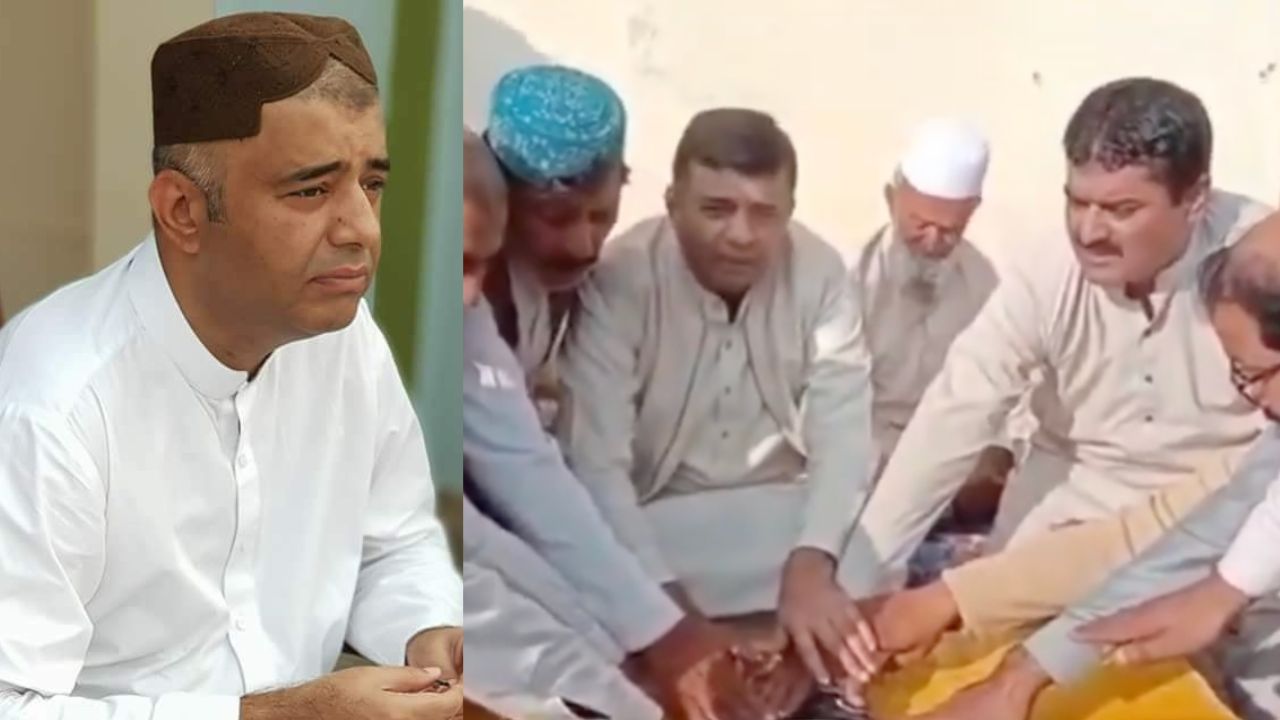
The politician took oath from his supporters on the Holy Quran to swear allegiance to him ahead of the general elections scheduled for February 8.
In a video that has now gone viral, Bukhari can be seen sitting with supporters who swore allegiance to him.
The political journey of Sultan took a turn last year when he switched allegiances, leaving the Pakistan Tehreek-i-Insaf (PTI) to join the ruling coalition under the leadership of PML-N President Shehbaz Sharif.
Recently, Sultan, accompanied by his wife and daughter, submitted nomination papers for NA-176, NA-177, PP-272, and PP-273.
Responding to critics who questioned the unconventional oath-taking approach, Sultan defended his actions, stating that supporters, including former union council chairmen, voluntarily participated in the oath.
He argued that the purpose was to dispel opposition propaganda suggesting a lack of support from constituents. Sultan explained that he initially resisted the idea of the oath but eventually yielded to the request of friends.
The caretaker government of Sindh on Tuesday announced a public holiday on December 27 (tomorrow) on account of the 16th death anniversary of former prime minister Benazir Bhutto.
Sindh Caretaker Chief Minister Justice (Retd) Maqbool Baqar’s spokesperson made the announcement, declaring a public holiday across the province tomorrow.
“The Government of Sindh has been pleased to declare 27th December 2023 (Wednesday) as a Public Holiday throughout the Province of Sindh on the occasion of Shahadat of Mohtarma Benazir Bhutto Shaheed for all offices, Autonomous, Semi-Autonomous Bodies, Corporations and Local Councils under the Administrative control of Government of Sindh, except the essential services,” said the notification issued today.
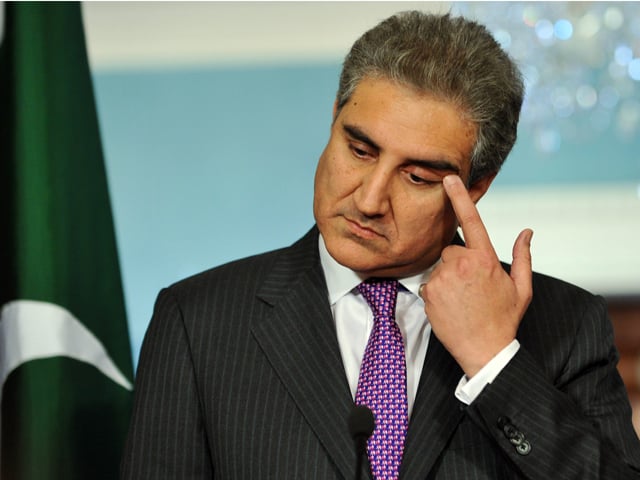
Pakistan Tehreek-e-Insaf (PTI) Vice-Chairman Shah Mahmood Qureshi was arrested again on Wednesday by Rawalpindi police from Adiala jail in connection with a case related to the May 9 riots.
Earlier, Shah Mahmood Qureshi was detained for 15 days after the Deputy Commissioner (DC) Rawalpindi issued an order to that effect.
According to the orders, the PTI leader will be detained owing to his involvement in attacking the GHQ, Rawalpindi Gate, on May 9.
Priviously, there was news circulating that Shah Mahmood Qureshi can be released from Adiala Jail today as the Supreme Court (SC) had approved his bail last week on Friday.
The former federal minister’s lawyer, Barrister Taimur Malik, reached Adiala jail today with required bail bonds.
Judge Abual Hasnat Zulqarnain, who is hearing the cipher case, also arrived at Adiala jail in Rawalpindi.
The wife of PTI founder Imran Khan, Bushra Bibi, and lawyers Umair Niazi and Rai Muhammad Ali were also present.
The SC approved the post-arrest bail of PTI leaders in the cipher case as well as the apex court also determined that Islamabad High Court (IHC) incorrectly exercised discretion deny the bail of petitioners in the said case.
After examining the material available on record, the court found that there was no sufficient incriminating material available at this stage to show that Khan communicated the information contained in the cipher telegram received from PAREP (Ambassador), Washington, USA, to the public at large with the intention or calculation, directly or indirectly, in the interest or for the benefit of a foreign power, nor the disclosed information related to any of the defence installations or affairs, nor did he disclose any secret official code to the public at large.
In the video, the actor, following the director’s instructions, picks up a burning shawl and tosses it aside for the scene. However, as the shawl lands, flames spread on the ground. Unaware of the fire, Ayeza Khan continues moving backward, unintentionally stepping into the flames. A voice can then be heard calling Ayeza’s name to warn her. She quickly becomes careful and narrowly avoids an accident. Along with the video post, Ayeza thanked Allah for keeping her safe. She wrote that being an actor is not easy. “When the director says ‘action’ we forget what is going to happen next and just give our best. The quest to put on a performance dawns on us.” She wrote that sometimes unexpected things happen on the set which the on-screen viewers don’t see but Allah protects them.
“I am thankful to Allah that He keeps me safe every day.”
In a major legal victory for the Pakistan Tehreek-e-Insaf (PTI), the Peshawar High Court (PHC) temporarily halted the Election Commission of Pakistan’s (ECP) directives and restored the iconic party symbol ‘bat’.
The PHC also stated while announcing the verdict that a double bench will hear the matter after winter vacations.
PHC judge, Kamran Hayat Miankhel, said the election symbol can’t be revoked after the release of the election schedule.
Earlier, Pakistan Tehreek-e-Insaf (PTI) filed a petition in Peshawar High Court (PHC) to challenge the Election Commission of Pakistan’s (ECP) order declaring intra-party polls illegal and revoking its electoral symbol, the cricket bat.
Justice Kamran Hayat Miankel of the PHC will hear the petition filed by PTI today after the party requested an urgent hearing in court.
According to the petition filed by PTI, the ECP has no authority to decide about the intra-party elections, adding that the complainant who challenged intra-party polls is not a member of the party.
“The ECP withdrew the electoral symbol ‘bat’,” it read asking the court to form a bench comprising senior judges and hear the plea on Tuesday (today).
In discussing the recent decision, the chairman of the PTI, Gohar Khan, strongly criticised the ECP but expressed optimism that courts will support the request for its reinstatement.
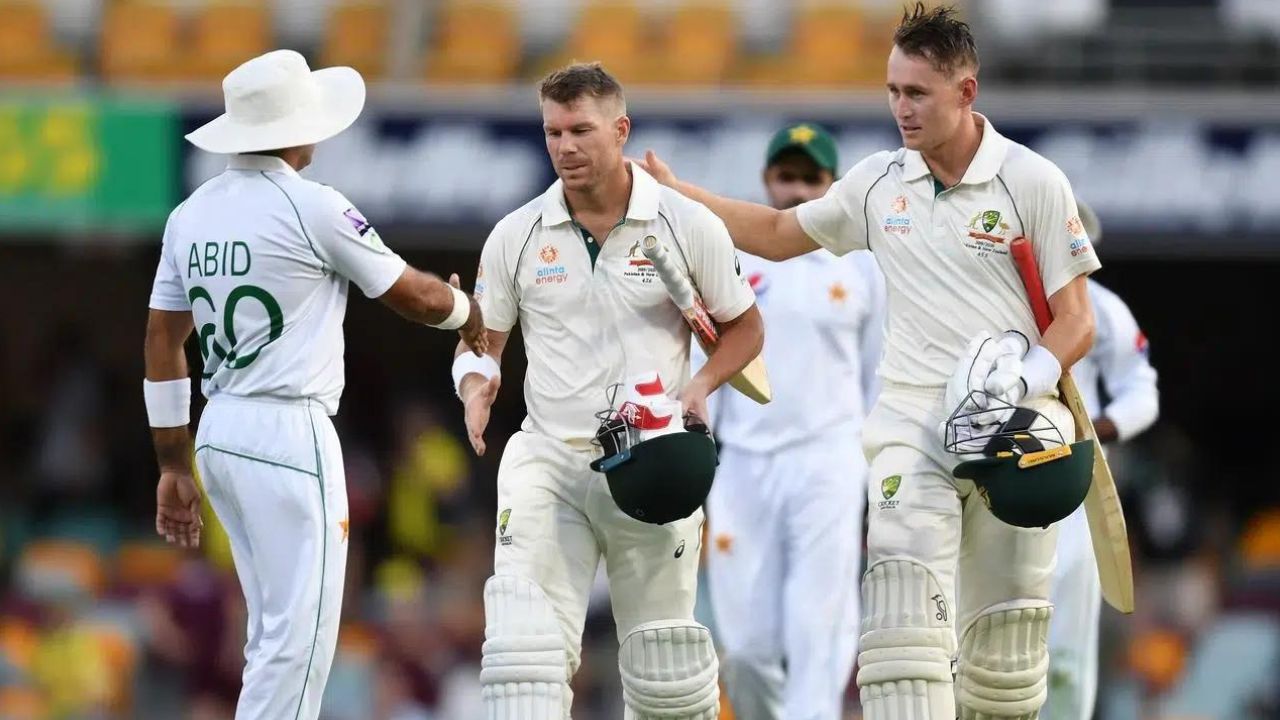
At the end of the first day of the Boxing Day Test between Pakistan and Australia, the Kangaroos scored 187 runs for the loss of three wickets.
Pakistan won the toss and invited the host team to bat first. David Warner and Usman Khawaja opened the batting, then Abdullah Shafiq, standing at first slip on a total score of six runs, dropped Warner’s easy catch.
The openers then put on a 90-run partnership, and Australia lost Warner, who scored 38 and was caught by Babar Azam on Salman Agha’s delivery. The second wicket of the Kangaroos fell on a total of 108 runs when Usman Khawaja, at 42 runs off 101 balls, was dismissed by Hasan Ali.
After rain disruption, play resumed when Australia’s third wicket fell for 154 runs and Aamir Jamal sent Steve Smith to the pavilion for 26 runs.
Hasan Ali, Salman Ali Agha, and Aamir Jamal took one wicket each for Pakistan