Blog

  • Karachi teenage girl allegedly marries her kidnapper

    Karachi teenage girl allegedly marries her kidnapper

    A teenage girl who had been reported missing from Karachi has allegedly married her kidnapper in Lahore, according to police, Dawn has reported.

    The girl’s family had filed a First Information Report (FIR) under Section 365-B of PPC while the police had conducted raids in Peshawar and Lahore to find her.


    The police have claimed that the girl married the kidnapper with her consent. The family had named Abdullah in the FIR, and according to Korangi-SSP Sajid Amir Sadozai, the girl’s marriage documents are being verified.


    The girl had gone missing on February 13. The case is currently under investigation, and further details are yet to be revealed.

  • Nadra confirms data theft of Army Chief’s family

    Nadra confirms data theft of Army Chief’s family

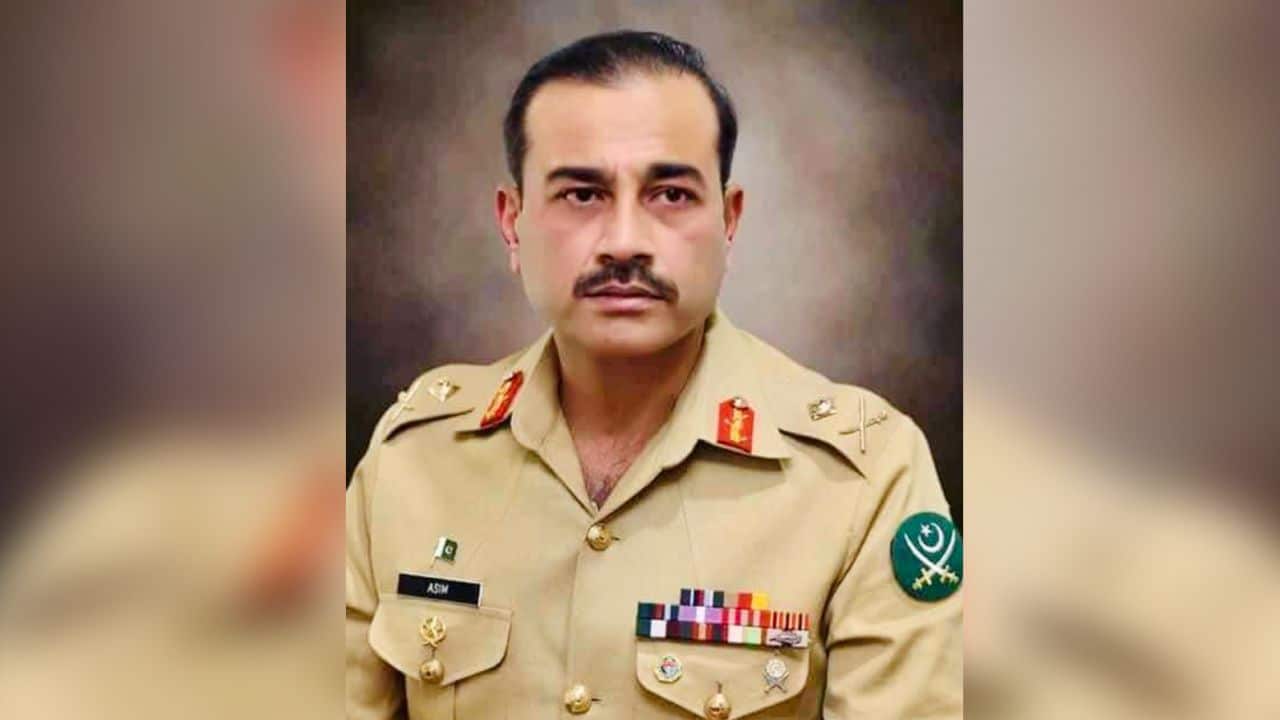
    In a news report published on Sunday in The News, it was stated that the National Database Registration Authority (NADRA) is set to finalise an inquiry identifying those behind a data leak involving the incumbent Chief of Army Staff (COAS) General Asim Munir’s family.

    Journalist Azaz Syed wrote that NADRA has issued a detailed statement confirming the data theft of Army Chief’s family, according to the same news outlet.

    According to the report, “Nadra finalises probe into illegal access to COAS family’s data, dated April 02, 2023, it is to clarify that the subject probe into illegal access to COAS family’s data is a continuation of Nadra’s stringent measures to protect the citizens’ data from unauthorised access, when he sought help from premier security agency upon assumption of charge as chairman Nadra in June 2021.”

    Multiple users of different organisations had accessed General Asim Munir’s data before he was appointed COAS. Other than Nadra, nine institutions, including law enforcement agencies, banks and housing authorities, accessed the COAS’s family data.

    About the ongoing inquiry, COAS’s family data was accessed in absence of Nadra Chairman Tariq Malik, who was on ex-Pakistan leave (on official assignment) in November 2022.

    Last November, illegally-accessed information was reportedly used in an attempt to block the appointment of the current army chief.

    In October 2022, five senior Lieutenant-Generals were contending for the position of Pakistan’s new army chief. During this time, a junior data entry operator at NADRA, Farooq Ahmed, allegedly accessed the data of a female family member of Gen Munir and collected the family’s details and identity card numbers.

    This data was later used in the Federal Investigation Agency’s (FIA) Integrated Border Management System (IBMS) to track international travel destinations the family had travelled to.

    The prime minister had an investigation launched into the data leak.

    As regards to the ongoing probe into the COAS family’s data, the NADRA chairman ordered the inquiry which is in the closing phase. Culprits, from DGs to the data entry operators, have been identified.

  • Ishaq Dar to attend IMF, World Bank meetings in US

    Ishaq Dar to attend IMF, World Bank meetings in US

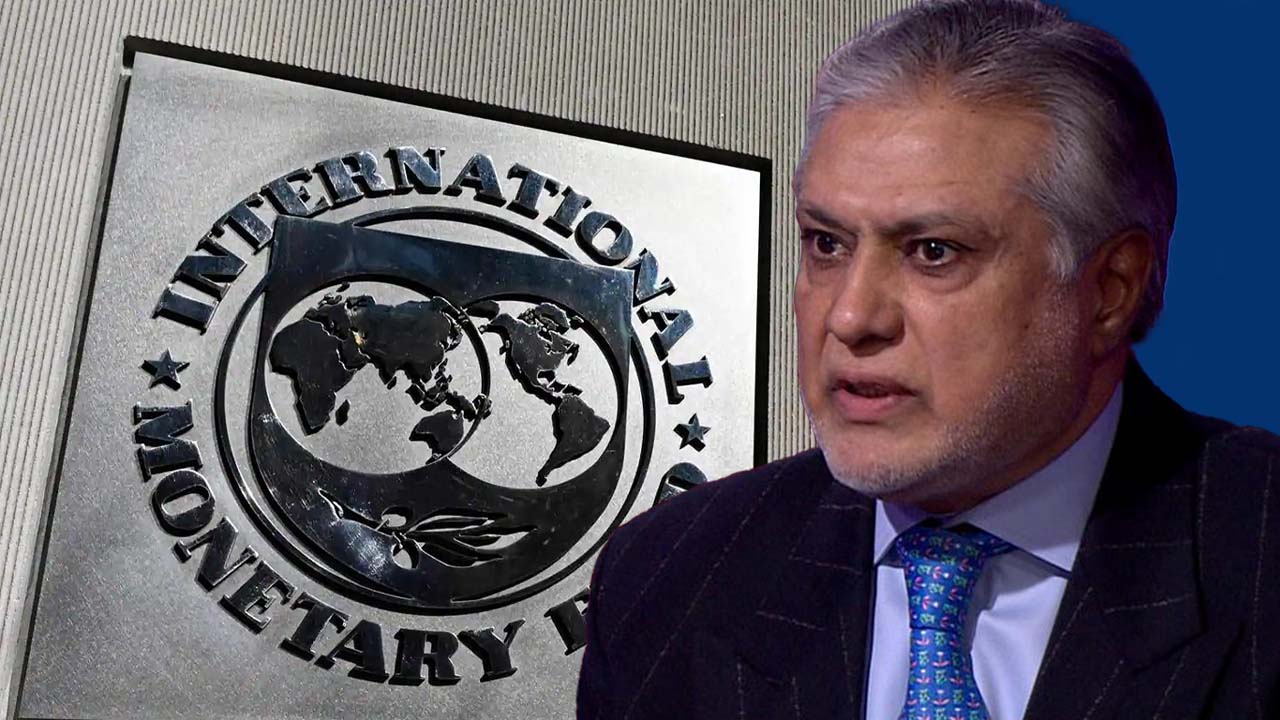
    Finance Minister of Pakistan, Ishaq Dar, will lead a delegation to the United States to attend the annual spring meeting of the Breton Wood Institutions (BWIs), comprising the International Monetary Fund (IMF) and World Bank, from April 10 to 16.

    The delegation includes officials from the Finance and Economic Affairs Division and the State Bank of Pakistan (SBP) governor. The delegation is expected to present new proposals to the IMF and World Bank for the provision of dollar inflows.

    IMF and Pakistan will also discuss the possibility of combining the remaining 10th and 11th reviews under the Extended Fund Facility (EFF) program, worth $6.5 billion, if the pending 9th review is completed. The EFF program, signed in 2019, is set to expire on June 30, 2023, and cannot be extended beyond the deadline.

    The delay in the 9th Review’s completion, scheduled for December 2022, has resulted in the delay of the 10th Review, which was to start in February 2023. The 11th Review was scheduled to begin on May 3. The delay in the 9th Review will increase the cost of correcting the situation.

    The government of Pakistan has taken difficult decisions to revive the IMF program, but there is no easy solution to the country’s ailing economy. The IMF is seeking verification from Pakistan’s bilateral friends, including Saudi Arabia, the UAE, and Qatar, to provide additional assistance of $6 billion until the end of June 2023.

    SBP’s foreign exchange reserves currently stand at $4.2 billion, which is insufficient to meet obligations related to foreign debt servicing, including principal and markup. It remains to be seen how the completion of the bailout program will proceed, given the delay in the 10th Review.

  • Pakistan to receive first-ever shipment of low-cost oil from Russia in May

    Pakistan to receive first-ever shipment of low-cost oil from Russia in May

    Minister of State for Petroleum, Musadik Malik, announced on Sunday that Pakistan will receive its first-ever shipment of low-cost oil from Russia next month, which is expected to benefit the general public.

    In an interview with a private news channel, the minister confirmed that the government had finalised a deal with Russian authorities following successful dialogues. The shipment is expected to arrive in May via cargo. The minister also ensured that the government will pass on the cost savings to consumers.

    Regarding power and gas tariffs, Malik stated that the government is planning to introduce different tariffs for the poor and elite classes. He stated that the government has already made progress in this regard and hopes to issue separate billing for the underprivileged and elite class. The new tariff structure is expected to provide relief to the poor segment of society.

    Last month, officials from the Petroleum Division had disclosed that Pakistan was in talks with Russia to procure crude oil at around $50 per barrel, which is $10 per barrel lower than the price cap imposed by the G7 countries on oil imports from Russia due to its conflict with Ukraine.

    The officials had shared that Moscow was keen on completing all the prerequisites, such as the mode of payment, shipping cost with premium, and insurance cost, before signing the agreement with Pakistan.

  • Arslan Ash once again takes Tekken trophy at EVO Japan 2023

    Arslan Ash once again takes Tekken trophy at EVO Japan 2023

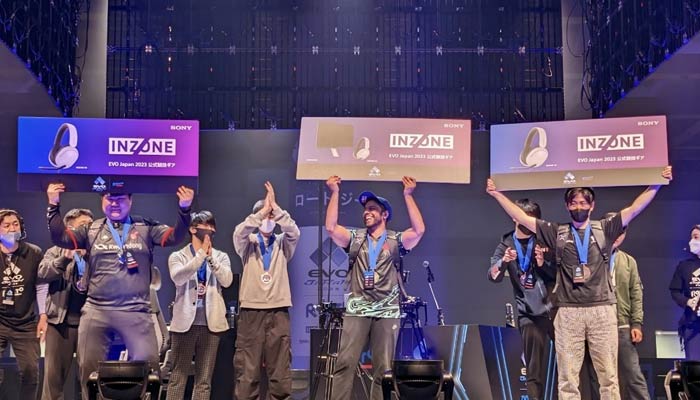
    Pakistan gamer Arslan “Ash” Siddique has won the Tekken 7 competition at EVO Japan 2023 on Sunday after beating South Korea’s Meo-IL.

    The Lahore-based player has now won three EVO titles. In 2019, he won the Tekken 7 tournament in Japan as well as the Evolution Championship Series in the United States.

    In August last year, he finished third in the EVO 2022 Tekken 7 competition.

    On Sunday, Siddique played as Zafina to dominate Meo-IL, who was using Geese Howard, 3-0 in the tournament’s final leg.

    Arslan Ash is a well known taken 7 player. He represents Pakistan at different platforms of E- gaming.

    His third trophy win at EVO Japan 2023 for Tekken 7, is now in direct competition for Knee’s record. Jae-Min “Knee” Bae holds the record for three EVO wins. He won his first back in 2013 at the Tekken Tag Tournament 2 event and subsequently, 2 more at EVO 2018 and 2022.

    Previously, Pakistan’s Arslan Ash won EVO Japan 2019 and the EVO Championship series. He went toe-to-toe against Rangchu for the upper bracket finals and Meo-IL in the Grand Finals. He mained Zafina, showcasing some flashy moves.

    This was the last time we’ll see Tekken 7 at an EVO event. Bandai Namco is planning full steam ahead for a Tekken 8 release. We don’t know when we’ll get our hands on those juicy Heat Smashes, Heat Bursts, and new juggle combos. But we’re eagerly waiting.

    Ash thanked his sponsors, fans, and the growing Pakistani Tekken Community for achieving this milestone in his eSports career. We might get to see him at EVO Las Vegas, adding another trophy to his name.

  • The high cost of not automating healthcare records can be death

    The high cost of not automating healthcare records can be death

    Shafiq* is a middle-aged Pakistani man, working as a driver for a household in Lahore. His son has just been diagnosed with early-stage lung cancer. He finally manages to take time off to take his son to an oncologist in a government hospital. The oncologist asks for all the lab reports of the patient. Shafiq hands over a heavy file. It turns out, one of the reports has been misplaced. The doctor tells Shafiq to come back after getting his son’s lab work done again. Shafiq now has to find the money to pay for more testing and also has to plead with his boss to give him another day off. Meanwhile, his son’s condition is only getting worse.

    When a healthcare system has no proper infrastructure for medical record keeping, the result is waste and medical errors. For example, the cost of repeat lab work will either be borne by Shafiq if he goes to a private lab or by the taxpayer if he opts for a government one. Repetition of tests will also use up limited laboratory resources and delay the test results of other patients. Shafiq’s story also points out another avenue of concern: medical misdiagnoses. Generally, a primary care physician, or family doctor, ensures an individual’s health through keeping family histories, doing annual health screenings and ensuring immunisations. These doctors maintain all this information is the form of electronic medical records. Shafiq’s son had no such family doctor to track his smoking habits or note the prevalence of cancer in his family history. In fact, the first doctor he saw gave him antibiotics for what he diagnosed as a bacterial infection of the lungs.

    In a country with less than 125,000 government hospital beds for more than 200 million people, there is little room for such errors. According to the World Health Organisation (WHO), Pakistan has one of the lowest per capita current health expenditures among Eastern Mediterranean countries, second only to Afghanistan. Because of our chronic debt issues, our healthcare spending will likely remain dismal. In such an environment, technology is a relatively inexpensive tool that can be used to improve efficiencies and better population health.

    Pakistan’s larger cities are home to a select few secondary and tertiary care hospitals, which are meant to provide inpatient care, ambulatory services and specialist care. The major swathe of the country, however, does not have access to these hospitals. In rural areas, the major public health facilities are small establishments called Basic Health Units (BHUs). In the more than 5,500 BHUs across Pakistan, outpatient facilities are provided to ordinary citizens. Contrastingly, the private sector is dominated by specialist care with doctors running their own independent clinics. Here, primary care is seen as neither lucrative nor prestigious. Patients do their own guesswork at diagnosing their problems and then decide which specialist they should see.

    But be it private or public, most doctors in Pakistan are reliant on pen and paper for record keeping. Patients like Shafiq* are meant to keep these physical records safe in a folder and bring them to each appointment. According to one doctor practicing in a government-run tertiary hospital in Lahore, the only records their hospital keeps is the patient’s admission date, discharge date and what kind of operation was performed. Any blood tests, imaging or other notes go into a black hole of patient data. 

    This is all set to change in the province of Punjab. The government is in the process of completing its transition from physical registers to electronic medical records in BHUs across the province.

    Khalid Sharif is Manager MIS in the government’s Health Information and Service Delivery Unit (HISDU). His unit aids the primary and secondary health department in developing and running health dashboards, inventory management systems and mobile applications.

    “Electronic Medical Records (EMR) came about because we wanted to be able to assess our performance as a department,” he said. “Before this, we had no credible way of knowing any metrics like doctor-patient ratios or the number of daily births.”

    The process began in around 2017, when they began testing out earlier versions of EMR in select BHUs. Now, they are running the multi-module application across more than 2,500 BHUs.

    “We expect to be fully paperless in about one and a half month’s time,” he said.

    Each employee at a BHU logs in using their computerised national identity card (CNIC) number and has access to a different module of the system. When a patient comes in, they are registered using their CNIC number. The receptionist takes the patient’s vitals and adds them to their profile. Then, when the patient goes to the doctor’s office, the doctor select a diagnosis and prescribes medicine. Finally, the medicine dispenser checks off the prescription he/she is filling, which automatically updates inventory records.

    “If someone doesn’t have a CNIC we have created another option,” Sharif said. “They can use a relative’s CNIC and we can select their relationship to the CNIC holder.”

    Dr. Faiza Ahmed* has been practicing as a health officer at a BHU near Faisalabad for the last couple of years. When I visited her, they were partially using the EMR system. Out of the 150 patients that had been to the BHU that day, they had electronically registered around 90 of them.

    Most of her patients, especially women, don’t bring along CNICs. But she has made it a point to especially encourage expectant mothers to bring along their own or a relative’s CNIC so that she can track the health of mothers and babies. “This way, I can see a patient’s data even if she had her baby six months ago,” she said. “I can see if she was hypertensive or diabetic back then and how her child was doing back then.”

    Dr. Ahmed has not received instructions to go paperless and she is skeptical of the idea.

    “It’s practically impossible to register all 200 patients because of resource limitations,” she told me. “Internet speed in this area is also very slow.”

    When I asked Khalid Sharif about this, he said that they had already address this issue by creating an offline version of the software which automatically uploads the data when the internet reconnects. However, Dr Ahmed said that the offline version is not functional yet.

    Another reason why the system might feel tedious to Dr Ahmed is because they are currently running two parallel systems. The EMR system has been designed with the idea of print receipts. When the midwife sends the patient off to the doctor, they are supposed to bring their registration slip along. Similarly, the doctor is supposed to print out a prescription slip and hand it to the patient. However, Dr. Ahmed contended that the BHU cannot afford to thermally print slips for every patient. So currently they are both logging data online and writing all the information manually on pieces of paper to give to the patients.

    “I think there’s always resistance to change — everyone gets used to a certain system and doesn’t want to get out of it,” Zara Ansari, a consultant for the government, said. “As with any new data system, it takes time, but this is definitely the future.”

    Zara Ansari is a senior consultant at ACASUS, a management consultancy firm that is assisting the health department with the rollout of electronic medical records. Ansari and her team have been giving trainings to doctors to make them comfortable with the new system. They have also been analysing data for the government to monitor the level of compliance that each BHU is showing.  

    “We started off by assigning lax targets so people can be onboard with actually doing this and then progressively over time making it more strict,” she said. “As of recently, we will be monitoring to see which facilities are doing completely paperless entry.”

    There are of course caveats to this new age technology. There is not a lot of clarity around the privacy of the date being collected and how it will be kept safe. There seem to be no conversations happening around data privacy or patient confidentiality in government halls. 

    Caveats and all, Punjab is making a step forward into modern healthcare. How successful they will be is something only time can tell.

    (*Names have been changed to protect privacy)

  • Resham, you might not be depressed but 75 per cent of Pakistanis are

    Resham, you might not be depressed but 75 per cent of Pakistanis are

    In a recent interview on PTV Home, veteran actor Resham claimed that depression “does not exist”, which is an incredibly insensitive and illogical statement for a person in her position to say. Depression is not trivial; it is a genuine health condition. And it very much exists in Pakistan — more than most countries in the world.

    In 2022, public health experts and intellectuals pointed out that around 75 per cent of the population, especially youngsters, are experiencing stress, anxiety or depression in Pakistan. We have one of the highest rates of mental ill-health in the world; according to one estimate, around 50 million people in Pakistan suffer from debilitating issues such as depression, abuse, alcoholism, post-traumatic disorder, eating disorders, manic depressive psychosis, and schizophrenia. What is even more alarming is that according to the World Health Organisation (WHO), there are only 0.19 psychiatrists in Pakistan per 100,000 inhabitants, one of the lowest numbers in the world. The absence of trained mental health professionals in the country has created a major treatment gap, leaving more than 90 per cent with mental health issues untreated. More than 20 million Pakistanis (10 per cent of the country’s population) suffer from some form of mental health condition.

    With a deteriorating economy, unemployment, an all time high inflation, and low salaries, survival seems nearly impossible in Pakistan right now. People are getting killed in stampedes just to get free ration for themselves.

    Last year, WHO and the International Labour Organisation (ILO) called for concrete actions to address mental health concerns in the working population, saying that an estimated 12 billion workdays are lost annually due to depression and anxiety, costing the global economy nearly $1 trillion.


    The struggles and torment some people are facing in Pakistan are truly heart-wrenching, the reasons why the country is wrapped in depression. Conditions are so palpable and scary that last month we witnessed a Grade 17 officer of the Inland Revenue Service (IRS) in Pakistan’s Federal Board of Revenue (FBR) who allegedly wrote a letter to Prime Minister Shehbaz Sharif requesting permission to start engaging in corrupt activities from April 1. The officer claimed that he faced difficulties in meeting his expenses due to his low salary and the current high inflation in the country. In the letter, the officer said that he had been working with the FBR for the last four years and has never committed a single rupee of corruption, despite offers to earn below-the-table money on several occasions. However, now he was not left with any option but to look for illicit means to make ends meet, and seeks permission from the prime minister to engage in corruption. The officer also shared his salary, which is Rs122,922, and his general expenses, which amount to Rs110,500, not including petty expenses as a husband and father.

    In these desperate times how would one not be scared, anxious, worried and in depression? We can only hope that people take mental health seriously. Times are tough and only the right help and guidance will help us get through. And we hope that people acknowledge and understand the reality of these conditions and not disregard that we are very much, in fact, a depressed nation.

  • ‘Cringe’: Twitter slams Varun Dhawan’s defence for kissing Gigi Hadid at Ambani event

    ‘Cringe’: Twitter slams Varun Dhawan’s defence for kissing Gigi Hadid at Ambani event

    Events hosted by the Ambanis are among the most anticipated nights in Bollywood. Indian film royalty as well as international stars arrive dressed to the nines to provide a spectacular night filled with entertainment.

    However, as much as we plebeians can gape at this show of money, there was a moment that did not sit well with twitter users. A viral clip showed a performance by Bollywood actor Varun Dhawan pulling Hollywood model Gigi Hadid on stage and spinning her around before kissing her cheek.

    The performance was planned, as Hadid posted a clip on her Instagram stories, with the caption saying: “Thank you Varun Dhawan for making my Bollywood dream come true.”

    But Dhawan drew backlash on social media because of his response to a twitter user and defending his behavior by trolling critics for being ‘woke’.

    The reply irked users, leading to many pointing out that even though the dance was planned, kissing Hadid was crossing boundaries.

    https://twitter.com/shak3342/status/1642491754195582980?s=20

    Twitter users pointed out that this was not the first time Dhawan had crossed boundaries, as they shared old clips of him crossing boundaries with other Bollywood actresses.

  • Nawaz to visit Saudi as royal guest

    Nawaz to visit Saudi as royal guest

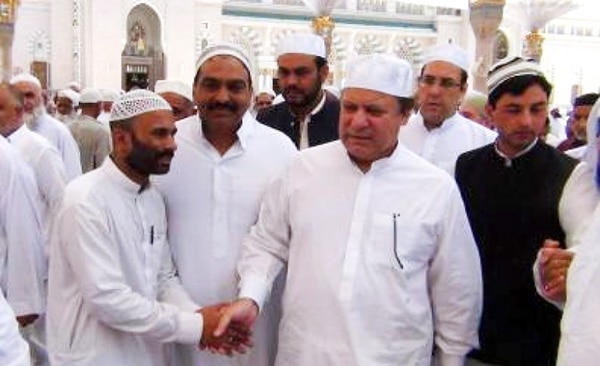
    Pakistan Muslim League-Nawaz (PML-N) supremo Nawaz Sharif will perform Umrah in the last days of Ramzan on the invitation of the royal family.

    Nawaz is set to visit the Kingdom on the invitation of the Saudi ruler, with the former Prime Minister being a royal guest in the country.

    The news of Sharif’s planned visit to Saudi Arabia has led to speculation that he may use the opportunity to return to Pakistan. However, there has been no official confirmation from Sharif or his party about his plans to return.

    The PML-N supremo was granted an eight-week bail on medical grounds in October 2019, and, he was allowed to travel to London for treatment for four weeks. However, Nawaz has not returned since then.

  • Najam Sethi denies talks with ICC about Pakistan’s World Cup matches

    Najam Sethi denies talks with ICC about Pakistan’s World Cup matches

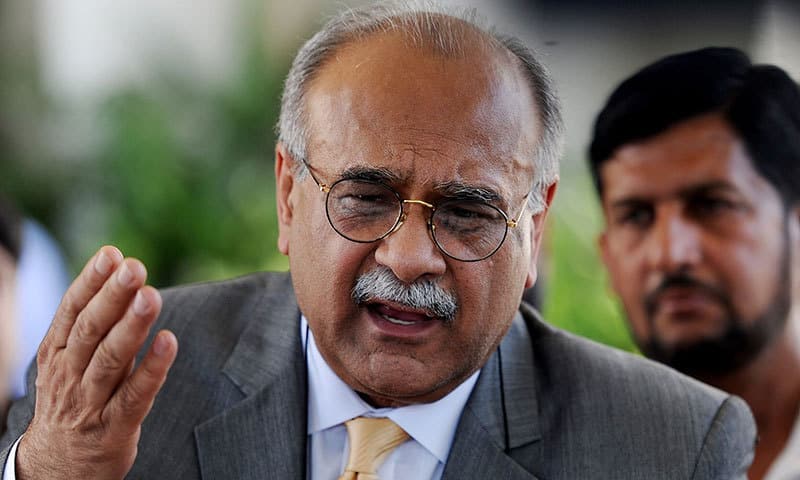
    Najam Sethi has denied speaking to International Cricket Council (ICC) about playing World Cup 2023 matches in Bangladesh. Pakistan Cricket Board (PCB) has clarified that the ‘hybrid model’ was strictly pertaining to the Asia Cup since India will not travel to Pakistan.


    “Referring to the media talk in Rawalpindi/Islamabad on Thursday, Mr. Najam Sethi said he had briefed the media on the hybrid model he had presented to the Asian Cricket Council officials for the ACC Asia Cup to end the impasse that had been created following the BCCI’s decision to not send its team to Pakistan.

    “This proposal – to play India’s matches at a neutral venue and the rest in Pakistan – is under discussions within the ACC,” a PCB media release stated.

    Sethi said that he was misquoted by a section of the media.

    “At no stage during Thursday’s media interaction, did I give any reference to the ICC or made any remarks on the ICC Men’s Cricket World Cup 2023, which is scheduled in October. This matter has not been mooted or discussed at any ICC forum so far,” Sethi said in the press release.
    The PCB through media release gave a rejoinder to one of its local English news agency.

    “In this background, the PCB is disappointed that a leading English language newspaper has misquoted, misinterpreted, and misrepresented Mr. Sethi’s comments and gave the impression that PCB’s hybrid model was presented and discussed at the ICC, which is factually incorrect.
    “At this stage, the PCB is only in discussions with the ACC over the hosting of the ACC Asia Cup and no discussions regarding the World Cup have taken place with the ICC.” However, to pacify the country’s media, PCB in its press release did mention that the concept of a ‘hybrid model’ could be discussed later but even the bigwigs know that any such recommendation will be rejected at the onset. “This is not to say that the hybrid model will not be advocated at the proper ICC forum at the right time,” it stated in the end.

    It must be mentioned that there is very little chance that Asian Cricket Council will pass the budget to allow Pakistan to play its Asia Cup matches at home instead of UAE or Qatar.
    The only possibility will be that PCB will have to bear the entire cost, including the logistics of the broadcasters in order to host matches in their country.