Blog

  • IMF Executive Board meeting to discuss revival of loan plan today

    IMF Executive Board meeting to discuss revival of loan plan today

    The International Monetary Fund (IMF) executive board will meet on Monday (today) to discuss the bailout plan for Pakistan.

    The 8th and 9th tranches, totaling over $1.2 billion, are anticipated to be disbursed with board approval.

    According to Geo, Pakistan also requested that the Extended Fund Facility (EFF) be increased from $6 billion to $7 billion and that the term be extended from September 2022 to June 2023.

    If the contract is approved by the board, the IMF will give Pakistan an initial payment of roughly $1.2 billion and could give up to $4 billion during the remaining months of the current fiscal year, which started on July 1.

    The board gave its approval for the transfer of $1.386 billion to Pakistan under the RFI in April 2020 to help with the economic effects of the Covid-19 shock.

    Additionally, according to The Wall Street Journal, Pakistan has secured at least $37 billion in foreign loans and investments in recent weeks, saving it from a financial catastrophe similar to that of Sri Lanka.

    The restart of the programme will greatly benefit the government led by Prime Minister Shehbaz Sharif as it will assist prevent what would be the second default in Asia this year after Sri Lanka.

    Bloomberg estimates that Pakistan would have to pay at least $3 billion in debt payment during the first half of the fiscal year 2023.

    The State Bank of Pakistan anticipates that foreign exchange reserves would increase to around $16 billion this fiscal year from $7.8 billion, thanks to the IMF loan opening the door for additional funding.

  • Video: Pakistani soldiers play Sidhu Moose Wala’s songs, Indian soldiers dance their hearts out

    Video: Pakistani soldiers play Sidhu Moose Wala’s songs, Indian soldiers dance their hearts out

    Indian singer-politician Sidhu Moose Wala passed away on May 29th this year. He was shot dead in his which had a connection with his famous song, 295 that he created for his enemies. Canada-based gangster Goldy Brar has taken responsibility for his murder, and Lawrence Bishnoi and others are involved. Now his father Balkaur Singh claims his ‘brothers’ turned out to be his enemies.

    A lot has happened ever since Sidhu passed away. A statue has been erected at his cremation site in Mansa and his father inaugurated it. He broke down and even expressed how hard it was to see his son in that form at the age of just 28. Police continue their investigation and several linked to the case have been arrested.

    The Punjabi rapper was very famous for his songs and now those same songs are now bringing cheer across the Indian-Pakistan border. The popularity of his songs is not just restricted to India but his magic also spreads worldwide, and now it has managed to make the two boundaries (India and Pakistan border) bond.

    Recently, Indian IPS officer HGS Dhaliwal shared a heartwarming video on Twitter. In the video, Indian Army personnel are seen grooving to Sidhu Moose Wala’s Bambiha Bole, which was being played on speakers by Pakistani soldiers across the border.

    The IPS officer captioned his post, “Sidhu’s songs playing across the border! bridging the divide!”

    The sight of it was indeed delightful to see!

  • PCB to donate earnings from match against England to flood victims

    The Pakistan Cricket Board (PCB) has announced that gate earnings from the first T20I against England will be donated to the Prime Minister’s Flood Relief Fund 2022.

    The match will be played on September 20 at the National Stadium in Karachi and will begin at 7:30pm (local time).

    The PCB has urged cricket supporters and fans to buy tickets in large quantities once they go on sale online the following week in order to show solidarity with all those affected by the floods.

     “We at the PCB express our grief and sorrow for all those affected by the extreme monsoon rainfall and floods, which has ​resulted in havoc and devastation beyond imagination, killing over 1,000 and leaving around a million homeless. As cricket unites our proud nation, we stand firmly with the victims and all those involved in​ the flood relief and rescue operations,” said PCB chairman Ramiz Raja in a statement.

    According to the data issued by the National Disaster Management Authority(NDMA), at least 1,033 people have died in floods caused by heavy rains in the country.

  • Pakistan is drowning. Why don’t we care until it’s too late?

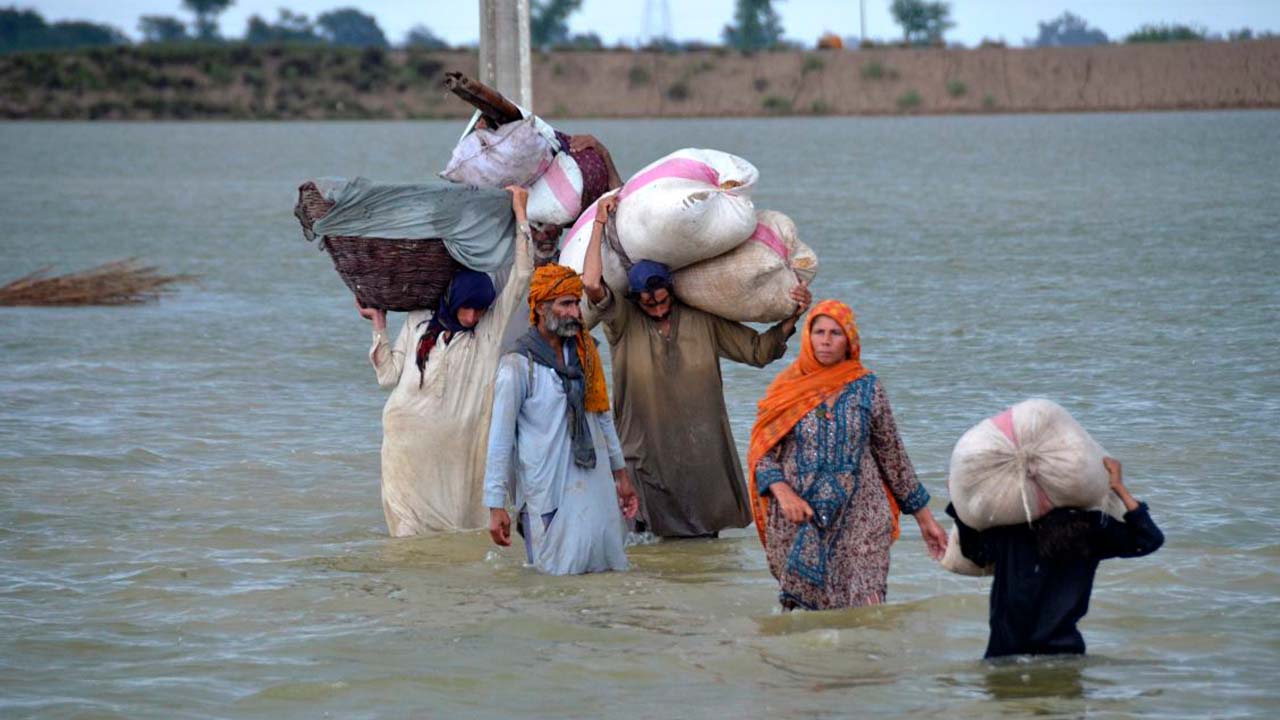
    Floods in Pakistan have affected more than 30 million people, which is about 15 per cent of the country’s population. More than a thousand people have lost their lives and millions have been displaced, prompting the government to proclaim a national emergency. This is one of the worst natural calamities in recent times. The harrowing videos and pictures on our television screens and social media show massive devastation, pain, tears, and death spread across the country. Entire villages have been washed away, and there are places that have been fully drenched due to the inundated rain and floods, turning them into islands without any access to the outside world. There are places without electricity, without internet, without phone data, without roads, and without food and help. What Pakistan witnessed in the 2010 floods is not even close to what the country is facing today. A decade later, the country is fully swamped with water. Unfortunately, we the people woke up a little too late to this harsh reality. With every passing day, the death toll increases and so does the destruction.

    The national response has been slow, to say the least, but mercifully all governments, federal and provincial, are actively helping the flood victims. Prime Minister Shehbaz Sharif has been actively visiting the flood-affected areas and trying to be at the top of his game by showing empathy towards the needy and has categorically said that it is time Pakistanis show unity and keep everything aside to save the flood victims while Chairman PTI Imran Khan will be hosting a telethon for fundraising on Monday. However, Khan has said that the PTI’s movement for Haqeeqi Azadi will continue alongside its flood relief work. PTI held a jalsa in Jehlum for its fight for haqeeqi azadi on August 27. A PTI member took to the stage and said that overseas Pakistanis should not give funds to the flood victims because the present government took away their right to vote. Khan also reiterated that his struggle against thieves will continue whether come what may. Such calamities demand a bipartisan approach from our leaders but well here too we have managed to fail our country. Khan seems pretty adamant that his quest against those he does not approve of will continue, even if there is a flood or war. PPP Chairman Bilawal Bhutto-Zardari has said that the Opposition can keep playing “jalsa, jalsa” while they will deal with the flood catastrophe.

    The question remains: will the politicians be able to let their politics take a backseat for now and show some empathy towards their own citizens? Can’t politics, the numbers game, and the blame game wait? For once, our politicians should look beyond their own personal interests and agendas and stand united. Our politicians must give priority to those millions of people who have been affected by floods. It is time that all Pakistanis must donate wholeheartedly. The people need to be prompt with their help and generosity. We hope that partisan politics is put on hold, and all political leaders fully dedicate their voices and efforts to helping the flood victims. They need to be rescued right now and relief efforts must continue. They will later need to be rehabilitated and relocated. It will take a lot of resources and hard work. We must all come together to help them right now. Our political battles can wait.

  • FBR establishes new section to investigate corrupt tax officials

    In order to ensure the prompt resolution of all disciplinary cases and inquiries against tax employees engaged in corruption and dishonest activities in field formations, the Federal Board of Revenue (FBR) established a new Section on Friday called “Discipline/Inquiries.”

    A new Section with the nomenclature “Discipline/Inquiries” is hereby created in the Admn/HR Wing, FBR (HQ), Islamabad with immediate effect in order to ensure proper follow-up of all disciplinary cases/inquiries of officers (BS-16 and above) of FBR (HQ) and IR field formations with a view to ensuring timely disposal of such cases, according to an office order issued by the FBR on Friday.

    According to Brecoder, a secretary or second secretary who works for the specified Section will be in charge and reporting to the Chief (HRM-IR), FBR.

    The FBR has also been ordered by Prime Minister Shehbaz Sharif to fully abide by the guidelines of the Civil Servants (Efficiency and Discipline) Rules, 2020 when taking disciplinary action and conducting investigations against dishonest tax officers.

    The FBR chairman has directed the Revenue Division/FBR to rigorously adhere to the following instructions in all disciplinary processes and inquiries launched against the officers, in accordance with the directives of the prime minister:

    The Civil Servants (Efficiency & Discipline) Rules, 2020, Rule 10 read with Rule 12 shall govern how the chosen inquiry officer would conduct the inquiry processes. The same must be finished within sixty (60) days of the date the inquiry order was issued, or within any further time the authority may provide.

    All Directors General, Chief Commissioners, Chief Collectors, Commissioners, and Collectors of FBR shall keep the relevant case record in safe custody while forwarding the recommendation to begin disciplinary proceedings against any officer(s) or official in order to ensure safe custody of the record in an inquiry.

    In accordance with the guidelines outlined in Rule 8 of the Civil Servants (Efficiency and Discipline) Rules, 2020, all heads of field offices shall also see to it that pertinent records of the case and other related documents are timely provided to the inquiry officer or the inquiry committee, as the case may be, through the designated departmental representative (DR). This must be done within seven days of the date of the inquiry order.

  • History of Pakistan vs India matches at Asia Cup

    History of Pakistan vs India matches at Asia Cup

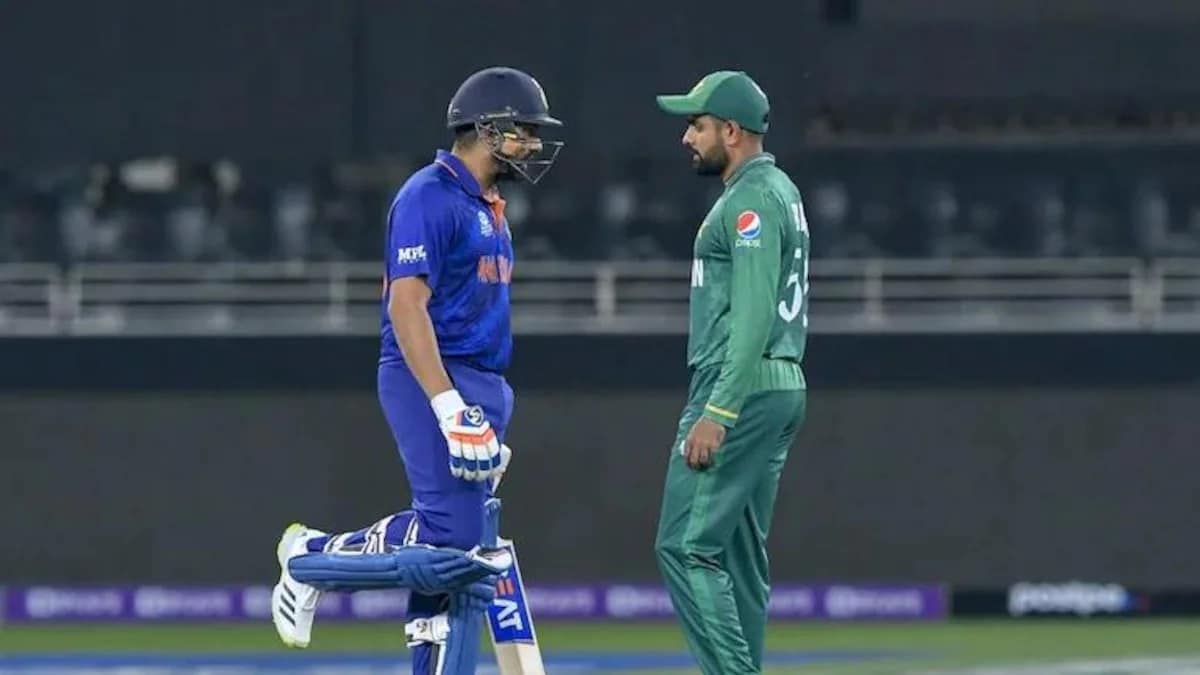
    The cricket rivalry between Pakistan and India is known as the greatest rivalry in the world of cricket. Today, the two sides will meet once again at Asia Cup 2022.

    Pakistan and India have played 14 matches in Asia Cup since 1984. India won 8 out of the 14 matches played in total while Pakistan won five. One match ended without a result as it was rained out.

    Here is the list of Pakistan vs India matches in Asia Cup.

    1984:

    India beat Pakistan by 54 runs while Surinder Khanna was the Man of the Match; he scored 56 runs on 72 balls.

    1988:

    India once again beat Pakistan by 4 wickets. Pakistan scored 142 while India chased the target in 40.4 overs with 4 wickets in hand. Arshad Ayub was Man of the Match.

    1995:

    Pakistan broke its losing streak and defeated India by 97 runs. Aqib Javed was Man of the Match with his magical bowling spell with five wickets to his name.

    1997:

    Match was abandoned because of rain.

    2000:

    Pakistan maintained its wining streak and beat India by 44 runs. Mouhammad Yousuf became Man of the Match by scoring a century on 112 balls. Pakistan scored 295 for the loss of 7 while India managed to score 251 in chase.

    2004:

    Pakistan won the match by 59 runs. Shoaib Malik was Man of the Match. He scored 143 on 127 with 2 wickets.

    2008 Group Stage:

    India beat Pakistan by 6 wickets. Suresh Raina became Man of the Match by scoring 84 runs on 69 balls with 2 wickets to his name. Virender Sehwag also played an outstanding innings of 119 on 95 balls.

    2008 Super 4s:

    Pakistan won by 8 wickets with Younis Khan getting Player of the Match award. His outstanding knock of 123 on 117 helped Pakistan achieve a huge target of 308.

    2010:

    India beat Pakistan by 3 wickets with 1 ball remaining. India chased 267 while Gautam Gambhir became Man of the Match by scoring 83 on 97 balls.

    2012:

    India beat Pakistan by 6 wickets. Pakistan scored 329 while India managed to chase in 47.5 overs. Kohli got the Player of the Match award by scoring 183 on 148 balls.

    2014:

    Pakistan won by 1 wicket. This match took a lot of turns. In the final over, Pakistan needed 9 runs in the last over with 2 wickets in hand. Pakistan lost their ninth wicket on Ashwin’s first ball. On the next ball, Junaid khan took a single followed by two maximums by Afridi. Hafeez became Man of the Match with 75 runs and two wickets to his name.

    2016:

    India beat Pakistan by five wickets. This was the first T20I edition of Asia Cup. India defeated Pakistan with Kohli scoring 49 on 51 balls.

    2018 Group Stage:

    India won with eight wickets in hand. Pakistan scored 162 while India achieved that target in 29 overs.

    2018 Super 4s:

    India once again defeated Pakistan with a tremendous knock of Shikhar Dhawan and Rohit Sharma of 114 and 111 respectively.

  • Jhagra responds after Miftah accuses KP govt of jeopardising IMF deal

    Jhagra responds after Miftah accuses KP govt of jeopardising IMF deal

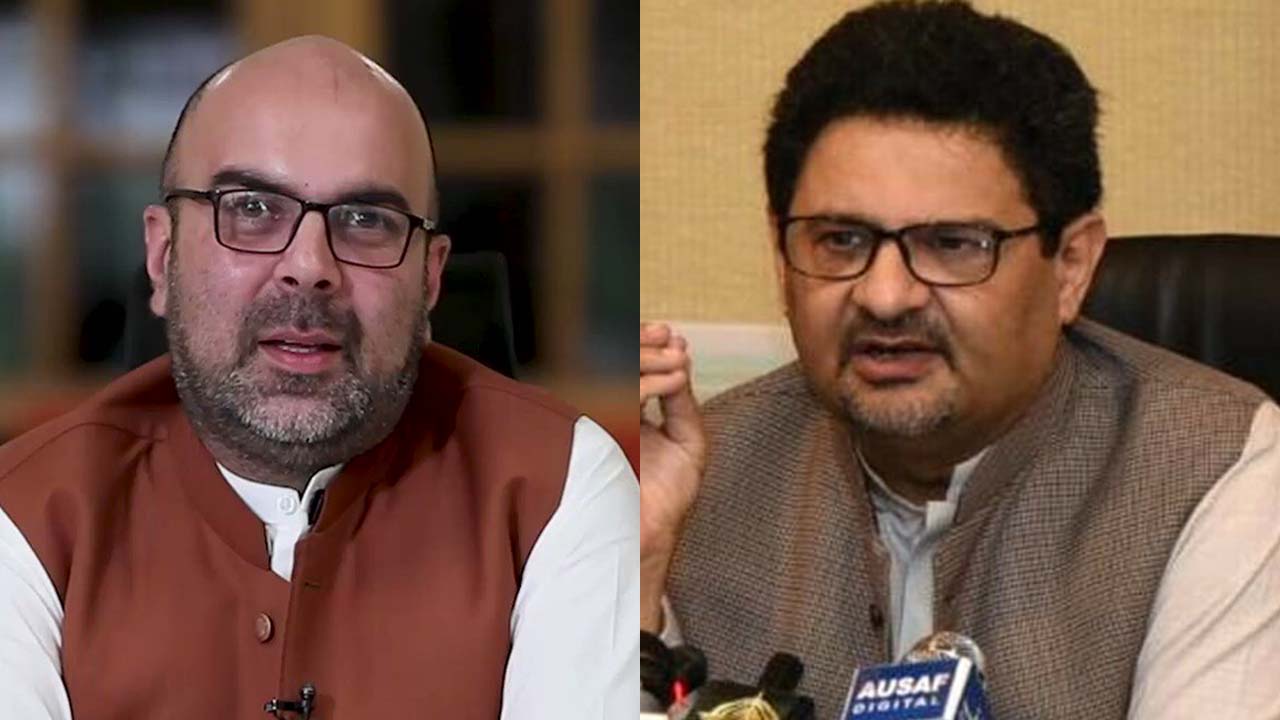
    After Finance Minister Miftah Ismail accused the KP government of plotting to derail the IMF deal in a late-night press conference, KP Finance Minister Taimur Khan Jhagra stated that the province is currently dealing with a flood scenario that takes precedence over everything else.

    In a previous letter to Miftah, Jhagra connected the payment of the Rs100 billion in alleged liabilities with the clearance of the provincial cash surplus for this fiscal year, which is a requirement of Pakistan’s agreement with the International Monetary Fund (IMF).

    This occurs just three days prior to the revival of IMF’s multibillion dollar credit programme. The K-P government has already agreed through a memorandum of understanding (MoU) to achieve the Rs117 billion cash surplus that is required by the IMF arrangement. Ismail is a co-signatory of the Letter of Intent (LoI) that was recently sent to the IMF in order to revive the programme.

    “Please note that in these conditions [floods], and without the resolution of the issues highlighted previously, for the province of Khyber Pakhtunkhwa to actually leave a surplus will be next to impossible,” Jhagra wrote in the communique sent to Miftah on Friday.

    Miftah Ismail’s call, according to Jhagra, was “interesting,” and the two will now meet on Monday to resolve their issues. However, the provincial finance minister stated it was “sad” that in Pakistan, one needed to “shout to be heard.”

    Jhagra confirmed in a series of tweets that he had actually addressed a letter to the federal finance minister and not the IMF. The provincial minister sent a letter that included images as well.

    Jhagra went on to say that despite raising the same issues with Miftah at their meeting on July 5, they decided to return the IMF MoU to Islamabad within 24 hours with the approval of the chief minister of KP.

    Jhagra added that the KP administration would never back down from advocating for a strong federation or from bringing up its concerns at the centre.

    At a late-night press conference, Miftah called the letter “deplorable.” He labelled the letter as a “conspiracy to derail the IMF programme and sink the rupee.”

    He questioned whether PTI Chairman Imran Khan, who was seeking to obliterate Pakistan and its economy out of a desire for power, had any set parameters.

  • Asia Cup: Everything you need to know

    Asia Cup: Everything you need to know

    Asia Cup’s 15th edition began today (August 27). In the first match, Afghanistan beat Sri Lanka.

    Pakistan will play India tomorrow (Sunday, August 28).

    Here’s a look at the history of Asia Cup.

    The first Asia Cup was played in 1984 in the United Arab Emirates (UAE) and India became the first team to win the Asia Cup. Only three matches were played in the tournament.

    The next edition was held in Sri Lanka in 1986 while India opted out of playing because of unstable diplomatic relations and were replaced by Bangladesh. India came back in action in the third edition when hosting rights were given to Bangladesh in 1988.

    Out of these 14 editions, India won seven times. Sri Lanka won five times while Pakistan has won the title twice.

    So far, 14 editions have been played. Among them, 13 took place in the 50-over format while the first T20I edition was played in 2016.

    In 2016, Asia Cup took place in T20I format to provide teams an opportunity to prepare for the 2016 T20 World Cup.

    This year, the second T20I format is being played at the Asia Cup 2022. This will once again provide the Asian teams an opportunity to prepare for the next T20 World Cup, which is scheduled for October-November.

  • What caused Pakistan’s greatest flood in a decade?

    What caused Pakistan’s greatest flood in a decade?

    Floods in Pakistan have affected millions of people, drowned hundreds, and prompted the government to proclaim a national emergency.

    Nearly 1,000 people have died since June, according to the National Disaster Management Authority (NDMA). People are looking for shelter as torn tents fill the streets of Sukkur.

    Around 15,500 people sacrificed everything in the 1,000-kilometer-long coastal area patch of Sindh’s Thatta district.

    The flood water has swallowed up people’s entire life savings, earned after years of hard work, meant to get their kids educated.

    The locals are concerned that the standing water may spread waterborne diseases. There hasn’t been any relief for residents expecting to return home to see what can be salvaged because it has been raining all week in Sindh province.

    Many houses in the city’s center have sustained damage, leaving only the walls standing.

    Over 300 people have died as a result of the floods in the province of Sindh alone. People set up tents along the narrow alleyways in any remaining dry area because further rain is predicted.

    About 15 per cent of the population, or 33 million people, were affected by the floods, according to Prime Minister (PM) Shehbaz Sharif on Friday.

    The nation has pleaded for greater international assistance, as PM met with ambassadors from other countries in Islamabad.

    He claimed that this season’s flood losses were on par with those from the floods of 2010–2011.

    The country is currently experiencing its eighth monsoon cycle, whereas typically there are only three to four cycles of rain, according to climate minister Sherry Rehman.

    She claimed that the proportions of super flood torrents are startling.

    Numerous monsoon cycles that have hit Pakistan since the start of summer have destroyed more than 400,000 homes.

    The Office for the Coordination of Humanitarian Affairs (OCHA), the UN organization in charge of disaster relief, announced on Thursday that at least 184,000 people had been relocated to relief camps.

    The rains have notably affected Sindh, which has seen nearly eight times its normal August rainfall. Southern Pakistan has been severely hit.

    On Thursday, Ms. Rehman claimed that officials had requested a million tents to house the refugees.

    What led to Pakistan’s floods?

    Extreme weather conditions or rains brought on by climate change are to blame for the recent floods that have affected Pakistan. Some floods originate in inland regions because of excessive rain, whereas others happen at the seashore because of sea-level rise, causing devastation in coastal districts.

    High tides in the sea cause heavy flooding primarily in coastal locations. Because of the daily rise in global temperature, this is related to climate change.

    There are two main causes of the floods: The experts noted that sea-level rise is a result of expanding saltwater caused by glacier and Arctic sea ice melting as well as cyclones and heavy rains brought on by warming ocean temperatures.

    Seawater intrusion inland has been caused by a significant sea-level rise of 1 millimeter along coastal Sindh recorded over hundreds of years. Communities in coastal regions, where economic activity is concentrated, are significantly impacted by invasive sea water.

    Experts have noted that the storms that have occurred more frequently and with greater severity in the Arabian Sea over the past 50 years as a result of climate change have an economic impact on urban areas like Karachi, Badin, and Thatta.

    According to a research, the primary causes of sea incursion include thermal expansion, freshwater inflows, physical forces, monsoon fluctuation, and ocean current variance.

    As seawater warms, the top layers of the ocean release some heat into the sky, while the lower layers hold onto this heat for a longer time and in greater amounts. As a result, saltwater gradually warms up due to a process known as thermal expansion.

    According to a study, freshwater inflow from melting glacial layers, ice sheets, and sea ice contributes to sea level rise. Freshwater input also rises as a result of the hydrogen cycle brought on by the warming of the oceans and surface areas.

    The scenario of subsidence and lifting also affects sea level without changing the volume of ocean water. This is caused by tectonic activities such extraction for oil, gas, and water.

    A direct connection between climate change and variations in monsoon rainfall. In recent years, Pakistan has had numerous instances of extreme monsoon rainfall and flooding.

    Regional ocean currents, which transfer a lot of water from one place to another, do not alter the volume but have an impact on sea level in another place.

  • ‘Only Yes means Yes’: Spain passes new law that requires explicit consent for sex

    ‘Only Yes means Yes’: Spain passes new law that requires explicit consent for sex

    Spain’s lower house of parliament passed legislation on Thursday requiring explicit consent for sex rather than consent that might be inferred from silence or by default.
    The legislation was passed on Thursday with 205 lawmakers voting in favour and 141 against.
    The law “Only Yes means Yes”, defines rape as sex without clear consent.

    “Consent is recognised only when a person has freely demonstrated it through actions which, in the context of the circumstances of the case, clearly express the person’s will,” says the law.

    The new law also sets fines for street harassment and for sharing intimate images and videos of a person without their consent.


    It was proposed by the country’s Socialist government after the high-profile “Wolfpack” gang-rape incident in Pamplona in 2016 prompted widespread protests.
    An 18-year-old woman was gang-raped by five men at the bull-running festival in Pamplona, northern Spain.


    In court, it was argued that video footage from the men’s phones, which showed the woman motionless and with her eyes closed during the attack, was proof of her consent.

    The men were convicted guilty of sexual abuse but not of rape because the woman was unable to prove that she had not given consent.