Blog

  • Samsung starts mass production of advanced 3nm chips

    Samsung starts mass production of advanced 3nm chips

    Samsung Electronics, which is vying with Taiwan’s TSMC for market dominance, declared on Thursday that it had begun mass producing advanced 3-nanometer microchips.

    Before being employed in devices like mobile phones, the new chips will be used in high-performance computer applications. They will be smaller, more powerful, and efficient.

    The first-generation 3nm technology, according to Samsung, “can reduce power consumption by up to 45 per cent, boost performance by 23 per cent, and reduce the area by 16 per cent” when compared to the 5nm process.

    The South Korean company stated last month that it would “push ahead the mass production of chips based on the 3-nanometer technology” with a five-year plan to invest 450 trillion won (US$356 billion).

    Only two businesses, Samsung and Taiwan’s TSMC produce the great majority of the most sophisticated microchips in the world, and both are currently operating at maximum capacity to address a global shortage.

    Although it dominates the memory chip market, Samsung has been unable to keep up with TSMC in the advanced foundry sector.

    According to TrendForce, TSMC holds a majority of the worldwide foundry business with clients like Apple and Qualcomm, while Samsung is in second place with a market share of about 16 per cent.

    As per the company’s 2021 annual report, TSMC intends to start 3-nanometer technology volume production in the second half of this year and 2-nanometer technology development last year.

  • Man gets Covid-19 from cat

    Thailand has reported a case of a human being infected with Covid-19 through a cat. The case was reported in Nature, a science journal.

    As per the study published on June 6 titled “Emerging Infectious Diseases” and cited by the journal, a father and son duo who tested positive for SARS-CoV-2 in August were reportedly kept in isolation at the university hospital. The household cat tested positive as well.

    The cat sneezed in the veterinarian’s face as it was being swabbed. The surgeon had no eye protection but was covered up with gloves and a face mask. Three days later, she developed a fever.

    Genetic testing proved the vet and the cat shared the same variant.

    However, according to researchers, such instances of cat-to-human transfer are quite uncommon.

  • Pakistan becomes third-largest Amazon marketplace

    Pakistan becomes third-largest Amazon marketplace

    Pakistan has become Amazon’s third most popular new seller, with more than 1.2 million registered sellers.

    Following the enactment of Pakistan’s first e-commerce policy, Pakistan was granted access to the Amazon marketplace in May 2021, a year after negotiations began in 2020, according to Marketplace Pulse.

    According to Marketplace Pulse, Pakistan also has more retailers than India, Vietnam, the United Kingdom, and Canada.

    The three biggest Amazon seller groups in the world are based in the nation, which has recently registered on the marketplace. These suppliers are anticipated to contribute to Pakistan’s $28 billion in exports.

    The platform’s perks will be extended to young entrepreneurs and small and medium-sized businesses throughout the nation, which will increase and diversify Pakistan’s export options.

    Additionally, this will help the government improve the macroeconomic picture of the nation while also increasing their revenue.

    In order to help medium-sized and small-scale businesses thrive and turn a profit in the face of increased operating costs, the e-commerce sector must grow.

    Pakistan’s e-commerce strategy is a component of the larger Digital Pakistan vision, which aims to pave the path for a comprehensive expansion of e-commerce by fostering an environment where businesses have an equitable opportunity to expand steadily.

    The nation’s economy is mostly supported by Pakistan’s exports of textiles, leather goods, sporting goods, chemicals, carpets, and rugs. Significant quantities of grains, sugar, cotton, fish, fruits, and vegetables are also exported from Pakistan.

    With revenue of $5.9 billion in 2021, Pakistan will surpass Iran to become the 37th-largest market for eCommerce, according to research of eCommerce data.

    The Pakistani eCommerce market grew by 45 per cent in 2021, contributing to the global growth rate of 15 per cent.

  • Man disappears after company pays 286 times his salary accidentally

    Man disappears after company pays 286 times his salary accidentally

    A company in Chile accidentally paid one of its employees 286 times his salary in May, after which the employee resigned from the company and disappeared.

    The man worked at Consorcio Industrial de Alimentos (Cial), one of the largest producers of cold cuts in Chile. The company paid nearly Rs37 million to the man although his salary was Rs111,760.

    Soon after the incident, the company realised its mistake. The management reached out to the employee who at the time agreed to get the money refunded.

    However, when the company did not get the amount back, they tried to contact the employee again but their messages were not answered.

    Later, the man got in touch with the management and promised that he would visit the bank.

    However, on June 2, he handed over his resignation and disappeared without any trace.

    Subsequently, the company was forced to take legal action against the man to recover their money.

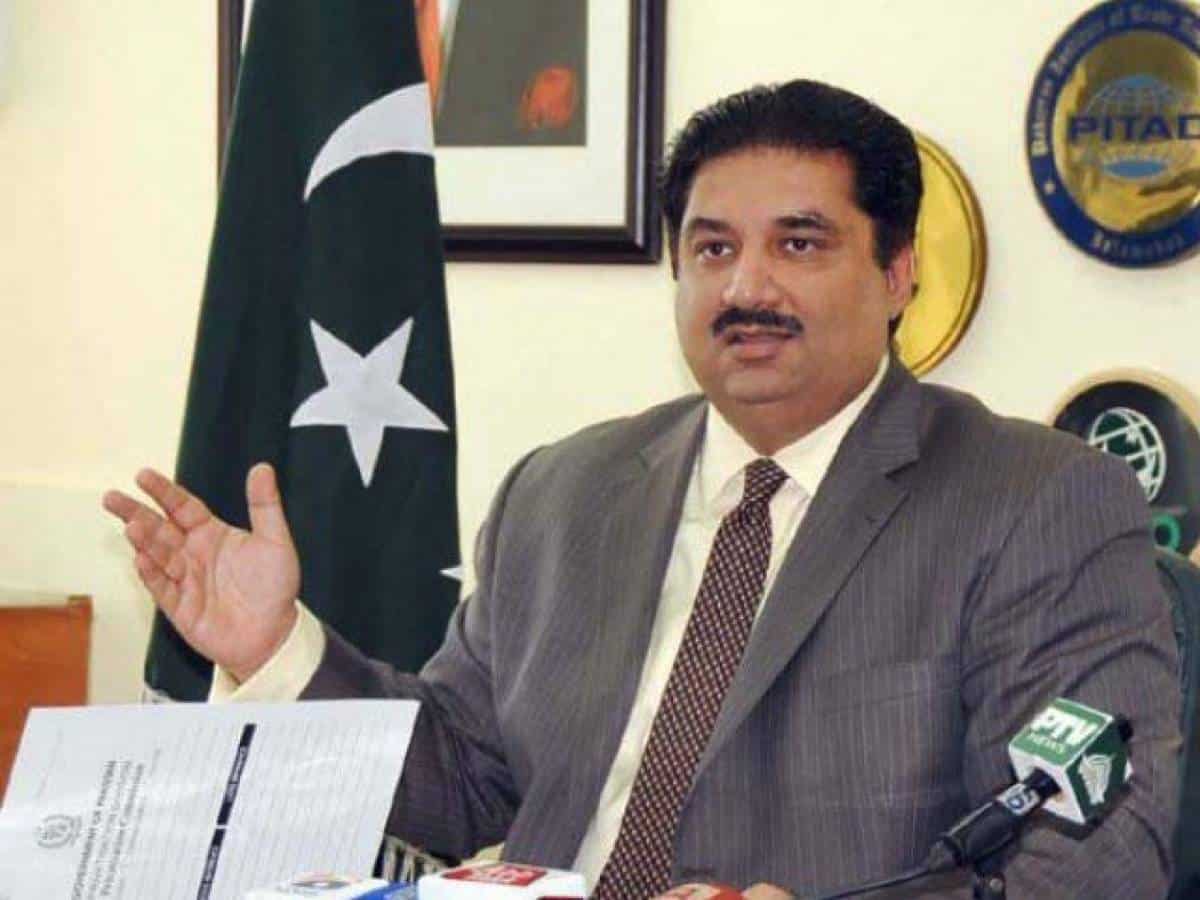
  • Next army chief appointment after consultation with leaders of coalition parties, says Khurram Dastgir

    Next army chief appointment after consultation with leaders of coalition parties, says Khurram Dastgir

    Federal Minister for Power Khurram Dastgir Khan has revealed that the appointment of the next chief of army staff (COAS) will be made by Prime Minister (PM) Shehbaz Sharif after consulting leaders of the coalition parties. The consultation process will begin in September.

    “The new army chief will be appointed in November. Prime Minister Shehbaz Sharif, after consulting with other coalition leaders, will decide on the army chief. This consultation will start in September,” said Dastgir.

    “This appointment is not only important for the safety and defence of Pakistan but also necessary for the transparency of the upcoming general elections in 2023,” added Dastgir.

    The new COAS appointment is to take place in November this year.

  • Woman writes 434-meter-long letter to brother after he blocked her on WhatsApp

    Woman writes 434-meter-long letter to brother after he blocked her on WhatsApp

    A woman in India forgot to wish her brother on International Brother’s Day this year, after which he stopped picking up her calls and blocked her on WhatsApp. To make it up to him, she wrote a 434-meter-long letter on billing rolls that weighed more than 5kg. It took her 12 hours to complete the letter.

    “I forgot to wish him. I usually call him or send him a text on Brother’s Day but I forgot this year due to my busy work schedule. I saw he sent me screenshots of all the wishes he received from others. We share a mother-son relationship. I was sad because he stopped talking to me and even blocked me on WhatsApp,” Krishnapriya told the media.

    “We have a seven-year age gap. So he respects me and fears me a little like a mother or a teacher. We are very attached to each other and share a very friendly relationship,” she added.

    “I was hurt and disappointed when she did not wish me on Brother’s Day this year…She must have felt bad about what happened and that is why she wrote the letter. I was very happy when I received it,” said Krishnaprasad, brother of Krishnapriya.

    Krishnapriya thinks that this could be the longest letter ever written and has submitted an application to the Guinness Book of World Records.

  • Tensions rise in India’s Udaipur after murder of Hindu tailor

    Tensions rise in India’s Udaipur after murder of Hindu tailor

    A Hindu tailor was murdered by two Muslim men in Udaipur, India, on June 28. The two men entered the tailor’s shop as customers and then murdered him.

    The man was allegedly killed after he shared a social media post in support of the derogatory remarks made about Prophet Muhammad (PBUH) by the Bharatiya Janata Party (BJP) spokesperson Nupur Sharma.

    The derogatory comments by Nupur Sharma caused a stir in the Muslim world, inviting condemnation and protest from over 20 Muslim states. There were widespread protests and demonstrations in India, which turned violent in some parts of the country.

    After the murder of the tailor, hundreds of police officials were deployed, and mobile internet was cut off in Udaipur. A partial curfew was also imposed to curb any potential uproar after a video of the attempted beheading of the Hindu tailor went viral.

    Other parts of the Rajasthan state also had their mobile internet access cut off and local authorities issued a month-long ban on four or more people gathering in the state.

    “Both the accused in the killing have been arrested and we will ensure strict punishment and speedy justice,” said Rajashtan Chief Minister Ashok Gehlot.

  • Petroleum levy of Rs50 per liter approved in Finance Bill 2022–23

    Petroleum levy of Rs50 per liter approved in Finance Bill 2022–23

    On Wednesday, the National Assembly approved an amendment to the Finance Bill 2022 that will allow the government to increase the fuel levy to Rs50 per liter.

    During the National Assembly session held to discuss the amendments to Finance Bill 2022, Finance Minister Miftah Ismail made it clear that the amendment grants the government the authority to impose a tax of no more than Rs50 per liter. The levy will not be implemented instantly, he said.

    He went on to say that the levy had been temporarily kept at zero by the government. Throughout the upcoming fiscal year, the levy will be gradually implemented.

    According to The News, about 80 per cent of the amendments to the finance bill, according to State Minister for Finance and Revenue Ayesha Ghous Pasha, were tax-related.

    She emphasised that the government’s objective was to burden the wealthy while sparing the rest of us.

    The participants also agreed to impose a 5 per cent tax on the services of IT and software consultants in addition to the collection of sales tax through shopkeeper utility bills.

    Additionally, a change to revoke the salary class’s relief was approved. Individuals earning between zero and Rs600,000 annually would not be subject to income tax, per the initial budget proposals (where salary income exceeds 75 per cent of taxable income). The following slab would have had a nominal deduction of Rs100 per year (those earning between Rs600,000 and Rs1.2 million per year).

    With the new rates, those making between Rs0.6 and Rs1.2 million annually will now be required to pay 2.5 per cent in income tax.

    Furthermore, a 10 per cent super tax on 13 high-income sectors was approved by the National Assembly. The 10 per cent super tax on large industries was announced by Prime Minister Shehbaz Sharif on Friday in his “bid to relieve the general public of tax pressures.”

    “The revenue generated by this tax will be used to alleviate poverty in Pakistan, and it will be funded by high-income earners,” he said following a meeting with the government’s economic team.

    The tax will be levied on the cement, steel, sugar, oil and gas, fertiliser, LNG, textile, banking, automobile, beverages, chemicals, and tobacco industries. Later, Miftah Ismail, the finance minister, added airlines to the list, bringing the total to 13 sectors.

    Miftah went on to explain that the indirect tax (super tax) was intended to help the state accumulate funds under the heading of tax collection and reduce the budget deficit. He also stated that the fee was a one-time levy.

    The government’s proposed 1-4 per cent super tax on high-income individuals’ salaries was also approved by the National Assembly.

    The leadership levied a 1 per cent tax on those making up to Rs150 million annually, a 2 per cent tax on those making up to Rs200 million annually, a 3 per cent tax on those making up to Rs250 million annually, and a 4 per cent tax on those making up to Rs300 million annually.

    Additionally, a change was approved that imposes a tax on imported mobile phones that ranges from Rs100 to Rs16,000 depending on their value.

    Late Tuesday night, new amendments were added to the Finance Bill, 2022, including a potential reduction in the sales tax rate on the import of pharmaceutical raw materials from 17 per cent to 1 per cent, a tax exemption for theatres and production companies, and a change in the definition of “deemed rental income” by replacing the words “immovable properties” with “capital assets” and other changes.

    Under the revised Finance Bill 2022, the FBR also decreased the capital value tax (CVT) on vehicles from 2 per cent to 1 per cent.


  • IK sold three watches to local dealer gifted to him as PM for Rs37 million

    IK sold three watches to local dealer gifted to him as PM for Rs37 million

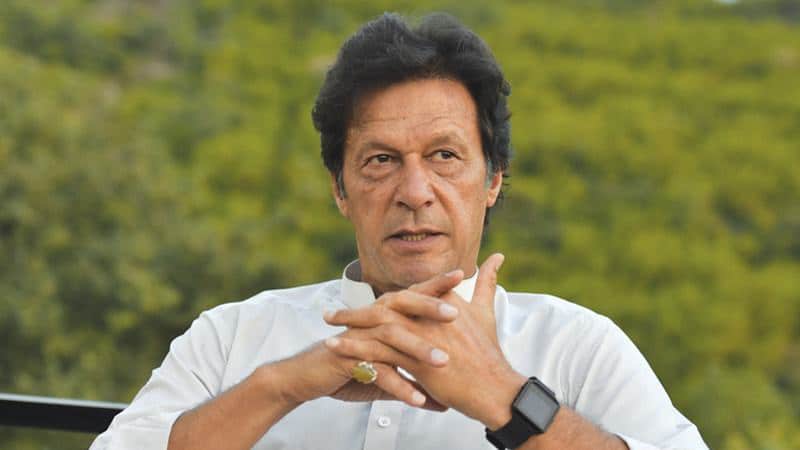
    Pakistan Tehreek-e-Insaf (PTI) Chairman Imran Khan reportedly sold three luxury watches worth more than Rs154 million to a local watch dealer in Islamabad. The watches were gifted to him by visiting dignitaries from Gulf countries when he was Prime Minister (PM), reports The News.

    By selling these watches, Khan earned a whopping amount of Rs37million. According to the news report, instead of buying these watches from Toshakhana with his own money, Khan first sold the watches and then deposited 20 per cent of each in the government treasury.

    It has been revealed that these gifts were never deposited in Toshakhana. These watches were supposed to be submitted to Toshakhana as per the laws that restrict any head of the state to possess the gifts they receive from officials of other countries.

    The most expensive watch among these three was assessed at Rs101 million. However, Khan had declared he sold it for Rs51 million and deposited the 20 per cent of its sales money, which is Rs20 million, in the government treasury, thus earning a whopping Rs31 million. The watch was sold on January 22, 2019.

    By selling a Rolex Platinum watch gifted by a member of a royal family from a Gulf island, Khan almost earned Rs4.5 million profit in November 2018, two months after it was gifted to him.

    Another Rolex watch gifted by a dignitary from the same Gulf island was sold by the former PM. This time Khan made Rs1.5 million profit from this deal.

    It is pertinent to mention that these watches are in addition to the ones reported earlier in the media.

    In April, PM Shehbaz Sharif revealed that Khan took gifts worth Rs140 million from Toshakhana and sold them in Dubai.

    Earlier, responding to the Toshakana controversy, Khan had said they were his gifts, so it was his choice whether to keep them or not.

  • ‘Khan is complaining about institutions being neutral since he cannot win otherwise’: Bilawal

    ‘Khan is complaining about institutions being neutral since he cannot win otherwise’: Bilawal

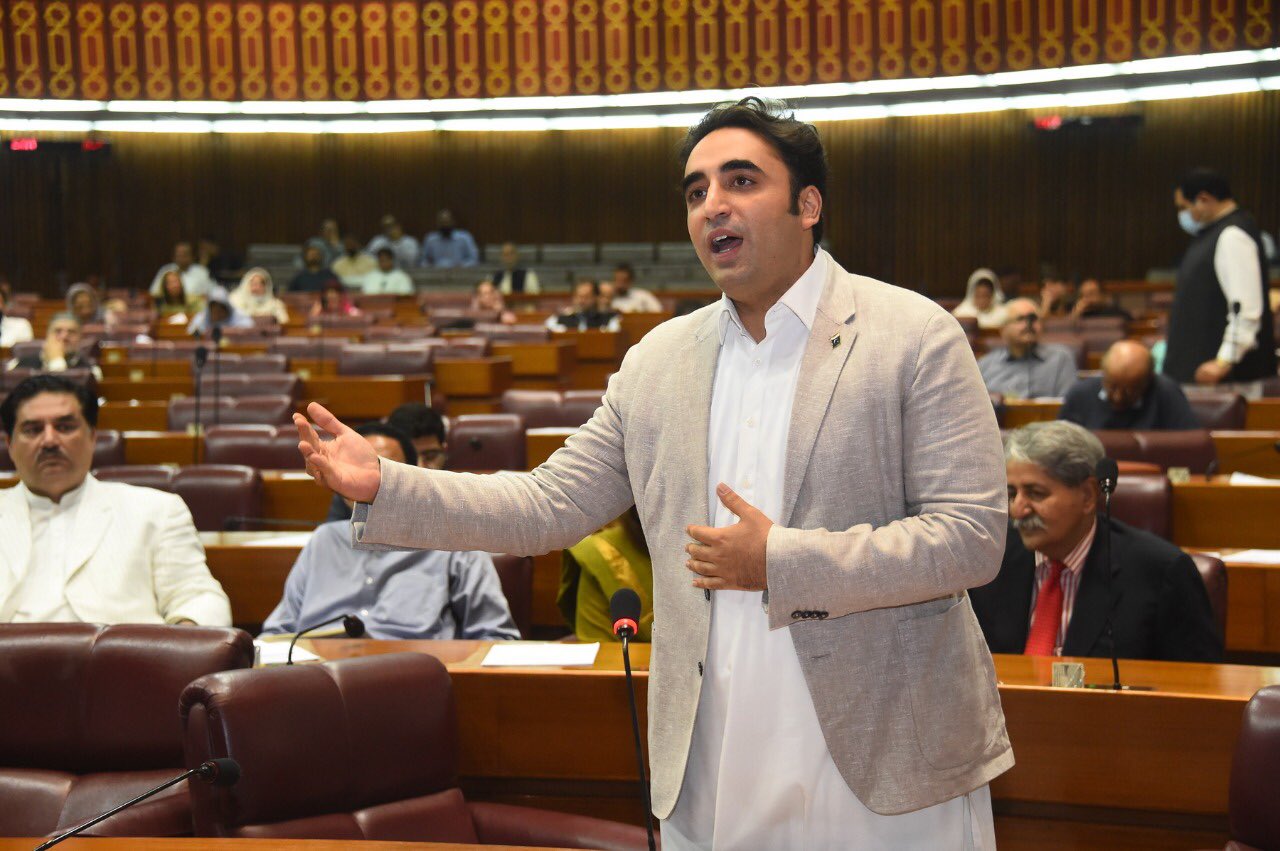
    Foreign Minister (FM) Bilawal Bhutto-Zardari criticised Pakistan Tehreek-e-Insaf (PTI) Chairman Imran Khan and said that he is complaining about the institutions being neutral since undemocratic parties like his cannot win otherwise. Bilawal’s comments were in response to the allegations made by PTI after the first phase of local body elections held in Sindh.

    “The beneficiaries of rigging are complaining before you. They cannot win. Imran Khan is complaining about our institutions being neutral since undemocratic parties like his cannot win otherwise. This is why today they are running a movement for our institutions to play a controversial role instead of a neutral and constitutional one,” said Bilawal addressing the National Assembly (NA) today (June 29).

    “Like Imran Khan, there are a few parties, politicians, and puppets in Sindh who are helped and made to come forward in a dictatorial rule. They were hoping, like Khan, for our institutions to not be neutral but controversial,” said the foreign minister.

    “When our institutions started becoming neutral, be it the Election Commission, the courts, or other institutions who used to take interest in elections, these people started panicking,” said Bilawal.