Blog

  • Pakistan railways to launch Lahore-Karachi bullet train by 2030 under CPEC

    Pakistan railways to launch Lahore-Karachi bullet train by 2030 under CPEC

    Pakistan Railways has unveiled a plan to launch a high-speed bullet train connecting Lahore and Karachi by 2030, slashing travel time between the two cities from nearly 20 hours to just five.

    Railways Minister Hanif Abbasi announced that the 1,215-kilometer rail link will be developed as part of the $6.8 billion ML-1 upgrade under the China-Pakistan Economic Corridor (CPEC). 

    The trains, expected to run at speeds of up to 250 km/h, will make key stops at Hyderabad, Multan and Sahiwal. 

    The project is being executed with Chinese assistance, including expertise from the China Railway Construction Corporation.

    It is anticipated that the project will increase freight capacity, create thousands of jobs during construction and operation, and increase Pakistan’s rail cargo share from the current 4 percent to 20 percent by the end of the decade. In addition to saving the nation billions in fuel imports, officials say the switch from road to rail may significantly boost regional connections and trade.

    The Lahore-Rawalpindi bullet train project, which intends to cut the travel time between the two cities to just two and a half hours, was also approved earlier this year by Punjab Chief Minister Maryam Nawaz.


    Alongside new lines, Pakistan Railways has embarked on a broad digitisation and automation programme designed to enhance safety, cut delays, and modernise operations. 

    Advanced signalling and communications systems are being deployed across major sections of the network.In order to improve train routing and lower the danger of accidents, government records state that a computerized interlocking system will soon replace manual controls at the Landhi, Jumma Goth, Badal Nala, and Sarhad stations.

     In the meantime, a digital microwave radio communication system is being installed in the Karachi–Lahore corridor to upgrade its telecom backbone and guarantee secure and uninterrupted data transmission.


    In addition, a Push-to-Talk digital network is gradually being introduced in the Rawalpindi, Lahore, Sukkur and Karachi divisions to strengthen real-time coordination between staff and control rooms.

    A private news channel cites that a senior railway official told Wealth Pakistan that more than 80 percent of the existing signalling infrastructure is still mechanical or relay-based, leaving it vulnerable to theft, weather and technical failures.

     “The new automation drive will replace outdated equipment with intelligent, sensor-driven systems capable of monitoring track conditions and enforcing safety standards,” the official said.

  • Cristiano Ronaldo hits another historic milestone

    Cristiano Ronaldo hits another historic milestone

    Portuguese football superstar Cristiano Ronaldo has achieved another historic milestone after scoring his 100th goal for the Al Nassr during the Saudi Super Cup final against Al Ahli.

    Although his team could not secure the title, the team’s forward achieved a record-breaking feat.

    Reports confirm that Ronaldo has now become the first player in history to score 100 or more goals for four different clubs. He netted 450 goals for Real Madrid, 145 for Manchester United, 101 for Juventus, and now 100 for Al Nassr.

    Ronaldo also remains the highest international goal scorer of all time, with 138 goals for Portugal’s national team.

    Alongside this achievement, Ronaldo recently got engaged to his longtime partner Georgina Rodríguez after eight years of dating. According to reports, the 40-year-old football star proposed to Georgina with a diamond ring.

    Georgina shared the happy news on Instagram, posting a picture of the ring on her hand resting over Ronaldo’s hand, showcasing the large diamond engagement ring.

  • Garbage collection in Punjab will now cost you between Rs200 and Rs5,000

    Garbage collection in Punjab will now cost you between Rs200 and Rs5,000

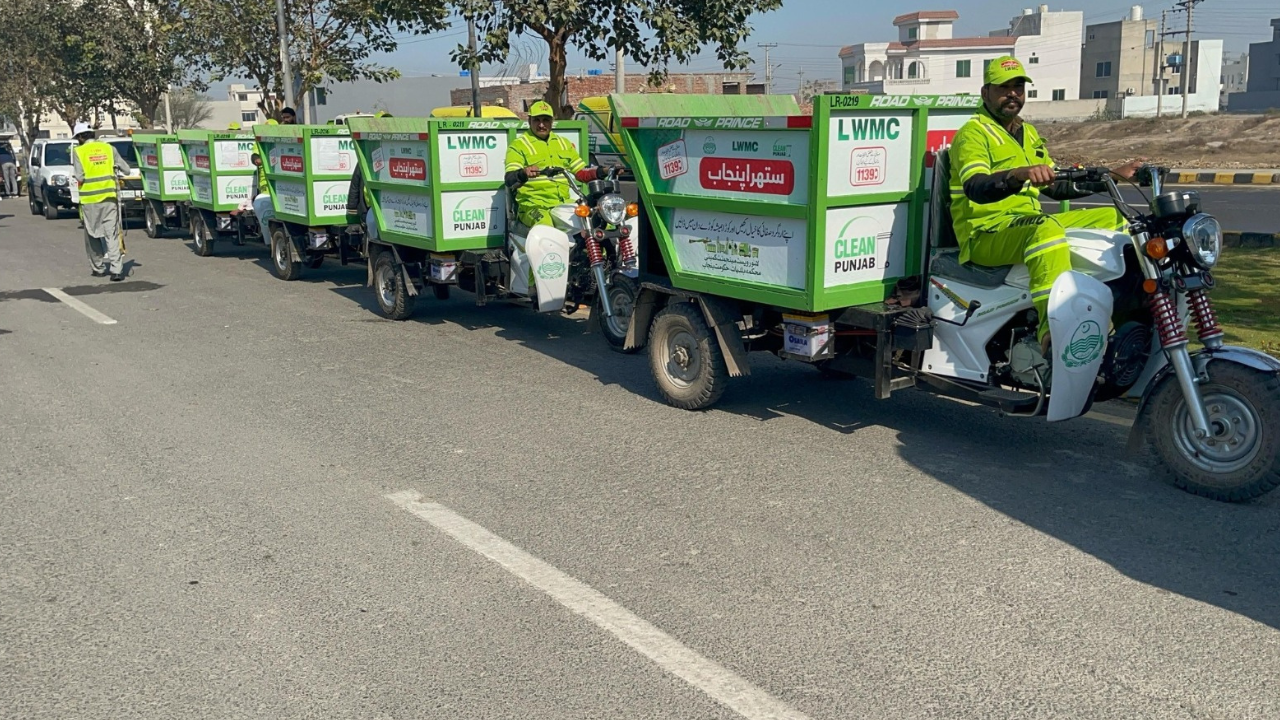
    The Punjab government has introduced a garbage collection tax across the province under the ‘Suthra Punjab’ initiative, approved by the provincial cabinet. The tax applies to both residential and commercial properties, with the Lahore Waste Management Company (LWMC) tasked with collections in Lahore.

    According to established rates, urban homes up to five marlas will be charged Rs300 a month, while rural homes of the same size will pay Rs200. Houses between five and 10 marlas will be taxed Rs500 in cities and Rs200 in villages.

    For properties between 10 marlas and one kanal, the monthly tax is Rs1,000 in urban areas and Rs400 in rural areas. Residential units of 20 to 40 marlas will be charged Rs2,000 in cities and Rs400 in villages. Homes exceeding 40 marlas will pay Rs5,000 per month in urban areas, while rural homes above 20 marlas will continue to pay Rs400.

    The tax also applies to commercial real estate. Small shops will be charged Rs500 in urban areas and Rs300 in rural areas. Medium-sized shops will pay Rs1,000 in cities and Rs700 in villages. Large businesses and industries will be taxed Rs3,000 in urban areas and Rs2,000 in rural areas.

    The government has linked the new tax to efforts to improve waste management services across Punjab. Officials stated that by involving local bodies and the LWMC, collections will be streamlined, and the funds will support the cleanliness campaign.

    The ‘Suthra Punjab’ initiative, launched earlier this year, is part of a broader strategy to upgrade municipal services. The garbage tax is one of the first steps under this program, with more measures expected in the coming months.

  • Pakistan, Bangladesh agree on visa free travel for diplomats, officials

    Pakistan, Bangladesh agree on visa free travel for diplomats, officials

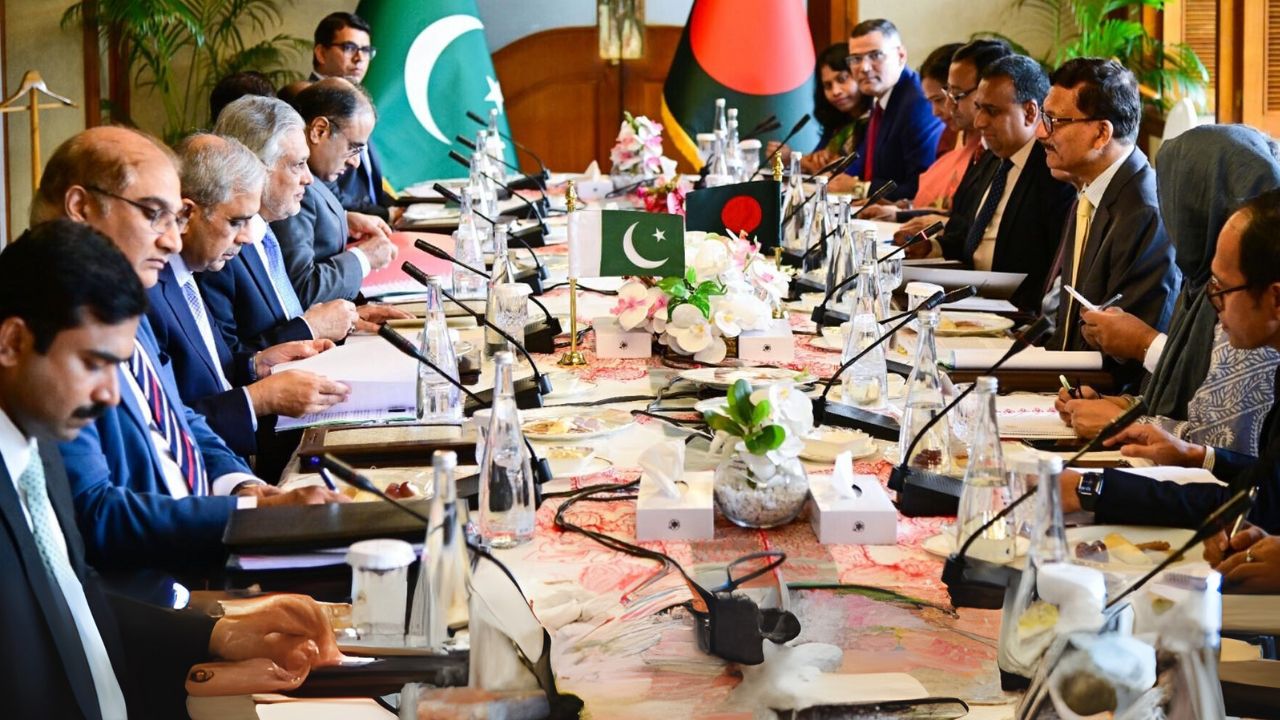
    Ishaq Dar, the Deputy Prime Minister and Foreign Minister, concluded a historic visit to Dhaka on Sunday, the first by a Pakistani foreign minister in 13 years, signing six agreements Memorandums of Understanding (MoUs) regarding trade, diplomacy, media, education, and cultural cooperation.

    During his stay, Dar met Bangladesh’s Chief Adviser Professor Muhammad Yunus, Foreign Policy Adviser Touhid Hossain, senior political leaders, and trade officials. The visit, widely described as a “milestone,” reflects Islamabad and Dhaka’s renewed efforts to reset relations following years of strained ties.

    The agreements signed included visa abolition for diplomatic and official passport holders, MoUs between the two countries’ foreign service academies and think tanks, a media cooperation accord between Associated Press of Pakistan (APP) and Bangladesh Sangbad Sangstha (BSS), a cultural exchange programme for 2025–2028, and the establishment of a joint working group on trade.

    In his meeting with Chief Adviser Yunus, Dar conveyed Prime Minister Shehbaz Sharif’s greetings and reiterated Pakistan’s commitment to strengthening bilateral relations. Both sides discussed trade, economic cooperation, youth exchanges, and regional security.

     According to the Foreign office, Yunus stressed the importance of revitalising Saarc, saying: “I encourage Saarc, and I see our relationship with Pakistan and other Saarc countries as one of the highest priorities.”

    Dar also announced the launch of the “Pakistan-Bangladesh Knowledge Corridor,” which will lead to 500 scholarships given by Pakistan to Bangladeshi students over the course of the following five years, with a quarter going to medical school.

    Training programmes for 100 Bangladeshi civil servants were also offered, while scholarships under the Pakistan Technical Assistance Programme were raised from five to 25.

    The foreign minister met with Dr. Shafiqur Rahman, the emir of Jamaat-e-Islami, and Begum Khaleda Zia, the chairperson of the Bangladesh Nationalist Party.

     At Zia’s house, Dar recalled her 2006 trip to Pakistan and wished her a speedy recovery. Dar praised Rahman’s “lifelong positive contribution in the fields of politics, education, and social welfare” when paying him a visit while he recovered from heart surgery.

    Foreign Policy Adviser Touhid Hossain, speaking to reporters after his meeting with Dar, said: “We have raised unresolved issues such as an apology or expression of regret for 1971, claims over assets, and the matter of stranded Pakistani citizens. It would be wrong to expect problems of 54 years to be solved in a single day.”

     Dar emphasized, however, that the issue had already been addressed. “As far as unresolved issues are concerned, this matter was first settled in writing in 1974, and this historic document is available to both countries. Later, General Musharraf came here and addressed this matter in a very open and explicit manner,” he told journalists.

    He continued: “In my view, once this matter has been settled between brothers, Islam also instructs us to keep our hearts clean. Therefore, we should move forward and work together, because our future is bright. In line with our Islamic teachings, the Quran, and the Sunnah, we must keep our hearts pure and move forward. We are one family, and we must work together to do the best for the people of both countries.” 

    Dar described his discussions in Dhaka as “excellent,” saying: “There was no disagreement on any matter, which is a very positive sign. We are working together to take economic and trade relations between our two countries to new heights.” 


    At a reception hosted by Pakistan’s High Commissioner in Dhaka, Dar noted the deep-rooted cultural and religious connections between the two nations. “The relations between the two countries are anchored in centuries-old shared traditions, Islamic heritage, social norms and literary expressions,” he remarked, adding that the people of Pakistan hold “fraternal sentiments” toward the people of Bangladesh.

    Both sides agreed to look into measures to improve connectivity and economic cooperation during the visit, which also included discussions with trade and commerce officials. Two decades after its last session, reports in Dhaka indicate that Pakistan and Bangladesh intend to call a new meeting of the long-stalled Joint Economic Commission later this year.

    Dar’s trip has been hailed as a major turning point in Pakistan-Bangladesh ties, indicating cautious optimism about the future with the signing of new agreements, strengthened political engagement, and commitments for educational and cultural exchanges.

  • Nirmal Purja becomes first climber to complete 50 ascents of 8,000-meter peaks

    Nirmal Purja becomes first climber to complete 50 ascents of 8,000-meter peaks

    Nepalese mountaineer Nirmal “Nims” Purja MBE, popularly known as Nimsdai, made history by completing 50 ascents of peaks over 8,000 meters, the most by any climber.

    Purja achieved this milestone on Pakistan’s Nanga Parbat (8,126 meters), one of the world’s most dangerous mountains.

    “This was the most dangerous climb of my life, battling fierce winds, blue ice, and rockfall,” Purja said after completing the summit.

    Out of the 50 ascents, he scaled 22 without supplemental oxygen, setting a new world record.

    Purja dedicated the achievement to 200 years of Nepal-UK friendship, carrying a flag to honour his service in the Gurkhas and UK Special Forces.

    The climber first gained global recognition in 2019 with Project Possible, where he climbed all 14 of the world’s 8,000-meter peaks in six months and six days. His record-breaking feat was later featured in the Netflix documentary 14 Peaks: Nothing Is Impossible.

    In 2021, he joined the historic team that completed the first winter ascent of K2, summiting without oxygen.

    Beyond mountaineering, Purja runs the Nimsdai Foundation, which supports education, environmental initiatives, and mountain communities.

    He is now pursuing his ambitious Hat-Trick Challenge, which involves climbing all 14 8,000-meter peaks and the Seven Summits for a third time, with proceeds funding his foundation’s projects.

  • NAB claims gold mining operations costing KP trillions in revenue

    NAB claims gold mining operations costing KP trillions in revenue

    The National Accountability Bureau (NAB) has reportedly uncovered large financial irregularities in the auction and operation of placer gold mining along the Kabul and Indus rivers in Khyber Pakhtunkhwa (KP). According to reports, these mining operations may have caused losses worth trillions of rupees to the provincial government.

    For reference, placer mining is a process of extracting gold from riverbed deposits formed through natural accumulation. NAB has reportedly raised concerns over the bidding process, particularly the minimum reserve price set for gold blocks during auctions.

    NAB revealed that the minimum reserve prices at auctions were intentionally miscalculated to favour certain entities partaking in the bidding process. According to reports, NAB has indicated that leaseholders are subletting mining rights to excavator owners, charging as low as Rs500,000 per excavator for an entire week’s access to the mining site.

    As per the details, a whopping 1,500 excavators were operating in KP, generating weekly earnings of up to Rs1.05 billion. However, reports maintain that the provincial government received only a minor portion of this amount as proceeds to the provincial exchequer. 

    KP Chief Minister (CM) Ali Amin Gandapur has hailed the auction of mines as a successful endeavour, outlining the benefits of mining operations. According to KP’s CM, the recent auctions witnessed access to mines being priced at higher amounts to generate larger revenue inflows.

    Moreover, he reportedly revealed that the minimum price of gold blocks at auctions jumped from just Rs650 million to a respectable Rs1.1 billion, which translates into a 69.23 percent increase. The CM further underlined that the lease of four gold blocks at a ten-year term fetched a staggering Rs4.6 billion for the provincial exchequer. 

    As per KP’s CM, illegal mining has been rampant in the province for over 20 years, and successive governments have failed to host an auction for the sale of mining rights to firms. However, he outlined how his administration took measures to crack down on province-wide illegal mining operations.

    According to reports, he also highlighted that the venture was advertised multiple times and that details of the auction were also provided to the NAB. Defending the provincial government’s moves, the CM revealed that an officer from the NAB was present at the auction’s proceedings.

    Details from reports, however, highlight leaseholders generating trillions of rupees in revenue via illegal means, leaving the government with marginal revenue inflows.

  • Fawad Khan’s ‘Abir Gulaal’ pushed back for international release

    Fawad Khan’s ‘Abir Gulaal’ pushed back for international release

    Fawad Khan’s Bollywood comeback film Abir Gulaal will hit Pakistani cinemas on August 29, while international audiences will have to wait until September 12, as distributors have confirmed a delayed worldwide release.

    The romantic drama, directed by Aarti S. Bagdi and starring Vaani Kapoor alongside Fawad Khan, will be screened in more than 1,000 cinemas across 75 countries. While the international release date has now been revised for a third time, the Pakistan schedule remains unchanged.

    The film was originally set to be released on May 9, but was postponed to late August. Despite its international release, Abir Gulaal will not be screened in India due to bans on Pakistani artists. This prohibition was imposed by the Central Board of Film Certification after the 2019 Pulwama attack, reinforced following the April 22 Pahalgam attack this year, and continues under pressure from organisations such as the All Indian Cine Workers Association and the Federation of Western India Cine Employees.

    The movie is produced by Indian Stories, A Richer Lens, and Aarjay Pictures. The production team includes Vivek B Agarwal, Avantika Hari, and Rakesh Sippy.

    Fawad Khan portrays a UK-based chef, while Vaani Kapoor plays the lead female character. The cast also features Lisa Haydon, Ridhi Dogra, Parmeet Sethi, and Farida Jalal.

    In the lead-up to its debut, the film’s soundtrack, composed by Amit Trivedi, has generated strong interest. Several songs have already been released online and resonated with listeners, keeping the project in the public eye despite multiple delays.

    Abir Gulaal marks Khan’s return to Bollywood after nearly a decade. His previous films in India include Khoobsurat (2014), Kapoor & Sons (2016), and Ae Dil Hai Mushkil (2016).

  • OGDCL’s journey of powering Pakistan’s future with resilience

    OGDCL’s journey of powering Pakistan’s future with resilience

    Established in 1961, Oil and Gas Development Company Limited (OGDCL) has remained at the forefront of Pakistan’s energy sector.

    Over the decades, the company has transformed into a publicly listed giant on the Karachi and London stock exchanges and today stands as the country’s largest company by market capitalisation, with repeated inclusion in the Forbes Global 2000.


    Initially, the company was listed as OGDC, tasked with undertaking a systematic exploratory program and promoting Pakistan’s oil and gas prospects. It was restructured as a Public Limited Company in 1997, becoming OGDCL.


    Strategically entrenched across Sindh, Punjab, Khyber Pakhtunkhwa, and Balochistan, OGDCL holds more than 40 percent of the country’s awarded hydrocarbon acreage and operates 50 oil and gas fields with 18 processing facilities. Its daily crude production has surged toward 50,000 barrels per day—a milestone reflecting recent technological upgrades such as electrical submersible pumps and enhanced production interventions.


    Under forward-looking leadership, the company is aggressively steering growth—both horizontal and vertical. On the domestic front, it projects gas output to rise from roughly 800 million cubic feet to 1 billion cubic feet per day in the next three years.


    On the international front, OGDCL is advancing in the Offshore Block-5 in Abu Dhabi as part of the Pakistan International Oil Limited (PIOL) consortium. This landmark venture represents the first opportunity for Pakistani E&P firms to explore oil and gas resources alongside ADNOC, with production expected to commence by 2027.


    The energy to Operate was the force that has powered OGDCL’s journey for decades. For 65 years, OGDCL has operated with resilience and responsibility, building a legacy that has powered the nation and strengthened communities. Today, as it stands at the cusp of transformation, the company is poised to begin a new journey — one that will carry forward its tradition of operational excellence while embracing innovation and sustainability.


    As OGDCL enters this defining phase, more than just statistics fuel the story—it is one of resilience, diversification, and adaptation. From its beginnings to a commanding role in Pakistan’s energy and emerging mining sectors, the company is embracing a broader role, one defined by continuity, innovation, and national significance.

  • Ducky Bhai admits mistakes, apologises for inappropriate videos, endorsing gambling apps without verification

    Ducky Bhai admits mistakes, apologises for inappropriate videos, endorsing gambling apps without verification

    Popular Pakistani YouTuber Saad ur Rehman, widely known as Ducky Bhai, has issued a public apology, admitting his past “mistakes”.

    He acknowledged promoting gambling applications without verifying their legality and creating inappropriate content during his early roasting days.

    During the hearing, the National Cyber Crime Investigation Agency (NCCIA) requested more time, saying it is still probing claims that the YouTuber promoted gambling apps in his videos. The court accepted the request and extended his remand by five days.

    Speaking to a private media outlet after the proceedings, Ducky Bhai admitted his past actions and apologised to the nation. “During my roasting days, I made inappropriate videos and I want to apologise to the entire Pakistani nation for that,” he said.

    He also explained how he promoted gambling apps without verifying their legality. “Some applications came for promotion and I endorsed them without checking because they were also being shown during PSL matches. I did not realise whether these apps were allowed in Pakistan or not,” he added.

    Ducky Bhai further said, “The gambling app appeared in PSL as well, so I did not think it was an issue. I deeply regret this and seek forgiveness for my actions.”

    According to the FIR, investigators booked Ducky Bhai under multiple sections of the Prevention of Electronic Crimes Act (PECA) 2016, including Section 13 (Electronic Forgery), Section 14 (Electronic Fraud), Section 25 (Spamming), and Section 26 (Spoofing), along with Sections 294-B and 420 of the Pakistan Penal Code.

    The case alleges that Ducky Bhai and other influencers promoted gambling platforms such as Binomo, 1xBet, Bet365, and B9 Game for financial gain, which caused losses for users who invested money on these apps. Investigators said they collected 27 video links from his account that promoted these platforms, although many videos have since been removed.

    Authorities arrested the YouTuber at Lahore airport on August 16. Initially, they placed him on a two-day physical remand, extended it to four days, and then added another five-day extension on Saturday.

    https://images.dawn.com/news/1194062/youtuber-ducky-bhai-will-remain-in-nccia-custody-for-another-4-days

  • World Bank greenlights $47.9 million package to improve primary education in Punjab

    World Bank greenlights $47.9 million package to improve primary education in Punjab

    In a bid to boost enrollment levels at pre-primary and primary levels in Punjab, the World Bank (WB) has approved a grant totalling $47.9 million, translating into approximately Rs135 billion. According to reports, the program will be funded by the Global Partnership for Education Fund.

    As per the details, funding could increase the level of remedial learning support available to elementary students and could improve learning outcomes for primary school students. The funds will be directed to the “Getting Results: Access and Delivery of Quality Education Services and System Transformation in Punjab Project”, which intends to boost teacher support, improve childhood education outcomes, and bring out-of-school children back into the education system. 

    Reports reveal that the project will accommodate the most vulnerable and financially weak segments of the population. The project’s aims align with those of the World Bank, namely the promotion of shared prosperity and the eradication of poverty.

    The WB has set these goals for Pakistan under the Country Partnership Framework (CPF). According to the World Bank’s Country Director for Pakistan, Punjab’s project will serve to reduce the gap in access to quality education. He believes that the project could improve human capital development outcomes and economic growth prospects “by strengthening foundational learning, enhancing system capacity, and promoting behavioral change”.

    Once in effect, the project will help four million children and three million children attending School Education Department (SED) schools. Data from reports indicates that an additional 850,000 students in the non-formal sector, along with 140,000 differently abled students enrolled in Special Education Department (SpED) schools, will benefit from the program. 

    As per reports, all students in SpED, SED, and non-formal schools will benefit from system reforms. Moreover, more than 100,000 members of schools’ staff, community members and parents are expected to undergo professional development, making them beneficiaries of the program as well. 

    Reports suggest that the WB’s Task Team Leader for the project outlined that the project was in line with the Government of Punjab’s objective of creating “a more effective, accountable, and inclusive education system”. The task team leader believed that the project would further the provincial government’s goal of improving capacity, governance and management in education.