Blog

  • Forgiving TTP: Never forget!

    Forgiving TTP: Never forget!

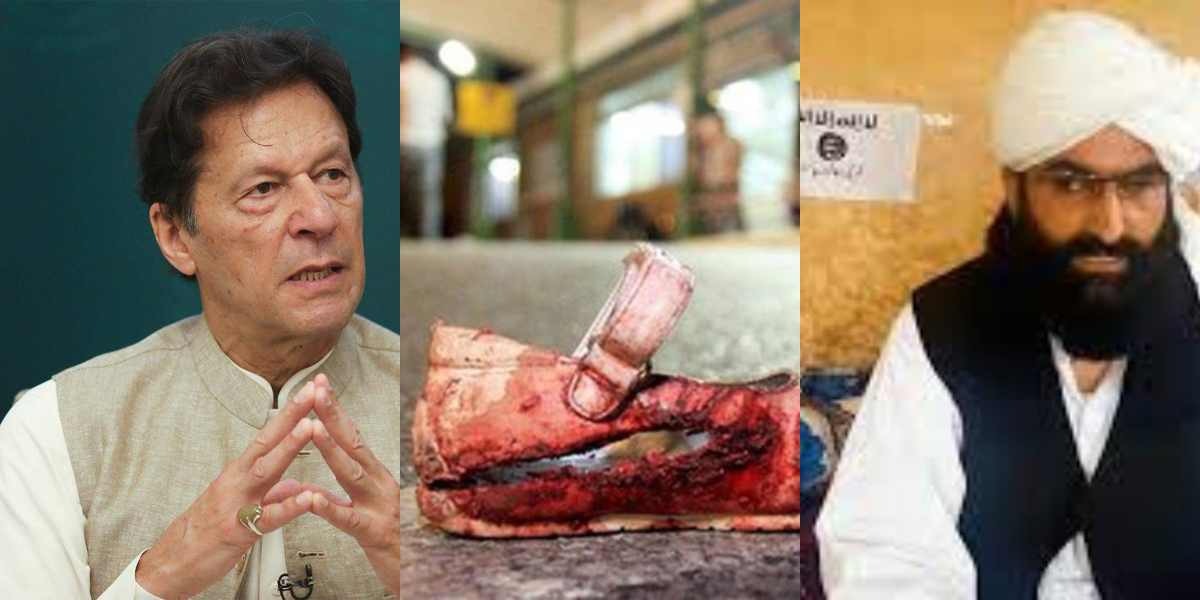
    Prime Minister Imran Khan has said that the government is in talks with some groups of the banned militant outfit, Tehreek-e-Taliban Pakistan (TTP). In an interview with TRT World, PM Khan said there are different groups that form the TTP and some of them want to talk to our government for peace. “So, we are in talks with them. It’s a reconciliation process.” Before PM’s interview, both President Arif Alvi and Foreign Minister Shah Mahmood Qureshi had talked about giving amnesty to TTP members if they lay down their arms and follow the Constitution of Pakistan.

    These statements warrant a lot of questions: why did the president, prime minister, and foreign minister disclose such important information in interviews to media outlets and not in parliament? TTP is no ordinary terrorist outfit. The entire country came together after the horrific APS attack in December 2014, in which more than 150 people were martyred – most of them children. All the political forces of Pakistan reached a consensus, after which the National Action Plan (NAP) came about. There was a massive crackdown on TTP and other terrorist outfits. We finally managed to eliminate the TTP in Pakistan. Those from the TTP who survived the crackdown ran away to Afghanistan. At that time, the government in Kabul was not friendly towards Pakistan.

    The state told us that the TTP was supported and funded by India and Afghanistan – when Ehsanullah Ehsan first surrendered to Pakistan, he confirmed in a video that Afghan and Indian intelligence agencies [RAW and NDS] gave funds and other assistance to Pakistani Taliban to fight Pakistan. Last year, after sharing a dossier containing ‘irrefutable proofs’ of Indian funding of terrorism in Pakistan, Shah Mahmood Qureshi said: “The [specific] evidence presented by Pakistan provides a concrete proof of Indian financial and material sponsorship of multiple terrorist organisations, including UN-designated terrorist organisations Jamaat-ul-Ahrar, Balochistan Liberation Army and Tehreek-e-Taliban Pakistan.”

    What is the reason for Pakistan to hold talks with a RAW and NDS-funded/supported terrorist outfit when we have broken its back in our country? And now that we have a friendly government in Kabul, what is the need to hold talks with an enemy outfit? Should the Afghan Taliban not help reign in the TTP and take action against those who are carrying out attacks against Pakistan from Afghan soil? Or, is it true that the Afghan Taliban and the Pakistani Taliban both have the same ideology, even if the targets of their attacks are different? The people of Pakistan – who have been killed and maimed by the TTP over the years – deserve an answer.

    The government needs to be transparent. This decision cannot be taken just by the government alone. All political parties must have a debate on this issue and the people of Pakistan have to be taken on board as well. We cannot forget what the TTP did to our nation. We lost more than 70,000 lives at their hands. There must be a consensus about the talks and also the government should be transparent about the negotiations. Don’t keep us in the dark, dear government, for we were told that we will never forget their heinous crimes.
  • #PetrolPrice: Memes break the internet

    The government on Thursday, increased the price of petrol by Rs 4 per litre and that of high-speed diesel (HSD) by Rs 2 per litre.

    The prices of kerosene oil and light diesel oil (LDO) were increased by Rs 7.05 and Rs 8.82 per litre, respectively.

    From Oct 1, the price of petrol will be Rs 127.30 per litre, high-speed diesel will be Rs 122.04 per litre, kerosene oil will be Rs 99.31 and light diesel oil will be Rs 99.51 per litre.

    Social media users did not lose the opportunity to start a meme fest following the news.

    https://twitter.com/Haroonikram10/status/1444001135073894402?s=20
  • ‘Chance at a normal life’: Fawad supports TTP integration

    ‘Chance at a normal life’: Fawad supports TTP integration

    Federal Minister for Information and Broadcasting Fawad Chaudhry is supporting ‘a normal life’ for the Tehreek-e-Taliban Pakistan (TTP), those of whom wish to pledged loyalty to the state, reports Geo.

    Fawad said, “The people who could not fulfill their pledge of allegiance to Pakistan want to return to fulfill this pledge.”

    According to the minister, those people who wish to follow the constitution should be given a chance, adding that the government seeks to move forward with the conditions laid down by Prime Minister (PM) Imran Khan.

    Earlier, PM Khan called for the disarmament of the TTP by saying, “We can forgive them and they can become normal citizens.”

    The information minister added that in Balochistan more than 3000 people have come back to a normal life, the ones who had ‘fallen prey to India’s conspiracies.’

    The TTP said that their leaders are engaged in “secret talks” and have asked all fighters to observe a ceasefire till October 20.

  • US official calls for Pakistan action against militants ‘without distinction’

    US official calls for Pakistan action against militants ‘without distinction’

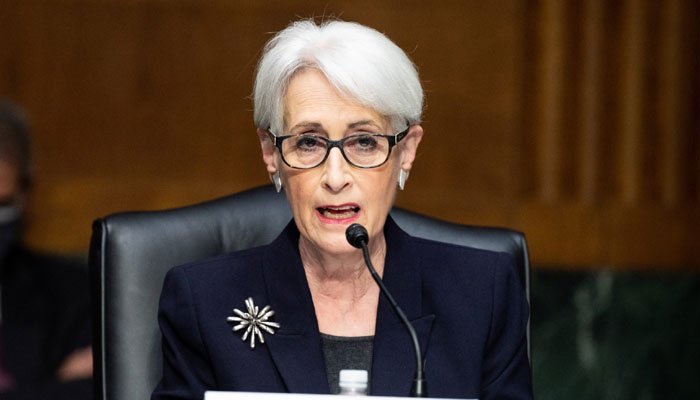
    US Deputy Secretary of State Wendy Sherman will meet with Pakistani officials during her October 7-8 visit.

    Ahead of her visit, Sherman told reporters, “We seek a strong partnership with Pakistan on counterterrorism and we expect sustained action against all militant and terrorist groups without distinction.”

    “Both of our countries have suffered terribly from the scourge of terrorism and we look forward to cooperative efforts to eliminate all regional and global terrorist threats,” she said.

    In an important development prior to her visit, Prime Minister Imran Khan told Turkey’s TRT World television, “Some of the Pakistani Taliban groups actually want to talk to our government for some peace, for some reconciliation.”

    “If the Tehreek-e-Taliban Pakistan (TTP) lay down their arms, we can forgive them and they can become normal citizens,” said PM Khan.

    “I repeat I do not believe in military solutions. I am anti-military solutions, so I always believe that being a politician, political dialogue is the way ahead, which I always believed was the case in Afghanistan,” added the premier.

  • PPP questions PM Khan for not taking parliament into confidence over talks with TTP

    Pakistan People’s Party (PPP) leader Sherry Rehman tweeted that Prime Minister (PM) Imran Khan again wants to give amnesty to the Tehreek-e-Taliban Pakistan (TTP). She questioned whether PM Khan had asked parliament “what we think about that”. She also questioned whether the premier had heard the TTP response to the government’s offer of reconciliation.

     PPP’s Nayyar Bokhari pointed out that the parliament had been “bypassed” and called on the government to clarify the terms on which these talks were being held.

    In a separate statement, PPP information secretary Shazia Marri said: “On what basis and under what conditions are talks being held with the TTP? Why was the parliament not taken into confidence? Why did the government feel the need to hold secret talks with the TTP in this way?”

    These statements came after Prime Minister Imran Khan said that if the TTP lay down their arms, “we can forgive them and they can become normal citizens”. 

  • Ehsanullah Ehsan joins Twitter space, says he is not ashamed of attacking Malala

    Ehsanullah Ehsan joins Twitter space, says he is not ashamed of attacking Malala

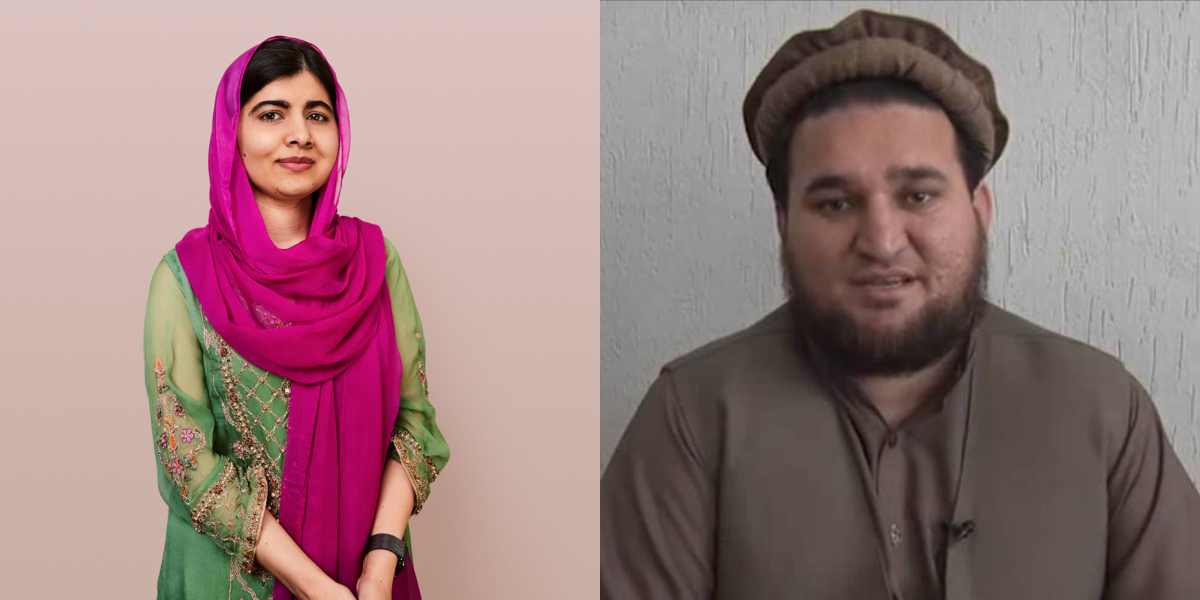
    Tehreek-e-Taliban Pakistan (TTP) spokesman Ehsanullah Ehsan participated in a Twitter space hosted by journalist Azaz Syed on Friday. In a video clip widely shared by social media users, Ehsan can be heard saying that he does not feel ashamed about taking the responsibility of the attack on Malala Yousafzai. He added that the attack on Malala was justified.

    Ehsanullah is also a prime accused in the 2014 attack on Army Public School (APS) Peshawar.

    In a separate development, Prime Minister Imran Khan has said that if theTTP lay down their arms, “we can forgive them and they can become normal citizens”. PM Khan said this in an interview with journalist Ali Mustafa, which will air on TRT World Now.

  • Ahsan Mohsin Ikram hits out at trolls for cursing death upon him and Minal Khan

    Ahsan Mohsin Ikram hits out at trolls for cursing death upon him and Minal Khan

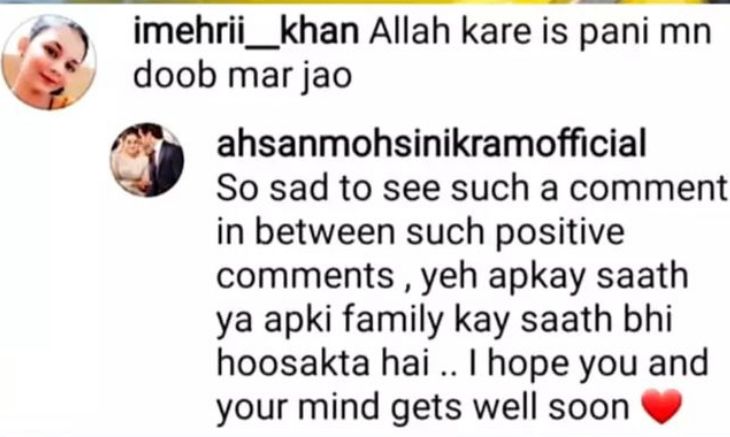
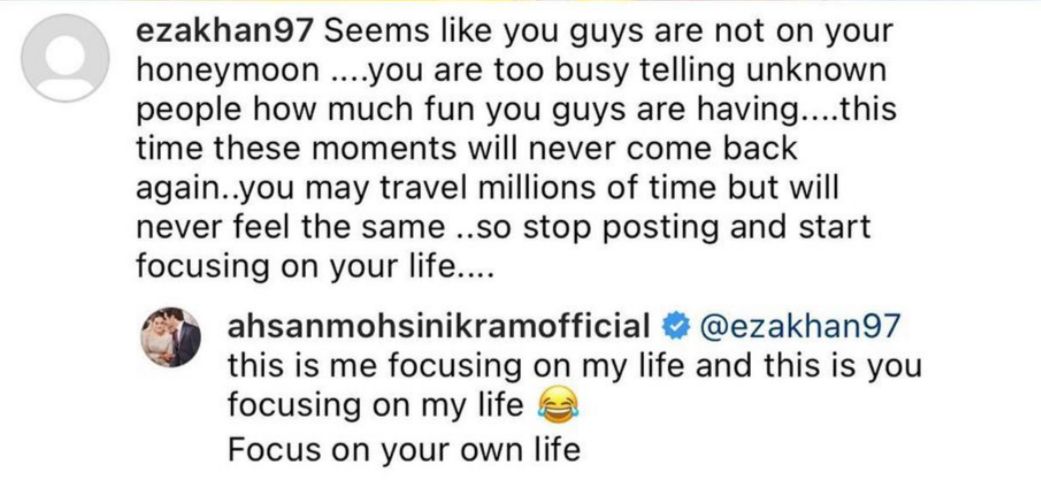
    Social media’s trolling culture doesn’t seems to ease down, however celebrities have started responding back to their naysayers. Actor Ahsan Mohsin Ikram recently hit back on multiple trolls for their mean comments on him and wife Minal Khan.

    The Parchayee pair looked all excited and happy to ring in their honeymoon vacation in Maldives. They shared their special moments on social media.

  • Sarah, Falak reveal baby’s customised bed in their room

    Sarah, Falak reveal baby’s customised bed in their room

    Singer Falak Shabir has revealed the preparations that his wife Sarah Khan is doing to welcome their baby. “Sarah Surely knows how to welcome our baby. MashAllah”

    Earlier, Falak Shabir revealed his and Sarah Khan’s baby room. He also showcased the baby’s tiny yet elaborative closet. The Roag singer played a jingle in the video’s backdrop.

    On the work front, Sarah and Falak appeared in two music videos together, Zindagi and Lagay Pyari.

    People Are Loving The Teaser Of Falak Shabir's New Song
  • Japanese princess to marry commoner boyfriend despite dispute

    Japanese princess to marry commoner boyfriend despite dispute

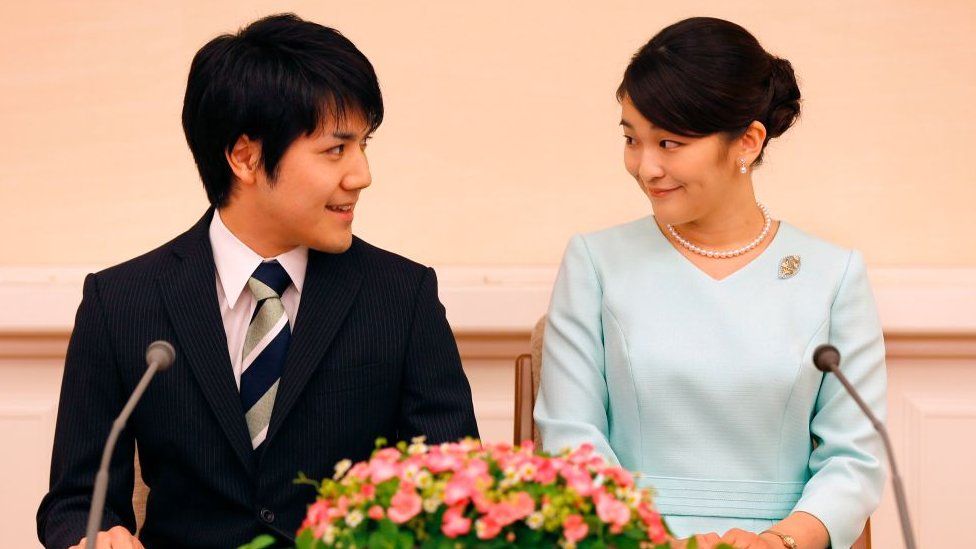
     Japan’s Princess Mako will marry a commoner, her former classmate, this month after years of controversy as she will give up her royal status, BBC News reported.

    The couple is all set to tie the know on October 26.

    The couple initially planned their wedding in 2018, but this was put off, reportedly after Mako’s boyfriend, Mr Komuro’s family had run into financial difficulties.

    They are expected to move to the US after marriage where Mr Komuro works as a lawyer.

    This excessive media coverage around the princess — whose father is Crown Prince Fumihito — and Mr Komuro’s family over the years has caused the princess to suffer from post-traumatic stress disorder, the Imperial Household Agency said, according to news outlet Kyodo.

    Her aunt, Empress Masako, also suffered from a stress-related illness, due to intense pressure to produce a male heir. There is often a stigma around mental illnesses in Japan. The couple first met in 2012 when they were students at the International Christian University in Tokyo.

    They were engaged in 2017 and were set to marry the following year. But news of Mr Komuro’s mother’s financial problems started doing the rounds; she had reportedly taken a loan from her ex-fiancé and not paid him back.

    Read More: Photographer deletes all wedding pictures after being denied food

    The palace denied the delay was linked to this, though Crown Prince Fumihito said it was important for the money issues to be dealt with before they got together.

    Princess Mako will reportedly forego a traditional lump-sum payment of up to 150 million yen ($1.3m), which is normally gifted to a member of the royal family upon their departure from the household.

    She is also expected to skip the usual rites associated with a royal family wedding. If she skips both the payment and the rites, it will make her the first female member of the Japanese royal family to do so.

    Under Japanese law, female imperial family members forfeit their status upon marriage to a “commoner” although male members do not.

  • Devaluation: What, why and how?

    Devaluation: What, why and how?

    The rupee has been sliding down for the past many weeks and dollar is touching Rs170. This wave of devaluation has sparked speculation of further depreciation in the coming days. Should we be panicking and start hoarding dollars?

    Probably not.

    If anything, this is perfectly in line with market fundamentals. The reasons behind the current spell of depreciation are primarily the rising trade deficit and to some extent, the Afghanistan situation. Our imports have risen sharply in the last few months — predominantly due to rising international commodity prices such as for oil, gas, coal, steel, etc.

    Some increase in imports can also be attributed to recovering economy fuelled by fiscal and monetary stimulus. In simpler terms, as the government injected more money into the market through the Covid stimulus package and other means and maintained interest rates at a low level, the demand increased leading to rebounding growth.

    But with growth recovery, the demand for imports also increased, widening the trade deficit. Moreover, some of the recent increase in imports can also be attributed to the vaccine imports, the phenomenal increase in demand for automotive, capital imports under Temporary Economic Refinance Facility (TERF), etc.

    What impact should the trade deficit and current account deficit have on the exchange rate?

    As soon as the current IMF programme started, the government switched to a market-determined exchange rate. Notwithstanding the reports of some intervention by the State Bank in the market, the market-determined regime does not give the flexibility to the central bank to maintain the exchange rate at an artificial level. This in fact is the right strategy for a country like Pakistan, so that its hard-earned forex reserves are not burnt to preserve the exchange rate, indirectly subsidising imports at the cost of scoring political brownie points. The exchange rate, therefore, took the hit, and the rupee devalued.

    But for now, the threat of any further significant devaluation is not in sight. The devaluation itself has made the imports expensive. In addition, the government is also considering increasing regulatory duty on luxury imports to further dampen the demand for these items. These measures are complemented by a change in monetary stance — an increase of 25 basis points, which is likely to be followed by further increases in the future — and passing on the energy price increases. All these measures are expected to immediately reign in the rising current account deficit. Hopefully, the current spell of rising international commodity prices should also be over in the next 6 to 9 months, further supporting an optimistic medium-term outlook.

    But under this cyclical trend, lies the political economy of devaluation in Pakistan.

    What we must understand is that historically the rupee has only gone down against the dollar and that’s the direction it will maintain in the medium-term, notwithstanding any short-term reverse movements. The reason for this perpetual devaluation is the underlying balance of exports and imports. Pakistan is a country with high imports and low exports. The difference is bridged through precious foreign exchange, earned from remittances, foreign direct investment, and external loans. Historically, the rupee has depreciated against the dollar by approximately 7 per cent per annum to account for the perpetual supply and demand gap. This gradual devaluation is in fact absolutely essential for Pakistan until the export composition and volume change significantly.

    During PML-N’s tenure, we followed the managed float exchange rate regime. The then finance minister artificially maintained an overvalued exchange rate and pumped in foreign exchange in the market, whenever the demand for dollars increased. An overvalued exchange rate made exports expensive and imports cheaper, thus further widening the trade deficit. The industry suffered but the traders were happy. The citizens enjoyed quality imported goods at cheaper prices, not realising that they would have to pay the price later on. Therefore, as a result of artificially maintaining the exchange rate at an abnormally low level, our reserves took a serious hit, while imports continued to increase. This prompted a balance of payment crisis and necessitated the present IMF programme. Such an approach was economically disastrous.

    If we don’t want to repeat the same mistake, we should be open to gradual devaluation depending on the current account balance. To manage the CAD, the fiscal and monetary policies have to work in tandem. It’s prudent to go slow and steady than to overheat the engine and lead to yet another balance of payments crisis.