Blog

  • Pakistan ready to kick India’s basmati rice off US shelves amid steep tariffs

    Pakistan ready to kick India’s basmati rice off US shelves amid steep tariffs

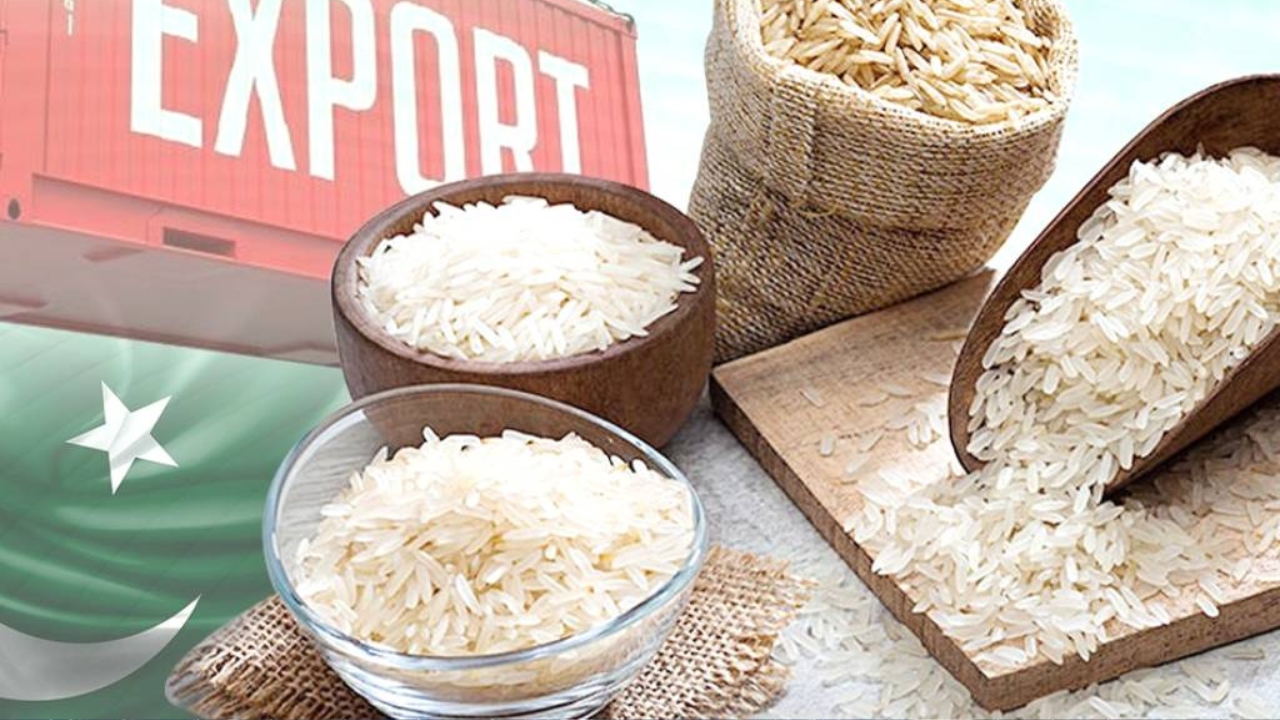
    US President Donald Trump’s imposition of a 50 percent tariff on Indian goods has opened the door for Pakistan to capture a bigger share of the American market. The US trade flows are reportedly already shifting away from India, creating new export opportunities for Pakistan, particularly in basmati rice.

    According to data from a global trade platform, 24 percent of Pakistan’s basmati rice was exported to the US between November 2023 and October 2024, with the country importing a staggering 1,519 shipments of rice from Pakistan.

    The US imports rice from Asian countries, as locally produced rice differs greatly in aroma and quality. According to the US Department of Agriculture (USDA), rice imports have increased over the past three decades, rising from just seven percent of the domestic market in 1993 to a sizable 25 percent by 2023.

    The USDA expects a growth in the demand for rice imports in the coming periods. The US sources over 60 percent of these imports from Asia, with Thailand, India, and Pakistan serving as top exporters of rice to the economic hegemon. 

    However, with US-India tensions heightening, mainly because of India’s economic ties with Russia, Pakistan could outcompete India on American shelves. Currently, India’s basmati rice faces a 50 percent tariff as opposed to the 19 percent tariff that Pakistani rice imports into the US bear.

    Reports have highlighted how this gives Pakistan a clear pricing advantage over India in the US market. Details from Indian media outlets have revealed that India’s basmati rice exports to the US could plunge by a whopping 80 percent. 

    This is because the price of importing India’s basmati rice into the US has soared to a staggering $1,800 per metric ton. For reference, the price of India’s basmati rice to US customers is now over 24 percent higher compared to importing rice from Pakistan, as Pakistani basmati rice is priced at roughly $1,450 per metric ton.

    US retailers and importers have already begun sourcing their basmati rice from Pakistan, instead of India, as its prices are unmatched compared to India. Reports suggest that customers have welcomed the change too, citing a retail worker who outlined that Pakistan’s basmati rice is “already popular” in the US. 

    Data from the Rice Exporters Association of Pakistan (REAP) indicates that Pakistan exported over 772,000 tons of basmati rice in fiscal year (FY) 2023-24, allowing for export revenues of $876.9 million. However, this number could grow significantly in Pakistan’s favour, as the odds and tariffs are stacked against India.

  • Stats reveal Babar, Rizwan slowest batters of 2024

    Stats reveal Babar, Rizwan slowest batters of 2024

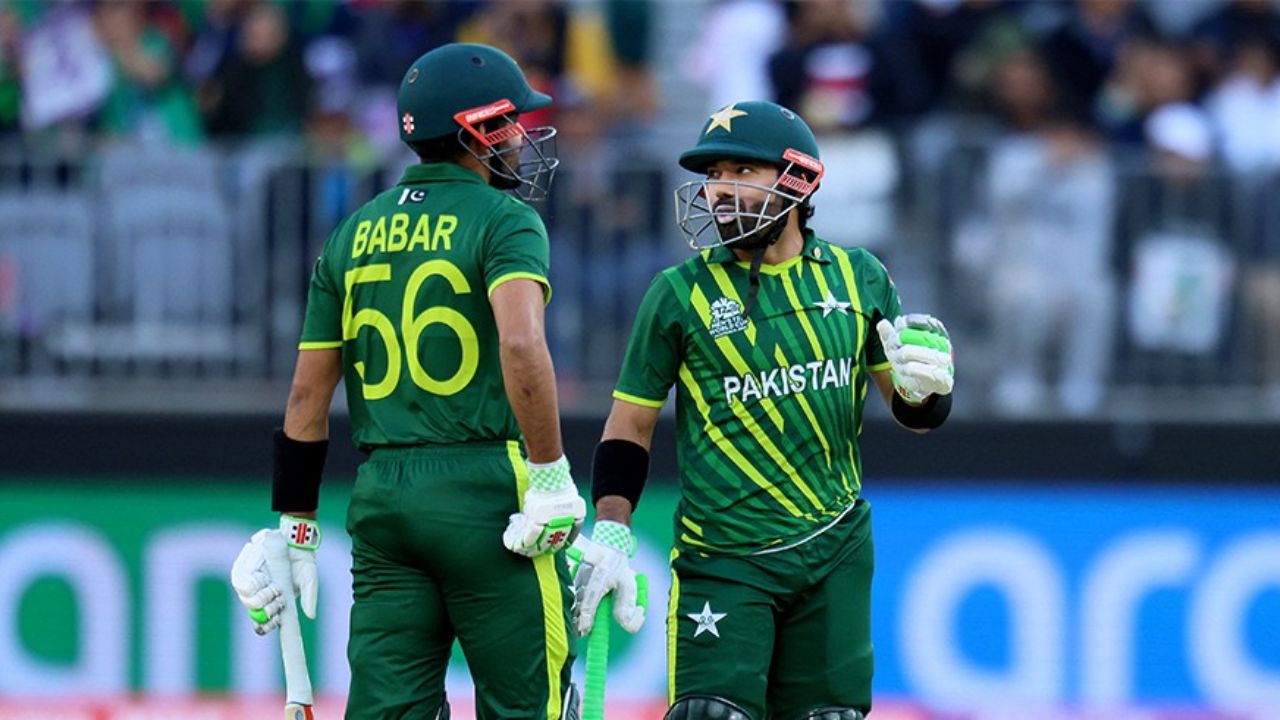
    Pakistan’s senior batters Mohammad Rizwan and Babar Azam have fallen behind all ICC full-member players in ODI strike rates, ranking among the lowest this year. Since January 1, 2024, Rizwan has scored at just 75.03, while Babar’s strike rate stands at 78.88.

    Babar’s poor run rate shows no sign of ending. It has now been 712 days since he scored his last ODI century. His most recent hundred came against Nepal in the Asia Cup 2023, when he made 151. Since then, in the past two years of ODI cricket, he has not gone beyond 78 runs in an innings.

    In the second ODI against West Indies, he was dismissed for a duck, the fifth of his career and the first since August 2023 against Afghanistan. Though he had scored back-to-back fifties against the same side before the Asia Cup, his form has dipped sharply since his 151-run knock against Nepal.

    In his last 28 ODI innings, Babar has scored 929 runs at an average of 37.16 and a strike rate of 79.53, well below his career averages of 54.62 and 87.78. He has made nine fifties in this period, with a highest score of 78. Before this slump, he had scored 19 centuries and 37 fifties in 102 ODI innings.

    His struggles are not limited to ODIs. Since the Nepal century, he has played 10 Tests, averaging just 23.15 with no centuries and only three fifties. In T20 internationals, he has scored 738 runs in 24 matches at an average of 33.54.

    During this period, Babar also lost the Pakistan captaincy, was dropped from the Test team before making a return, and has now lost his place in the national T20 side as well.

  • Hasan Raheem says ‘Qubool Hai’, this time for real

    Hasan Raheem says ‘Qubool Hai’, this time for real

    Singer Hasan Raheem has become a dulha again but this time its not for a music video, its for real. While the singer himself did not share pictures from the event, photos and videos from the nikkah have been circulating on social media.

    A few months ago, Hasan jokingly announced his marriage, which later turned out to be part of a music video project. 

    Before the official announcement, social media was already buzzing with speculation about his wedding. 

    One fan jokingly wrote, “Guys, it’s AI .” Another commented, “Koi baat nahi girlies, better luck next time.” 

    Someone else asked, “Is this real this time??” while another teased, “Prank hai guys, prank.”


    In April, Hasan surprised fans on Instagram by posting a picture from what appeared to be his wedding day. In the photo, he sat beside a woman in a stunning purple outfit, her face hidden from the camera, while he wore a tea-pink kurta shalwar, giving off a soft and simple wedding vibe.


    He captioned the post: “Kept it lowkey, it was a big day. Any photographs or videos from our wedding shared online violate our privacy. We do not consent to the publication or posting of any images or footage from our events.”

    However, a month later in May, Hasan revealed it was all a prank. The Peechay Hutt hitmaker admitted that the post was part of the promotional campaign for his song MEMORIES featuring Justin Bibis. At the time, he shared a video on Instagram saying: “Abhi bhi kunwara hun ” and announced that MEMORIES was the first track from his upcoming album DKP.

  • US designates BLA, Majeed Brigade as foreign terrorist organisation

    US designates BLA, Majeed Brigade as foreign terrorist organisation

    The United States (US) has formally designated the Balochistan Liberation Army (BLA) and its militant faction Majeed Brigade as Foreign Terrorist Organisation (FTO), the US State Department said in a statement on Monday, chalking up a huge diplomatic victory for Pakistan. 

    The move also adds the Majeed Brigade as an alias to the BLA’s previous listing as a Specially Designated Global Terrorist (SDGT) group.

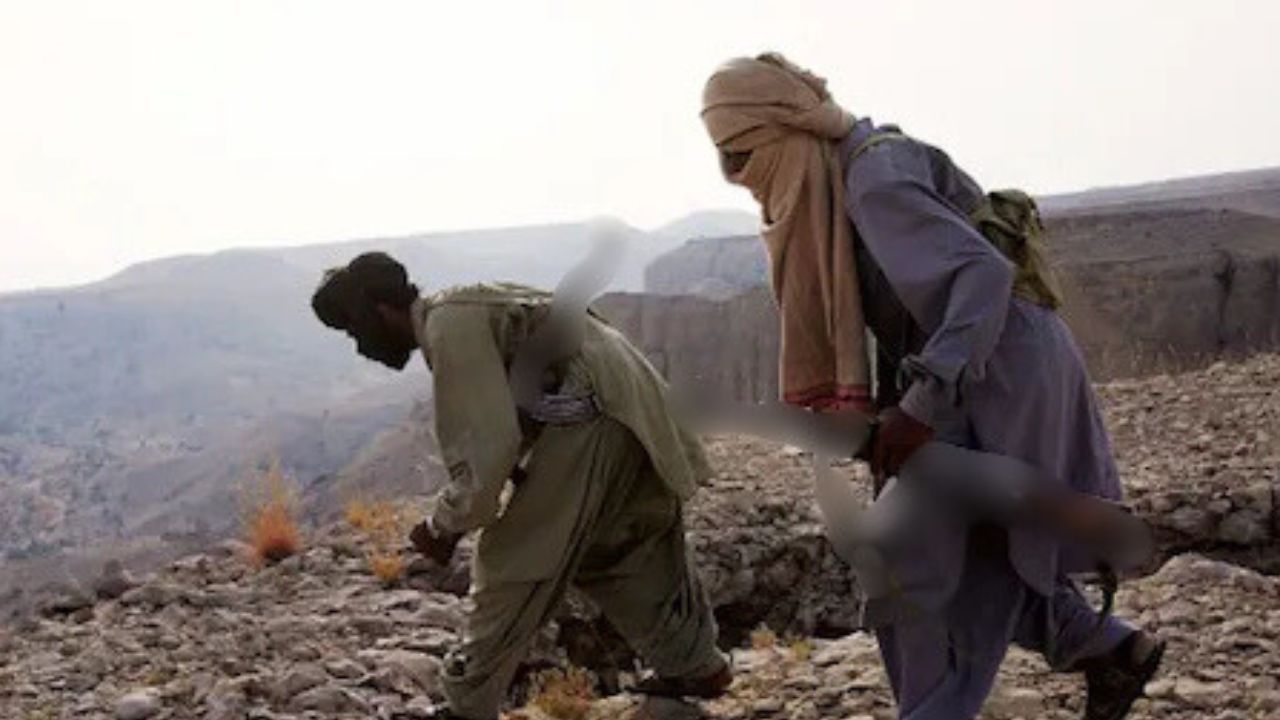
    The BLA has claimed responsibility for multiple attacks, including the October 6 suicide attack on a road near Jinnah International Airport, killing three people, including two Chinese engineers, and injuring at least 11 others.

    In March this year, the BLA claimed responsibility for the hijacking of the Jaffar Express train en route from Quetta to Peshawar, which left 31 civilians and security personnel martyred and saw more than 300 passengers taken hostage.

    “Today’s action taken by the Department of State demonstrates the Trump Administration’s commitment to countering terrorism.  Terrorist designations play a critical role in our fight against this scourge and are an effective way to curtail support for terrorist activities,” read the press statement.

    It further said that the actions were taken under section 219 of the Immigration and Nationality Act, as amended, and Executive Order 13224, as amended. “FTO designations go into effect upon publication in the Federal Register,” the statement concluded.

    Islamabad has already termed BLA and Majeed Brigade ‘Fitna al-Hindustan’, saying that the insurgent groups are conducting their anti-state activities with India’s backing.

    Balochistan Chief Minister (CM) Mir Sarfraz Bugti welcomed the move, attributing the credit to the federal government and Chief of Army Staff (COAS) Field Marshal Asim Munir, who recently traveled to the US and engaged in high-level discussions with military leaders, for communicating Pakistan’s stance against terrorism to the Trump administration.

    “BLA and Majeed Brigade shed the blood of the innocent in the name of rights and ethnicity,” he said, stressing that the world must unite to eliminate the scourge of terrorism.

  • Live conversation with super stars, happening this August

    Live conversation with super stars, happening this August

    Mahira Khan has announced an exciting new project, UNCUT, a unique live conversation series scheduled for August 23 and 24, 2025, at the Arts Council of Pakistan, Karachi.

    Sharing the news on Instagram, Mahira wrote: “For as long as I can remember I’ve enjoyed watching interviews… especially those where you see an artist speaking their heart out. Those where I see two people vibing with each other, being vulnerable, recounting moments of their journey that they normally don’t talk about. I hope UNCUT can be exactly that.”

    Mahira described the event as “exclusive, unfiltered conversations with some of the biggest public personalities of Pakistan, sharing their journeys, their stories, and moments you’ve never heard before.” She also expressed gratitude to the artists who agreed to participate, adding that she looks forward to “two memorable nights, InshAllah.”

    Produced by Mashion and directed by acclaimed filmmaker Sarmad Khoosat, UNCUT will feature nine of Pakistan’s most celebrated names: Mahira Khan, Fawad Khan, Ahad Raza Mir, Iqra Aziz, Wasim Akram, Shoaib Akhtar, Humayun Saeed, Sanam Saeed, and Fahad Mustafa.

    Fans have been quick to react, calling the project “ICONIC” and praising Mahira for her vision. 

    One user commented: “Epic!!! Legend is what Legend does. So proud of all that you’ve managed to do with Mashion in the last 7 years. You’ve come a long way indeed. Can’t wait for Pakistan’s version of Actor on Actor. Only love ♥” 

    Another wrote: “Only YOU could pull this off ❤”

  • Iqra Aziz faces backlash on ‘tone-deaf’ remarks on India daycare assault

    Iqra Aziz faces backlash on ‘tone-deaf’ remarks on India daycare assault

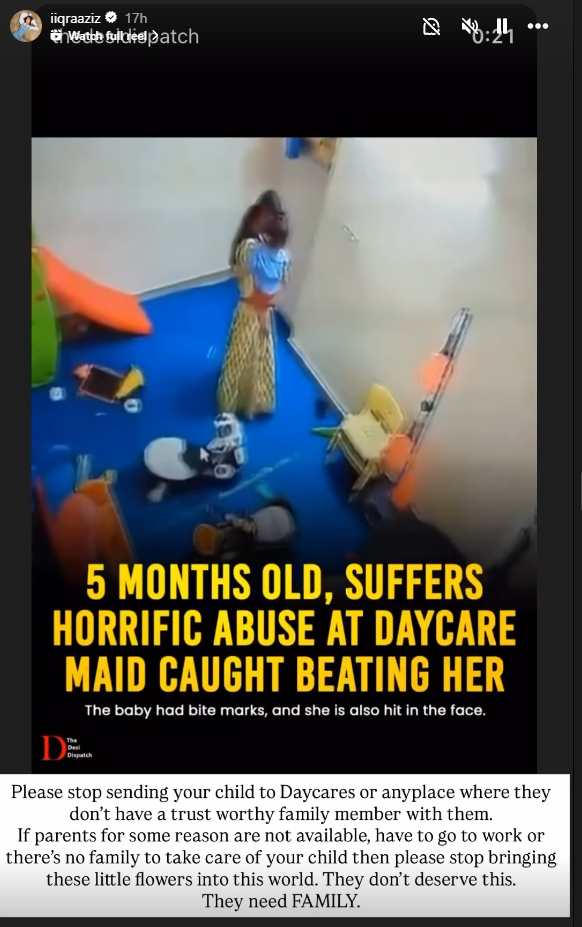
    Pakistani actress Iqra Aziz has come under criticism after reacting to the brutal assault of a 15-month-old baby girl at a daycare centre in Noida, India. The incident, which led to the arrest of a daycare maid, has sparked outrage and renewed debates over child safety.

    Taking to Instagram, Iqra posted a video message urging parents not to send their children to daycares unless a trustworthy family member is present. She wrote, “Please stop sending your child to daycares or any place where they don’t have a trustworthy family member with them. If parents for some reason are not available, have to go to work or there’s no family to take care of your child then please stop bringing these little flowers into this world. They don’t deserve this. They need FAMILY.”

    Her comments drew swift reactions online, with many accusing her of being insensitive and out of touch with the struggles of working parents. One user wrote, “This is so tone-deaf.” Another said, “You have the privilege of having your mother around your child. Not everyone’s parents are in good health, not everyone has a big family who can take responsibility, and not every mother is working by choice. Rather than pointing out how this behaviour only happens in a few countries where law is not strict and condemning the criminal, she is victim blaming.”

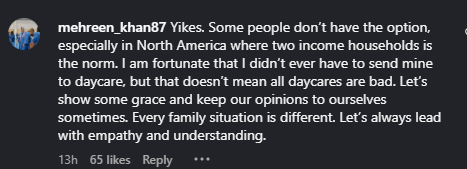
    Some argued that her statement ignored economic realities. “Yikes. Some people don’t have the option, especially in North America where two-income households are the norm. I am fortunate that I didn’t ever have to send mine to daycare, but that doesn’t mean all daycares are bad. Let’s show some grace and keep our opinions to ourselves sometimes. Every family situation is different. Let’s always lead with empathy and understanding,” one comment read.

    Others simply called it “Privilege speaking.”

    The backlash followed the disturbing events in Noida, where police arrested a maid at a daycare centre after CCTV footage allegedly showed her slapping the toddler, throwing her to the ground, and whipping her with a plastic belt while hurling abuse and threats. The victim’s parents also claimed the daycare head did not intervene.

    Police confirmed that a case has been registered and the suspect is in custody. Noida Central DCP Shakti Mohan Avasthy said, “The police have been informed by the victim’s parents about the torture by the daycare centre maid. Based on their complaint, a case has been registered at the Sector 142 police station, and the accused has been taken into custody. Further probe is on into the matter.”

    The child has undergone a medical examination, and the investigation is ongoing.

  • Cristiano, Georgina gets engaged after 10 years together

    Cristiano, Georgina gets engaged after 10 years together

    Portuguese football legend Cristiano Ronaldo and his long-time partner Georgina Rodriguez have officially gotten engaged after a decade together. The 40-year-old player proposed to Georgina with a stunning diamond ring.

    Georgina shared the happy news on Instagram, posting a photo where her hand rests on Ronaldo’s, showcasing the large diamond ring. In the caption, she wrote, “Yes I do. In this and in all my lives.”

    The couple has been together since meeting in 2016 at a Gucci store in Madrid. They share three children and are also raising Ronaldo’s eldest son, Cristiano Jr.

    The engagement ring features a beautiful oval-cut diamond set on an elegant band. According to media reports, jewellery experts estimate the stone weighs between 10 and 15 carats and is valued between $1 million and $5 million. Other experts suggest the diamond could be between 25 and 30 carats, with a price tag ranging from $2 million to $5 million, depending on its clarity and design.

    Currently playing for Saudi Arabian club Al Nassr, Ronaldo has previously said in interviews that he would marry Georgina “when the time is right.”

    The couple has faced personal challenges, including the loss of one of their newborn twins in 2022, but they have remained together for nearly a decade.

    The engagement comes as Ronaldo gets busy with the ongoing Saudi Pro League season and continues to rank among the highest-paid athletes in the world.

  • Elena Moussa: Life, Career, and Marriage to Greg Gutfeld

    Elena Moussa: Life, Career, and Marriage to Greg Gutfeld

    Elena Moussa is a notable picture editor and a one-time model. She’s quite well known for her creative work in the fashion field. Quite a number of people also know her as the spouse of television host Greg Gutfeld. Elena leads a low-profile life. However, she is inspiring in her own way. Born in Russia, she always had a love for design and style. Subsequently, she moved to London to attend the Fashion Institute of Technology. 

    Her career showcases her attention to detail and her love for visual storytelling. She has achieved a respected reputation in the field for her work with well-known publications. She loves to live away from the spotlight, where she focuses on her personal life. Readers admire her quiet strength and effortless sophistication. Let’s discuss her in detail!


    Her Journey Through the Fashion World

    Moussa has had years of experience in fashion and has been acclaimed as a stylist in various publications around the world. She routinely posts her work on Instagram, where one can find her contributions to Venice Magazine, Design Scene, and L’Officiel, to name a few. Additionally, she has been recognized for her style, including by the fashion writers at The Cut, who awarded her as one of the 21 best-dressed people at New York Fashion Week in 2015.

    She enrolled at Parsons School of Design in New York City in 2015 to start her academic career in fashion. The information is collected from her LinkedIn profile. Moussa graduated in May 2017 and even shared an Instagram post after the ceremony showing her with friends.


    She’s from Russia

    Moussa is from Russia. Here, she used to work as a photo editor for Maxim Russia. It’s during this time that she met Gutfeld, the editor-in-chief of the U.K. edition.

    After a short period of them being together, she moved to London to live with the journalist. Unfortunately, Gutfeld’s contract at Maxim, as noted in Campaign, ended in 2006 and wasn’t renewed. After this, the two moved to New York City. Here, both of their careers dramatically advanced.

    Moussa’s mother was stranded in Ukraine at the beginning of the Russian invasion and was taking sanctuary in a hotel in the town of Lviv. Thanks to Gutfeld’s colleagues at Fox News, she was able to escape to Poland and was later reunited with Moussa.


    She and Gutfeld got married in 2004

    As noted by The New York Times, Gutfeld and Moussa wed in a civil ceremony in New York just five months after meeting. While they have generally remained silent regarding their wedding and marriage, Gutfeld provided a glimpse of Moussa in his 2008 book, Lessons from the Land of Pork Scratchings: A Miserable Yank Finds Happiness in the UK, which discussed his years in London.

    “Things with Elena are good, and we are getting married after dating for five months,” he shared. “Elena wants me to take the bus so I can see the sights and the city. I wouldn’t do that. Without her encouragement, I would just sit at home and watch Big Brother, my new favorite show.”


    A Quiet Love Story

    Moussa provides her followers with a little bit of detail about her family life. However, she offers nearly no details about her relationship to Gutfeld. Throughout their marriage, she has posted only a single picture of her husband on her Instagram.

    Gutfeld also tends to keep a low profile on his social media, although he does post pictures of Moussa from time to time. As of 2021, after the launch of his late-night talk show Gutfeld!, Gutfeld has posted a black and white picture of his wife taken while the two of them were at lunch for their celebration.


    The Couple Share a Daughter

    In December 2024, the couple shared publicly that their first child, a daughter named Mira, had been born. In a statement shared on Fox News’ The Five, Gutfeld shared his part. “It is with great joy that my wife Elena and I have welcomed a baby girl into the world. Mira is healthy with a real set of lungs,” was part of his statement.


    Their Furry Friend

    In October 2022, Gutfeld and Moussa adopted a French Bulldog named Gus. Gutfeld enjoys sharing photos of Gus on social media and has featured him on The Five and Gutfeld!  Gutfeld was the first to showcase Gus on The Five after a few days of having the dog, and joked that he got a French Bulldog because they look like him. “That’s the first thing my wife said when I sent the picture,” Gutfeld said. “She goes, ‘He looks just like you.’”

    Read More: Bacone College Financial Collapse Explained

  • Bacone College Financial Collapse Explained

    Bacone College Financial Collapse Explained

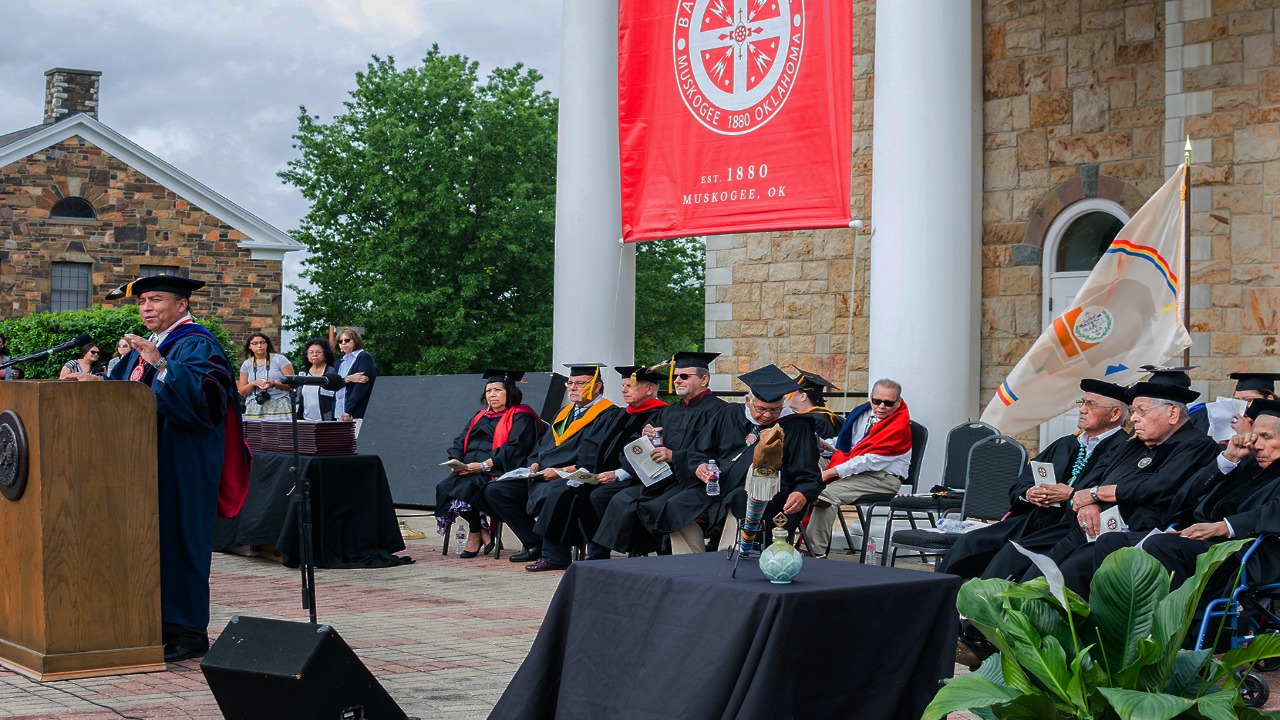
    For nearly 145 years, Bacone College served as a center of learning, culture, and opportunity in Muskogee, Oklahoma. Founded in 1880, the institution was especially significant to Native American communities. Known for its art program, faith-based education, and commitment to diversity, Bacone held a special place in American higher education.

    In 2025, that long history came to an abrupt and heartbreaking end. The Bacone College Financial Collapse shocked alumni, students, faculty, and the wider community. What happened to this historic school is a story of financial mismanagement, missed opportunities, and a struggle to adapt to modern challenges.


    A Brief History of Bacone College

    Bacone College was originally founded as a mission school to provide education for Native American students. Over time, it evolved into a liberal arts college with a strong emphasis on Indigenous culture and art. The institution was widely respected for preserving the “Bacone style” of art, a unique blend of traditional Native American themes with contemporary expression.

    Generations of students attended Bacone, often being the first in their families to earn a college degree. The school’s commitment to faith and culture made it not only a place of education but also a cultural landmark. Unfortunately, heritage alone was not enough to protect it from the pressures facing small colleges in the United States.


    Early Signs of Trouble

    The financial issues at Bacone College did not appear overnight. They were the result of years of underfunding, declining enrollment, and poor decision-making. As far back as the 2010s, the college began showing signs of strain. Budgets were tight, buildings needed repairs, and the school struggled to attract enough students to balance its books.

    In 2018, Bacone underwent massive layoffs, cutting faculty and staff in an attempt to reduce costs. Several academic programs were eliminated, and parts of the campus were sold to raise money. While these measures provided temporary relief, they did not address the root causes of the college’s financial instability.


    Attempts to Save the College

    Recognizing the seriousness of its financial situation, Bacone’s leadership explored the possibility of transforming the school into a tribally chartered college. This change could have opened doors to federal funding specifically aimed at Native-serving institutions.

    Several tribal nations expressed interest in supporting Bacone in this transition. However, the process required approval from federal agencies, and unfortunately, those approvals never came. Without the expected funding and partnerships, the plan collapsed, leaving Bacone to face its challenges alone.


    Mounting Debt and Legal Troubles

    As years passed, Bacone’s debts continued to grow. Bills went unpaid, maintenance was deferred, and creditors became increasingly frustrated. By 2023, the college owed large sums of money to various vendors, including contractors who had worked on campus infrastructure.

    One of the most notable disputes involved unpaid work on the campus heating and cooling systems. A creditor won a court judgment for about one million dollars, and at one point, the college’s property was scheduled for public auction to help pay the debt. That auction was canceled at the last minute, but it highlighted just how close Bacone was to losing everything.


    Suspension of Classes

    By early 2024, Bacone’s leadership made the difficult decision to suspend classes. The official statement was that the school needed time to restructure and plan for the future. Administrators insisted that the college was not closing permanently, but students and faculty feared the worst.

    Suspending classes meant losing tuition income, which only worsened the school’s financial position. Without a steady stream of revenue, Bacone had fewer options for recovery.


    Bankruptcy and the Final Collapse

    In mid-2024, Bacone filed for Chapter 11 bankruptcy. This type of bankruptcy is often used by organizations that plan to reorganize and eventually return to normal operations. However, the process quickly went in the wrong direction.

    The U.S. trustee overseeing the case accused Bacone’s leadership of “gross mismanagement.” Reports revealed that the acting president had used college funds to repay a personal loan of about $16,500 from the Small Business Administration. This raised serious questions about ethics and oversight.

    By May 2025, the bankruptcy case was converted to Chapter 7. This meant Bacone would no longer attempt to reorganize. Instead, its assets would be sold to pay creditors, and the institution would cease to exist. Control of the college shifted from its leadership to a court-appointed trustee. With that, the Bacone College Financial Collapse became final.


    The Cultural and Educational Impact

    The closure of Bacone College is more than just the loss of another small private school. It represents the end of an important cultural institution. Bacone was known for fostering Native American art and preserving Indigenous history. Its art program helped create and promote a distinctive style that has influenced artists for generations.

    The campus itself housed priceless artwork and artifacts tied to Native heritage. The fate of these cultural treasures is now uncertain, as they may be sold or moved as part of the bankruptcy process. For many in the Native American community, this is a painful blow that goes beyond academics.


    Why Bacone Failed

    The Bacone College Financial Collapse can be traced to several interconnected factors:

    1. Declining Enrollment – Like many small colleges, Bacone struggled to attract enough students to cover its operating costs.

    2. Poor Financial Oversight – Longstanding mismanagement and questionable use of funds eroded trust and stability.

    3. Deferred Maintenance – Years of neglect left the campus in need of expensive repairs that the college could not afford.

    4. Failed Strategic Initiatives – Efforts to secure tribal funding and federal support fell through, leaving Bacone without the resources it needed.

    5. Legal and Debt Pressures – Mounting lawsuits and unpaid bills forced the school into bankruptcy.


    Lessons from the Bacone College Financial Collapse

    The fall of Bacone College offers valuable lessons for other institutions:

    • Act Early – Addressing financial problems before they become overwhelming is critical.

    • Maintain Transparency – Stakeholders need clear and honest communication about challenges and plans.

    • Diversify Revenue – Relying too heavily on tuition can be risky, especially for smaller colleges.

    • Protect Cultural Assets – Institutions with historical or cultural significance must prioritize preservation, even during crises.


    What Happens Next

    With Bacone College now closed, the future of its campus, archives, and cultural assets lies in the hands of the bankruptcy trustee. Some of the property may be sold to other educational institutions, while other parts may be auctioned to private buyers. Alumni groups and tribal organizations may try to save portions of the legacy, but the path forward is uncertain.


    Final Thoughts

    The Bacone College Financial Collapse is a tragic end to a long and meaningful chapter in American education. It is a reminder that history and tradition, while powerful, cannot shield an institution from the realities of poor management and financial hardship.

    Bacone’s story is not only about the loss of a college but also about the broader struggles of small, mission-driven schools in today’s competitive higher education environment. For alumni, Native communities, and the city of Muskogee, the closure leaves a void that will not be easily filled.

    Read More: Where Is Clive Rothwell Now After Belle Gibson Scandal
  • Saheefa Jabbar slams social media trends spreading hate for views

    Saheefa Jabbar slams social media trends spreading hate for views

    Actor Saheefa Jabbar Khattak has called out content creators for “propagating hate for views” in a series of Instagram stories.

    Sharing several reels featuring people, mainly in their 20s and 30s, making derogatory remarks about others’ identities, Khattak criticised the current trend of asking people to rate others based on their “names, caste, income levels and other attributes.” She went on to ask, “What are we doing as a nation?”

    She also spoke against the celebration of “toxic masculinity, abusive men, and the biggest walking red flags.” She also condemned the notion, highlighted in one of the shared reels, that women are “disgusting” simply because they have been victims of sexual harassment.

    Expressing her concern over the quality of online discourse, Khattak said, “Take the phones away from these kids, and for God’s sake, get them to study, learn and grow.” 

    The actor also criticised the new trend in which people flaunt the cost of their outfits, deeming it “elitist.”

    Saheefa Jabbar Khattak ended the series of posts by saying, “I am ashamed and deeply sorry for any time I had spoken carelessly or hurt someone with my words.” She added, “What we choose to say must come from wisdom and knowledge.”

    Reflecting on the online content she had seen, she said, “It only makes me reflect on myself more, and reminds me that I must keep learning.”

    Khattak’s remarks come at a time when ethnic and religious intolerance, violence against women, and economic struggles remain pressing issues in society, making her call for more mindful speech on social media all the more relevant.