Blog

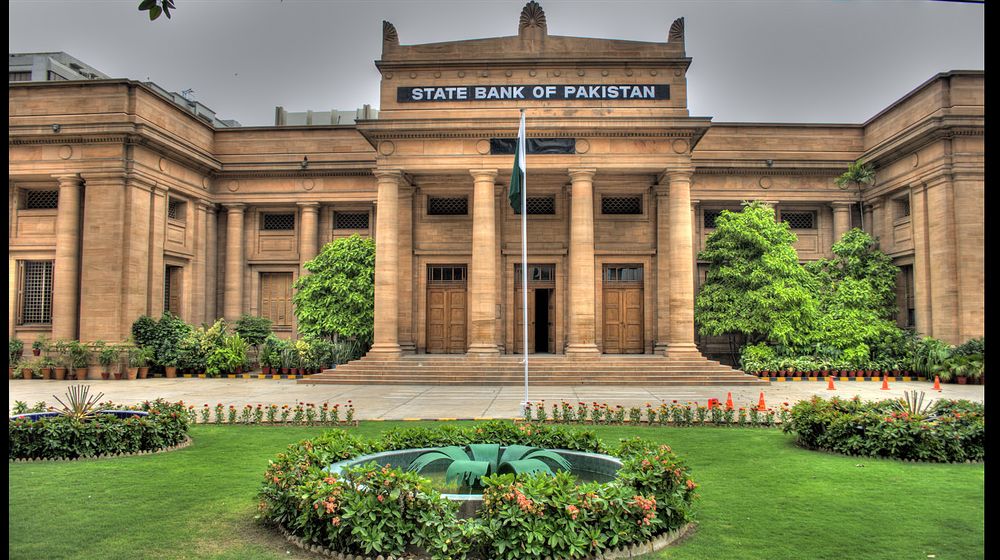
  • The great debate on State Bank autonomy

    The great debate on State Bank autonomy

    “We must understand that we do need to make SBP autonomous, or else it would continue to get exploited by the government to gain political advantages through expansionary fiscal policies.”

    If you have wondered in recent days what’s the real deal with the proposed changes in the State Bank of Pakistan law but have failed to understand the issue, perhaps this is just the right piece for you.

    Lately, there has been a lot of noise in the media about this issue. Many leading economists have claimed that this would mean compromising on government’s independence. Others have equated it to a deep conspiracy against Pakistan. But there are many contrarian voices as well, claiming that these amendments are justified and well needed. It’s time to put this debate to rest. Let’s objectively look at both sides of the argument and come to an independent conclusion.

    Firstly, why is there so much mistrust about the proposed amendments in the SBP Act?

    While there is always noise in the media, motivated by vested interests, it is hard to attribute all criticism to political motivations when it’s coming from multiple credible economists. There has to be a deeper reason for why so many people are apprehensive about it. There are a few cogent reasons. Pakistan is facing a fifth-generation war, and anything out of the ordinary is bound to raise eyebrows. Given our geostrategic location, it is not a farfetched idea that international powers could have a clandestine agenda. The fact that the current Governor State Bank is a former IMF employee has also not helped, given our eternal mistrust about the Bretton Woods institutions. People have confused two different issues: choice of the Governor and autonomy of the State Bank. Merely because the current governor is a former IMF employee, it’s a bit of a stretch to say that the proposed law will make the SBP subservient to the IMF. Lastly and most importantly, many economists have taken a clue from the recent past, when there was a hyper-reaction by the SBP to the headline inflation, which slowed down the economy. A legitimate question is what would prevent the State Bank from over-reacting in the future if Pakistan were to face similar circumstances.

    The second question is that where these amendments came from and why they are required.

    Pakistan has witnessed repeated boom-and-bust cycles that have taken a toll on national economic health. Many previous governments have spent generously to appease their voters and then got the State Bank to finance the ballooning budget deficits (by literally printing money). Under the government’s pressure, the central bank had kept the interest rates low and exchange rate overvalued to stimulate demand and drive growth. By the time the import-led consumption led to a crisis, it was the next government’s turn to run to the IMF yet again.  No one can deny that this pattern had to break.

    How can this cycle be broken?

    The IMF reports from 2008, 2013 and 2018 all highlighted SBP’s continued financing of large fiscal deficits and currency support operations draining external reserves and recommended enhanced autonomy for SBP with domestic price stability as the primary objective, flexible exchange rate policies and an end to direct lending to the government. Those who criticise the proposed amendments, unfortunately, have not come up with a better practical alternative.

    But the devil is always in the details. So what exactly has the IMF proposed?

    The IMF ran a safeguards assessment, which recommended ensuring full operational independence of SBP, making price stability the primary objective of the central bank, prohibiting monetary financing of public sector debt, and removing quasi-fiscal operations. It also suggested improving SBP’s governance, including creating a firewall between management and oversight functions, establishment of the Executive Board and protecting personal autonomy of members of SBP Board and Monetary Policy Committee. In addition, IMF also proposed strengthening legal provisions for audit and statutory mechanisms for sufficient capitalisation and profit retention.

    Let’s translate these proposed changes into simpler terms. What is the change that we actually need, which should not be unduly criticised?

    Putting an end to government’s direct borrowing from SBP, dissolution of Monetary and Fiscal Policies Coordination Board and removal of Secretary Finance from SBP’s Board, all aimed at cutting the cord between MoF and SBP. This is essential if we intend to remove the government’s influence on the State Bank to take politically motivated decisions.

    The tenure of the Governor also needs to be increased to delink his appointment from electoral cycle, depoliticise the Governor’s role and ensure policy continuity. The proposed tenure of five years is in line with other central banks including India. Some have criticised the provision for reappointment of the Governor, which is actually not new and was also present in the previous draft, albeit with a shorter tenure of three years.

    Then there has been a lot of criticism on proposing domestic price stability as the primary objective and ‘supporting general economic policies’ as a tertiary objective. No one has bothered to check that even the existing law does not mention supporting economic policies or growth as objectives of the SBP, and instead focuses on supporting the regulation and growth of monetary and credit systems. Moreover, putting price stability as a primary objective is not a novel concept and has been embraced by many countries. In fact, macro-economic stabilisation is critical for sustained economic growth and for preventing the boom-and-bust cycles – the kind we have repeatedly experienced.

    Nevertheless, the new law should mention sustainable growth as the ultimate objective. The Indian Reserve Bank Act also mentions price stability as its primary objective but keeping in view the objective of growth. But this would be a semantic change. The central bank cannot operate in isolation from the rest of the economy and ignore the growth considerations altogether.

    The proposed amendments also have a provision for the SBP to support growth. The end to quasi-fiscal operations would not mean the discontinuation of re-financing facilities, at least in the foreseeable future. These schemes have much lesser risk since the credit allocation decisions rest with the commercial banks, which in turn remain accountable for asset quality indicators, like non-performing loans, while the SBP steers clear of the credit risk.

    Another misunderstanding is about inflation targeting. Inflation targeting does not necessarily mean that SBP alone would be able to control inflation, especially if the country is facing supply-driven and cost-pushed inflation, and in the wake of weak monetary policy transmission mechanisms. But even in that situation, SBP’s interventions are required to mitigate the second-round effects of supply-driven inflation. However, given the track record, the SBP will also have to be cautious and not get carried away by inflationary concerns.

    There has also been much criticism about the new accountability clauses, especially the provision of getting prior permission of the SBP Board before NAB or FIA can initiate an investigation. But this is not an unusual concept in Pakistan. Securities and Exchange Commission enjoys the exact same protection under Section 41 (b) of the SECP Act. Why then fear it for the SBP?

    Moreover, a new accountability clause has been proposed to be added whereby the Governor will have to appear in person before the parliament, which wasn’t there earlier. Other than these, no accountability provision has been taken out from the existing law. 

    Furthermore, all SBP officials continue to be considered public servants and therefore subjected to Pakistan Penal Code’s stipulated offences for public servants (sections 161-171) including corruption. Similarly, the SBP’s accounts will continue to be audited by the Auditor General of Pakistan, besides two external auditors. In addition, the law now includes a conflict-of-interest clause, which will ensure transparency.

    Does this mean that all the proposed amendments are good, and nothing really needs to change? Not really. There are a number of proposed amendments that need reconsideration.

    For instance, the new law is not clear on who will set the inflation target. It should be made clear that National Economic Council is the legitimate forum to provide the target range.

    Similarly, the independent directors will now be appointed by the President, but on recommendation of the federal government. The only problem here is that the government will need to base its recommendations on list of candidates proposed by SBP’s Board itself, which seems cyclical and does not make sense. The federal government should be free to propose members who meet the requisite criteria.

    The section on removal of Governor has also been diluted, where previously they could be removed on breach of trust, but not anymore. Even the ground of serious misconduct has to be determined now by the court, which is ridiculous and needs to be fixed.

    Lastly, if the SECP Act is to be considered a benchmark for accountability clauses, then it should also be followed for other provisions. One can see that the newly inserted conflict of interest provision and the amended provision for removal of governor in the SBP Act are quite weak and must be strengthened in light of how these have been provisioned in the SECP Act.

    Most importantly, the question that we all need to ask is if there is anything for us to worry about the new SBP Act. Perhaps not as much as the media has portrayed.

    Many are confusing the issue of who occupies the seat of the governor with whether the central bank should be autonomous. The current governor might be from IMF, but that’s not always the case. So autonomy should not mean IMF controlling the central bank.

    Then, no matter what we write in the law, the parliament will always have the right to amend it. If we can change it once, we can always do that again. The President can even change it overnight through an ordinance if the parliament is not in session.

    Most importantly, there is a big difference between de jure and de facto power. By merely amending the law, the SBP cannot ignore the Prime Minister, the cabinet and the whole federal government.

    Lastly, before criticising the change and fearing the ‘new’, we must ask how the ‘old’ has delivered. We do know that it has not worked in the past, given our economic situation. So something must change.

    In short, we must understand that we do need to make SBP autonomous, or else it would continue to get exploited by the government to gain political advantages through expansionary fiscal policies. But we should not do it in a hush-hush manner and instead debate the proposed amendments in the parliament and only then pass them into law.
  • Lahore declared Pakistan’s first ‘polio-free city’

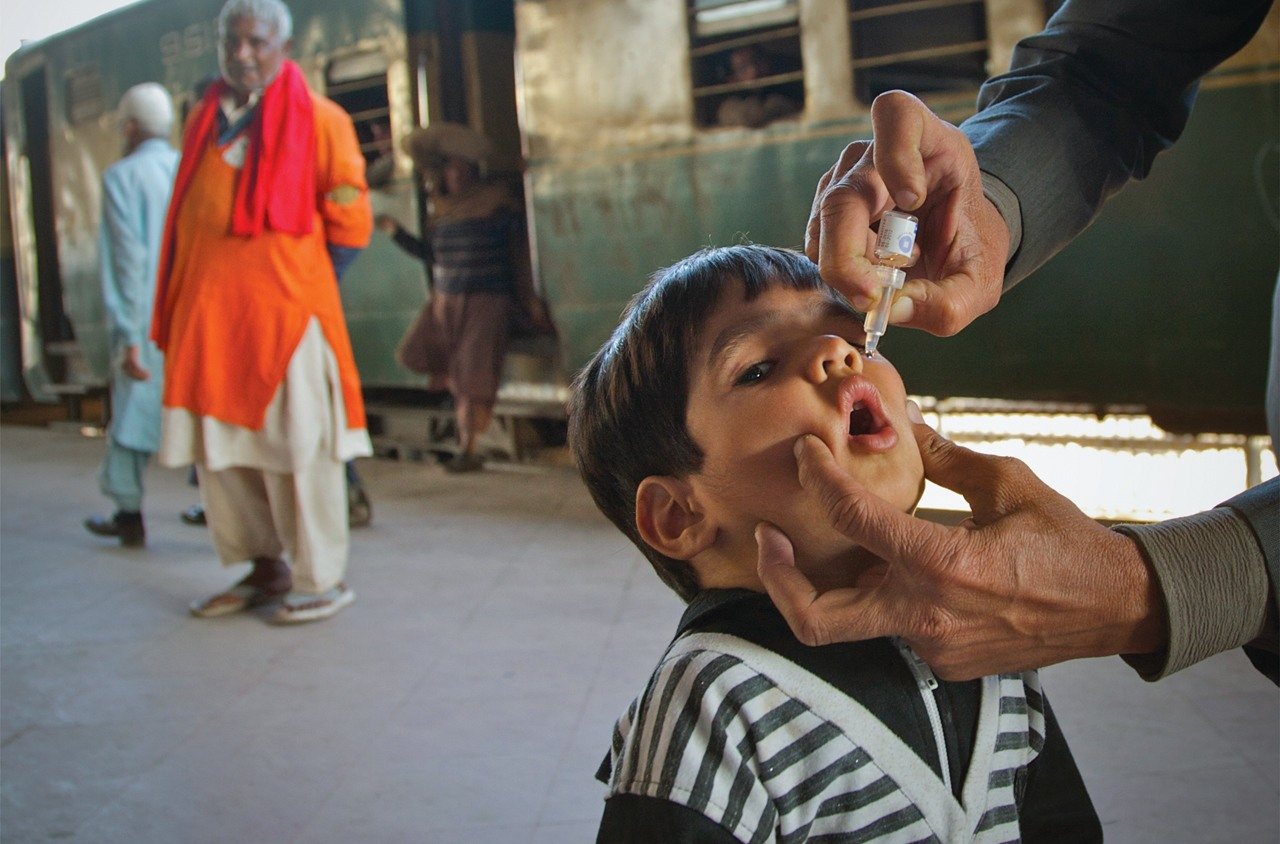
    Lahore declared Pakistan’s first ‘polio-free city’

    Lahore has become the first polio-free city in the country.

    According to details, the Lahore deputy commissioner said that the fifth environmental sample taken from the city for the poliovirus tested negative. Earlier four environmental samples for the virus had tested negative, he added.

    He credited the achievement to the doctors, polio workers, and the parents for making the city polio-free.

    Earlier on April 3, around 3.5 million children got vaccinated during the first four days of the nationwide polio campaign in the country.

    Read more – Here’s where you can find COVID-19 vaccine in Karachi, Lahore

    A five-day polio vaccination campaign commenced across the country on March 29 to vaccinate over 40.1 million children under the age of five.

    As many as 290,000 polio workers were administering anti-polio drops across the country while following COVID-19 standard operating procedures (SOPs). Security forces were providing foolproof security to the teams to avoid any unpleasant situation.

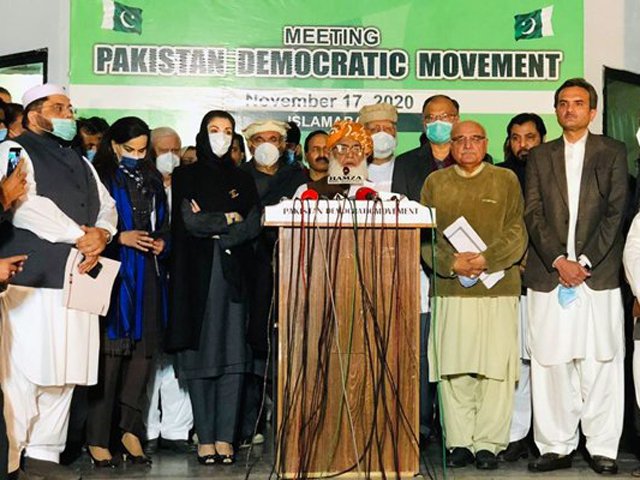
  • PDM: Done and dusted?

    PDM: Done and dusted?

    PPP chairperson Bilawal Bhutto Zardari on Monday announced that the party’s Central Executive Committee (CEC) has called upon its members to resign from all positions of the Pakistan Democratic Movement (PDM). 

    Flanked by party leaders, Bilawal held a news conference to speak about the matters that came under discussion during the recently-held Central Executive Committee meeting of the party. 

    He said the CEC had come to the conclusion that resignations from the national and provincial assemblies should be “like an atom bomb”.

    Bilawal said the PPP’s stance that the Opposition should not “abandon the Parliament and the Senate battleground” had been vindicated.

    He said if the PPP had listened to other political parties in the Opposition and boycotted the Senate elections and by-elections, then it would have harmed democracy.

    “We did not give the PTI government an open field to form a two-thirds majority in the Senate,” he said, adding that the government lost on its “own pitch” when the PDM candidate won from the Nowshera by-election.

    “We will not undermine these gains that the PPP has achieved after giving many sacrifices,” he said. “When the PML-N was in power, we protected the Parliament then and we will protect the Parliament today.”

    He said those who wanted to resign from the Parliament, should do so.

    “But, no one should try to impose their will or their dictation on any other political party,” he said. “And the Pakistan Peoples Party will continue in its firm, consistent Opposition to the selected government that has been ongoing since day one and has not broken for a single day,” stressed the PPP chairperson.

    “The Pakistan Peoples Party rejects the so-called show-cause notice,” he said. “Politics is done with equality and respect,” he added.

    “The PPP demands an unconditional apology to the ANP and to the PPP for this obnoxious attitude,” he said.

    Bilawal said the PPP stands by the ANP and would not abandon them under any circumstances. “There is no concept of show-cause notices in democratic alliances,” he said.

    He recounted the PPP’s participation in the Movement for the Restoration of Democracy and the Alliance for the Restoration of Democracy.

    “We condemn the politics of Opposition against members of the Opposition,” he said.

    The PPP chairperson said his party’s doors were open for all other parties, adding that there should be a “working relationship” among them.

  • Punjab govt launches mobile lungar for travellers, labourers

    Punjab govt launches mobile lungar for travellers, labourers

    Punjab government has launched a mobile lungar scheme in Lahore and Faisalabad in line with Prime Minister (PM) Imran Khan’s Ehsaas Koi Bhooka Na Soye Programme.

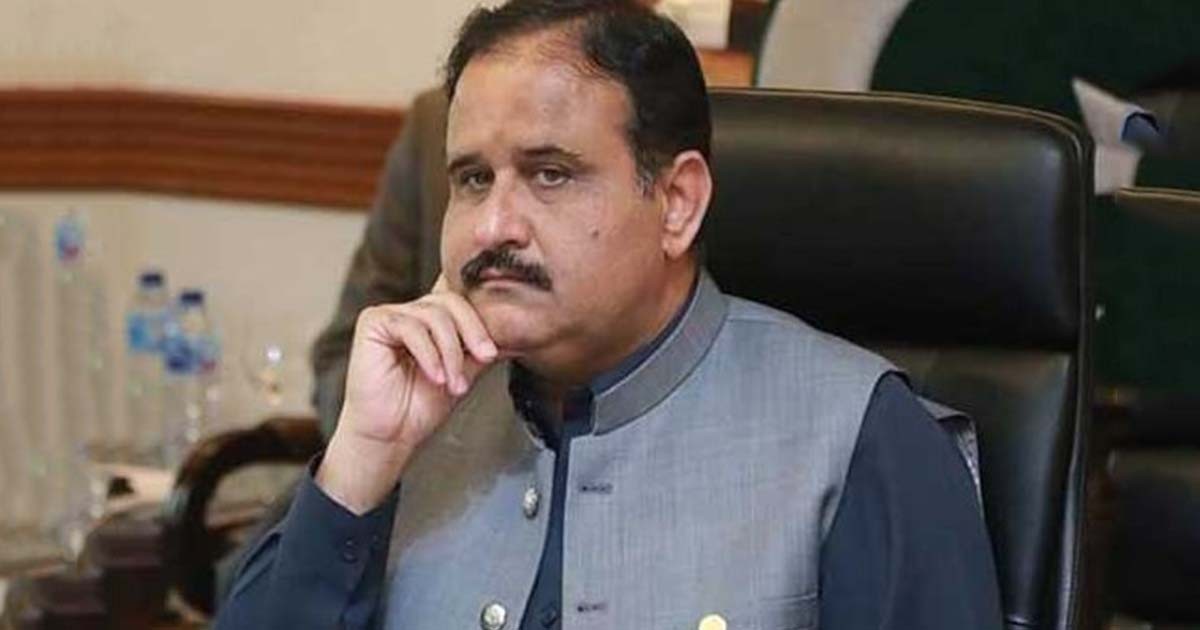
    Chief Minister (CM) Usman Buzdar inaugurated the programme in two cities, and food trucks are operating on four different routes in Lahore since.

    The following are the routes of the food trucks in Lahore:

    1. Thokar Niaz Baig to Data Darbar to cater to Multan Chungi, Mandi Stop, Chowk Yateem Khana and Chauburji
    2. Circular Road, Railway Station, Do Moria Pul, Badami Bagh Auto Parts Market, Masti Gate, General Bus Stand, Sabzi Mandi and Niazi Chowk
    3. Garrhi Shahu, Co-op Store, Shalamar, Darogay Wala and Shadipura
    4. Lakshmi Chowk, Mayo Hospital Chowk, Shah Aalam Market, Dalgaraan Chowk and Dehli Gate

    CM Buzdar has announced that 10,000 boxes will be distributed regularly on these routes to provide meals to labourers and travellers.

    In various areas of Faisalabad, two trucks will distribute almost 10,000 lunch boxes regularly.

    CM Buzdar remarked that feeding the needy is Prophet Muhammad (PBUH)’s Sunnah and is also in line with PM Imran’s vision of a welfare state.

    He added that the project will be launched in other cities of Punjab as well.

  • Sadia Ghaffar and Hassan Hayat are expecting their first child

    Sadia Ghaffar and Hassan Hayat are expecting their first child

    Sadia Ghaffar and Hassan Hayat Khan, who tied the knot last year in March, are expecting their first child.

    Interestingly neither Ghaffar nor Khan made the announcement but it was in fact Saboor Aly, who revealed the news on social media.

    Sharing a picture of herself with Sadia’s baby bump, Saboor said: “Can’t wait to meet the mini you and share the most precious bond of love!”

    “I am going to be the favourite khala,” she added.

    Commenting on Saboor’s post, Sadia said: “Blessed with the best Khala ever! Can’t wait to spoil the [baby] together!”

    Zara Noor Abbas and Kinza Hashmi also sent love and blessings to the couple.

    Sadia and Hassan celebrated their first wedding anniversary on March 1.

  • Rights champion IA Rehman passes away at 90

    Rights champion IA Rehman passes away at 90

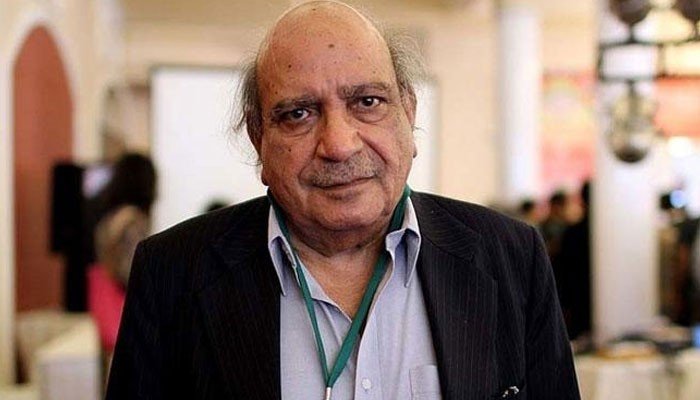
     Journalist and veteran human rights activist Ibn Abdur Rehman aka I A Rehman passed away in Lahore at the age of 90 on Monday.

    He died of old age and high sugar and blood pressure levels, Human Rights Commission of Pakistan (HRCP) Secretary General Harris Khalique said.

    The deceased left behind three sons and two daughters. His wife, Tauseef I A Rehman, had died in 2015.

    A protégé of Faiz Ahmad Faiz, Abdur Rehman became chief editor of the now-defunct Pakistan Times in 1989. He wrote a regular column for Dawn until a few days before his death.

    He was the founding chair of the Pakistan-India Peoples’ Forum for Peace and Democracy (PIPFPD) and a director of the HRCP since 1990.

    Between 1978 and 1988, he remained executive editor of weekly Viewpoint.

    Tributes poured in from all quarters as word of Abdur Rehman’s passing spread.

    “A titan of human rights, Mr Rehman’s integrity, conscience and compassion were unparalleled,” HRCP said.

    Foreign Minister Shah Mahmood Qureshi said the country had lost a “true icon”.

    Political leaders from both the government and opposition, media persons and rights activists are among those expressing grief and sorrow over Rehman’s death on Twitter.

  • Alizeh Shah opens up on her struggles with acne

    Alizeh Shah opens up on her struggles with acne

    Alizeh Shah has opened up about her struggle with acne.

    “Hello people. Here I am putting my biggest insecurity on display,” wrote Alizeh on social media. “Yes, I have been struggling with acne for quite a long time. A lot of us had this idea that ‘clear skin’ should be the goal but I guess living a happy life with acne is possible.”

    She further said: “The current state state on your skin does NOT measure your worth your beauty!”

    “There is nothing more attractive than confidence. Once you see your beauty, everyone will so,” said the actor further, urging everyone to embrace the “glorious mess” that they are.

    Shah also posted her short video clip where she showed off her face without makeup, flaunting her natural beauty.

    Earlier, Hania Aamir had also shared her ‘painful struggle’ with acne and how it induced feelings of insecurity and anxiety in her.

  • 600-year-old statues discovered in Thar

    Statues dating back almost 600 years were recovered during a recent campaign in Thar while restoring a heritage site in the area.

    According to a report in Dawn News, volunteers of the Endowment Fund for Trust for Preservation of the Heritage of Sindh found the statutes while restoring a temple in the desert district.

    “Statues were unearthed during restoration works at the Nagarparkar City Temple by Endowment Fund for Trust for Preservation of the Heritage of Sindh,” read a brief announcement by the organisation. “The temple will shortly be handed over to the Culture Department, Government of Sindh, along with the statues of (sandstone and marble) Mahavira and other Tirthankaras of Jainism.”

    Read more – 1,300-year-old Hindu temple discovered in KP

    Hameed Akhund of the Endowment Fund for Trust for Preservation of the Heritage of Sindh said that the statues were likely to have been discovered long ago.

    “We think when the war began in 1971 between India and Pakistan, someone dumped them in a cave-like space where we were doing our project. We found them in the same place,” said Akhund, adding that they will be handed over to the Sindh government.

  • Punjab archaeology department to restore 400-year-old fort in Sheikhupura

    Punjab archaeology department to restore 400-year-old fort in Sheikhupura

    The Punjab Archaeology Department has announced plans to restore a 400-year-old Mughal-era fort-like palace in Sheikhupura.

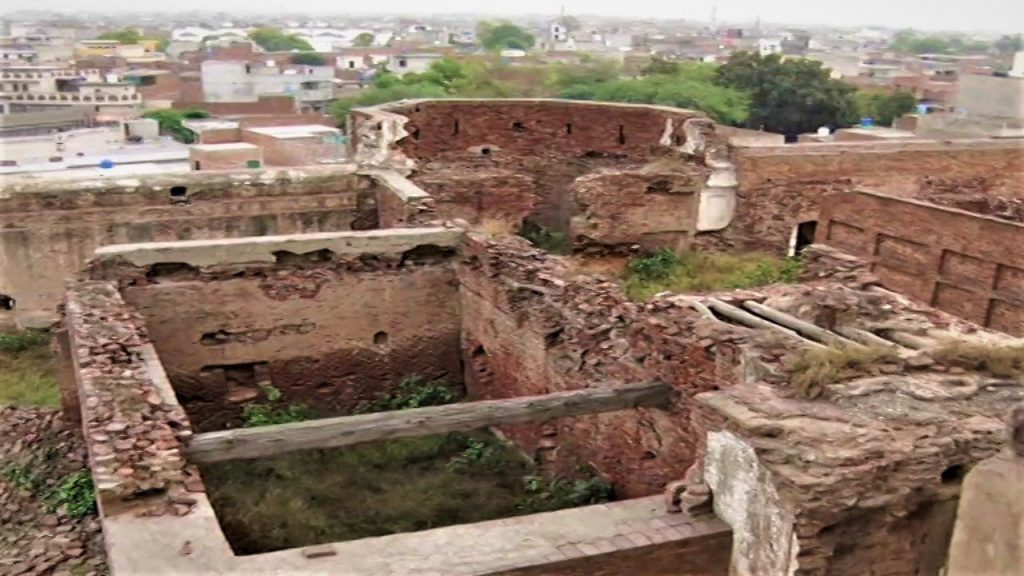
    According to details, a study will be conducted on the fort, currently in a dilapidated condition, before the restoration work.

    The building underwent several structural changes over the years in different time periods with much of the building currently in ruins. Restoration work on the exterior walls is in progress.

    Photo via The Express Tribune

    Those involved in the restoration work have also suggested study tours from Lahore to Qila Sheikhupura and Hiran Minar, saying that they can be entertaining as well as informative. Only guided tours will be allowed inside due to the current condition of the fort.

    Read more – Authorities to restore historic mosque near Lotus Lake

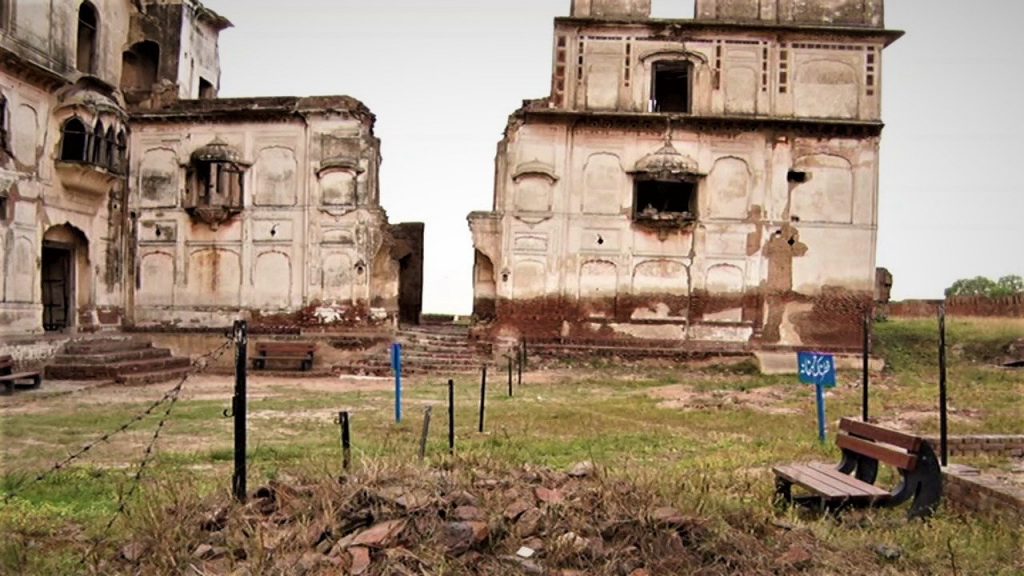
    Spread over an area of more than 64 kanals, the Sheikhupura Fort is perched on a high mound in the south of the city and is a magnificent symbol of the glory of the Mughal era. Experts have suggested that it was not a traditional fort but the residence of Emperor Jahangir, who had a hunting resort nearby.

    Photo via The Express Tribune

    An official of the Archaeology Department Malik Maqsood Ahmed says the fort was not built for military purposes but as a palace.

    The fort was also used as a military base during the Sikh and British eras. After the partition of the Indian sub-continent, a refugee camp was also set up here.

    Many  government offices were also built here that resulted in the changes of the building’s structure and badly damaged the original historic look of the building.

    Locals of the city say that the fort is the identity of the city. A mechanic who has been working in front of the fort for many years, says that if the government develops a food street after the restoration work in the fort, it will not only grow the business activities but also tourist interest.

    Secretary Tourism and Archaeology Ehsan Bhutta said that when the fort was handed over to Punjab Archaeology Department in 2011, it was in a terrible condition.

    In 2017, the department initiated a restoration project at the site, which is still continuing. The outer wall of the fort is being restored while the interior portions have been renovated and some benches have fixed there. Display boards with information have been installed at numerous places.

  • Jawad Ahmad vs Rohail Hyatt: Here’s what happened

    After Prime Minister Imran Khan made some unwarranted comments on rape and the cited vulgarity as the reason behind rising rape cases, Rohail Hyatt stepped in to defend him, saying that the premier’s words had been taken out of context. The musician received a lot of flak for his comments. Among those who criticised him is Jawad Ahmad, who questioned Rohail’s logic behind the tweet.

    “Why are you talking stupid?” wrote the singer-turned-politician in response to Hyatt’s tweet. “Will you tell us which dresses are modest and which are not?”

    “Will you get into your child’s wardrobe and point out which dress once worn would keep her safe in the society?” questioned Ahmad.

    “What if a dress you choose is still disapproved by majority?” he asked further.

    Jawad also used the hashtag #DontJustifyRape to elaborate his stance.

    Replying to Jawad’s tweet, Rohail said: “Because I am stupid. Since you’re wise, you can say wise things.”

    “See there’s balance in the universe. Something to be appreciated perhaps?” he added.

    While one would have thought that the debate ended there, but that was, in fact, just the start. Check out their complete exchange below:

    Later, Hyatt added a humorous twist to the debate and said that Ahmad won the match.

    He also said that he “loves Jawad”.

    Meanwhile, Hyatt also shared why he supports PM Khan.