Blog

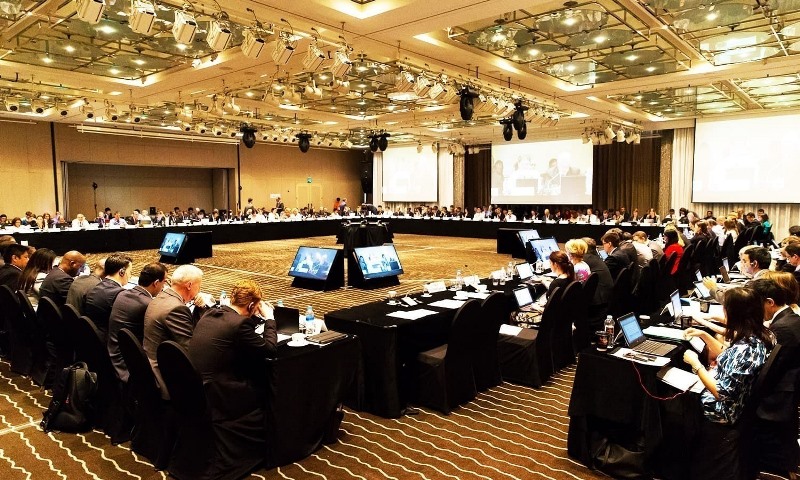
  • FATF grey-listing has cost Pakistan $38bn since 2008: report

    FATF grey-listing has cost Pakistan $38bn since 2008: report

    The Financial Action Task Force’s (FATF) decision to place Pakistan on the grey list three times since 2008 has cost Islamabad $38 billion, reported Express Tribune.

    The newspaper quoted a report published by an independent think-thank, Tabadlab, stated that grey-listing events spanning from 2008 to 2019, may have resulted in cumulative GDP losses worth $38 billion.

    According to the report, the losses are worked out on the basis of reduction in consumption expenditures, exports, and foreign direct investment (FDI). The report has attributed most of these losses to the reduction in household and government consumption expenditures.

    “The author of the research paper argued that the data suggested that Pakistan’s removal from the grey list has at times led to the revival of the economy, as evident from an increase in the level of GDP for the years 2017 and 2018 when Pakistan was not on the grey-list,” Tribune reported.

    Pakistan was first placed on the list in 2008 for one year. In 2012, Islamabad was penalised by the FATF again and this time it was removed from the list after three years. In 2018, the country found itself on the FATF list again and has been trying to get off it ever since.

    France and some other European countries have recommended the Financial Action Task Force (FATF) to continue to keep Pakistan on the grey list, saying Islamabad has allegedly failed to comply with the conditions set by the global watchdog, according to a report in Dawn newspaper.

    The decision on whether Pakistan will remain or remove from the list will be announced on Feb 25 (today) after a three-day-long plenary meeting of the global watchdog.

  • Open ballot in Senate polls: What do legal experts have to say?

    While the government continues to stress the need for open ballot/show of hands in the forthcoming Senate election to curb horse-trading marring the process of induction of lawmakers into the upper house of the parliament, the opposition is continuing to allege that it is meant to serve the political interests of the ruling party as it “loses control over its own legislators”.

    The judiciary, on the other hand, has observed that matters related to ballot secrecy had been left to the parliament and would be decided by it.

    Chief Justice of Pakistan (CJP) Gulzar Ahmed, during the hearing of the presidential reference on holding Senate elections through open ballot on Wednesday, said that the judiciary was not the parliament and neither could it reduce its authority.

    According to Dawn, the CJP observed that it has to be seen how parties decide who to vote for. “Do parties have minutes of their meetings?” he asked.

    He said the court had three questions in front of it:

    • Is Article 226 applicable to the Senate elections or not?
    • Can proportional representation be done through single transferable vote?
    • Are elections conducted according to the Constitution secret?

    But with the verdict on the procedure to hold the election likely to come out soon, what do legal experts have to say?

    In this regard, The Current reached out to lawyers Reema Omer and Muhammad Ahmad Pansota…

    REEMA OMER:

    This is exactly the question before the Supreme Court (SC): if SC opines Senate elections are “under the constitution”, Article 226 says they shall be by secret ballot. Any change, therefore, will require a constitutional amendment and amending the Elections Act (EA) either by an Act of Parliament or an ordinance won’t be enough.

    In 2003, the Indian Parliament introduced open ballot in Rajya Sabha elections through amending the Representation of People Act (India’s equivalent of their Elections Act). However, this was possible because unlike the Pakistani constitution, the Indian constitution identifies which elections will be by secret ballot and leaves this question open for all other elections.

    In my view, in Pakistan’s context, this change cannot be done without a constitutional amendment. The government’s argument is that the procedure for Senate election is in the EA and Election Commission of Pakistan (ECP) conducts this election (unlike speaker and Senate chairperson).

    This is why Senate elections fall under the elections act and not the constitution.

    The logical extension of this argument is that the general election where we all vote by secret ballot isn’t under the constitution either as that too is conducted by the election commission. This raises the possibility that the government could through an ordinance even make voting in the general election open. Surely, allowing such a scenario is deeply troubling.

    It’s also important to note the question before the SC is not whether Senate elections should be by open ballot or not: the desirability or necessity of this move is not being determined by the SC. The court is only clarifying the procedure through which this can be done — whether by constitutional amendment or amendment of the EA.

    Since the reference is under the court’s advisory jurisdiction, there are also limitations on how far the court can go in such proceedings.

    Reports from SC proceedings, in this case, suggest the court is also looking at the possibility of reinterpreting “secret ballot” to allow votes to be identifiable. This would in effect be equivalent to the SC amending the constitution itself, which goes against the very foundation of our constitutional framework and separation of powers.

    Let’s hope the SC sticks to the question in the reference before it and allows parliament to decide questions of desirability.

    MUHAMMAD AHMAD PANSOTA:

    The government’s uncertainty about the conduct of Senate elections through an open ballot adopting three different routes has ignited a constitutional and political debate across the country.

    Referral of issue to the SC invoking its advisory jurisdiction under Article 186 of the Constitution for an opinion, tabling of constitutional amendment seeking amendment in Article 226 of the Constitution and then finally the passing of an ordinance on the subject by the president has certainly added to the already existing confusion on the subject.

    Article 59 (2) of the Constitution states that the election of the Senate has to take place through a system of proportional representation and the members of the Senate should hold office for a term of 6 years. Article 218 (1) of the Constitution further states that the ECP is empowered to conduct elections of both houses: Senate and the National Assembly and Article 218 (3) embodies a duty on the ECP to conduct the elections in the best possible manner; in a fair, just and honest exercise–in accordance with the law. Confusion appears as a result of article 226, which says that the Constitution stipulates that all elections which are conducted “under the constitution”, except for the positions of Prime Minister and Chief Minister shall be by a secret ballot.

    Chapter VII of the EA, section 122(6) provides that “poll for election of members of Senate shall be held by secret ballot”.

    This gives rise to a million-dollar question i.e. whether the Senate is an election under the constitution and, if not, can the government amend section 122(6) of the EA?

    Recently through a presidential ordinance, section 122(6) of the EA has been amended so as to allow for open and identifiable ballot subject to the outcome of the Reference No.1 0f 2021 pending before the SC to determine whether the election of the Senate falls under the Constitution or not?

    Supreme Court through its judgment bearing CAS No.760-765 of 2016 titled as “Province of Sindh vs. MQM etc.” declared local government elections could be conducted through either secret or open ballot so long as the applicable law stated its legislative preference.

    The government, in light of the above judgment, could have either amended the law through an ordinance or an act of parliament. The government chooses to promulgate the ordinance which, in my view, appears to be legal and constitutional, however, should not have been passed before the decision of the reference.

    Dragging the courts into politics is not an appreciable move when the same could have been achieved without filing the said reference.
  • Pakistan, India agree to respect ceasefire, other agreements along LoC

    Pakistan, India agree to respect ceasefire, other agreements along LoC

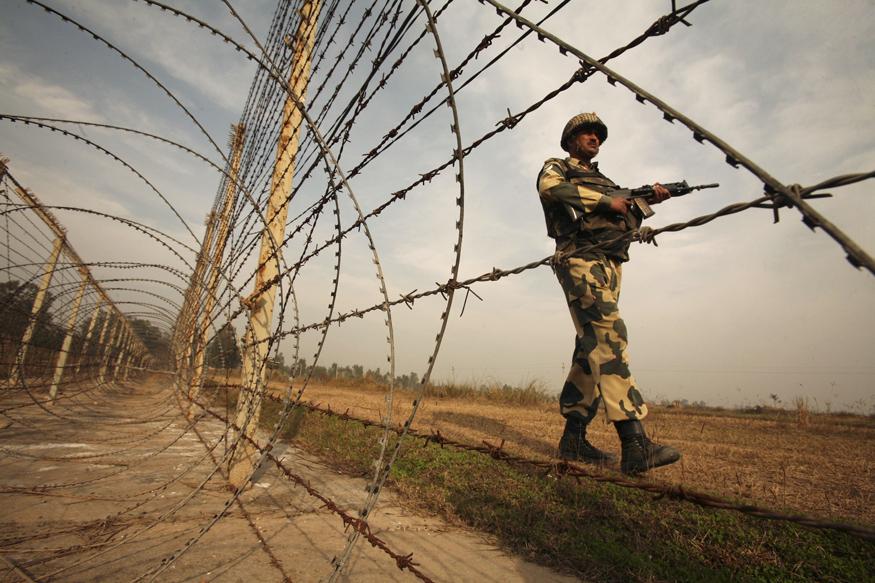
    After discussions between the Director Generals of Military Operations of Pakistan and India, the two sides have agreed to a ceasefire agreement along the Line of Control and all other sectors with effect from midnight of February 24 to 25.

    According to a statement issued by the Inter-Services Public Relations (ISPR), the two Director Generals of Military Operations held discussions over the established mechanism of hotline contact. “The two sides reviewed the situation along Line of Control and all other sectors in a free, frank and cordial atmosphere,” it added.

    Both sides agreed for strict observance of all agreements, understandings and ceasefire along the LoC and all other sectors, with effect from last midnight. Both sides reiterated that existing, mechanisms of hotline contact and border flag meetings will be utilized to resolve any unforeseen situation or misunderstanding.

    During the discussions, both sides reiterated that existing mechanisms of hotline contact and border flag meetings will be utilised to resolve any unforeseen situation or misunderstanding.

    ISPR Director General Major General Babar Iftikhar reportedly said: “There has been contact between India and Pakistan on a hotline level since 1987. Frequently, the DGMOs of both countries stay in contact through this established mechanism.”

    He said that there has been a spike in ceasefire violations along the LoC since 2014. “Both the DGMOs have agreed that the existing 2003 understanding should be implemented in letter and spirit.”

    The discussion between the two armies took place at a time when a large number of ceasefire violations were taking place along the LoC.

  • It’s a boy for Ali Xeeshan

    It’s a boy for Ali Xeeshan

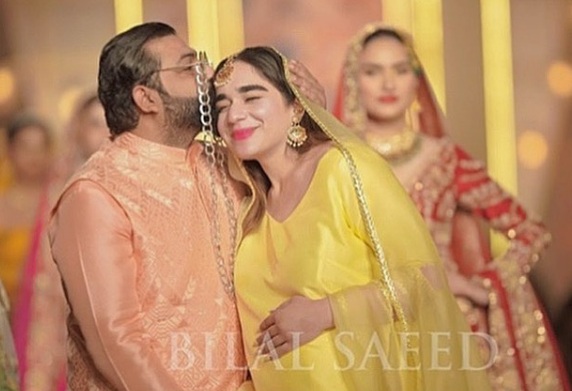
    Congratulations are in order for Ali Xeeshan and wife Myrah who have welcomed a baby boy. The couple announced the joyful news on social media with a picture of themselves with their bundle of joy.

    “Meet Jansher Ali,” wrote the designer on social media. “God has blessed us with a baby boy.”

    Sharing the same picture, Myrah said: “Purest form of love and joy! Shukar Alhumdulillah.”

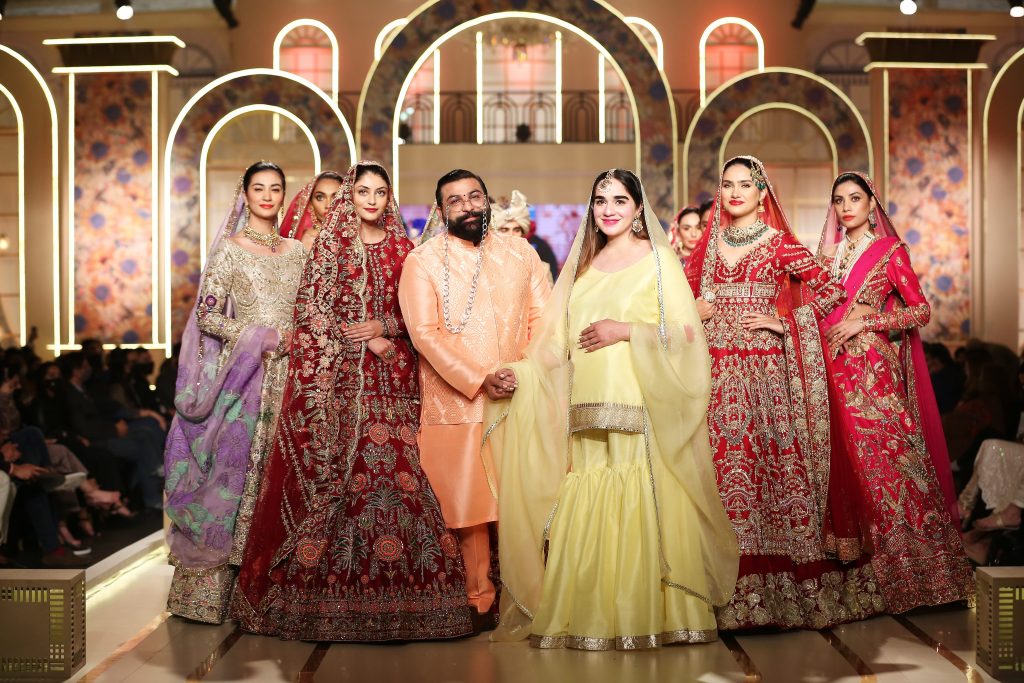
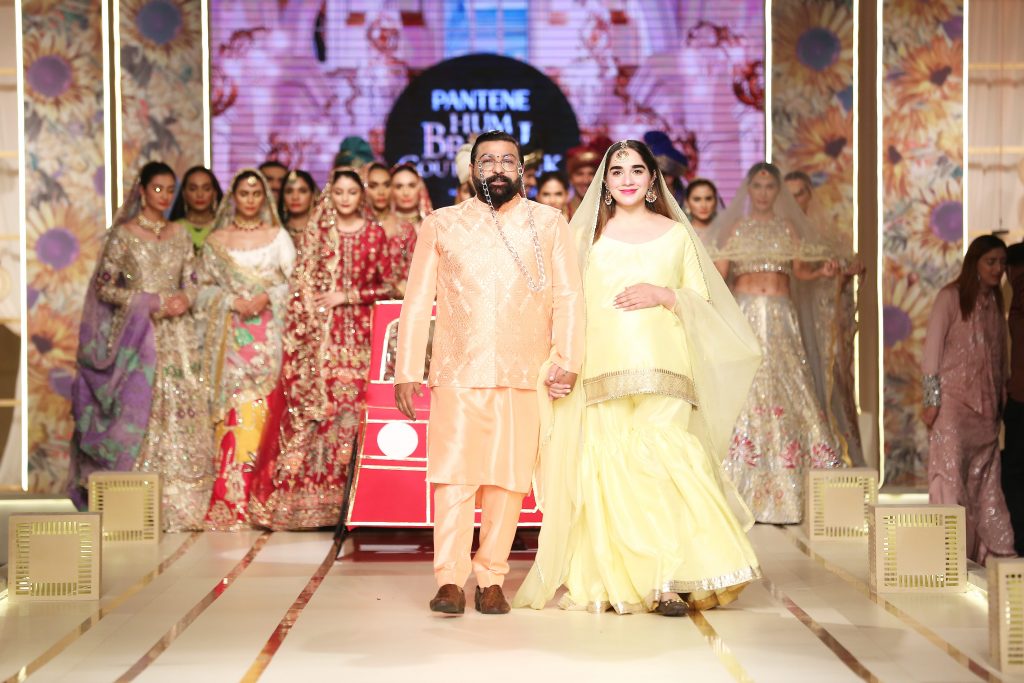
    Ali and Myrah tied the knot in an intimate affair in November 2019. Earlier this month, Myrah debuted her baby bump at the Hum Bridal Couture Week 2021 as she walked the ramp alongside her husband in a pale yellow outfit.

  • Senate election: Bilawal says establishment is ‘neutral’

    Senate election: Bilawal says establishment is ‘neutral’

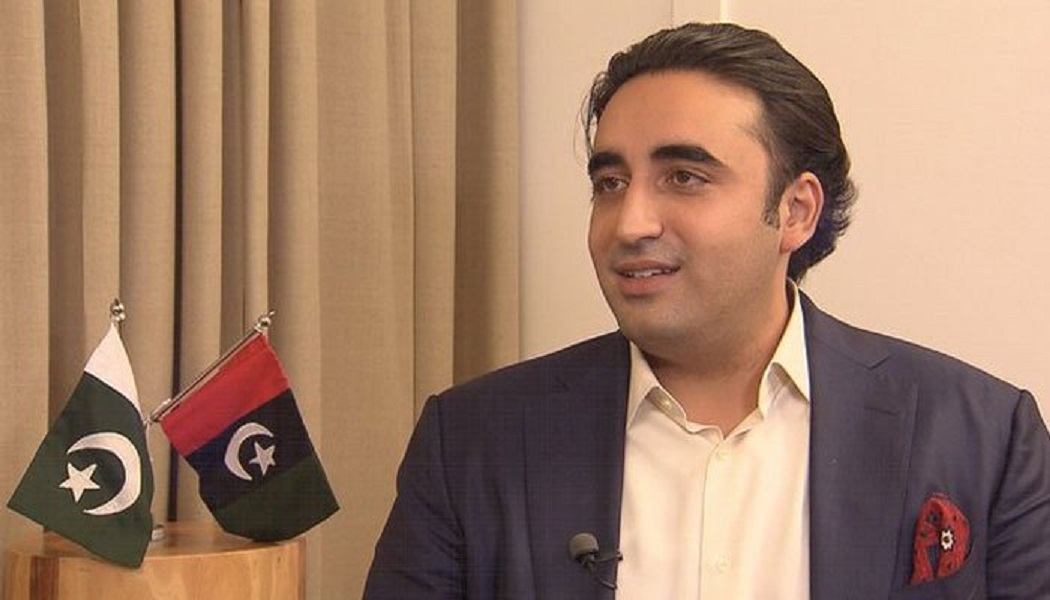
    Pakistan People’s Party (PPP) Chairperson Bilawal Bhutto-Zardari has said that the military establishment is playing a neutral role in the lead up to the Senate elections.

    Addressing a press conference in Lahore, the PPP chief said that his party criticises the state institutions when they act beyond their constitutional role. “It is heartening to see that they are not transgressing their boundaries,” the opposition leader added. He said that if the establishment is neutral, then we should welcome this.

    According to Bilawal, the Pakistan Democratic Movement is giving the “incapable government” a tough time. He said the PDM has aiming to strengthen democracy in Pakistan.

    “The responsibility of the opposition is to fight for the rights of people. Now we have exposed this selected and incapable government not only before the people of Pakistan but also before the entire world. This government tried to carry out massive rigging in the Daska by-election, but was exposed.”

    He thanked PML-N and JUI leadership for accepting PPP candidate Syed Yousaf Raza Gillani as the candidate of PDM for the Senate seat from Islamabad.

    “The march will also begin by the end of the month of March. It is time to say that just one more push is needed for the wall to fall,” he said.

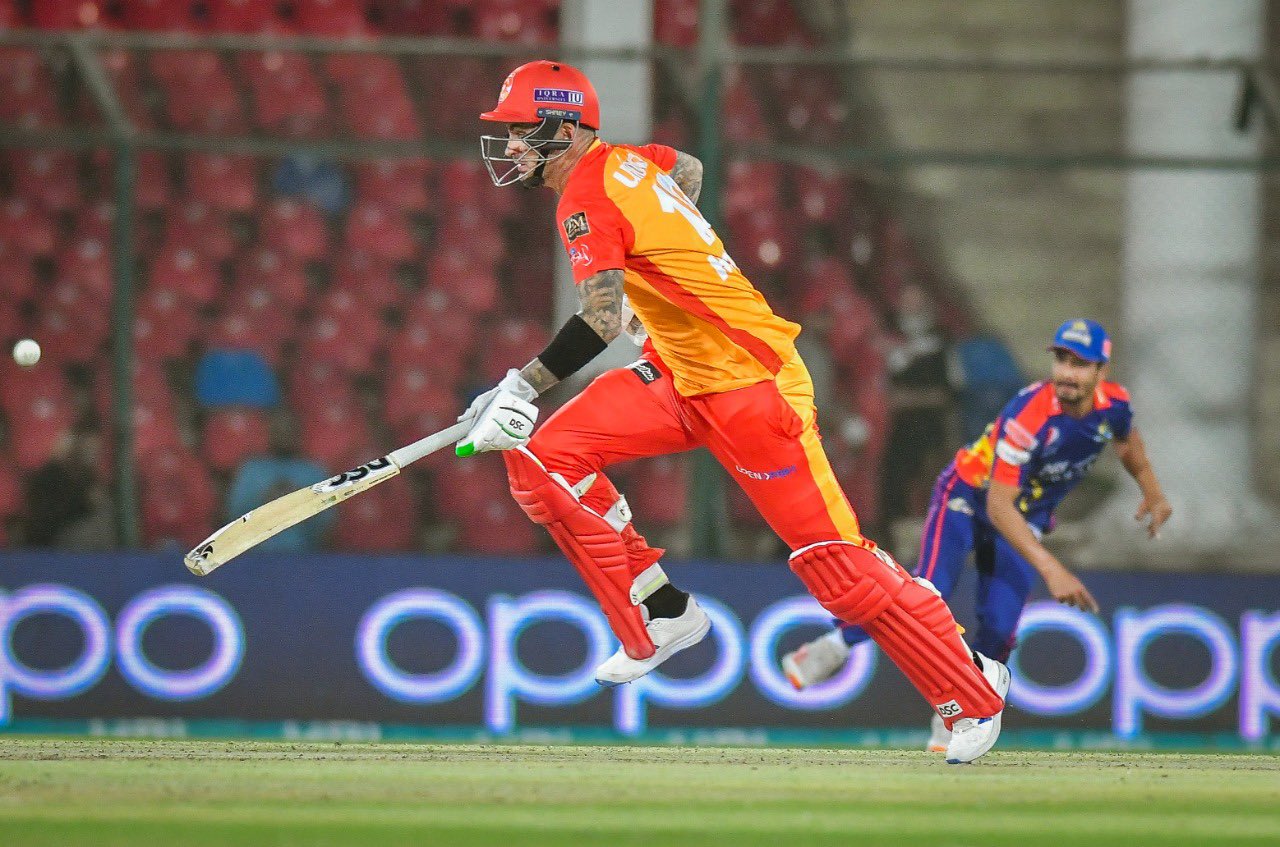
  • Islamabad United beat Karachi Kings despite Sharjeel’s ton

    Islamabad United beat Karachi Kings despite Sharjeel’s ton

    Islamabad United beat Karachi Kings by five wickets despite Sharjeel Khan’s classic ton.

    After scoring 197-run score Karachi Kings were the favorites but the chasing team defeated kings with five balls in hand.

    Babar Azam and Sharjeel’s 176-run partnership went all in vain. While the most expensive over of PSL history, bowled by Aamer Yamin, whose seven-ball third over was bled for 29 runs by Alex Hales.

    Sharjeel, after being dropped by Hales, the lefty power hitter made capital city bowlers pay with a 59-ball 105 laced with nine 4s and eight sixes.

    That over turned the tables and later with good partnership between Hussain Tallat (42) and Iftikhar Ahmed (49) helped the team to grasp the victory. While Asif cruised the Uniteds to victory with a staggering 21-run score on just nine balls.

    Meanwhile, man of the match award was given to Hales on scoring a much need knock for the Sherus.

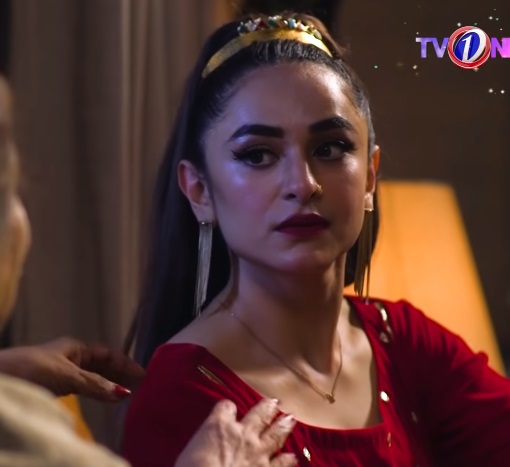
  • PEMRA directs ‘Dil Na Umeed Toh Nahi’ makers to review drama’s content

    PEMRA directs ‘Dil Na Umeed Toh Nahi’ makers to review drama’s content

    The Pakistan Media Regulatory Authority (PEMRA) has issued a notice to the makers of Dil Na Umeed Toh Nahi and has directed TV One to review the drama’s content and modify it according to the regulatory body’s guidelines.

    In a notification shared on social media, PEMRA said: “PEMRA has issued a notice to TV One over content televised in the drama serial Dil Na Umeed To Nahi.”

    “The channel has been directed to follow the quality of censor, according to the rules,” it adds.

    The notice further directed TV One’s administration to modify the content according to PEMRA’s Code of Conduct and submit a report regarding the editorial board within five days.

    Featuring Yumna Zaidi, Yasra Rizvi, Wahaj Ali, Nadia Afgan, Naumaan Ijaz, Samiya Mumtaz, and Omair Rana in the lead, Dil Na Umeed Toh Nahi is a harrowing tale of child abuse and human trafficking in Pakistan. The drama has been written by Amna Mufti and directed by Kashif Nisar and is a Kashf Foundation Presentation.

    Six episodes of the drama have aired so far. According to a press release issued earlier, Dil Na Umeed Toh Nahi will “bring some of the most heinous and deeply sensitive issues to light – while showing how humanity can still prevail in even the most insurmountable of situations.

    The press release further said: “With three parallel stories on prostitution, human trafficking, and child abuse, the drama exposes the lowest ebb of our society.”

    Yumna, in an earlier interview, while talking about the drama had said: “The story is based on multiple causes. It has three major tracks: human trafficking, child abuse and a young girl who wants to become a cricketer. As far as my track is concerned, it is about women trafficking. Parents from slums sell their young daughters. The drama explores where these girls end up and what kind of a life they spend. And, if any of them dreams big, how does she manage to pursue that.”

    Earlier, PEMRA had also banned ARY Digital’s Jalan for going against the “social and moral ethics of Pakistani society” and had also directed the makers of Fitoor to check for “inappropriate dialogues and content” in the drama.

    Read more – Of freedoms and censorship

    Meanwhile, audiences have strongly criticised PEMRA’s notice and have called out the regulatory body for interfering unnecessarily.

  • ‘Thank you for making me a better person’: Aima Baig’s birthday wish for Shahbaz Shigri

    Aima Baig took to her Instagram account to write a love note for beau Shahbaz Shigri on his birthday.

    Aima baig’s birthday note for Shahbaz Shigri read as “Halalalalalalala, thats what my thoughts are writing this, there is so much to say but honestly i cant find the right words to show all these memories we have built together.”


    She continued, “Still thinking if it be cringy to write too much, but in all honesty there arent enough words to describe the type of person you are.”


    “I have known you for quite a while now, and surprisingly i still cant think of a single drab moment with you dude, who needs comedy central when they have you in their life,” added Aima.

    Aima further said, “I sorta dig all your dad jokes now, and dayum that jukebox of rejected Bollywood Lollywood songs that keeps playing in your head.”

    “Never met a fellow more mellow than you, also lets reveal your true talent to the world today…that aussie accent imitation with a hint of british, is definitely an inspiring emulation.”

    She further thanked Shigri for ‘coping’ up with her, “Thank you for turning me into a better person Shigri, and hats off to you for coping up with a person like me LOL! Lucky to have you.”


    “Happy birthday Bubz Ilysm,” concluded Aima.

    Aima posted some pictures and videos along with the birthday note.

    The duo made things official last year with Shigri announcing the news on social media. In an Instagram post, he revealed that Aima is his “better half”. Sharing a picture of himself and the singer in Los Angeles, Shigri swooned over Baig’s smile adding that she is his “partner in crime, homie, companion and a whole bunch of other things which, if I began listing down, would turn up the cringe level to a million”.

  • Does this TikToker girl really look like Shoaib Akhtar?

    Social media users have found the former Pakistani cricketer Shoaib Akhtar’s lookalike in an Indian content creator Vinita Khilnani. The collage comparing the two celebrities is going viral and people are convinced that the two are each other’s doppelganger.

    Vinita Khilnani is a content creator and TikToker. Her recent video, ‘How our parents used to take pictures’ went viral on social media that resulted in people comparing her with Akhtar.

    Indian-American comedian is aware of the situation herself. She pasted her face in the cricketer’s photos and asked her fans about her resemblance with Akhtar on Instagram.

    “So everyone is saying I look like this man? @imshoaibakhtar – what do you think?” the Tiktoker wrote in the caption.

  • Terrorist involved in murder of four women killed in Waziristan operation: ISPR

    The security forces have killed a key militant leader who was involved in the killing of four women aid workers in North Waziristan, said the Inter-Services Public Relations (ISPR) in a statement on Tuesday.

    Commander of militant outfit Tehreek-e-Taliban Pakistan (TTP) Hassan alias Sajna was killed in a security operation in the restive district near the Afghan border, the army said.

    The statement said Sajna was involved in the Monday morning killing of four aid workers associated with a local women’s skills development program in Mirali, a town in North Waziristan.

    Security forces conducted an intelligence-based operation in Mirali and killed militant commander Sajna of the TTP’s Hafiz Gul Bahadur group during an exchange of fire, it was quoted by Anadolu Agency as saying.

    Bahadur, who is believed to have been operating from Afghanistan, is leading his own militant group within the TTP.

    Sajna, the statement said, remained involved in terrorist activities against the security forces and civilians, including “bomb blasts, kidnapping for ransom, target killings, and extortion,” in addition to the recruitment of terrorists.

    North Waziristan — once dubbed the heartland of militancy — is one of seven former semi-autonomous tribal regions in Pakistan where the army has carried out a series of operations since 2014 to eliminate the TTP network.

    Successive operations have pushed the TTP towards neighboring Afghanistan and Islamabad claims the terrorist network has now set up bases across the border to attack Pakistani security forces.