Blog

  • Moderna says possible allergic reactions to COVID-19 vaccine under investigation

    Moderna says possible allergic reactions to COVID-19 vaccine under investigation

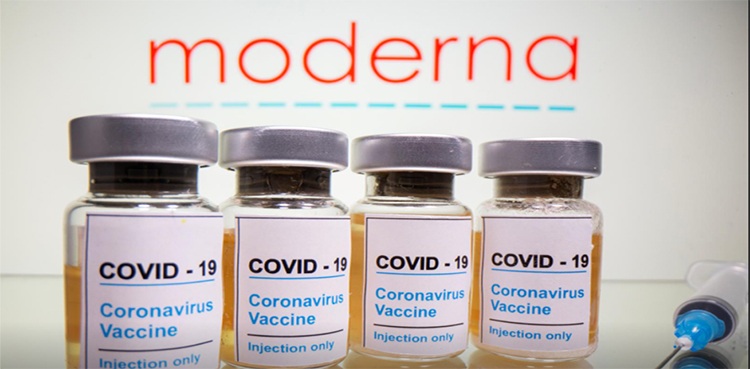
    Moderna Inc said on Tuesday it had received a report from California’s health department that several people at a center in San Diego were treated for possible allergic reactions to its COVID-19 vaccine from a particular batch.

    The company’s response comes after California’s top epidemiologist on Sunday issued a statement recommending providers to pause vaccination from a specific batch due to possible allergic reactions that are under examination.

    “A higher-than-usual number of possible allergic reactions were reported with a specific lot of Moderna vaccine administered at one community vaccination clinic. Fewer than 10 individuals required medical attention over the span of 24 hours,” the epidemiologist said in a statement.

    The vaccine maker said it was unaware of comparable cases of adverse events from other vaccination centers which may have administered vaccines from the same lot or from other lots of its vaccine.

    A total of 307,300 doses from the lot remain in storage, vaccine said, of the total 1,272,200 doses that were produced in the batch.

    It was working closely with US health regulators to understand the cases and whether pausing the use of the lot was warranted.

    Nearly a million doses from the lot have already been distributed to about 1,700 vaccination sites in 37 states, said Moderna.

  • Is Ertuğrul’s Esra Bilgiç in Pakistan?

    Is Ertuğrul’s Esra Bilgiç in Pakistan?

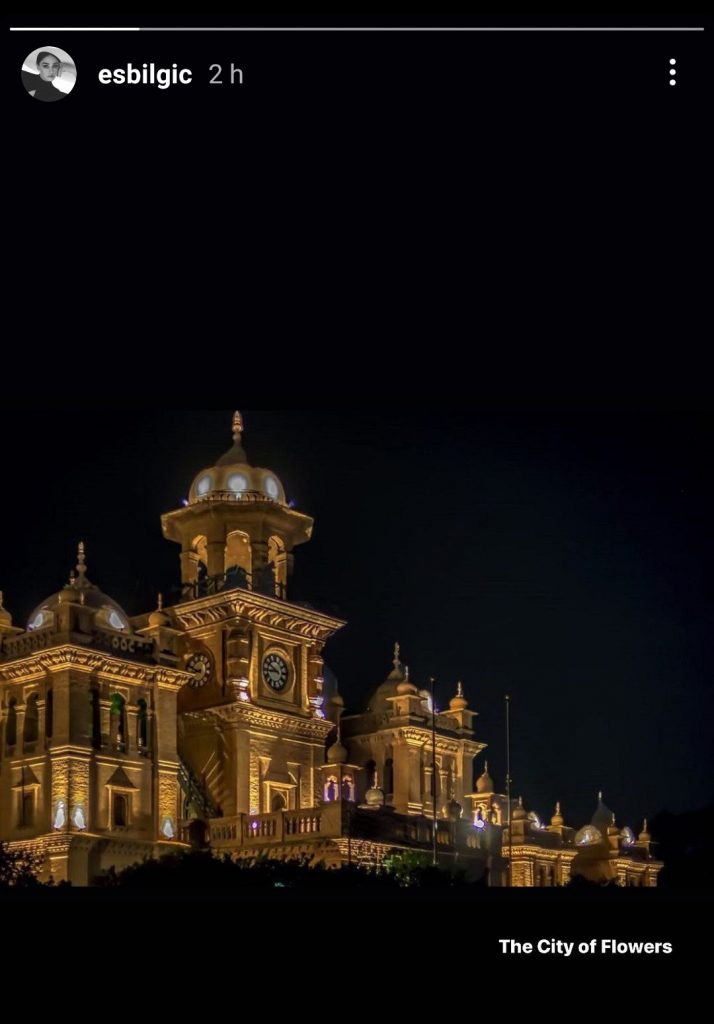
    Dirilis: Ertuğrul’s Esra Bilgiç aka Haleema Sultan has left fans in a tizzy after she posted a picture of Islamia University Peshawar with the caption “The City of Flowers”. This led to fans and followers speculating if the star was in Pakistan.

    While it has not yet been confirmed whether the star is in Pakistan, it is being speculated that Esra will be visiting soon as she has reportedly signed a contract with Pakistan Super League (PSL) franchise Peshawar Zalmi.

    Shortly after Esra posted her story, Peshawar Zalmi owner Javed Afridi posted one on his Instagram account writing “The City of Flowers” and tagging Esra, further convincing fans.

    Earlier in July 2020, Afridi had asked Zalmi fans what they thought about having the cast of Dirilis: Ertuğrul as the brand ambassador of the team.

    Responding to Afridi’s tweet, the Turkish actress had said: “I will be sharing some good news with you soon.”

    https://twitter.com/esbilgic/status/1279772401853702150?s=20

    Recently, several Turkish actors from the super hit drama series have visited Pakistan for different purposes. From Engin Altan Düzyatan (Ertuğrul Bey) to Cavit Çetin Güner (Dogan Alp) and Celal AL (Abdur Rehman Alp), almost every prominent actor from the drama series has visited different cities of the country.

    While it is too early to say if Bilgiç is in Pakistan, we are sure she will be coming soon.

  • CPEC to come down crashing? Foreign media report claims ‘most serious disagreement’ between Pakistan, China

    Pakistan and China are embroiled in their most serious disagreement relating to the Belt and Road Initiative, causing the annual bilateral summit of the China-Pakistan Economic Corridor (CPEC) to be delayed, the world’s largest financial newspaper has claimed.

    The Joint Cooperation Committee (JCC) is CPEC’s principal decision-making body. It is jointly chaired by Pakistan’s minister for planning, development and special initiatives and the vice chairman of China’s National Development and Reform Commission.

    The first JCC meeting was held in August 2013 and the last in November 2019. The 10th JCC was scheduled for early 2020, but remains postponed.

    Initially, the COVID-19 pandemic was the reason, but later disagreements between the two countries over the Main Line 1 (ML-1) railway project and special economic zones became the main points of disagreement, Nikkei Asia has learned from informed sources.

    Asad Umar, Pakistan’s minister for planning, development and special initiatives, told local media in November that the 10th JCC would be held the following month. However, officials in the Planning Commission of Pakistan, who asked not to be named, recently told Nikkei that the meeting will not take place for at least three months — by far the longest JCC gap to date.

    ML-1 is the largest CPEC project and worth $6.8 billion. China is expected to lend $6 billion of this, which Pakistan wants to borrow at a concessional interest rate of less than 3%.

    China offers a mixture of concessionary and commercial loans for such projects. This could significantly increase the aggregate interest rate Islamabad will face, according to the planning commission officials.

    “China is reluctant to lend money for ML-1 because Pakistan has already sought debt relief to meet G-20 lending conditions and it is not in a position to give sovereign guarantees,” Nasir Jamal, a senior journalist in Lahore covering business and the economy, told Nikkei. He said Beijing’s appetite for lending money for large infrastructure projects has diminished because these projects are vulnerable to local politics that delay returns on investment for China. That has hindered agreement on the finance framework for ML-1.

    Andrew Small, a senior trans-Atlantic fellow with the Asia program at the German Marshall Fund, a U.S. think tank, said China tends to base its decisions about interest rates for loans to Pakistan on a couple of criteria. Firstly, do low-interest rates encourage projects that do not make sense financially? Secondly, what precedents are set for other countries looking for similar concessions?

    “China is much more comfortable deferring payments or providing new financing than it is offering concessional rates in the first place,” Small told Nikkei. He said this approach provides Beijing with greater leverage and control even if they are willing to be very flexible at the back-end.

    With host countries under pressure to repay at higher rates, China trades payment deferments in return for influence, which helps it get more favorable arrangements.

    The delayed JCC meeting and unsettled ML-1 financial framework is complicating matters for Pakistan. Early this month, Pakistan Railways asked the government for 11 billion rupees ($69 million) to provide ML-1 security. Without the Chinese financing framework being agreed by the JCC, it is hard for Islamabad to come up with such a large amount given the state of the economy and severe budgetary constraints.

    The other major disagreement between Beijing and Islamabad delaying the JCC meeting relates to SEZs. In the second phase of CPEC scheduled for 2020 to 2025, Chinese companies are due to start producing goods in Pakistan and exporting from there.

    Currently, the industrial cooperation framework for the SEZs is limited to a memorandum of understanding without detailed modalities. Matters such as tax exemptions and requirements for employing local labor have not been finalized. These need to be agreed by China for confirmation at the JCC. The Board of Investment of Pakistan submitted the draft agreement for the industrial cooperation framework to the Chinese government last month and is still awaiting a response.

    In December 2020, during a meeting of the Joint Working Group on Industrial Cooperation under CPEC, Asim Ayub, the project director for industrial cooperation at the Board of Investment, pressed for early signing of the industrial cooperation framework agreement.

    The seriousness of the delay is clear from China’s unprecedented reluctance to schedule a JCC meeting. In the past, JCCs were always held in time, and China agreed to Islamabad’s requests most of the time. Some experts believe the delay is evidence that CPEC is derailing.

    According to Small, there were plenty of announcements about CPEC last year, but actually setting deals in motion was another matter. “The optics do matter to China so I still expect them to figure out terms in the end, and certainly to keep some narrative of continued progress alive,” Small told Nikkei. “But that doesn’t mean they’re willing to agree on something that doesn’t make sense for other reasons just to speed things up a little.”

    Pakistan is currently renegotiating its $6 billion extended fund facility with the International Monetary Fund (IMF), which was suspended in April 2020. The IMF reportedly will only resume the program if Pakistan does not take out any new commercial loans, and that is one of the reasons it is looking for concessions on loans for the ML-1 project.

    An important long-term implication of this case for other BRI countries could be that China will be more wary of lending to countries that have entered loan agreements with global lenders such as the IMF.

    Hasaan Khawar, an Islamabad-based public policy analyst, views the situation from a different perspective. “The back-and-forth with China by Pakistan on the interest rate and additional guarantees for the ML-1 project is a good sign,” he told Nikkei. “The Pakistani side is appraising the terms carefully and trying to negotiate a better deal.”

    The report originally appeared on Nikkei Asia
  • Naqeeb’s brother says Sindh govt trying to save ‘encounter specialist’ Rao Anwar

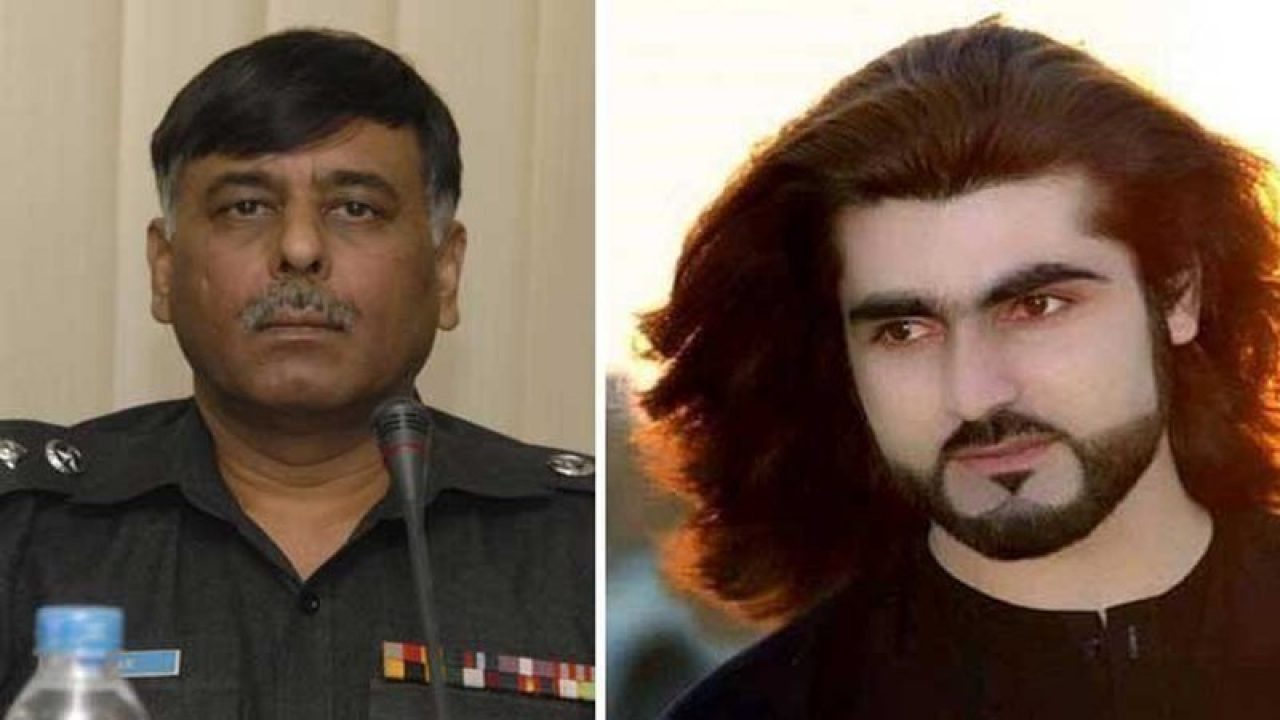
    Naqeeb’s brother says Sindh govt trying to save ‘encounter specialist’ Rao Anwar

    The Sindh government is helping former Malir SSP Rao Anwar to get a clean chit in the Naqeebullah Mehsud murder case by pressurising the witnesses, alleged Naqeeb’s brother Alam Sher.

    In a press conference alongside his attorney Jibran Nasir, the younger brother alleged that the witnesses were turning hostile at the behest of the Sindh government and the prosecution.

    “The case was registered on behalf of the state, not from the family and if the charges were not proved in the court, the state will lose,” said the attorney.

    Jibran also criticised the National Accountability Bureau (NAB) for ignoring an application filed by the family of Naqib to look into the assets of Rao Anwar. “The US and UK have frozen the assets of Anwar besides imposing travel restrictions on him due to human rights violations, but still NAB has refused to investigate the former police officer,” he added.

    Instead of being detained in a jail, he was confined for a short time in the comfort of his own home and given the protocol of a federal minister, Jibran said. If top politicians, like Shehbaz Sharif, Maryam Nawaz and Asif Ali Zardari, could be sent to jail then why can’t they send Anwar to prison, he asked.

    On January 13, 2019, Mehsud and three others were killed in a fake encounter carried out by a police team headed by then Malir SSP Anwar in Karachi. On January 17, his body was handed over to his relatives at the Chhipa Welfare Association morgue in the metropolis.

    The fake encounter had sparked countrywide protests against extrajudicial killings in the country and to bring Anwar to justice.

    Subsequently, the former SSP and around 20 of his subordinates were charged with killing Naqeebullah. In March 2019, an anti-terrorism court (ATC) had framed charges on Anwar and others for the alleged murder of Naqeebullah and implicating him in bogus cases.

    In Dec 2019, On International Human Rights’ Day, Anwar was also blacklisted by the United States for engaging in “serious human rights abuse” by carrying out alleged fake police ‘encounters’ in which scores of individuals including Naqeebullah Mehsud were killed.

  • Former general replaces career diplomat as ambassador to Saudi Arabia

    Former general replaces career diplomat as ambassador to Saudi Arabia

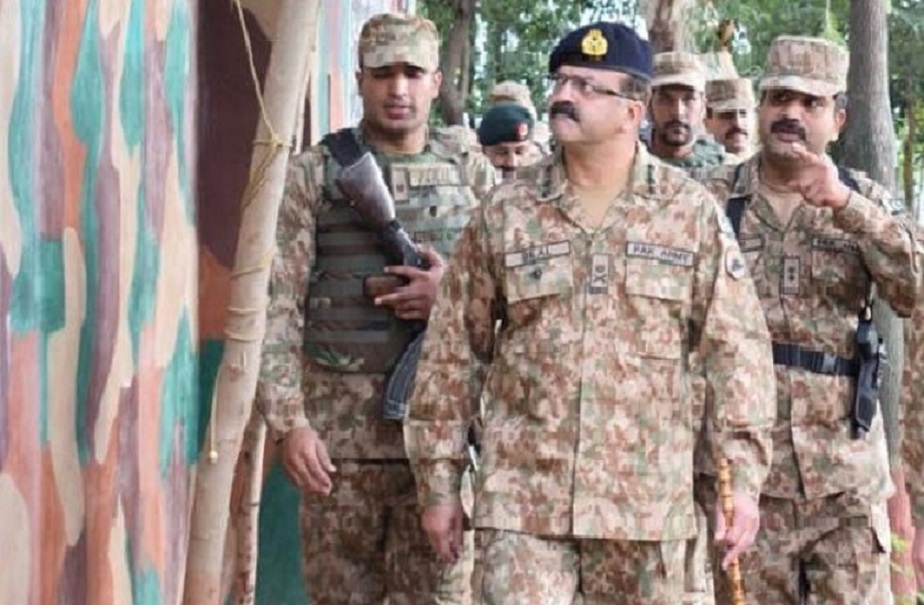
    The Ministry of Foreign Affairs has appointed Lt Gen (r) Bilal Akbar as Pakistan’s ambassador to Saudi Arabia, removing Raja Ali Ejaz, a career diplomat.

    The outgoing Ejaz, who was on his first ambassadorial posting, had been given the assignment around two years ago.

    The latest change has brought Islamabad at par with Riyadh in one term that now both countries have envoys with a military background in each other’s capitals. 

    The Saudi ambassador in Pakistan Nawaf bin Saeed Al-Maliki was from the Royal Saudi Navy and retired as Rear Admiral. He had been appointed as the defence attaché of the Saudi mission in Islamabad and later elevated as the ambassador here four years ago.

    The sudden shuffling by Pakistan is being seen as significant amid reportedly weakening bilateral ties at a time when India’s relationship with the Kingdom is improving. 

    Amid the present scenario, key task of Lt Gen (r) Bilal Akbar, who retired as Pakistan Ordnance Factories chairman, would be saving the ties from further deterioration. 

    The former three-star rank lieutenant general also served as X Corps Rawalpindi commander, chief of general staff (CGS) at GHQ, Pakistan Rangers Sindh director general and the general officer commanding (GOC) of the 11th Infantry Division Lahore.

  • Sarmad Qadeer’s ‘Ishq’ to feature TikTok star Alishba Anjum

    TikTok star Alishbah Anjum is all set to make her acting debut with a music video. Anjum, who has more than 10 million followers on TikTok, will make an appearance in Sarmad Qadeer’s song titled Ishq.

    The song has been written, composed and sung by Qadeer himself and the music video will be released under the banner of One Two Records.

    Earler, Alishba’s sister Jannat Mirza also debuted in Sarmad Qadeer’s Shayar. The song was a hit with15 million views so far.

  • EXPLAINER: How NAB cost Pakistan billions over Broadsheet deal

    EXPLAINER: How NAB cost Pakistan billions over Broadsheet deal

    Pakistan paid Broadsheet, an asset recovery firm registered in the Isle of Man, Rs4.65bn after the National Accountability Bureau (NAB) broke an agreement with it three years after it was signed in 2000.

    After its formation in 1999 by then military dictator Pervez Musharraf, NAB approached Broadsheet to recover overseas assets of at least 200 Pakistanis, particularly the Sharif family. However, the deal fell through in 2003, with NAB saying that the recovery firm had stopped investigations; Broadsheet had accused NAB of hampering its probe to locate the offshore assets of Pakistanis.

    The broken accord was the start of an 18-year-long legal battle between the two parties. In 2008, NAB reached a settlement with a former Broadcast LLC official, Jerry James. The bureau paid at least $1.5million to James to settle the case even though the company was being liquidated and the liquidator was not a party to the deal.

    Though NAB claimed it had reached a settlement with Broadsheet, the firm said James had nothing to do with it at the time of the signing of the agreement. The money paid to James didn’t reach the original Broadsheet, its CEO had claimed and filed a case in a UK court for arbitration in the matter in 2012.

    The UK judge decided the matter in favour of Broadsheet, the claimant. It said Broadsheet LLC was entitled to recover damages for the wrongful repudiation of the ARA [asset recovery agreement]. The award declared that James had no authority from the claimant after March 2005 to enter into a settlement agreement with NAB. The judge said the deal was “wrongful and deliberate to financially hurt the original Broadsheet LLC, Isle of Man”.

    The court held that while negotiating with the fraudulent company, NAB representative Ahmer Bilal Soofi was aware that the original company was in liquidation, and he signed the wrongful deal knowingly.

    Finally, the court ordered NAB to pay $21.58m plus interest to Broadsheet LLC in damages over the breach of the agreement. Due to interest rates, the award amount reached $28.7 million by December 2020.

    According to the judgement, a total of $21.58 million has to be recovered and given to Broadsheet of which $1.5 million had to be recovered from the Sharifs on account of Avenfield flats, $19 million for other assets ($802m worth assets are being attributed to Sharifs); $48,760 from Schon Group; $25,000 from Sultan Lakhani; $85,600 from Fauzi Kazmi; $381,600 from Lt Gen (r) Zahid Ali Akbar; Aftab Sherpao $210,000; and $180,000 from Jamil Ansari.

    WHY DID NAB PAY $1.5m MONEY TO JAMES?

    NAB deliberately tried to cheat Broadsheet LLC by paying $1.5m to James.

    According to the court, NAB made two payments to Jerry James, by then the unauthorized person who had incorporated another Colorado company which he had also named “Broadsheet LLC”. The actual company was Broadsheet LLC, an Isle of Man entity. The arbitration court said NAB tried to financially defraud the original Broadsheet LLC by paying James instead of the original company.

    Broadsheet had been in the process of liquidation since 2005. And Moussavi, who now owns the company, offered to rescue it in return for a 50 per cent share from the settlement and James agreed. He, however, went behind Moussavi’s back and made a deal with NAB by registering another company named Broadsheet LLC — based in Colorado. The deal was declared shady by the court that asked NAB to pay damages to the original Broadsheet.

  • Ikigai: A Japanese technique helping Pakistani children ‘find true purpose in life’

    Hasan Ikhlaqi and his team at Umungi, a career centre, are training Pakistani students with a Japanese technique called Ikigai. Umungi offers training to children by conducting different activities in schools. Parents of the children are also involved in the training process.

    The Japanese technique Ikigai is used to find the purpose of life. The origin of the word ikigai goes back to the Heian period (794 to 1185). The word ikigai consists of two Japanese words: iki, meaning “life” and kai, meaning “effect/result/worth or benefit.”

    Explaining the technique to BBC Urdu, Ikhlaqi, creative coach at Umungi, said: “We use Japanese technique to find the true purpose in life, and to find the true purpose you need answers to the following questions: Profession, Passion, Mission, and Vocation.”

    The Umunji creative team has been conducting creative festivals in different schools for the past three years.

  • ‘It was scary’: Sania Mirza recounts her COVID experience

    ‘It was scary’: Sania Mirza recounts her COVID experience

    Sania Mirza has revealed that she had tested positive for COVID-19 in the beginning of the year.

    In a note posted to social media, the tennis champion said that though she is fine and healthy now, she wanted to share her experience.

    “I was lucky to not have any major symptoms for the most part of it, but I was in isolation and the toughest part was to stay away from my 2-year-old and family,” Sania said, adding that she “can’t even imagine what people and their families are going through when people are sick in [the] hospital all alone and by themselves.”

    “It was scary as you aren’t very sure what to expect and hear so many different things and stories…you get a new symptom every day and the uncertainty of it is extremely hard to deal with, not just physically but mentally and emotionally as well,” she shared further.

    “I just want to say after having been through it, I was fortunate to be more or less ok throughout it all, but to be away from my family was one of the scariest things – to not know when I’ll see them again.”

    “This virus is no joke,” she iterated, adding, “I took all the precautions as I could but still contracted it. We must do everything we can to protect our friends and family.”

    Sania and husband Shoaib Malik were recently in Dubai spending family time.

  • India hands Australia first defeat since 1988 at Brisbane’s Gabba ground

    India handed Australia their first defeat since 1988 at Brisbane’s Gabba ground, allowing them to clinch the four-Test series 2-1 to win the Border-Gavaskar trophy on Tuesday.

    Wicketkeeper Rishabh Pant starred with a swashbuckling 89 not out as the injury-depleted visitors overhauled the 328-run target with three overs to go, winning by three wickets.

    Australia had not been beaten at the Gabba since falling to Viv Richards’ all-conquering West Indies side by nine wickets in November 1988.

    Since then, Australia had played 31 test matches at The Gabba, winning 24 of them, while drawing the remaining seven.

    “Last time Australia lost a Gabba Test… George H.W. Bush had just won the US Presidential election, Bad Medicine by Bon Jovi was charting #1, Virat Kohli was 16 days old and Sachin Tendulkar was still one year away from making his Test debut,” wrote ICC on Twitter.

    India’s 329 for seven also smashed the 69-year-old record for the biggest run-chase at the Gabba, set by Australia who scored 236 for seven to beat the West Indies in 1951.

    The series win was a remarkable achievement considering India were bowled out for their lowest Test score of 36 to lose the first Test in Adelaide, before bouncing back to win the second in Melbourne.

    The visitors, ravaged by injuries and captain Virat Kohli’s absence for paternity leave, then batted throughout the final day to draw the third Test in Sydney.

    “It really means a lot to us. I don’t know how to describe this victory but I’m really proud of all the boys,” said India’s interim skipper Ajinkya Rahane. “They showed character, attitude, especially after the Adelaide Test match. We decided we’re going to fight really hard and we just wanted to give our best.”

    Man-of-the-match Pant, who played a similar innings in the drawn Sydney Test, blasted his 89 from 138 balls with nine fours and a six.

    His innings followed an equally impressive knock from 21-year-old Shubman Gill, who made 91 at the top of the order earlier in the day.

    Before the latest match, India had played six test matches at The Gabba, losing five of them with one draw. In their seventh outing on the ground, they managed to beat Australia and with this win, India moved to the top of the ICC World Test Championship ranking list.

    Meanwhile, Kohli congratulated the team and the board on their historic win.