Blog

  • Zainab Jamil quits acting ‘to learn more about Islam’

    Zainab Jamil quits acting ‘to learn more about Islam’

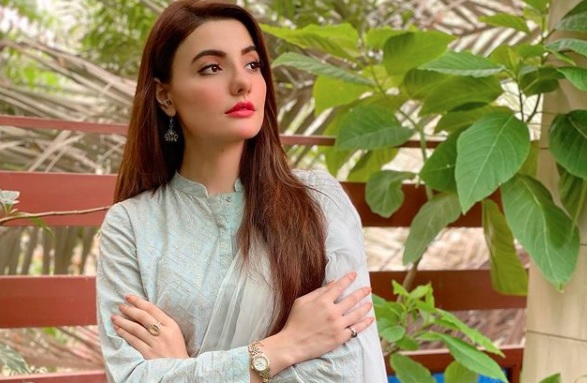
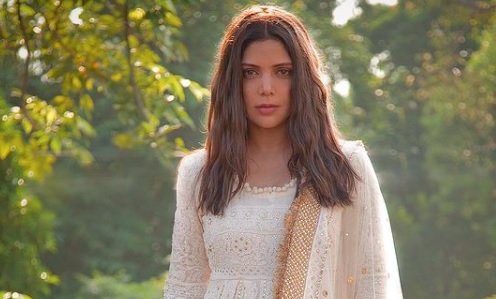
    Zainab Jamil has announced that she will be quitting acting and modelling to learn more about Islam.

    “I proudly announce that I won’t be continuing my career as actor and model”, wrote the model-turned-actor on social media.

    “Allah has chosen me to become a student of Quran and Hadees and learn more about our deen Islam,” she added.

    Later, Zainab shared a detailed explanation regarding her decision and talked about why she decided to step away from showbiz.

    “For those who are really concerned and have been asking me why did I take this decision at once, I really respect your concern that’s the reason I am posting one [story],” wrote Zainab.

    “I’m late I should have made this announcement a lot earlier but maybe I was not ready or I was in search of few answers actually now it’s been 3 years that I am studying Quran with Tafseer and I am not an easy student”, she continued.

    Zainab further shared that she was not satisfied with her choice of career.

    “Thanks to my teachers for bearing with all my stupid questions and doubts which I had and bringing me to the point where I finally thought that I’m ready to take this very big step to announce that I am quitting the career which I thought I loved, whereas I did not because whenever I was on set working, I was not completely satisfied.”

    “With all due respect to those who are working in this field, I am not hurting anyone’s feelings to work as an actor but we all are different so this is my different. And I really want to thank the producers and people whom I was in contract to work with and thank you all for understanding me and letting me drop the projects I signed,” she concluded.

    Zainab has been part of many multi-starrer projects including Hum TV’s Khawab Saraye (2016) alongside Muneeb Butt, Aiman Khan, Behroze Sabzwari, and Khalid Anam. She also had a small role in the blockbuster film Jawani Phir Nahi Ani in which she played Hamza Ali Abbasi’s love interest Charity.

    Earlier, Rabi Pirzada, Hamza Ali Abbasi, Ali Afzal, and Noor Bukhari had quit the industry on religious grounds.

  • Police arrest man for blackmailing kids into sending sexually explicit videos using PUBG, 8 Ball Pool

    Police arrest man for blackmailing kids into sending sexually explicit videos using PUBG, 8 Ball Pool

    Police arrested a man who used online games such as PUBG and 8 Ball Pool to blackmail children into sending sexually explicit videos.

    As per reports, the man was arrested after an operation in Jamshoro.

    The deputy director of the FIA’s Cyber Crime Wing, Mohammad Iqbal, said several pornographic and sexually explicit videos were recovered from the suspect during the search. A first information report (FIR) has been registered against him as well, he added.

    The man PlayerUnknown’s Battlegrounds (PUBG) and multiplayer video game 8 Ball Pool to befriend children.

    The FIA official said the suspect also used to ask for sexually explicit videos from children by attracting them with offers of giving them PUBG’s in-game currency, G-Coins. 

    “In the past, the culprit had forced some children into sending him videos of their families, after which he would blackmail them,” he added.

    The parents of one of the kids had earlier requested the relevant authorities to investigate the matter and filed a case against him.

    The alleged paedophile has cyber-abused and threatened children from Sindh, Khyber Pakhtunkhwa and Punjab along with their families, the FIA official said.

    The criminal investigation and cybercrime agency was also investigating the sale of pornographic videos by the suspect.

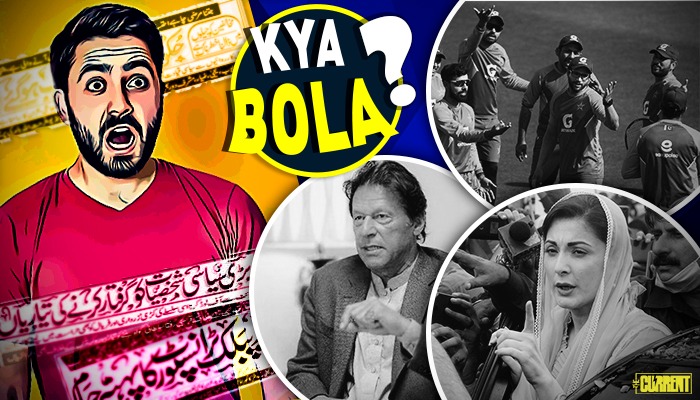
  • KYA BOLA? (Dec 7): ‘Five Star Mahool Ko Taras Gye’, ‘Hukoomat Media Ky Nishany Py’, ‘Media Azad Nahi’

    KYA BOLA? (Dec 7): ‘Five Star Mahool Ko Taras Gye’, ‘Hukoomat Media Ky Nishany Py’, ‘Media Azad Nahi’

    Following are some snippets that stood out from Urdu newspapers on Dec 7, 2020, which The Current takes no responsibility for.

    ‘Five Star Mahool Ko Taras Gye’

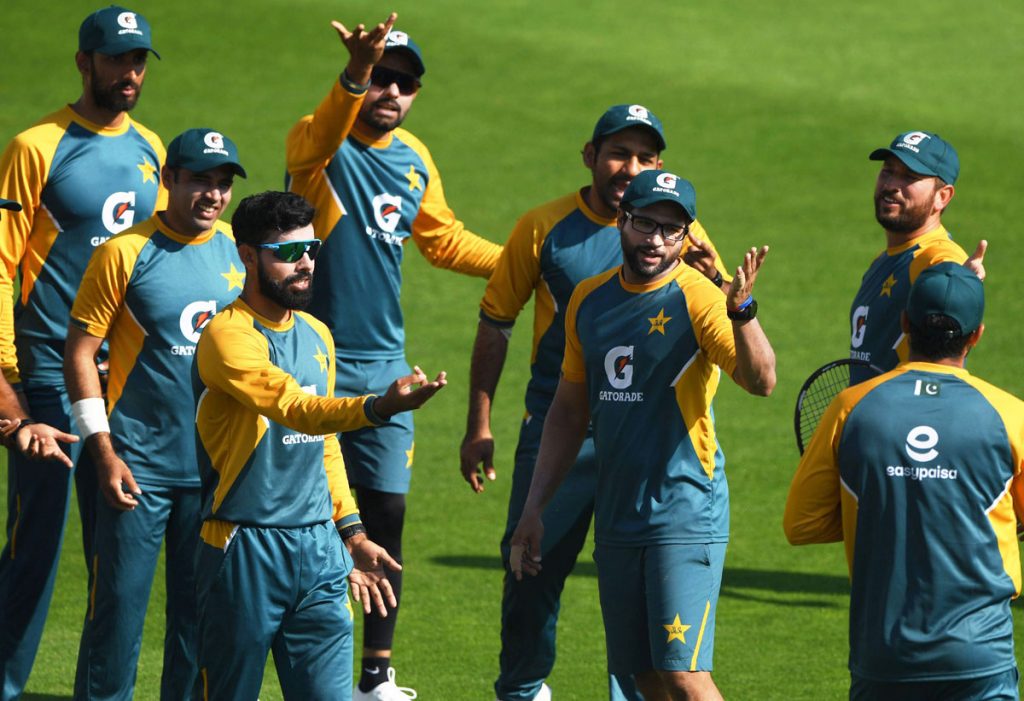
    According to Express News, Pakistani cricket players in New Zealand are irked by the quarantine routine. “Mulk mai badshaon wali zindagi guzarny waly stars ky kamron ki 11 din sy safai nahi hui. Bedsheets tak nahi change huay, aur khana dabon mai deny ka silsala jari.”

    ‘Hukoomat Media Ky Nishany Py’

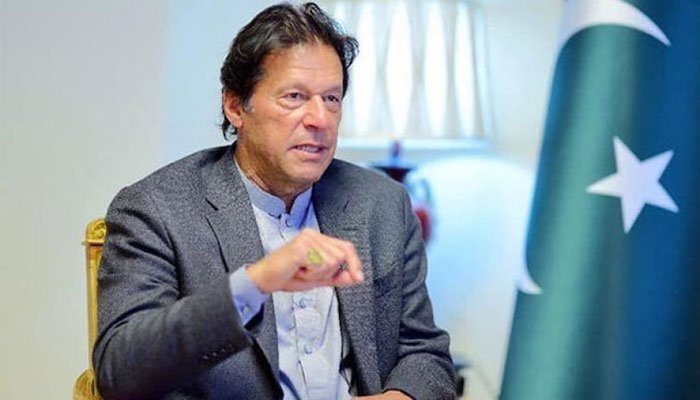
    PM Imran Khan has been quoted by Daily Jang saying that the media is targetting his government. According to the PM: “Hukoomati karkardgi sahi nahi batai jati. Media corrupt opposition ki himayat kar raha ha.”

    ‘Media Azad Nahi’

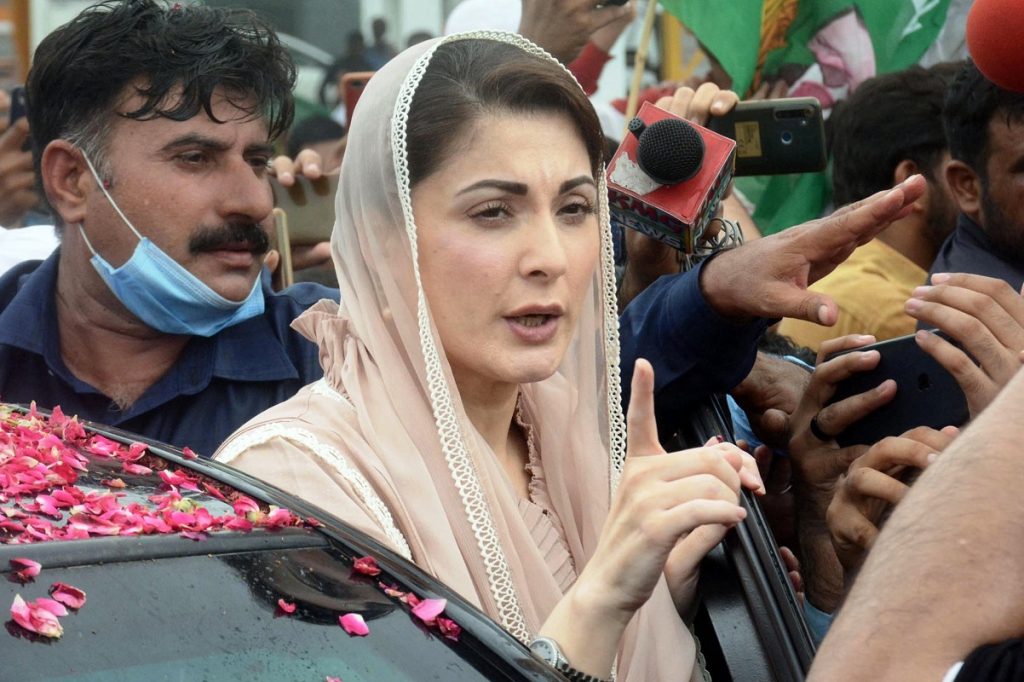
    Maryam Nawaz was quoted by Daily Jang as saying that Pakistani media was being controlled by the government. “Media kab tak mar khata rahy ga, wo hukomat ka aalakar banany sy inkar kary. Kya sada isi trah majboori mai bethy rahin gy? Sab channels ko sabaq parhaya jata ha ya likha hua aata ha.”

  • VIDEO: The tea is not fantastic? Ex-PM’s video chiding help goes viral

    A cup of tea served to former prime minister Nawaz Sharif disturbed him during his address via video-link at an event organised by Pakistan Muslim League-Nawaz (PML-N) media cell.

    “When you knew I was speaking then why did you keep it here,” the clearly perturbed three-time prime minister said in the footage.

    WATCH VIDEO:

    https://twitter.com/worldofjaved/status/1335591711964344320?s=19

    It is pertinent to mention here that the PML-N in accordance with its social mobilisation plan has announced holding seven workers conventions throughout Punjab to build the momentum for running a decisive movement against the government from the Pakistan Democratic Movement (PDM) platform.

    The decision regarding holding workers conventions was announced during a PML-N Punjab chapter meeting presided over by party provincial President Rana Sanaullah and attended by senior leaders, including all divisional and district presidents and general secretaries.

    On the other hand, Shahbaz Gill, Adviser to PM on Political Communication, shared the footage of Nawaz Sharif with the caption, “Nothing but parchee (script) during the speech.”

    PML-N leader Hina Parvez Butt hit back at Gill, saying, “So, secretly you watch Nawaz’s speeches.”

  • Hamza Ali Abbasi has interviewed PM Imran and we all can’t stop talking

    Hamza Ali Abbasi has interviewed PM Imran and we all can’t stop talking

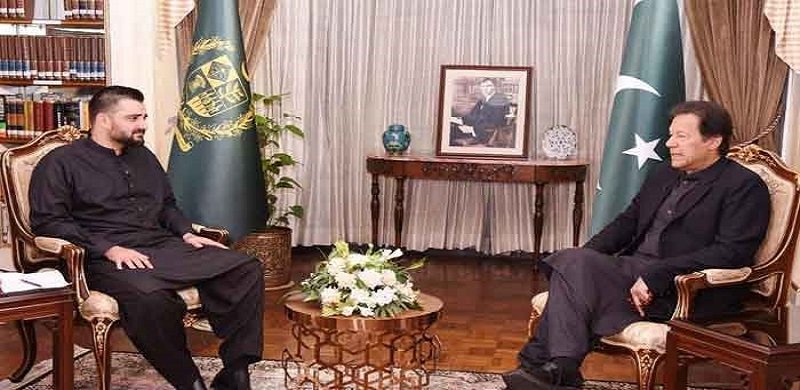
    Parwaaz Hai Junoon actor Hamza Ali Abbasi is trending on social media after his interview with the Prime Minister of Pakistan on Hum News, in which he covered a myriad of topics including the Pakistan Democratic Movement’s (PDM) upcoming rally in Lahore on December 13, PM’s own spiritual journey and his thoughts on Western culture.

    It was reported that the PM has handpicked actor Hamza Ali Abbasi to interview him.

    The interview was appreciated by some while others had a lot to say against the selection of Abbasi for the interview, considering his support for the ruling party.

    https://twitter.com/FarmanKhanVlogs/status/1335235083607961622?s=20
    https://twitter.com/HassanTheTruman/status/1335318685397946369?s=20

    Here’s what others had to say about the interview:

    The interview has also generated some quality memes for all the meme-lovers out there:

    https://twitter.com/teasersixer/status/1335482982728159232?s=20
    https://twitter.com/teasersixer/status/1335474756032884736?s=20
    https://twitter.com/HoorimaK/status/1335153988778463232?s=20

    It is pertinent to mention here that Hamza has been a loyal and vocal supporter of Prime Minister Imran Khan and has even served as the Cultural Secretary of Pakistan Tehreek-e-Insaf (PTI) for a short while. He is also taking a break from acting these days, and last week he announced that he is writing a book about God and religion which he hopes to finish by June 2021.

  • Dowry culture

    According to a recent survey conducted by Pulse Consultants, more than 50 per cent Pakistanis believe that a girl’s family should give dowry when she is getting married. Around 61 per cent respondents were of the view that dowry should be allowed in the Pakistani system while 36 per cent were against it. Almost 73 per cent women believed that dowry should be allowed whereas 24 per cent were against it.

    This survey’s results should not be surprising given that dowry has become an unfortunate reality in our region.

    Dowry is used as a measure of worth for the bride; it is used as a bargaining tool or as a price tag when marrying off girls. This is rooted in the patriarchal and misogynist belief that daughters are a burden when they are born and so to marry them off, a price must be attached to them to ‘lure’ a groom. Despite laws against dowry in the country, this ‘tradition’ continues. Underage girls are often married so that the family gives less dowry in comparison to an adult bride. Many women are left unmarried because their families cannot afford to give a sizeable dowry. This tradition is one that perpetuates violence against women. Pakistan has a high rate of dowry-related deaths. Many women are tortured and even killed for not meeting the dowry requirements of their in-laws. Laws can only do so much. Not many people would report that the other party is demanding dowry for their daughter’s hand in marriage. Dowry transcends all classes. A lot of people would say what they are giving to their daughter is a ‘gift’ when actually it is more like ‘ransom’. Sometimes it is also used to deny a woman her inheritance rights – once dowry is given, the family says they have no rights in their inheritance any more. In a patriarchal society, women are treated like a property or objects instead of human beings with any rights. Dowry is a custom that encourages such thinking.

    The need of the hour is a public awareness campaign against dowry and why this cultural tradition must end. Both the government and the media need to do their part to educate the masses that there are laws against dowry in the country and also why this custom is a social evil. The acceptability of dowry will not end overnight. It will take years of education and awareness for the masses to eradicate this menace.

  • ‘The Fab Lives of Bolly Wives’ falls flat despite the glam and starry special appearances

    ‘The Fab Lives of Bolly Wives’ falls flat despite the glam and starry special appearances

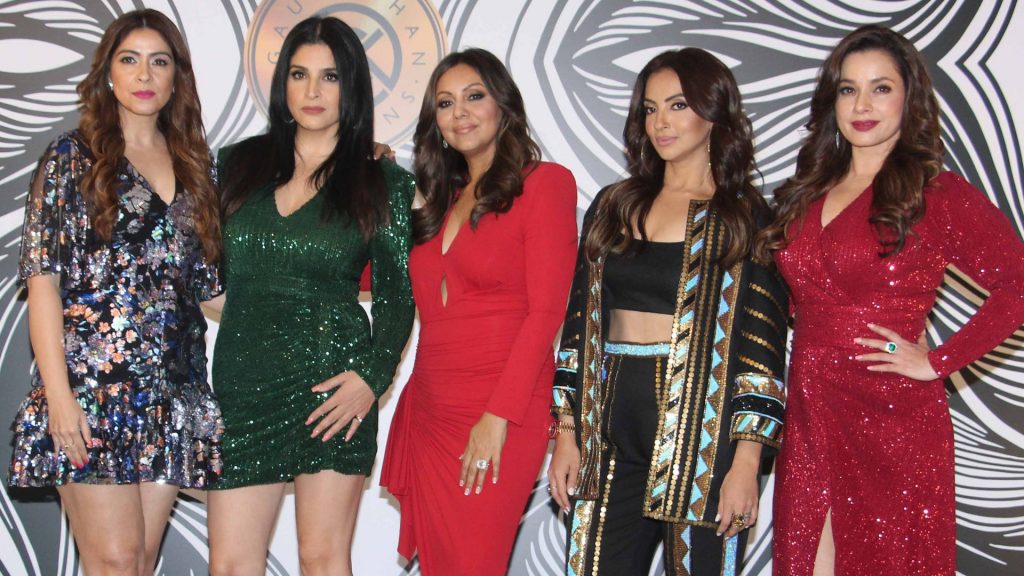
    What are the three things you look for in a reality tv series? Drama, drama and more drama. Unfortunately, Netflix’s latest reality television series The Fabulous Lives of Bollywood Wives has everything to offer besides that. You have glitz, glam, a fancy holiday, discussions on plastic surgery and the cherry on top – lots, and I mean lots, of starry special appearances. But all this fails to add to the oomph factor and you end up watching the show only because of your love for Bollywood.

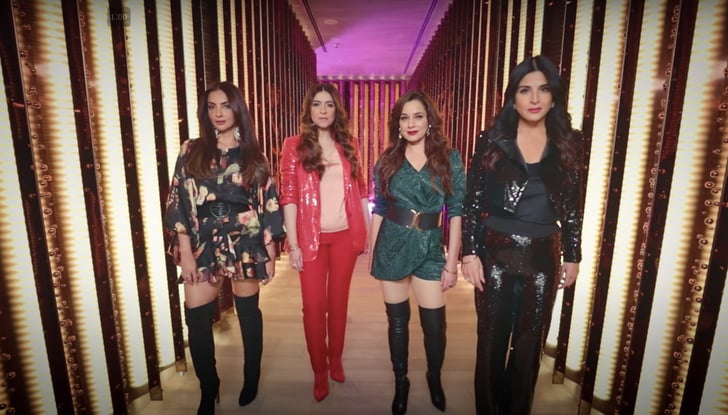
    The Fab Lives of Bolly Wives (let’s just call it FLBW) centres around four Bollywood wives – Maheep Kapoor, wife of Sanjay Kapoor, Seema Khan, wife of Sohail Khan, Bhavana Pandey, wife of Chunkey Pandey, and Neelum Kothari, wife of Samir Soni. Maheep is the queen bee of the gang which has been together for 25 years. Mind you, this has been repeated a gazillion times in the entire show, lest we forget. Seema is the one with the wit and sarcasm, while Bhavana is the superstitious one. And Neelum, throughout the series is just worried about one thing: should she make a comeback to films.

    While each woman has her own distinct personality and they are interesting to see in the first episode, the problem with the show is that there is just no drama. The girls are chill with one another and no one gets pissed at the other, except in one episode. Even then, their ‘showdown’ was just very dry. What is this relationship? Where is the spark? The fire? Twice Karan Johar had to come in and be the phoppo he is so that he can instigate them. Unfortunately, the fire never really lights – they really should have taken classes from our favourite Sima Taparia from Indian Matchmaking on how to say the most outrageous things and still not be hated for it. Most of the stuff we saw in the series was all that the paparazzi have already shown to us or they have posted on their Instagram feeds. Even their conversations were terribly safe as if they were scared to give viewers a sneak peek into who they are behind the facades. Just goes on to show that reality tv is not everyone’s piece of cake.

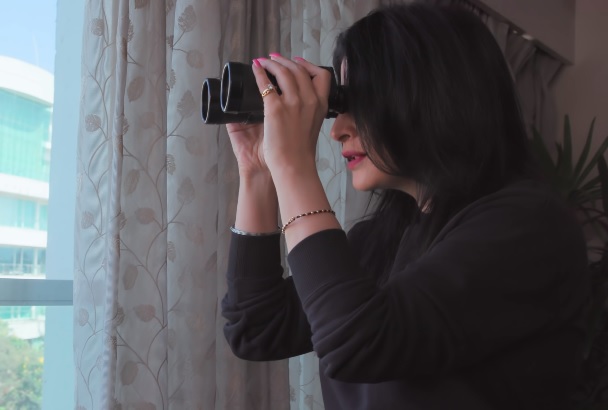
    The two things I did find interesting was that one Maheep is a stalker. An actual stalker. She observes people through her binoculars and she apparently caught glimpses of Aishwarya Rai Bachchan and Abhishek Bachchan’s wedding through her binoculars. And secondly, Seema and Sohail, despite being married don’t live in the same house. They live across the street from one another and are very happy with this arrangement.

    Interestingly the show is called FLBW, but we barely get to see them as wives. We end up watching them as mothers mostly because my God they are obsessed with their kids. Even the series opens with Maheep fretting over her daughter Shanaya’s Le Bal debut.

    The biggest takeaways from the show had NOTHING to do with the wives. For me, there were two major ones. SPOILERS AHEAD. One that Janhvi Kapoor got a wish from Kylie Jenner on her birthday and second which fascinated me the most – on their trips abroad, Shah Rukh Khan would be the one to babysit all the children when the wives would go party. In fact, my favourite episode from the season was the one which had SRK. Damn that man can charm even a cactus. His witty one-liners and dry humour had me smiling throughout the episode. Gauri Khan in an Instagram post has said that she will be gatecrashing the second season and I do hope that if there is a second season, I’d like to see more of Shah Rukh in it than anyone else.

    The makers of the show tried to create a desi version of Keeping up with the Kardashians meets Sex and the City, but they somehow forgot to add the main ingredient – drama. In this review, I am not even going to recommend or not recommend the show. Because I know that if you’re a Bolly freak like myself, you will still sit and spend five hours watching the eight episodes. All I’m going to say is keep your expectations low.

  • Hadiqa Kiani responds to allegations of ‘distorting’ customer’s appearance

    Hadiqa Kiani responds to allegations of ‘distorting’ customer’s appearance

    Hadiqa Kiani has responded to accusations by a woman Zahida, who claimed that she suffered drastic hair loss after she visited a franchise outlet of the musician’s beauty salon for a straightening treatment. Zahida alleged that the use of harmful creams caused her hair to fall out, distorting her appearance.

    Zahida has also claimed Rs 2 crores in damages from the singer.

    While reports have suggested that a local court has summoned Kiani, the salon’s franchise owner, Deputy Commissioner Faisalabad and the district health officer on December 16, Kiani has denied all allegations.

    In a series of tweets, Kiani said the allegations were false and assured her customers that “Hadiqa Kiani Salon franchises across the country continue to operate with the highest quality products and according to proper SOPs.”

    “My lawyers and local franchise team are fully prepared to address these malicious and baseless claims,” she said further.

    Hadiqa added that in these testing times we should focus on “uplifting each other instead of tearing down honest businesses”.

  • ‘Accha’ is now a dictionary word

    ‘Accha’ is now a dictionary word

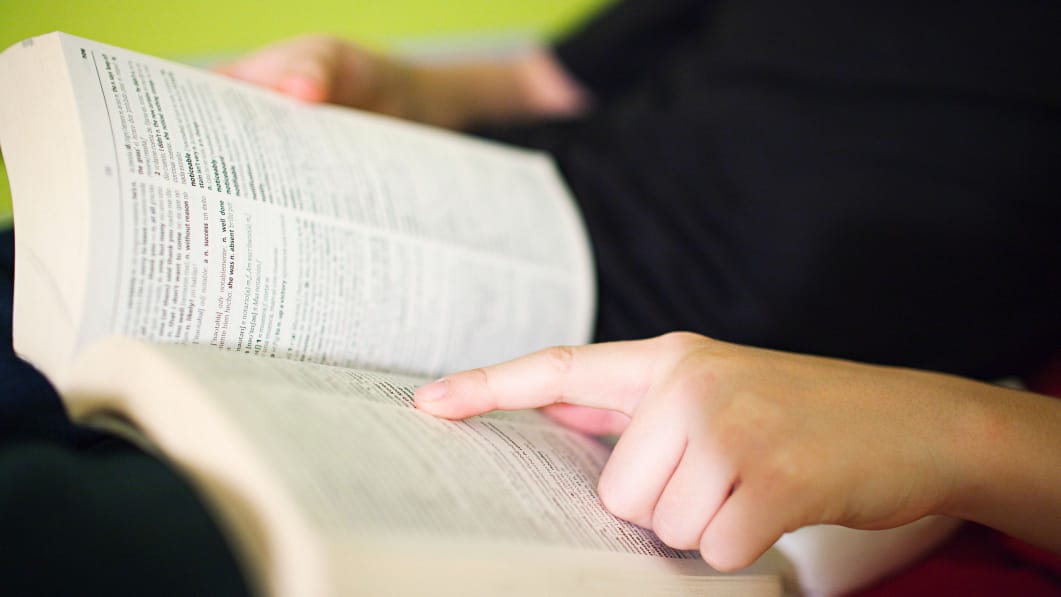
    Accha, probably one of the most commonly used words in the country, has been recognised as a real word and added in the Cambridge Dictionary.

    https://twitter.com/munimmatin/status/1335116240440975365?s=20

    The Cambridge Dictionary, produced by Cambridge University Press, is one of the world’s most well-known, trusted and credible English dictionary sources and they have added word Accha also Achha as an expression which, according to it, means “That’s good. Go ahead.”

    The word in it is used for showing surprise or happiness. “I managed to buy it for half the price. Accha!

    Meanwhile, the Cambridge Dictionary has also declared Quarantine as its word of the year. According to the dictionary, quarantine was the third most-searched for word during the year, with maximum searches between March 18 and 24, when restrictions began to be imposed due to the pandemic.

    Alongside quarantine, other coronavirus-related words, including pandemic and lockdown, ranked highly on Cambridge Dictionary’s most popular list for 2020.

  • Dividing the divided

    “The ruling party’s most recent act of issuing a list of news media talk-show anchors, dubbing them pro-corruption, drives a deeper wedge into a polarised nation.”

    It is no secret that the truth of national integration of the Islamic Republic of Pakistan is not just bitter but severely inconvenient. The fine line that separates diversity and differences among this nation has blurred so many times that it has almost permanently been reduced to a smudge. From the barracks to the parliament, sermons and edicts from atop the mosque minarets, political jargons from atop the containers and trucks, to the unending layers of multiple identities — divisions are the Achilles’ heel of this society.

    Issuing a list of journalists, dubbing them against the interests of the state, vilifying them publicly was like shooting a nuke at this Achilles heel. Driving a wedge at the very source of information of the nation, the media, is creating the deepest division imaginable so far. In the history of deleted tweets in this country, these two might have very long lasting effects.

    A ruling political party being unaware of this landmine or apathetic to the consequences of triggering it can potentially prove to be catastrophic.

    73 years of age, sick, weak and drained it stood on shaky feet, running out of natural body resources, vitals dimming, surviving on one shot of steroids after another, scars of surgical interventions spread across the map of its skin and a plethora of side-effects from past treatments racking its existence. It had almost forgotten the number of doctors that had taken a shot at it, sometimes even without its total consent. Almost every one of those taxing prognosis left it more vulnerable and feeble. All of them focused on treating the symptoms and not the disease, worsening the illness.

    It was almost as if they knew, but never disclosed that it was plagued by the uncanny Autoimmune Disease – an ailment in which the organs of its own body were at constant war with each other. It was almost as if they were intentionally not treating the disease because ending its ailment would end years of profiteering from its misery, and yet they all claimed they did everything to serve its interest. Or maybe decades of varying drugs had blurred its ability to separate those who sought to save it from those who added to its agony.

    The story of Pakistan is difficult to pen down because it is hard to indisputably identify the heroes and the villains. Pakistanis to this day are even conflicted over autocratic dictatorships being good or bad. This is a country where coups were celebrated, even if by a significant minority. Its very inception on the basis of a presumed uniformity of a religion so deeply divided across sectarian lines was unsteady. The ethnic, cultural, political and ideological differences at its core, though dormant at the time, were highly flammable. While these divisions stayed buried under the unanimous rejected of Hindu subjugation, the fault lines under the surface started growing into visible cracks once liberated from the common enemy. This is why, ever since, the integration and unity of this nation has always been a function of hatred, fear and anger against a common enemy, rather than collective growth, pride and prosperity.

    However, in times when an aggravated threat of a common enemy does not exist, Pakistan’s autoimmune disease starts tearing her apart and eating the core of the country hollow. For all these reasons, and more, the worst thing that can happen to this already fragmented and disunited country is fuelling more divisions.

    From its campaign leading to the 2018 elections, PTI and its patron in chief Imran Khan has been extremely careless, if not intentionally exploitative, of this ability of the Pakistani polity. He went further than the usual practice of demonising and defiling his political rivals and berated their voters and supporters as dumb donkeys following their leaders mindlessly like zombies. At his massive public meetings he openly vilified news organisations that disagreed with him. The rants inadvertently led to mob attacks on news media offices and at times on journalists.

    The ruling party’s most recent act of issuing a list of news media talk-show anchors, dubbing them pro-corruption, incites targeted and aggravated hatred against these journalists. But more importantly still, it drives a deeper wedge into a polarised nation. It impacts not just PTI supporters but the supporters of its political rivals as well. With the history of Pakistan and its behavior in view, this action will have consequences far more long-lasting than being perceived.

    This list discourages openness to differing views and perspectives. It freezes the ability to question and challenge one’s hardened positions and clan-vote mentality. It encourages the dangerous practice of sticking to narratives that only feed people’s confirmation biases. It magnifies and glorifies selective perception. But more than anything else, it breeds generations of an ill-informed polity, with an ‘us-versus-them’ mindset for its own countrymen, incapacitated to vote a credible person into power, adding to the long list of bad doctors that would worsen this ailing country’s autoimmune disease and feed off its ailing semi-conscious body.