Blog

  • Blasphemy accusations against Hindu doctor lead to violence in Sindh

    Blasphemy accusations against Hindu doctor lead to violence in Sindh

    A Hindu veterinary doctor has been arrested over blasphemy accusations in the Mirpurkhas district of Sindh.

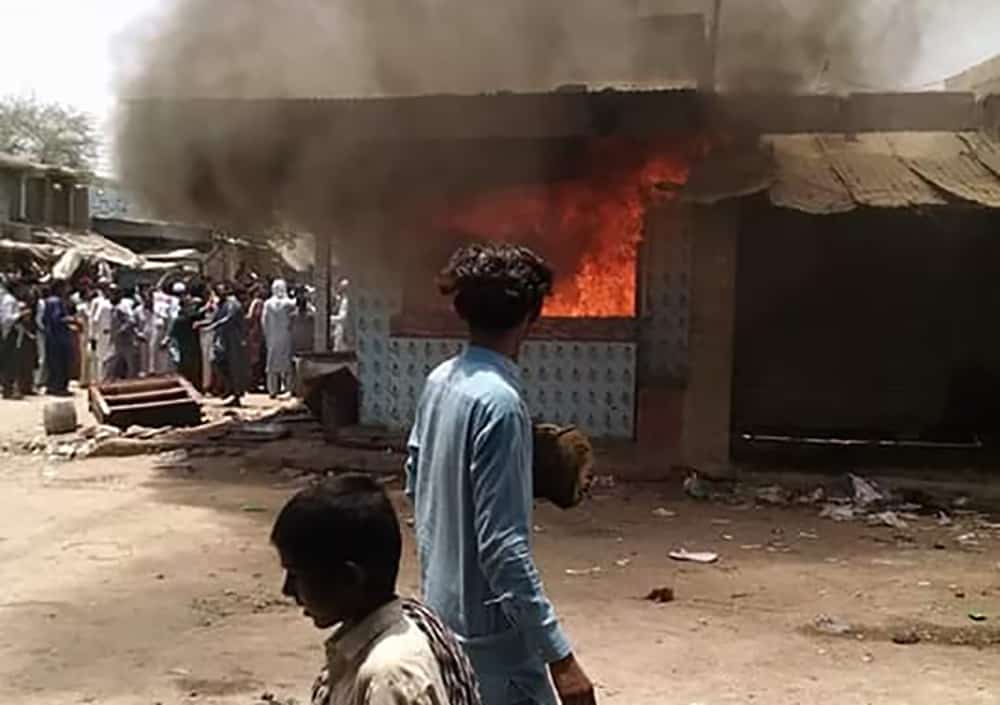
    According to reports, Ramesh Kumar was taken into custody on Monday while angry protesters burnt tyres to block roads and set ablaze shops owned by Hindus in the Phuladyon town of the city.

    Reports quoted Zahid Hussain Leghari, the Station House Officer (SHO) of the local police station, as saying that a case was registered against the doctor.

    He added that a proper investigation would be carried out and the doctor had been shifted to a safe location amid all the unrest.

    https://twitter.com/timesofpak123/status/1132965562852810754?ref_src=twsrc%5Etfw%7Ctwcamp%5Etweetembed%7Ctwterm%5E1132965562852810754&ref_url=https%3A%2F%2Fwww.indiatoday.in%2Fworld%2Fstory%2Fpakistan-hindu-doctor-blasphemy-charges-mirpurkhas-violence-1536222-2019-05-28

    Earlier, the head cleric of a local mosque, Maulvi Ishaq Nohri, had filed the complaint with the police alleging that the doctor had torn pages of a holy book and wrapped medicines in them.

    “I urge the government to intervene and ensure the safety of Hindu Sindhis who have lived peacefully here for centuries,” said Facebook user Syma Jafri.

    “Also, action must be taken against those who initiated these riots and incited violence. There is a proper lawful procedure for such cases. How can we think of killing someone, especially when it’s Youme Ali,” she added.

    Being 7.5 million in number, Hindus form the biggest minority community in the country. Pakistan Hindu Council has time and again complained of minority members being “targeted under the blasphemy law by people because of personal enmity”.

    According to Center for Social Justice, at least 1,490 people have been charged under the country’s blasphemy laws between 1987 and 2018.


  • ‘Burn-out’ is real, WHO recognises it as a medical condition

    ‘Burn-out’ is real, WHO recognises it as a medical condition

    The World Health Organisation has for the first time recognised “burn-out” as a medical condition in its International Classification of Diseases (ICD), which is widely used as a benchmark for diagnosis and health insurers.

    The decision, reached during the World Health Assembly in Geneva, could help settle decades of debate among experts over how to define burnout, and whether it should be considered a medical condition.

    In the latest update of its catalogue of diseases and injuries around the world, WHO defines burn-out as “a syndrome conceptualised as resulting from chronic workplace stress that has not been successfully managed.”

    It said the syndrome was characterised by three symptoms:

    1) feelings of energy depletion or exhaustion

    2) increased mental distance from one’s job or feelings of negativism or cynicism related to one’s job

    3) reduced professional efficacy.

    The classification further stated that the burn-out diagnosis is limited to work environments, and shouldn’t be applied to other life situations.

    The updated ICD list, dubbed ICD-11, was drafted last year following recommendations from health experts around the world. It will take effect in January 2022 and contains several other additions, including classification of “compulsive sexual behaviour” as a mental disorder.

    It also recognises video gaming as an addiction for the first time, listing it alongside gambling and drugs like cocaine.

    Watch The Current‘s video on how to tell if you workplace is toxic:

    https://www.youtube.com/watch?v=Elz__X4Cnks
  • How 5G will change everything?

    How 5G will change everything?

    China and the United States are in a race over who will master the technology first. On May 15, the United States President Donald Trump banned Huawei in the country. The reason cited was a “threat to national security”.China already leads the world in the mobile market sector, so it is very well expected that China will be on the top when it releases its 5g technology.

    5G will change everything but How?

    Wifi Everywhere

    An entire building can get a direct 5G connection from a nearby cell, and within that building, every device can take advantage of 5G’s speeds via existing wifi connections, including TVs, game consoles, phones, desktop computers, laptops, etc.

    Faster Downloading

    5G will allow downloading 20 times faster than 4G.  The 5G technology will be up to twenty times faster than the 4G. downloading a two-hour long movie takes six minutes on a 4G network, while it will only take 3.6 seconds on a 5G network.

    Smart Vehicles

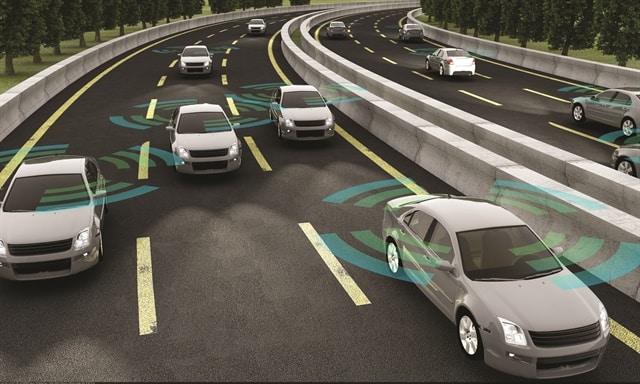
    When a whole city is online with 5G, and cars can communicate directly with other cars and traffic lights, traffic signals will respond appropriately. One day, you can quit waiting at a stop light when no other cars are around. The system will know when other vehicles are approaching fast enough to warrant a red light on your side, and will otherwise let you cross the intersection effortlessly.

    Vehicles require GPS to know exactly where they’re located. The latest generation of GPS chips are even more accurate, direct car-to-car communication will make the whole experience even better, specifically when it comes to safety and traffic jams.

    Smarter Healthcare

    Exchanging information with your doctor or should be something you can tap into at any time, especially in emergency situations. An “on-demand doctor” will be there all the time.

    Imagine the near future where smart wearable not only monitor your heart rate but also your blood sugar, hemoglobin, etc. The last thing you’d want in an emergency is for your device to not be able to communicate important data to your doctor because the connection was slow. With 5G your wearable will be able to quickly contact a server to update your health records for your doctor to see or to alert a family member that you need instant attention.

  • CWC’19: Inzamam hopeful of Pakistan ending losing streak against India

    CWC’19: Inzamam hopeful of Pakistan ending losing streak against India

    Chief selector Inzamamul Haq is confident that the national cricket team will finally break its six-match losing streak in the World Cup against India when it takes on the arch-rivals on June 16.

    Pakistan have never won against India in a world cup match, but the former skipper feels that they can post a breakthrough victory this time around when the two teams meet in Manchester next month.

    “People take an Indo-Pak match very seriously and some even go on to say that ‘we will be happy even if only we can win against India during the World Cup’,” Inzamam was quoted as saying by a cricket website.

    The veteran of 120 Tests, however, said that the mega cricketing tournament was not just about the match against India, and “Pakistan have the potential to beat other sides as well”.

    Pakistan go into the 2019 World Cup having suffered 10 successive ODI defeats and were also beaten by Afghanistan in a warm-up match on Friday.

  • Fawad Chaudhry announces Eid on June 5, launches Islamic calendar

    Fawad Chaudhry announces Eid on June 5, launches Islamic calendar

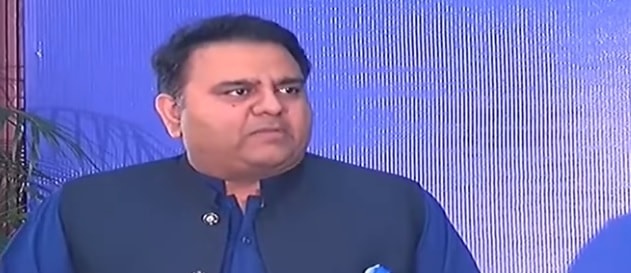
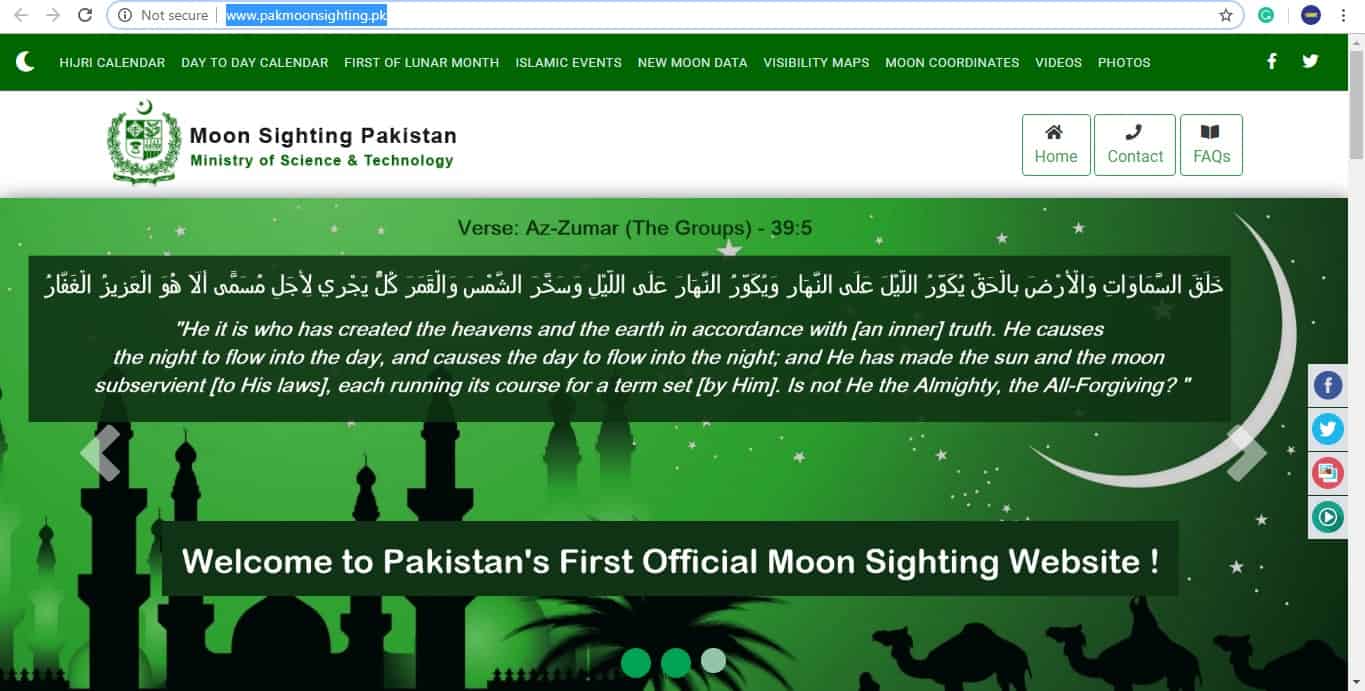
    Fulfilling his promise, Minister for Science and Technology Fawad Chaudhry launched the country’s first moonsighting website and Hijri Calendar on Sunday.

    He also announced that Eid will be celebrated on June 5 as per the lunar observations.

    The minister shared that the five-year Hijri Calendar has been sent to the Council of Islamic Ideology (CII) and will be presented before the cabinet on Wednesday.

    The CII will review the lunar calendar and decide if under Islamic laws, the only evidence acceptable for moon-sighting is with the naked eye or if it can also be sighted with equipment.

    Fawad added he “personally believes that there is no need to have Rueti Hilal Committee [moon-sighting committee] in the country.”

    He said that the moonsighting website and calendar have been created with the efforts of several departments and provide all relevant information.

  • The Current’s guide to Eid planning

    The Current’s guide to Eid planning

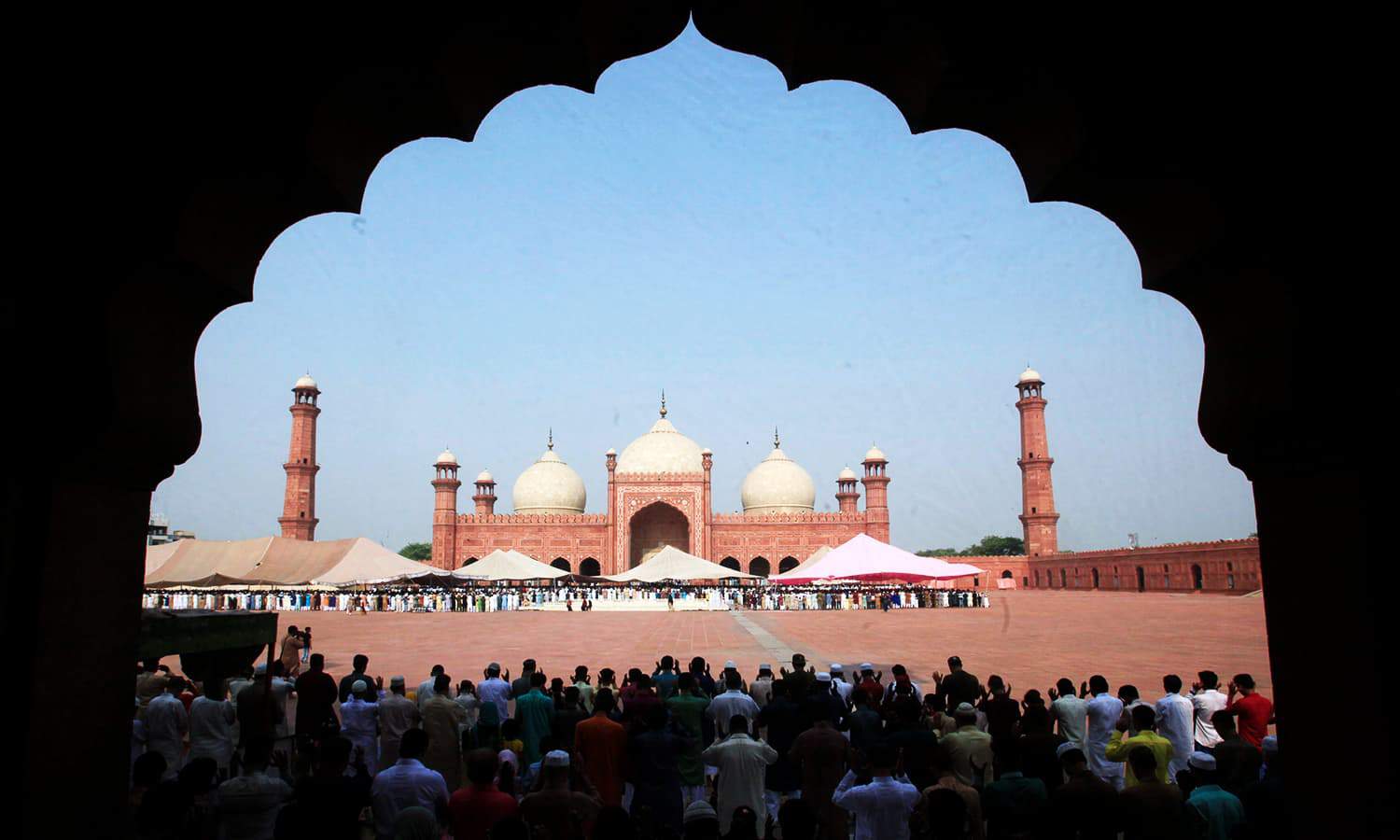
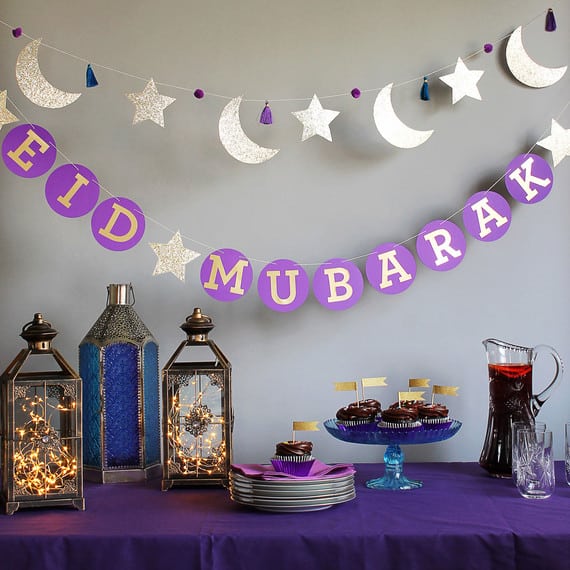
    Eid-ul-Fitr is just around the corner and preparations for it are or should be, in full swing. The event marks the end of Ramazan and the beginning of three days of festivities, meeting relatives you haven’t seen in eons and eating till you go into food coma.

    This year, The Current decided to make your life easier by putting down a list of things you should be doing before Eid so that you can enjoy the Eid holidays to the fullest.

    Store frozen food

    Food is the way to everyone’s hearts so prepare some special food with your family and freeze it. Or stock up on frozen foods. So when the day comes, you just have to heat up and food and serve. Most of favourite Eid memories somehow always revolve around eating shami kababs, samosas and haleem with chai at our Khala’s or Taya’s house.

    Eid decorations

    Do things differently this Eid and add some festive vibes to your home with some colorful decorations and lights. People with children should definitely take note of this.

    Eid-themed decorations are now available at a lot of stores, so you can get your hands on those. But if you’re feeling creative and want to make it a family thing, get some art and craft supplies and make the banners and decorations yourself.

    Shopping

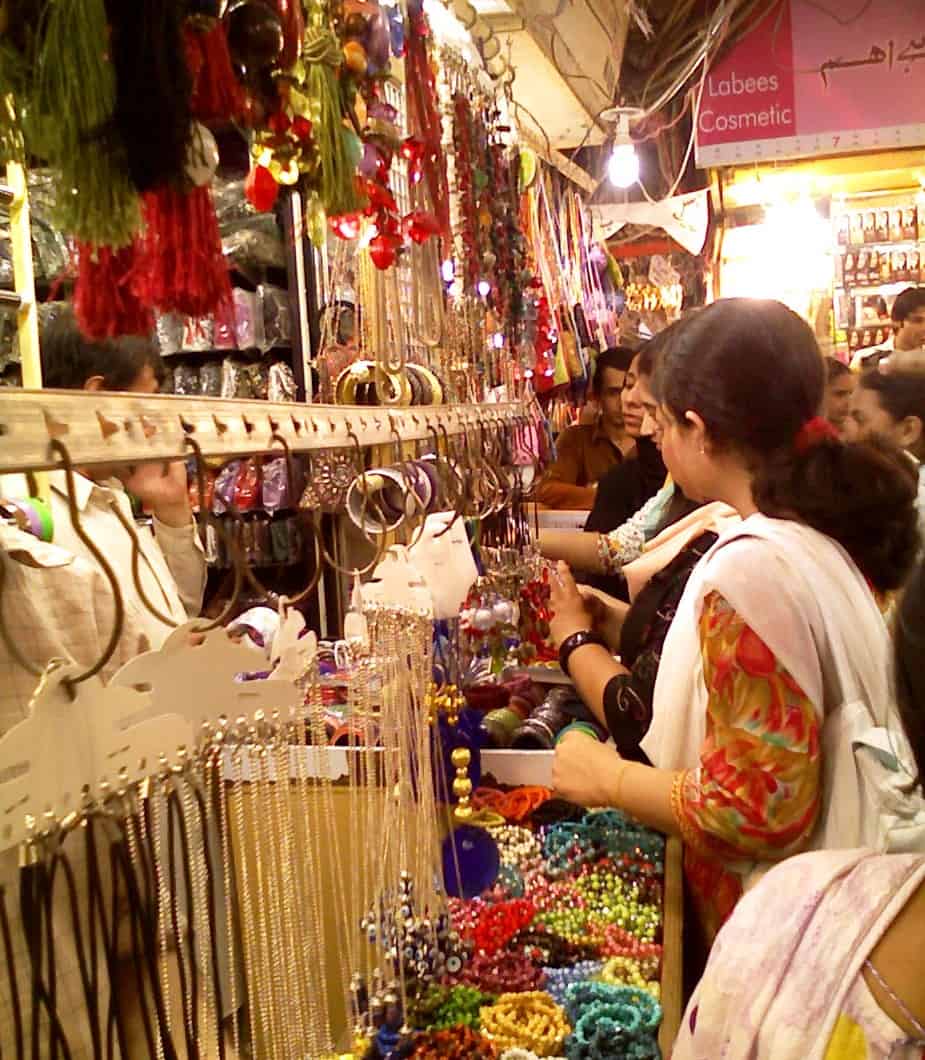
    How can Eid even be complete without shopping? It is one of those happy occasions when one can dress up to the nines. So putting together an Eid look can be stressful, especially for girls who have to make sure they have everything from the clothes to the shoes to bangles and other accessories. The best way to ensure that you have Eid outfits ready for all three days is to start ahead. Hit the mall and start shopping.

    Eid Games

    Before the advent of technology and iPads, what did we all do for fun? Play games right? Who else remembers playing endless games of Bluff, Rang, Monopoly and Ludo on Eid with cousins? This year gather all the games, ditch the phones and iPads and plan a fun game night with your friends or family just like old times. And let us tell you, we’re pretty sure this will be the highlight of your Eid.

  • Rihanna launches her new fashion brand in Paris with LVMH

    Rihanna launches her new fashion brand in Paris with LVMH

    Rihanna is followed almost as much for her style as her music in the West. Rihanna has partnered with the luxury multinational brand LVMH (Louis Vuitton and Moët Hennessy) to launch Fenty Maison, a ready-to-wear, shoes, and accessories. The brand is called Fenty after the singer’s full name – Robyn Rihanna Fenty

     The pop star will become the first black woman in charge of a major luxury fashion house in Paris. “My fashion will be different and non-traditional because I do not come from this industry,” says the singer and hopes to bring a “new vision of fashion”.

    Rihanna’s Fenty line has a luxury price point, with pieces going for Rs 31,000 to  166,485. The lower priced pieces are in there too minimum for Rs 9400.

    The brand will first be available in 14 countries, in Europe and the United States, and will open in Asia by the end of the year.

  • Hindu mob beats up Muslim couple over beef rumour in India

    Hindu mob beats up Muslim couple over beef rumour in India

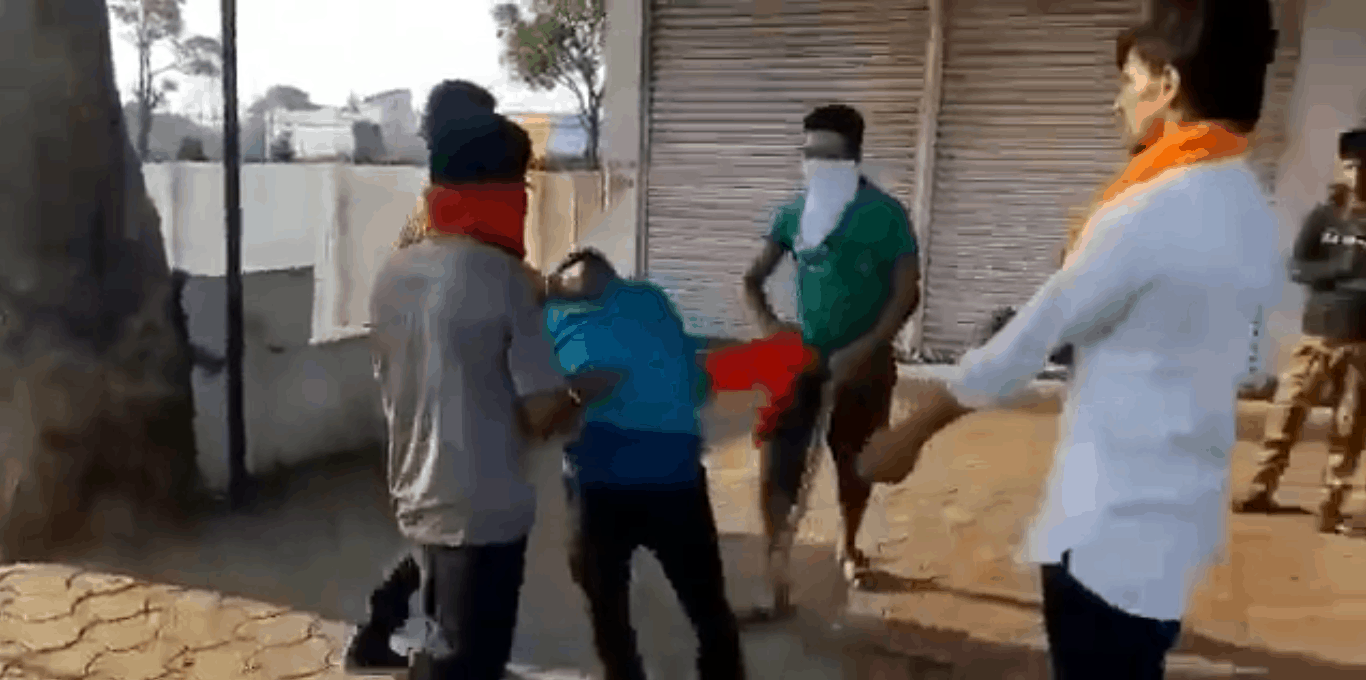
    Days after Narendra Modi’s hardliner Bharatiya Janata Party (BJP) was elected to power for a second consecutive term, a Hindu extremist mob has severely thrashed three Muslims, including a woman, over beef rumours.

    According to India Today, the incident took place in the Seoni city of Madhya Pradesh.

    A video of the incident, which shows self-claimed gau rakshaks [cow vigilantes] hitting the young Muslims with sticks, has gone viral. The video also shows the Muslim man being forced to thrash his wife with a slipper and say Jai Shree Ram.

    WATCH VIDEO:

    Five suspects have been arrested from Seoni city, 350 km from state capital Bhopal, the police was quoted as saying. Meanwhile, the victims have been identified as local residents Dilip Malviya, Taufik and Anjum Shama.

    Former Indian occupied Kashmir (IoK) chief minister Mehbooba Mufti took to Twitter to condemn the incident.

    “Horrified to see cow vigilantes thrash an innocent Muslim with such impunity in MP. Hope the chief minister will take swift action against these goons,” she said.

  • Human traffic jam on Mount Everest

    Human traffic jam on Mount Everest

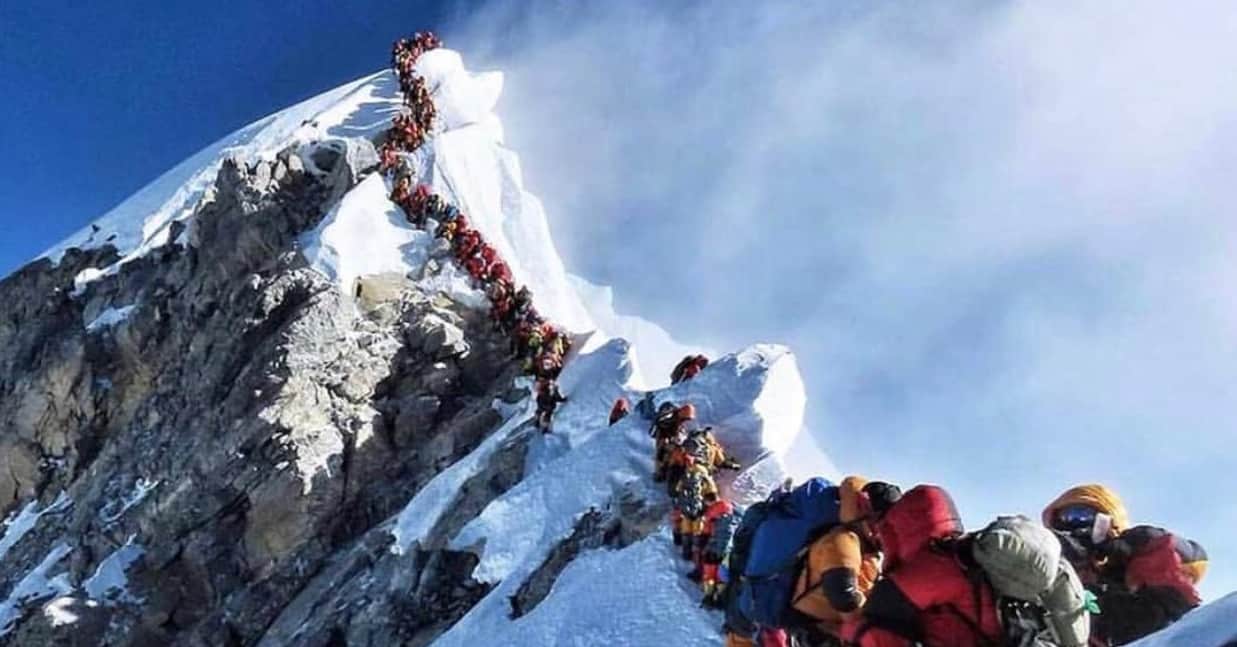
    Nepal has issued a record 381 permits, costing $11,000 each, for the current spring climbing season causing a traffic jam of climbers on Everest’s “death zone.” Though this was done to bring in the much-needed money for the impoverished Himayalan country, it appears to have done more damage.

    A traffic jam of climbers has resulted in a total of eight deaths as hundreds of climbers attempt to achieve the ultimate in mountaineering. These include two Indians and a Nepali on the Nepal side and an Austrian on the way down on the northern Tibetan side, officials and expedition organisers said.

    Ang Tsering Sherpa, former president of the Nepal Mountaineering Association, said that the weather window to summit this season was narrow, meaning that many teams had to wait to go up.

    “Spending a long time above the death zone increases the risk of frostbite, altitude sickness and even death,” he said. It is important to note that most of the climbers were “stuck in traffic” for approximately 12 hours.

    The summit of Mount Everest has an elevation of 8,848 meters (29,029 feet). At that level, each breath contains only one-third of the oxygen found at sea level. The human body is also rapidly deteriorating at that altitude, meaning most people can spend only a matter of minutes at the top, without extra oxygen supplies, before it becomes intolerable.

    “The weather has not been very great this climbing season, so when there is a small window when the weather clears up, climbers make the move,” director general of Nepal’s Tourism Department Danduraj Ghimire said, rejecting claims that the deaths were caused by overcrowding. “On May 22, after several days of bad weather, there was a small window of clear weather, when more than 200 mountaineers ascended Everest. The main cause of deaths on Everest has been high altitude sickness which is what happened with most of the climbers who lost their lives this season as well.”

    Mountaineering in Nepal has become a lucrative business since Edmund Hillary and Tenzing Norgay made the first ascent of Everest in 1953.

    Most Everest hopefuls are escorted by a Nepali guide, meaning more than 750 climbers were expected to tread the same path to the top in the current season. At least 140 others have been granted permits to scale Everest from the northern flank in Tibet, according to expedition operators. This could take the total past last year’s record of 807 people reaching the summit.