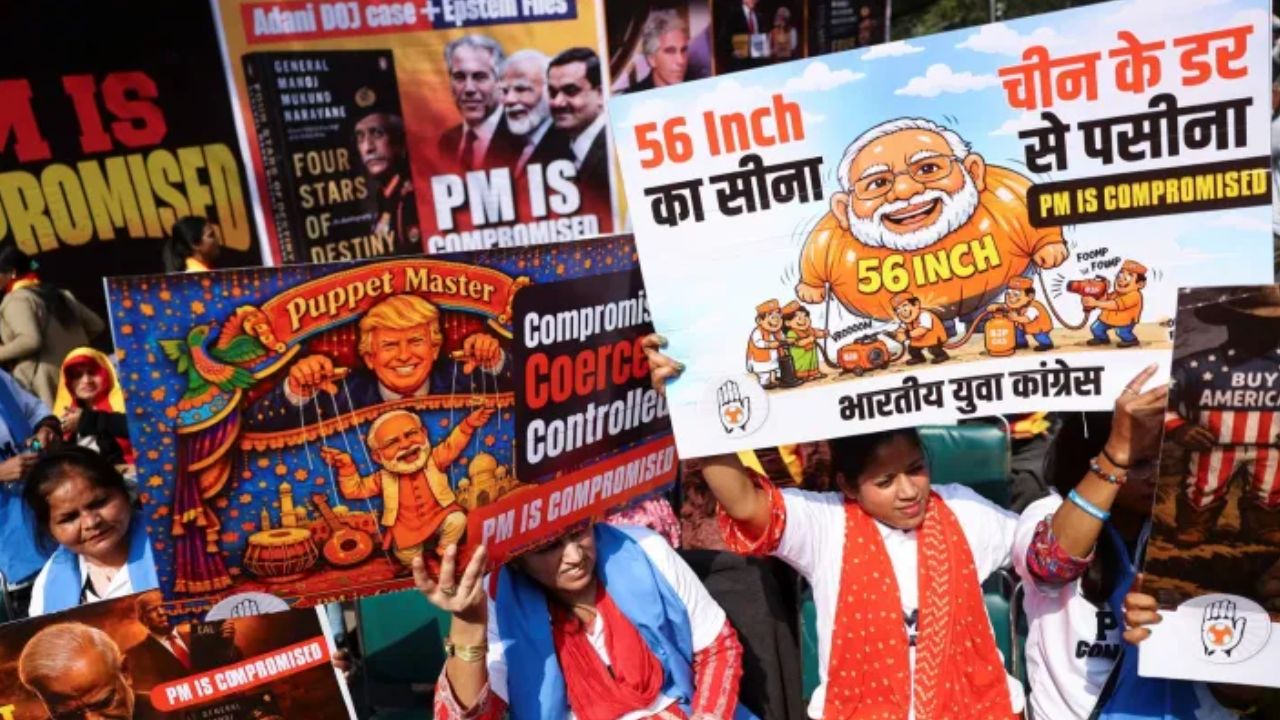
Hundreds of protesters gathered in India’s capital on Tuesday after media reports and a fresh release of United States (US) court documents allegedly linked Prime Minister (PM) Narendra Modi’s name to communications connected with the Jeffrey Epstein case, triggering political backlash and demands for clarification from the government.
Members of the Indian Youth Congress (IYC) assembled at Jantar Mantar, a key protest venue in central New Delhi, calling on the PM to publicly address the controversy.
Demonstrators held placards, chanted slogans and accused the government of maintaining silence over an issue they said could damage India’s global standing.
“We want answers. The silence from the Prime Minister’s Office is unacceptable,” a Youth Congress organiser said at the rally, videos circulating on social media showed.
The protests followed the publication of a large tranche of documents related to the late US financier Epstein, who was convicted of soliciting prostitution and died in a New York jail in 2019.
The newly released files reportedly contain names and communications involving prominent political and business figures from multiple countries. However, individuals named in the documents have not been charged with crimes linked to Epstein’s activities.
In India, the development quickly took on a political dimension. Youth Congress leaders accused the ruling Bharatiya Janata Party (BJP) of attempting to downplay the matter and demanded an independent inquiry.
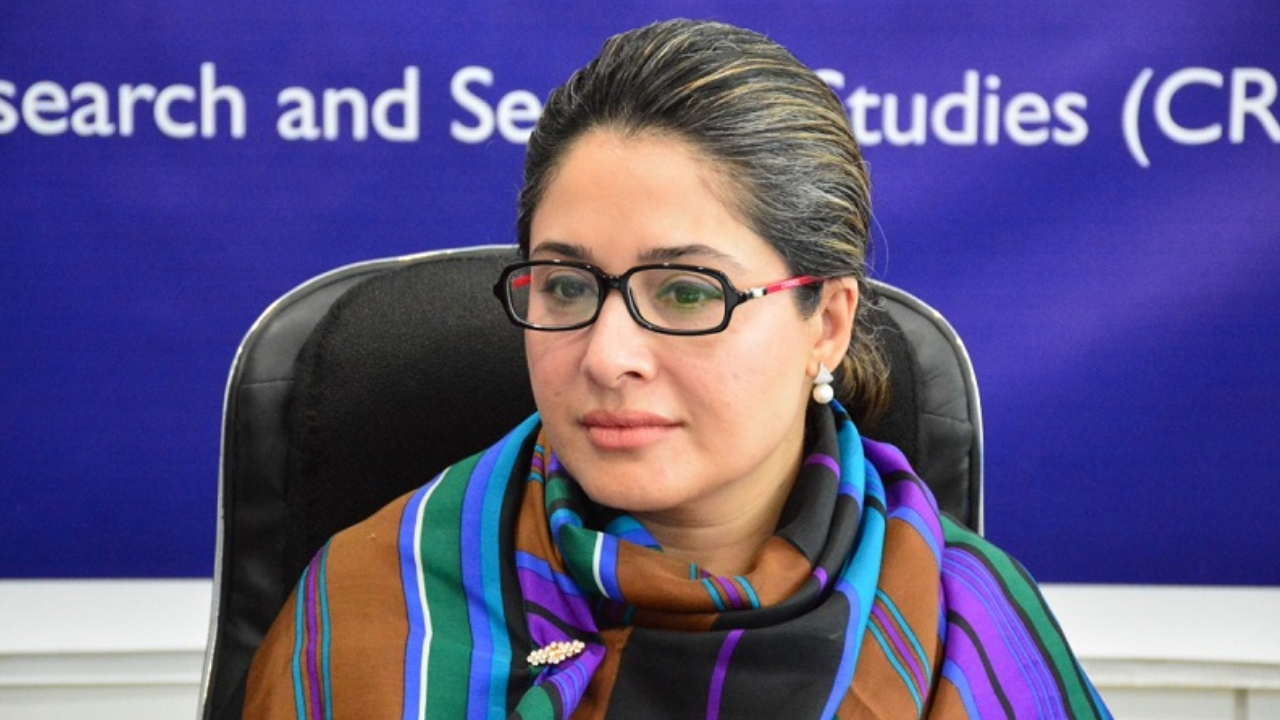
Mumbai Youth Congress President Zeenat Shabrin said the allegations were harming the country’s international image and argued that Modi should step down if he fails to provide a satisfactory explanation.
The Prime Minister’s Office has not issued a direct response to the claims. Government representatives, however, have dismissed the controversy as politically motivated and based on what they describe as misinterpretations of publicly released documents.
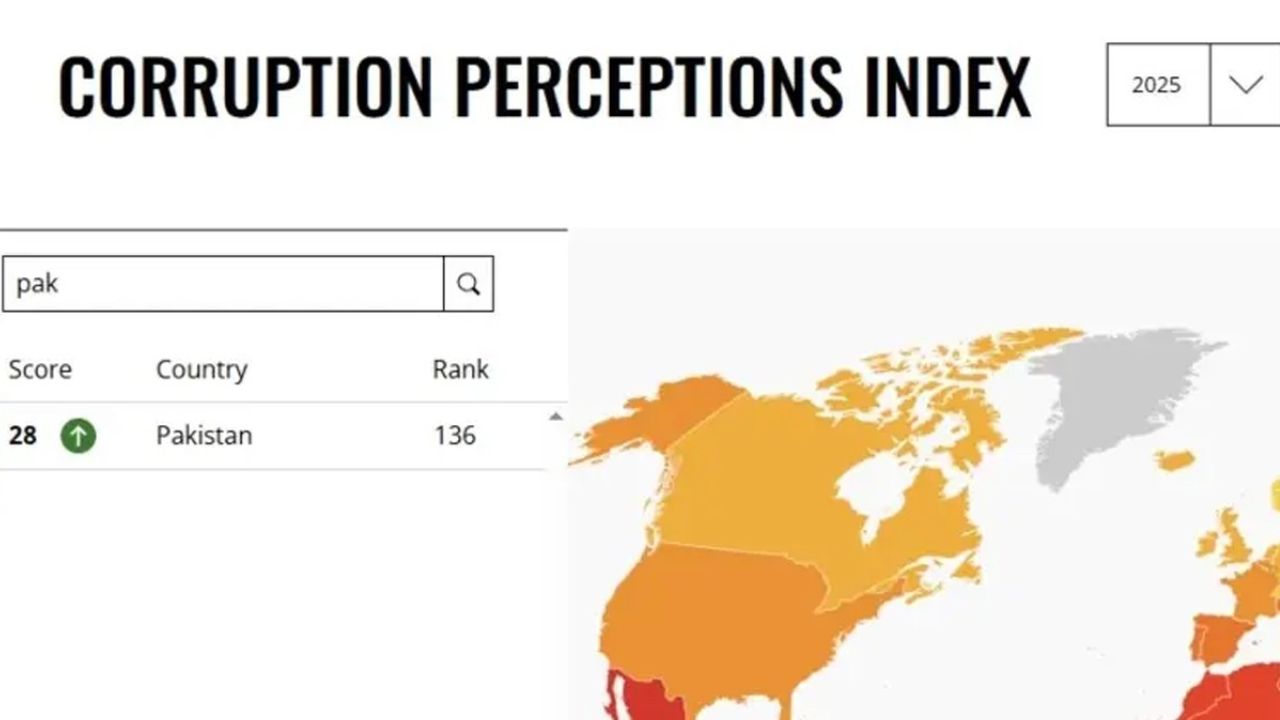
Pakistan has improved its standing in the Corruption Perceptions Index (CPI) 2025, moving up one spot – from 135 out of 180 countries in 2024 to 136 out of 182 countries this year.
According to a report by Berlin-based Transparency International, the country’s CPI score also inched upward, rising from 27 to 28.
In its report, Transparency International noted that corruption is a growing global concern, affecting even well-established democracies as leadership accountability declines. The 2025 index reveals a shrinking number of countries performing exceptionally well, with only five nations scoring above 80.
Since 2012, global trends in CPI scores show 31 countries improved, 50 declined and 100 remained unchanged, highlighting the uneven progress in tackling corruption worldwide.
This year, 182 countries and territories were ranked based on perceptions of public-sector corruption among experts and business leaders.
Per the rankings, Denmark led for the eighth consecutive year with a score of 89 while only a handful of countries, mainly in Western Europe and the Asia-Pacific region, scored above 75, and just five surpassed 80.
Meanwhile, over two-thirds of countries (68%) scored below 50, indicating widespread corruption challenges. The lowest-ranked countries, such as Somalia and South Sudan, scored just nine, reflecting the link between conflict, repression and corruption.
Even long-standing democracies experienced troubling declines, the report said.
Countries like the United States (64), Canada (75), New Zealand (81), the United Kingdom (70), France (66) and Sweden (80) showed a downward trend in anti-corruption performance.
Transparency International highlighted that restrictions on freedom of expression, assembly and association are closely tied to declining CPI scores, with 36 of the 50 countries showing significant drops also experiencing reduced civic space since 2012.
“Corruption is not inevitable. Our global research shows that strong democratic processes, independent oversight, and active civil societies create a clear blueprint to hold power accountable,” Transparency International Chair Francois Velerian said in a statement.
He also urged leaders to uphold integrity and international norms to secure a better future for citizens globally, as the global corruption watchdog urged governments worldwide to strengthen justice systems, ensure independent oversight of public spending, increase transparency in political funding and protect civic freedoms and media independence.
These measures are vital to curb corruption and reinforce accountability, it said.
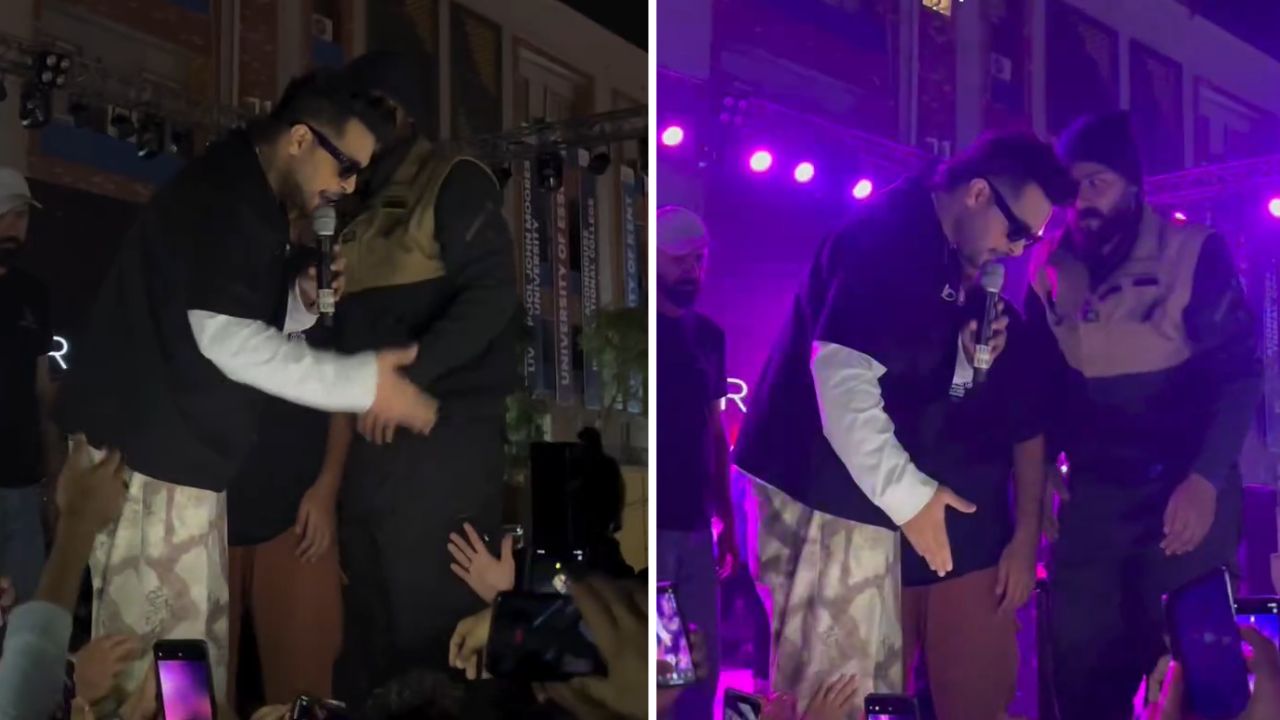
Singer Asim Azhar has addressed a video from one of his recent concerts that went viral on social media, showing him appearing visibly upset on stage.
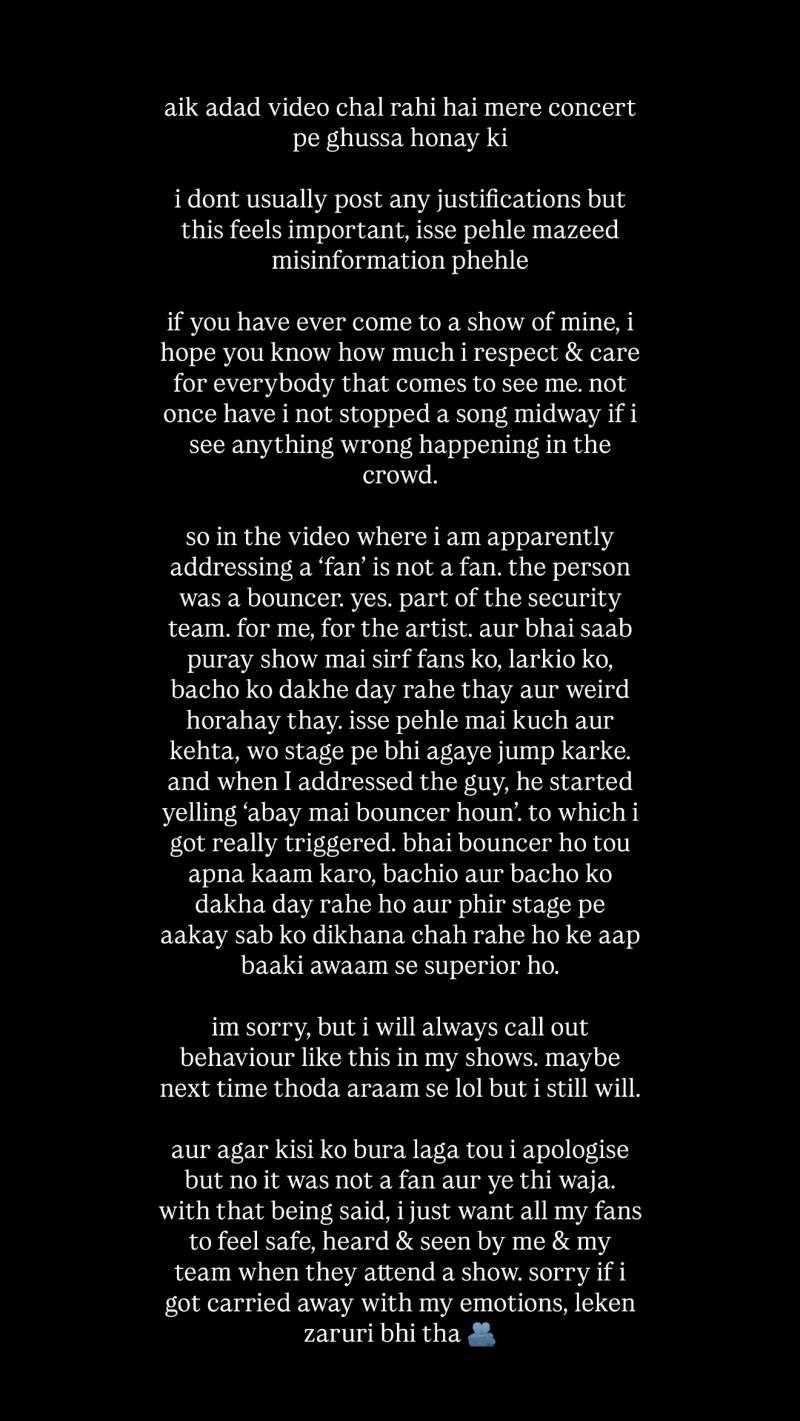
Taking to Instagram, the singer said he does not usually post justifications but felt compelled to clarify the situation before “misinformation spreads further.”
The singer explained that the individual he confronted, widely assumed to be a fan, was actually part of the security team. “In the video where I am apparently addressing a ‘fan,’ it is not a fan. The person was a bouncer, part of the security team,” Asim said.
He added that during the show, the security staffer was pushing members of the crowd, including girls and children.
“Throughout the show, he was only showing off to the crowd, to girls and kids, and behaving weirdly. Before I could say anything, he jumped onto the stage. When I addressed him, he started yelling, ‘I am a bouncer.’ I got really triggered. If you are a bouncer, do your job. You were pushing kids and then came on stage trying to show you are superior to everyone else.”
Asim admitted he reacted in the moment but stressed that he will always call out behaviour he sees as inappropriate. “I’m sorry, but I will always call out behaviour like this in my shows. Maybe next time I will be calmer, but I still will,” he said.
He also apologised if anyone felt offended but clarified that the confrontation was not directed at a fan.
“If anyone got upset, I apologise. But no, it was not a fan, and this was the reason. With that being said, I just want all my fans to feel safe, heard, and seen by me and my team when they attend a show. Sorry if I got carried away with my emotions, but it was necessary,” he added.
The viral clip sparked mixed reactions online. Some social media users criticised Asim’s tone, while others defended him, noting that artists have a responsibility to ensure crowd safety.
Asim Azhar has been in the limelight for other reasons. His song Meri Zindagi Hai Tu has been gaining immense popularity and is the official soundtrack of Hania Aamir’s hit drama, which has also found a following in India.
The singer has been in the news due to rumours surrounding an alleged relationship with actress Hania Aamir, keeping fans and the media intrigued.
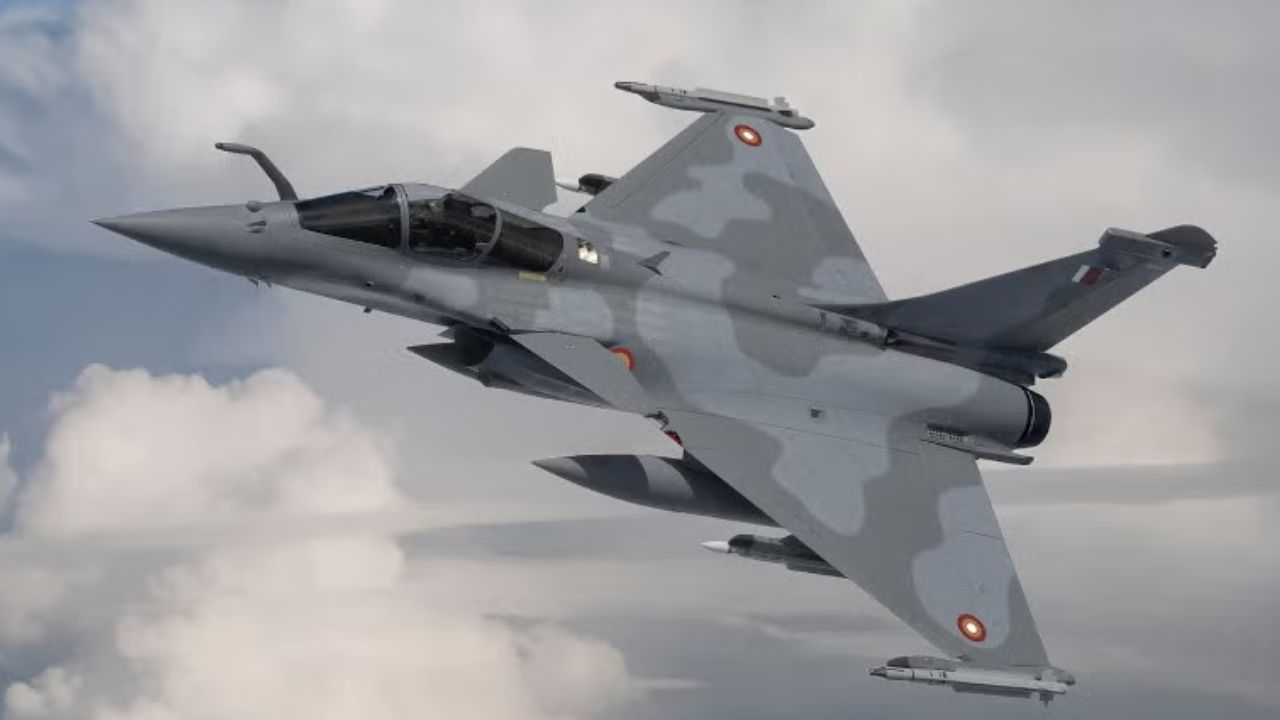
India is preparing to spend billions on 114 Rafale fighter jets in what could be its largest-ever defence purchase, but the decision has triggered a wave of ridicule from Pakistanis, many mocking the country’s past military losses and questioning the logic behind the deal.
The Indian government is reportedly set to acquire 114 Rafale fighter jets from France at an estimated cost of 11.21 trillion PKR ($39 billion). Reports quoted sources as saying that 18 of the jets would be bought in “fly-away” condition from France, while the remaining 96 will be produced in India under a strategic partnership.
However, Pakistanis on social media were quick to question the logic and effectiveness of the purchase. One user commented, “O dear India, think you have to upgrade your pilots, not aircraft. A good pilot gives good results, not just a good machine.” Another pointed out, “4th largest economy, sir… can’t even make a single fighter jet.”
Several posts mocked India’s past military setbacks, with one saying, “Welcome back to be downed again by Pakistan,” while another added, “More aircrafts for Indians to crash.”
Others highlighted concerns over cost and production timelines: “Wow, spending taxpayer money to buy a useless overpriced 4th-generation Rafale from the ’90s, which IAF will get in 2030s from an almost bankrupt country, which can only produce 10 Rafales a year. Congratulations, great job and decision-making.”
Some users were more direct, calling it “a scam” . One post read: “As a Pakistani, please buy 200 Rafales,” while others referenced recent skirmishes: “Didn’t Paki shoot these out of the air in the recent skirmish?”
Even humorous reactions dominated, with comments such as “6-0,” “Dreams of the Indians” and “No problem, it will be 114-0,” reflecting both sarcasm and nationalistic pride.
The Defence Acquisition Council, chaired by Defence Minister Rajnath Singh, is expected to meet on February 12 to give the crucial Acceptance of Necessity (AoN) approval for the deal. The decision comes ahead of French President Emmanuel Macron’s state visit to India later this month.
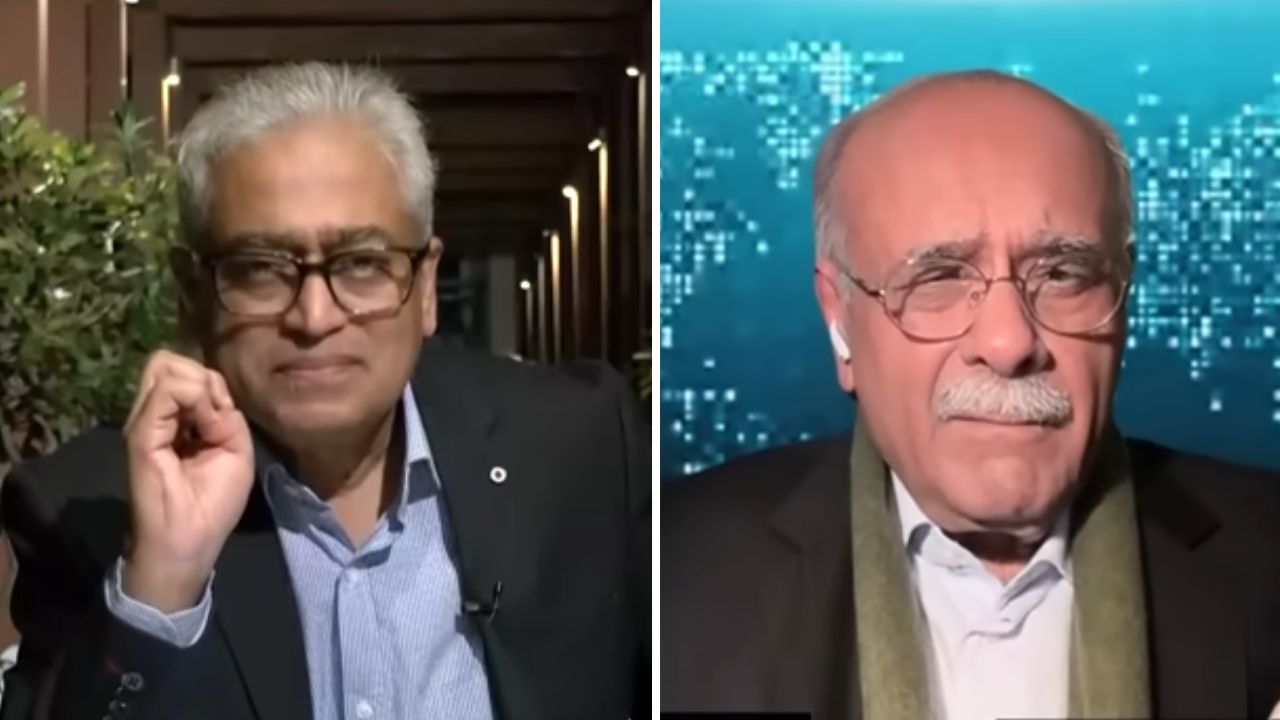
Former Pakistan Cricket Board (PCB) chairman Najam Sethi has defended Pakistan’s boycott of their T20 World Cup match against India, calling it a calculated move that forced the ICC to back down rather than an impulsive decision.
Speaking to India Today’s Rajdeep Sardesai, Sethi revealed that Pakistan’s 15-day boycott notice was deliberately designed to create negotiating space with the ICC and Bangladesh.
“Pakistan looked at all the angles. They knew that there could be no sanctions. They consulted the top lawyers at home and abroad,” Sethi said. “And there are precedents that made it clear to them that they were on a very strong wicket. And at best, they would lose a point, no more than that.”
“Pakistan knew that the broadcasters had the ICC, as it were, on a cold slab,” he said. “As far as the question on resources, there was a time when Pakistan used to rely on the ICC and many other boards too, but not anymore. Now the PSL has grown in a big way, and we earn more money from the PSL than from the ICC,” Sethi responded.
The former PCB chief claimed the ICC quickly realised Pakistan’s legal position was solid and initiated backdoor negotiations.
“The ICC has decided to back off a little bit, give Bangladesh some space,” he said. “That’s how Imran Khawaja, the deputy chief, got into action. That’s how the Bangladeshis got into action. That’s how they came to Pakistan to negotiate so that Pakistan could play this match.”
Sethi explained that Pakistan’s strategic notice period allowed them room to maneuver.
“One of the reasons that Pakistan gave a 15-day notice was that they wanted space with which to talk to the ICC and Bangladesh. And I think they had reason to believe that that would yield some results,” he said.
Sardesai challenged this interpretation sharply, arguing that Pakistan’s move was a terrible example of mixing cricket with politics. “It’s almost as if Pakistan had a problem with the fact that India, like it or not, is the world capital of cricket, the superpower of cricket,” he said. “The world wants to come to India and play here. They don’t want to play the PSL as much as they want to play the IPL. And maybe Pakistan simply wants to try and use these fora to express its anger against India dictating terms to the world. And that becomes an example of churlishness and mixing cricket and politics, isn’t it?”
Sethi pushed back hard against this characterisation. He acknowledged India’s financial clout but insisted the ICC should operate independently from the BCCI.
“The world definitely wants to come to India to play the IPL and all other fixtures. There’s no doubt about the fact that India is a major contributor to ICC revenues. No doubt. Nobody’s questioning that,” he said. “But what we are saying is this: the ICC is supposed to be an independent body. It’s not the BCCI. And so therefore, you need to have a system of equity.”
The former PCB chief pointed to his earlier opposition to the “Big Three” revenue formula, which eventually got scrapped.
“I have been working on this question of equity since the big three discussions. We were the only ones who didn’t want to sign on the dotted line. In the end, we were proven right that the big three formulas were all unjust. And eventually they had to scrap those and come to a new agreement,” he said. “And by the way, I might tell you, my sense is that there will be new formulas going forward, better, more equitable formulas.”
Sethi also highlighted what he sees as double standards in how cricket operates.
“Everybody wants to play in the PSL. Those who don’t get into the IPL are all too ready to play in the PSL. And so we realise that. But here’s the interesting point: India has never allowed Indian players to play in any league outside India. Isn’t that right?” he asked. “Pakistani players play in all the leagues outside Pakistan. We are welcoming. We want India to come and play in Pakistan in both ICC fixtures and bilateral fixtures. But India even refuses to play us in bilateral fixtures outside Pakistan.”
Sardesai countered by bringing up the security situation and terrorism concerns. “The reason is so long as the Pakistani state is seen as a sponsor of terror against India, what happened in Pahalgam, for example, last year, terror and cricket don’t go together,” he said. “You can’t have a bilateral series if Pakistan is going to be seen as a sponsor of terror or expect India to visit Pakistan and play against Pakistan. You need to create a conducive atmosphere, sir.”
Sethi fired back with counter-allegations and refused to accept the one-sided narrative.
“It takes two hands to clap. Do you know what the narrative is? The narrative is that your national security advisor, Mr. Doval, is on record for saying that we’re going to sort out Pakistan by sponsoring insurgency in Balochistan. That’s on record. You know it as well as I do,” he said.
“So now every time there’s a bomb blast that goes off and the insurgents do something in Balochistan, every day Pakistani newspapers are pointing the finger at India, much like India used to point the finger at Pakistan during those years when the insurgency was raging in Kashmir. So it’s basically tit for tat. You can’t accuse Pakistan of terrorism without evidence. On the other hand, when Pakistan accuses India of terrorism, you turn around and say, oh, that’s not right. So let’s not go there, please,” Sethi said.
Sardesai then pressed Sethi on the real motivations behind the boycott, questioning whether it was genuinely about Bangladesh being wronged or about political opportunism.
“Do you really believe that this was about Pakistan feeling anguished about Bangladesh being wronged? Or was it Pakistan seeing an opportunity to forge an axis with Dhaka in a way to somehow politically encircle India?” he asked. “This was therefore a political decision and you know that better than anyone else. This was not about cricket, it was about politics, Mr. Sethi. Would you agree or not?”
Sethi didn’t deny the political calculations and turned the tables on India instead. “That’s what was happening for 15 years in Bangladesh when Haseena [Sheikh Haseena] and Narendra Modi were in bed together. So now what’s happened is the tables have been turned. You have a new government that is pro-Pakistan. For 15 years you had a government that was pro-India. So Bangladesh was sitting with India all the time. Now Bangladesh is going to sit with Pakistan. That’s politics for you,” he said.
Sardesai appreciated Sethi’s candor while expressing concern about the implications. “I think you’re being very honest. I’m glad that you’re being honest about that. That’s politics. But whether a cricket field should become an arena for politics is the big question that all of us cricket lovers certainly will continue to ask,” he said before thanking Sethi for providing a Pakistani perspective on the issue.
Pakistan reversed its boycott decision this week, confirming the team will face India on February 15 as originally scheduled. The government’s statement came after Pakistan had initially announced the boycott in solidarity with Bangladesh.
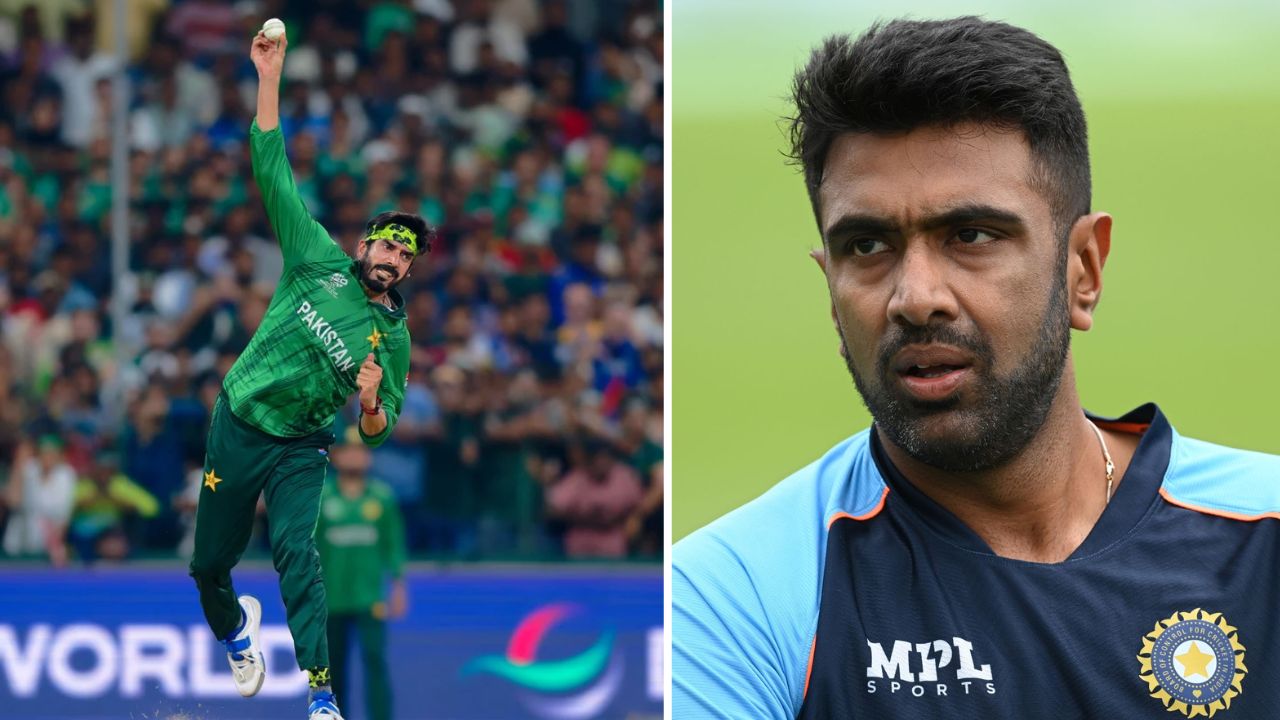
Mystery spinner Usman Tariq is once again under the microscope after Pakistan’s win over the USA in the T20 World Cup 2026.
As per the details, internet and cricketing experts, especially those from India, have a lot to say about Tariq’s unconventional bowling action after he starred with three wickets for 27 runs.
Amid mixed reactions, former Indian spinner Ravichandran Ashwin has defended the 28-year-old, saying on-field judging of elbow flex is impractical and the issue needs clearer solutions.
“Okay, let me make it as clear as possible. Firstly, the legalities of his action can only be tested at an ICC bowling action testing Centre. Secondly, there is a 15° rule under which a bowler needs to keep his elbow and straighten it and to judge if a bowler is bowling within that 15° mark by the onfield Umpire is impossible. The only solution to that is having a real time in competition testing tool [sic],” Ashwin wrote on X.
Okay, let me make it as clear as possible. Firstly, the legalities of his action can only be tested at an ICC bowling action testing Centre.
Secondly, there is a 15° rule under which a bowler needs to keep his elbow and straighten it and to judge if a bowler is bowling within… pic.twitter.com/RbTkY6xJ3h
He added that it was a grey area and to accuse someone for utilising it was wrong.
“Finally, if the pause at the crease is legal or not, and that’s where I believe that it is entirely legal because that is his regular action,” he concluded.
Tariq’s bowling action is distinctive as he follows a normal run-up with a pause at release, almost coming to a complete stop before delivering side-arm, slinging off-breaks.
He has been reported twice before, first during the 2024 PSL and again in the next edition, however, was cleared both times.
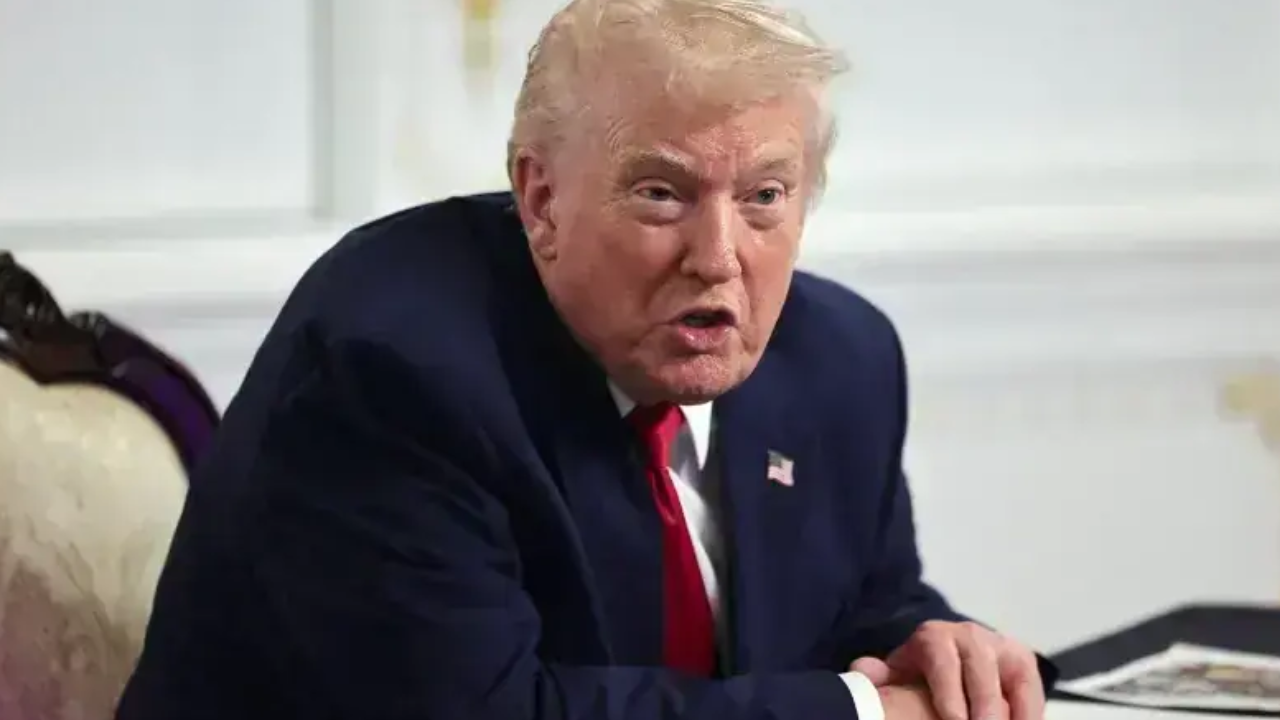
US President Donald Trump has claimed that ten aircraft were shot down during the May 2025 military conflict between Pakistan and India, while talking to Fox Business for an interview that aired on Wednesday.
During the interview, the host was discussing Trump’s “reciprocity policy” in trade and the use of tariffs, when the president said, “And that’s being very nice and gentle. Look, I settled eight wars. Out of the eight wars, at least six were settled because of tariffs.”
He further explained his approach, saying, “In other words, I said, ‘if you don’t settle this war, I’m gonna charge you tariffs because I don’t wanna see people getting killed.’ And they said, ‘No, what does this have to do with it?’ I said, ‘You’re gonna be charged.’”
On the Pakistan-India conflict, Trump said, “Like India and Pakistan would’ve been a nuclear war in my opinion. They were really going at it. Ten planes were shot down. They were going at it.”
Over the past ten months, Trump has repeatedly mentioned aircraft being shot down during the clash, first stating five jets, then raising the figure to seven in October and eight in November.
During the interview, Trump also cited Prime Minister Shehbaz Sharif as saying that he helped “save at least 10 million lives when he got us to stop fighting.” He added, “Because, see, they were going to nuclear, in my opinion. Without tariffs, that (ceasefire) wouldn’t have happened.”
He criticized other US presidents on trade, saying, “every single” president in the last 50 years was “bad on trade. But I’m not bad on trade. I’m real good on trade.”
US-Pakistan relations were highlighted during Trump’s Oval Office meeting with PM Shehbaz in September 2025, where the Pakistani leader thanked him for mediating the ceasefire in the four-day military conflict.
The conflict had escalated in April 2025 after a deadly terror attack on tourists in Illegally Occupied Jammu & Kashmir (IIOJK), which India attributed to Pakistan. Pakistan rejected the claims. Both sides exchanged retaliatory actions before a ceasefire was declared in May 2025.
Pakistan Tehreek-e-Insaf (PTI) leader Shandana Gulzar Khan recently criticised Lahore residents for celebrating Basant, drawing strong reactions from both supporters and critics. Her remarks came up after massive public attention on the city’s response to the long-awaited return of the traditional kite-flying festival.
When asked about PTI founder Imran Khan’s sister Aleema Khan’s statement that “Lahoris cannot be stopped from celebrating Basant,” Shandana Gulzar Khan said, “Lahore residents have no sense of shame. I am sorry, I have great respect for Aleema Khan, but the people celebrating during funerals should drown in shame. They should die.”
Her remarks refer to the celebrations held in Lahore coinciding with the funerals of worshippers killed in a suicide bombing at an Imambargah on the outskirts of Islamabad on February 6. The attack left several injured, with security sources confirming the attacker was a foreign national linked to Fitna-al-Khawarij.
Authorities had blocked the bomber at the entrance, after which he detonated himself. Hospitals in Islamabad, including PIMS, Polyclinic, and CDA Hospital, were put on emergency status to treat the injured.
Public reaction to Shandana’s statements has been divided. Some criticized her strongly, with one social media user calling her “the most disgraceful woman of Pakistan and a big liar. Her statements are always controversial and we strongly reject her.” Another commented, “She is extraordinary blunt,” while others expressed disappointment in her perspective, noting that her words seemed disrespectful toward Punjabis and questioning her sensibility despite her education.
However, not all reactions were negative. Supporters defended her blunt approach, with one saying, “I have never been so proud of someone for speaking the truth,” while another noted, “Truth hurts. She is absolutely right.”
Aleema Khan, whose family participated in the Basant celebrations, previously told reporters that the festival was celebrated at her Lahore residence despite political differences with the ruling PML-N. Her son, Shahrez, flew kites with his children on February 6, while she also flew kites marked with Imran Khan’s prisoner number, 804. She emphasized that Basant is a festival belonging to no political party and highlighted the city’s widespread enthusiasm, noting that children were also actively participating.
Lucy Harrison, a 23-year-old from Warrington in Cheshire, was shot dead by her father at his home in Texas after they argued earlier that day about US President Donald Trump, an inquest has heard.
Harrison was shot in the chest on 10 January 2025 at the property in Prosper, near Dallas. Police in the town investigated her death as possible manslaughter, however a grand jury in Collin County declined to indict Kris Harrison and no criminal case was brought.
The inquest opened at Cheshire Coroner’s Court where her boyfriend, Sam Littler, gave evidence. He told the court the couple had travelled to the United States for a holiday and described a “big argument” on the morning of January 10 about Trump, who was preparing to be inaugurated for a second term.
Littler said that during the dispute she asked him: “How would you feel if I was the girl in that situation and I’d been sexually assaulted?”
He said Kris Harrison responded that he had two other daughters living with him so it would not upset him that much. Lucy then became “quite upset” and went upstairs.
About half an hour before they were due to leave for the airport, Littler said Lucy was in the kitchen when her father took her by the hand and led her into his ground-floor bedroom. Around 15 seconds later, he heard a loud bang followed by Harrison shouting for his wife.
“I remember running into the room and Lucy was lying on the floor near the entrance to the bathroom and Kris was just screaming, just sort of nonsense,” Littler told the court.
In a statement read to the inquest, Kris Harrison said he and his daughter had been watching a news item on gun crime when he told her he owned a firearm and asked if she wanted to see it. He said they went into the bedroom where he kept a Glock 9mm handgun in a bedside cabinet.
“As I lifted the gun to show her I suddenly heard a loud bang. I did not understand what had happened. Lucy immediately fell,” he said, adding he could not recall whether his finger was on the trigger.
Harrison said he had previously attended rehabilitation for alcohol addiction and had “briefly lapsed” on the day of the shooting, drinking about 500ml of white wine because he was emotional about his daughter leaving.
At the outset of the hearing, Ana Samuel, representing Kris Harrison, asked Coroner Jacqueline Devonish to step aside from the case. She argued that a fair-minded observer might conclude there was a “real possibility she was biased” and said the inquest had been conducted “in a manner more akin to a criminal investigation than a fact-finding inquiry.”
The application was challenged by Lois Norris, who represents Lucy Harrison’s mother, Jane Coates. Norris described the move as an “ambush by Mr Harrison’s legal team” and told the court that Kris Harrison was “the person in the room who shot Ms Harrison” and the only person present when the shooting occurred.
The inquest was adjourned until Wednesday, when the coroner is expected to deliver her conclusions.
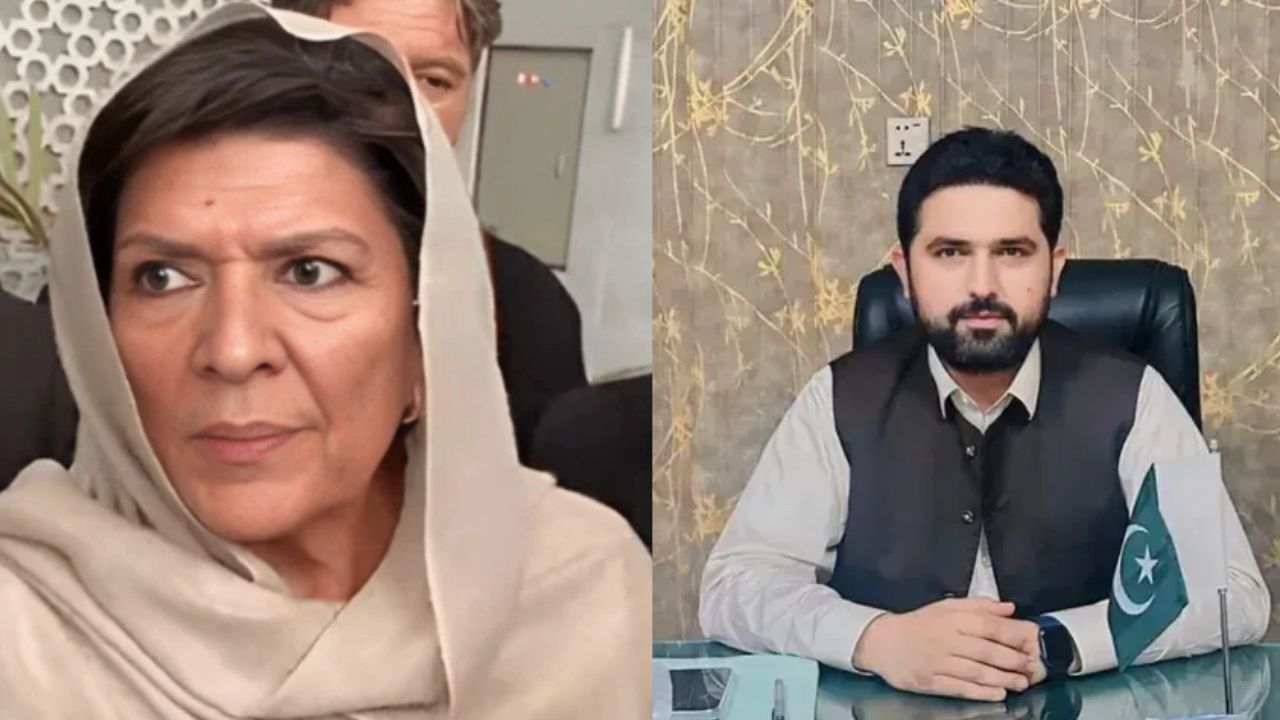
Courts in the twin cities on Tuesday issued non-bailable arrest warrants in two separate cases involving senior Pakistan Tehreek-e-Insaf (PTI) figures, including Aleema Khanum, sister of party founder Imran Khan, and Khyber Pakhtunkhwa Chief Minister Sohail Afridi.
An Anti-Terrorism Court (ATC) in Rawalpindi issued a non-bailable arrest warrant for Aleema Khan in connection with a PTI protest case stemming from the November 26 demonstrations. The case was registered at Sadiqabad police station.
ATC Judge Amjad Ali Shah ruled that there was no legal justification for Ms Khan’s absence from court proceedings, noting that she neither appeared before the court nor sought an exemption. Her counsel, Faisal Malik, was also absent, prompting the court to proceed with the hearing in their absence.
The court accepted Special Prosecutor Zaheer Shah’s request to include National Counter Cyber Crime Investigation (NCCI) official Salman Niaz as a prosecution witness and adjourned the hearing until Wednesday (today).
Earlier, the same court dismissed Ms Khan’s plea seeking the removal of terrorism charges and rejected her challenge to the court’s jurisdiction under the Anti-Terrorism Act (ATA). Judge Shah ruled that the case fell within the ambit of the ATA, rejecting the defence’s argument that protest-related cases should not be tried in an anti-terrorism court.
According to the prosecution, Ms Khan relayed a message from her brother Imran Khan from Adiala Jail, allegedly calling for nationwide protests that later turned violent.
Special Prosecutor Zaheer Shah argued that the Faizabad protest resulted in injuries to police personnel and that gunfire struck a police van, actions which, he said, met the legal threshold for terrorism.
The prosecution also accused the defence of employing delaying tactics, including repeated adjournment requests citing a lawyers’ strike.
During earlier proceedings, the court ordered the unfreezing of bank accounts belonging to the Shaukat Khanum Memorial Trust and Namal University, clarifying that prosecutors had never sought their freezing.
The November 26 protests saw PTI supporters march towards Islamabad despite government restrictions, leading to clashes with security personnel in the Red Zone.
Following the unrest, multiple cases were registered under the Pakistan Penal Code (PPC) and Section 7 of the Anti-Terrorism Act at Taxila, Sadiqabad and Naseerabad police stations. Proceedings in the Sadiqabad case are ongoing at the ATC Rawalpindi.
Separately, an Islamabad court issued a non-bailable arrest warrant for Khyber Pakhtunkhwa Chief Minister Sohail Afridi in a case related to allegedly misleading statements against state institutions and damage to their reputation.
The case was registered by the National Cyber Crime Investigation Authority (NCCIA) under the Prevention of Electronic Crimes Act (PECA ), 2016, following allegations that the chief minister made false and defamatory claims against state institutions.
During the hearing, Senior Civil Judge Abbas Shah noted that CM Afridi had once again failed to appear despite repeated summons. The court subsequently ordered his immediate arrest and directed law enforcement authorities to ensure his production before the court. The hearing was adjourned till February 21.