Blog

  • Afghan refugees’ repatriation to begin today as voluntary return deadline ends

    Afghan refugees’ repatriation to begin today as voluntary return deadline ends

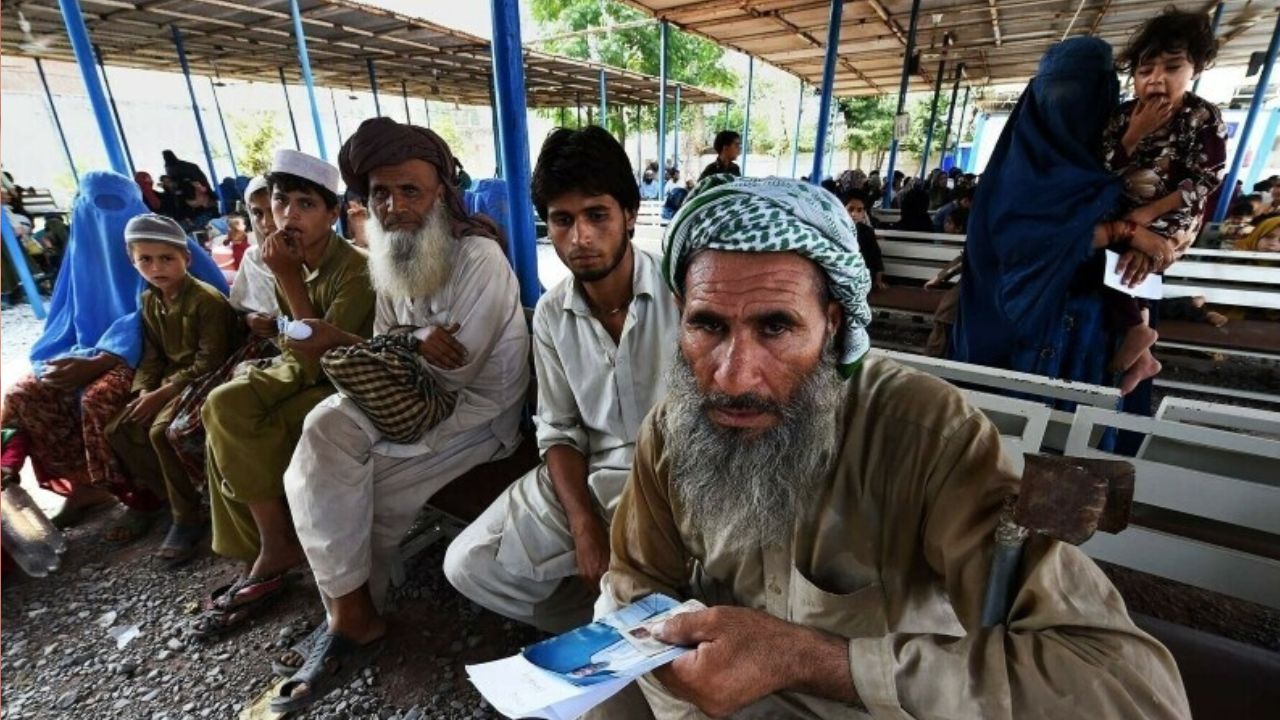
    The process of repatriation for Afghan refugees residing illegally in Pakistan is set to begin today (Tuesday) as the March 31 deadline for voluntary return has expired.


    Pakistan launched the deportation drive in 2023 following a spike in suicide attacks that the government believes were carried out by Afghan nationals. Islamabad also blamed them for smuggling, militant violence, and other crimes.

    Sources affiliated with the Khyber Pakhtunkhwa Home Department said that the deportation of Afghan refugees will commence today (April 1).

    Despite requests from the Taliban government, the federal government decided last week not to extend the deadline for the deportation of Afghan refugees.

    The government also requested the provincial authorities’ records of Afghan students in KP by March 27 to update the Foreign National Security Cell’s dashboard, which tracks foreign nationals.

    Meanwhile, officials in the Khyber district say that temporary camps have been set up in Landi Kotal and Peshawar to facilitate the refugees’ repatriation.

    According to a report by Radio Pakistan, a total of 878,972 Afghans residing illegally in Pakistan have returned to their home country so far.

    Human rights organisation Amnesty International has called on Pakistan to revoke its “opaque” Illegal Foreigners Repatriation Plan, which involves the deportation of Afghan citizens and other undocumented immigrants.

    In a statement, Amnesty warned that Islamabad’s March 31 deadline for Afghan refugees would further worsen their hardships.

    It merits mention that Pakistan is home to 2.1 million documented Afghan refugees, in addition to hundreds of thousands of undocumented Afghan nationals who have been living in the country for decades.

    “Out of the total 2.1 million, 1.3 million Afghan refugees are those who have obtained Proof of Registration Cards. Over 52% of them are in KP,” said United Nations High Commission for Refugees (UNHCR) spokesperson Qasier Afridi.

    He added that around 800,000 Afghans have obtained Afghan Citizen Cards (ACC), with the majority residing in KP.

    The country has hosted millions of Afghans for nearly five decades. Hundreds of thousands have returned to their homeland in recent years, yet over 2.1 million still reside in KP and other provinces.

    Pakistani authorities set March 31 as the deadline for all illegal Afghan nationals, including those holding ACC cards, to return to their country.

    There are tens of thousands of Afghans who were born in Pakistan and have hardly ever visited their homeland.

    Many are deeply concerned as the deadline approaches, particularly during the holy month.

    Peshawar hosts the highest number of Afghan nationals of any city. Thousands run their own businesses, while others have been employed in the city for decades. They reside in various urban, suburban, and rural areas alongside the local population.

    In 2023, the government had set an October 31 deadline solely for unregistered foreigners, after which a large number of undocumented Afghans returned to their homeland via Torkham and other border crossings.


  • Four relatives who ‘gang-raped, murdered’ 9yo girl, shot dead in police custody

    Four relatives who ‘gang-raped, murdered’ 9yo girl, shot dead in police custody

    Four accused in the case pertaining to the gang-rape and murder of a 9-year-old girl in Bahawalpur were killed in custody following an attack on a police vehicle, officials said.

    According to reports, the accused were killed by their accomplices’ firing on a police party near Southern Bypass when the suspects were being transported for recovery in connection with the case.

    Police said they were attacked by motorcyclists within the limits of Saddar Police Station, leading to an alleged encounter with the gunmen in darkness, resulting in the death of all four accused.

    The suspects, identified as Umar, Ans, Kamran and Mahmood, were relatives of victim Fiza Bibi, a student of class three.

    The police had arrested the accused two days ago under the supervision of ASP Agha Fasihur Rehman, with SHO Rao Shehzad Babar and his team successfully tracing the culprits following a DNA match.

    According to reports, the perpetrators – two uncles and two cousins of the victim – assaulted the little girl and then slit her throat.

    A special investigation team headed by ASP (Sadar) Circle had been formed to conduct investigation into the case.

    Fiza Bibi had gone missing when she left her house to fetch water from a nearby water pump. The family, along with locals, were looking for the minor when they had spotted her coming from a nearby agricultural field, bleeding from the neck. The girl had passed away shortly after.

    Following the incident, Bahawalpur DPO Asad Sarfraz Khan had assigned ASP Agha Fasihur Rehman and SHO Rao Shehzad Babar the task of tracking down the perpetrators.

    The investigation was carried out with the help of the Forensic Science Agency and Crime and Cyber Division (CCD). The murder weapon was also recovered.

  • PAKvNZ: Chapman ruled out of second ODI

    PAKvNZ: Chapman ruled out of second ODI

    Star Kiwi batter Mark Chapman was ruled out of the second ODI against Pakistan after suffering a hamstring injury.

    According to reports, Tim Seifert was inducted into the Black Caps squad in place of injured Chapman.

    Champan had challenged Pakistan bowlers in the first ODI at the Mclean Park in Naiper and went on to score his career best 132, helping the Kiwis put Pakistan on the backfoot after early dominance.

    The left-hander showcased his dedication and put in all the hard work to frustrate the Pakistani bowlers.

    Chapman’s masterclass allowed other players to further treat the Pakistani bowlers with utter contempt, as the debutant, Muhammad Abbas, did by notching the fastest 50.

    Pakistan will take on New Zealand in the second ODI at Seddon Park in Hamilton tomorrow (Wednesday).

  • Brathwaite quits as West Indies Test skipper, Hope takes white-ball charge

    Brathwaite quits as West Indies Test skipper, Hope takes white-ball charge

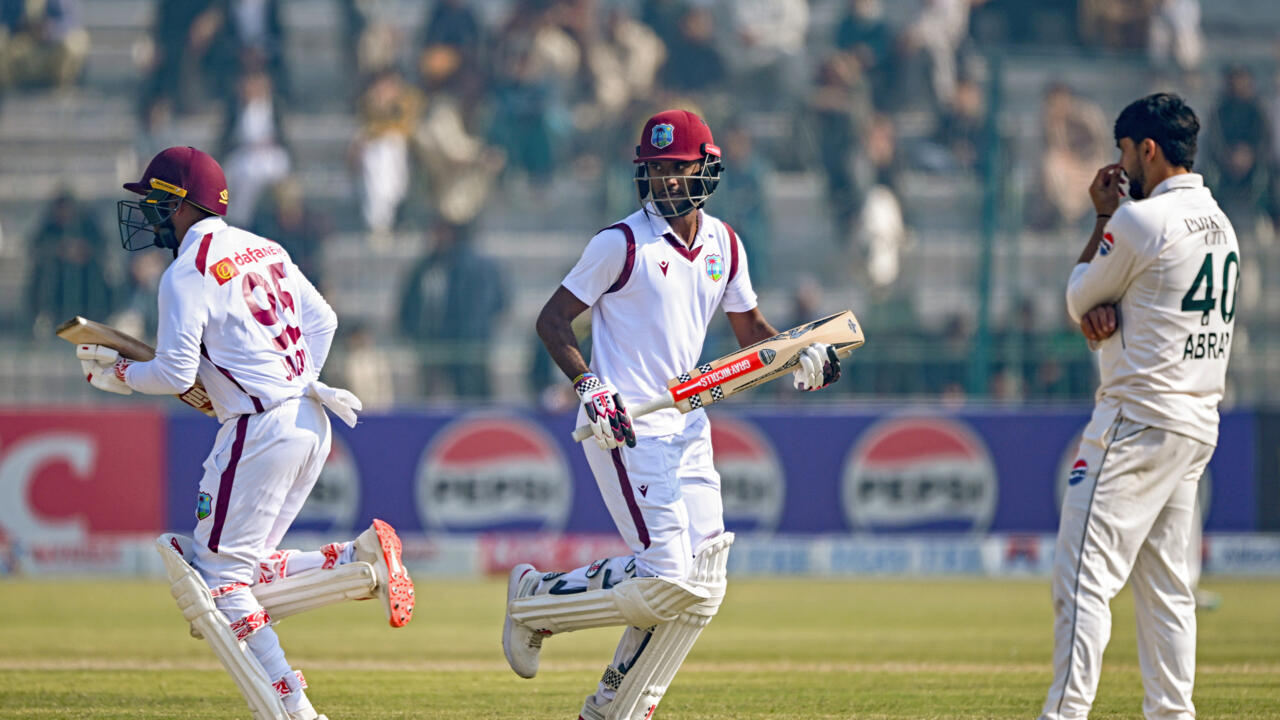
    Kraigg Brathwaite quit as West Indies Test captain on Monday after four years in charge while ODI skipper Shai Hope was handed leadership of the T20 team, officials said.

    The 32-year-old Brathwaite, who is two matches shy of reaching the 100-Test mark, led the team to a first Test victory in Australia in 27 years with an eight-run win in Brisbane last year.

    Earlier this season, he was in charge when the West Indies won a Test match in Pakistan for the first time in nearly 35 years.

    A dogged and disciplined opening batsman, Brathwaite has accumulated 5,935 runs in Tests with 12 centuries and 31 fifties but at an average of just over 33.

    He is also renowned for feats of patience, batting for the best part of 16 hours over two innings to secure a draw with England at Barbados in 2022.

    “Kraigg Brathwaite has been an outstanding leader for our Test team, guiding the squad with discipline, resilience, and a deep understanding of the game,” said West Indies director of cricket, Miles Bascombe.

    “His contributions have been invaluable, and under his leadership, we have witnessed historic moments that will be remembered for years to come.”

    Meanwhile, Hope replaces Rovman Powell, in charge since 2023, as T20 captain.

    Hope, 31, has played 133 ODIs and 39 T20 internationals, scoring more than 6,000 runs over both formats.

    He has 17 centuries in ODI cricket.

    “Shai Hope’s appointment signals a progressive shift for West Indies cricket,” said head coach Darren Sammy.

  • After Karachi, earthquake rocks Balochistan

    After Karachi, earthquake rocks Balochistan

    Hours after tremors were felt in Karachi, an earthquake jolted Balochistan’s Barkhan district early Tuesday morning.

    According to the US Geological Survey, the earthquake measuring 3.9 on the Richter scale occurred at a depth of 12 kilometres. The epicentre was located 59 kilometres northwest of Barkhan. 

    However, no immediate reports of damage were received.

    On first day of Eid, tremors were also felt in various areas of Karachi around 4 pm. The Meteorological Department noted that the earthquake in the port city had a magnitude of 4.7, with the epicentre situated 75 kilometres north of the provincial capital.

    No damage or injuries were reported.

    It merits a mention that the tremors come within days of the deadly Myanmar earthquake that has so far claimed 2,000 lives.  Rescuers are desperately searching for survivors more than three days after the powerful 7.7 quake, toppling buildings as far away as the Thai capital Bangkok and sending tremors through nearby Chinese provinces.

    The first 72-hours after a quake are widely regarded as the “golden” window to reach victims buried alive under rubble – after that period the chances of survival without a water source diminishes rapidly.

    The epicenter was recorded in Myanmar’s central Sagaing region, near the former royal capital Mandalay, home to around 1.5 million people, as well as multiple historic temple complexes and palaces.

    Meanwhile, foreign aid and international rescue teams have started arriving in Myanmar after the military junta issued a rare plea for help.

  • Devastated Lebanon village marks Eid among its dead

    Devastated Lebanon village marks Eid among its dead

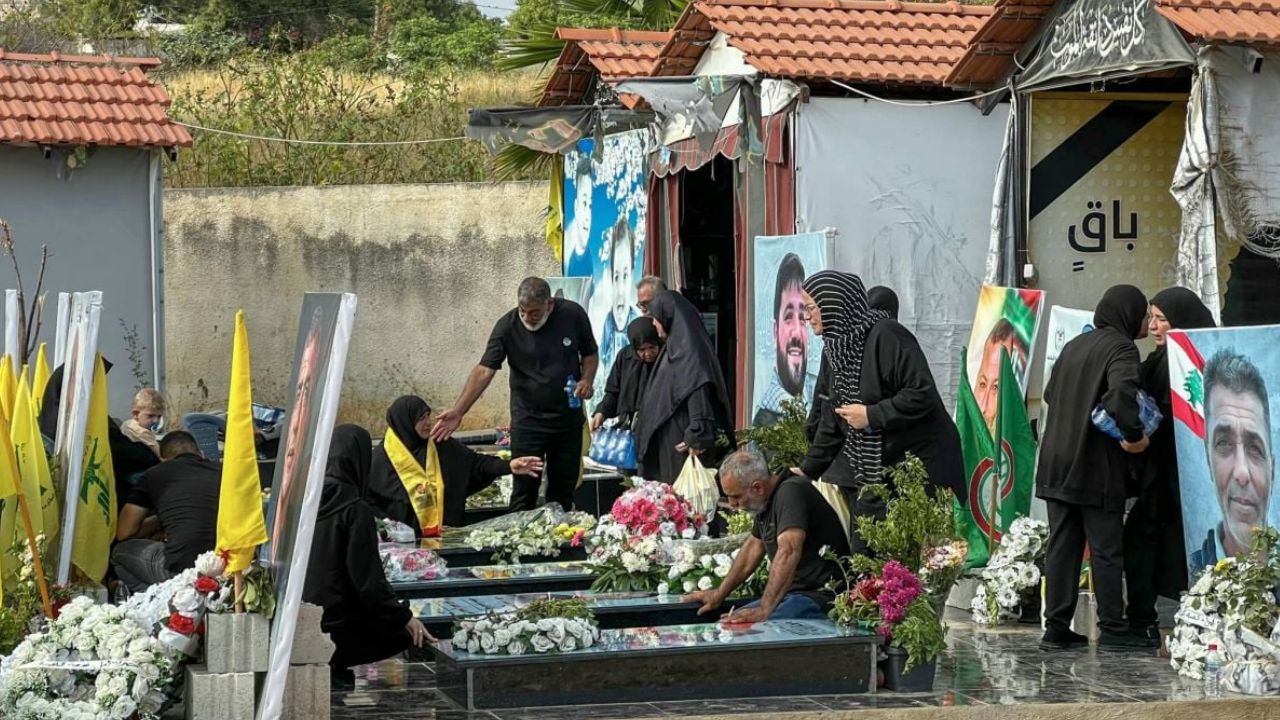
    In the war-devastated southern Lebanese village of Aitaroun on Monday, residents marked the Muslim holiday of Eid al-Fitr among their dead.

    Relatives crowded the village’s cemeteries to pray for the more than 100 residents, including fighters from Hezbollah, killed during the war between the militant group and Israel that ended with a fragile ceasefire in November.

    “We defied the entire world by being here in Aitaroun to celebrate Eid with our martyrs,” Siham Ftouni said near the grave of her son, a rescuer with an Islamic health organisation affiliated with Hezbollah.

    “Their blood permitted us to come back to our village,” she said.

    During the war, Lebanese state media reported that Israeli troops used explosives in Aitaroun and two nearby villages to blow up houses. The town square is heavily damaged.

    Few people have returned to live or to reopen businesses.

    The story is the same in other villages in southern Lebanon.

    In Aitaroun, more than 90 of the village’s dead — including some who died from natural causes — were buried only a month ago when Israeli troops pulled out.

    Under the ceasefire, Israel had 60 days to withdraw its troops from southern Lebanon, but it did not pull most of them back until February 18 after the initial deadline was extended.

    On Monday, beneath yellow Hezbollah flags, Ftouni and other women clad in black let their grief pour out.

    A young girl sat near the grave of a woman, holding her photo surrounded by flowers.

    Other pictures, of infants and young men in military uniform, lay on top of graves, and the sound of funeral orations triggered tears.

    Some visitors handed out sweets and other foods to mourners who came from further away.

    ‘Ashamed’

    “This year, Eid is different from the years before,” said Salim Sayyed, 60, a farmer originally from Aitaroun. “Aitaroun, which lost more than 120 martyrs including many women and children, is living a sad Eid.”

    He added: “The will to live will remain stronger than death.”

    The war saw the killing of Hezbollah’s leader Hassan Nasrallah and other commanders, and the group’s military infrastructure was devastated. Yet it continues to proclaim victory after more than a year of conflict that escalated to full-blown war and killed more than 4,000 people in Lebanon.

    Despite the ceasefire deal, Israeli troops remain inside Lebanon at five points it deems strategic.

    Both Hezbollah and Israel have accused each other of truce violations.

    Israel has regularly carried out often-deadly air raids in south and east Lebanon since the ceasefire, striking what it says are Hezbollah military targets that violated the agreement.

    On Friday Israel bombed southern Beirut for the first time since the truce after rockets were fired towards its territory.

    Imad Hijazi, 55, a taxi driver, said the security uncertainty was no deterrent to those wanting to spend Eid beside the graves of their loved ones.

    “The sadness was immense. Everyone was shaken by the loss of loved ones. I lost 23 members of my family in an Israeli strike,” Hijazi said.

    “I was ashamed to convey Eid greetings to my relatives or my friends.”

  • Trump says ‘real pain is yet to come’ for Houthis, Iran

    Trump says ‘real pain is yet to come’ for Houthis, Iran

    US President Donald Trump vowed Monday that strikes on Yemen’s Huthis will continue until they are no longer a threat to shipping, warning the rebels and their Iranian backers of “real pain” to come.

    “The choice for the Houthis is clear: Stop shooting at US ships, and we will stop shooting at you. Otherwise, we have only just begun, and the real pain is yet to come, for both the Huthis and their sponsors in Iran,” Trump said on his Truth Social platform.

    Shortly after Trump’s threat, Yemeni rebel media said two US strikes Monday hit the island of Kamaran, off the Hodeida coast.

    Huthi-held parts of Yemen have faced near daily attacks since the US launched a military offensive on March 15 to stop them threatening vessels in key maritime routes. The first day alone, US officials said they killed senior Huthi leaders, while the rebels’ health ministry said 53 people were killed.

    Since then, rebels have announced the continued targeting of US military ships and Israel.

    In his post Monday, Trump added that the Huthis had been “decimated” by “relentless” strikes since March 15, saying that US forces “hit them every day and night — Harder and harder.”

    Trump’s threat comes as his administration battles a scandal over the accidental leaking of a secret text chat by senior security officials on the Yemen strikes.

    It also comes amid a sharpening of Trump’s rhetoric towards Tehran, with the president threatening that “there will be bombing” if Iran does not reach a deal on its nuclear program.

    The Huthis began targeting shipping after the start of the Gaza war, claiming solidarity with Palestinians.

    Huthi attacks have prevented ships from passing through the Suez Canal, a vital route that normally carries about 12 percent of world shipping traffic. Ongoing attacks are forcing many companies into a costly detour around the tip of southern Africa.

    “Our attacks will continue until they are no longer a threat to Freedom of Navigation,” Trump said.

    The rising rhetoric from the Trump administration comes as it copes with the phone text scandal.

    The Atlantic magazine revealed last week that its editor — a well-known US journalist — was accidentally included in a chat on the commercially available Signal app where top officials were discussing the Yemen air strikes.

    The officials, including Trump’s National Security Advisor Mike Waltz and Defense Secretary Pete Hegseth, discussed details of air strike timings and intelligence — unaware that the highly sensitive information was being simultaneously read by a member of the media.

    Trump has rejected calls to sack Waltz or Hegseth and branded the scandal a “witch hunt.”

    “This case has been closed here at the White House as far as we are concerned,” White House Press Secretary Karoline Leavitt told reporters on Monday.

  • Mahira Khan channels her inner Chand Nawab in hilarious video

    Mahira Khan channels her inner Chand Nawab in hilarious video


    Renowned actress Mahira Khan has yet again proven that she’s not only a phenomenal performer but also a comedy queen.

    In a social media post, the actress recreated news reporter Chand Nawab’s iconic video with absolute perfection — right down to the unexpected passerby.

    Dressed in a stunning pink kurta shalwar, Mahira took to Instagram to share her take on the legendary reporter’s struggle at the Karachi railway station as he reported mass exodus of out-of-city folks back to their hometowns.

    “Eid aaney waali hai aur train station pe shoot thi – Chaand Nawab toh banta hai ♀,” she wrote.

    In the video, Mahira flawlessly mimiced Nawab’s famous line, “Karachi se log androon-e-mulk Lahore apnon mein Eid manane ke liye aa rahe hain…”

    And just like the original, a passerby makes an unexpected cameo—sealing the nostalgia factor.

    Fans couldn’t get enough of the clip, flooding the comments with laughter and love. “Too good and so cute ❤,” some said while others added, “Hamari Eid hogayi!”

    For those who may not remember, journalist Chand Nawab went viral in 2008 when a blooper-filled news segment of him fumbling during an Eid report took the internet by storm. His struggle became legendary, even inspiring a character in Bollywood’s Bajrangi Bhaijaan.

    With this hilarious tribute, Mahira just made Eid extra special for her fans.

  • ‘Posted it without thinking too much’; Aima Baig shares new singing video after a long break

    ‘Posted it without thinking too much’; Aima Baig shares new singing video after a long break

    Renowned singer Aima Baig has surprised her fans by sharing a new video on social media after a long break.

    Taking to Instagram, Aima Baig posted a video of herself singing the song We Can’t Be Friends by American singer and songwriter Ariana Grande. In the clip, she showcases her vocal talent in a soulful rendition of the popular track.

    Along with the video, Aima Baig wrote in the comment box, “Posted it without thinking too much. If you are listening, please don’t forget to put on your headphones.”

    Her latest post has delighted her 6.6 million Instagram followers, who are expressing their excitement and admiration for her singing.

    Many fans and fellow celebrities have flooded the comments section with praise, welcoming her return to social media.

  • Pakistan’s short-term foreign debt climbs to whopping $30.6bn

    Pakistan’s short-term foreign debt climbs to whopping $30.6bn

    Pakistan struggles with its financial woes as obligations on its debt cause fiscal pressures. As per credible reports, short-term debt has climbed to a staggering $30.6 billion in foreign repayments.

    On the other hand, domestic debt has reached a colossal 51 trillion rupees, causing a significant strain on the cash-strapped country’s already strained foreign reserves.

    Data from the State Bank of Pakistan (SBP) has revealed that Pakistan’s total debt continues its upward trend as both domestic and foreign debt show no signs of slowing down. As per reports, Pakistan is set to face repayment obligations which would result in a net outflow of $30.6 billion.

    Concerningly, these obligations are not scheduled over a longer period and, instead, are to be met in the coming months. Given how the SBP holds a meagre $10.6 billion in official foreign reserves, many wonder how Pakistan will avert the looming repayment crisis.

    Pakistan might have to restructure its debt holdings and request for rollovers and better repayment conditions. If lawmakers and authorities can successfully negotiate more favorable conditions, the economy might get some breathing room.

    The federal government has recently been working with commercial banks to restructure its liabilities to tackle the growing circular debt issue. However, the existing debt may be too large to tackle with micro-level restructuring arrangements. 

    According to reports, Islamabad’s domestic debt holdings have surged by a whopping 18.81 percent on a year-on-year (YoY) basis. This caused the government’s debt stock to sit at an uneasy 51.28 trillion rupees by February 2025.

    This marks a stark increase in debt from the same month last year, February 2024, as the government’s debt holdings stood at just 43.17 trillion rupees. This meteoric rise in debt is causing independent analysts to worry about the sustainability of Pakistan’s ever-rising credit demand. 

    On a month-on-month basis, however, the domestic debt value posted a marginal growth rate of 1.49 percent. This indicates a slowdown in borrowing in the short run after the government accumulated a large debt stock over the months leading up to February 2025. 

    While some consider the domestic debt growth to be concerning, the increase in permanent debt is arguably more alarming. Reports suggest that permanent debt has grown by a whopping 25.42 percent on a YoY basis to settle at 39.43 trillion rupees.

    For reference, permanent debt includes prize and federal government bonds. Moreover, floating debt, mainly made up of treasury bills, has also increased to 8.23 trillion.