Blog

  • We don’t give enough credit to Hania Aamir for her acting and brain, says Musaddiq Malek

    We don’t give enough credit to Hania Aamir for her acting and brain, says Musaddiq Malek

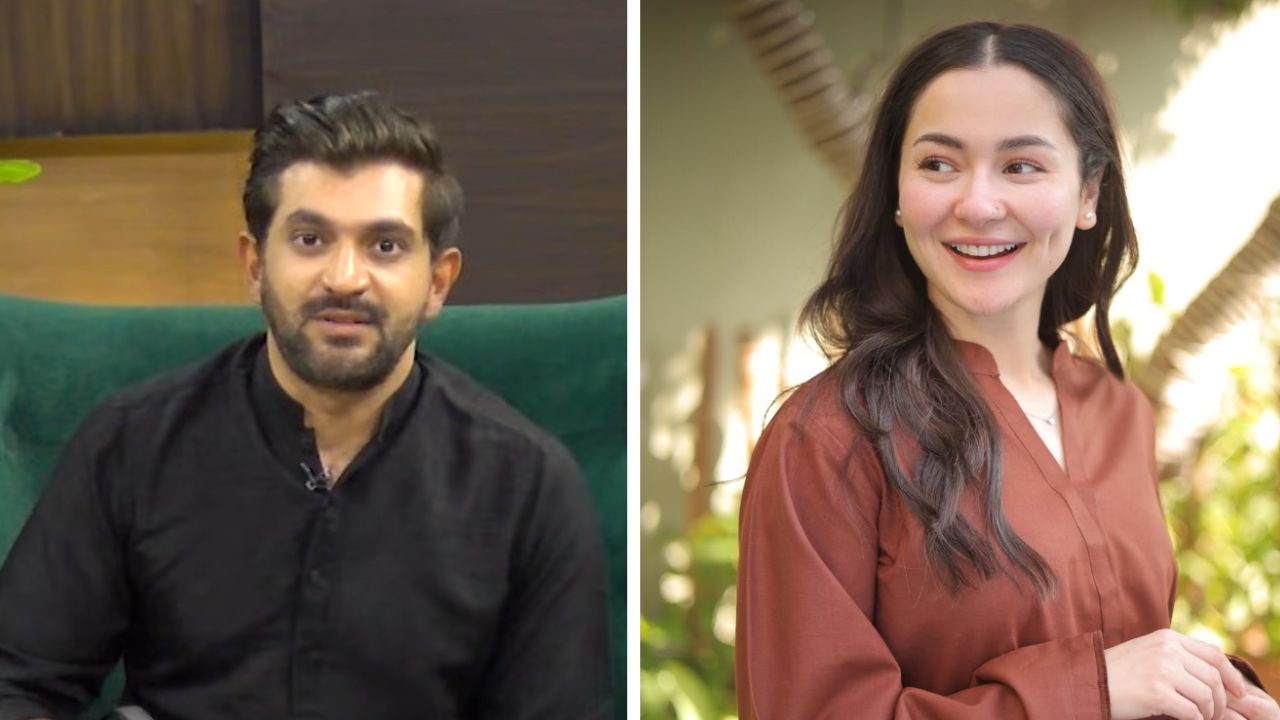
    Director Musaddiq Malek, who is currently directing Hania Aamir in the hit drama Meri Zindagi Hai Tu, recently defended the actress against those who undervalue her talent.

    In a recent interview about the drama’s cast, Malek said, “We don’t give enough credit to Hania Aamir for her acting skills and brain simply because she is pertty. I am speaking generally but being pretty comes with side effects, beauty with brain is a rare combination.”

    Fans quickly responded to his comments on social media with overwhelming support for the actress. 

    “Haniaaaa,” one fan wrote enthusiastically, while another commented that Hania is a versatile actress who is amazing. “Finally someone said it,” added a third fan, with others simply praising her as an amazing actress and agreeing with Malik’s observation.

    Hania Aamir currently stars alongside Bilal Abbas Khan in Meri Zindagi Hai Tu on ARY Digital, which premiered in late 2025 and has already crossed 600 million views on YouTube. Written by Radain Shah, the drama is on track to become 2026’s first Pakistani show to hit one billion views.

    Hania Aamir has built an impressive career with her first Lux Style Award for Best TV Actress coming for Kabhi Main Kabhi Tum in 2024, which she won in December 2025. 

    She gained widespread recognition for her roles in Mere Humsafar (2022), Mujhe Pyaar Hua Tha (2023), Anaa (2019), and Ishqiya (2020). She also made her film debut with Janaan (2016) and recently appeared in the Punjabi film Sardaar Ji 3 alongside Diljit Dosanjh.

    Meanwhile, Musaddiq Malek has established himself as both an actor and director in Pakistani entertainment, with his most notable directorial work including Habs (2022) and Noor Jahan (2024). 

    As an actor, he featured in noteworthy projects including Alif, Meray Pass Tum Ho, Kuch Unkahi and Noor Jahan. He also worked as an assistant director on major productions like Jawani Phir Nahi Ani 2 and London Nahi Jaunga.

  • Karachi cop shoots wife dead for ‘honour’

    Karachi cop shoots wife dead for ‘honour’

    A woman has been shot dead, allegedly by her husband, a serving police officer, in what authorities described as an ‘honour’ related incident in Karachi’s Shadman Town on Friday.


    Police said the 40-year-old woman was shot inside her home during a domestic dispute. 


    She was rushed to Abbasi Shaheed Hospital after the incident but later succumbed to her injuries.

    “After receiving the information, police immediately reached the scene and shifted the injured woman to the hospital, where she expired,” Senior Superintendent of Police (Central) Zeeshan Shafiq Siddiqi said.


    Police surgeon Dr Summaiya Syed told a private media outlet that the victim had sustained “two gunshot injuries to the torso, through and through”.


    According to SSP (Senior Superintendent of Police) Siddiqi, the suspect fled the scene following the shooting. 


    He identified the suspect as a serving police inspector currently posted with the Special Investigation Unit (SIU).


    The SSP added that this was the woman’s second marriage, adding that the suspect harboured doubts about his wife remaining in contact with her former husband.


    “CCTV footage has been obtained and concerted efforts are underway to arrest the alleged killer,” he stated. 

    The incident comes a day after another alleged so-called ‘honour killing’ in Karachi’s Sohrab Goth area, where a young couple was shot dead, police and rescue officials have said. 

    They said the bodies of a 30-year-old man and his 28-year-old wife were found inside a house in Lasi Goth, both bearing gunshot wounds.

    So called honour killings continued to claim the lives of women across Pakistan throughout 2024, driven by deeply entrenched notions of family honour and shame.

    Data released by the Human Rights Commission of Pakistan (HRCP) shows that such crimes remained widespread during the year, with Sindh and Punjab recording particularly high numbers. 


    From January to November 2024, at least 346 people were killed in ‘honour’-related incidents nationwide.

  • Egyptian squash player clashes with Pakistani referee during Karachi Open

    Egyptian squash player clashes with Pakistani referee during Karachi Open

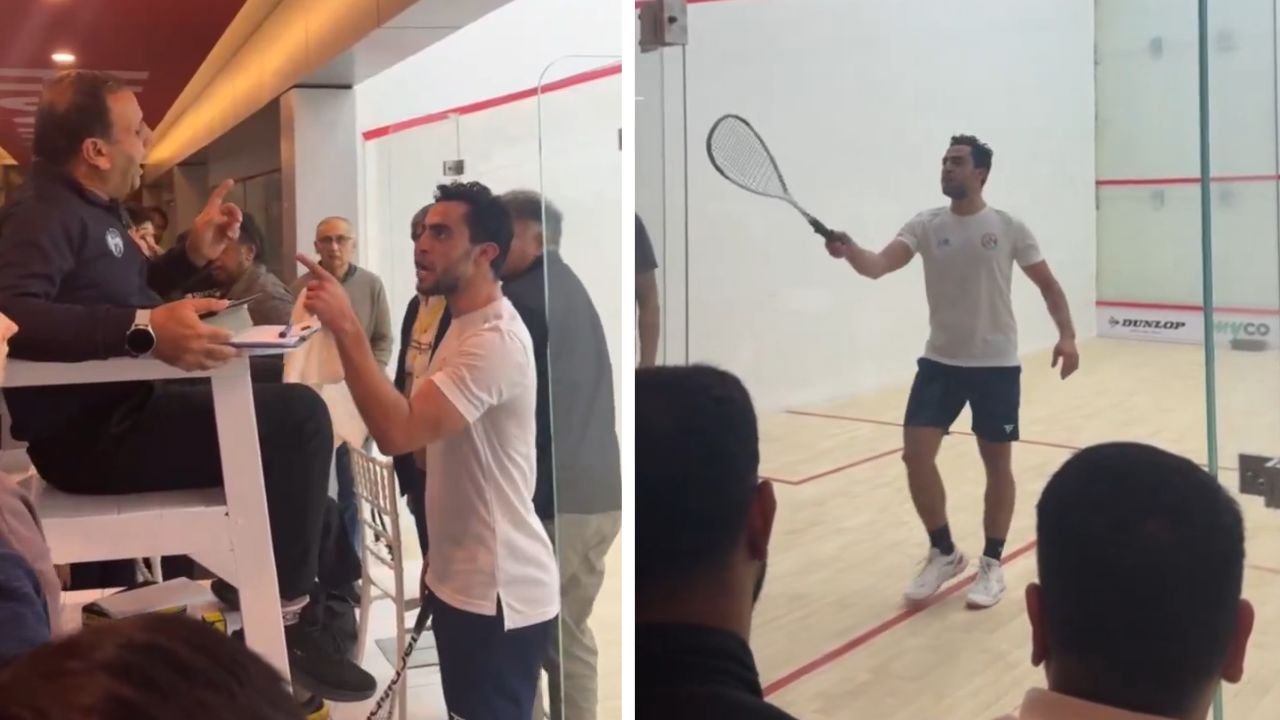
    World Squash Officiating (WSO) has released an official statement following a controversial match at the Karachi Open where Egyptian player Fares Dessouky received multiple conduct violations and ultimately lost by default.

    The incident occurred on January 7 during a Round of 16 match between Dessouky, ranked 15th in the world, and Pakistan’s Noor Zaman, the under-23 world champion ranked 38th. 

    The confrontation escalated when Dessouky questioned the referee’s nationality, creating a tense atmosphere on court.

    Dessouky challenged several calls throughout the match and repeatedly disputed decisions made by Pakistani referee Sajjad Khan. 

    The situation reached a breaking point in the fifth game when Dessouky, trailing 3-6, refused to accept the referee’s authority. Despite multiple warnings, he continued arguing and shouting from outside the court, prompting the referee to award the match to Zaman.

    WSO’s statement outlined the sequence of penalties Dessouky received: a conduct warning for dissent at 7-7 in the fourth game, a conduct stroke during the interval that gave Zaman a 1-0 lead to start the fifth game, another warning for racket abuse at 5-3, and finally a conduct match penalty at 6-3 for directing an audible obscenity at the official.

    The organization acknowledged one scoring error during the second game where Zaman incorrectly received two points instead of one. WSO will conduct a full review of the match and provide feedback to the referee while addressing the error with Dessouky.

    Refree Sajjad Khan also filed a formal report with the Professional Squash Association (PSA) regarding the incident. Dessouky shook hands with Zaman as he left the court.

    “Referees can make mistakes, but players need to maintain proper behavior,” Zaman said after the match, expressing disappointment at how it ended.

    Zaman’s tournament run ended in the quarterfinals on January 9, when he lost to Egypt’s Mohamed Elshorbagy, the fourth seed and world number 9, in a thrilling five-game match at DHA Creek Club.

  • Security forces kill 11 Indian-backed militants in KP’s North Waziristan, Kurram

    Security forces kill 11 Indian-backed militants in KP’s North Waziristan, Kurram

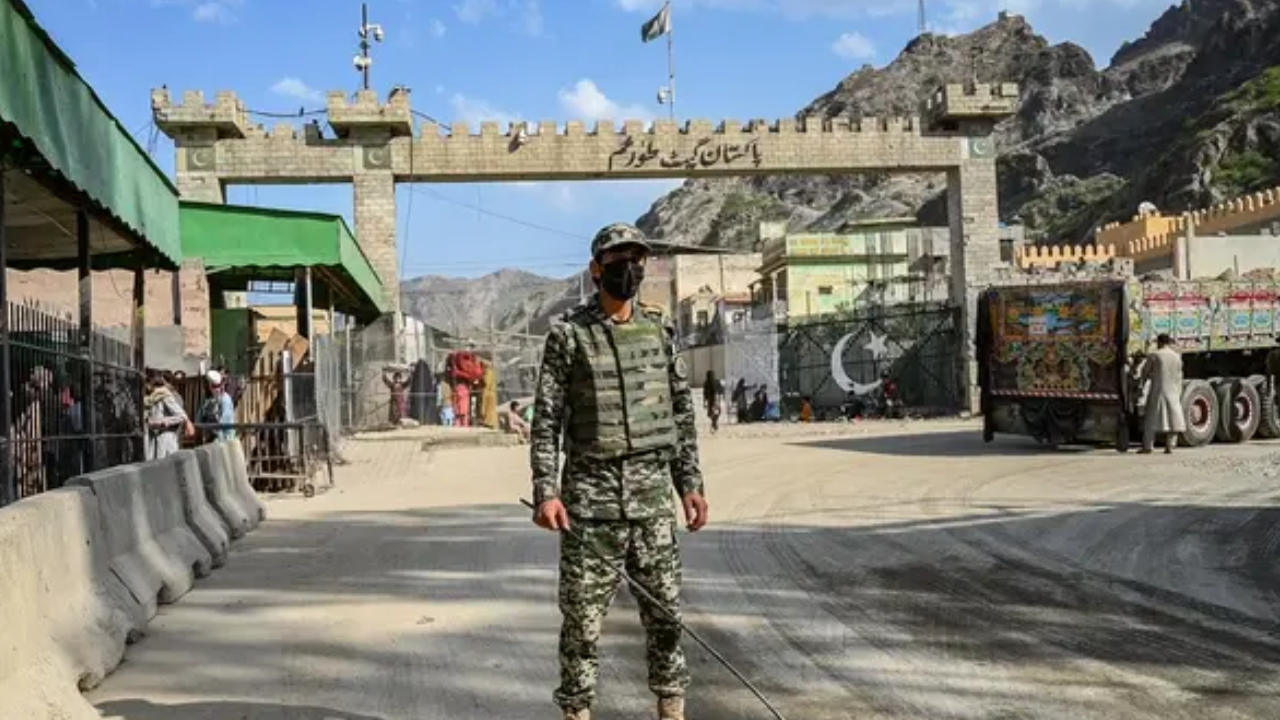
    Security forces have killed at least 11 militants in two separate intelligence-based operations in Khyber-Pakhtunkhwa on January 8, a statement issued by the Inter-Services Public Relations (ISPR) has confirmed. 

    The military has said that the militants belonged to Indian proxy Fitna Al Khwarij, a term it uses for the banned Tehreek-e-Taliban Pakistan (TTP).

    The ISPR claims that in response to reports of militant activity in the region, an Intelligence-Based Operation was carried out in the North Waziristan district. Six militants were killed by security personnel during the operation after an exchange of fire.

    In a separate incident, a joint intelligence-based operation was carried out by police and security forces in Kurram district. The operation resulted in the killing of five more militants, the statement said.

    Weapons and ammunition were recovered from the dead militants. ISPR has stated that the militants were “actively involved in numerous terrorist activities against the Security Forces, Law Enforcement agencies, and the target killing of innocent civilians”.

    The military added that sanitisation operations were being conducted in both areas to eliminate any remaining militants. 

    The ISPR further said the operations were part of a broader counterterrorism effort being carried out under the vision of “Azm-e-Istehkam”, which was approved by the Federal Apex Committee under the National Action Plan.

    The military described the current operation as a “relentless Counter Terrorism campaign” that will continue at full speed to eradicate the threat of foreign-sponsored and supported terrorism from the country.

    ISPR Director General Lieutenant General Ahmed Sharif Chaudhry stated earlier this week that Khyber-Pakhtunkhwa accounted for 80 percent of terrorist incidents in Pakistan.

    Additionally, he mentioned a growing “nexus between political and militant elements,” claiming that circumstances had made it possible for militant organizations to band together, create networks of facilitators, and consistently contest the authority of the state.

    Lt Gen Chaudhry said that the prevailing environment had broader implications for Pakistan’s internal security and had enabled extremist groups to operate with greater coordination in the province.

  • Türkiye seeks entry into Pak-Saudi defence pact:report

    Türkiye seeks entry into Pak-Saudi defence pact:report

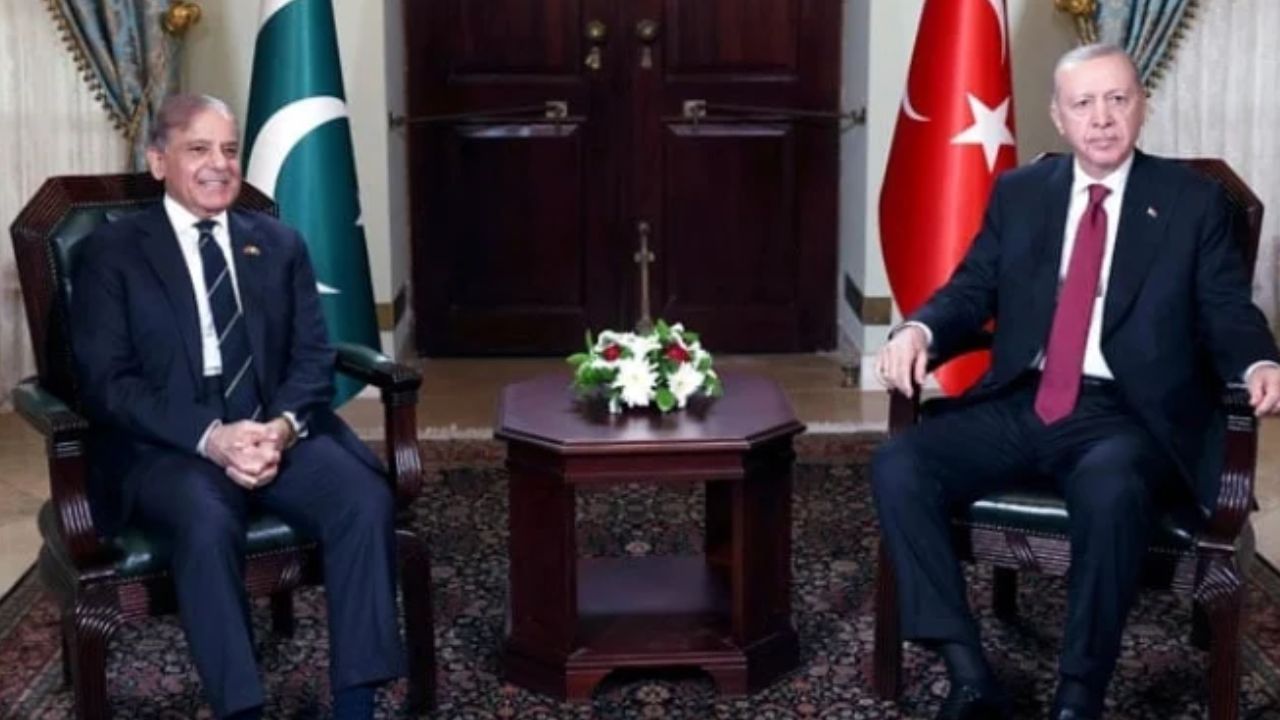
    Türkiye is seeking to join a mutual defence agreement between Pakistan and Saudi Arabia, a move that could reshape regional security dynamics across the Middle East and South Asia, reported on Friday.


    Citing people familiar with the matter, the news outlet reported that talks have progressed significantly and an agreement is “very likely”. 

    Pakistan and Saudi Arabia signed a Strategic Mutual Defence Agreement in Riyadh in September last year during Prime Minister Shehbaz Sharif’s visit, pledging that an attack on one would be treated as aggression against both.


    “The expanded alliance would make sense because Turkiye’s interests increasingly overlap with those of Saudi Arabia and Pakistan in South Asia, the Middle East and even Africa,” the Bloomberg report said.

    Nihat Ali Ozcan, a strategist at the Ankara-based think tank TEPAV (The Economic Policy Research Foundation of Türkiye), said that as the United States (US) prioritises its own interests and those of Israel in the region, changing dynamics and fallout from regional conflicts are prompting countries to develop new mechanisms to identify friends and foes.

    The report pointed to the complementary strengths each country brings to the table: Saudi Arabia’s financial clout, Pakistan’s nuclear capability, missile programme and manpower, and Türkiye’s expanding defence industry and developed defence industry. 


    Pakistan’s information ministry and Türkiye’s defence ministry declined to comment on the report, while Saudi authorities were not immediately available to respond to requests for comment.


    Bloomberg said Türkiye’s potential entry would underscore a new era in relations with Saudia Arabia.

    The report noted that the two countries are expanding defence and economic cooperation and recently held their first-ever naval meeting in Ankara, according to Türkiye’s defence ministry.

    It added that both Riyadh and Ankara share longstanding concerns over Tehran, while favouring diplomatic engagement over use of force.

    With regard to Pakistan, the report highlighted Türkiye’s growing military footprint, including the construction of corvette warships for the Pakistan Navy and upgrades to the Pakistan Air Force’s F-16 fleet.


    “Turkiye is already sharing drone technology with both countries, and now wants them to join its Kaan fifth-generation fighter jet program,” the outlet added, citing an earlier report.


    The trilateral discussions come in the wake of a ceasefire between Pakistan and India in May following a four-day clash between the nuclear-armed neighbours.


    Pakistan and Saudi Arabia have long maintained close ties rooted in defence cooperation, economic support and shared religious identity, with Riyadh providing financial assistance and energy supplies to Islamabad.


    Defence collaboration is also a central pillar of Pakistan–Türkiye relations. According to the Stockholm International Peace Research Institute’s 2023 (SIPRI) report, Türkiye is Pakistan’s second-largest arms supplier, accounting for 11 percent of its total arms imports.


    The defence partnership has grown significantly, with joint projects such as the Milgem warships, aircraft modernisation, and drone acquisitions deepening military collaboration.

  • ‘Will shoot first, ask questions later’: Denmark on Trump’s Greenland bid

    ‘Will shoot first, ask questions later’: Denmark on Trump’s Greenland bid

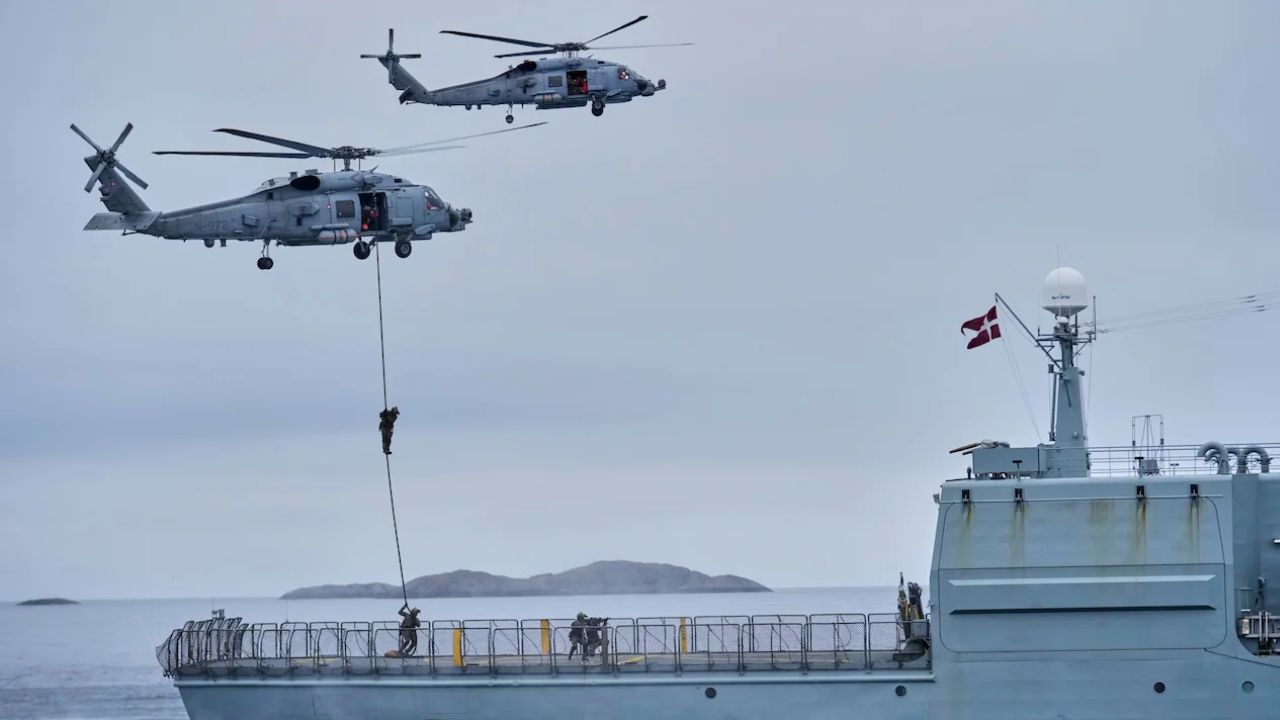
    Under the army’s rules of engagement, Danish soldiers would be instructed to shoot first and ask questions later if the United States (US) attempts to seize Greenland, it has emerged.


    As per the details, the directive dates back to 1952 and requires Danish forces to respond instantly to any invasion, without waiting for formal commands or political clearance. 


    According to a Danish newspaper, the rule states that in the event of an attack, “the attacked forces must immediately take up the fight without waiting for or seeking orders, even if the commanders in question are not aware of the declaration of war or state of war.”


    When asked the status of the order, Denmark’s defence ministry told the newspaper, “The order on precautionary measures for military defence in the event of attacks on the country and during war, remains in force.”


    The issue has gained renewed attention after President Donald Trump reiterated this week that he intends to annex Greenland, a territory governed by Denmark, and said that military force could be used if necessary.


    Denmark, which administers Greenland as an overseas territory, has said the island is “not for sale”. Trump’s remarks have shocked Denmark, Greenland’s government and the wider Nato (North Atlantic Treaty Organisation) alliance.


    European allies are now holding urgent discussions on how to respond to a possible US attack on Greenland, a move that experts say would likely bring an end to Nato.


    Speaking about the talks, French foreign minister Jean-Noël Barrot said: “We want to take action, but we want to do so together with our European partners.”


    A German government source separately told an international media outlet that Germany was “closely working together with other European countries and Denmark on the next steps regarding Greenland”.


    Later on Wednesday, Barrot said he had received assurances from US Secretary of State Marco Rubio that Washington was not planning an “invasion”.


    “I myself was on the phone yesterday with US Secretary of State Marco Rubio… who confirmed that this was not the approach taken… he ruled out the possibility of an invasion of Greenland,” Barrot said.


    According to sources cited by the Wall Street Journal (WSJ), Rubio has also briefed US politicians that threats against Greenland do not indicate an imminent invasion, and that the objective remains to buy the island.


    Those statements appeared to contradict comments made on Tuesday by Karoline Leavitt, Trump’s press secretary, who said that military action was “always an option”.


    An international media outlet reported on Wednesday that US officials have been increasingly discussing a takeover of Greenland with European counterparts as a “concrete” possibility.

    A senior European diplomat told the newspaper that there had been a noticeable shift in tone in recent days.


    Former French premier Dominique de Villepin warned that a US invasion of Greenland would fundamentally change relations between Washington and Europe’s Nato members.


    “In no case should Europe accept any damage to European sovereignty,” Villepin told an international media outlet adding that a Nato member attacking another would be “unprecedented”.


    “And of course, if Donald Trump goes forward, the status of the US will go from adversary or rival to the one of enemy,” he said.

  • HEC announces fully-funded Chinese scholarships; here’s how to apply…

    HEC announces fully-funded Chinese scholarships; here’s how to apply…

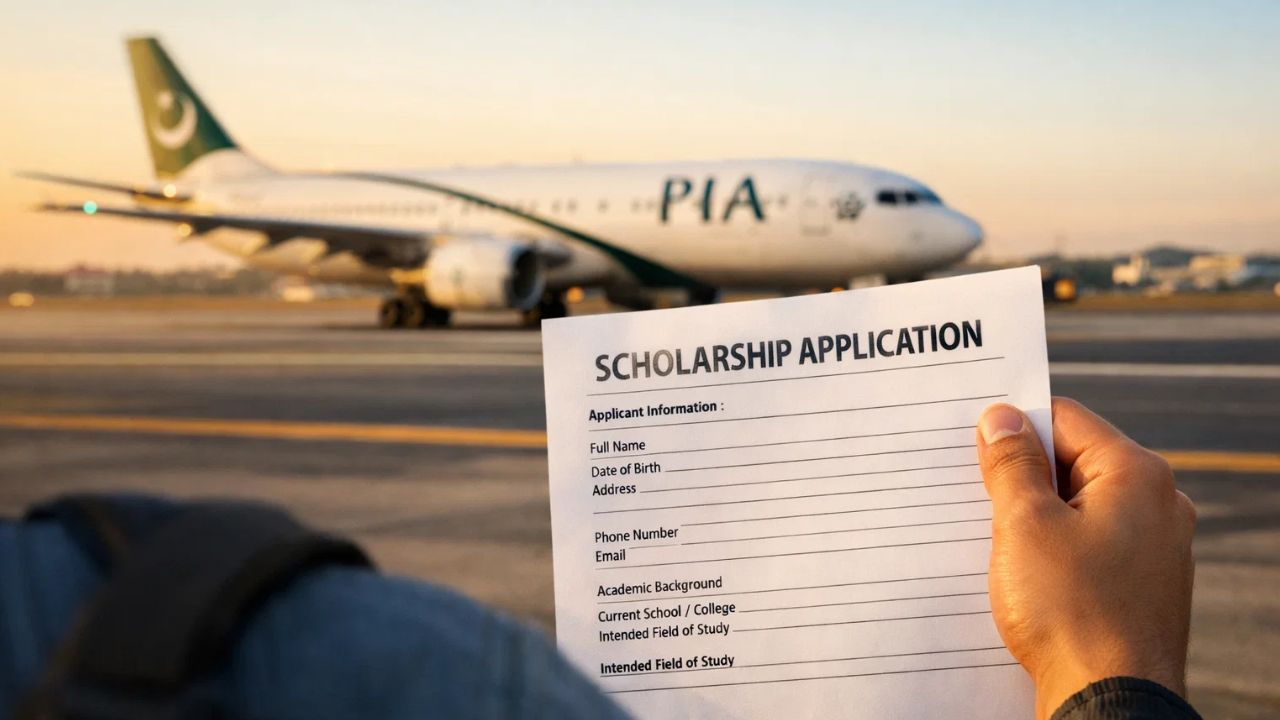
    The Higher Education Commission (HEC) has announced the Chinese Government Scholarship High-Level Postgraduate Program 2026 (Type B) for Pakistani students seeking admission to Master’s and PhD programmes at Tianjin University in China.

    According to details shared by HEC, the fully-funded scholarship targets outstanding Pakistani students from engineering, sciences, management, humanities and social sciences. 

    The scholarship aims to attract high-performing international students to pursue postgraduate education in China. The deadline to apply for the programme is January 18, and you can apply by visiting this link.

    .

    Tianjin University currently offers 104 Master’s and 125 PhD programmes. Out of these, 29 Master’s and 55 PhD programmes are taught entirely in English, providing wider access to international students.

    Under the scholarship, selected candidates will receive full tuition fee coverage, on-campus accommodation or a housing subsidy, comprehensive medical insurance and a monthly stipend of CNY 3,500 (approximately PKR 140,000) for both Master’s and PhD students.

    The scholarship does not cover international airfare.

    The funding will remain valid for the full standard duration of the degree, subject to satisfactory academic performance throughout the study period.

    To qualify, applicants must hold a minimum GPA of 3.2 out of 4.0 or its equivalent. PhD applicants must also have at least one published academic research paper. 

    For English-taught programmes, candidates must submit an International English Language Testing System (IELTS) score of at least 6.0 or a Test of English as a Foreign Language (TOEFL) score of 80. Applicants for Chinese-taught programmes must hold an HSK Level 5 certificate with a minimum score of 180.

    Applicants must also meet the specific academic and language requirements of their selected programme.

    HEC has clarified that it will not bear any financial liability related to the scholarship.

  • Non-customs paid vehicles worth Rs158m seized in Quetta

    Non-customs paid vehicles worth Rs158m seized in Quetta

    Customs Enforcement in Quetta seized multiple non-customs paid vehicles worth an estimated Rs. 158 million from a showroom on Saryab Road. The operation was intelligence-based.

    The confiscated vehicles included a Toyota Revo 2020, three Toyota Land Cruisers, and a Honda Civic Hybrid 2007. All vehicles were non-customs paid, meaning they were imported without paying required duties and taxes.

    Federal Board of Revenue (FBR) said this operation underscores the continued commitment of Customs Enforcement Quetta to curb smuggling, safeguard government revenue, and protect the national economy.


    In recent months, the FBR has intensified its crackdown on non-customs paid vehicles nationwide. Such vehicles result in revenue losses for the national economy and affect legitimate businesses in the automobile sector.


    Customs authorities have conducted similar raids in major cities as part of a nationwide enforcement campaign. The FBR reiterated its resolve to eliminate smuggling, illicit trade, and corrupt practices.

  • Tara Sutaria, Veer Pahariya break up after viral concert moment: reports

    Tara Sutaria, Veer Pahariya break up after viral concert moment: reports

    Indian actors Tara Sutaria and Veer Pahariya have reportedly ended their relationship, Indian media reports have claimed. 

    Several Indian media outlets state that the couple quietly broke up, although the exact reason behind the split remains unclear. The timing of the reports has drawn attention, as they surfaced just days after a viral incident at AP Dhillon’s Mumbai concert.

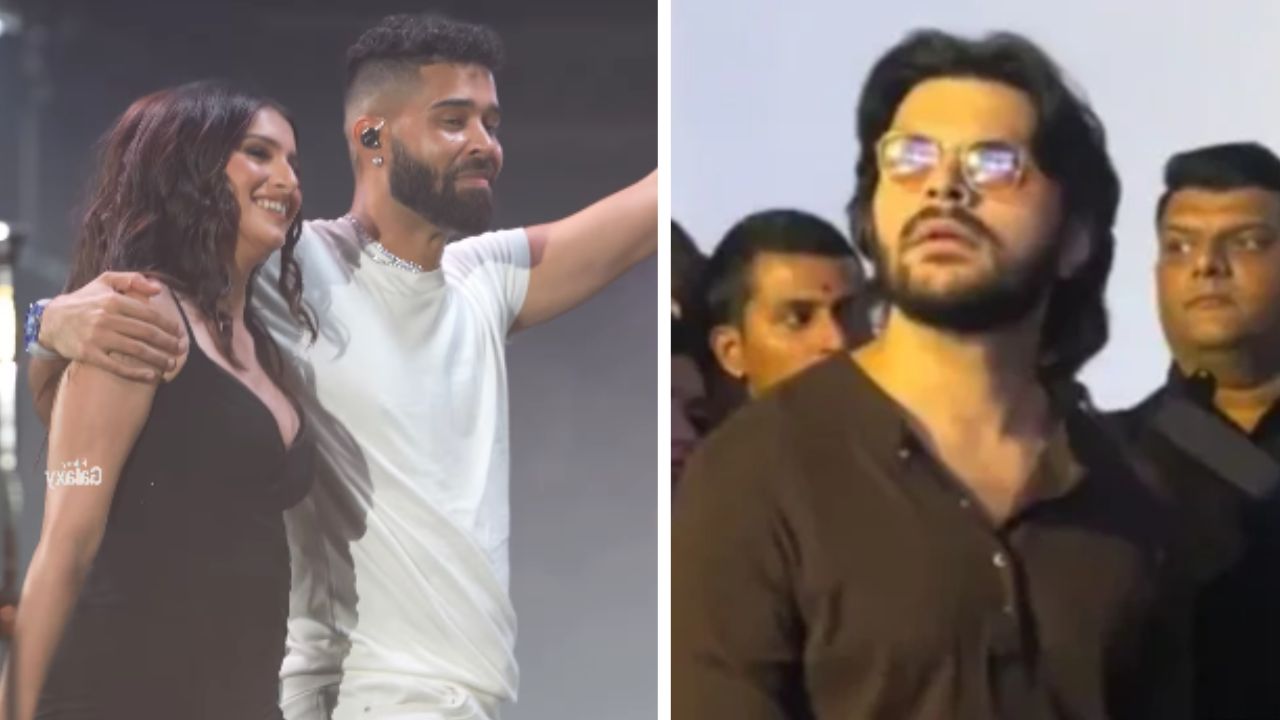
    During the event, Tara Sutaria joined AP Dhillon on stage for a performance. A video from the concert later went viral on social media, showing the singer hugging Tara and kissing her on the cheek, sparking widespread discussion online. 

    The matter gained further attention when another clip emerged on social media showing Veer Pahariya in the audience during the same concert. Social media users highlighted his surprised and visibly uncomfortable reaction while watching the moment on stage.

    Later, social media influencer Orry shared an unedited video in which Veer Pahariya appeared cheering for Tara Sutaria and AP Dhillon. 

    Veer also reposted the clip on his Instagram story, writing that the truth would eventually come out and accusing the media of not showing the full picture.

    Online reactions remained divided. While some users expressed sympathy for Veer, others defended Tara, saying the kiss seemed unexpected and that she appeared hesitant.

    Soon after the videos circulated online, speculation about a breakup between Tara Sutaria and Veer Pahariya began trending on social media. Many fans linked the concert incident to the reported separation.

    Neither Tara nor Veer has issued an official statement. However, Indian media reports have quoted sources close to the couple as confirming that they have gone their separate ways.

  • ‘Iranian regime’s collapse’: Everything you need to know about countrywide protests

    ‘Iranian regime’s collapse’: Everything you need to know about countrywide protests

    Iran has entered one of its most volatile periods in years as protests driven by economic hardship have spread across dozens of cities, drawing international attention, state crackdowns and a communication blackout. 

    What began as anger over inflation and a collapsing currency has escalated into nationwide demonstrations openly challenging the Islamic Republic’s authority.

    As the world speculates that the movement could lead to the “falling of Tehran”, here is what you need to know about it.

    PROTESTS BEGIN

    The latest wave of unrest ignited late last month after shopkeepers in Tehran’s Grand Bazaar closed their businesses in protest against the government’s economic policies and the sharp fall of the rial. 

    The central bank’s decision to end a programme that allowed some importers to access cheaper US dollars caused overnight spikes in the prices of basic goods such as cooking oil and chicken, while some products disappeared from the market entirely.

    Millions of Iranians are now grappling with rampant inflation, unaffordable medicine and a currency that has plunged to historic lows. As sanctions tightened and Iran struggled after the 12-day war, its currency collapsed in December and protests began soon after.

    PROTESTS SPREAD NATIONWIDE

    Demonstrations have now reached more than 100 cities across Iran, from Ilam near the Iraqi border to Mashhad in the northeast, according to an international media outlet. 

    Cities including Tehran, Qom, Isfahan, Shiraz, Bandar Abbas, Borujerd, Arsanjan, Gilan-e Gharb, Fardis, Ilam, Shermin, Mashhad, Bojnurd, Lorestan, Golestan and Aligudarz have all reported unrest. 


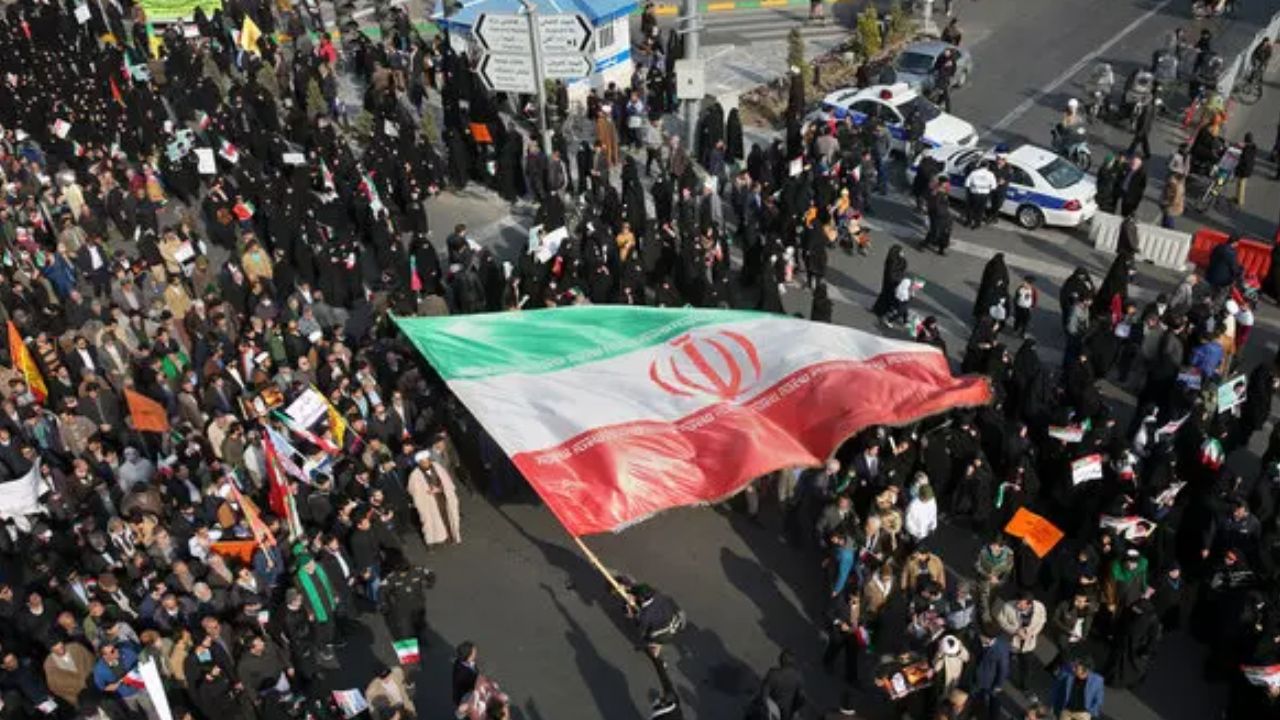
    Protesters have blocked roads, set fires and marched through neighbourhoods chanting slogans against the ruling system.

    In Tehran, witnesses described neighborhoods erupting into chants late Thursday night, including “Death to the dictator!” and “Death to the Islamic Republic!” Others praised the former monarchy, shouting, “This is the last battle! Pahlavi will return!” Thousands were seen on the streets before communications were cut.


    Footage verified by an international media outlet showed demonstrators lighting fires in the capital, blocking highways and clashing with security forces. In Shiraz, video showed security vehicles driving through a protest barrier that read, “We revolt due to hunger.”


    As protests intensified, Iran was plunged into a nationwide internet and telephone blackout on Thursday evening. Authorities cut access shortly after demonstrations began, limiting the flow of information both domestically and internationally.


    The blackout also appeared to take Iran’s state-run and semi-official news agencies offline. State television acknowledged the protests hours later, claiming that violence had caused casualties and that public and private property, including buses, metro stations, motorcycles and cars, had been set on fire.

    CASUALTIES

    The true human toll remains unclear. Iranian authorities have not released comprehensive casualty figures, while rights groups report conflicting numbers.


    US-based Human Rights Activists News Agency said at least 42 people were killed and more than 2,270 detained. Norway-based Iran Human Rights reported at least 45 deaths, including children, while Iranian media have confirmed fewer fatalities, including members of the security forces.


    Rights organisations have accused security forces of using live ammunition, tear gas and mass arrests to suppress demonstrations.


    ROLE OF PRINCE REZA PAHLVI


    The protests have also tested the influence of exiled Crown Prince Reza Pahlavi, who called on Iranians to take to the streets at 8 pm on Thursday and Friday. His appeal appeared to resonate, with chants supporting the former monarchy heard in several cities.


    As the latest protests unfolded, Pahlavi posted encouragement on X, urging Iranians to “take to the streets and, as a united front, shout demands”.


    Pahlavi had said he would offer further plans depending on the response to his call. His support of and from Israel has drawn criticism in the past – particularly after the 12-day war Israel waged on Iran in June. 


    Demonstrators have shouted in support of the shah in some demonstrations, but it isn’t clear whether that’s support for Pahlavi himself or a desire to return to a time before the 1979 Islamic Revolution.

    TEHRAN’S REACTION

    Iranian Supreme Leader Ayatollah Ali Khamenei promised not to “yield to the enemy” following US President Trump’s comments, which acquired added significance after the US military raid that abducted Venezuelan President Nicolas Maduro, a longtime ally of Tehran, over the weekend.

    Khamenei acknowledged economic grievances but blamed “external forces” for inciting riots.

    Iran’s top judicial and military officials issued stark warnings. Chief Justice Gholam-Hossein Mohseni-Ejei said there would be no leniency for those accused of inciting unrest, claiming they were “operating in line with the enemies of the Islamic Republic of Iran”.

    Mohseni-Ejei was referring to comments by President Trump, who threatened last week that if Tehran “violently kills peaceful protesters, which is their custom, the United States of America will come to their rescue”.

    Army chief Major-General Amir Hatami warned that Iran would “cut off the hand of any aggressor” and said the armed forces were more prepared than before the recent war with Israel.

    Despite this rhetoric, President Masoud Pezeshkian has publicly urged restraint. His office said security forces were ordered not to take action against peaceful demonstrators and to distinguish between protesters and armed rioters.

    German officials condemned Iran’s use of “excessive force” while Israeli Prime Minister Benjamin Netanyahu expressed solidarity with protesters, saying the Iranian people may be “taking their fate into their own hands”.