Tag: Canada

  • Canada FM confirms halting arms shipments to Israel

    Canada FM confirms halting arms shipments to Israel

    OTTAWA: Canada will halt all arms shipments to Israel, Foreign Minister Melanie Joly’s office confirmed Wednesday, a decision that has drawn the ire of Israeli leaders facing growing international scrutiny over the war in the Gaza Strip.

    The besieged Palestinian territory is facing a mounting humanitarian crisis, and months of war have pushed hundreds of thousands of Gazans to the brink of famine.

    Canada, a key ally of the United States, which provides Israel with billions of dollars a year in military aid, had already reduced its shipments to Israel to only include non-lethal equipment, such as radios, following the October 7 Hamas attack.

    “Since January 8th, the government has not approved new arms export permits to Israel and this will continue until we can ensure full compliance with our export regime,” said a statement from Joly’s office.

    “There are no open permits for exports of lethal goods to Israel,” it added.

    Export permits approved prior to January 8, however, would “remain in effect,” Joly’s office said, explaining that canceling them risked “important implications for both Canada and its allies,” including NATO and the Five Eyes intelligence alliance.

    A senior Canadian official had on Tuesday told AFP that “the situation on the ground makes it so that we can’t” export any equipment that could have a potential military use.

    Israel slammed the decision, with foreign minister Israel Katz saying it “undermines Israel’s right to self-defense against Hamas terrorists.”

    “History will judge Canada’s current action harshly,” he said in a post on social media platform X.

    US Senator Bernie Sanders welcomed the move, saying in his own post on social media: “Given the humanitarian catastrophe in Gaza, including widespread and growing starvation, the US should not provide another nickel for (Prime Minister Benjamin) Netanyahu’s war machine.”

    The issue of arms deliveries to Israel has triggered legal proceedings in several countries around the world.

    In Canada, a coalition of lawyers and citizens of Palestinian origin filed a complaint against the government in early March to suspend arms exports to Israel, accusing Ottawa of violating both international and domestic law.

    Israel has historically been a top receiver of Canadian arms exports, with Can$21 million worth of military materiel exported to Israel in 2022, according to government data, following Can$26 million in shipments in 2021.

    That places Israel among the top 10 recipients of Canadian arms exports.

    Israel offensive in Gaza has killed at least 31,923 people, most of them women and children, according to Gaza’s health ministry.

    While affirming Israel’s right to defend itself, Canadian Prime Minister Justin Trudeau has taken an increasingly critical stance toward Israel as civilian deaths have mounted in Gaza.

    On Monday, the Canadian Parliament passed a nonbinding resolution calling for the international community to work toward a two-state solution between Israel and the Palestinians.


  • PIA air hostess slips away in Canada leaving ‘Thank you’ note behind

    PIA air hostess slips away in Canada leaving ‘Thank you’ note behind

    Another air hostess of Pakistan International Airlines (PIA) allegedly went missing while on duty in Canada.


    The incident came to light when Maryam Raza, assigned to flight PK 782 from Pakistan to Toronto, failed to report for duty on the return flight, PK 784 from Toronto to Karachi.

    Upon investigation, a note expressing gratitude to PIA was discovered alongside her uniform hanging in her room. “Thank you, PIA”, she wrote, reports Samaa News.

    This marks the third reported case this year of PIA flight attendants allegedly ‘slipping’ while on duty, with two of them being women.

    Despite measures such as collecting passports of flight attendants assigned to Toronto flights to prevent such incidents, the effectiveness of these policies has come under scrutiny.


    Experts cite low pay and a lack of job security within the national airline as the primary reasons behind these alleged instances of slippage but above all it maligns the image of the country on an international level.

    Read more here: Two PIA flight attendants go missing in Canada

  • Farmers protest: From India to Europe

    Farmers protest: From India to Europe


    Farmers are protesting from India to Europe, separately, for their rights and to register their rebellion with sitting governments against soaring fuel, and fertilizer costs, lower prices of their produce, and restrictive regulations. The protests are shedding light on the very pertinent issues faced by the primary food-producing sector of countries owning big agricultural markets.


    Demands of Greek farmers


    Farmers in Greece are protesting across the country against rising costs. They are conducting a tractor rally all across the country. Manolis Liakis, a farmer from the southern island of Crete, talked to __ and singled out fuel costs as his biggest problem. He said farmers pay more than three times as much for petrol as shipping companies due to tax disparities. Farmers can’t sell their products “for ridiculously low prices while the consumer buys them at extremely high prices”, he said.


    Demands of Polish farmers


    In Poland, farmers are blocking roads to stop cheap grain imports crossing the border from Ukraine. They are demanding a “complete embargo” on Ukranian produce. During the protests on Tuesday against competition from imports of cheaper Ukrainian products, farmers in Gorzyczki, southern Poland, unfurled a banner saying “Putin, get Ukraine, Brussels, and our government in order”. Consequently, the farmers were warned by the government against raising the slogans.


    Demands of Spanish farmers


    Spanish farmers are gathering with hundreds of tractors in tow to protest against the unfair competition from outside the European Union. They want to include production costs in the end product so they don’t end up selling their goods at a loss. Additionally, they want imported products to be subjected to the same conditions that they have to face.

    Demands of French farmers


    French farmers blocked a milk transport in protest against wholesale prices they say are too low. The farmers’ unions have made it clear they want ironclad assurances that their grievances over produce prices and red tape have been addressed. French Prime Minister Gabriel Attal is trying to negotiate and pacify the raging farmers with the negotiations.


    Demands of Czech farmers


    In Prague, farmers are on the roads because they feel neglected in the policy-making process. After all, they are not given due attention by the government. “Around 3,000 tractors took to the streets,” The Czech Chamber of Agriculture said in a statement on the nationwide protests. Their demands included an end to restrictions on agricultural production, cutting red tape for farming, and introducing changes to the EU-Ukraine arrangements on farming imports.


    Demands of Italian farmers


    In Rome, cowbells are clanking with the message that Farmers feed the world, but can’t afford to farm.

    Demands of Indian farmers


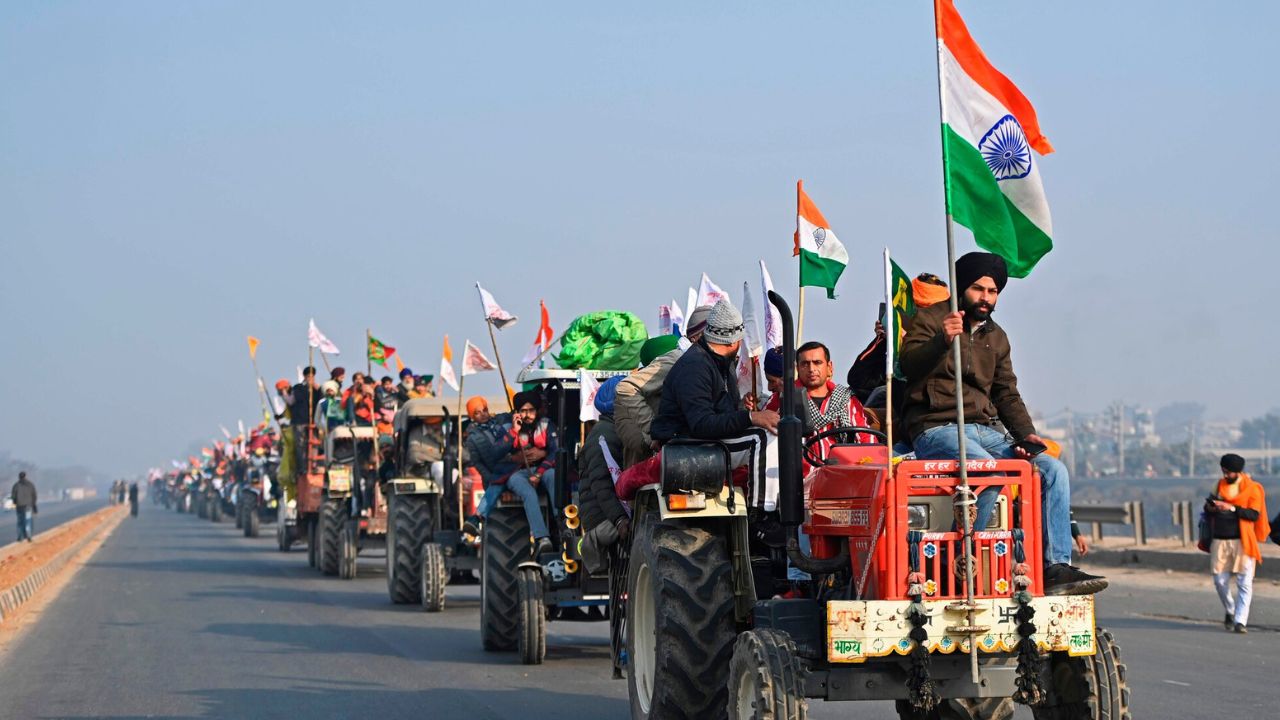
    In India, massive protests have broken out over minimum crop price guarantees which were promised nearly a year ago but not implemented by the government. Thousands of Indian farmers riding tractors attempted to resume their push towards New Delhi. They were attacked by the police claiming the life of young farmer Shubhkaran Singh and injuring 25 others. Farm unions are demanding a law to set a minimum price on all crops, expanding a government scheme that already exists for staples, including rice and wheat. They have also demanded other concessions, including the waiving of loans and universal pensions for farmers aged 60 and above.


    Concerns of Canadian Farmers


    In Canada, there are fewer environmental regulations but farmers feel a disconnect with the central government whose main mandate is based on the environment. They have been pushing forward all kinds of policies about fertilizer reduction and disallowing certain pesticides. The green policies and higher costs have instead of favouring them making farmers feel ignored. Experts say the consumers feel that lower output prices and higher input prices are just a way for the government to tell them that do whatever they want but in a cleaner and environmentally friendly way.


    Conclusion


    Protesting farmers are trying to divert attention to the most neglected yet important sector of a country which is the food-producing sector which is the backbone of both the society and the economy of the country yet remains ignored by the political class for their vested interests.

  • Canadian sentenced to life in prison for ‘terrorist’ murders of Muslim family

    Canadian sentenced to life in prison for ‘terrorist’ murders of Muslim family

    A white supremacist committed terrorism when he ran down a Muslim family out for an evening stroll, a Canadian judge said Thursday as she sentenced him to life in prison for the murders.

    The ruling is the first in Canada to make a link between white supremacy and terrorism in a murder case.

    Nathaniel Veltman, 23, was convicted in November of four counts of first degree or premeditated murder, and one count of attempted murder in the killing of three generations of the Afzaal family that also left a young boy orphaned.

    He acknowledged striking the family with his pickup truck in June 2021 in London, Ontario.

    The prosecution argued at trial that he sought to intimidate and terrorize Muslims, while the defense said he’d suffered a mental decline — which did not, however, meet the requirements for an insanity plea.

    His lawyers also said he was in “a state of extreme confusion” after consuming hallucinogenic psilocybin mushrooms that weekend.

    Judge Renee Pomerance of the Ontario Superior Court of Justice at his sentencing said Veltman “had planned a murderous rampage for months and took steps to ensure that he would kill as many Muslims in this brutal manner as he could.”

    Recalling Veltman’s statements to police, she said: “He wanted to intimidate the Muslim community. He wanted to follow in the footsteps of other mass killers, and he wanted to inspire others to commit murderous acts.”

    “I find that the offender’s actions constitute terrorist activity,” she concluded.

    The jury in the almost 10-week trial heard Veltman had penned a “terrorist manifesto,” found on his computer, in which he espoused white nationalism and described his hate for Muslims.

    The judge noted that he wore “combat gear” including a helmet and bulletproof vest during the attack.

    Veltman passed the Afzaal family on a London street on that warm Sunday evening, turned his newly purchased truck with a heavy grill guard around, jumped the curb and slammed into them.

    Salman Afzaal, 46, his wife Madiha Salman, 44, their 15-year-old daughter Yumnah and her grandmother Talat Afzaal, 74, were killed. A nine-year-old boy orphaned in the ramming suffered serious but non-life-threatening injuries.

    The slaying was the deadliest anti-Muslim attack in Canada since a shooting at a mosque in Quebec City in 2017 that left six dead. The perpetrator of that shooting was not accused of terrorism.

  • ‘Pakistan has credible evidence regarding Indian Agents orchestrating extra-territorial assassinations’, Foreign Secretary Syrus Qazi

    ‘Pakistan has credible evidence regarding Indian Agents orchestrating extra-territorial assassinations’, Foreign Secretary Syrus Qazi

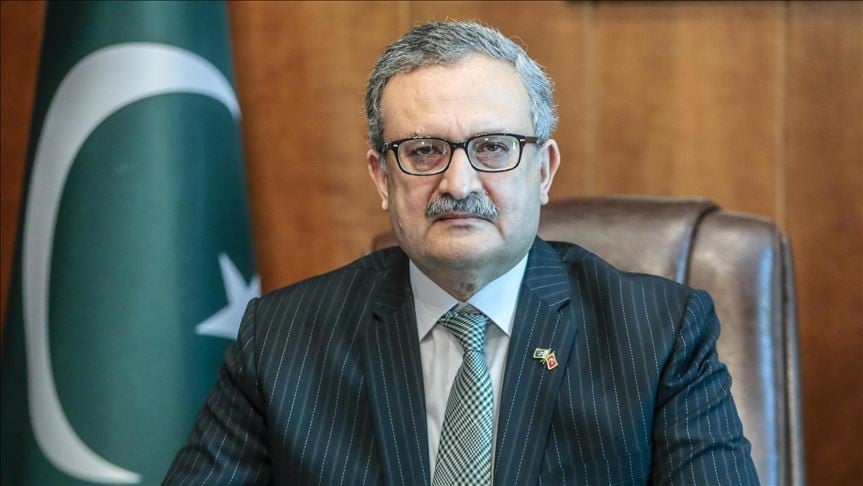
    In a press conference held on Thursday, Pakistan’s Foreign Secretary Syrus Qazi revealed what he termed as “credible evidence” linking Indian agents to the orchestrated killings of two Pakistani citizens on Pakistani soil.

    Qazi characterized the alleged actions as part of a “sophisticated and sinister” Indian campaign involving extra-territorial and extra-judicial assassinations.

    “These are killings-for-hire cases involving a sophisticated international set-up spread over multiple jurisdictions,” Qazi told reporters during a press conference in Islamabad.

    The strained relations between Pakistan and India, exacerbated by historical tensions and border disputes, took a hit with the arrest of spy Kulbushan Yadav in 2016 and the 2019 revocation of the special status of Indian Illegally Occupied Jammu and Kashmir (IIOJK). The move led to a freeze in diplomacy and trade between the two neighboring nations.

    Qazi’s statements come months after both Canada and the United States separately accused Indian agents of involvement in assassination attempts on their soil. While India rejected Ottawa’s allegations, it initiated an investigation into Washington’s claims.

    Providing details of the alleged Indian campaign, Qazi claimed that Indian agents utilized technology and safe havens on foreign soil to carry out assassinations in Pakistan.

    “They recruited, financed, and supported criminals, terrorists, and unsuspecting civilians to play defined roles in these assassinations,” he added.
    The foreign secretary blasted Indian media and social media accounts for their quick claims and glorification of the said killings as “successful retribution against ‘enemies’ of India” and projecting their capacity to carry out these illegal acts.
    “Potential assassins were recruited, using social media, talent spotters, and fake Da’esh accounts,” Qazi said.

    The Foreign Secretary criticized Indian media and social media accounts for glorifying the killings and projecting them as successful retribution against perceived enemies.

    He alleged that potential assassins were recruited through social media, talent spotters, and fake Da’esh accounts.

    Qazi focused on two specific cases during the press conference: the assassinations of Shahid Latif and Muhammad Riaz.

    Assassination of Shahid Latif
    Qazi said that on October 11, 2023, a group of criminals assassinated Latif outside a mosque in the city of Sialkot.
    A detailed investigation revealed that an Indian agent, Yogesh Kumar, based in a third country orchestrated the assassination through criminals and terrorists, he added.
    Going deeper into the details of the killing, the foreign secretary revealed that Kumar recruited Muhammad Umair, a labourer in that third country to act as a contact with local criminals in Pakistan to trace and assassinate Latif.
    The recruited local criminals were able to locate and trace Latif, however, the killers-for-hire were unable to carry out the execution, Qazi added.
    “After some failed attempts, Muhammad Umair was personally sent to Pakistan to carry out the assassination. Muhammad Umair organised a team of five target killers which after the first failed attempt on 9 October 2023, succeeded in assassinating Shahid Latif on 11 October 2023.”
    The foreign secretary further stated that the law enforcement authorities apprehended the target killers, including Umair, based on confessional statements and technical evidence, thwarting their bid to flee Pakistan on October 12, 2023.
    Qazi said that all those involved in reconnaissance and killing have been apprehended and are being tried in a court of law.
    He added that the FO also had evidence of transactions made in the process linking the entire chain to Indian agent Yogesh Kumar.
    Assassination of Muhammad Riaz
    Sharing the details of the second extra-territorial killing, Qazi said that another Indian agent was involved in killing of Pakistani national Muhammad Riaz. As per the foreign secretary, Riaz was assassinated in a mosque in Rawalakot during Fajr prayer on September 8, 2023.
    He said that the law enforcement agencies tracked and apprehended the killer, Muhammad Abdullah Ali, on September 15, 2023, while boarding a flight at Jinnah International Airport, Karachi.
    “Interrogation revealed that Muhammad Abdullah Ali was recruited and guided by Indian agents Ashok Kumar Anand and Yogesh Kumar. Indian agents utilised social media app Telegram to recruit Muhammad Abdullah Ali, who was asked to locate Muhammad Riaz,” Qazi revealed.
    He further stated that Ali received payments through the middlemen based in a third country, and he was also provided with weapons and ammunition.
    “After a failed attempt on September 7, 2023, Muhammad Abdullah Ali succeeded in killing Muhammad Riaz on September 8, 2023,” he added.
    Later, the law enforcement authorities apprehended the killer, his supporters and facilitators from various cities of Pakistan, and the case is being tried in a court of law.
    Qazi said that the investigators quickly identified the facilitators inside the country and in the third countries on the basis of confessional statements of Ali and technical evidence.
    “We have documentary, financial and forensic evidence of the involvement of the two Indian agents, who masterminded these assassinations. We are releasing the passport details of Yogesh Kumar and Ashok Kumar,” he added.
    per the foreign secretary, Pakistan had reached out to the governments of the relevant third countries in this regard.

    The Foreign Secretary asserted that Pakistan had evidence linking the entire chain of events to the Indian agents and called for international accountability for India’s “blatant violation of international law.”

    He emphasized that such actions not only violated Pakistan’s sovereignty but also breached the UN Charter.

    Concluding his remarks, Qazi demanded justice for the victims, their facilitators, and financiers involved in the alleged assassinations, reaffirming Pakistan’s commitment to protecting its people and securing its sovereignty.

    The accused Indian agents’ passport details were also disclosed, and Pakistan reportedly reached out to the relevant third countries regarding the matter.

  • Pakistani passport once again least powerful

    Pakistani passport once again least powerful

    Henley & Partners‘ Passport Index has published a list portraying the world’s travel access hierarchy.


    Top on the list of countries that encourage travelling are France, Germany, Italy, Japan, Singapore, and Spain, whose citizens can visit an astounding 194 destinations without requiring arduous visa procedures. This group of countries offer passport-to-plane experience, setting the bar high for unmatched worldwide mobility.


    With access to 193 locations, Finland, South Korea, and Sweden share second place. Many visa-free or visa-on-arrival options are available to their well-travelled inhabitants, providing access to a variety of cultures and environments.


    Austria, Denmark, Ireland, and the Netherlands take third place with access to 192 destinations. These nations serve as entry points to a wide range of travel opportunities.


    The long list goes on, honouring countries that place a high priority on global connection. Among the notable entries are the United States, Canada, Greece, Switzerland, and New Zealand, all of which provide their inhabitants with an abundance of travel options.


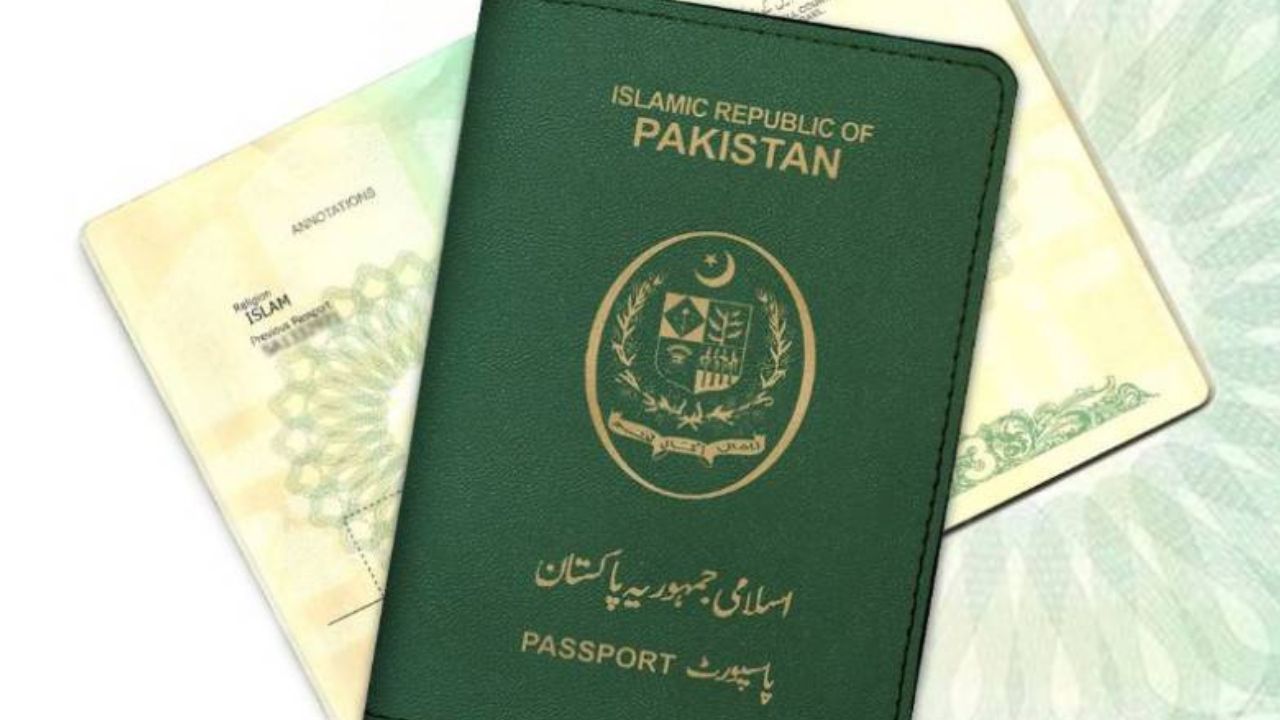
    On the other hand, the Passport Index identifies states with more limited travel options. Afghanistan, Syria, Iraq, and Pakistan are among the least accessible, offering their passport holders entry to just 34 countries that require no visa or one upon arrival.


    The London-based company, which offers residency and citizenship consultancy services, teamed together with the International Air Transport Association to create a unique ranking that takes into account passport holders’ access to countries without a visa or with one upon arrival.

  • What is Canada’s new visa policy for students?

    What is Canada’s new visa policy for students?

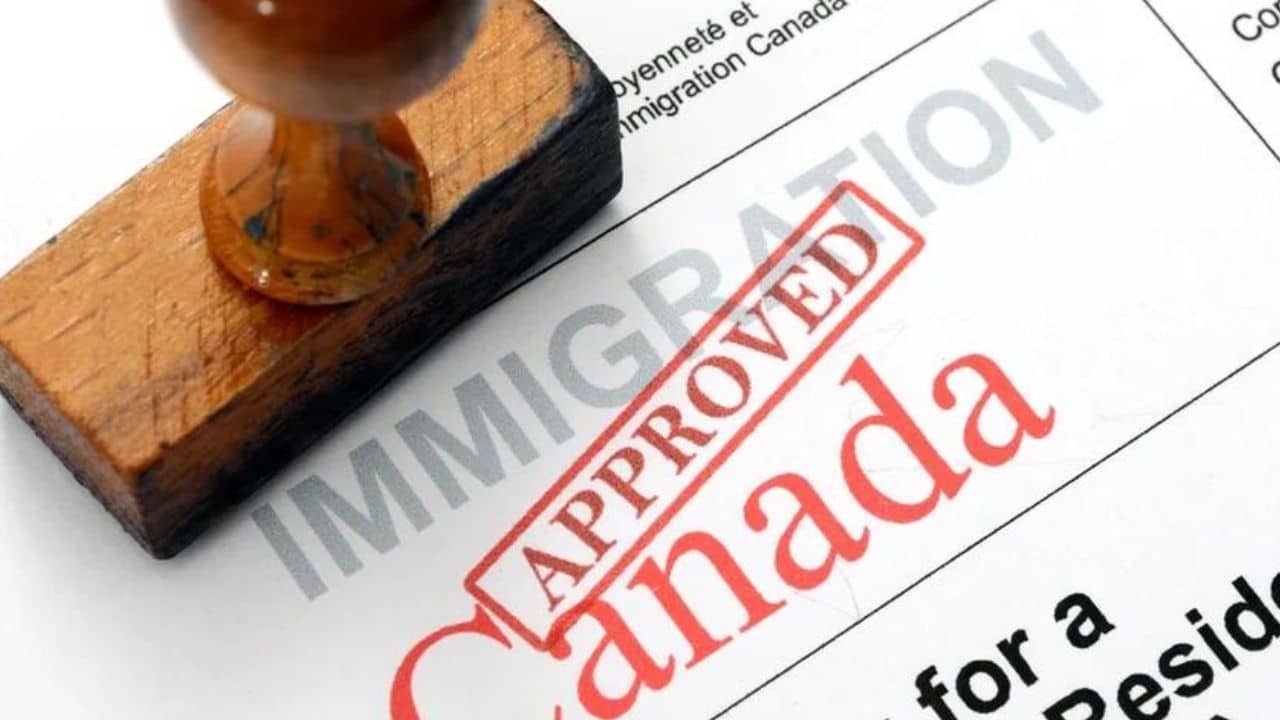
    As per official data, last year Canada issued nearly one million study permits, about three times that of a decade ago, and now they are changing their policy.

    In response to a housing shortage aggravated by explosive growth in foreign student numbers, Canada has announced a temporary two-year cap on the intake of international students.

    Last year, the country issued nearly one million study permits, triple the figures from a decade ago, according to government data. The new proposal aims to reduce the intake by almost a third.

    Canada’s Immigration Minister, Marc Miller, revealed that the Liberal government will implement a two-year cap on student visas, resulting in the issuance of approximately 364,000 visas in 2024.

    The plan also includes limitations on post-graduate work permits for foreign students, potentially encouraging them to return to their home countries.

    Previously viewed as a straightforward path to permanent residency, these permits will now be subject to stricter regulations.

    However, those pursuing master’s or post-doctorate programs will still be eligible for a three-year work permit.

    Additionally, spouses of international students enrolled in undergraduate and college programs will no longer be eligible for permits, Miller stated.

    The acceptance of new study permit applications in 2025 will be reassessed at the end of the current year.

    The government’s decision comes in response to the surge in international students, creating a housing crisis and driving up rents across the country.

    December 2023 saw a 7.7 per cent year-on-year increase in rents nationwide, according to Statscan. Prime Minister Justin Trudeau’s popularity has been dented mainly due to the affordability crisis, and opposition Conservative Party leader Pierre Poilievre has taken a commanding lead over Trudeau in opinion polls ahead of an election next year.

    Concerns about the quality of education provided by some institutions have also prompted the government to reevaluate its immigration policies.

    The move will not only affect the housing market but will also have economic implications. International students contribute approximately C$22 billion ($16.4 billion) annually to the Canadian economy.

    This decision will likely impact educational institutions that expanded their campuses in anticipation of a continuous influx of students.

    Ontario, the most populous province, has been the primary recipient of international students. Some businesses, including restaurants and the retail sector, have warned of potential labor shortages due to the cap on foreign students.

    Canada’s move will have repercussions for Canadian banks, as international students are required to have Guaranteed Investment Certificates (GICs) of over C$20,000, covering living expenses.

    Most foreign students, approximately 40%, hail from India, with China coming in second at around 12%, based on official data from 2022.

    In response to these changes, the University of Toronto has expressed its readiness to collaborate with all levels of government to ensure that the allocation of study permits considers institutions like U of T and addresses challenges in the system.

  • Canada to provide remote work visa for freelancers

    Canada to provide remote work visa for freelancers

    The Canadian government intends to give remote work visas for freelancers and digital nomads in 2024, to adapt to the changing nature of the labour market, reports Samaa.

    The program is aimed at drawing international talent by enabling people to live temporarily in the country while working remotely.

    According to the policy, a specific visa will be issued to freelancers, who are working remotely in Canada.


    Digital nomads were previously permitted a maximum of six months of stay on tourist visas in Canada.


    The government is now developing a comprehensive “tech talent strategy” to attract foreign workers in an effort to increase the size of its workforce.
    Immigration, Refugees and Citizenship Canada spokesman Isabelle Dubois emphasized the expected advantages, stating, “We anticipate that some digital nomads will opt to stay in Canada, contributing their skills to employers here.”


    In an attempt to draw in highly qualified IT professionals who thrive in remote work, plans are in motion to establish a framework that would allow entrepreneurs to apply for extended work licenses, which might last up to three years.


    Asserting Canada’s dedication to allowing remote workers, the Immigration, Refugees, and Citizenship Office promised further information in the coming months.


    The number of US citizens who work as digital nomads soared to 17.3 million, moving up by 2 percent in 2023.


    Apply for a Canada visa from Pakistan


    Pakistanis can also apply for a Canada Visit, via a temporary resident visa that allows South Asians to travel for tourism, business meetings, or to visit family members, according to Pakistan Observer.


    For Pakistanis, the Canada Visitor Visa offers multiple entries over 10 years, allowing stays of 180 days per entry. To apply for a visa, applicants must be without criminal or immigration convictions.


    The financial statement should prove the job, own residence, or family, to demonstrate a temporary visit intention. Adequate funds for the stay is also a pre-requisite.


    Required documents include a valid passport, national ID, and possibly additional documents like bank statements. The application process involves the submission of forms, checking the accuracy, and uploading supporting documents, followed by an appointment at the local visa center.


    Visa and biometric fees need to be paid at the center, and tracking information is shared.

  • Canada’s ‘Startup Visa Program’ with no education, experience, job requirement or age limit

    Canada’s ‘Startup Visa Program’ with no education, experience, job requirement or age limit

    Umair Saleemi, journalist for BBC Urdu, shed light on Canada’s ‘Startup Visa Program’ in his latest piece:

    Every year, thousands of people from India and Pakistan migrate to America, Canada and European countries for better opportunities and a brighter future.

    Therefore, any changes in immigration and work visa laws or the introduction of any new programs are closely monitored in these countries.

    As Canada has changed the work permit law this month, Canadian authorities extended work permits for 18 months due to increased demand in the labour market during the Covid era, which is being phased out from January next year.

    Since then, Canada has initiated a startup visa program has been hailed by some experts as a golden opportunity.

    The program is mainly for talented foreigners who want to establish their own small businesses or startups in Canada.

    Certain criteria have been set to assess the quality of a startup, including innovation, creation of new jobs for local people and ability to compete globally.

    Who can apply for a Canadian Startup Visa?

    To apply for a Canadian start-up visa, a candidate must have a valid business. It is important that the candidate owns the shares of the business. One must hold 10 per cent or more of the company’s shares and have voting power (at shareholders’ meetings).

    A maximum of five people can apply in this program. It is important that the startup is supported by a Canadian organisation or ‘designated body’ and a letter of support is issued.

    Your business must operate from Canada, have its main activities from Canada and be established in Canada.

    In addition to mastering the English language, knowledge of French can further help your startup succeed in Canada. Canadian visa rules require the applicants to be fluent in speaking, writing and understanding either English or French.

    The startup visa candidate also has to provide evidence to the Canadian government that they have the resources to support themselves and their dependents. Candidates cannot manage this money by borrowing money.

    Immigration expert Julie Desai told BBC Gujarati that a startup visa is quite different from a normal work permit visa. Its aim is only to attract businessmen and entrepreneurs to Canada.

    The most important requirement is that the candidate’s business must be innovative enough to create new jobs in Canada, Desai explains. This visa is not for general business people — such start-up plans are needed that they can compete in the world.

    Under this program, the financial resources required by a family can be determined by the number of its members. If only one person wants to go to Canada under this program, one will need 13757 Canadian dollars. This amount can increase if other family members also want to go along. It will also be important to see if the Canadian authorities revise this amount every year.

    Meanwhile the candidate needs a ‘Letter of Support’ for start-up from a recognized business group in Canada. For this the candidate approaches these organisations and assures them that their startup idea deserves support.

    Candidate has to contract with these institutions for a letter of support as this letter is proof that a Canadian investor, such as a venture capital fund, angel investor group or business incubator, supports the candidate’s idea.

    In addition, accredited organisations also issue Canadian Government ‘Certificates of Commitment’ to candidates. The government then verifies both the letters for the visa application.

    The Canadian government may ask for more information about your startup to review the information.

    The Canadian government may reject the application if the letter of support or other requirements are not met.

    Immigration lawyer Prashant Ajmera asserts that it is very important that the startup plan has the support of Canadian organisations, that the candidate has a detailed business plan, and to have knowledge of the Canadian market.

  • US-led coalition to patrol Red Sea against Houthi attacks

    US-led coalition to patrol Red Sea against Houthi attacks

    The United States on Monday announced a 10-nation coalition to quell Houthi missile and drone attacks on ships transiting the Red Sea, with Britain, France, Bahrain and Italy among countries joining the “multinational security initiative.”

    “Countries that seek to uphold the foundational principle of freedom of navigation must come together to tackle the challenge posed by this non-state actor,” US Defense Secretary Lloyd Austin said in a statement.

    Iran-backed Houthi rebels have escalated attacks on tankers, cargo ships and other vessels in the Red Sea, imperiling a transit route that carries up to 12 percent of global trade.

    The security coalition, Austin said, will operate “with the goal of ensuring freedom of navigation for all countries and bolstering regional security and prosperity.”

    It includes the United States, United Kingdom, Bahrain, Canada, France, Italy, Netherlands, Norway, Seychelles and Spain, Austin said.

    Yemen’s Iran-backed Houthi rebels said earlier they had attacked two “Israeli-linked” vessels in the Red Sea in solidarity with Gaza, as more companies halt transit through the troubled but vital waterway.

    The attacks on the Norwegian-owned Swan Atlantic and another ship identified by the Houthis as the MSC Clara are the latest in a flurry of maritime incidents that are disrupting global trade in an attempt to pressure Israel over its war against Hamas militants.

    In a statement, the Yemeni rebels said they had carried out a “military operation against two ships linked to the Zionist entity” using naval drones.

    They vowed to “continue to prevent all ships heading to Israeli ports… from navigating in the Arab and Red Seas” until more food and medicine is allowed into Gaza.

    But the Swan Atlantic’s owner, Norway’s Inventor Chemical Tankers, said in a statement the ship was carrying biofuel feedstock from France to Reunion Island.

    It said the vessel has “no Israeli link” and was managed by a Singaporean firm, adding that the Indian crew were unharmed and the vessel sustained limited damage.

    British oil giant BP became the latest to suspend transit through the Red Sea on Monday, while Taiwan shipping firm Evergreen said it was suspending its Israeli cargo shipments with immediate effect.

    Frontline, one of the world’s largest tanker companies, also said it was rerouting ships and would “only allow new business” that could be routed via South Africa’s Cape of Good Hope.

    That route is far longer and uses more fuel.

    The Red Sea attacks have forced insurance companies to significantly increase premiums on ships, making it uneconomical for some to transit through the Suez Canal.

    Italian-Swiss giant Mediterranean Shipping Company, France’s CMA CGM, Germany’s Hapag-Lloyd, Belgium’s Euronav and Denmark’s A.P Moller-Maersk — the latter accounting for 15 percent of global container freight — have all stopped using the Red Sea until further notice.

    The attacks have become “a maritime security crisis” with “commercial and economic implications in the region and beyond,” Torbjorn Soltvedt of analysis firm Verisk Maplecroft told AFP.

    Monday’s attack took place as the Pentagon chief visited Israel after a stop in Bahrain, home base of the US Navy’s Fifth Fleet.

    “In the Red Sea, we’re leading a multinational maritime taskforce to uphold the bedrock principle of freedom of navigation. Iran’s support for Houthi attacks on commercial vessels must stop,” Austin said at a news conference.

    On Saturday, a US destroyer shot down 14 drones in the Red Sea launched from rebel-controlled areas of Yemen, the US military said.
    Britain said one of its destroyers had also brought down a suspected attack drone in the area.

    Rebel spokesman Mohammed Abdul Salam said neutral Oman had launched mediation efforts to safeguard shipping using the waterway.

    “Under the sponsorship of our brothers in the Sultanate of Oman, communication and discussion continue with a number of international parties regarding operations in the Red Sea and Arabian Sea,” he said on X, formerly Twitter.

    The Gaza war broke out when its rulers Hamas launched an unprecedented attack on Israel on October 7, killing around 1,140 people and kidnapping some 250, according to an AFP tally based on official Israeli figures.

    Gaza’s health ministry says Israel’s military response has killed more than 19,450 people, mostly women and children.