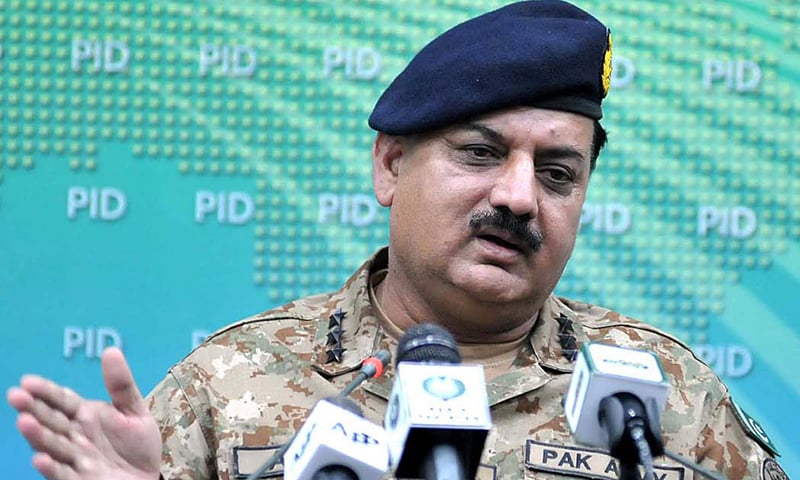
National Disaster Management Authority (NDMA) Chairman Lieutenant General Muhammad Afzal has said that Pakistan will start conducting 50,000 coronavirus tests a day from next week as a meeting held at the National Command and Operations Centre has decided that virus detection kits would be provided to all departments concerned at the earliest.
Speaking to journalists, the NDMA chairman said that earlier only those who showed symptoms of the coronavirus were being tested, but the authorities are now shifting to randomised testing for effective implementation of the government’s plans to curb the menace of COVID-19 that has so far claimed 251 lives in Pakistan and left over 12,000 people sick across the country.
Lt Gen Afzal added that 800,000 testing kits were available and efforts were being made to procure more.
On April 11, the NDMA received a medical consignment from China consisting of 59 ventilators, about 936 kilogrammes (kg) of surgical masks, protective suits, safety lenses, thermometers, and 1,720 kg of unstitched cloth for surgical gowns, all of which were distributed among provinces.
Meanwhile, according to Inter-Services Public Relations (ISPR) Director General (DG) Major General Babar Iftikhar, Chief of Army Staff (COAS) General Qamar Javed Bajwa has instructed the military to help civilian administration during the holy month of Ramzan that has arrived amid the global coronavirus pandemic.
“COAS held a special conference at General Headquarters (GHQ) today where the overview of the coronavirus deployment and situation was taken into account. COAS instructed all commanders to ensures border security and carry out routine activities as per schedule,” the military spokesperson said while addressing a press conference on Friday.
“The army chief gave the instruction to work with civil authorities to ease the difficulties being faced by the people during Ramzan,” he said.
After Edhi Foundation head Faisal Edhi tested positive for the new coronavirus less than a week following his meeting with Prime Minister (PM) Imran Khan, who, however, has tested negative for the same, concerns have been raised over another health risk that the premier may be facing as an employee of Coronavirus Care Hospital of Pakistan Red Crescent Society (PRCS) in Rawalpindi tested positive for COVID-19 the same day Imran visited the facility.
As per the details, Khaleeq Abbasi, who works at the Logistics Department, had been deputed at the hospital to take care of the logistics and was also involved in logistics provision for PM Imran’s visit along with other staff.
“Abbasi was not feeling well for quite a few days. He tested for coronavirus on Monday which came positive on Wednesday,” reports quoted an official as saying.
“After testing positive, Abbasi has been directed by the PRCS management to self-isolate,” they said, adding that as a follow-up measure, the management had also isolated the entire logistics department and sent samples of all of the department’s employees among a number of other persons for testing.
According to a press statement issued by PM House, the premier during his visit was briefed in detail by PRCS Chairman Abrarul Haq on the measures taken by the organisation in the wake of the situation arising out of the COVID-19 outbreak and the facilities at the hospital.
A video doing rounds over the internet also showed PM Imran and his delegation at the facility without any specific protective measures.
Minister for Railways Sheikh Rasheed Ahmad, PM’s special assistants Dr Sania Nishtar, Dr Zafar Mirza and Member National Assembly (MNA) Amir Mehmood Kiyani were among those who accompanied Imran.
PRCS spokesperson Rehal Ali has confirmed that an employee named Khaleeq Abbasi tested positive for COVID-19 the same day the premier visited the hospital. “Actually, Abbasi’s test sample had been sent on Monday and the confirmation came on Wednesday,” said the spokesperson, adding that Abbasi and all other staff members had been isolated at their homes as a safety measure.
“We have tracked back around 10 people who had been in contact with Abbasi and isolated them at their homes. Their samples have also been taken and sent for tests,” he said, adding that all measures identified by the National Institute of Health (NIH) were being followed at the hospital as well as the national headquarters of the PRCS.
Prominent preacher Maulana Tariq Jamil’s statements from Prime Minister (PM) Imran Khan’s Ehsaas Telethon to raise money for the government’s coronavirus relief fund on Thursday have received mixed reactions, which were followed by the religious scholar also apologising as he drew the ire of several netizens, including senior journalists and rights activists, who called him out for “targetting women” and calling media personalities “liars”.
“I apologise if someone has misconstrued my words. It was not a sweeping statement and I was referring to certain journalists when I said they lie,” Jamil said while appearing on a private media outlet’s show hosted senior journalist Javed Chaudhry, who was seen making the religious scholar realise that his words had not been very well-received by many.
WATCH VIDEO:
https://www.youtube.com/watch?v=IE6KhNlpK7A
Earlier, he was also called out by senior journalist and analyst Hamid Mir and his colleague Murtaza Ali Shah.
ایک زمانے میں مولانا طارق جمیل کی آخری امید نواز شریف ہوا کرتے تھے پھر وقت بدلا اور امید بھی بدل گئی https://t.co/T77upk1iuy
Molana Tariq Jameel used to praise Nawaz Sharif in the same way he's today praising PM Imran Khan; he has condemned the whole media but the media didnt have the opportunity to defend itself but TJ shud explain who justified lying on media, says @HamidMirPAK on @geonews_urdu
Other than speaking against “certain journalists”, Maulana had on Thursday also blamed “immodest women” for causing the coronavirus pandemic in Pakistan.
According to reports, he advised people to abstain from vices like indecency, lying, fraud and illegal means of earning a livelihood, adding that pre-Islamic nations were annihilated because they transgressed the limits set by God.
He went on to call some women “behaiya [immodest]” and talked about the indecency and mixing up of genders and leading the youth astray. In one particular sentence, he expressed remorse over women dancing. He, however, did not clarify his stance further.
He then concluded the transmission with a special prayer asking God to end the pandemic coronavirus and save entire humanity.
Here’s what Twitterati had to say:
"Mulana Tariq Jameel" blessing for Pakistan Exactly explain the ground reality. To build a great Empire or Nation it requires the guidance of scholars. inshaAllah Imran Khan will make Pakistan a great nation under the guidance of scholars.#PMIKEhsasTelethon#tariqjamilpic.twitter.com/G56n6G39Qc
I just want to apologise to all my followers for that sleeveless kurta I wore once. I really didn’t know it would cause a global pandemic. 🙏🏽#tariqjamil#COVID19
Pakistani media made Tariq Jameel a hero and celebrity, gave him his status that he enjoys today. Live on all channels today, he declared all Pakistani media as 'liars'. Good going.
#tariqjamil 's comments about immoral women & corona sum up the thinking of most clergy in Pakistan and dare I say, the Prime Minister himself & most of his party & followers.
The question is: if we women brought this azaab upon us why is the virus affecting more men than women?
— Benazir Jatoi #FreePalestine (@BenazirJatoi) April 24, 2020
The Human Rights Commission of Pakistan (HRCP) has also condemned Jamil’s remarks.
HRCP is appalled at Maulana #TariqJamil's recent statement inexplicably correlating women's 'modesty' to the #Covid19 pandemic. Such blatant objectification is unacceptable and, when aired on public television, only compounds the misogyny entrenched in society.
— Human Rights Commission of Pakistan (@HRCP87) April 24, 2020
Meanwhile, “#TariqJamil” continues to trend on Twitter in Pakistan.
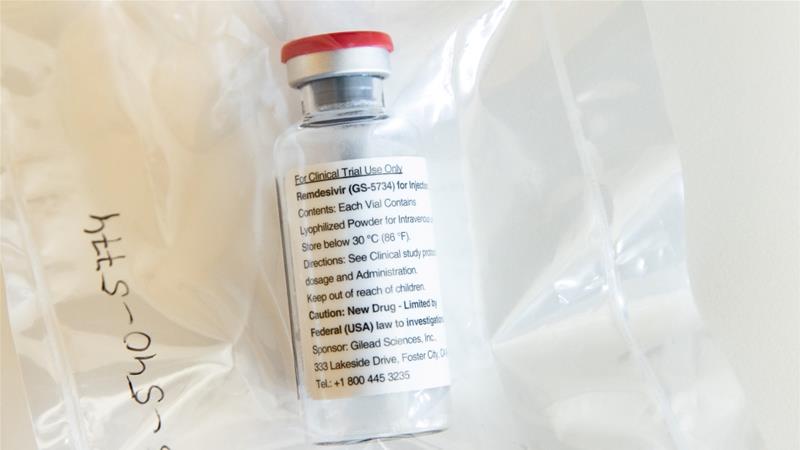
A potential antiviral drug for the coronavirus has reportedly failed in its first randomised clinical trial, Financial Times reported.
According to reports, there had been widespread hope that remdesivir could treat the new coronavirus — COVID-19 — that has left at least 191,000 people dead and 2.7 million infected across the globe.
But a Chinese trial showed that the drug had not been successful, according to draft documents accidentally published by the World Health Organization (WHO).
The drug did not improve patients’ condition or reduce the pathogen’s presence in the bloodstream, it said.
Researchers studied 237 patients, giving the drug to 158 and comparing their progress with the remaining 79. The drug also showed significant side effects in some, which meant 18 patients were taken off it.
Interest in the drug, had been high as there are currently no approved treatments or preventive vaccines for COVID-19, and doctors are desperate for anything that might alter the course of the disease that attacks the lungs and can shut down other organs in extremely severe cases.
The United States (US) firm behind the drug, Gilead Sciences, is testing it in multiple trials, and highly anticipated trial results from a study involving 400 patients hospitalised with severe cases of the illness are expected later this month.
It says the WHO documents mischaracterised the study.
Remdesivir, which previously failed as a treatment for Ebola, is being tried against COVID-19 because it is designed to disable the mechanism by which certain viruses, including the new coronavirus, make copies of themselves and potentially overwhelm their host’s immune system.
A host of Pakistan’s much-loved celebrities have come together for a short film titled Call To Action to raise awareness on the coronavirus pandemic.
Among those who feature in the film includes Hamza Ali Abbasi, Humayun Saeed, Reema, Shehzad Roy, Ali Rehman Khan, Zara Noor Abbas, Maya Ali, Anwar Maqsood, Bilal Maqsood, Sheheryar Munawar, Wasim Akram, Shaniera Akram, Ayesha Omar, Iqra Aziz, Yasir Hussain and Mikaal Zulfiqar. The film follows them as they talk to each other on the phones. While the conversation appears to be like one anyone would be having with their friend or family on the phone, each dialogue has a message behind it.
For example, Shehzad Roy talks about how important it is to keep washing our hands, while Iqra says, “Fasla rakhain, kaheen corona na ho jaye.” Ayesha Omar expresses her annoyance at unverified Whatsapp forwards. The dialogues are fun, short and witty.
The film has been written and directed by Faisal Qureshi.
Twitter is working to ensure that misinformation and panic does not spread through the platform. According to the official Twitter Safety handle, the social media site has “removed over 2,230 tweets containing misleading and potentially harmful content.”
Twitter Safety tweeted: “We have broadened our guidance on unverified claims that incite people to engage in harmful activity, could lead to the destruction or damage of critical 5G infrastructure or could lead to widespread panic, social unrest, or large-scale disorder.”
“Our automated systems have challenged more than 3.4 million accounts targeting manipulative discussions around COVID-19,” the tweet further read.
“We’re prioritising the removal of COVID-19 content when it has a call to action that could potentially cause harm,” TechCrunch quoted a spokesperson for Twitter as saying.
With the entire world fighting against coronavirus, many social media domains have made consistent efforts on their part to ensure only relevant remains on their platforms. Earlier, Whatsapp placed a limit on the number of times a message could be forwarded.
The number of estimated coronavirus cases in Pakistan can rise to 200,000 by mid-July if “effective interventions” are not taken, the World Health Organisation (WHO) has warned.
According to WHO Director General (DG) Dr Tedros Adhanom, who was speaking at the launch of a virtual conference titled “Pakistan National Strategic Preparedness and Response Plan”, without effective interventions, there could be an estimated 200,000 cases by mid-July, the impacts of which on the economy could be devastating and double the number of people living in poverty.
"When this year began, little was known about #COVID19. Now, it has spread globally, upending health systems and economies, and putting lives and livelihoods at risk"-@DrTedros at the Launch of #Pakistan National Strategic Preparedness and Response Plan virtual conference pic.twitter.com/XKLUEifu5H
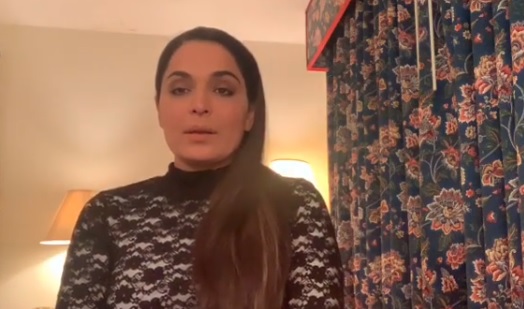
Earlier this week, a video of an emotional Meera appealing to Prime Minister Imran Khan to bring her back home went viral on social media. In the video, Meera had said that she was stranded in New York for the past two months and that she was running out of resources and funds to sustain herself. Meera urged the Government of Pakistan to facilitate her journey back home as soon as possible because New York was turning into a graveyard and she did not want to die in a foreign land.
Soon after Meera’s video went viral, several media outlets reported that the actor is not telling the truth and that she is in fact at her husband and father-in-law’s house in New York. The media reports also suggested that her video was shot in a room at their house and not in a hotel room as she claimed.
Furthermore, Meera in her first video had also said that she had travelled to the US with Humayun Saeed and that while he had managed to return home she was left behind. However, Humayun Saeed while speaking to GNN stated that he had gone to the US with Adnan Siddiqui and Hira Mani for Meray Paas Tum Ho shows. He said that Meera was not part of their contingent and that he had met her last six months ago. Humayun further shared that Meera had approached him for a film but because he was busy with the shoot of London Nahi Jaunga, he has to turn down her offer.
Following the reports and speculations, Meera, in another video message denied the rumours and called out those spreading false information.
“In my video, I had asked requested Prime Minister Imran Khan to bring me home. As a Pakistani, it is my right,” she said. “This is not the time to mock or ridicule people.”
Slamming those twisting her story, Meera further said that the Pakistan embassy in New York knows of her whereabouts and that she is grateful to Council General Ayesha Ali [for her help].
Meanwhile speaking on Bakhabar Savera among other media outlets, Meera further clarified that the videos of her enjoying BBQ parties were from a few days back and that for the past one week, she has been stuck in a hotel in New York.
Meera also shared a series of erratic social media updates.
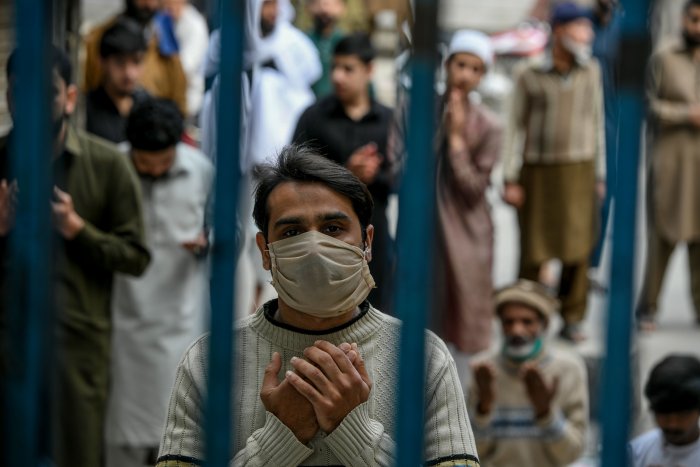
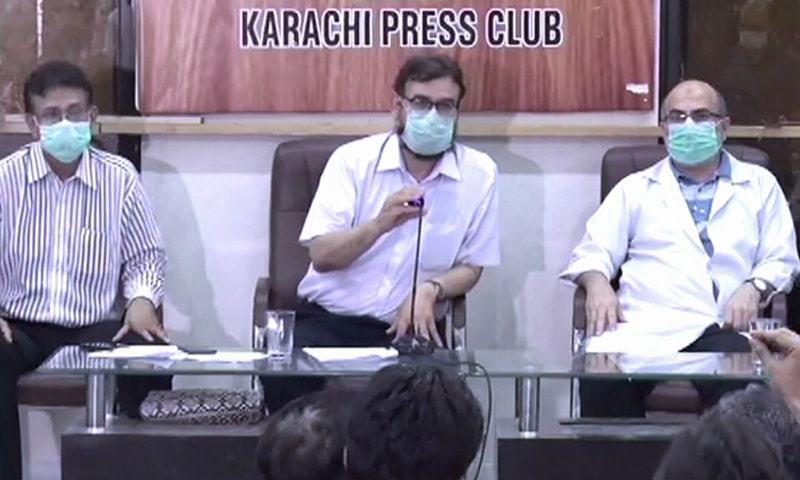
Senior doctors and top healthcare professionals issued a stern warning on Wednesday and appealed to the federal and provincial governments to reconsider relaxation in lockdown given that they fear a spike in coronavirus cases in the country. Doctors said easing relaxation could prove disastrous for Pakistan.
Addressing a press conference in Karachi, Dr Saad Niaz said that from April 16-April 21, cases have increased around 40 percent.
“If we don’t strictly enforce lockdown measures, the projected number of coronavirus cases may go up to 70,000 by May 15,” he stated.
Dr Saad also said that we don’t have the testing capacity. “We are not safe. These are just myths. If there had been no lockdown initially, things would have been worse…Wards are already saturated. We have more patients under the age of 60 than in western countries. We have to realise that we don’t have enough healthcare facilities to cope with cases…In fact, severity is much more than what we think.”
He said that more than 162 healthcare workers have been tested positive for COVID-19 in Sindh alone. “Don’t take this lightly based on myths. Neither is there any cure nor do we have the capacity to cope with the cases. Lockdown helped contain the spread. The only thing that can help is complete social distancing and lockdown. We know that at least 200 people have died of coronavirus in the last month alone. We don’t want to get to a point where we will be treating people on the roads or deciding who to save – the 35-year-old patient or the 55-year-old one. We are taking risks. It is very depressing for us to see that everything is being opened while we are at the frontline of this war against corona.”
Watch the complete video of doctor’s press conference here.
Meanwhile, Dr Atif Siddiqui said that doctors are there for you but please stay at home. “We are running out of beds. We need to understand why the number of cases are increasing.”
The list of demands by healthcare professionals included :
Strict enforcement of lockdown and prevention of congregation of all sorts
People will have to cooperate. Do not leave your houses
Request the business community to reconsider opening businesses
Appeal to religious scholars to review decision to keep mosques open
The first case of COVID-19 was reported in the Chinese city of Wuhan in late November 2019. Since then, the virus has spread across the globe, infecting over 2.5 million people as of April 22.
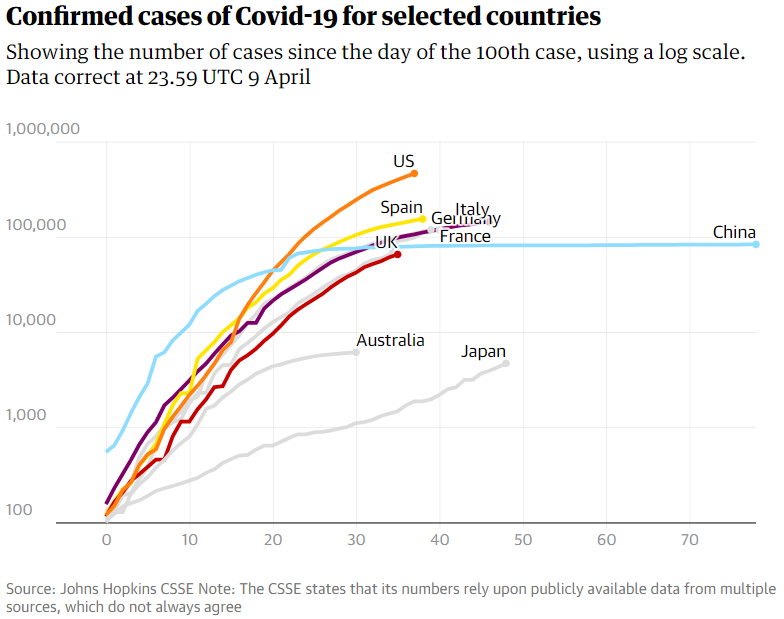
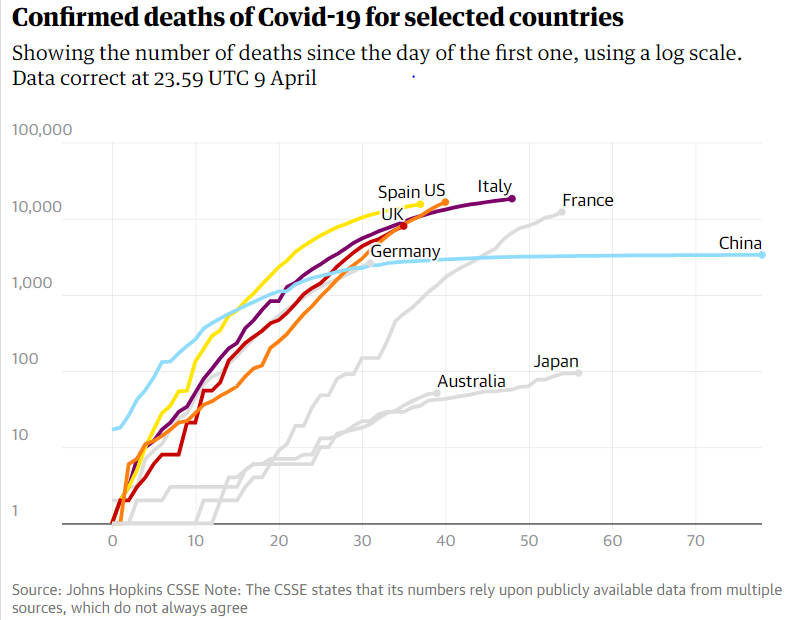
However, the disease that has wreaked havoc in the developed world, has failed to prove as severe in a developing country like Pakistan. While the number of confirmed cases has risen far beyond a few hundred thousands in countries such as the United States (US) and Italy, Pakistan’s tally of COVID-19 cases stands at a relatively meager rate of 10,072 of which 2,156 have recovered and 212 have lost their lives.
This raises an interesting question: how has a country with far less resources successfully weathered a storm that has brought wealthier states to their knees?
The first possible explanation can be that the countries’ populace is more resistant to being infected by the virus. Usually, this resistance can only be imparted to humans based on previous exposure to the organism, which is also the basis of most vaccinations used to immune the masses.
The second possibility can be other diseases and vaccines that most probably granted resistance to people living in these areas.
Many diseases are endemic to this part of the World. Tuberculosis is one of the most commonly seen conditions, the treatment of which is also available. The Bacillus-Calmette Guerin (BCG) Vaccine is mandatory for newborns in countries such as Pakistan, India and Nigeria.
This same vaccine, however, is not mandatory in the developed world. It seems that countries that administer the BCG vaccine have reported far less cases of COVID-19 than those who do not.
No direct evidence, however, has so far surfaced in this regard.
Another disease endemic to these parts of the world is Malaria. At least 19 countries, including Pakistan bear 98 per cent of the global Malaria burden and hydroxychloroquine is used to treat it.
It has been observed that countries, where Malaria is rampant and hydroxychloroquine is routinely administered to patients, have encountered far less cases of COVID-19. Pakistan, India and Nigeria are among these countries. Unfortunately, just like the BCG vaccine, the effectiveness of hydroxychloroquine in treating COVID-19 cases has not yet been proven, but it has been approved for use in emergency cases by the US’ Food and Drug Administration (FDA).
The diseases commonly encountered in a region are not the only distinctive feature of the environment of that region — a widely held perception is that COVID-19 is less dangerous in warmer parts of the world. It is to be noted that warmer countries have also been hit by the pandemic.
Several other factors can be at play here.
Perhaps a less virulent strain of COVID-19 is encountered by people in these regions?
COVID-19 exists as two strains; a less common S-type strain (seen in 30% of COVID-19 cases) which was the original strain, and the more frequently encountered L-type strain (inflicting 70% of COVID-19 cases).
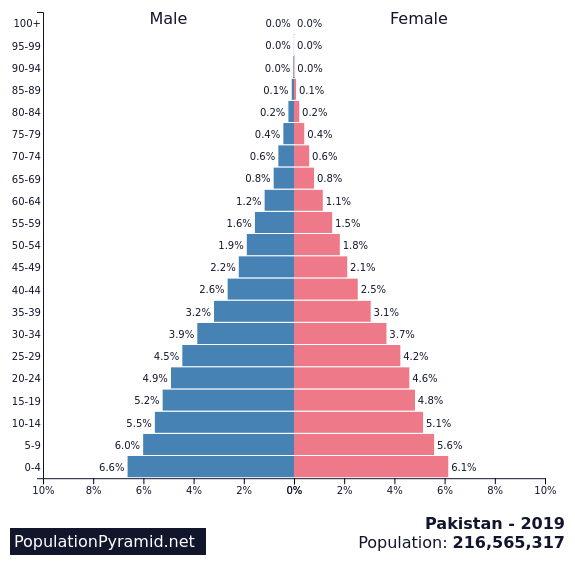
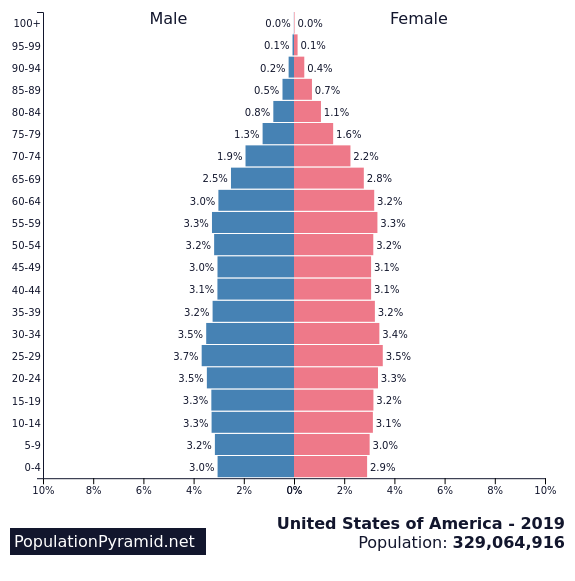
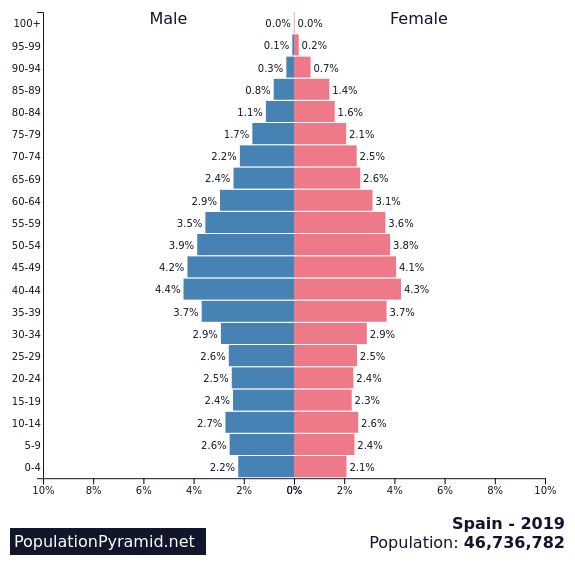
The World Health Organization (WHO) believes it is natural for viruses to mutate from one form to another and no strain is particularly more dangerous than the other. Age may play an important role in how rapidly the virus spreads as countries such as Italy and France, which have a higher percentage of old people, have fared worse against COVID-19 than countries such as Pakistan with a younger population.
There is also the possible case that less people are being tested for COVID-19 in developing countries leading to a lower number of confirmed cases. It must be noted, however, that the mortality rate is lower as well.
Clearly more research has to be conducted into what has allowed countries such as Pakistan to handle the COVID-19 pandemic better than the others across the globe. It could be any one of the factors discussed here or a combination of the variables that allowed it to withstand the worst of the COVID-19 situation.