Tag: coronavirus

  • How to protect yourself from coronavirus at office

    How to protect yourself from coronavirus at office

    The Khyber Pakhtunkhwa government’s Department of Relief, Rehabilitation & Settlement has released a list of directives for its employees to help prevent the spread of the novel coronavirus in shared workspaces.

    Here are the measures you can take to ensure a healthy environment for all employees:

    • Employees must be politely directed against hugging and shaking hands or coming into any needless physical contact with each other. This can help prevent the virus from being transferred to healthy employees from employees who may already have the virus but are not showing its symptoms.
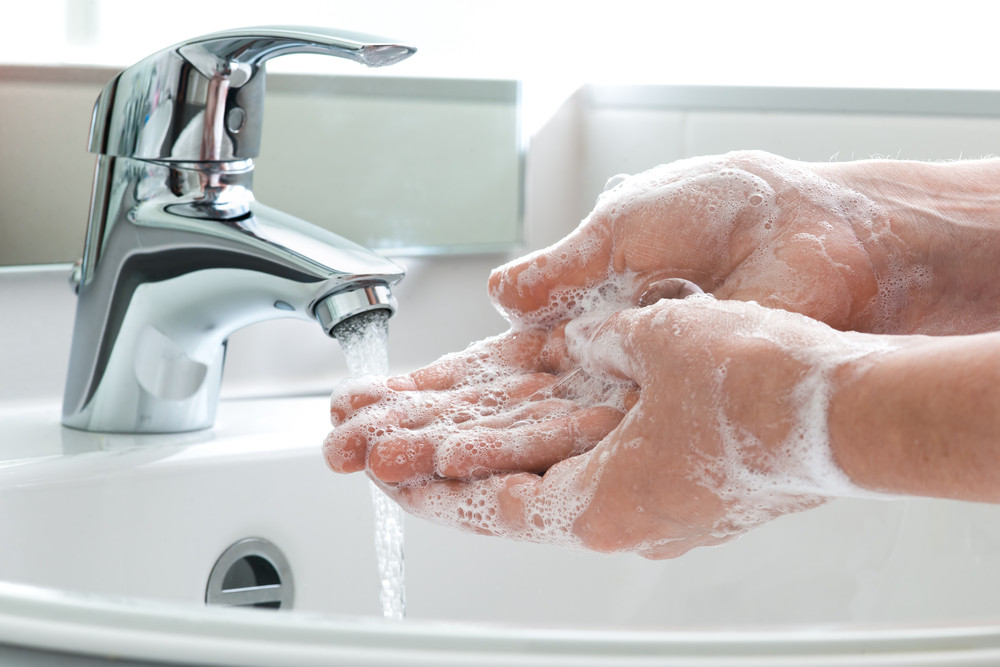
    • Employees must wash their hands at least three to four times a day with soap or an alcohol-based sanitizer
    • All towels in toilets should be changed frequently or replaced with disposable towels that can be trashed after first use.
    • Any tissues, once used, should be disposed of immediately in a trash bin.
    • Biometric attendance to be stopped with immediate effect. This can help prevent the virus from being transferred to healthy employees from a sick individual via biometric machines.
    • Any unnecessary contact with side railings and doors should be avoided.  Healthy employees can pick up the virus by touching surfaces that a sick employee has also touched.
    • Likewise, appropriate safety precautions must be taken when coming in contact with office machinery such as telephones, fax machines and computers.
    • In case of cough and flu, the employee must seek medical attention on first priority.
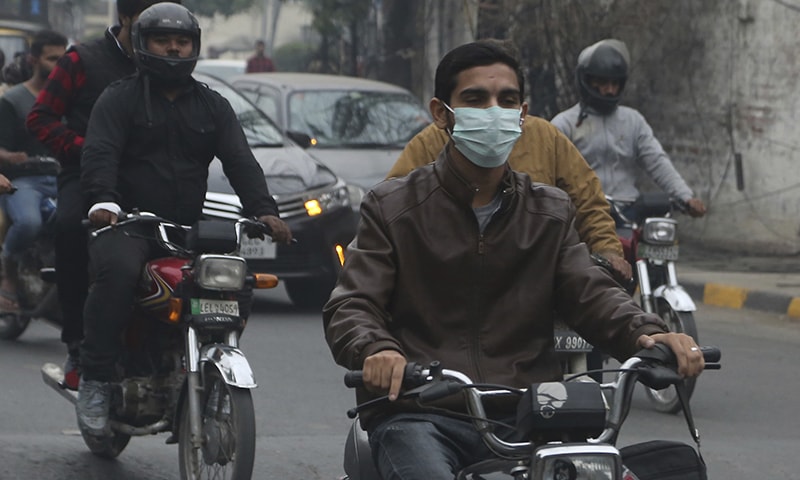
    • A mask should be worn by any person showing symptoms of cough and flu. This is to prevent the virus from spreading in the environment through coughing and sneezing.
    • Face-masks should be discarded after one day of use.

  • Coronavirus in Pakistan: Prices of face masks increase by 900%

    Coronavirus in Pakistan: Prices of face masks increase by 900%

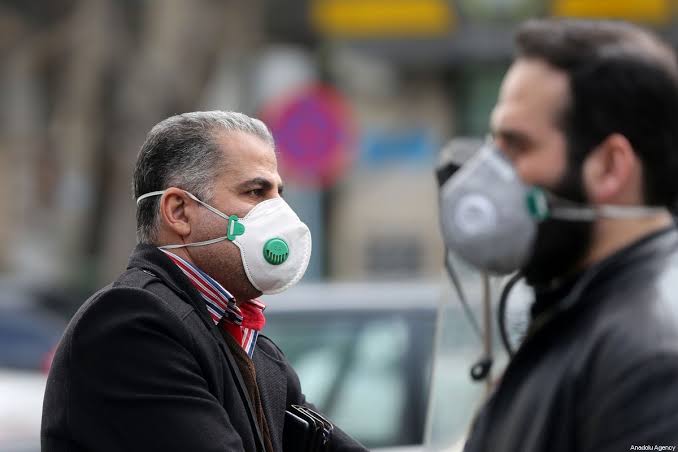
    With a couple of confirmed cases of the new coronavirus — COVID-19 — surfacing in the country, the prices of face or medical masks have increased by staggering 900% as local pharmacies also run out of what is said to provide some protection from the virus.

    While some experts say it provides modest protection against the virus that is new to science, others doubt the effectiveness of such masks for stopping COVID-19 transmission. United States (US) health officials say the virus spreads mostly between people who are in close contact with each other, and from respiratory droplets when an infected person sneezes or coughs.

    China is the world’s largest producer of the said masks, with a reported daily capacity of 20 million pieces, but by the estimate of its manufacturers, domestic demand alone is around 50 to 60 million per day. Amid the surge in demand, medical store owners are citing a shortage of the masks as the reason behind the increase in its price from Rs100 for a box to Rs1,000 for the same in markets across Pakistan.

    CORONAVIRUS IN PAKISTAN:

    First two cases of coronavirus in Pakistan were reported on Wednesday night, one of which was in the provincial capital of the country’s southeastern province of Sindh, and the other in the federal capital.

    While details of the case in Islamabad have not yet been made public, the first reported case is that of a 22-year-old man who, according to government sources, reached Pakistan from Iran by air and has a history of travel to Tehran “from where he acquired the virus”.

    It was also confirmed by Special Assistant to Prime Minister (SAPM) on Health Dr Zafar Mirza.

    “I can confirm first two cases of coronavirus in Pakistan. Both cases are being taken care of according to clinical standard protocols and both of them are stable. No need to panic, things are under control,” he tweeted.

  • Coronavirus myths flooding your WhatsApp? Here’s what is actually true

    Coronavirus myths flooding your WhatsApp? Here’s what is actually true

    The WhatsApp inbox of almost every Pakistani user has been flooding with myths regarding the new coronavirus — COVID-19 — since first two cases of the disease in the country were confirmed by the government last night.

    While the World Health Organization (WHO) has already declared an emergency following the global outbreak of the novel virus that has so far claimed over 2,700 lives and left around 81,000 others infected, here are some myth busters you need to know while maybe ignoring all those forwarded messages on WhatsApp.

    Does the new coronavirus affect older people, or are younger people also at risk?

    According to the WHO, people of all ages can be infected by the new coronavirus (2019-nCoV). Older people and people with pre-existing medical conditions (such as asthma, diabetes, heart disease) appear to be more vulnerable to becoming severely ill with the virus. 

    WHO advises people of all ages to take steps to protect themselves from the virus, for example by following good hand hygiene and good respiratory hygiene.

    Are antibiotics effective in preventing and treating the new coronavirus?

    No, antibiotics do not work against viruses, only bacteria.

    The new coronavirus is a virus and, therefore, antibiotics should not be used as a means of prevention or treatment. However, if you are hospitalised for the COVID-19, you may receive antibiotics because bacterial co-infection is possible.

    Can eating garlic or putting on sesame oil help prevent coronavirus?

    Garlic is a healthy food that may have some antimicrobial properties. However, there is no evidence from the current outbreak that eating garlic has protected people from the new coronavirus.

    As for sesame oil, it does not kill the new coronavirus. There are some chemical disinfectants that can kill the 2019-nCoV on surfaces. These include bleach/chlorine-based disinfectants, either solvents, 75% ethanol, peracetic acid and chloroform.

    However, they have little or no impact on the virus if you put them on the skin or under your nose. It can even be dangerous to put these chemicals on your skin.

    Are there any specific medicines to prevent or treat the new coronavirus?

    To date, there is no specific medicine recommended to prevent or treat the new coronavirus, however, chloroquine phosphate — used for the treatment of malaria — has so far proven to be the most effective drug against the virus.

    Those infected with the virus should receive appropriate care to relieve and treat symptoms, and those with severe illness should receive optimised supportive care. Some specific treatments are under investigation, and will be tested through clinical trials. WHO is helping to accelerate research and development efforts with a range or partners.

    Can pets at home spread the coronavirus?

    At present, there is no evidence that companion animals/pets such as dogs or cats can be infected with the new coronavirus. However, it is always a good idea to wash your hands with soap and water after contact with pets. This protects you against various common bacteria such as E.coli and Salmonella that can pass between pets and humans.

  • Schools in Sindh and Balochistan closed due to Coronavirus scare

    Schools in Sindh and Balochistan closed due to Coronavirus scare

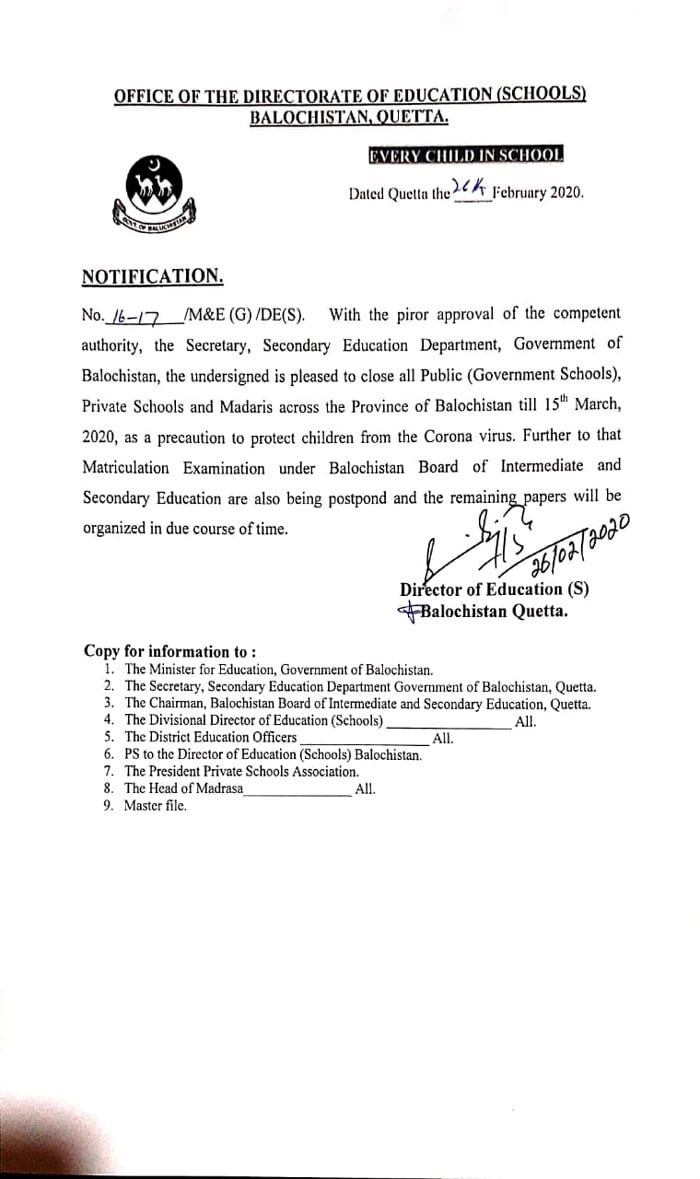
    All public and private educational institutes are closed in Balochistan until March 15 to protect children from the spread of Coronavirus. After two cases were confirmed in Pakistan on Wednesday, one in Karachi and one in Islamabad, governments are taking precautionary measures.

    The notification states that all public and private educational institutes, as well as madrassas, will be closed for more than two weeks.

    “The ongoing examinations of Grade 9 and Matriculation are also suspended,” the education minister said in a video message, “We want to keep our children safe’. He also said that it was a safety measure and no one needed to panic.

    A copy of the notification

    RELATED: Two coronavirus cases confirmed in Pakistan

    Sindh Education Minister Saeed Ghani also announced that the schools in the province would remain closed on Thursday and Friday, after the confirmation of a case in Karachi on Wednesday night.

    Saeed Ghani’s tweet

    The State Minister for Health Dr. Zafar Mirza tweeted last night, confirming the two cases.

    He said that everything was under control and also tweeted a helpline number.

    He asked people to refrain from sharing personal information of the patients saying that the patient in Karachi, as well as his family, was immediately placed in quarantine at a private hospital on the National Stadium Road while the one in Islamabad was moved to the capital’s Pakistan Institute of Medical Sciences (PIMS).

  • Two coronavirus cases confirmed in Pakistan

    Two coronavirus cases confirmed in Pakistan

    First two cases of coronavirus in Pakistan were reported on Wednesday, one of which was in the provincial capital of the country’s southeastern province of Sindh.

    While The Current is attempting to garner details of the other case, the first reported case is that of a 22-year-old man who, according to government sources, reached Pakistan from Iran by air and has a history of travel to Tehran “from where he acquired the virus”.

    The young man recently arrived in Karachi on a bus, however, authorities added, it is not yet clear as to when exactly did he reach the country.

    According to reports, the patient and his family were immediately placed in quarantine at a private hospital on the port city’s National Stadium Road.

    Meanwhile, Special Assistant to Prime Minister (SAPM) on Health Dr Zafar Mirza, hours after his “no confirmed cases of coronavirus statement”, has tweeted the development.

    The Current had on Tuesday reported possibility of unreported coronavirus cases being present in the country — a claim then denied by the authorities.

  • Iran blames Pakistan for spread of coronavirus

    Iran blames Pakistan for spread of coronavirus

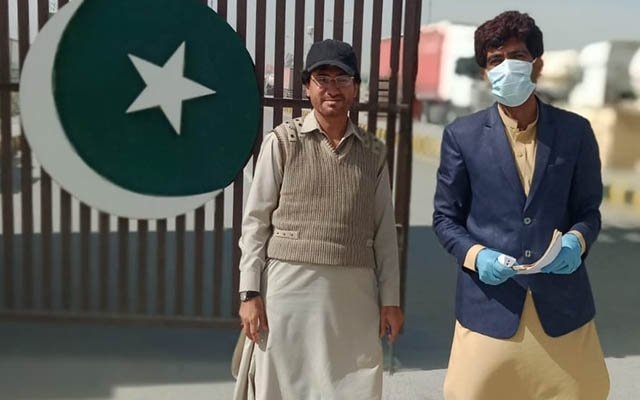
    With the coronavirus death toll in Iran rising to 15 among 64 reported cases, Tehran has allegedly blamed Islamabad for the epidemic, saying it was brought to the country by Pakistani nationals illegally crossing into Iranian territory.

    The outbreak of the 2019 novel coronavirus — a severe acute respiratory syndrome named ‘COVID-19’ by the World Health Organization (WHO) — is an ongoing pandemic that originated in the central Chinese province of Hubei’s capital city, Wuhan.

    The virus, as of February 25, has claimed 2,663 lives with over 25,000 recoveries. COVID-19 spreading to other parts of Asia, the Middle East, Africa, North America and Europe, has infected more than 80,000 people globally.

    In Hubei, the number of cases appears to be stabilising, according to government figures. But the number of people infected elsewhere in the world is rising quickly, with clusters in South Korea, Italy, Iran and a cruise ship docked in Japan.

    While Pakistan International Airlines (PIA) has suspended flight operations to China and Japan till March 15 due to the outbreak, Pakistan has closed its border with Iran after casualties from the deadly coronavirus were reported on Monday.

    The outbreak in Iran began in the city of Qom, an often-visited religious destination.

    According to authorities, Islamabad has suspended trade activities across the western border and barred citizens from travelling to Iran through the five existing border gates. The border town of Taftan in Balochistan has been quarantined for screening, while a 100-bed tent hospital has been set up in the area for pilgrims coming back from Iran, officials told The Current.

    “The government is in close contact with Iranian authorities to save Pakistani pilgrims from coronavirus,” Federal Minister for Religious Affairs and Interfaith Harmony Noorul Haq Qadri said in a statement. He added that his ministry had deployed a special team in Taftan to protect Pakistani pilgrims returning from Iran.

    Amid Pakistani actions aimed at what the government calls “continuing to successfully avoid” an outbreak of the novel coronavirus, Iranian officials have claimed it reached the country with Pakistani, Afghan and Chinese nationals illegally crossing the border to enter Iran.

    “It is not possible for the virus to reach Iran otherwise,” an Iranian official said on the condition of anonymity. They added that Afghanistan had also confirmed its first infection, so the possibility of the virus reaching the country via its northern neighbour, could not be ruled out either.

    The claims were, however, contradicted by government sources.

    They said these “unverified” claims were untrue and being made by some local Iranian media agency, but it was not the time for blame game. “Coronavirus is a real threat. Every country in the region and the world is at risk. We all need to pool together our resources and fight it instead of shifting blame on one country or the other.”

    Government sources also said that both Pakistani and Iranian health advisers and their ministers knew each other for a long time. “Cooperation is quite good between the two health ministries and the governments are in close touch with each other. They are satisfied with the mutual assistance.”

    NO CORONAVIRUS IN PAKISTAN’:

    Speaking to The Current, National Institute of Health (NIH) Focal Person Dr Muhammad Salman rejected the claims and clarified that for Pakistan to be responsible for the pandemic in Iran, there should’ve been any cases on this side of the border first.

    “Pakistan has in a scientific way, and while using evidence-based public health measures, dealt with the threats of a coronavirus outbreak in the country, and not even a single case has surfaced until now,” he said and reiterated that all such claims were false.

    He maintained that Dr Zafar Mirza had been on the frontline in curbing the potential risk, and owing to the efforts of the government, Pakistan was safe until now despite the virus affecting neighbouring Afghanistan, Iran and reportedly even India.

    CORONAVIRUS:

    In late December, a cluster of pneumonia cases of unknown aetiology was reported by health authorities in Wuhan. The initial cases mostly had epidemiological links to the Huanan Seafood Wholesale Market and consequently, the virus is thought to have a zoonotic origin.

    The virus that caused the outbreak is known as SARS-CoV-2, a new virus which is closely related to bat coronaviruses, pangolin coronaviruses and SARS-CoV-1.

    The earliest reported symptoms occurred on December 1, 2019, in a person who had not had any exposure to the Huanan Seafood Wholesale Market or to the remaining 40 of the first cluster detected with the new virus.

    Of this first cluster, two-thirds were found to have a link with the market, which also sold live animals.

    A large response, both in China and globally, followed an increase in cases in mid-January 2020, bringing travel restrictions, quarantines and even curfews.

    Examples include the quarantine of the British cruise ship, Diamond Princess, in Japanese waters; the curfew of over 780 million people in China, a voluntary curfew in South Korea, and the curfew of a dozen towns with over 50,000 people in Italy.

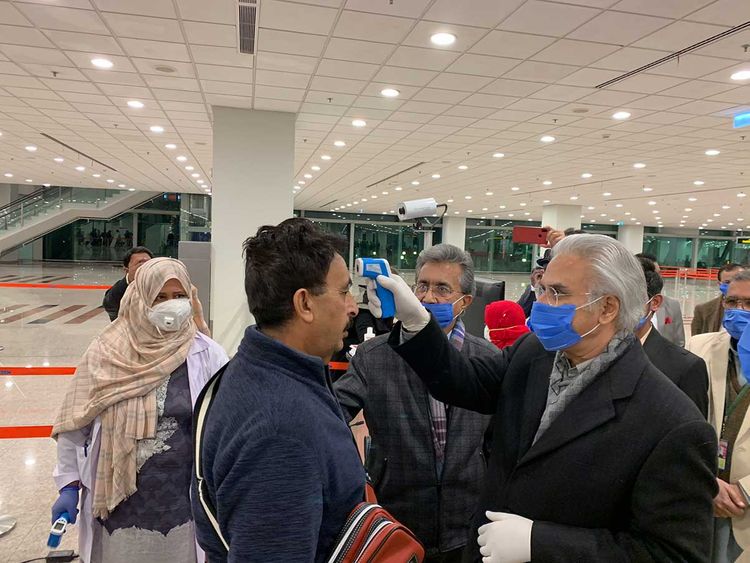
    The outbreak has been declared a Public Health Emergency of International Concern (PHEIC) by the WHO, and airports, as well as train stations, have implemented body temperature checks, health declarations and information signage in an attempt to identify carriers of the virus.

    Among the wider consequences of the outbreak are concerns about potential economic instability and incidents of racism against people of Chinese and East Asian descent, which have been reported in several countries.
  • Coronavirus: PIA suspends flight operations to Beijing till March 15

    Coronavirus: PIA suspends flight operations to Beijing till March 15

    Pakistan International Airlines (PIA) on Monday announced to once again suspend flight operations to China till March 15, journalist Sophia Saifi and Geo News reported.

    Reports quoted a PIA spokesperson as saying that a decision about extending or ending the suspension would be taken after reviewing the situation.

    “PIA has suspended flights to Beijing till March 15,” Geo reported.

    The decision comes amid the spread of the deadly virus to another neighbouring country, Iran, where the death toll rose to eight since the infection was reported on Wednesday last week.

    Last month, Pakistan had suspended operations to China briefly amid coronavirus outbreak and allowed airlines to resume flights only after installing screening machines at airports.

  • Pakistan has a cure for coronavirus and Chinese can’t stop thanking for it

    Pakistan has a cure for coronavirus and Chinese can’t stop thanking for it

    Pakistan has an effective drug for COVID-19, over 300,000 pieces of which have been exported to China, said an article published by Economic Daily – China Economic Net (CEN) on February 21, which has gotten 5.71 million page views and 38,000 likes.

    In nearly 10,000 comments, in addition to a lot of thanks to Pakistani friends for their help, some netizens were interested in the “multinational enterprise” mentioned in the CEN reporter’s article and wanted to know the hero behind the scenes who urgently dispensed the effective drugs at a Bayer — German multinational pharmaceutical and life sciences company — subsidiary in Pakistan.

    On February 20, after noticing that the official Weibo account of Bayer China said it had made an emergency deployment of chloroquine phosphate tablets in Pakistan at the beginning of this month, the CEN reporter quickly contacted to verify the matter.

    The official Weibo account of Bayer China confirmed the news and said that the batch of medicines was completed in 24 hours. 200,000 of the 300,000 tablets were “sold” to Guangzhou Pharmaceutical Holdings Limited (GPHL) at zero yuan.

    READ: Iran blames Pakistan for spread of coronavirus

    Earlier, Economic Daily reported that on February 5, GPHL first purchased 15,000 tablets of chloroquine phosphate in Pakistan through various channels, and then purchased another 200,000 tablets. The drugs arrived in Guangzhou at 7 pm on February 8.

    Data from clinical trials being performed in China has revealed that chloroquine phosphate could help treat the new coronavirus disease, Covid-19.

    China National Center for Biotechnology Development deputy head Sun Yanrong said that chloroquine, an anti-malarial medication, was selected after several screening rounds of thousands of existing drugs.

    AFP has also verified claims pertaining to the effectiveness of the drug against the virus.

    It took less than four days from purchasing in Pakistan to arriving in Guangzhou. In addition to the international and domestic airline time, it is not easy for Pakistan, a country with less developed transport infrastructure that is suffering from a severe locust plague, to urgently collect, transport and cooperate to undertake the fastest international rescue for dispensing the effective drugs to treat COVID-19.

    The CEN reporter learned from further interviews that chloroquine phosphate production was suspended in China for 20 years. In order to deliver the first batch of effective drugs successfully, from February 5 to 8, in addition to GPHL and Bayer, there are many more heroes behind the scenes, such as China Southern Airlines and Urumqi Customs.

  • Mobile accessory prices rise in Pakistan as coronavirus grips China

    Mobile accessory prices rise in Pakistan as coronavirus grips China

    Markets that depend on Chinese imports are running out of supplies as production in China hasn’t resumed due to coronavirus fears.

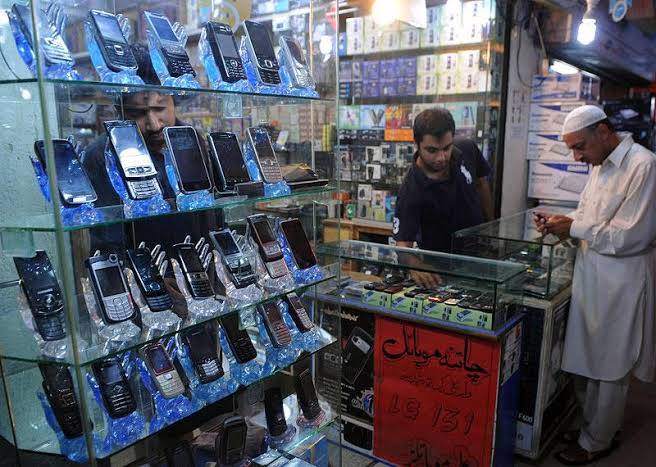
    Electronics importers in Pakistan are concerned since most of the supplies they imported from China are almost finished. This includes mobile phone hardware, accessories and spare electronic parts.

    The market has responded to the lessening supplies by raising prices. LCD screens for mobile phones that cost between Rs900 and Rs1,000 now cost Rs1,800. Supplies are also running out.

    A 30% price hike has been recorded for mobile accessories but so far, there are enough supplies for a month.

    A notification by New Asia International Electronic & Digital City, said the delay was “in order to ensure the health and life safety of merchants and customers”.

    Many business-to-business dealers are concerned as supplies were to resume on February 22, which they say would have lightened the demand pressure. Instead, they received messages from their suppliers in China saying that the goods would be delayed indefinitely.

    One of the importers said, “I think we will not get any supplies now until March 6. That, too, if we are lucky.”

    He facilitates all types of imports, including garments, jewelry and electronics. He said that even now the production units in China have not reopened as coronavirus fears are rampant.

    “People are still concerned and production units are empty in China as the virus has not been contained,” he said.

    He also said that a phone brand with a customer base in Pakistan has totally run out of its phones since all its assembly units are in China.

  • ‘Three Pakistanis diagnosed with coronavirus have been cured’

    ‘Three Pakistanis diagnosed with coronavirus have been cured’

    Three Pakistani students diagnosed with coronavirus in China have been cured, the Chinese embassy in Pakistan has said.

    “We are pleased to learn that three Pakistani citizens affected by coronavirus in China have been cured and discharged from hospitals in Guangzhou and Shenzhen of Guangdong province,” the Chinese mission in Pakistan tweeted Wednesday.

    “All the best to them! Thank you, medical team in China,” it added, tagging Pakistan’s Ambassador to China, Naghmana Hashmi, and Special Assistant to the Prime Minister (PM) on Health, Dr Zafar Mirza.

    No further details of the students, however, were shared by the mission.

    According to The News, Dr Mirza had in January announced that four Pakistani students in China were tested positive for the coronavirus at a press conference in Islamabad. At that time too, the SAPM had refused to share the names of the affected students with the media.

    “The government will take good care of the students who have contracted the virus,” he had said at the presser.

    The death toll from China’s coronavirus epidemic climbed past 1,100 on Wednesday but the number of new cases fell for a second straight day, raising hope the outbreak could peak later this month.

    As Beijing scrambles to contain the outbreak, the number of people infected on a cruise ship off Japan’s coast rose to 174 — the biggest cluster outside the Chinese mainland.

    Another 97 people died in China, raising the national toll to 1,113, while more than 44,600 people have now been infected by newly named COVID-19 virus.