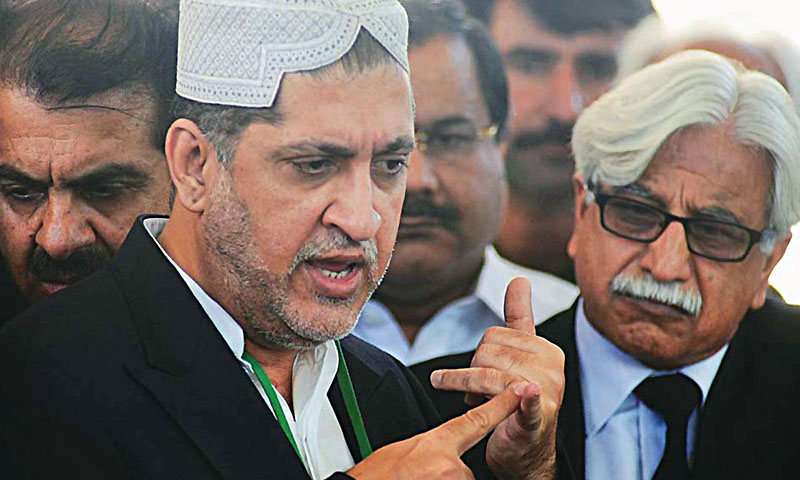
Balochistan National Party-Mengal (BNP-M) chief Sardar Akhtar Mengal has demanded the inclusion of Dera Ghazi (DG) Khan and Rajanpur into Balochistan, The Express Tribune reported.
According to the details, BNP-M chief while addressing a gathering held at Kalama Chowk of Taunsa tehsil in honour of the martyrs of Koh-e-Sulaiman said that Balochistan had the lowest population in Pakistan despite having an area of 43% of the country.
“Both these regions should be included in Balochistan to balance the population,” Mengal said, adding that they were part of the province at the time of partition.
While criticising the the government for launching mega projects such as metro trains under the China-Pakistan Economic Corridor (CPEC) in other cities of the country, he said that no welfare projects were being introduced in Balochistan.
Akhtar Mengal also accused the government of “selling” the entire country, including Balochistan province under CPEC.
Akhtar said that he is only supporting the government for the implementation of his six-point agenda.
“I am not supporting them in greed for any post,” he added, saying that he was striving for the rights of his people within the framework of the Constitution.
He further demanded of the Punjab chief minister to conduct an inquiry into the killing of two persons in DG Khan two months back in police encounter.
British journalist Mehdi Hasan has called out the Prime Minsiter (PM) Imran Khan-led Pakistan government for voicing concerns over repression being faced by Muslims across the globe expect the Chinese persecution of Uighur Muslims in Xinjiang.
Speaking to Federal Minister for Human Rights Shireen Mazari on his show, Al Jazeera’s Hasan asked as to why had Pakistan not publicly criticised China on its detention of millions of Uighur Muslims.
“There’s a quote on your Twitter profile page from the great Muslim leader and the grandson of the prophet, Imam Hussain, that reads ‘those who are silent when others are oppressed, are guilty of oppression themselves’,” he said, adding that in China, millions of Uighur Muslims were being detained against their will in “concentration camps” and yet the Pakistani government had said nothing.
“In fact, PM Imran Khan has said that he will not criticise China on this publically. Couldn’t the Uighurs say that your silence, Pakistan’s silence, means that you’re guilty of oppressing them too?”
Responding to the question, Mazari said that the link established by Hasan was “absurd” since her government had talked to China. “When we have evidence, we take it up. But China is an ally of ours, and we will not go screaming on the streets about it.”
When asked if Pakistan had condemned Chinese actions privately, the minister said that Islamabad had been speaking to the Chinese and “hearing their point of view”.
WATCH VIDEO:
“You haven’t stood up and spoken about the Uighurs… that’s the problem,” the journalist maintained as Mazari said repression must be called out regardless of who was behind it when asked if she would condemn the Chinese actions.
PAKISTAN, CHINA & UIGHURS:
The Chinese government has reportedly detained more than a million Muslims in reeducation camps. Most of the people who have been arbitrarily detained are Uighur, a predominantly Turkic-speaking ethnic group primarily from China’s northwestern region of Xinjiang.
Human rights organisations, United Nations (UN) officials and many foreign governments are urging China to stop the crackdown; however, officials maintain that what they call “vocational training centres” do not infringe on Uighurs’ rights.
While the Chinese government has refused to share information about the detention centres and prevented journalists and foreign investigators from examining them, internal documents leaked in late 2019 have provided important details on how officials launched and maintain the camps.
As part of a campaign seeking relief for Uighurs in China, Islamabad has time and again been called out for raising its voice for Muslims facing Indian oppression in held Kashmir as well as helpless Palestinians, but not for those in China where lie Pakistan’s economic interests — such as the construction of China–Pakistan Economic Corridor (CPEC).
CPEC is a collection of infrastructure projects that are currently under construction throughout Pakistan. Originally valued at $46 billion, the value of CPEC projects is worth $62 billion as of 2017.
It is expected to not only benefit Pakistan and China, but also to have a positive impact on Iran, Afghanistan and India with the enhancement of geographical links through improved road, rail and air transportation system with frequent and free exchanges of growth and people to people contact.
Senate Standing Committee on Foreign Affairs Chairman Mushahid Hussain Sayed has said that Chief of Army Staff (COAS) General Qamar Javed Bajwa had to go to China to control the situation after Pakistan Tehreek-e-Insaf (PTI) ministers levelled baseless allegations regarding the China-Pakistan Economic Corridor (CPEC) projects.
Speaking to a private media outlet Sunday, Mushahid said it was regrettable that the United States (US) openly opposed the CPEC initiative, adding that the project was not aimed at defence, though it did have various strategic implications.
“China has no link with attempts to subjugate right to freedom in Pakistan,” he said and added that it was unfortunate how every government in Pakistan tried to take credit for the projects launched by its predecessors.
Speaking about Federal Minister for Communication Murad Saeed’s allegations about corruption in CPEC projects, Mushahid said not even a single rupee corruption had been proven and Pakistan Muslim League-Nawaz (PML-N) leader Ahsan Iqbal should take Murad to court in this regard.
The PML-N senator said that CPEC had a central position in the Pak-China strategic relationship, and maintained that the PTI leadership should be very careful in giving statements about the flagship projects as they were not fully aware of the sensitivities attached to it.
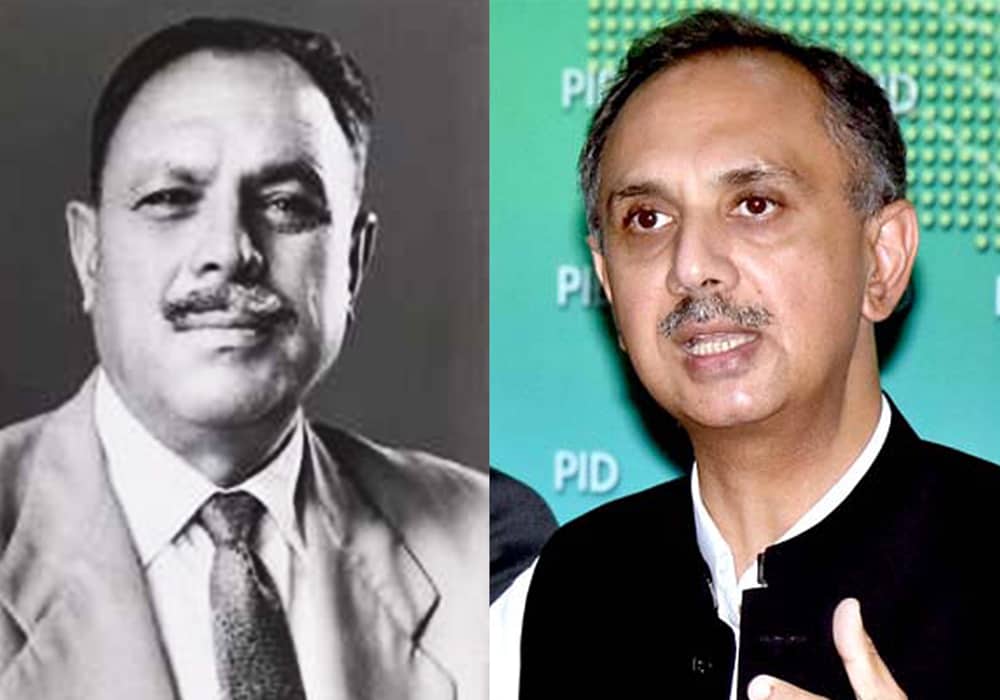
Minister for Power Division Omar Ayub Khan has said his grandfather and former president of Pakistan, Ayub Khan, had “laid the foundation of China-Pakistan Economic Corridor (CPEC)”.
Taking the floor of the National Assembly on Wednesday, Omar Ayub said, “Former president of Pakistan Ayub Khan had laid the foundation of CPEC by starting work on the Karakoram Highway.”
He further said that the Prime Minister (PM) Imran Khan-led government was determined to achieve the set target of Rs5,500 billion in the financial year 2019-20.
The minister added that the country had to pay billions of rupees as interest on the loans taken by the Pakistan Muslim League-Nawaz (PML-N) and Pakistan People’s Party (PPP) governments.
CPEC:
CPEC is a collection of infrastructure projects that are currently under construction throughout Pakistan with China’s help. Originally valued at $46 billion, the value of CPEC projects is worth $62 billion as of 2017.
The project is expected to generate employment and boost the country’s economy in the years to come.
Generally considered a conservative political party that supports
free market capitalism, democratic ideals and is anti-censorship, the Shehbaz
Sharif-led Pakistan Muslim League-Nawaz (PML-N) is among the few major political
entities that shaped Pakistan as it is today.
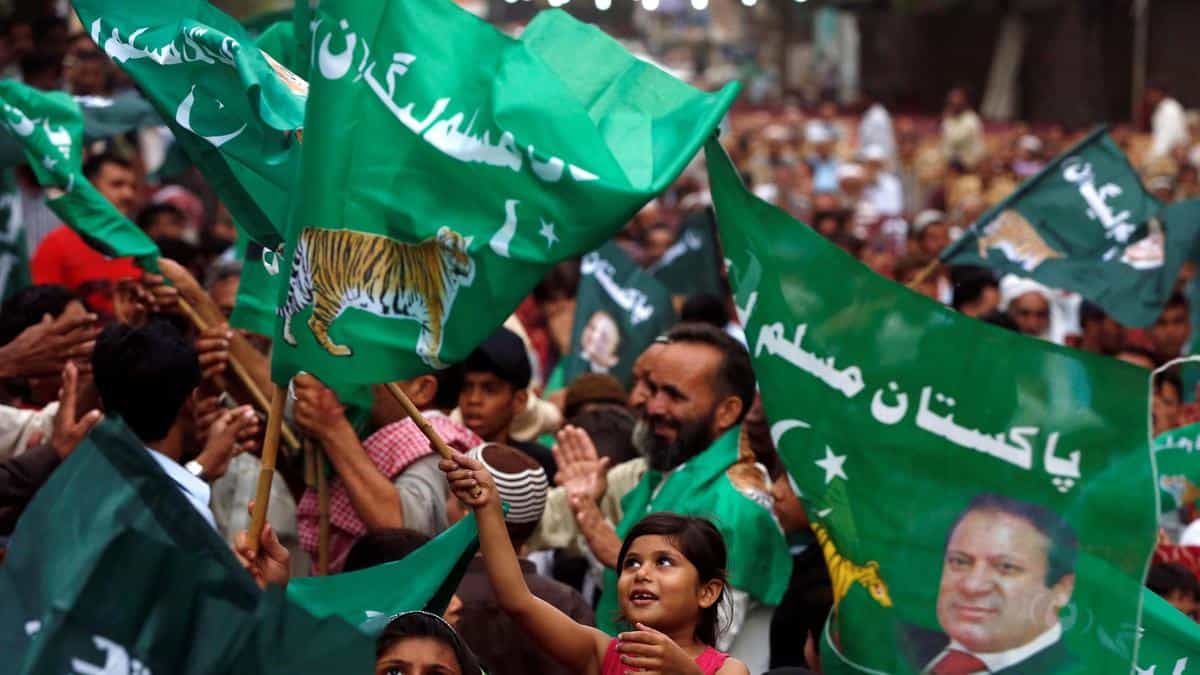
While the party’s popularity has taken massive blows in recent years owing to the alleged involvement of its leadership, especially former party chief and thrice-elected prime minister Nawaz Sharif, in corrupt practices, here are five reasons you have to love PML-N for, nonetheless.
Too lazy to read the entire article? Watch the video:
5. Punjab Protection
of Women Against Violence Bill:
The Shehbaz administration passed in the provincial assembly
the Protection of Women Against Violence Bill 2015, granting sweeping powers to
women, particularly in their marital life.
While the bill invited strong criticism from religious
circles that termed some of the clauses of the new law “repugnant to the basic
canons of Islam”, it was finally passed by the Punjab Assembly in February 2016,
providing comprehensive protection to women against a range of crimes.
4. 126 days of
patience:
Among other achievements of the PML-N during its last tenure
were the 126 days of patience while Pakistan Tehreek-e-Insaf (PTI) chief Imran
Khan continued his Azadi march and subsequent sit-in in the federal capital
from August 14 to December 17, 2014.
The patience that the then ruling party resorted to –
without launching a rigorous crackdown and later accepting the protesters’
demands – calls for accepting it as a reason to love the PML-N.
3. China-Pakistan
Economic Corridor:
PML-N supremo Nawaz is credited for the China-Pakistan
Economic Corridor (CPEC) project which has brought $46 billion investment to
Pakistan.
The project is a collection of infrastructure projects that
are currently under construction throughout the country, the value of which was
worth $62 billion as of 2017.
Officials predict that CPEC will result in the creation of over
2 million jobs by the year 2030 and will add 2 to 2.5 percent points to the
country’s annual economic growth.
2. Dealing with the
energy crisis:
The PML-N government launched several power plants in
Sahiwal, Port Qasim, Jamshoro, Faisalabad, Mianwali and DG Khan besides a solar
park in Bahawalpur and wind farms in Sindh to overcome the once
“uncontrollable” power shortage.
Its pre-2013 polls promise to bring about US$20 billion for
the energy sector was also fulfilled which positively impacted the lives of the
people, at least until 2018.
1. War on terror:
The then premier Nawaz launched the Karachi operation in
2013 as part of which hundreds of criminals, gangs and terrorist were held and
sentenced.
Zarbe Azab was also one of the biggest and most successful
anti-terrorism operations ever, which was launched by the Nawaz government. The
operation launch was followed by the formation of the National Action Plan
later in 2015 to crack down on terrorism and supplement the anti-terrorist
offensives.
It was considered as a major coordinated state retaliation
following the deadly APS Peshawar attack and received unprecedented levels of
support and co-operation across the country’s political spectrum.