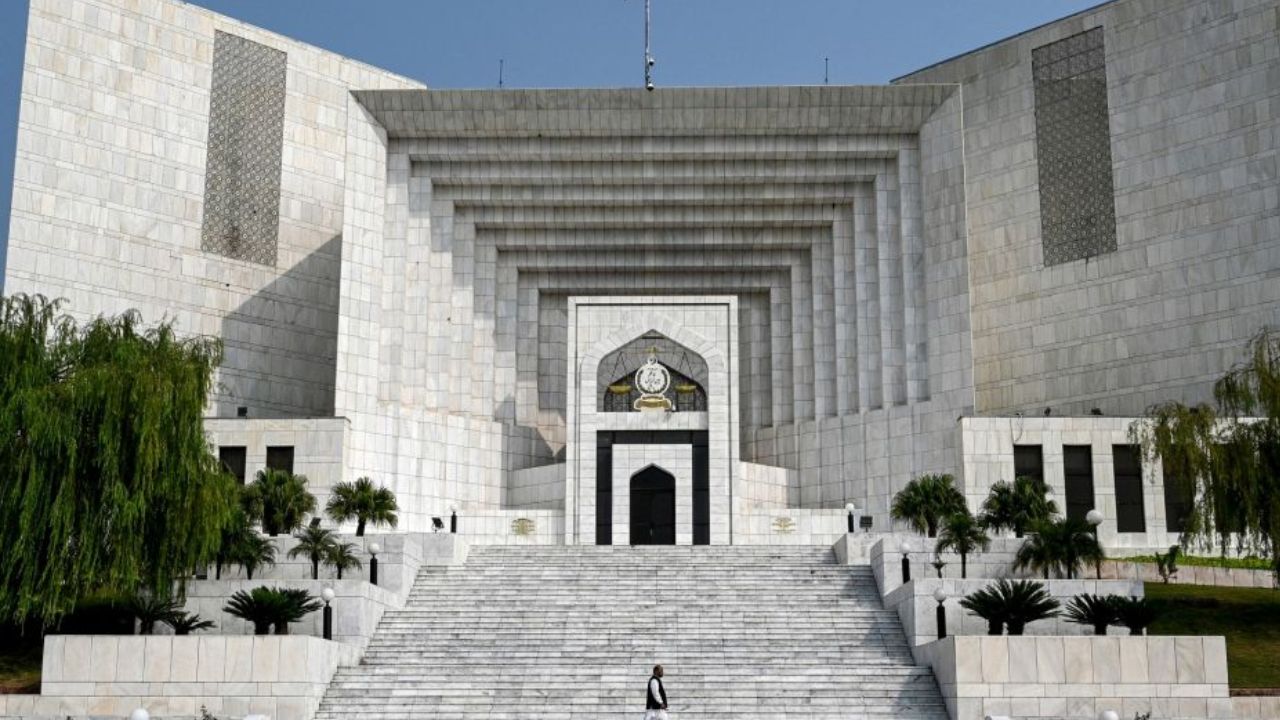
The Supreme Court on Thursday acquitted a man who had been in prison for 12 years on charges of raping his daughter, citing contradictions in the prosecution’s case.
In its August 26 order, accessed by a private news channel, Justice Ali Baqar Najafi stated that the prosecution’s evidence “was deficient of trustworthiness” and was therefore rejected.
“The sentence and conviction of the appellant is set aside. He be released forthwith if not required in any other case,” the order stated.
The case dates back to 2010, when the suspect’s minor daughter, then aged six or seven, told her mother and maternal uncle that “her own father had committed rape with her”.
According to the order, that year on October 2, the girl went to her mother crying and said her father had done a “wrong act” with her, leaving her in severe pain.
Following the allegation, the father was arrested and handed life imprisonment under Section 376(1) of the Pakistan Penal Code, along with a fine of Rs35,000.
In 2013, the Lahore High Court upheld the punishment.
The convict appealed the LHC’s decision to the Supreme Court, where a three-judge panel heard the case.
The SC noted in its ruling that although the mother had stated the daughter had been raped at 2:00 pm, the victim’s own account cast doubt on her credibility and required corroboration.
The order highlighted further contradictions, stating: “According to the complainant (mother), the victim was brought to the hospital where she was examined in her presence.
However, the doctor’s opinion is self-contradictory as in her examination in chief she stated that the victim was subjected to rape but in the cross-examination she categorically stated that on the basis of chemical examiner’s report, no rape was found to have been committed with her.”
Justice Najafi added that this raised “a serious question on the credibility of the statement of the victim and the possibility of false implication of the appellant”, noting that a dispute between the complainant and the accused had also been recorded during the proceedings.
The judge further underlined that the trial court had failed to apply the Rationality Test before recording the child’s statement. The order read: “a child is a competent witness if he/she passes a standard of sufficient maturity of understanding about the facts which were to be narrated by her,” stressing that such statements required corroboration.
Sexual abuse remains widespread in Pakistan despite strong anti-rape laws that prescribe the death penalty or imprisonment ranging from 10 to 25 years.
According to data compiled last year by Sahil, an NGO working on child sexual abuse, most perpetrators are either acquaintances, neighbours, or family members. In March this year, four men who raped and murdered an 11-year-old girl in Bahawalpur were found to be her relatives, including two maternal uncles.