Tag: economic news

  • SBP-held forex reserves rise by $12 million to $8.05 billion, sufficient to cover over two months’ worth of imports

    SBP-held forex reserves rise by $12 million to $8.05 billion, sufficient to cover over two months’ worth of imports

    The State Bank of Pakistan (SBP) announced a rise of $12 million in its foreign exchange reserves, reaching $8.05 billion, as detailed in a statement released on Thursday. The nation’s overall liquid foreign reserves, encompassing both SBP and commercial banks, amounted to $13.379 billion as of August 11. Among these, commercial banks held net reserves totaling $5.3237 billion, as reported by the SBP.

    While the central bank did not provide specifics on the cause behind the augmentation of foreign exchange reserves, the situation presents an upbeat stance. Nevertheless, it’s worth noting that the existing reserves would barely cover imports for a span slightly exceeding two months.

    Notably, the previous month saw a notable escalation in SBP reserves due to inflows from the United Arab Emirates, Saudi Arabia, and the International Monetary Fund (IMF), following the formalisation of a $3 billion Stand-by Arrangement (SBA) with the global financial institution.

    According to Geo, in a departure from market predictions, the SBP opted to maintain the key policy rate at 22 per cent during the preceding month. This stance diverged from expectations, particularly those guided by IMF recommendations. SBP Governor Jameel Ahmed conveyed this decision following a Monetary Policy Committee (MPC) meeting. Explaining the rationale, he stated that given the decline in inflation, there was no inclination to increase the interest rate.

    During a press conference, Governor Ahmed also shared insights into the nation’s economic trajectory. He projected a growth rate ranging from 2 per cent to 3 per cent for the upcoming year. Highlighting the government’s actions, he mentioned the complete removal of import restrictions. This move, coupled with financial inflows from the IMF and other supportive nations, led to a $4.2 billion upswing in Pakistan’s foreign exchange reserves in July.
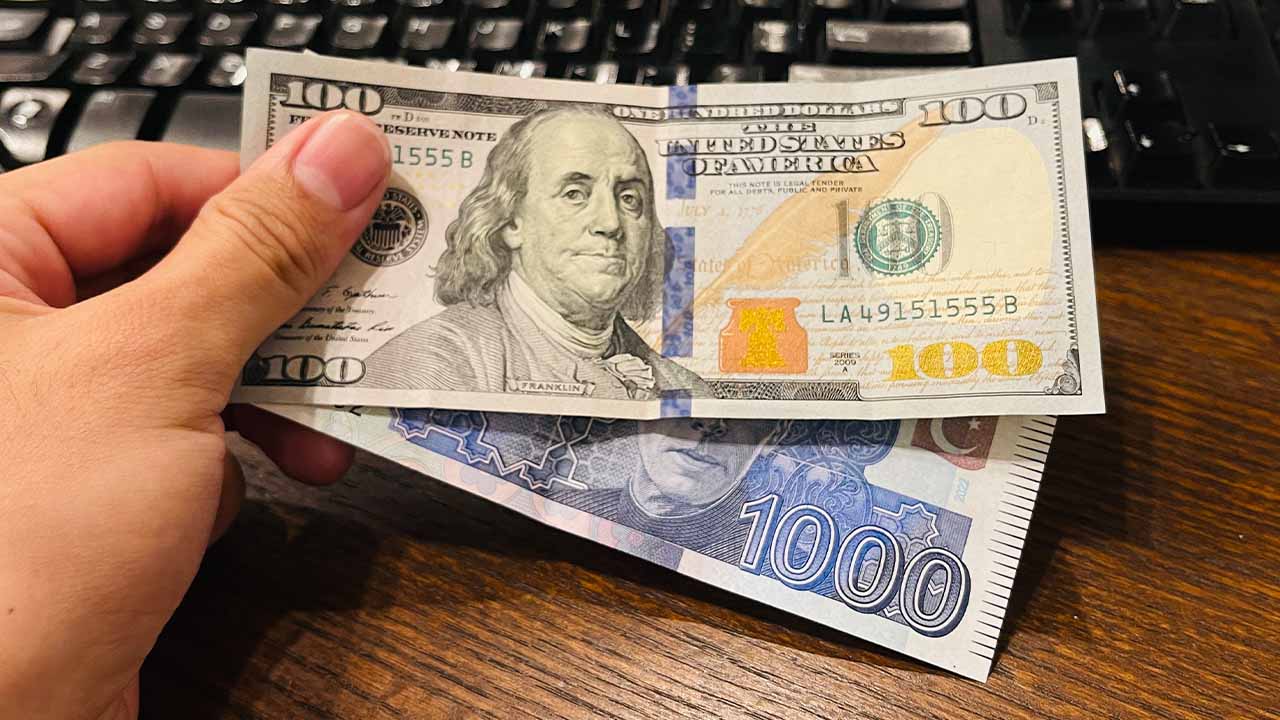
  • Pakistan’s weekly inflation reaches lowest point at 28.6% since October 2022

    Pakistan’s weekly inflation reaches lowest point at 28.6% since October 2022

    The Sensitive Price Indicator (SPI) recorded a weekly inflation increase of 0.70 per cent, reaching 28.55 per cent on a year-on-year basis for the week ending June 6.

    This represents the lowest rate since October 20, 2022, when SPI inflation stood at 27.1 per cent. Furthermore, short-term inflation surged to an all-time high of 48.35 per cent for the period ending on May 4.

    During the week, a total of 51 items were monitored, and their price movements were analysed. Out of these items, 24 (47.06 per cent) experienced price increases, 10 (19.61 per cent) witnessed price decreases, and 17 (33.33 per cent) remained stable.

    This table showcases the items that recorded either an increase or decrease in their average prices during the specified week:

    ItemIncrease/Decrease
    TomatoesIncrease (42.25%)
    OnionsIncrease (8.70%)
    PotatoesIncrease (4.79%)
    Wheat flour bag 20 kgIncrease (4.05%)
    GurIncrease (4.01%)
    SugarIncrease (3.48%)
    ShirtingIncrease (3.02%)
    Hi-speed dieselIncrease (2.95%)
    GarlicIncrease (1.90%)
    Matchbox eachIncrease (1.66%)
    CurdIncrease (1.43%)
    Pulse mashIncrease (1.29%)
    Fresh milkIncrease (1.20%)
    Rice irri-6/9Increase (0.74%)
    Rice basmati brokenIncrease (0.67%)
    Mustard oilIncrease (0.59%)
    Prepared teaIncrease (0.56%)
    Long cloth 57″ Gul Ahmed/Al KaramIncrease (0.51%)
    MuttonIncrease (0.40%)
    Beef with boneIncrease (0.39%)
    Toilet soapIncrease (0.24%)
    Powdered milk Nido 390 gm polybag eachIncrease (0.13%)
    GeorgetteIncrease (0.08%)
    Cooked daalIncrease (0.04%)
    BananasDecrease (7.51%)
    ChickenDecrease (2.80%)
    EggsDecrease (1.17%)
    LPGDecrease (0.96%)
    Vegetable ghee Dalda/Habib 2.5 kg tin eachDecrease (0.74%)
    Cooking oil Dalda or other similar brands, 5LDecrease (0.72%)
    Vegetable ghee Dalda/Habib or other superior quality, 1 kg pouch eachDecrease (0.81%)
    Pulse masoorDecrease (0.47%)
    Pulse moongDecrease (0.31%)
    Pulse gramDecrease (0.24%)
  • Pakistani rupee records slight increase against US dollar, settles at Rs285.99

    Pakistani rupee records slight increase against US dollar, settles at Rs285.99

    The State Bank of Pakistan reported that the Pakistani Rupee (PKR) maintained an upward trajectory against the US dollar in the interbank foreign exchange market on Tuesday.

    The PKR experienced a gain of Rs0.072 against the greenback, resulting in a closing rate of Rs285.99. This marks an improvement from the previous day’s closing rate of Rs286.71.

    Experts attribute the rise in the dollar’s value to the government’s successful fulfillment of all conditions set by the International Monetary Fund (IMF).

    Prime Minister Shehbaz Sharif recently engaged in his fourth communication with the IMF Managing Director, Kristalina Georgieva, within a span of six days.

    It is worth noting that Pakistan’s ninth review by the IMF under the 2019 Extended Fund Facility, which aims to secure the release of $1.2 billion in funds, is still pending. With only three days remaining until the programme’s expiry on June 30, there is a pressing need to conclude the review process promptly.

  • Petrol price slashed by Rs8 to Rs262 per litre for next fortnight

    Petrol price slashed by Rs8 to Rs262 per litre for next fortnight

    In a televised address on Wednesday, Finance Minister Ishaq Dar announced a significant reduction in the prices of petroleum products by the federal government.

    Effective from 12 am tonight, the price of petrol will be lowered by Rs8 per litre, bringing it down to Rs262 per litre. Similarly, the price of diesel will be reduced by Rs5 per litre, making it Rs253 per litre.

    Minister Dar said that these revised prices would remain unchanged for the next fortnight, providing stability and predictability for consumers. He further stated that this reduction in prices is part of a cumulative effort, as the government has already decreased the prices of petrol and diesel by Rs20 and Rs35 per litre respectively throughout the month of May.

  • Gold price declines by Rs1,700 to Rs234,500 per tola amidst weakening rupee

    Gold price declines by Rs1,700 to Rs234,500 per tola amidst weakening rupee

    The price of gold in Pakistan continued its downward trend on Monday, having lost a cumulative sum of Rs1,100 per tola throughout the previous week. The All Pakistan Sarafa Gems and Jewellers Association (APSGJA) provided data indicating that the rate of 24-carat gold declined by Rs1,700 per tola and Rs1,457 per 10 grammes, reaching Rs234,500 and Rs201,046 respectively.

    On the international front, the price settled at $1,945 per ounce after a decrease of $1. The safe-haven bullion traded within a narrow range in the global market due to an agreement reached by US Democrats and Republicans to raise the federal debt ceiling, thereby averting a potential US default, which would have been unprecedented.

    Moreover, recent data suggested that the US Federal Reserve would raise interest rates for the 11th consecutive time in June. Consequently, the value of the US dollar surged, negatively impacting the gold price.

    These factors, coupled with ongoing political and economic uncertainty, high inflation, and currency depreciation, contributed to the volatility of the gold rate in Pakistan. As a result, individuals turned to purchasing the precious metal as a safe investment and a hedge.

    In the interbank market, the Pakistani rupee experienced a decrease of Re0.27 or 0.09 per cent against the US dollar on Monday, closing at Rs285.42, according to data from the State Bank of Pakistan.

    Furthermore, data shared by the jewellers’ association revealed a decline in the price of silver, which had remained relatively stable in the previous week. The rate of silver fell by Rs50 per tola and Rs42.87 per 10 grammes, reaching Rs2,850 and Rs2,443.41 respectively.

  • Gold price in Pakistan is currently Rs5,000 higher than global market rate

    Gold price in Pakistan is currently Rs5,000 higher than global market rate

    The price of gold continued to increase in Pakistan on Monday, following the gains of last week. According to the All Pakistan Sarafa Gems and Jewellers Association, the rate of 24-carat gold rose by Rs2,000 per tola and Rs1,714 per 10 grammes, settling at Rs237,300 and Rs203,446, respectively.

    In the international market, the gold rate declined by $5, reaching $1,972 per ounce. Throughout last week, the rate of gold experienced fluctuations in both the domestic and international markets, amidst uncertainty surrounding the raising of the US debt limit.

    If the US debt limit, which is currently capped at $31.4 trillion, is not raised, it could trigger the first-ever US default.

    According to Geo, recent volatility in the domestic gold market can be attributed to various factors, including economic and political turmoil, high inflation, and currency depreciation. In such times, people tend to prefer buying yellow metal as a safe investment and a hedge.

    On May 10, the safe-haven bullion reached an all-time high of Rs240,000 per tola, driven by increased political uncertainty following the arrest of Imran Khan, the Chairman of Pakistan Tehreek-e-Insaf (PTI). However, it subsequently dropped in line with the decline in the international rate.

    Pakistan’s gold price peaks above global market levels

    The jewellers’ body also highlighted that local gold in Pakistan is currently overpriced by Rs5,000 per tola compared to the Dubai bullion market. Consequently, the Pakistani gold market is presently more expensive than the world market.

    Data shared by the association revealed a significant jump in the price of silver, with an increase of Rs50 per tola and Rs42.87 per 10 grammes, settling at Rs2,900 and Rs2,486.28, respectively.

  • Pakistan’s current account records $18 million surplus in April due to import reductions

    Pakistan’s current account records $18 million surplus in April due to import reductions

    Pakistan’s current account recorded a surplus for the second consecutive month in April, with analysts attributing this development to a reduction in imports resulting from administrative measures.

    Data released by the State Bank of Pakistan (SBP) on Tuesday revealed that the country achieved a surplus of $18 million this month, compared to a current account deficit of $640 million last year. The current account had previously attained a surplus in March for the first time since November 2020, reaching $654 million, the highest since February 2015.

    According to experts, April’s current account surplus was lower than expected due to the SBP’s clearance of an import backlog.

    Overall, during the ten months of the current fiscal year, the current account deficit amounted to $3.25 billion, marking a 76 per cent decline compared to $13.65 billion for the same period last year.

    According to the SBP data, the import of goods experienced a 38 per cent year-on-year decrease, amounting to $3.7 billion in April. In contrast, exports also fell by 33 per cent to $2.11 billion.

    Furthermore, remittances declined by 29 per cent to $2.2 billion.

    The current account has achieved a surplus for two months, primarily due to the containment of imports through administrative measures.

    According to Geo, the decrease in imports has led to a slowdown in large-scale manufacturing in the country, impacting overall activity levels in sectors like services and trade.