Tag: export

  • Chinese firms seek official approval to export donkey meat

    Chinese firms seek official approval to export donkey meat

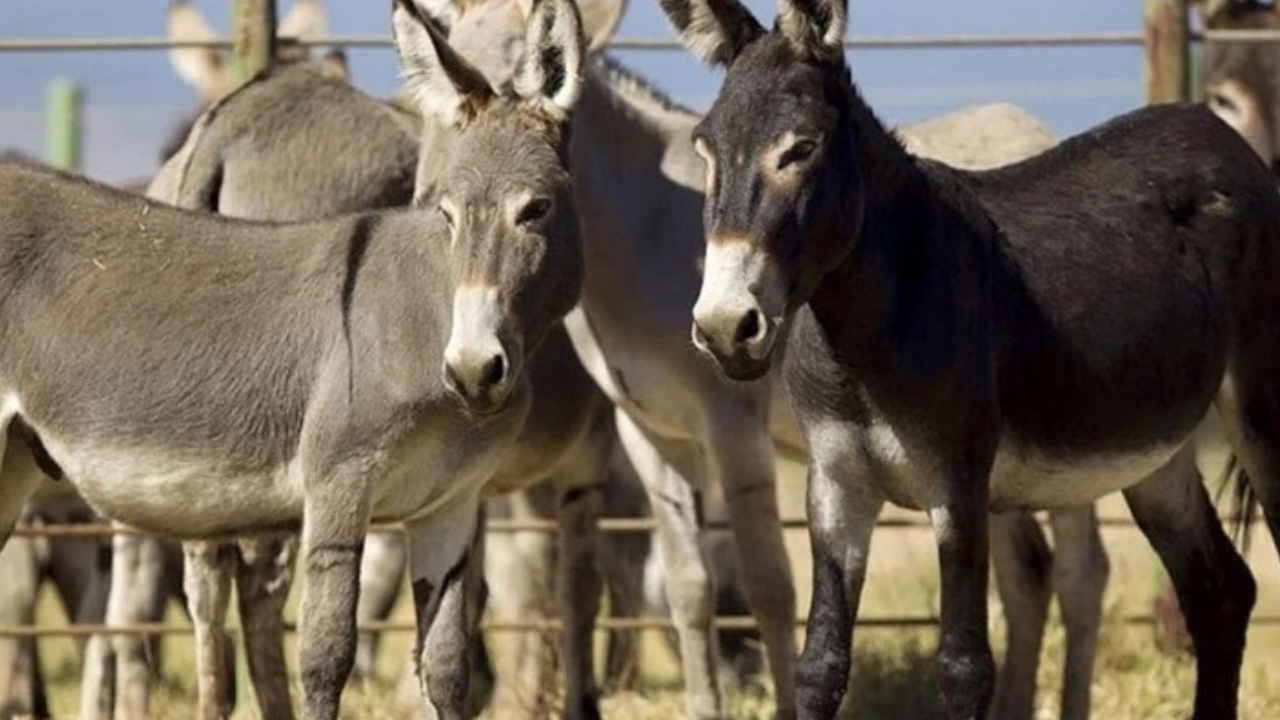
    Officials from the Ministry of National Food Security & Research have confirmed that two Chinese firms have submitted applications for permits to export donkey meat from Pakistan, representing the initial formal effort to create a legal supply chain from Pakistan to China.

    As per ministry officials, the firms have applied for authorization to operate slaughterhouses and obtain export clearance. These proposals are currently undergoing comprehensive evaluation. If granted permission, the firms would be allowed to process and export donkey meat along with byproducts via Gwadar, which has been designated as the sole location for this trade. Authorities have indicated that any meat processing conducted outside of Gwadar will be strictly forbidden to maintain regulatory oversight and avoid domestic distribution.

    This initiative follows a recent inspection by the Islamabad Food Authority (IFA) at an unlawful donkey meat facility in Tarnol, where officials confiscated roughly 1,000 kilograms of meat and over 50 live donkeys.

    A foreign national found on site was taken into custody, and an FIR has been registered. The seized meat is being destroyed as investigations continue into possible export attempts.

    Officials have expressed concerns regarding unlicensed activities. The ministry has emphasized that only duly authorized operations will be allowed, and any efforts to circumvent regulations will face stringent legal consequences.

    Donkeys are in high demand in China, where their meat is used in cuisine and their hides in the production of e-jiao, a traditional medicinal gelatin. A slaughterhouse in Gwadar began production earlier this year to meet rising demand from China.

    The Donkey Sanctuary, a UK-based animal welfare organization, states that the e-jiao industry requires approximately 5.9 million donkey skins each year. Shandong province in China accounts for nearly 90 percent of the global supply of e-jiao and regards this product as essential to its traditional medicinal practices.

    The donkey population in Pakistan reached 6.047 million in 2024, an increase of more than 109,000 from the previous year, according to a report from the Pakistan Bureau of Statistics.
  • Business council warns gas price hike could derail Pakistan’s export target

    Business council warns gas price hike could derail Pakistan’s export target

    The Pakistan Business Council (PBC) has warned that Islamabad’s ambitious $60 billion export target by 2027 is unlikely to materialise following a staggering increase in gas tariffs for captive power plants (CPPs). As per reports, the government has raised the price of gas for CPPs through a presidential ordinance, with additional levies further driving up the cost of gas.

    Gas price has surged from a conservative 2400 rupees per million British thermal units (mmBtu) to a whopping 4200 rupees per mmBtu. This marks a colossal increase of 75 percent, which might significantly affect industries that use the commodity for power generation. Once all levies come into effect, the final cost may even exceed the global rate of regasified liquefied natural gas (RLNG).

    According to reports, the new price is twice the amount which industries in Bangladesh have to pay for gas. Islamabad has effectively raised the price so that more industrial units start utilising electricity from the national grid instead of producing it themselves.

    However, industrialists might be impacted negatively by the shift to the national grid as electricity tariffs for Pakistani industries are already among the highest in the region: at 17 cents per kilowatt-hour (kWh).

    The sky-high tariff amount could be dubbed as extortionate if compared to the six to eight cents/kWh tariff that is levied in India and Vietnam. According to analysts, the latest gas price hike could weaken Pakistan’s industrial and export competitiveness.

    PBC’s Chief Executive Ehsan Malik expressed his concerns in a letter to the prime minister, as he highlighted that this sharp increase will not only hurt export-oriented industries but also impact manufacturing for the domestic market. The move could force businesses to rely more on imports instead which will ultimately strain Pakistan’s foreign exchange reserves.

    Reports reveal that a staggering 50 percent of Pakistan’s exports come from factories that depend on gas-fueled CPPs. The PBC has warned that making gas more expensive may not necessarily shift industries to the national grid as intended.

    Moreover, some manufacturers lack immediate grid access, while others will need to make additional hefty investments to get connected to the national grid. Industrialists will have to bear these expenditures on top of their previous spending on modern CPPs when grid power was unreliable.

    Analysts were predicting that with the United States imposing tariffs on Chinese imports, Pakistan could have benefited from increased export orders. However, rising energy costs will detrimentally impact the cash-strapped nation’s ability to secure export orders.

    Ehsan Malik further outlined that it remains unclear whether businesses will receive any consideration for their past investments in CPPs when calculating the levies. Faced with these challenges, most industries are expected to turn to alternative energy sources such as solar power.

  • Growth prospects remain positive despite increase in exports

    Growth prospects remain positive despite increase in exports

    Exporters are sensing trouble as Pakistan’s merchandise exports declined for the second consecutive month to close out 2024. As per data from the Pakistan Bureau of Statistics (PBS), the fall in exports can be attributed to a sharp decline in international demand for goods.

    Despite a decline in export figures, it is important to highlight that total exports have not declined. Instead, their growth rate has fallen.

    The reduced level of export growth is predicted to end soon. According to Dawn News, the demand for Pakistani goods is expected to increase in North America and European countries from January onwards.

    The past year saw exporters post respectable figures as exports started growing in July. This trend of rising exports was because of a greater volume of international orders and a stable Rupee.

    Pakistan witnessed exports grow by double digits throughout July-September, with growth rates surging by as high as 16 per cent in August. However, November saw the export growth rate fall to 8.98 percent, while December witnessed an abysmally low of 0.67 percent.

    The positive export trajectory can be partially attributed to Commerce Minister Jam Kamal Khan’s extensive efforts to boost exports. Islamabad had a motivation to boost exports as it could not have tolerated a high trade deficit at a time when the nation was already strapped for cash. The outflow of foreign reserves due to a trade deficit would create significant issues for the economy.

    Exports in December climbed up to $2.84 billion after growing by 0.28 percent on a month-on-month basis. The export revenue in December was $20 million higher than the corresponding month in 2023.

    While the growth rate is declining on a month-on-month basis, it is important to highlight how export revenues surged past $16 billion in the first half of FY 2024-25. Compared to the same period last year, the export revenue has grown by 10.52% as exports stood just a little under $15 billion.

    Interestingly enough, it might not be Pakistani exporters or the Minister of Commerce who will help increase the growth rate of exports again. Instead, Pakistani exports may rise once President-elect Donald Trump takes office.

    The reasoning here is that experts are predicting that Donald Trump might impose tariff increases on the USA’s trading rival, China. For Pakistani businesses, this spells great news as they will be able to attract buyers from the USA who had previously purchased from China.

    In an interview with Dawn, Pakistan Textile Exporters Association Patron in Chief Khurram Mukhtar revealed that retailers and buyers from the USA were already visiting Pakistan to place orders.

    If Donald Trump follows through with his threat of increasing tariffs on Chinese goods, Pakistani exporters might benefit

  • Honey producers secure a sweet export deal to Malaysia

    Honey producers secure a sweet export deal to Malaysia

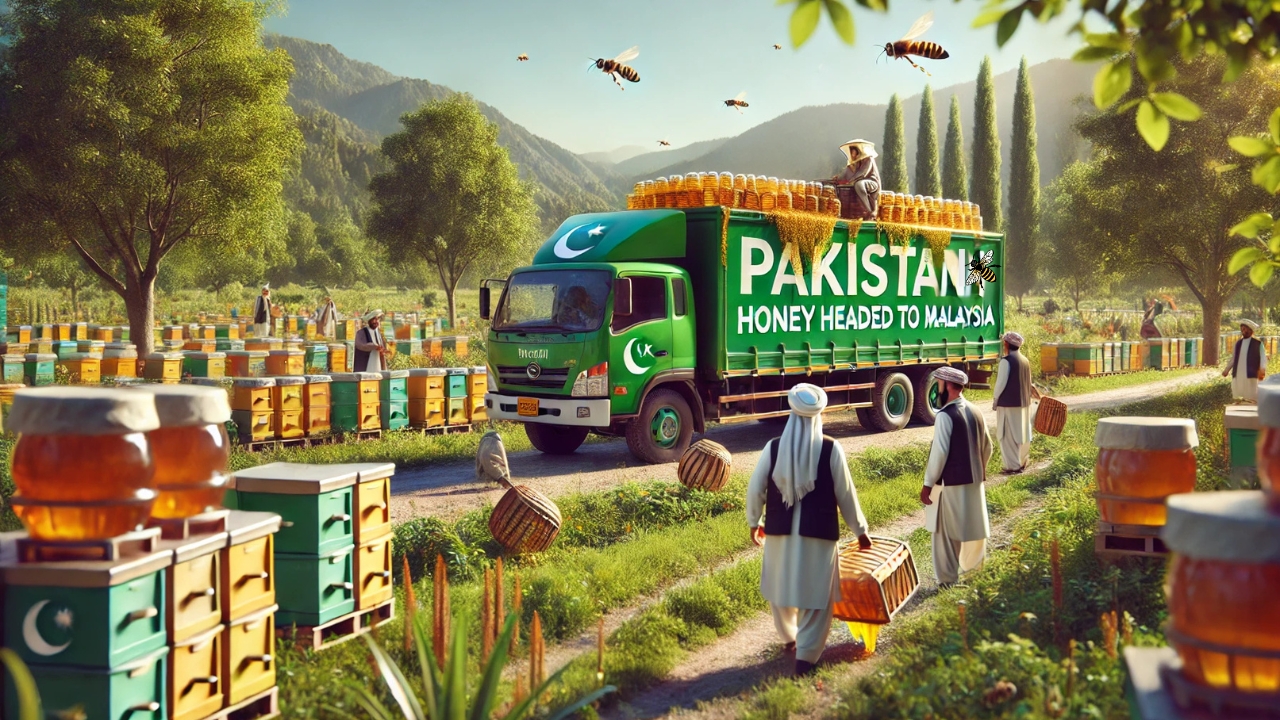
    Producers of honey rejoiced as an export deal saw the first shipment of Pakistani honey heading for Malaysian shores. This sweet deal is expected to open up new destinations for Pakistan’s honey. Any further developments will help Khyber Pakhtunkhwa (KP) the most, as the industry is primarily focused on the province.

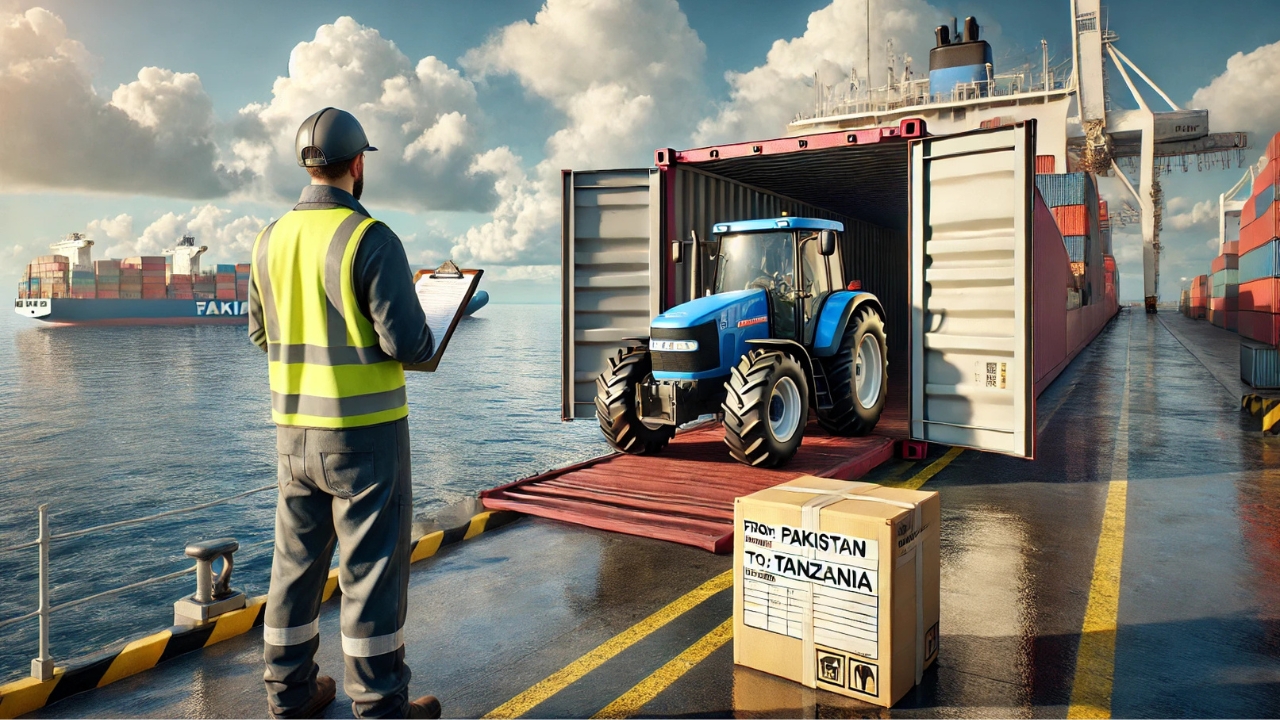
    This deal was negotiated and supported by the Pakistani High Commission in Kuala Lumpur, which has made it the second of its kind in recent history. The first one was negotiated by the Pakistani High Commission in Kenya to support tractor sales in East Africa. These activities by the High Commission are a reflection of Commerce Minister Jam Kamal, who has been advocating for the export of commodities such as cotton, sugar, tractors and, most recently, honey.

    As it stands, Pakistan ranks 34th in the export of honey, a position hardly anyone could envy. 

    Historically, Pakistan’s honey has always been destined to be shelved in stores that are primarily located in the Middle East. This expansion into a new market spells great news for the 60,000 honey farms that call KPK home as they expect to boost export levels.

    The value of all traded honey in 2022 sat at $2.69 billion, with China leading the export race at $254.2 million. If Pakistan’s producers manage to secure additional deals, they can expect to scale up the scope of their operations, as there will be a large inflow of foreign reserves.

    These foreign reserves will be critical for businesses involved in the production of honey. This is because the majority of these honey-producing farms are located in rural areas where income tends to be generally low. However, the same jar of honey can fetch a better price in foreign markets, which is especially beneficial to businesses located in economically depressed areas of the country.

    The signing of export deals by foreign importers and Pakistani honey businesses will undoubtedly create employment opportunities, as the increased demand for honey will incentivise farms to scale up production by hiring labour.

    This is especially beneficial for KP, where the farms are predominantly located. This could help reduce the unemployment rate in the province, which rests at an uneasy 8.8 per cent.

    The export to Malaysia is also a great safety net for honey producers in Pakistan because if the Middle East decides to cut back on honey imports, the effect will not be as pronounced. This is just another example of why diversification of trade is always beneficial.

    Transport businesses are also eyeing the deal as a positive step.

    If this batch of exports garners more international customers, the local transport sector could see more activity in the coming months. Likewise, businesses lining the route from KP to Karachi port.

  • Can African imports of Pakistani tractors save the ‘sinking industry’?

    Can African imports of Pakistani tractors save the ‘sinking industry’?

    Farmers and tractor producers watched on as officials in Pakistan’s high commission in Kenya facilitated the export of Pakistani tractors. These tractors are headed to their new home in Tanzania: Masai Trekta Company Ltd’s tractor depot.

    The export deal marks a significant moment for ATS (ATS tractors), which does not operate on the same scale as other tractor giants in the industry, such as Millat and Ghazi tractors, which have a 70 per cent and 29 per cent market share, respectively. Aside from ATS, other tractor manufacturers are likely to benefit too.

    This is because the tractor manufacturing industry has seen a great decline in the recent past, with some plants even shutting down across the country. The situation was so serious that even the Minister for Industry and Production, Rana Tanveer, referred to it as “the sinking tractor manufacturing industry”.

    However, experts predict the demand for tractors will increase, not just from Tanzania but also from other neighbouring African countries. This spells great news for tractor manufacturers as they will be able to increase their profit levels due to the increased sales volumes.

    Additionally, the sale of tractors will also open up further export avenues for Pakistani businesses. This could include – but is not limited to – the export of tractor spare parts by the 400 companies that produce them. Currently, 90 per cent of all parts used in local tractors are sourced internally, which means that Pakistan is capable of providing international customers with service parts for their tractors.

    If these tractors experience problems abroad, Pakistani tractor technicians and mechanics will be paid to fix them. This is bound to create additional skilled labour jobs in Pakistan.

    Moreover, tractor manufacturing plants that were previously shut down are expected to reopen and operate closer to full capacity. The result will be an increase in the hiring of unskilled employees at these plants. This is expected to ease the current unemployment rate, which stands at 5.5 per cent.

    While tractor manufacturers are expected to benefit, the same can’t be said for business owners in the agricultural sector. The fact of the matter is that a rise in international demand for Pakistani tractors will hurt agricultural landowners and farmers in Pakistan. This is because the price of tractors will rise alongside the demand. As a consequence, Pakistani farmers are expected to suffer as the higher price tags will make it tougher to purchase them.

    Lawmakers in Islamabad are undoubtedly elated, though, as tractor exports will help bring in valuable foreign reserves for the cash-strapped country. The export deal is likely to be a cause of relief as just last month alone, the trade deficit rose by 20.4 per cent to an alarming deficit of $1.78 billion.

    While further exports are not guaranteed, experts speculate that new export deals are on the horizon. Only time will tell if tractor exports can save the “sinking industry”.

  • Pakistani rice exports: A booming sector that needs government support

    Pakistani rice exports: A booming sector that needs government support

    Pakistani rice is serving a purpose far greater than tasting good in Biryani: it’s turning into a lifeline for the country’s economy, bringing in nearly $4 billion annually.

    In July and August alone, exporters managed to export a staggering 620,000 metric tons of rice. That’s a huge deal, especially considering they did it without enjoying government perks like minimum support prices or energy subsidies.

    What’s even more impressive is how Pakistani rice is standing out globally. Compared to its counterpart India, Pakistan had 74 alerts, while India had a staggering 264 alerts. The result is that Pakistan is building a reputation for quality rice, especially in Europe.

    And with production ramping up significantly in the past year, Pakistan has been able to beat India in price, too. As such, Pakistan now has a 25 per cent share of Europe’s rice market while India is behind with 17 per cent. However, India isn’t sitting quietly – they’ve come out firing by lifting bans on certain rice varieties to regain their market share.

    Rice exports could be the key to pulling Pakistan out of its economic troubles. At the close of FY 2023, Pakistan’s current account deficit was a worrying $3.275 billion.

    But the Minister of Commerce, Jam Kamal Khan’s new vision might change that.

    He wants to boost rice exports by $3 billion, which could nearly wipe out the deficit and inject much-needed dollars into the economy. Moreover, the minister expressed interest in educating farmers to improve the quality of rice harvests to reduce the chances of getting flagged with a health alert by foreign authorities.

    However, the catch is that to jump from $4 billion in exports to $7 billion, a 75% increase, Pakistan’s rice industry needs help. But what could be the solution here? The solution: Government subsidies to rice exporters.

    While exporters are doing well, they could meet the minister of commerce’s goal with the right support. Access to state-of-the-art rice milling machines and government-improved irrigation systems is necessary. Rice is a water intensive crop, and any disruption in water supply wipes out a year’s worth of yields.

    But even low-cost milling machines can cost small farmers around PKR 3 million – a price many can’t afford on their own.

    If Jam Kamal wants to take rice exports to the next level, the government needs to step in. Supporting farmers and exporters with subsidies could be the difference between a negative and positive balance of trade in the coming years.

    Is rice the new saviour of the economy? Time will tell.

  • Here’s when PayPal and Stripe payment services will be available in Pakistan

    Here’s when PayPal and Stripe payment services will be available in Pakistan

    Dr Umar Saif, Pakistan’s interim Federal Minister for IT and Telecommunications, shared noteworthy developments on Wednesday regarding the imminent availability of PayPal and Stripe payment gateways within the country. Addressing the flourishing freelancing community, he drew attention to the current scarcity of financial tools to facilitate payments within this sector. 

    During these discussions with major industry players, including PayPal, Stripe, and Wise, a compelling case for Pakistan was presented, despite reservations, including those arising from the Financial Action Task Force (FATF). 

    Dr Saif expressed optimism, foreseeing promising updates on PayPal and Stripe services in the coming four to six weeks, heralding positive implications for the freelancer community. 

    Highlighting the substantial size and potential of Pakistan’s IT freelancing workforce, the country ranks as the world’s second-largest online workforce, boasting approximately 1.5 million active IT freelancers. Nonetheless, the sector’s growth has been stymied by infrastructure limitations. 

    To address these challenges, the E-Rozgar programme is set to offer interest-free loans to the private sector, with plans for establishing co-working spaces capable of accommodating 500,000 individuals. Dr Saif also revealed a collaborative initiative with the Higher Education Commission (HEC) to introduce standardised testing for IT graduates. 

    The significance of Pakistan’s IT sector cannot be understated, with around 19,000 companies contributing substantially to both employment and the national economy, boasting official exports worth $2.5 billion. 

    Another pertinent issue discussed by Dr Saif is the reluctance of some IT companies to maintain foreign exchange reserves and revenues abroad due to constraints on repatriating US dollars. Despite conservative estimates placing Pakistan’s IT exports at $4–4.5 billion, the reality is obscured by restrictions on US-dollar spending. 

    Fueled by cooperative efforts between the IT ministry and P@SHA, a positive development has emerged. IT companies can now retain 50 per cent of their revenue in US dollar accounts and receive corporate debit cards from banks, facilitating international payments without hindrance. 

    In addition, the State Bank of Pakistan (SBP) has played a crucial role in assisting IT exporters. The SBP recently increased the permissible retention limit for IT exporters, allowing them to hold 50 per cent of their export proceeds in Exporters’ Specialised Foreign Currency Accounts (ESFCAs) with the aim of bolstering IT and IT-enabled services exports. 

  • Pak Suzuki CEO reveals plan to export upgraded cars meeting WP-29 standards 

    Pak Suzuki CEO reveals plan to export upgraded cars meeting WP-29 standards 

    Hiroshi Kawamura, the Chief Executive of Pak Suzuki Motor Company Ltd. (PSMCL), recently shared insights into the company’s endeavours to enhance the export capabilities of their cars, aligning them with numerous WP-29 standards. This significant development was reported by The News on Friday. 

    During the second round of interactive meetings with key decision-makers, conducted under the Suzuki Motors banner, Kawamura underscored the transient nature of economic challenges. He reaffirmed the company’s unwavering commitment to delivering cost-effective vehicles to the ordinary citizens of Pakistan. Furthermore, he disclosed that the company was actively engaged in the development of hybrid vehicle variants. 

    In attendance at the meeting were prominent part manufacturers, and they unanimously advocated for the promotion of localization within the automotive industry while simultaneously pursuing global market expansion. In a call for collaborative efforts, Kawamura emphasised the vital need for collective action in addressing the mounting crises faced by the automotive sector, stating, “It is imperative to take stock of the escalating crisis collectively for the automotive industry. Nothing can be achieved without local partners.” 

    During the meeting, Usman Aslam Malik, Senior Vice Chairman of the Pakistan Association of Automotive Parts and Accessories Manufacturers (PAAPAM), expressed unwavering support for original equipment manufacturers (OEMs) in their endeavours to export auto components. 

    It is important to note that WP-29 standards represent a distinctive global regulatory forum operating under the auspices of the UNECE Inland Transport Committee. Three UN Agreements, adopted in 1958, 1997, and 1998, provide the legal foundation enabling contracting parties (member countries) participating in WP-29 sessions to establish regulatory frameworks governing motor vehicles and their equipment.

    These encompass UN Regulations, appended to the 1958 Agreement; United Nations Global Technical Regulations (UN GTRs), linked to the 1998 Agreement; and UN Rules, annexed to the 1997 Agreement. 

  • Fungus found: UAE bans fresh meat imports from Pakistan

    Fungus found: UAE bans fresh meat imports from Pakistan

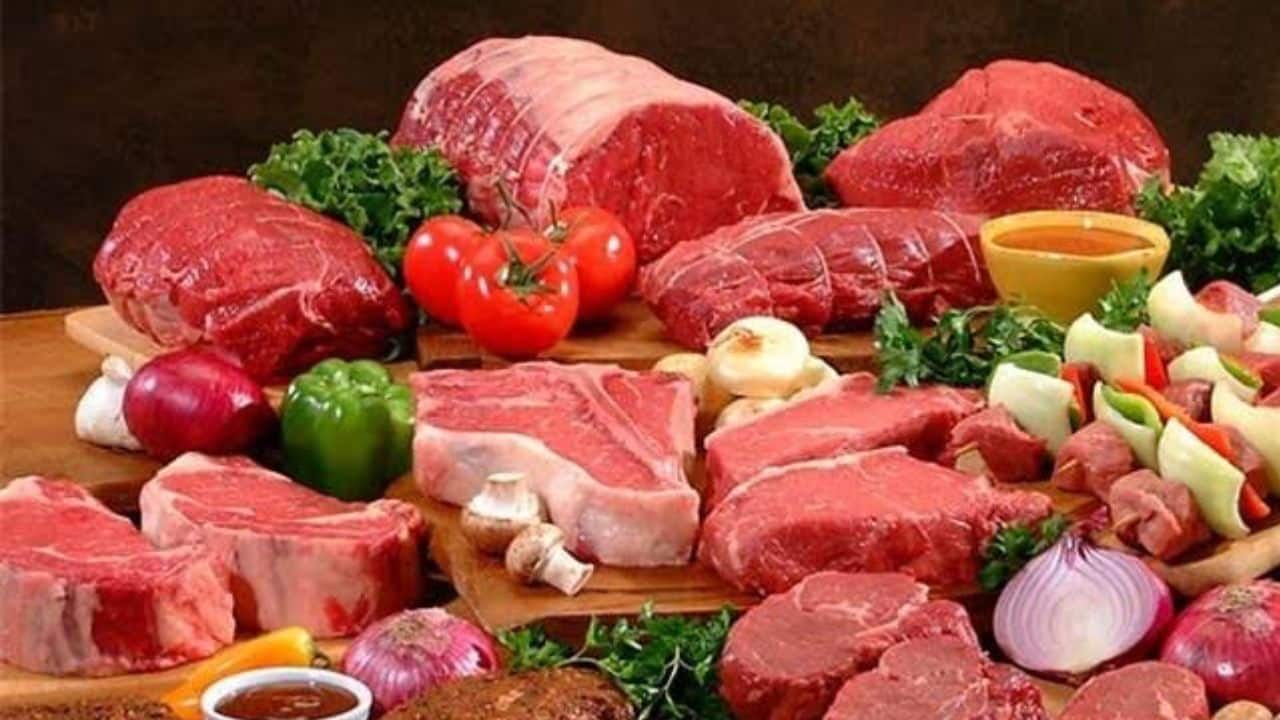
    The United Arab Emirates (UAE) has imposed a ban on the importation of fresh meat from Pakistan.

    This decision stems from the discovery of fungal contamination in frozen meat shipments from Pakistan via the sea route.

    As reported by ARY News, the presence of fungus on meat imported by a Karachi-based company prompted the UAE to enact this ban, which will be in effect until October 10.

    It’s worth noting that Pakistan typically exports fresh meat valued at $12 million monthly to the UAE through maritime channels.

    Pakistan primarily directs a significant portion of its meat exports towards the United Arab Emirates, Saudi Arabia, and Bahrain.

  • UK introduces new trade plan, offering duty-free access to 94% Pakistani products

    UK introduces new trade plan, offering duty-free access to 94% Pakistani products

    The United Kingdom has taken a momentous step in strengthening commercial ties with 64 nations, including Pakistan, by launching a new trading plan that offers duty-free access to goods.

    This move is expected to have a significant impact on Pakistani exports, allowing a staggering 94 per cent of goods to enter the British market without any duties, resulting in substantial savings of £120 million for the country.

    With the replacement of the Generalised System of Preferences (GSP), the UK’s new trade system opens up new avenues for trade and promises further tariff reductions for an additional 156 items.

    The implementation of the new trade system marks a significant development for Pakistani exports to the United Kingdom. By providing duty-free access to a vast majority of Pakistani goods, the UK aims to foster a mutually beneficial trade relationship. This move is expected to boost the trading possibilities between the two nations and facilitate an expansion of bilateral trade.

    According to the British High Commission, the current annual trade volume between Pakistan and the UK stands at £4.4 billion, and these figures are expected to rise in the future.

    The new trading plan aims to extend opportunities for free and fair trade to 65 nations, including Pakistan. By facilitating necessary changes and improvements, the UK seeks to enhance the quality of trade and enable these countries to actively participate in the global trading system. The British Trade Centre will play a crucial role in supporting and assisting these nations in their trade endeavors.

    Notably, this new plan also benefits 26 Asian nations and 37 African nations, collectively amounting to an export volume of £21 billion to the UK.

    The new trade system also promises further tariff reductions and increased trading possibilities for participating nations. With this plan in place, the UK aims to promote free and fair trade, strengthen global trading systems, and foster economic growth for all involved parties.