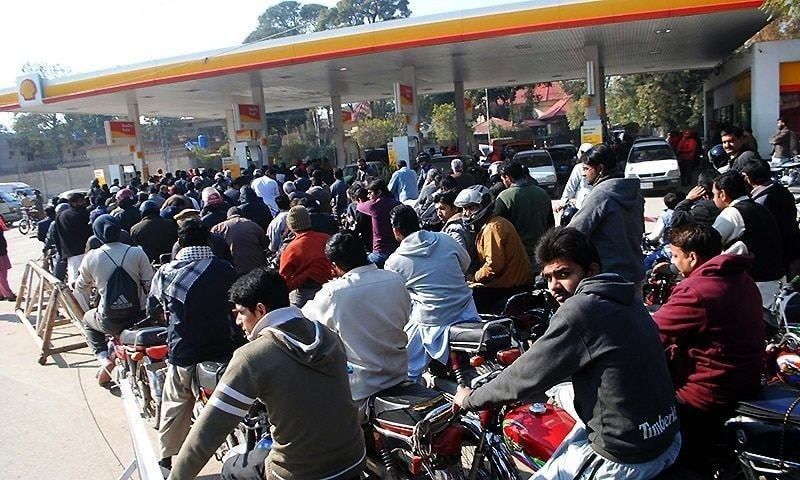
The National Accountability Bureau (NAB) and the Federal Investigation Agency (FIA) have started an investigation against those who were responsible for the shortage of fuel in June 2020.
The probe has been started because according to the reports, the shortage of fuel had caused a loss of Rs25 billion to the national exchequer in 2020.
The agencies have asked the Petroleum Division to provide records along with Inquiry Commission reports. During the investigation, NAB will look into the role of Petroleum Division secretary, director general (DG) of oil at the Ministry of Energy (Petroleum Division), and oil marketing companies (OMCs) in the petrol crisis.
Similarly, NAB will also examine the alleged connivance of government officials with OMCs.
NAB will further investigate the officers of oil refineries, OMCs and the Inter-State Gas System (ISGS) because the provision of licences to the OMCs was a criminal act.
NAB further added that the officers of different companies were appointed in the petroleum division, and they have allegedly been influencing the policy and decision making, which has resulted in massive losses to the national exchequer.
According to sources, the federal cabinet had earlier advised the FIA to complete the inquiry within three months. The investigation would later be transferred to NAB from FIA for the collection of funds plundered from the national exchequer.
Besides NAB, the FIA has also moved to take action and asked the petroleum division and the Oil and Gas Regulatory Authority (OGRA) to provide relevant details and records of OMCs and the inquiries did to unearth facts behind the petrol crisis.
Prime Minister Imran Khan has said the government would uphold the law without discriminating between the weak and powerful, as he slammed sugar mill owners for hiking up sugar prices.
Responding to a question on Jahangir Tareen’s hearings while addressing media persons in Sargodha, the PM said: “I am ready to listen to everyone’s reservations, but there is one thing they should understand. Sugar prices increased by Rs26 in a year or so.”
An increase of Rs26 per kg in sugar prices translates into Rs120-130 billion, and this huge sum of money went from the citizens’ pockets to the sugar mills, PM Imran Khan said.
“It is obvious: the government has to work in the best interests of the people and we’ve asked the FIA (Federal Investigation Agency) to probe the matter. During the investigation, several horrific things were revealed to us.”
The premier said he was ready to speak to those who had reservations against the proceedings, but stressed that the government would uphold the law — the same law that is applicable to everyone.
PM Imran Khan said the “elite and the powerful are the actual menaces behind the country’s downfall.”
“If you combine the amount of corruption done by all poor people in jails, it will amount to a maximum of Rs2-3 billion.”
The premier, speaking on PML-N president Shahbaz Sharif’s bail, said if they are unable to convict people against whom evidence was available, the country could not prosper.
A day later, on Thursday, his aide on accountability and interior Shahzad Akbar said it was regrettable that a few were threatening watchdogs for questioning them “only for personal gains”.
واپس سرکار کے نام منتقل کر دی گی اعتراض کے لیے عدالت موجود ہے، اور یہ کام محکمہ مال پنجاب کا ہے لیکن نکی مریم کو اس میں بھی شہزاد اکبر نظر آتا ہے ویسے کمال ہے اب آگے ہونے والی گھریلو لڑائیاں بھی میرے متھے نہ لگا دینا !
He was tweeting on reactions by Pakistan Muslim League-Nawaz (PML-N) to the transfer of 127 kanals of land belonging to the Raiwind residence of the Sharif family back to the government.
Punjab Revenue Department was ordered, however, a court in Lahore approved the stay order and summoned all parties to the case on April 27.
The court of civil judge Faheemul Hassan Shah issued the stay order after Nawaz Sharif’s nephew Yousuf Abbas Sharif and other members of the Sharif family, through their lawyers, approached the court.
The Federal Investigation Agency (FIA) has booked estranged Pakistan Tehreek-e-Insaf (PTI) leader Jahangir Tareen and his son, Ali Tareen, for fraud and money laundering after it was told to do so by someone over WhatsApp, senior journalist and analyst Arif Hameed Bhatti has claimed.
According to Bhatti, he possesses details of who sent the WhatsApp message, at what time and when did the other person respond to that message.
“Even the language used in the draft is not that of the investigation officer,” he said, further saying that the case was registered back on March 22 but the news was leaked over a week later.
Bhatti’s claims came after Tareens, who are rumoured to be at odds with Prime Minister (PM) Imran Khan over probe into their alleged involvement in the sugar crisis, were booked by the FIA.
According to the FIRs dated March 22, two separate cases were registered under sections 406 (criminal breach of trust), 420 (cheating of public shareholders) and 109 of the Pakistan Penal Code (PPC), read with sections 3/4 of the Anti Money Laundering Act.
Responding to the development, Tareen lashed out at the FIA and said the accusations against him and his family were “totally fabricated”.
FIA's latest claims against me and my family are totally fabricated. I have already submitted a detailed reply along with concrete evidence in response to FIA notice. Unfortunate to see them go on another smear campaign against me & my family without establishing anything illegal
— Jahangir Khan Tareen (@JahangirKTareen) March 31, 2021
One of the complaints states that Tareen fraudulently misappropriated shareholder’s money after his company — JDW group — transferred Rs3.14 billion to an associated private company identified as Farooqi Pulp Private Limited (FPML). The FIR stated that the private company is owned by his sons and close relatives.
“The transfers, especially after FY 2011-2012, were patently fraudulent investments which ultimately translated into personal gains for the family members of the JDW CEO,” the FIR said.
According to Dawn, it said that during this period, Tareen, his son and other family members purchased cash (US$) from the open market in Lahore in a “structured manner”.
“Subsequently, in 2016, Ali Khan Tareen remitted approximately US$7.4 Million to the United Kingdom for purchasing properties (to be investigated in detail during the course of investigation) which makes them liable for Anti-Money Laundering investigation,” it said.
The FIA stated that Tareen, his son, son-in-law Waleed Akbar Faruki and Shahid Akbar Faruki beneficially controlled FPML and personally benefitted from this scheme.
In the second FIR, the investigation agency said “voluminous withdrawals amounting to at least Rs2.2 billion were fraudulently and dishonestly made through a trusted cash rider.” It noted that Amir Waris, employed as a cashier at JDW’s Corporate Head Office, deposited large amounts into the personal and business accounts of Tareen and his family members.
“This modus operandi of cash-based misappropriation and money laundering was employed to break the onwards money trail of deposits into personal and business accounts of the accused Tareen and family,” it said.
It also stated that Rana Nasim Ahmed, JDW CEO, was also given large amounts from the company’s accounts to the tune of Rs600 million. “He claims these humungous amounts as salary, bonuses and ‘gentlemanly-agreed’ benefits.”
An immigration officer of the Federal Investigation Agency (FIA) has been suspended over an incident of alleged harassment at the Jinnah International Airport, Karachi.
The incident took place when an FIA immigration officer reportedly harassed a young woman arriving from Bahrain to Karachi Monday night, with the security agency’s director for Sindh, Amir Farooqi, taking notice of it Tuesday morning.
The alleged harassment incident took place when, according to the women, the FIA officer in question reportedly asked her for her number and mithai, or sweetmeat, officials said.
At Karachi Int Airport,an FIA officer harassed a lone 15-year-old girl 4m Bahrain on immigration, asked her mob No and demanded money.The girl was harassed for not giving her number.The presence of such FIA officers at the airport in a sensitive place of Pakistan is excessive. pic.twitter.com/7yK0eMKzzI
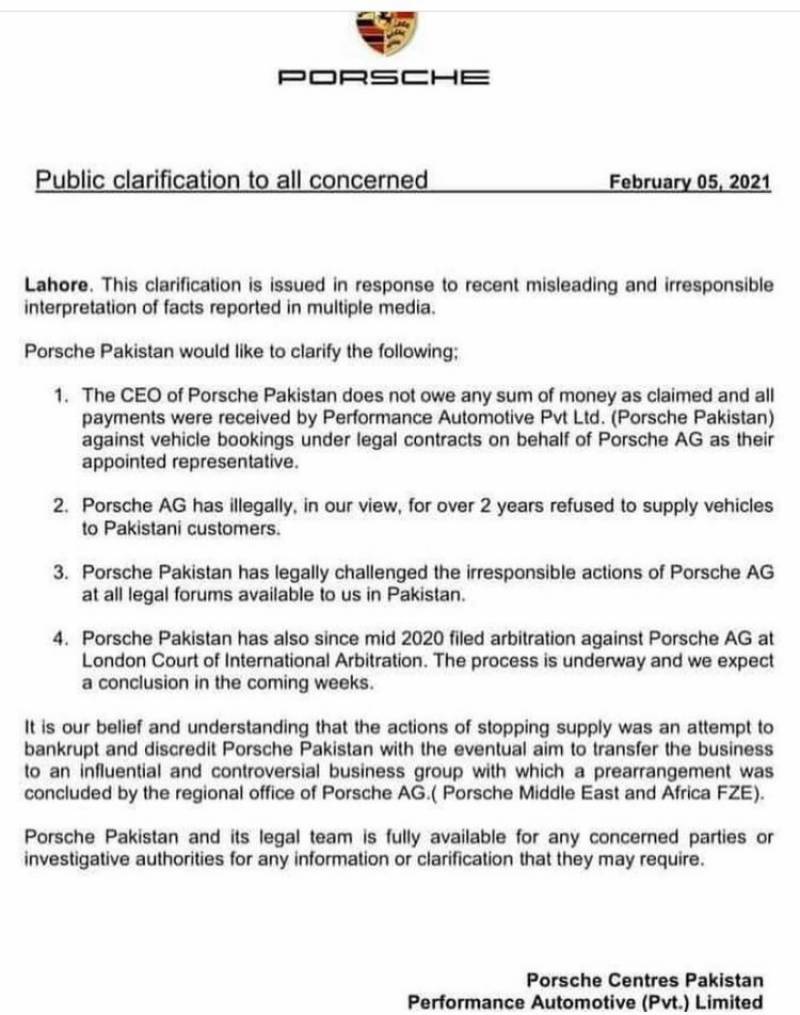
The chief executive officer (CEO) of Porsche Pakistan in Lahore has been accused of running off with nearly a billion rupees after conning people in the name of advance booking for high-end cars, whereas the company has termed these claims “false”.
According to the police, while victims of the scam have registered complaints against Abuzar Bokhari in different police stations across the city, the department has informed the Federal Investigation Agency (FIA), seeking their help in informing Interpol.
Help from the international criminal police organisation is being sought for Bokhari’s extradition from England where he allegedly flew off to a few days ago.
Police further say that Bokhari collected Rs800 million (Rs 80 crores) from people in the name of car registrations and fled to the United Arab Emirates (UAE) after which he went to England and has not returned since.
While Bokhari is the founder and CEO of Lahore-based, and Pakistan’s only, Porsche dealership based in Lahore, media reports say he started off with two partners but continued alone with the venture when Porsche formally entered the Pakistani market.
Porsche’s presence in Pakistan was provisionally launched in 2006 and then formally launched in 2008. Since then, it has been running its operations rather successfully and has grown significantly.
However, the luxury carmaker has now reportedly removed its official website page on Pakistan.
Porsche official website removes page on Pakistan which has details of its Pakistan representative Abuzar Bokhari – accused of leaving the country with Rs 800 million in booked orders – here is a screenshot of the cached version of the page pic.twitter.com/dFJkCm4NQx
“Porsche official website removes page on Pakistan which has details of its Pakistan representative Abuzar Bokhari — accused of leaving the country with Rs800 million in booked orders — here is a screenshot of the cached version of the page,” journalist Omar Quraishi tweeted.
‘ALLEGATIONS ARE FALSE’:
In a statement, Porsche Pakistan said the said claims are false. It said that its CEO doesn’t owe car booking money to anyone and all the registration money was received in the account of Performance Automotive Pvt Ltd (Porsche Pakistan) on behalf of Porsche AG as their appointed representative.
It said Porsche AG was refusing delivery of the vehicles to Pakistani customers for two years.
A lull in supply is due to attempts to discredit Porche Pakistan by a ‘controversia;’ business group.
The statement said Porsche Pakistan was in a legal battle with Porsche AG for this “illegal” refusal on all legal forums.
The statement alleged that the delay was due to Porsche Middle East and Africa FZE’s alleged understanding with a rival local party it called “an influential and controversial business group” that seeks to get hold of Porsche distribution rights in Pakistan.
The company concluded, “Porsche Pakistan and its legal team are fully available for any concerned parties or investigative authorities for any information or clarification they may require.
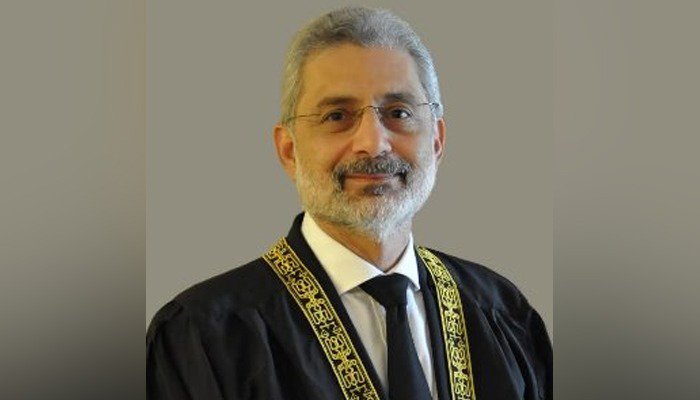
The Federal Investigation Agency (FIA) will trace the suspects responsible for hacking the phone of senior Supreme Court judge Qazi Faez Isa.
The News reported that the FIA team would comprise forensic and cyber exports who would identify the hackers and their motives for targetting the judge. It will also probe the potential theft of the judge’s phone data, email and messages, during the hacking attempt. It hasn’t been decided as to who would head the FIA team to probe the cyber attack.
On Tuesday, Supreme Court Registrar Khawaja Daud Ahmad requested FIA Director General Wajid Zia to form a team of experts to probe this phone hacking issue.
“I am directed to state that the personal cell phone of Justice Qazi Faez Isa, judge of this court, was hacked on Jan 29, 2021 (Saturday) and his lordship learnt of this early Sunday morning. I am therefore directed to request you [Wajid Zia] to depute a technical team to assess his lordship’s cell phone in respect of hacking status and apprise about the same at the earliest,” stated Registrar Supreme Court’s letter quoted by Geo News.
The SC had also issued an official statement to inform the public that the personal cell phone of Justice Qazi Faez Isa was hacked.
“There is suspicion that misleading communication can be made from his lordship’s number to anyone with ulterior motives,” read the SCP’s official statement. “Therefore, the communication purportedly made from his lordship’s cell phone, which his lordship had not sent, may be treated as fake and false,” the official statement added.
IT expert Dr Umar Saif, while talking about the hacking of the judge’s phone, said there were two ways to hack a cell phone: one is to take over other person’s Whatsapp by stealing the confirmation code, while the second, more sophisticated one, is to hack the entire operating system of the cell phone.
جسٹس قاضی فائز عیسیٰ کا موبائل فون ہیک ہوگیا۔ واٹس ایپ ہیک ہونے کی متعدد شکایات۔ یہ ہیکنگ کیسے ہورہی ہے؟ جانیےآئی ٹی ایکسپرٹ ڈاکٹر عمر سیف سے
Both techniques are being used to hack phones in Pakistan, he said, adding that an Israeli cybersecurity firm built a software named Pegasus to hack the phones in 2016.
Pegasus malware is spyware that can hack any device and steal a variety of data from the infected device, including text messages, emails, key logs, audio and information from installed applications, such as Facebook or Instagram. The spyware can record conversations and video as well as snap pictures from the device’s camera.
The malware was created by NSO Group, an Israeli cybersecurity firm founded in 2010, and has been around since at least the summer of 2016.
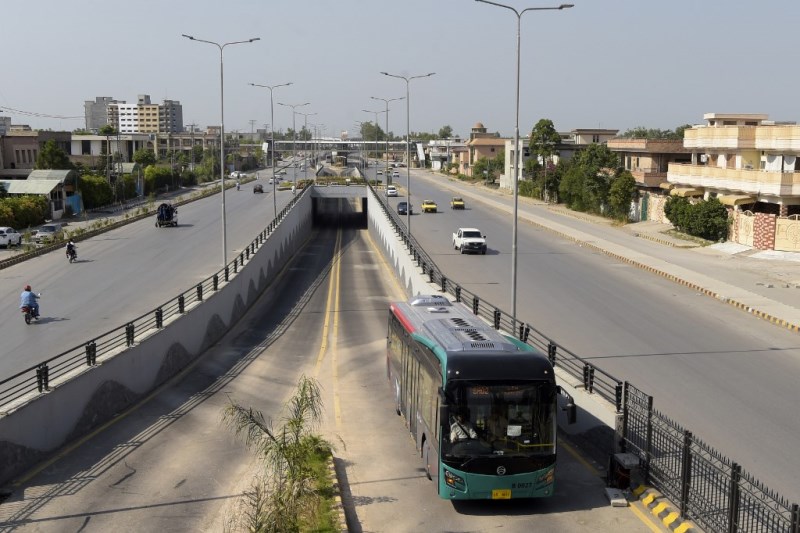
The Supreme Court has stopped the National Accountability Bureau (NAB) from investigating alleged irregularities in the Peshawar Bus Rapid Transit (BRT) project.
The Khyber Pakhtunkhwa government had approached the apex court against a ruling by the Peshawar High Court wherein the court had asked NAB to probe the mass transit project over alleged corrupt practices that resulted in massive losses to the national exchequer.
Note:there were two PHC judgments on BRT project wherein NAB and FIA were directed to probe the matter respectively. SC set aside PHC verdict wherein NAB was asked to probe. Matter related to FIA inquiry is still pending. FIA has already been stopped to conduct investigation.
A three-member bench headed by Justice Umar Ata Bandial set aside the decision of the high court, saying it was based on speculations.
According to the petition filed in the high court, the project was transferred to the Peshawar Development Authority despite the formation of a special BRT cell in the provincial transport department that also hired staffers and consultants. The court had observed the project was not coordinated well, resulting in delay and loss of money.
This is not the first time that NAB has been barred from touching the BRT. In 2018, after the PHC asked NAB to probe the BRT project, then chief justice Saqib Nisar had suspended the decision in Sept 2018.
In Feb 2020, an SC bench headed by Justice Bandial had stopped the Federal Investigation Agency to stop the BRT investigation. At this time, the KP government’s lawyer had alleged that the PHC had issued its verdict without any reasoning.
PESHAWAR METRO:
The BRT bus service was launched on Aug 13 last year by Prime Minister Imran Khan after much delay as it missed several deadlines.
The KP government and the project’s execution agency had promised to open the project, launched in October 2017, within six months on April 20, 2018. However, the deadline was missed.
The project managers kept changing the launch dates from May 20 to June 30 to December 31 in 2018 to March 23, 2019, but the project was finally launched in Aug 2020. Since then, multiple buses of the BRT have broken down or caught fire.
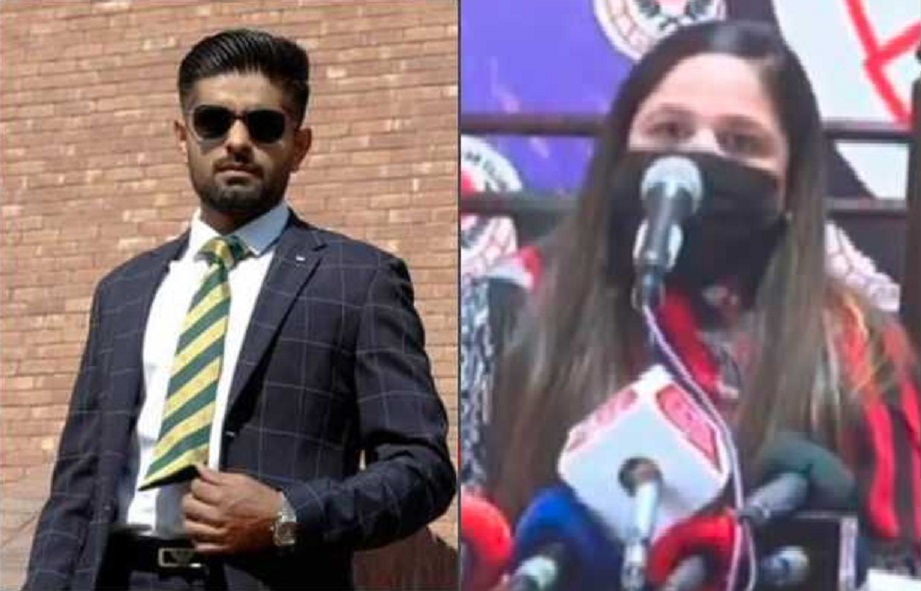
Cybercrime wing of the Federal Investigation Agency (FIA) has summoned Pakistan cricket team skipper Babar Azam over sexual and financial abuse accusations by the woman who claims to be his ex-girlfriend.
Babar, 26, was summoned on Thursday but excused from visiting the officials due to some engagements.
The star batsman requested the FIA to reschedule the summons, after which he has been asked to appear before the agency next week.
On Wednesday, he started net practice at the National Cricket Academy (NCA) after missing out all the matches of Pakistan against New Zealand owing to thumb injury. Babar’s thumb was injured during net practice in Queens Town on December 12.
Despite missing out on all the matches, Babar remained with the team in New Zealand.
The New Zealand series was Babar’s first as Test captain and now he has to lead Pakistan in the home series against South Africa starting from January 26 with the first Test scheduled to be played in Karachi. The second Test is scheduled to be played in Rawalpindi from February 4 following which the two teams will play three T20Is in Lahore from February 11 to 14.
CASE AGAINST BABAR:
In December 2020, police had given a clean chit to Babar in the harassment case against him.
According to reports, Additional Sessions Judge Nauman Naeem had taken up the petition of a woman, namely Hameeza Mukhtar, against the Pakistani skipper.
The hearing had come after Pakistan Cricket Board (PCB) Director of Media and Communications Samiul Hassan said that the sexual violence allegations against skipper Babar were a personal matter and the board could not comment on it.
According to Jang, the board’s spokesperson was responding to a question posed by the Urdu daily after a damning press conference by one Hamiza of Lahore, who claims to be Babar’s schoolfellow and neighbour.
Addressing the presser, the woman had claimed that the young cricketer tricked her into love and marriage.
“When I asked him to marry me, he tortured me,” she said.
Hamiza said that she had financially supported Babar when he was struggling with his career, adding that she spent millions of rupees on him.
“When I called the PCB to lodge a complaint, they said that it was a personal matter,” she continued.
During the proceedings in the sessions court, the counsel of the petitioner sought time to submit documents in the court and said that the entire case was based on medical reports.
Azam’s counsel, Barrister Harris Azmat, while requesting the court to reject the petitioner’s plea, said that Azam was a national cricketer and hero, adding that Hameeza had started blackmailing the national cricket team captain in 2016 whereas the police had cleared him in an investigation.
Police also submitted an investigation report in the court, as per which the national cricketer was found innocent and the woman was leveling baseless allegations.
“The court should reject the petitioner’s plea,” he had said.
Barrister Azmat said that Azam’s case was being covered by Indian media and the woman may have targeted the national cricketer once again at the behest of someone.
“The biggest threat to gender justice right now are defamation laws and the FIA.”
“Women are harassed and so we must introduce a law to protect them,” went the PML-N narrative in favour of enacting the Prevention of Electronic Crimes Act (PECA), 2016. This line peddled was mainly by the then minister for state for information technology and telecom, Anusha Rahman, to shut down critique levelled at the draconian provisions of the law, criminalising various forms of speech in an overbroad manner.
Criticism of the law was deflected by making wild accusations and false imputations against critics, what actually qualifies as defamatory statements: foreign-funded agents working against the interests of the country and religion. As recorded in the House Debates on August 11, 2016, the day PECA 2016 was passed into law, dismissing all concerns raised regarding the violation of rights, Rahman remarked women were committing suicide as a result of online harassment, ‘what about them?’
In 2017, news broke of Sindh University student, Naila Rind’s death. According to reports, she “committed suicide due to exploitation and blackmailing by a man who had befriended her on WhatsApp.” She was found hanging by the neck in her hostel room. Just last month in September 2020, a woman who had filed a complaint with the Federal Investigation Agency (FIA) committed suicide. Reportedly, she had contacted the investigation officer just hours before deciding to end her life. A law purportedly enacted to shield women from harassment and provide them with legal recourse has done no such thing.
PECA In Practice
While much haste was made to pass PECA, once enacted it took over a month to designate FIA as the investigation agency. It was not until March 2017 that courts to try PECA cases were notified. Meanwhile, complainants and litigants were left hanging. Many women who attempt to file a complaint through the online web form say it does not work or they do not hear back. Several women who visit FIA offices to file in-person complaints talk about the misconduct of investigation officers. Among the complaints that do make it to court, some complainants are advised – and at other times coerced – to withdraw and settle. Compromises are facilitated even in non-compoundable cases, which the law does not allow. Women who wish to see their cases through to the end are punished.
In a case registered in 2016, FIA “lost” the evidence file. It was only after the complainant petitioned the Sindh High Court against the FIA that the file was “recovered.” Four years after the registration of the case, the trial has not concluded because the FIA’s investigation officers, who are required to appear as prosecution witnesses in order to complete evidence, do not show up. This is routine. Case diaries are replete with show-cause notices, bailable and non-bailable warrants to compel FIA officers to attend court hearings. But this has little effect on them.
Women who participated in the Aurat Marches and were targeted online, women journalists who filed complaints with the FIA and are consistently attacked online, share the experience of so many others: the FIA does nothing about their complaints. Instead, the priority for the FIA is to register cases when men complain their reputation has been damaged by women alleging harassment. On September 29, 2020, an FIR was registered against singer Meesha Shafi and eight others under Section 20 of the PECA read with Section 109 of the Pakistan Penal Code. This FIR comes after a spate of summons issued last year by the FIA in response to a complaint made by singer Ali Zafar. Section 20, referred to as the criminal defamation section of PECA, has been weaponised by the state to silence journalists but also private complainants against women alleging sexual harassment or violence.
In July 2019, several people received a summon by the FIA requiring their attendance in Lahore. Many received summons once the date for appearance written on it had already passed. The summons themselves were vague. They contained no details about what the investigation pertained to or the section of the law it was under. Requests for a copy of the complaint were met with yet another summon. In violation of the law and investigation Rules under PECA, “sources” within the FIA leaked names to the press during the 2019 investigation, even though the law requires confidentiality to be maintained and the Rules bar disclosure of identities of both the complainant and accused.
Despite responding in writing and, in the case of some, appearing in person at the FIA office, an FIR was registered. Those summoned earlier and now named in the FIR include those who have spoken up in support of Shafi, spoken of their own experiences and covered the cases in a journalistic capacity. Many found out about the FIR through news reports. While a civil defamation trial was already underway, now a criminal case has also been lodged, not only against Shafi but also witnesses in her case. The purpose and intent of this exercise is nothing but to further harass and intimidate. It is also a tactic to scare away witnesses and diminish their credibility in the court of law.
The Chilling Effect
An FIR in another city entails contacting a lawyer, applying for protective/transitory bail. The amount is decided by the court and typically can be anywhere between Rs. 30,000-100,000. This is usually granted for a period of a week in which time arrangements have to be made to travel to the city the FIR is registered in — in this case, Lahore. A second lawyer, in the city where the FIR was lodged, must apply for pre-arrest bail. Then the investigation has to be joined which essentially means going to the FIA office and giving a statement that is included in the investigation report. This is all at the pre-trial stage. The trial itself has no specified time frame and can go on for years. As an accused in a criminal case, it is mandatory to attend hearings unless a special exemption is granted by the court. All this adds up to monetary expenses, time and psychological strain, affecting work, life and mental health. The cost of ostensibly one or a few social media posts.
It is a myth that the FIA does not act in a coercive manner against women. This is not the first time an FIR has been registered by the FIA against a woman after she levelled an allegation of sexual violence and harassment. There are other cases in which the FIA obtained search and seizure permissions and moved arrest applications at the investigation stage, while a petition against harassment by the investigation officer and validity of the search and seizure order was pending before the High Court.
The immediate fall out of summons by the FIA and now an FIR, is a chilling effect. Not only do people stop speaking about issues and self-censor to protect themselves, but those implicated in cases, depending on the level of support they enjoy and resources at their disposal, end up settling by retracting and apologising. This then serves as a narrative win for the other party. In the public domain, the outcome – retraction or apology – becomes the subject of debate, useful also to vindicate in ongoing legal proceedings. Hanging a criminal case over someone’s head to force certain terms and extract such an outcome never becomes public knowledge or the subject of discussion – for obvious reasons.
What Next?
A statement released by the Women’s Action Forum – Karachi chapter in August 2019, pointed to an emerging pattern of criminal defamation laws being used as a silencing tool against those speaking about sexual harassment and violence, both in relation to online calls outs but also against women who filed cases of harassment before legal forums. In September 2019, this issue was taken up with the Senate’s Functional Committee on Human Rights. The committee was apprised of the illegal and unconstitutional manner in which the FIA acts against citizens — in this case women. Proposals to repeal criminal defamation laws – 499 and 500 of the PPC and Section 20 of PECA – were laid before the committee and recommendations on fixing the civil defamation procedure in relation to cases of harassment, were also made. Since then, summons and investigations have turned into challans and FIRs. The onus lies on parliamentary committees to take this up again. The MeToo movement, women’s marches and more recently, the motorway rape has sparked conversations around everyday misogyny, harassment and a culture that enables harassment and rape. Laws and the criminal ‘justice’ system are being weaponised against women and their supporters, to suppress disclosures of harassment and sexual violence. Especially, PECA.
The biggest threat to gender justice right now are defamation laws and the FIA. Repealing Section 20 of PECA, 499 and 500 of the PPC, fixing civil defamation law and procedures to prevent their misuse, and holding the FIA to account for its excesses is imperative.
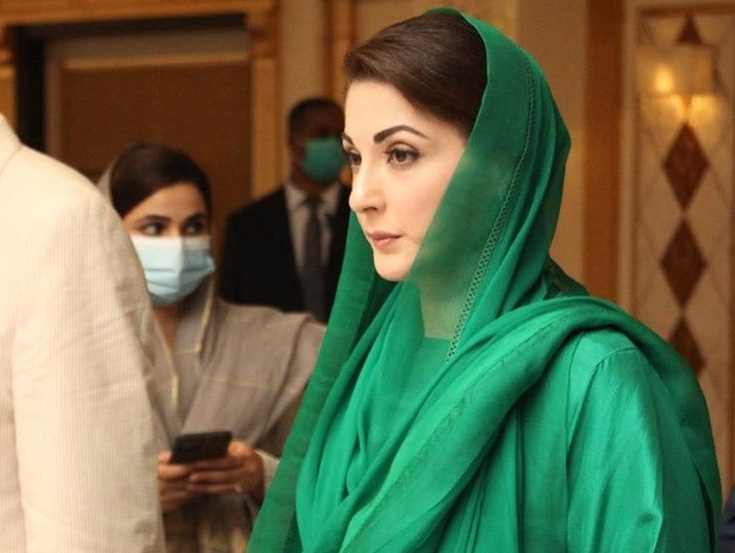
Former Federal Investigation Agency (FIA) chief Bashir Memon has claimed during his tenure, the “highest office” had ordered him to file a terrorism case against members of the social media cell of the opposition Pakistan Muslim League-Nawaz’s (PML-N) Maryam Nawaz, after a picture of First Lady Bushra Bibi was found circulating on social media.
Memon, a career civil servant of the Police Service of Pakistan (PSP) cadre, resigned from service in November last year, days before he was supposed to retire, in protest against being posted out close to retirement.
Memon had resigned the same day the government, while booting him out of office, appointed incumbent FIA director general Wajid Zia, also a PSP, in his pace.
In an interview with journalist Matiullah Jan, the first part of which was uploaded on the latter’s YouTube channel on Monday, Memon said: “There was a picture on social media, regarding which they [said] that a terrorism case should be filed.”
“It was a picture of the first lady [uploaded] on social media. How is this terrorism? There is a definition of terrorism in law. It was a normal picture, how was that terrorism,” he questioned.
It merits a mention here that the first lady clads a burqa and strictly adheres to face veiling. She also keeps out of the public eye and has rarely accompanied the prime minister on his domestic and international visits.
During the interview, then Jan asked Memon to name the authority who gave him the order, he said that he was summoned by the “highest office in Pakistan”.
When the host wondered if Prime Minister Imran Khan had attended the meeting Memon was summoned for, Memon refused to take names. “I said the highest office,” he reiterated.
“[They told me] to take action on this against [Maryam Nawaz’s] social media cell. I didn’t say that this couldn’t be done. I said, under which law? Because we have to work according to the law.”
He claimed that the government’s “expectations” which it had from the FIA “are [now] being fulfilled”.
In response to another question, Memon declared that the government expected the FIA to “do exactly what NAB [National Accountability Bureau] has done [with the opposition leaders]”.
“Especially regarding his [Nawaz Sharif’s] son-in-law captain Safdar […] just what NAB is doing with him,” he said.
Memon also said that the authorities wanted FIA to pursue corruption cases against PML-N President Shehbaz Sharif, his sons and his entire family including his relatives. The members of the Sharif family are being investigated in several cases of graft and abuse of authority.
The anti-graft agency arrested Shahbaz last week after the Lahore High Court rejected his bail petition in a money laundering case which also involves his family members. The agency accuses him of having laundered billions of rupees of black money during his tenure as the chief executive of Punjab.
When asked why he refused to pursue those cases, Memon said: “There were two reasons. One, I didn’t have the inquiries. Second, this was the mandate of the provincial anti-corruption [unit].”
The former FIA chief recalled that he was sent to Lahore where a meeting was convened by Punjab chief secretary Akbar Durrani and attended by all secretaries as well. Memon added that he was provided with the record of the case he had been asked to take up.
“End of the day, I told them that all of this is the mandate of provincial anti-corruption [unit]. They can do this, we cannot. Because FIA is a law enforcement agency. A law enforcement agency will [handle issues related to] law. We will remain within our mandate. We can’t go and jump around, in my opinion,” Memon said.
Memon said that the cases that were first referred to FIA were later transferred to the NAB. He said that the reason behind referring the cases to FIA first may have been that “they (authorities) feel that we are more competent”.
“However, I always said that this is what the law says and this is what it doesn’t. We have to work according to the law,” he told Jan. He further said that after NAB picked up the cases which were initially being probed by FIA, he was “relieved of that pressure”.
“Regarding NAB cases, whenever I hear the remarks and the verdicts that are given […] I say that God wanted to protect my dignity. In this age, all you care about is your respect,” he said.
He also talked about a “peculiar case” against PML-N leader Khawaja Asif, in which it was alleged that the latter was working for a company in Dubai while he was defence and foreign minister. The former FIA official said that it was suggested that a treason case against Asif should be lodged over the allegation.
“I’m not saying that [this is not possible]. But we need evidence for that,” he said and added that there was no available evidence when he was told to file the case. When asked who told him that such a case should be filed, he said it was said during a cabinet meeting and was included in the minutes.
“Cabinet had asked to carry out an inquiry. We did that but could not find evidence,” he explained.
He also mentioned a meeting, which was also attended by the prime minister, in which officials of government regretted that Karachi Electric was “ruined”. Memon said that FIA had proven that K-Electric had to return Rs87 billion to Sui Southern Gas Limited and that the money should be recovered.
“In his (prime minister’s) opinion, FIA did wrong by conducting this investigation [against KE]. That this investigation should not have been conducted,” Memon claimed.
No official from the government has so far commented on Memon’s claims.