Tag: Finance Minister

  • PM includes Dar in CCI instead of Aurangzeb

    PM includes Dar in CCI instead of Aurangzeb

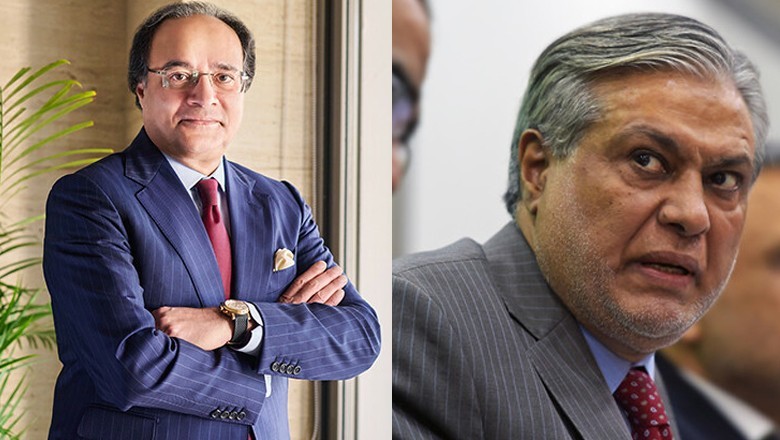
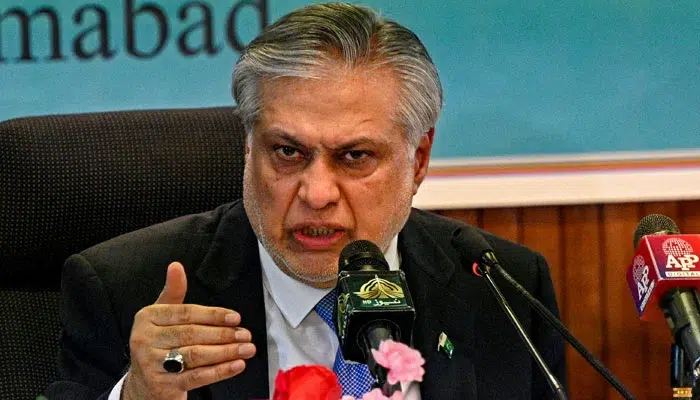
    Prime Minister Shehbaz Sharif reconstituted the Council of Common Interests (CCI) on Friday, notably replacing Finance Minister Muhammad Aurangzeb with Foreign Minister Ishaq Dar.

    The PM is heading the CCI which constitutes the chief ministers of all four provinces. Interestingly, this is the first time in the history of the council that a Foreign Minister of Pakistan has been included in the CCI.

    Business Recorder article reported that it would be normal if a Finance Minister isn’t included in the CCI because historically it has happened. However, energy and planning ministers were mostly included because they deal with provincial matters.

    The presence of the Finance Minister and the Law Minister in the CCI is very important as these two portfolios are required to respond to numerous queries raised by the provinces during the meeting.

    A similar pattern could be observed as PM Shehbaz gave Ishaq Dar the control of Cabinet Committee on Privatisation (CCoP) as well instead of including Aurangzeb earlier this month.

  • Finance Minister Muhammad Aurangzeb will meet with IMF on April 14–15

    Finance Minister Muhammad Aurangzeb will meet with IMF on April 14–15

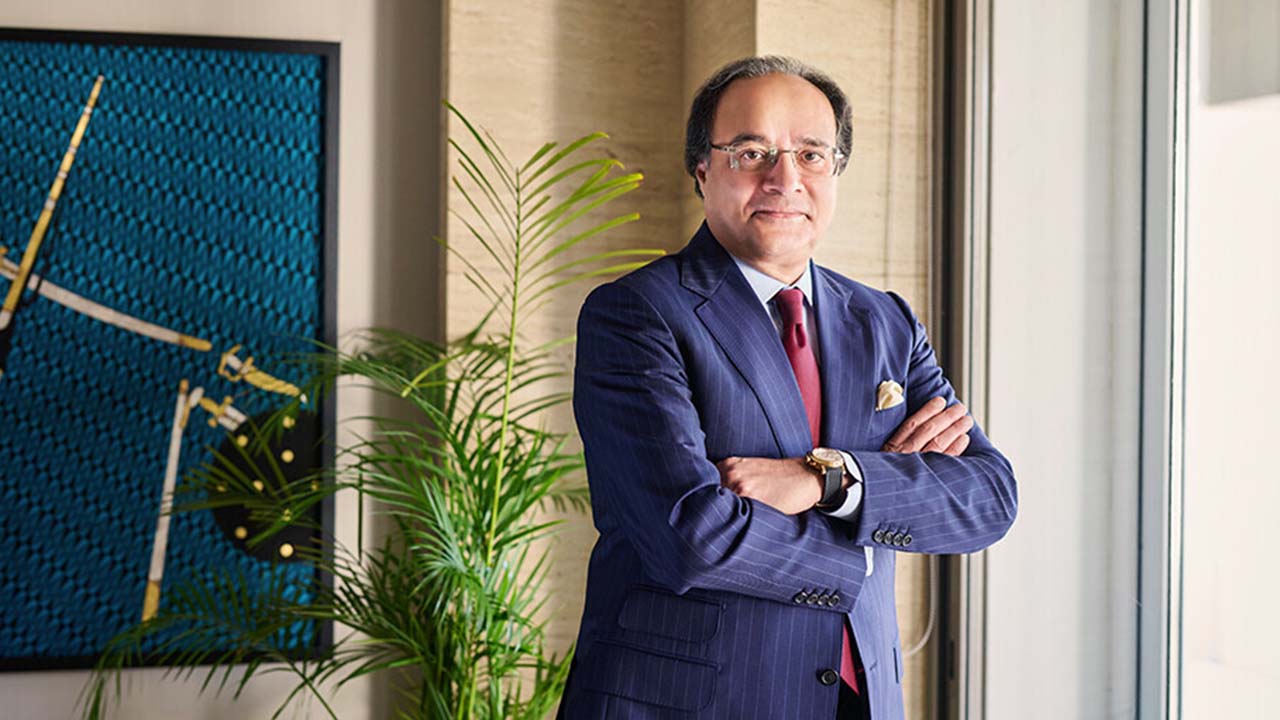
    Minister for Finance and Revenue Muhammad Aurangzeb announced on Friday that a government delegation will meet with the International Monetary Fund (IMF) in Washington DC on April 14 and 15.

    Talking to the media during his visit to the Pakistan Stock Exchange (PSX), the Minister said that the features of a new programme will be discussed in a Washington DC meeting. However, detailed talks will be held in Pakistan.

    He also said that the government plans to join a longer programme with the IMF, adding that the country’s economy will stay stable with the fund.

    Prime Minister Shehbaz Sharif also hinted on March 21 that the new IMF programme will last for three years.

    “New tranche of loan is likely to be received from the IMF in a few days, however, we would need another programme,” he had said while addressing a session of the Special Investment Facilitation Council’s (SIFC) apex committee attended by civil-military leadership.

    Aurangzeb responded to a question regarding the IMF, saying that the size of the new programme has not been discussed yet.

  • Is Aurangzeb being pushed in background to give Dar more control?

    Is Aurangzeb being pushed in background to give Dar more control?

    In a surprising move, the Finance Minister of Pakistan finds himself cut from two major financial decision-making committees, while paving the way for a much bigger role in financial matters for Ishaq Dar, Express Tribune has reported.

    Prime Minister Shehbaz Sharif has reshuffled four cabinet committees. As a result, Finance Minister Aurangzeb now heads only one committee instead of three.
    PM Shehbaz kept the chairmanship of the very important Economic Coordination Committee (ECC) of the cabinet instead of giving the Finance Minister the portfolio.

    Meanwhile, the PM has given Foreign Minister Ishaq Dar the chairmanship of Cabinet Committee on Privatization (CCOP) – a post normally headed by the Finance Minister of the country.

    Tribune reported that there was some apprehension within the ruling party Pakistan Muslim League (PML-N) regarding the appointment of Aurangzeb as the Finance Minister and it was decided within the party leadership that Dar would stay in charge of economic affairs but in a different capacity.

    Finance Minister Muhammad Aurangzeb now chairs only the Cabinet Committee on State-owned Enterprises (CCoSOEs).

  • IMF mission holds crucial talks with FinMin Aurangzeb on $3 billion SBA

    IMF mission holds crucial talks with FinMin Aurangzeb on $3 billion SBA

    In a pivotal meeting held on Thursday, Pakistan’s Finance Minister, Muhammad Aurangzeb, engaged in discussions regarding structural reforms and the viability of the energy sector with the visiting International Monetary Fund (IMF) mission.

    The mission’s visit is part of the second review process of the $3 billion Stand-By Arrangement (SBA) established between Pakistan and the international lender.

    Key points of deliberation encompassed various facets of Pakistan’s macroeconomic landscape, including fiscal consolidation efforts by the government, structural reforms, energy sector sustainability, and governance of state-owned enterprises (SOEs).

    Expressing a warm reception, the finance minister underscored the government’s steadfast commitment to collaborating with the IMF to drive forward the reform agenda, aimed at fostering economic growth and bolstering stability across Pakistan.

    During the meeting, Nathan Porter, head of the IMF mission, extended congratulations to Muhammad Aurangzeb on his appointment as the finance minister.

    Anticipations are high that the IMF mission’s visit could culminate in a staff-level agreement regarding the second review of the SBA.

    Since its inception in July 2023, Pakistan has received $1.9 billion out of the allocated $3 billion under the nine-month programme.

    Aurangzeb, articulating the government’s stance, outlined intentions to explore the possibility of acquiring a more extensive and prolonged Extended Fund Facility (EFF) within the IMF framework, with the overarching objective of attaining macroeconomic stability.

    Officials from Pakistan, including Finance Minister Muhammad Aurangzeb and Energy Minister Musadik Malik, apprised the IMF team of the concerted efforts undertaken to implement the prescribed reforms, including the adjustment of energy tariffs.

    An official from the Finance Division, speaking on anonymity, disclosed the IMF’s acknowledgment of Pakistan’s strides in meeting quarterly programmeme targets under the SBA.

    Simultaneously, discussions are underway to chart the trajectory of the subsequent programmeme, with deliberations leaning towards a more extensive endeavour valued at approximately $8 billion.

    Minister Malik elaborated on the government’s energy reform agenda, highlighting recent adjustments in electricity and gas prices aligned with the stipulated schedule.

    The recent levy hike on petrol and diesel, coupled with the augmentation of gas tariffs for domestic consumers, underscores Pakistan’s commitment to fulfilling key conditions outlined in the IMF’s final review.

    Economic analysts anticipate a seamless final review process, citing Pakistan’s commendable adherence to the IMF’s performance targets as a harbinger of success.

  • Pakistan’s next Finance Minister: Who is Muhammad Aurangzeb?

    Pakistan’s next Finance Minister: Who is Muhammad Aurangzeb?

    In a significant development, sources have revealed that Muhammad Aurangzeb, a distinguished banker, is poised to become the country’s next finance minister under the newly-elected Prime Minister Shehbaz Sharif. This comes as part of the impending formation of the federal cabinet.

    The sources further disclosed that Ishaq Dar, a former finance minister and close aide to Pakistan Muslim League-Nawaz (PML-N) supremo Nawaz Sharif, is no longer in contention for the position due to health issues.

    Instead, there is speculation that Dar might be offered another crucial role, considering his formidable track record during the previous Pakistan Democratic Movement.

    During his tenure, Dar faced significant challenges in rejuvenating the stalled International Monetary Fund (IMF) programme. However, the sources did not specify the potential alternative role for Dar.

    According to information from Geo News, Muhammad Aurangzeb brings an impressive resume to the table. He has previously held the position of president at HBL and served as the CEO of JP Morgan’s Global Corporate Bank in Asia.

    With a robust international banking experience spanning over 30 years, Aurangzeb has held various senior management roles.

    In an interesting turn of events, it was revealed that the government’s initial preference for the finance minister role was Sultan Allana, the Chairman of HBL.

    Allana is recognised for his extensive experience in finance and the economy. Notably, he played a pivotal role in conceptualising the Roshan Digital Account and spearheaded the project management efforts that contributed to Pakistan’s removal from the FATF Grey List.

    However, sources clarified that Allana had international work commitments related to the Aga Khan, preventing him from committing to the finance minister role.

    This opens the door for Muhammad Aurangzeb, whose impressive banking background positions him as a strong candidate for the crucial position of finance minister under the new government.

  • PPP agrees on Dar as finance minister

    PPP agrees on Dar as finance minister

    The Pakistan Peoples Party (PPP) has agreed to the appointment of Ishaq Dar as the finance minister, as per The News on Monday. Pakistan Muslim League-Nawaz (PML-N) and PPP are ready to form a coalition government in the centre after the February 8 polls nationwide.

    The development comes in the backdrop of PPP Chairman Bilawal Bhutto’s tirade during election campaign in the run-up to the February 8 polls, wherein he had time and again criticised Dar for mismanaging the economy during the PML-N-led Pakistan Democratic Movement (PDM) government.

    In January, Bilawal Bhutto told Geo News that his party will see  “anyone but Dar” as the country’s finance minister because of the poor economic situation in Pakistan.

    The PML-N leader refrained from responding to his comment and said, “He [Bilawal] is like my child. I don’t want to comment on what he said.” 

    “This is the same Bilawal who on the floor [of the parliament] a few months back used to say that for him I’m Dar uncle,” he added.

  • Tributes pour in after senior politician Sartaj Aziz’s death

    Tributes pour in after senior politician Sartaj Aziz’s death

    Senior politician, diplomat, and former finance minister Sartaj Aziz passed away at the age of 94 in Islamabad on Tuesday night.


    Born in February 1929 in Nowshera, Aziz was a veteran politician from the Pakistan Muslim League-Nawaz (PML-N). He served in key governmental posts in his long political career, including as the minister for finance and economic affairs. He also remained a senator from 1985 to 1999 and was elected as an advisor on national security and foreign affairs in the 2013 general elections.


    Aziz’s vast political career spanned academia, civil service, and public office holding.


    Besides serving as the federal minister, Aziz also fulfilled responsibilities as assistant president of the International Fund for Agricultural Development (IFAD) and director of the Food and Agriculture Organisation’s Commodities and Trade Division.


    The two-time finance minister was considered a respected figure in the national discourse, bearing keen insights and analysis on economic and political issues.


    PML-N announced the death of the senior politician on X (formerly Twitter). “It is with a heavy heart that we announce the passing of Mr. Sartaj Aziz. A stalwart, a true icon, and a towering figure! His contributions to the nation and towards the party will never be forgotten.”

    Other politicians and his colleagues started posting pictures of him and recalled the time, they served with him. Ahsan Iqbal said he had the “honour of working with him very closely and will never forget his affection and guidance”.


    Shehbaz Sharif termed it as “not just a personal loss but a loss for the nation.”


    Miftah Ismail said, “Sartaj Aziz’s passing is surely the end of an era.”


    Engineer Khurram Dastgir called it a profound loss to the nation.


    Reacting to the demise of a veteran politician, President Arif Alvi expressed deep grief and solidarity with the survivors of the deceased. He also prayed for Aziz’s forgiveness and patience for his family.


    Caretaker Prime Minister Anwaar-ul-Haq Kakar also expressed sorrow and said that his contributions to the country will always be remembered.


    Career diplomat Maleeha Lodhi paid tribute to him by saying, “Pakistan will be poorer without him.”


    Fellow Academic Adil Najam lauded him by saying, “Thank you, Sartaj sb, for a life well lived; a life of unwavering commitment to Pakistan.”


    Senior journalist, Nasim Zehra showed her respect towards Sartaj by praising him for his “commitment to the very best for Pakistan as Foreign and Finance Minister.”


    Fellow diplomat, Kristof Duwaerts tweeted, “I had the pleasure of interacting with H.E. late Sartaj Aziz on a number of occasions during my time in Pakistan.”


    Indian journalist Aditya Raj Kaul, praised him for being a gentleman and a great diplomat.


    Social worker and activist Khaleel Tetaly lauded Sartaj Aziz as a key advocate for community-led development in Pakistan.


    Institute of Strategic Studies Islamabad extended condolences on the passing of Sartaj Aziz for serving Pakistan with his exceptional talent in various capacities for over seven decades.


    Beaconhouse National University paid tribute to their esteemed founding Vice Chancellor and cherished mentor.
  • Pakistan plans to secure $4.5 billion from diverse sources in current fiscal year

    Pakistan plans to secure $4.5 billion from diverse sources in current fiscal year

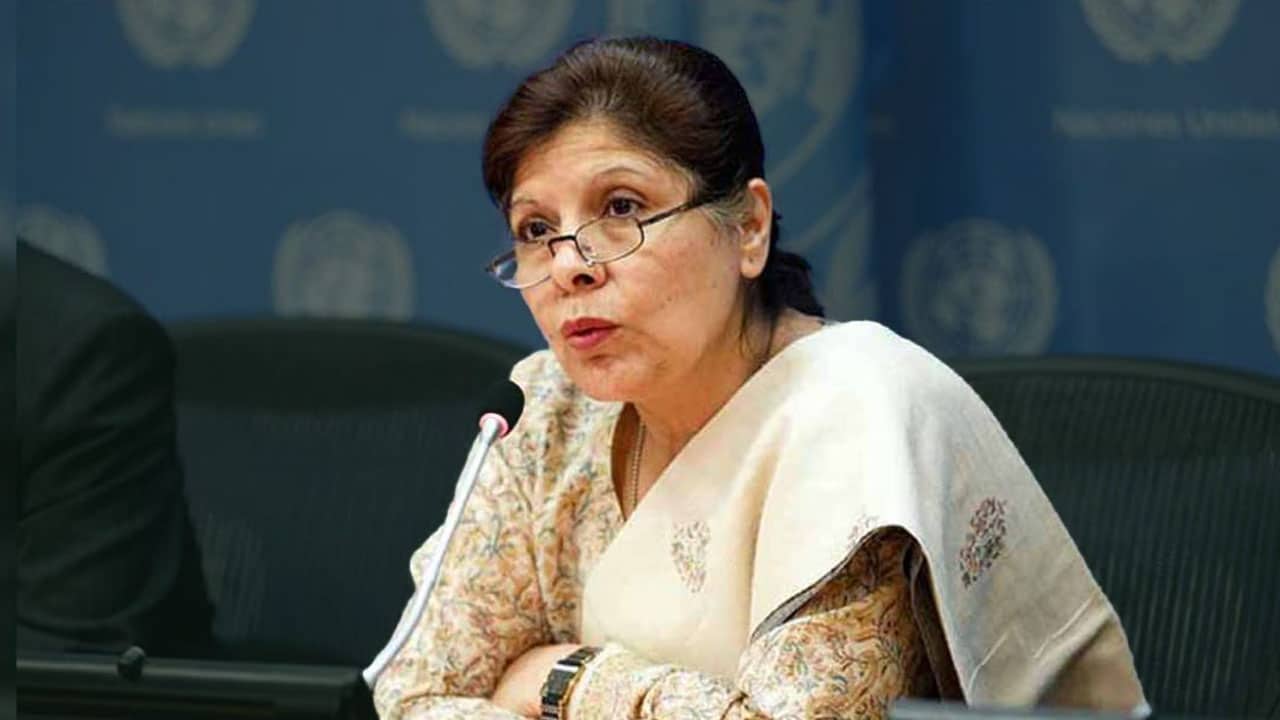
    Caretaker Minister for Finance, Dr Shamshad Akhtar, has outlined Pakistan’s financial projections for the current fiscal year (2023–24), highlighting an anticipated mobilisation of approximately $4.5 billion from both multilateral and bilateral sources, excluding the International Monetary Fund (IMF).

    Minister Akhtar disclosed that the government foresees receiving over $1.6 billion in the second quarter (Q2) from sources such as the Asian Development Bank (ADB), the World Bank, and the Asian Infrastructure Investment Bank (AIIB).

    She clarified that these inflows encompass funds allocated to both project-based and programme-based initiatives.

    Highlighting progress in negotiations, the minister revealed the completion of discussions for certain programme loans, with impending disbursements expected.

    She reassured that Pakistan remains committed to meeting its debt obligations promptly, both currently and in the future.

    Regarding the International Monetary Fund (IMF) programme, Minister Akhtar reported the successful conclusion of the first review of the Standby Agreement, resulting in the attainment of a Staff Level Agreement (SLA).

    Pending approval by the IMF’s Executive Board, this agreement will grant Pakistan access to $700 million.

    Commenting on the prevailing economic situation, Minister Akhtar acknowledged the challenges faced domestically and globally during FY2023.

    Despite these hurdles, she asserted that fiscal and external sector stability have been achieved through the implementation of various stabilisation measures and structural reforms.

  • Pakistan to receive $1.5 billion from international lenders following IMF approval

    Pakistan to receive $1.5 billion from international lenders following IMF approval

    Pakistan is poised to secure funds amounting to $1.5 billion from global lenders, contingent on the approval of the loan tranche under the $3 billion Stand-By Arrangement (SBA) by the International Monetary Fund (IMF), as highlighted by Dr Shamshad Akhtar, the caretaker finance minister, in a recent interview with a local news channel.

    It’s noteworthy that the IMF granted preliminary approval on November 15, 2023, for the disbursement of the upcoming loan tranche within the programme.


    Upon receiving approval, Pakistan will gain access to SDR 528 million, equivalent to approximately $700 million. This will contribute to the cumulative disbursements under the program reaching almost $1.9 billion.

    The agreement underscores the authorities’ commitment to advancing planned fiscal consolidation, expediting cost-reducing reforms in the energy sector, completing the transition to a market-determined exchange rate, and pursuing reforms in state-owned enterprises and governance.


    These measures aim to attract investment, support job creation, and simultaneously enhance social assistance.

    Nathan Porter remarked, “Anchored by the stabilization policies under the SBA, a nascent recovery is underway, supported by international partners and indications of improved confidence.”

    He added that the steadfast execution of the FY24 budget, ongoing adjustments of energy prices, and renewed inflows into the foreign exchange (FX) market have alleviated fiscal and external pressures.

  • Govt plans to increase gas and electricity prices in January

    Govt plans to increase gas and electricity prices in January

    The interim Finance Minister, Dr Shamshad Akhtar, announced during a press conference that the caretaker government is planning to increase electricity and gas tariffs in January to address the circular debt issue, in line with the International Monetary Fund’s (IMF) Stand-By Arrangement (SBA). 

    The circular debt in the power and gas sectors, currently exceeding 4 per cent of the Gross Domestic Product, requires urgent action for reduction. 

    Dr Akhtar also discussed tariff revisions with the IMF and the potential imposition of additional taxes on sectors like real estate and retail, emphasizing that final decisions are pending. 

    She highlighted the necessity for a new short-term IMF program and anticipated a medium-term program under the Extended Fund Facility (EFF) after the SBA concludes. 

    Regarding the external financing gap, Finance Secretary Imdad Bosal expressed optimism that a successful IMF review would unlock programme and project loans from multilateral lenders. 

    He anticipated approvals in December for loans from the World Bank, Asian Development Bank, Asian Infrastructure Investment Bank, and Islamic Development Bank. 

    Bosal assured that there is no external financing gap, and the improved ratings post-review would attract foreign loans. 

    Dr Akhtar stated that the World Bank is expected to disburse $2 billion during the current fiscal year, contributing to foreign exchange reserves along with the $700 million tranche approval from the IMF, bringing the total disbursement under the SBA to $1.9 billion out of $3 billion. 

    The approval for the second tranche from the IMF’s Executive Board is anticipated within a month.